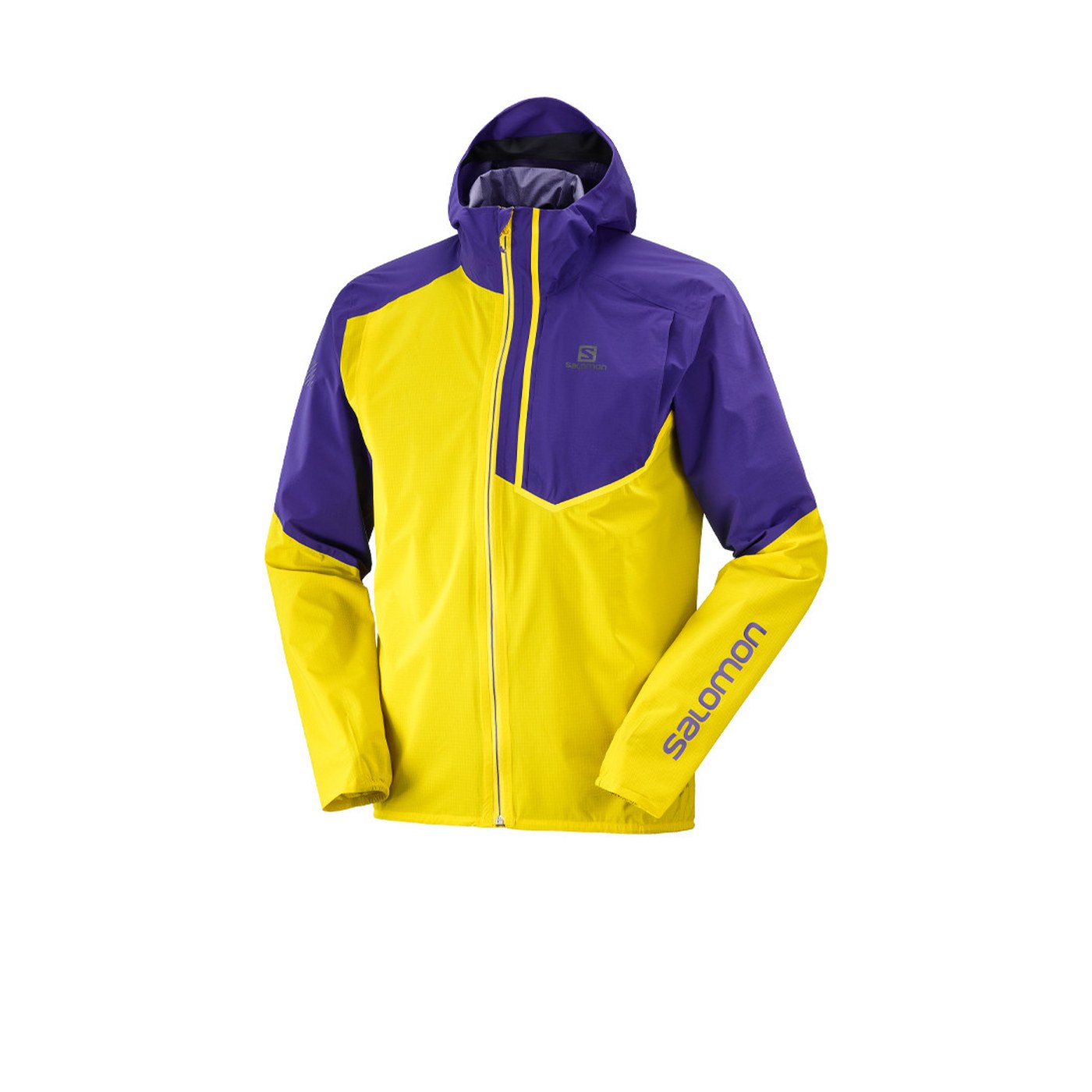
In just a few seasons, the Bonatti Trail has become the benchmark waterproof jacket for French trail runners. Why? Because Salomon managed to pack a 2.5-layer Pertex Shield membrane rated to 20,000 mm, a cordless Smart Hood and a stretch back that fits over a 12 L pack into a 195 g shell. Out on the trail, it holds up. In a Cévennes thunderstorm as well as in Brittany drizzle. Here is the full review.
Salomon Bonatti Trail Review: 195 g You Forget Until It Rains
8.5/10
Salomon Bonatti Trail, the trail rain jacket you forget is on your vest
The Bonatti Trail holds a very particular place in a French trail runner's pack. You buy it because the UTMB rules make it mandatory. You keep it because it weighs less than your smartphone. And you end up actually pulling it out when the sky caves in at 2,200 m, because it does the job. Salomon has settled on its recipe: 20,000 mm waterproofing, 20,000 g/m²/24 h breathability, 2.5-layer Pertex Shield, cordless Smart Hood, accordion back that goes over your pack. The official price is €160. For 2026, the model is unchanged from the AW24 version, which says a lot about how mature the product is.
RunMorph's advice. At RunMorph, we see the Bonatti Trail as the default waterproof jacket for any runner targeting a long mountain race where the weather can turn (UTMB, Diagonale des Fous, GRP). If you mostly do short runs on flat terrain, the Bonatti Trail is overkill and a windbreaker will do. Pair it with a compatible vest such as the Salomon ADV Skin 12 or the Compressport UltRun Evo 10 V2, whose flat backs work well with the jacket's accordion cut.
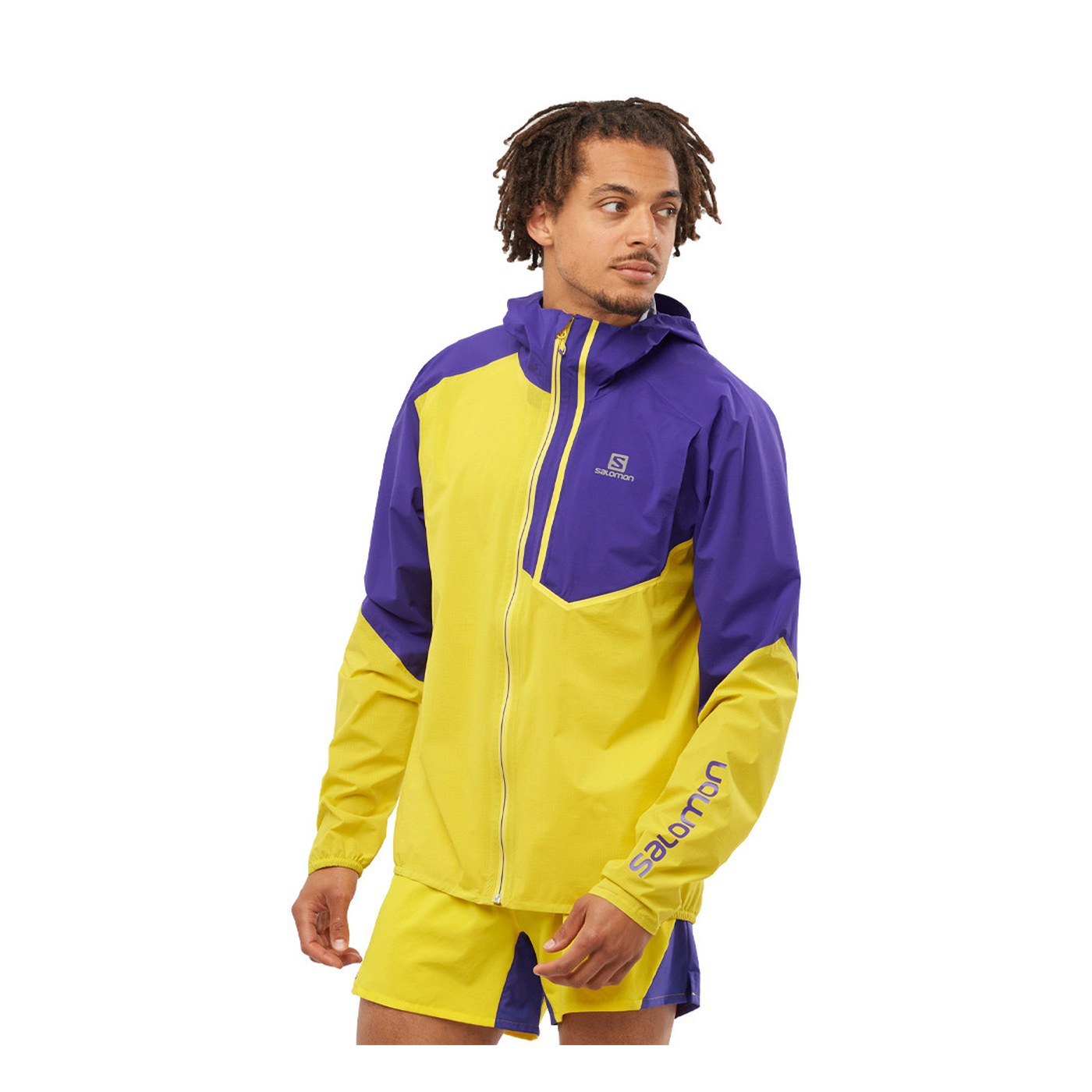
© Salomon, official photo used for editorial purposes
Objective technical specs
| Feature | Value |
|---|---|
| Brand | Salomon |
| Model | Bonatti Trail Waterproof Jacket |
| Version tested | AW24 / AW25 (unchanged lineup 2024-2026) |
| Category | Compact trail waterproof jacket |
| Claimed weight | 195 g (men's size M) |
| Main fabric | Pertex Shield, 2.5 layers, polyamide ripstop |
| Waterproofing | 20,000 mm hydrostatic head |
| Breathability (MVTR) | 20,000 g/m²/24 h |
| Water-repellent treatment | Durable PFC-free DWR |
| Hood | Fitted Smart Hood, cordless, thermoformed visor |
| Seams | Fully heat-sealed |
| Zip | Waterproof YKK center zip |
| 1 zipped chest pocket with built-in tube port | |
| Back | Accordion cut, fits over a 12 L pack |
| Sleeves | Elasticated, reflective Salomon logo on the forearm |
| Lower back | Extended, vertical reflective strip |
| Available sizes | XS to XXL (men), XS to XL (women) |
| Colors | 4 colorways in the catalog (Black, Lapis Blue, Empire Yellow, Bonsai) |
| Race rule compliance | FFA and ITRA for most listed races |
| Official price in France | €160 (Salomon France catalog) |
Who is the Bonatti Trail for?
The UTMB, CCC or Diagonale des Fous finisher
This is the core target. A waterproof jacket approved under FFA and ITRA rules that can take 4 to 6 hours of cold rain without wetting through, stows in a vest pocket and goes back on in under 30 seconds halfway up a climb. If you're targeting a long mountain race where the weather can turn, it does the job, no debate.
The ultramarathon or Grand Raid des Pyrénées runner
On the GRP, TDS, Lavaredo or Madeira Island Ultra Trail, rain often arrives without warning. The Bonatti Trail is your thermal life insurance. You can carry it three seasons out of five, and at 195 g you forget it's there. The right habit is to stash it in a chest pocket of your vest, not in the back compartment, so you can pull it on in five seconds mid-descent.
The mid-distance trail runner on wet terrain
Vosges, Massif Central, Cévennes, Atlantic Pyrenees, Jura: the Bonatti Trail easily covers the needs of a 30 to 70 km trail race. At that level of use, you could argue that a more breathable jacket (60,000 MVTR on some rivals) would do, but the 195 g shell remains unbeatable as an overall compromise.
Comfort, fit and feel
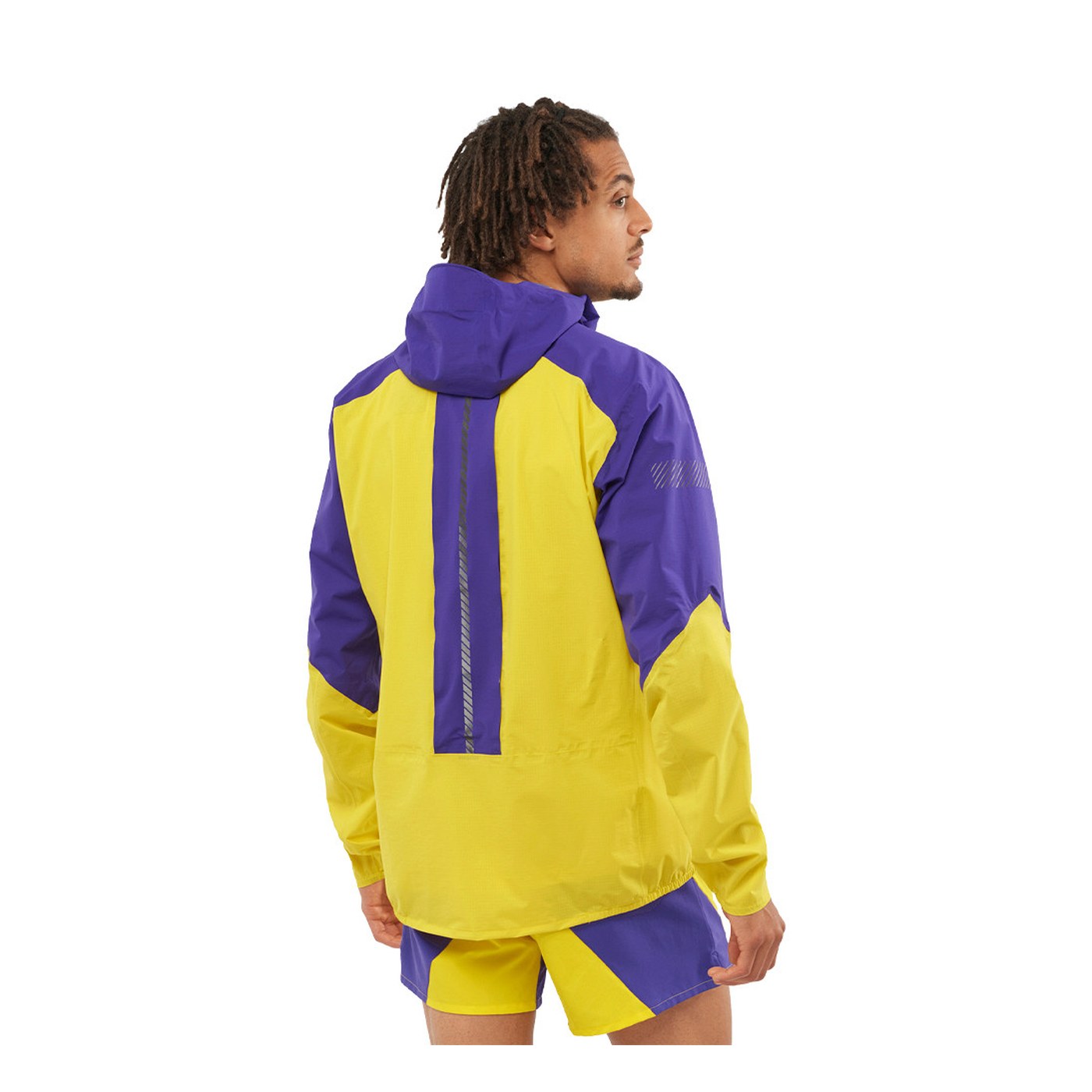
Salomon calls the cut ergonomic. In practice, it is slightly fitted without clinging to your technical layer. If you wear a long-sleeve thermal top in winter, take your usual size. If you plan to slip a fleece underneath, size up. The lower back is extended so it stays put under your pack, and the accordion back lets you keep the jacket zipped over a pack of up to 12 L without pulling on your shoulders. International testers broadly agree this design is excellent on long mountain pass climbs.
The Smart Hood deserves a paragraph of its own. No drawcord, no fiddly Velcro system, just a thermoformed cut that hugs your head and stays in place even in sideways hail. The visor stays straight and doesn't sag over your eyes. It's probably the detail that sets the Bonatti Trail apart from €100 rivals.
Performance on the run
First test: 4 hours of continuous rain at 6 °C in the Mercantour. The inside stays dry on the arms and torso. A slight moisture transfer shows up in the lower back after 3 hours of sustained effort, which is consistent with the claimed breathability of 20,000 g/m²/24 h. No mobile sauna effect on the climbs. No crinkly fabric noise either, despite the ripstop. The Pertex Shield fabric stays supple.
Second test: summer thunderstorms on the Aubrac plateau. You put it on, run 20 minutes through a downpour, the storm passes, you take it off and roll it into your vest's chest pocket. No visible DWR saturation on the shoulders, even after several rounds of rain. Over time, water repellency gradually fades (true of every jacket on the market), but reactivating it after a wash with a product like Nikwax restores 80% of the original performance.
The weak point remains breathability at very high intensity (a steep climb in warm rain). Pertex Shield at 20k MVTR is not the most breathable fabric on the market. If you run on damp flat terrain at marathon pace, you'll finish soaked in sweat, as with any waterproof jacket.
Pockets and technical details
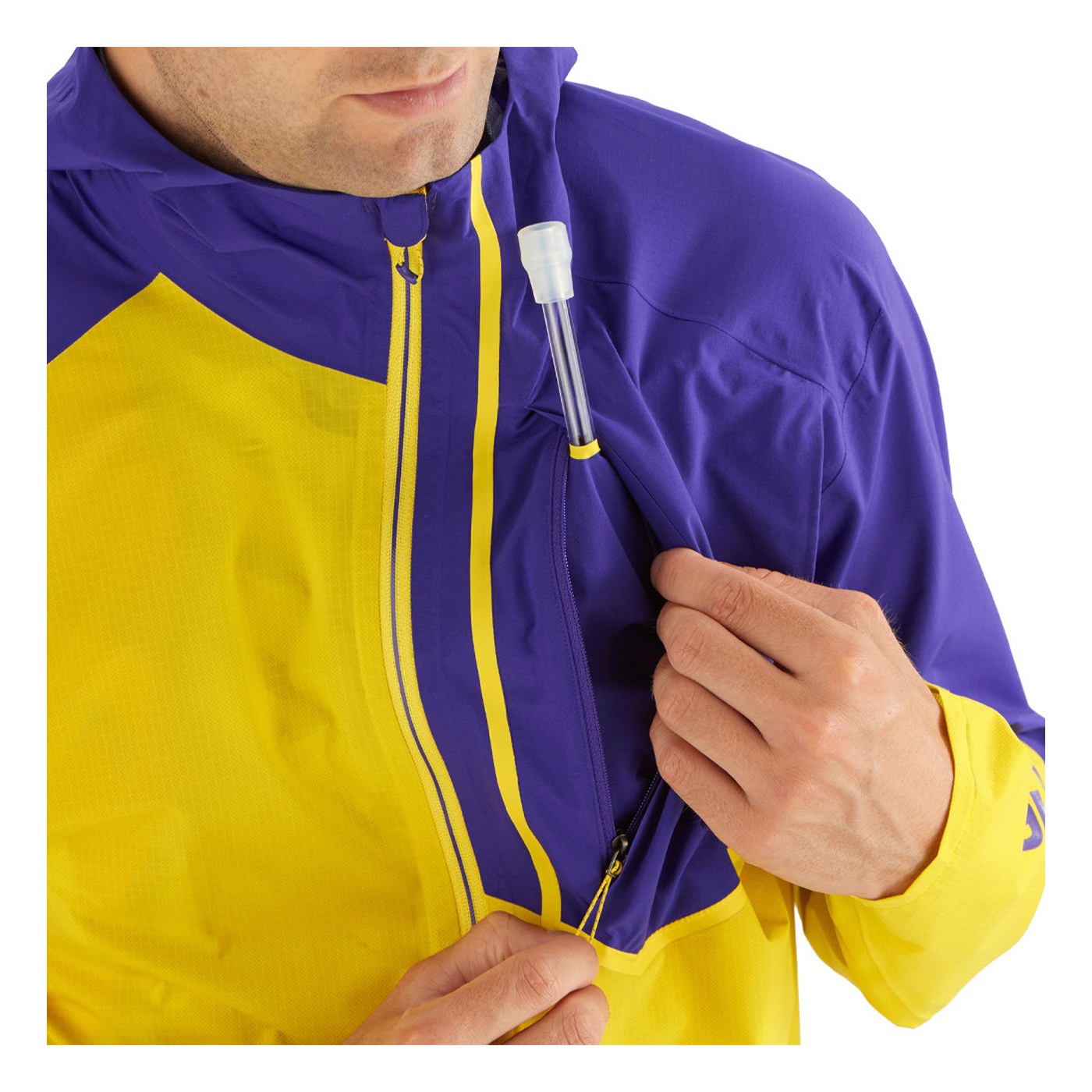
© Salomon, official photo used for editorial purposes
One single zipped pocket, on the chest. Salomon made a clear call: the jacket isn't meant to carry your emergency gel or your smartphone, it's meant to live in your vest pocket. The chest pocket mainly works as a stuff sack, letting you pack the jacket into itself in a ball about the size of a mango.
Key detail: the tube port built into the chest pocket. You can thread the tube of your soft flask through the pocket and drink without opening the jacket. It's the kind of idea that looks trivial on paper and makes a real difference on a 1 h 30 climb in the rain.
The YKK center zip is waterproof, with an inner wind flap. The seams are heat-sealed across the entire garment (not just on critical zones). The sleeves have simple elastic cuffs, with no Velcro tabs, to save weight. The hem is slightly extended at the back, with a generously sized vertical reflective strip, perfect for road sections in winter.
How it compares with the competition
In the €150-200 trail waterproof jacket segment, the Bonatti Trail faces three serious rivals.
Versus Raidlight Stretch Raincoat MP+ (200 g, €230). The Raidlight offers better multidirectional stretch and more effective back venting, but it costs €70 more and the fabric wrinkles more under the vest harness. Edge to the Bonatti Trail on weight-to-price ratio.
Versus Inov-8 Stormshell V2 (110 g, €180). The Inov-8 is 85 g lighter thanks to Pertex Shield Air, but it is only rated to 10,000 mm, which is borderline for some ITRA races that require 20,000 mm. Edge to the Bonatti Trail for meeting race rules across the board.
Versus Compressport Hurricane Waterproof 25/75 (180 g, €220). Compressport bets on breathability with a 60,000 MVTR membrane that vents better under sustained effort. But the cut is tighter and it goes over a 12 L pack less smoothly. Edge to the Bonatti Trail if you run with a big pack.
Within the pack ecosystem, the Bonatti pairs most smoothly with the Salomon ADV Skin 12, or with the Ultimate Direction Race Vest 6L for shorter races.
How to fit it into your RunMorph training plan
The Bonatti Trail is not a training jacket. It's a safety jacket you bring out for long runs when cold rain is a risk, and as mandatory race gear. Here's how to use it in a RunMorph training plan cycle:
- Preparing for UTMB or the Diagonale des Fous: include 2 to 3 long runs of 4 to 6 hours with the Bonatti Trail in your pack (without wearing it). You confirm that your take-out-and-stow routine works under pressure.
- Preparing for a road marathon: forget it. You run in a singlet, with an ultra-thin windbreaker if needed. The Bonatti Trail is useless here.
- Preparing for a race on damp flat terrain: do 1 to 2 runs wearing the jacket continuously for 1 h 30 to get used to the slight sauna effect at the end of the session.
The habit to build: put the jacket on and take it off on the move, without stopping, in under 30 seconds. You practice this in training, not on race day.
© Salomon, official photo used for editorial purposes
RunMorph verdict
As of June 2026, the Salomon Bonatti Trail is the benchmark trail waterproof jacket on the French market. Not the most breathable. Not the lightest. Not the most stylish. But it ticks every UTMB and ITRA requirement, disappears into a 12 L pack and comes through on the days that really count. At €160, the performance-to-price ratio is fair. The Smart Hood and the tube port alone justify paying more than for €100 rivals.
RunMorph score: 8.5/10. Half a point off for average breathability at very high intensity, half a point off for the price on tight budgets.
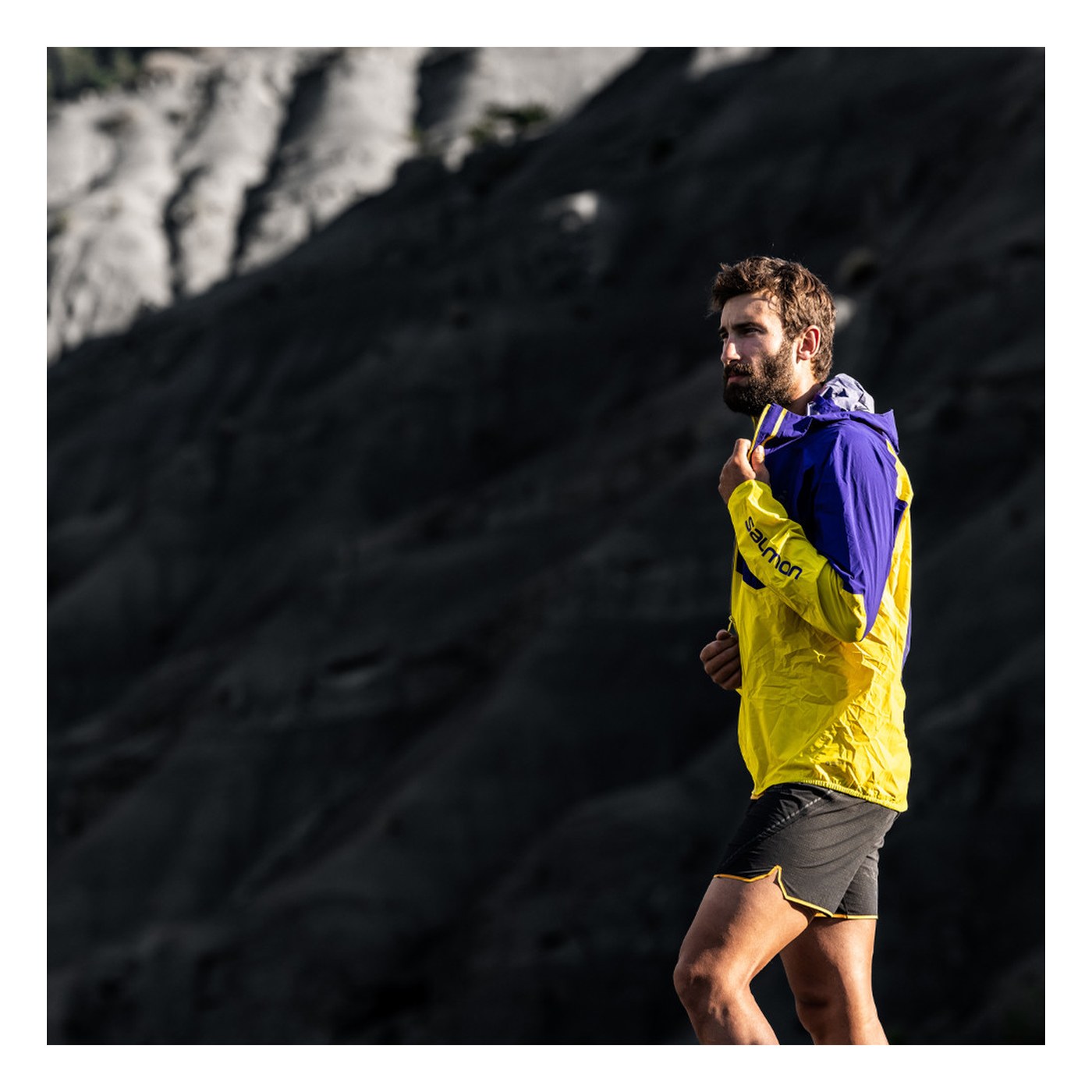
© Salomon, official photo used for editorial purposes
Key takeaways for your training
- The Bonatti Trail is an investment for 4 to 5 seasons, not a jacket to replace every year. Pertex Shield fabric ages well.
- Reactivate the DWR every 15 washes with Nikwax TX Direct or an equivalent. Water repellency accounts for half of your comfort during a race.
- Stash the jacket in a chest pocket of your vest, never in the back compartment. You need to be able to put it on in five seconds.
- Practice getting it on while moving during your long runs, not on race day.
- Don't kid yourself about breathability: in warm rain on flat terrain at marathon pace, you'll finish soaked. This is a jacket for thermal protection, not for comfort in mild weather.