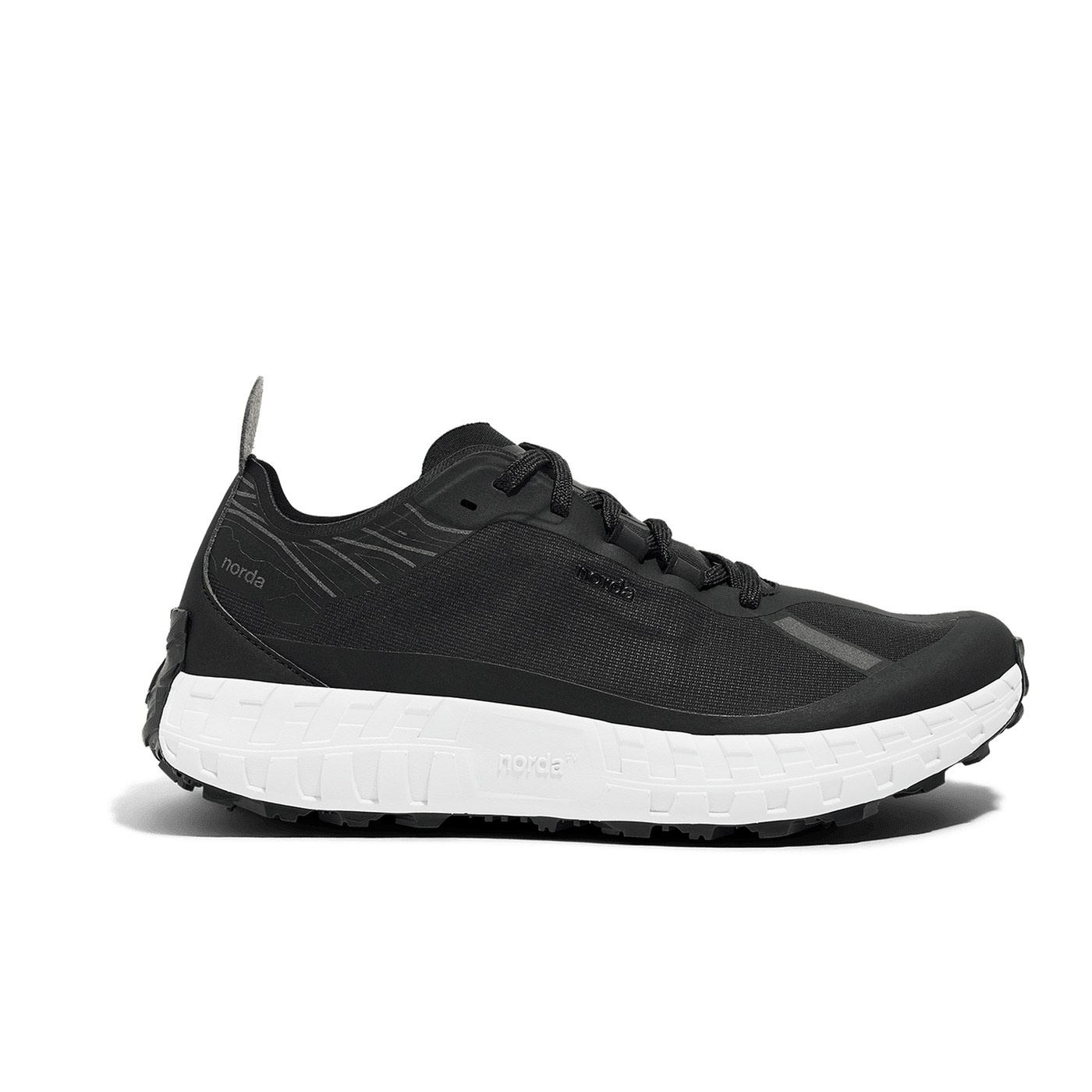
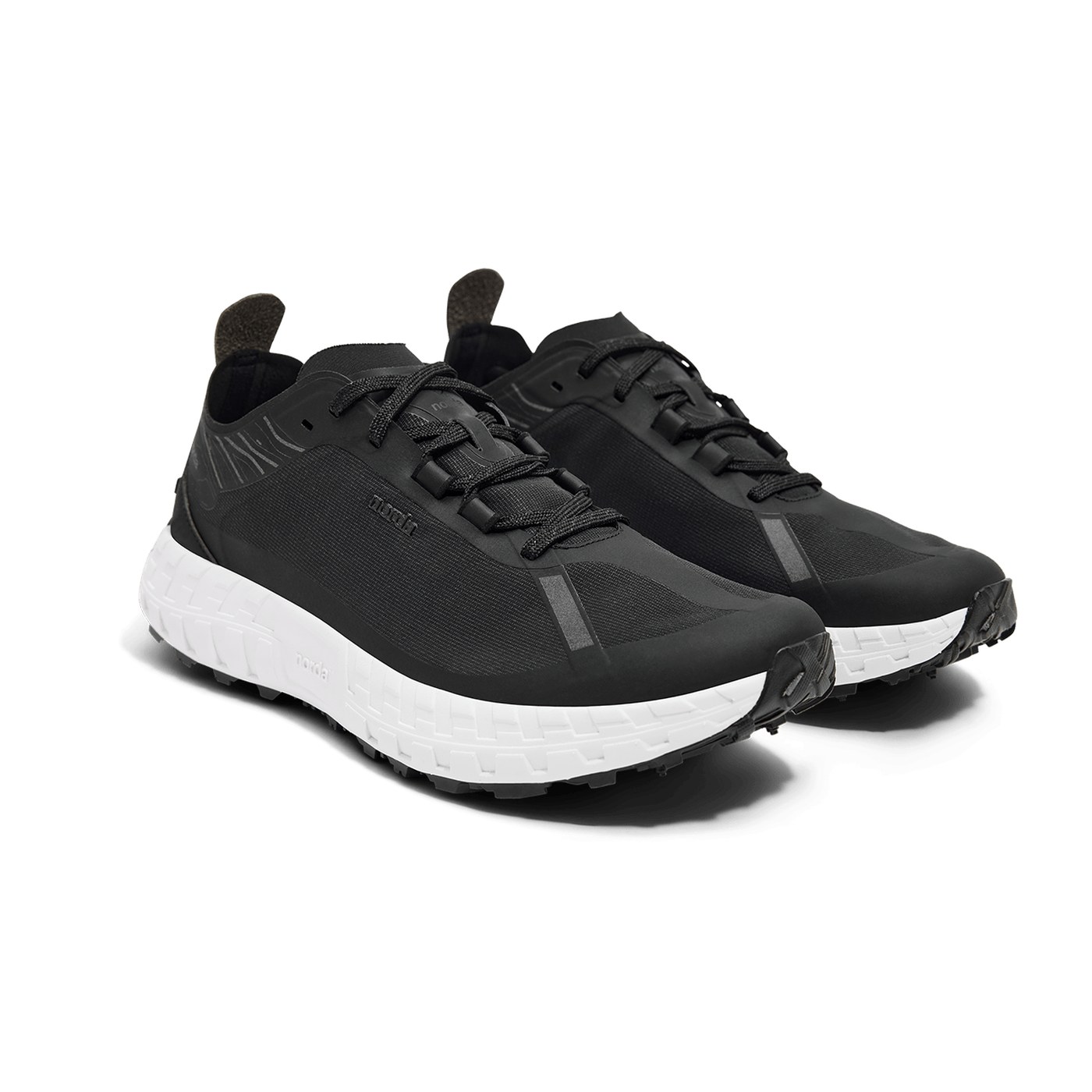
A trail shoe that lasts 1600 km without losing its shape: at RunMorph, that kind of promise gets a raised eyebrow. Norda, a young Canadian brand born in Montreal, has built its entire reputation on it with the 001A, its do-it-all model built from Dyneema. The bet is simple: pay more up front and burn through far fewer pairs over a season. We put the 001A through its paces to see whether the promise holds up on the road, or rather on the trail.
© Norda, official photo used for editorial purposes
Norda, the brand betting against planned obsolescence
Founded in Montreal in 2020, Norda made a name for itself in barely three years in a trail market crowded with yearly releases and ever-thicker foams. Its strategy breaks with the industry giants: instead of refreshing its lineup every season, Norda bets on a woven Dyneema upper. Dyneema is a fiber originally developed for bulletproof vests and marine ropes, and it's sixteen times stronger than steel by weight. The sales pitch is straightforward: you buy fewer pairs over time, so your cost per kilometer drops despite a high entry price.
The 001A is the model that best embodies this philosophy. Billed as the updated version of the original 001, it swaps the old foam for a proprietary Arnitel TPEE, meant to fix the main complaint about the first Norda shoes: cushioning too firm for long distances. On paper, the brand promises a shoe that handles a daily training run as well as an ultra, without ever losing its structure, even after several hundred kilometers of hard use.
Dyneema and Arnitel: what difference do they make underfoot?
Every Norda shares this upper woven from a single piece of Dyneema, with no seams and no glued-on overlays. In practice, that means far better abrasion resistance than a standard mesh: the brand claims an average lifespan of around 700 km, versus 500 km for a generic trail shoe, and user reports regularly go past 1000 km with no visible tears. On the trail, this upper wraps your foot like a stiff sock: little stretch, even lockdown, but feet used to softer uppers need a break-in period.
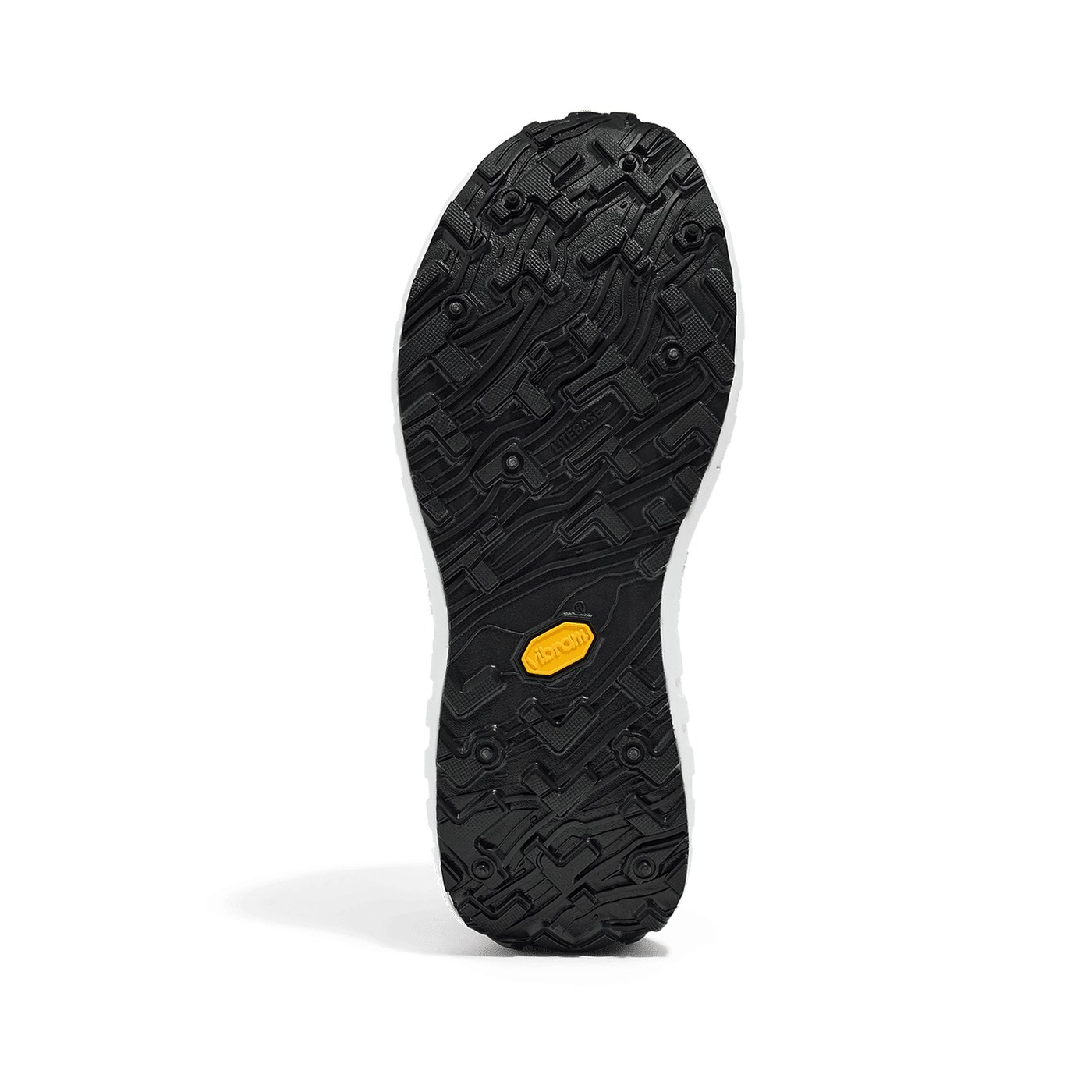
The 001A's real upgrade over the original 001 is in the midsole. The in-house Arnitel TPEE replaces the old foam, which some French testers found too firm on the first generations. You feel the gain most at the end of a long run: energy return is more noticeable, though it doesn't reach the level of the expanded PEBA-type foams found in the most premium racing shoes. The outsole, developed exclusively with Vibram around its Litebase technology, is 30% lighter than a standard Vibram outsole while keeping Megagrip traction on wet rock.
© Norda, official photo used for editorial purposes
The field test: from training runs to technical trails
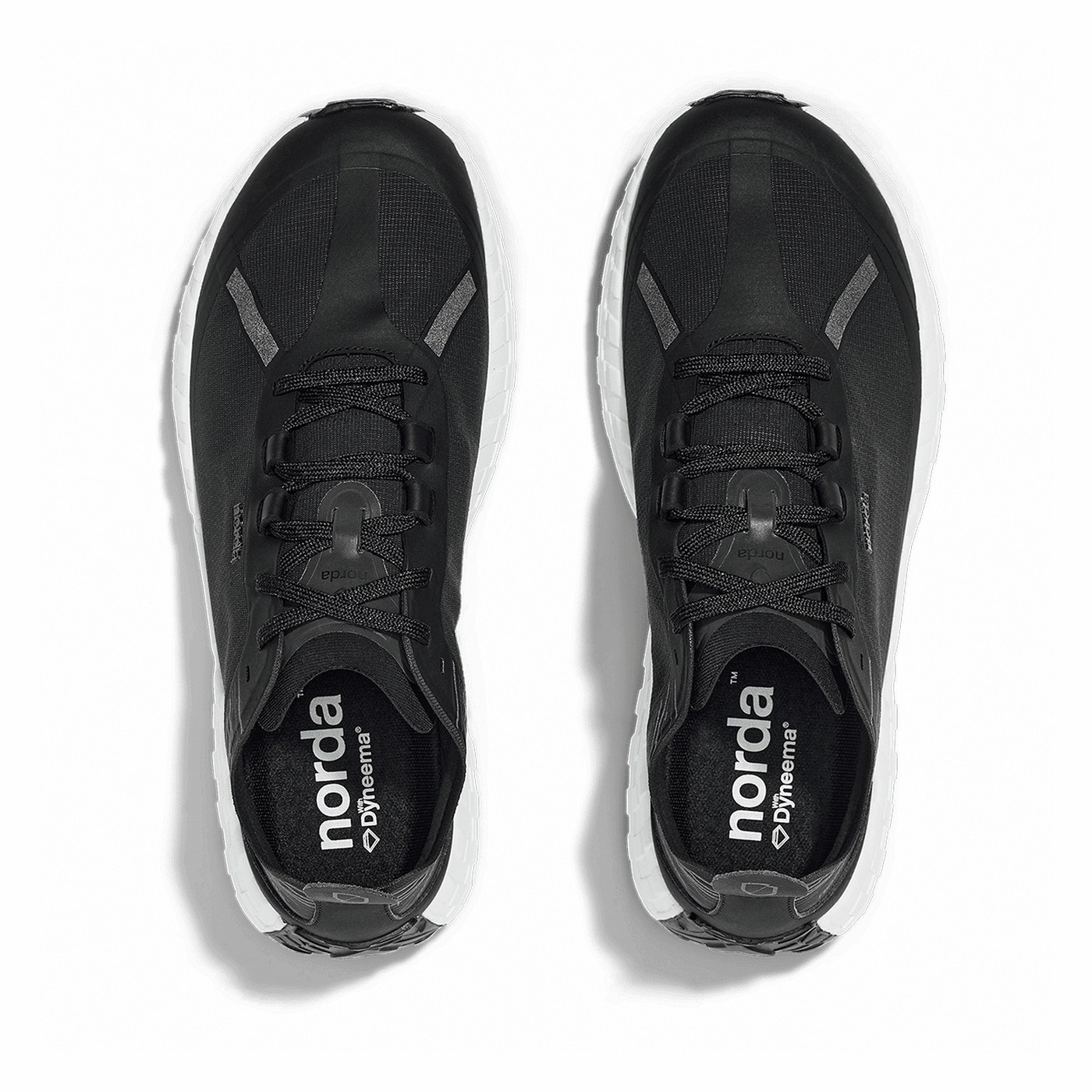
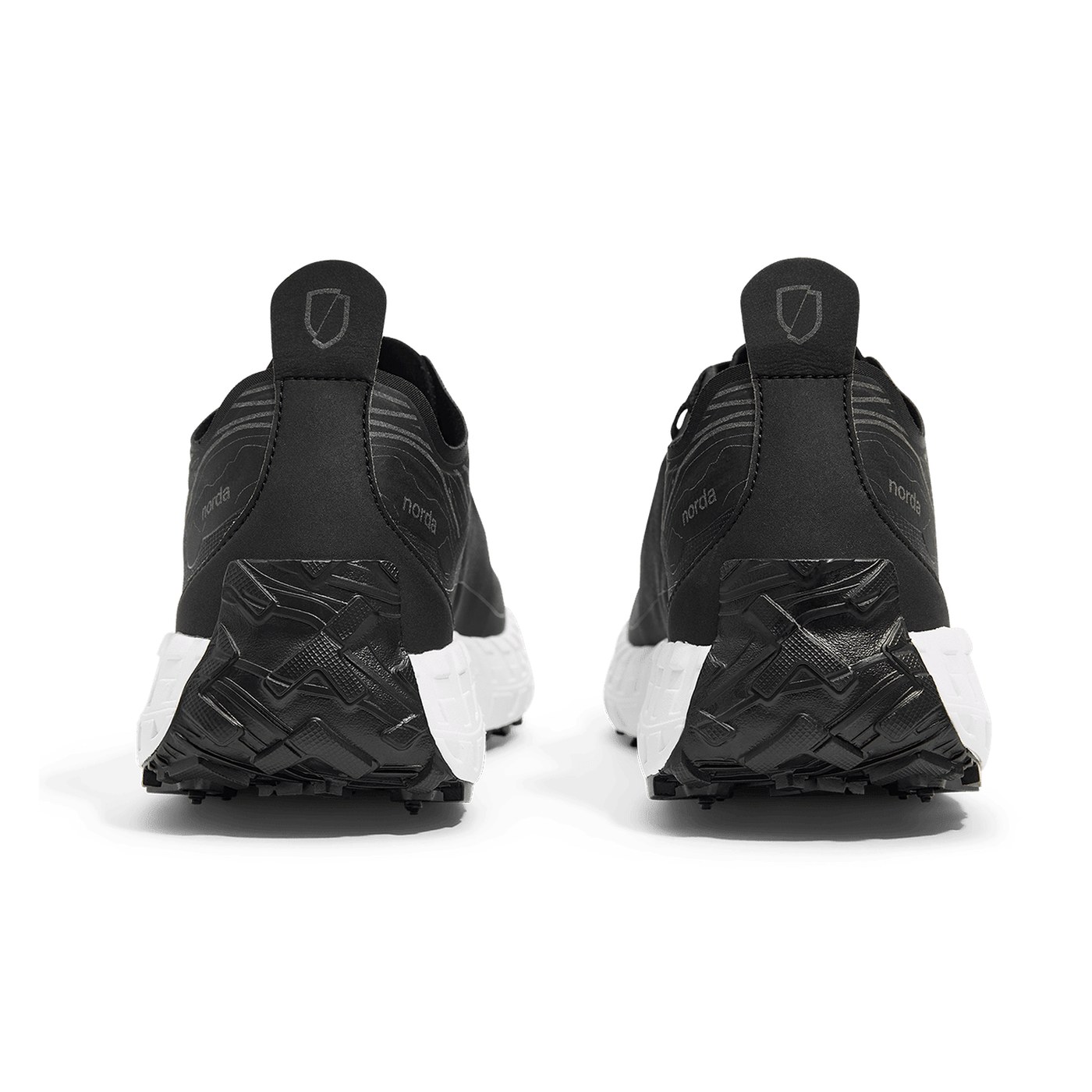
We tested the 001A across a range of paces, from 5:30/km on smooth trails to power hiking on broken, off-camber ground: the typical mix for a trail runner who combines training runs and long runs. Heel lockdown impresses from the first few kilometers. The norda Lock lacing system, with its braided Dyneema laces, gives you even tension with no pressure points, even after several hours. On rocky sections, the Vibram outsole handles uneven footing well, though the lack of a rock plate under the midfoot shows on sharp stones.
What stands out most is how well it holds up over time. After several weeks of regular use on abrasive terrain (granite, flint, limestone trails), wear on the upper is almost invisible, where a standard mesh shoe would already show rubbing around the little toe. On the other hand, the shoe is unforgiving on very fast runs: with no propulsion plate, it lags behind pure racing models when the pace changes.
Norda 001A vs NNormal Tomir 2: which one should you pick?
The most relevant comparison isn't a classic daily trainer but another player in the "small premium brand focused on durability" segment: the NNormal Tomir 2. The two shoes share a similar philosophy but make different technical choices.
| Norda 001A | NNormal Tomir 2 |
|---|
| Weight | 268 g | Comparable, ultralight technical segment |
| Upper material | Woven bio-circular Dyneema | Reinforced technical mesh |
| Positioning | Versatility from training to ultra | Technical and mountain terrain |
| Core selling point | Extreme durability, cost per kilometer | Precision and grip on rough terrain |
| Price | €284.90 | Similar premium positioning |
The short version: the 001A wins on sheer longevity and everyday comfort, while the Tomir 2 remains a benchmark on the most technical, rocky terrain thanks to a more aggressive outsole pattern. The choice often comes down to how often you run: the more kilometers you log each week, the more the 001A's Dyneema argument tips the economic balance.
Our take from the trail: which runners and which goals?
The 001A isn't meant to replace a pure racing shoe for a marathon or half marathon. At RunMorph, we recommend it first and foremost to trail runners who log serious weekly volume on varied terrain and want to limit the number of pairs they juggle over an ultra training season. The cost per kilometer becomes attractive once the shoe passes 700-800 km, which is common according to user feedback.
To fit the 001A into a structured training block, it naturally belongs in the high-volume weeks of a
RunMorph trail plan, especially for long runs and hill blocks, where the upper's durability makes a real difference compared with a standard mesh that wears out in a few weeks.
© Norda, official photo used for editorial purposes
© Norda, official photo used for editorial purposes
© Norda, official photo used for editorial purposes
The RunMorph Coach's verdict
The Norda 001A largely delivers on its promise: a Dyneema upper that shrugs off the most abrasive runs, comfortable lockdown and real versatility from training to ultra distance. You pay for it at the checkout, well above the segment average, and with a still-young distribution network in France that makes trying them on beforehand difficult. For regular trail runners who log lots of kilometers each week, the economics balance out over time. For occasional use, the durability argument carries less weight against rivals that cost less to buy.
Final RunMorph score: 8/10.