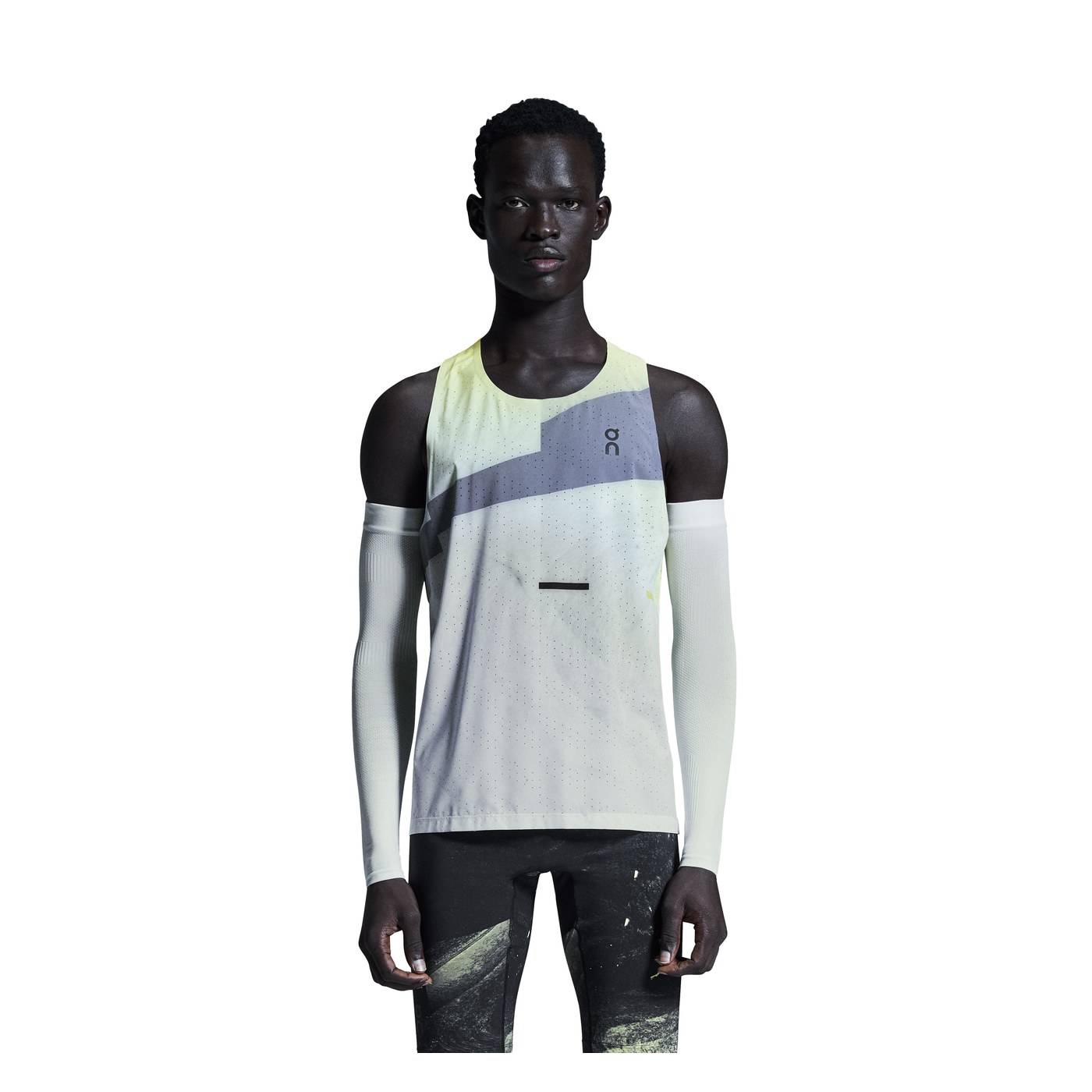
On built its reputation on running shoes, but the Swiss brand has expanded its apparel line with a racing range designed around the same demands: extreme lightness, optimal temperature regulation and precise finishing. The Race Singlet 2 sits at the top of this collection: a 50-gram singlet in micro-perforated DryTec fabric. Full review after several weeks of use on road and track.
© On Running, official photo used for editorial purposes
On Running and racing apparel: a clear ambition
Founded in Zurich in 2010, On Running spent years proving its shoes were not a gimmick. From the CloudUltra 3 to the Cloudboom Strike LS, the brand has imposed its vision: products at the crossroads of engineering and design, with no compromise on either front. The apparel collection follows the same philosophy. The Race Singlet 2 was designed with track and road athletes to meet a simple brief: once the race starts, you shouldn't feel the garment.
The brand isn't trying to cover every terrain with this product. This isn't a top for winter training or long trail runs. It's a tool for high-intensity racing, built for hot conditions and fast paces.
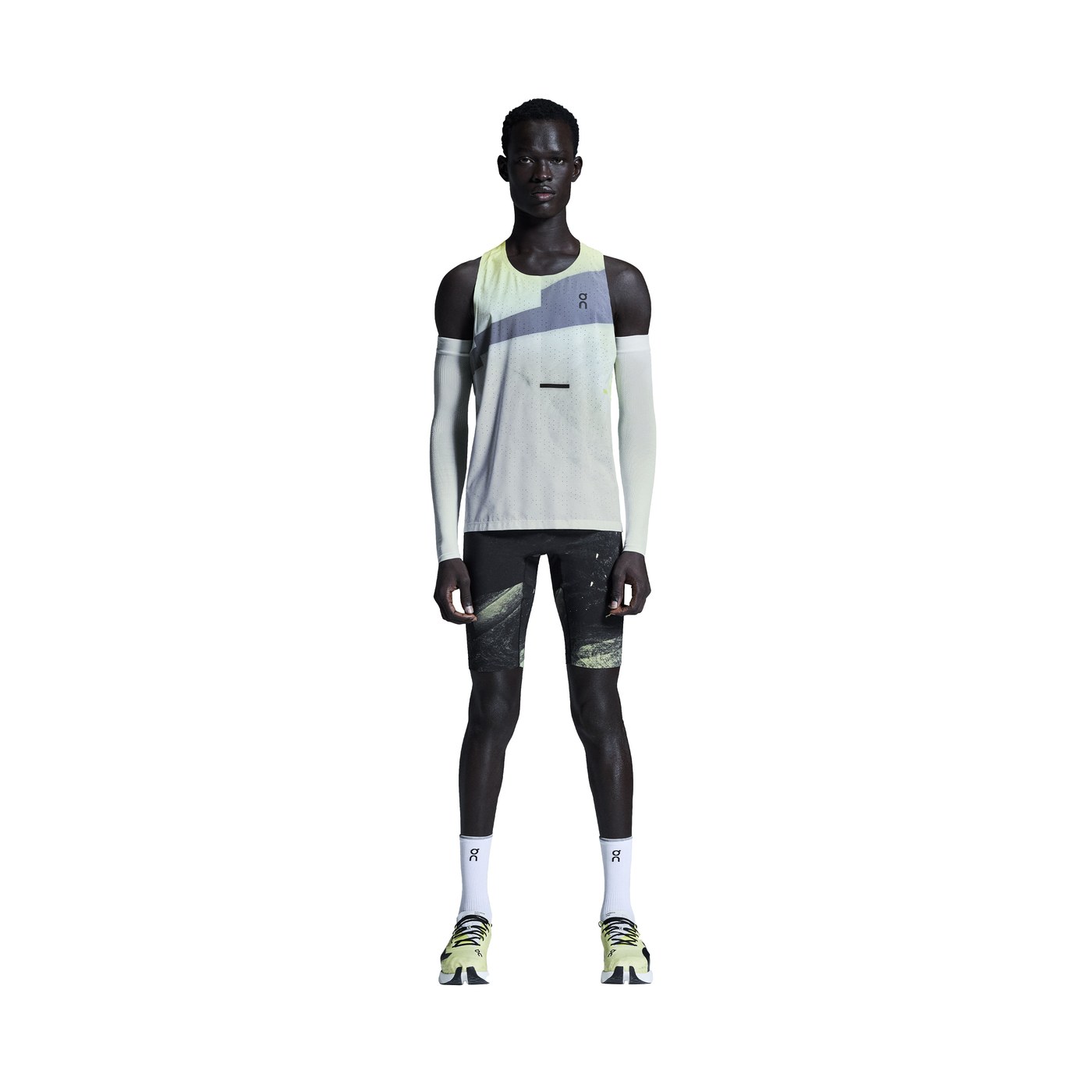
Specs: 50 g of micro-perforated fabric
| Brand | On Running |
|---|
| Model | Race Singlet 2 |
|---|
| Type | Racing singlet / tank top |
|---|
| Weight | ~50 g (size M) |
|---|
| Fabric | 100% micro-perforated DryTec polyester |
|---|
| Cut | Racerback |
|---|
| Seams | Bonded (no raised seams) |
|---|
| Colorway tested | Graphic (lime green / geometric gray) |
|---|
| Colorways available | Graphic, Limelight, Black, Pearl |
|---|
| Price | ~€65 |
|---|
| Gender | Men's (women's range available) |
|---|
© On Running, official photo used for editorial purposes
DryTec and bonded seams: what they change in practice
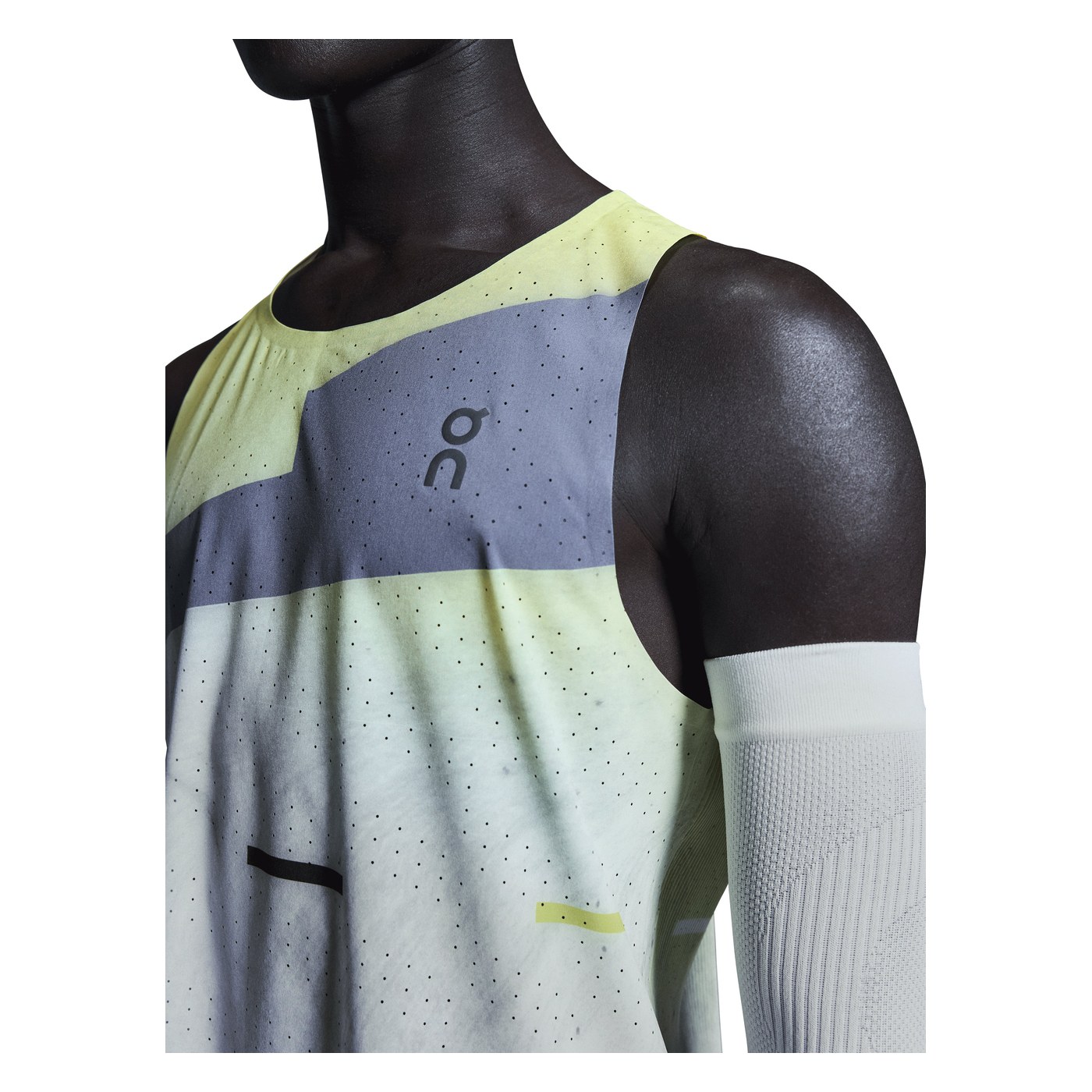
On's DryTec fabric is an in-house take on high-performance micro-perforated polyester. Micro-perforation means the fabric has thousands of tiny holes, invisible to the naked eye, that boost airflow between your skin and the outside. At a sustained pace, this passive ventilation speeds up sweat evaporation and delays the buildup of humid heat against your body. In practice, you get a top that dries extremely fast and doesn't stick to your skin, even after 20 km in July.
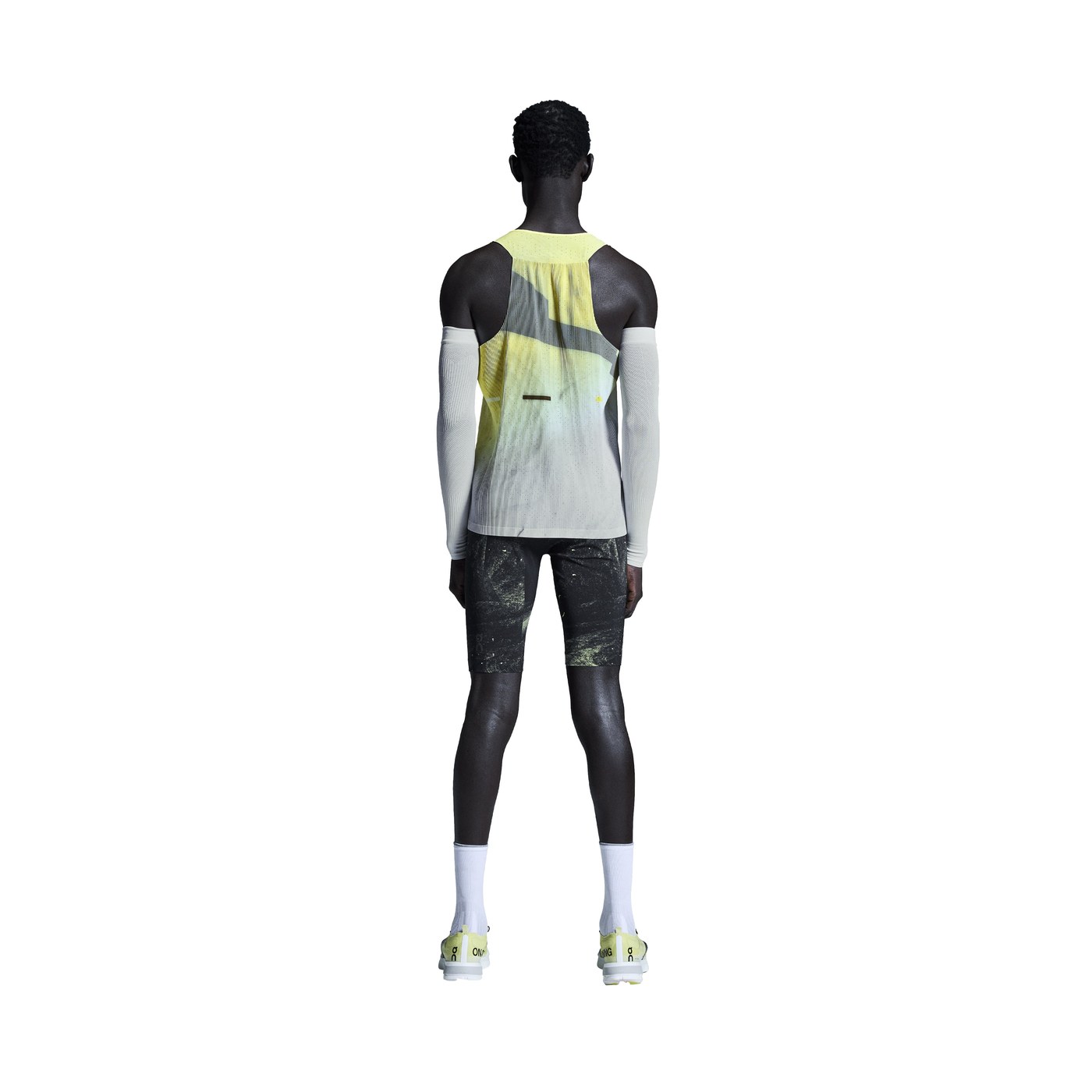
Bonded seams are the Race Singlet 2's other technical selling point. Traditional seams create ridges against the skin. You don't notice them when you start, but they cause irritation and chafing as the kilometers add up, especially under the arms and on the back. Bonding means gluing the fabric panels together instead of stitching them, which removes every rough edge. Over half marathon and marathon distances, the difference is real, especially for runners who sweat heavily.
RunMorph note: if you're running your first summer race in this kind of fabric, check how it works with your bib. Some safety pins can tear ultra-fine mesh if you place them in the wrong spot. Use a race belt or pin through a seam.
© On Running, official photo used for editorial purposes
Field test: in training and racing
We tested the Race Singlet 2 on runs ranging from 8 km of track intervals to 25 km on the road in hot weather (between 22 °C and 31 °C). The first thing you notice when you pull it on is the lightness: you don't feel the 50 g at all. It feels like running shirtless with just a thin layer of sun protection. That's exactly the point.
The racerback cut leaves your shoulders and shoulder blades completely free, so your arms swing without a single friction point. Size M (tested on a 180 cm / 75 kg runner) fits close without compressing: the fabric follows your movement without catching the wind, and without squeezing your shoulders or traps either.
Breathability is its undisputed strength. During long interval sessions at 160-170 bpm, we felt no localized overheating on the back or ribs. The micro-perforated fabric moves sweat away continuously and never turns heavy or clingy. Compared with a standard technical T-shirt, the difference in thermal comfort is obvious from the first kilometer.
On durability, micro-perforated fabric is more fragile than standard polyester. After about ten machine washes at 30 °C (laundry bag recommended), the perforations look stable and no snags have appeared. Stay careful with packs and trail vests, though: their straps can rub against the fabric on long runs.
© On Running, official photo used for editorial purposes
On Race Singlet 2 vs the competition: racing singlets compared
| Singlet | Weight | Fabric | Seams | Price |
|---|
| On Race Singlet 2 | ~50 g | Micro-perforated DryTec polyester | Bonded | ~€65 |
| Nike AeroSwift Singlet | ~55 g | Dri-FIT ADV polyester | Flatlock | ~€70 |
| Adidas Adizero Singlet | ~60 g | HEAT.RDY polyester | Flatlock | ~€50 |
| Salomon S/Lab Short 2in1 | ~90 g (shorts) | Lightweight polyester | Flatlock | ~€80 |
Against the Nike AeroSwift and Adidas Adizero singlets, the On Race Singlet 2 stands out with its bonded seams, a real quality advantage over long distances. The Nike AeroSwift is slightly heavier and more expensive. The Adidas Adizero is cheaper but uses standard flatlock seams. If you're running your first races, the seam difference may seem minor. In a half marathon above 25 °C, you feel it.
Who it's for and when to use it
The On Race Singlet 2 is aimed first and foremost at road and track racers. It shines in specific situations:
- Summer races from 5 km to the marathon: this is its ideal playground. Maximum lightness, high-flow sweat wicking, seam-free comfort. Wear it directly against your skin, with nothing underneath.
- Hard interval sessions in summer: high-intensity intervals generate a lot of body heat. Micro-perforated DryTec handles these short heat peaks better than any other fabric.
- Short trail runs in hot weather: the singlet works for trail runs under 3 hours if you run without a vest. As soon as a vest or pack comes into play, the straps can rub against the fragile fabric. In those situations, a standard technical top is the better choice.
RunMorph coach's verdict
The On Race Singlet 2 is a racing singlet whose intrinsic qualities justify its high price. The micro-perforated DryTec fabric and bonded seams aren't just marketing claims: out on the road, in hot conditions, they deliver thermal comfort and freedom of movement that are hard to find at this weight. 50 g sounds like nothing, and that's exactly the product's strength.
The main reservation is durability. A fabric this airy and light is by definition more fragile than standard polyester. If you plan to do your daily training in it, expect faster wear. As a race top saved for competitions and key sessions, though, the Race Singlet 2 can last several seasons without problems.
For trail running, choose a sturdier standard technical top. But for road and track races in summer, it's one of the best options on the market. RunMorph score: 8/10.