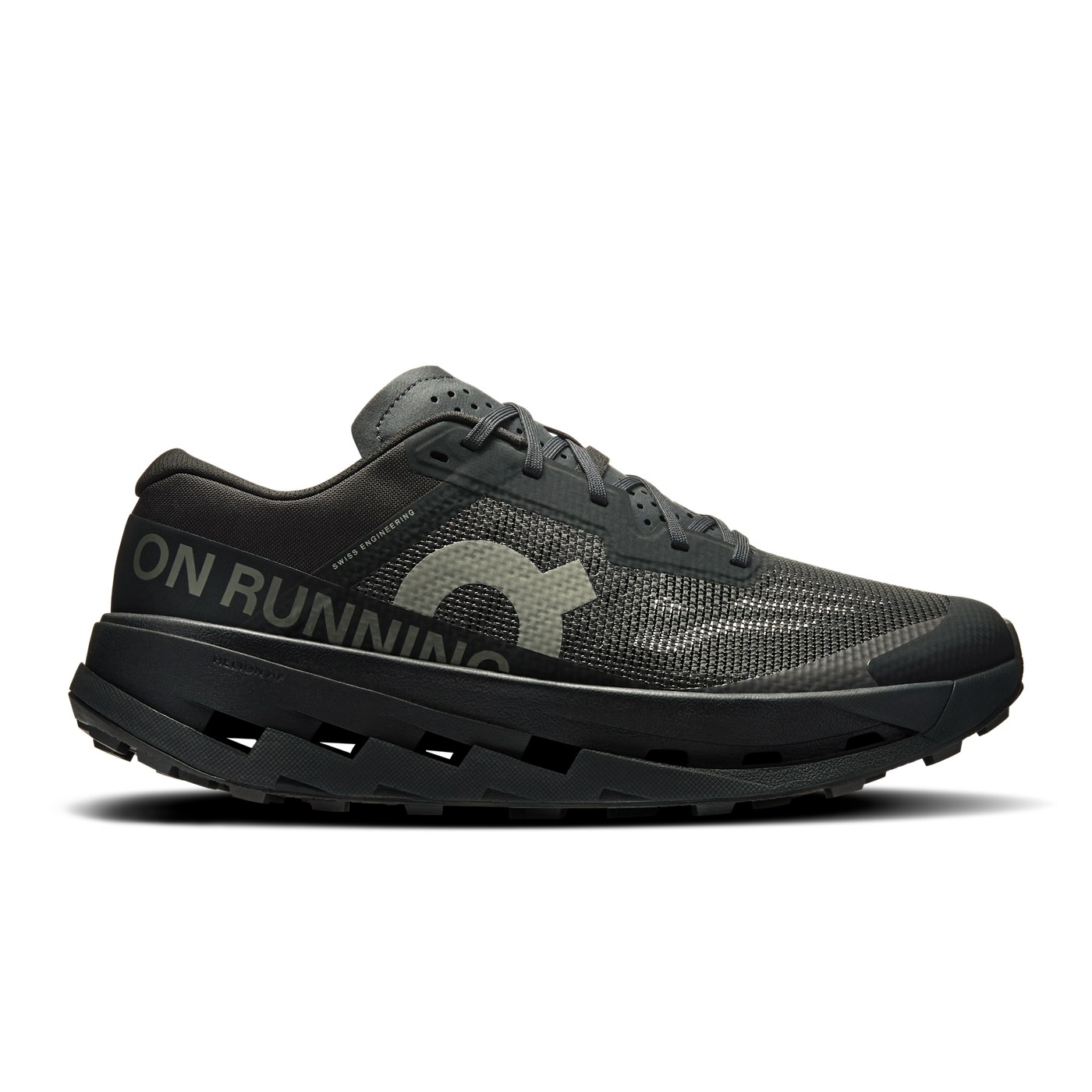
The On Cloudultra 3 marks a real break for the Swiss brand: this ultra-trail shoe drops its trademark stiffness for Helion HF super foam, a TPU Speedboard plate and multidirectional Missiongrip traction. As a RunMorph coach, I see a model that finally moves up a category: you can take it to your 50 km or your 100 miles.
On Cloudultra 3 Review: The Versatile Long-Run Trail Shoe
On Cloudultra 3: an ultra shoe that finally rolls
The first two generations of the Cloudultra failed to convince over long distances. Too firm, too noisy, not much energy return. With this third version, released in fall 2025 (and widely available in France in spring 2026), On shifts gears. The concept hasn't changed: protect your feet for 6 to 24 hours, in the mountains or on runnable trails. But the execution is completely new.
The Cloudultra 3 is here to replace your old long-run pair for technical trails. It faces crowded competition: Hoka Speedgoat 7, La Sportiva Prodigio 2, Asics Trabuco Max 5, Saucony Peregrine 16. In this busy segment, the Cloudultra 3 stakes its claim with a simple pitch: plush cushioning without giving up precision on the descents.
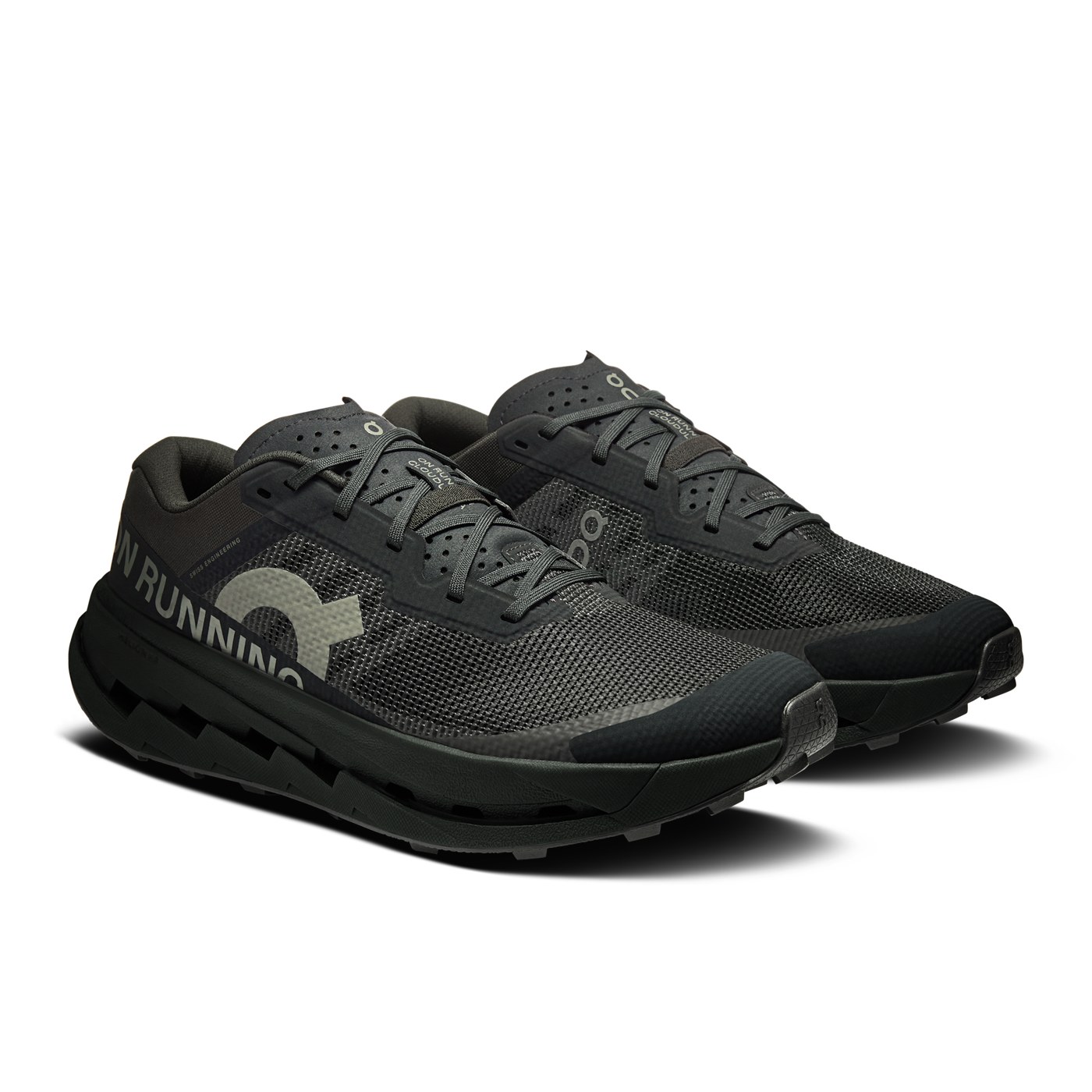
© On Running, official photo used for editorial purposes
RunMorph's advice
If you're training for an ultra over 50 km in mid-altitude mountains, the Cloudultra 3 is one of the best buys right now. It gives you 70% of the comfort of an Asics Trabuco Max 5 with far better grip on wet rocks. For dry, runnable trails up to 30 km, I prefer the La Sportiva Prodigio 2, which is lighter and livelier. The right pick depends on your main terrain, not on the brand.
Objective specs
| Brand | On |
| Model | Cloudultra 3 |
| Year | 2025 / 2026 |
| Type | Long-distance trail, versatile ultra-trail shoe |
| Drop | 6 mm |
| Stack height (heel / forefoot) | 32 mm / 26.5 mm |
| Weight | 295 g (men's, size 42.5) / 235 g (women's) |
| Foam | Helion HF (supercritical super foam) |
| Plate | TPU Speedboard (no carbon) |
| Outsole | Missiongrip, 4 mm multidirectional lugs |
| Rock protection | Yes, built into the foam |
| Recommended distance | 30 km to 100 miles |
| Official price | €200 |
What the numbers tell you: the Cloudultra 3 is lighter than most ultra shoes with a similar stack height. The Hoka Mafate 5 sits around 320 g, the On Cloudultra Pro tops 300 g, and the Asics Trabuco Max 5 comes close to 310 g. At 295 g, you get a real sense of flow after six hours on your feet.
The 6 mm drop is in line with modern ultra models (4 to 8 mm). If you're coming from the Salomon Speedcross 6 and its 10 mm drop, give your calves and Achilles tendon two weeks to adapt.
Who is this shoe for?
The ultra-trail runner (50 km to 100 miles)
This is its natural target. You can wear it in the morning for a two-hour recovery run, then keep it on for your 30 km long run in the mountains on the weekend. Helion HF foam, a supercritical version of the brand's original foam, soaks up impacts very well. On outings of 6 hours or more, your feet stay protected without the usual packing out of classic EVA. If your calendar includes the Templiers, the UTMR or the 80 km du Mont-Blanc, put it straight on your shortlist.
The all-around trail runner who doesn't like ultra-technical shoes
The Cloudultra 3 is more approachable than the Salomon S/Lab Genesis or the Hoka Tecton X 3, which target more experienced, faster trail runners. Looking for a shoe you can lace up without thinking for 80% of your runs, including the hard-packed road to the trailhead? It checks that box. The flip side: it never gets truly explosive on dry, runnable terrain. For that profile, the La Sportiva Prodigio 2 remains the better fit.
The heavier runner (over 80 kg) who wants cushioning that lasts
With a 32 mm heel stack, the Cloudultra 3 absorbs the impacts of a solid build. The CloudTec structure under the Helion HF foam adds a stability the Speedgoat 7 sometimes struggles to deliver above 80 kg. If you weigh between 75 and 95 kg, the Cloudultra 3 will spare your joints the fatigue after four hours of effort. As a coach, I see too many heavier runners pick shoes that are too firm because they distrust a high stack. Lasting comfort is the key to performance in an ultra.
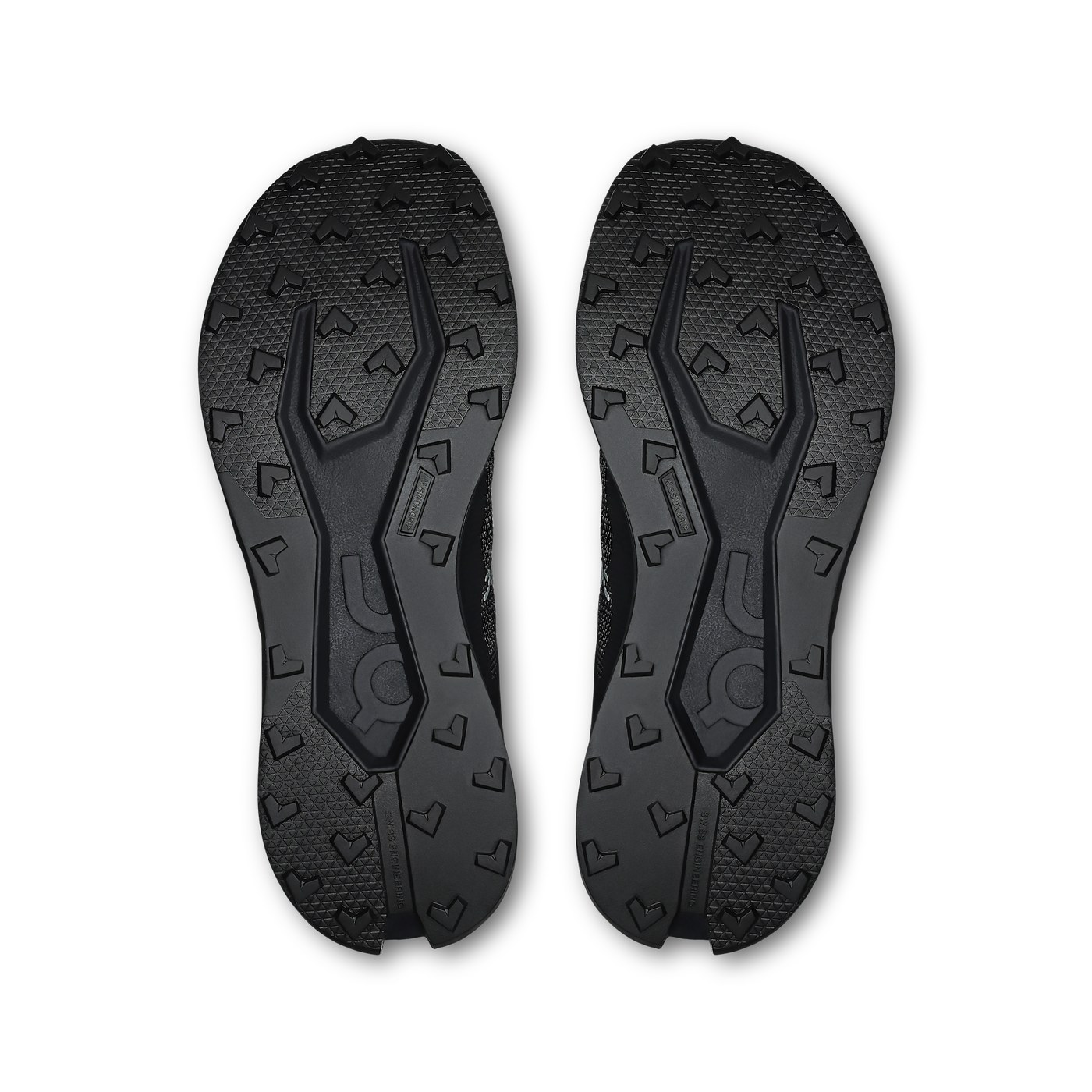
© On Running, official photo used for editorial purposes
On the run: what you'll feel
First few kilometers: the shoe disappears. You don't feel the cushioning squash down like on a Hoka Bondi 9. Instead you feel a stable platform that gives back a little energy with every step. The heel-to-toe transition is smooth, without the harsh slap of the Cloudultra 1 or 2. The TPU Speedboard plate does its job: it doesn't propel you like a carbon plate (that's not its purpose), but it stabilizes the foam and keeps your foot from rolling into excessive pronation on rocks.
On technical descents, the Missiongrip outsole is a surprise. The multidirectional lugs (a mix of diamonds and studs, 4 mm deep) bite on wet roots, lichen-covered rock and loose dirt. It's a clear step above the two previous generations. You can commit to steep descents without braking constantly, which changes everything on a long run.
On climbs, the shoe is reasonably snappy. Not the explosiveness of a more race-oriented shoe, but good grip on push-off and a forefoot that flexes well without collapsing. Above a 7% grade, you'll still feel the 295 g, as with any ultra-trail shoe.
How it stacks up against direct rivals
The Cloudultra 3 goes up against three models in the versatile ultra-trail segment. Here's where it stands.
Vs Hoka Speedgoat 7 (€155, 285 g, 4 mm drop): the Speedgoat is still the default benchmark for ultras, more proven and more protective on very technical trails. The Cloudultra 3 is more stable for a heavier runner and offers a better transition. Value for money tips toward the Speedgoat (€45 less), but if you mostly run rocky, runnable trails rather than true alpine terrain, the Cloudultra 3 will be more versatile.
Vs La Sportiva Prodigio 2 (€175, 270 g, 6 mm drop): the Prodigio 2 is livelier, more playful and more precise on technical descents. But it tops out around 50-60 km. Beyond that, the Cloudultra 3 takes over thanks to its higher stack. If your season mixes short races (10 to 30 km) with one goal ultra, the Cloudultra 3 can handle both. The Prodigio 2 is too thin for your long runs.
Vs Asics Trabuco Max 5 (€180, 310 g, 4 mm drop): the Trabuco Max 5 goes further down the max-cushion path, with even softer FF Blast Plus foam. It's also 15 g heavier and a bit less precise on technical descents. If you want maximum comfort over 100 miles, the Trabuco Max 5 is unbeatable. If you want high comfort with more ground feel, the Cloudultra 3 is the right compromise.
Vs Saucony Peregrine 16 (€140, 260 g, 4 mm drop): the Peregrine 16 is still a pure-bred trail shoe, perfect for 10 to 50 km. It doesn't play in the same category as the Cloudultra 3, which is built for longer efforts. On a tight budget and for races up to trail marathon distance, the Peregrine 16 remains unbeatable.
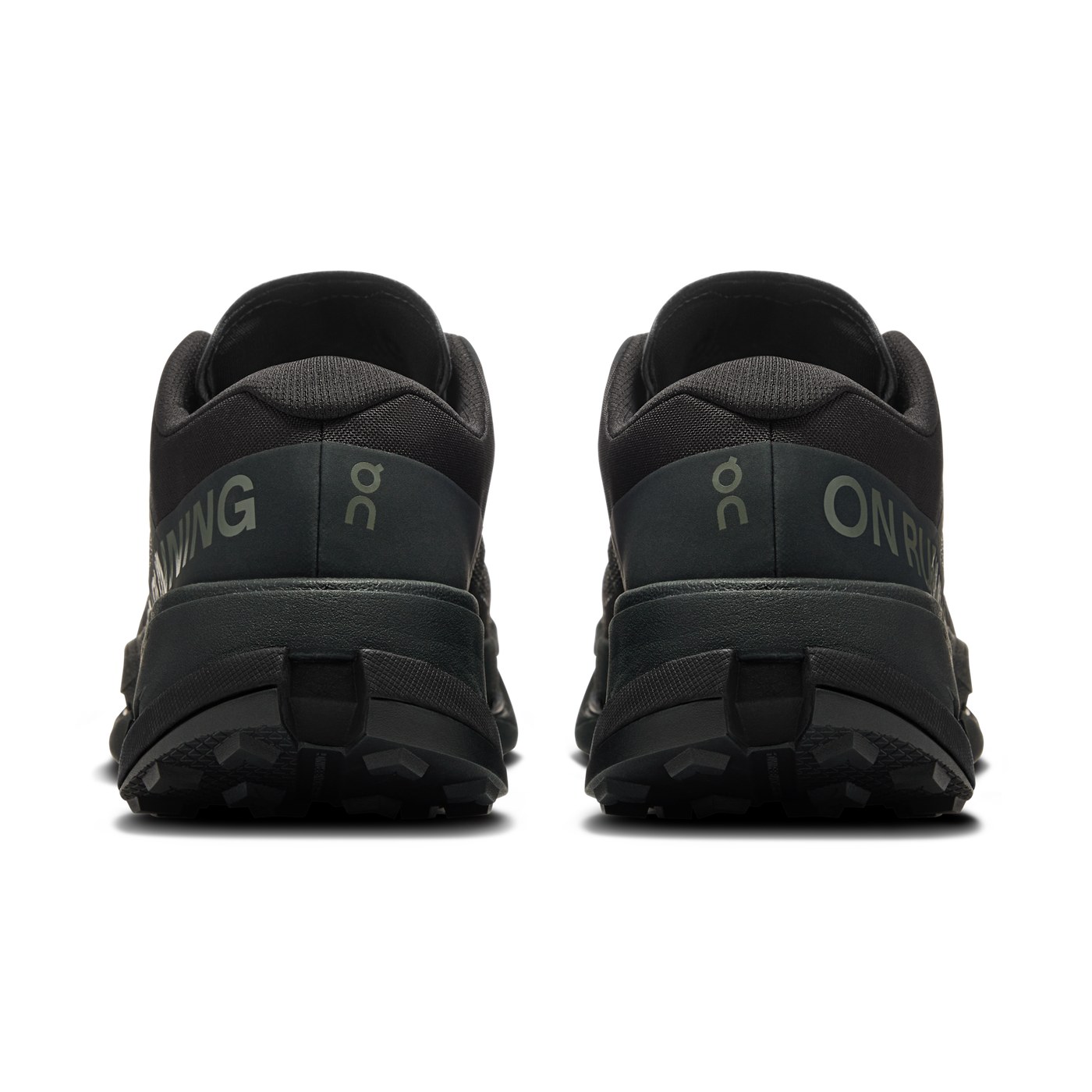
© On Running, official photo used for editorial purposes
How to fit it into your RunMorph training plan
The Cloudultra 3 is a shoe for long training runs and long races. Here's how I use it in the programming I offer in the RunMorph plans:
Progressive long run (90 to 180 minutes). This is the shoe's natural role. You build your base endurance, your body gets used to going the distance, and the comfort of the Helion HF foam lets you gradually work up to 3 or 4 hours out without post-session joint pain.
Recovery run. Oddly enough, the Cloudultra 3 is also excellent for easy runs on flat ground or hard-packed paths. The weight is well enough controlled and the cushioning soft enough that you don't feel like you're "wasting" an ultra shoe. Many of my athletes take it out for recovery the day after a big threshold session.
Goal races: ultra-trails from 30 to 160 km. This is its hunting ground. Templiers, Maxi-Race, MIUT, UTMB Mont-Blanc, Diagonale des Fous: the Cloudultra 3 delivers. For a 100 miles, I still recommend testing the shoe on a long run that simulates the full effort before you trust it on race day.
What I do not recommend with this shoe: short interval sessions (200 m, 400 m), road races over 5 km, and very technical trails on slabs (where a Salomon Speedcross 6 or the Salomon S/Lab Genesis will be a better choice).
RunMorph Coach verdict
In my view, the On Cloudultra 3 is the Swiss brand's first truly successful ultra shoe. The two previous generations were trail shoes poorly tuned for long distances. This third version finally fixes every flaw: convincing cushioning, smooth transition, solid grip on descents. The €200 price is still high, but consistent with the premium segment it competes in.
My two reservations: the shoe will never be truly lively on dry, runnable trails (that's not its purpose, but you should know it), and the durability of the Helion HF foam beyond 800 km remains to be confirmed, as real-world feedback is still too recent.
If you're training for a 50 to 160 km ultra-trail this season and you weigh between 70 and 95 kg, it's a buy you won't regret. If you mostly run 10 to 30 km trails, look instead at the La Sportiva Prodigio 2 or the Saucony Peregrine 16.
Key takeaways for your training
- Versatile ultra shoe: 295 g, 6 mm drop, 32/26.5 mm stack height, supercritical Helion HF foam, TPU Speedboard plate.
- Ideal from 50 to 160 km: lasting comfort, solid grip, smooth transition, and a perfect match for runners from 70-95 kg.
- A real break from versions 1 and 2: the Cloudultra finally joins the club of benchmark ultra-trail shoes.
- Limitations: not very lively on dry, runnable trails, high price (€200), durability beyond 800 km still to be confirmed.
- Matching RunMorph plans: ultra-trail prep (Templiers, UTMB, Diagonale), long runs, recovery runs.
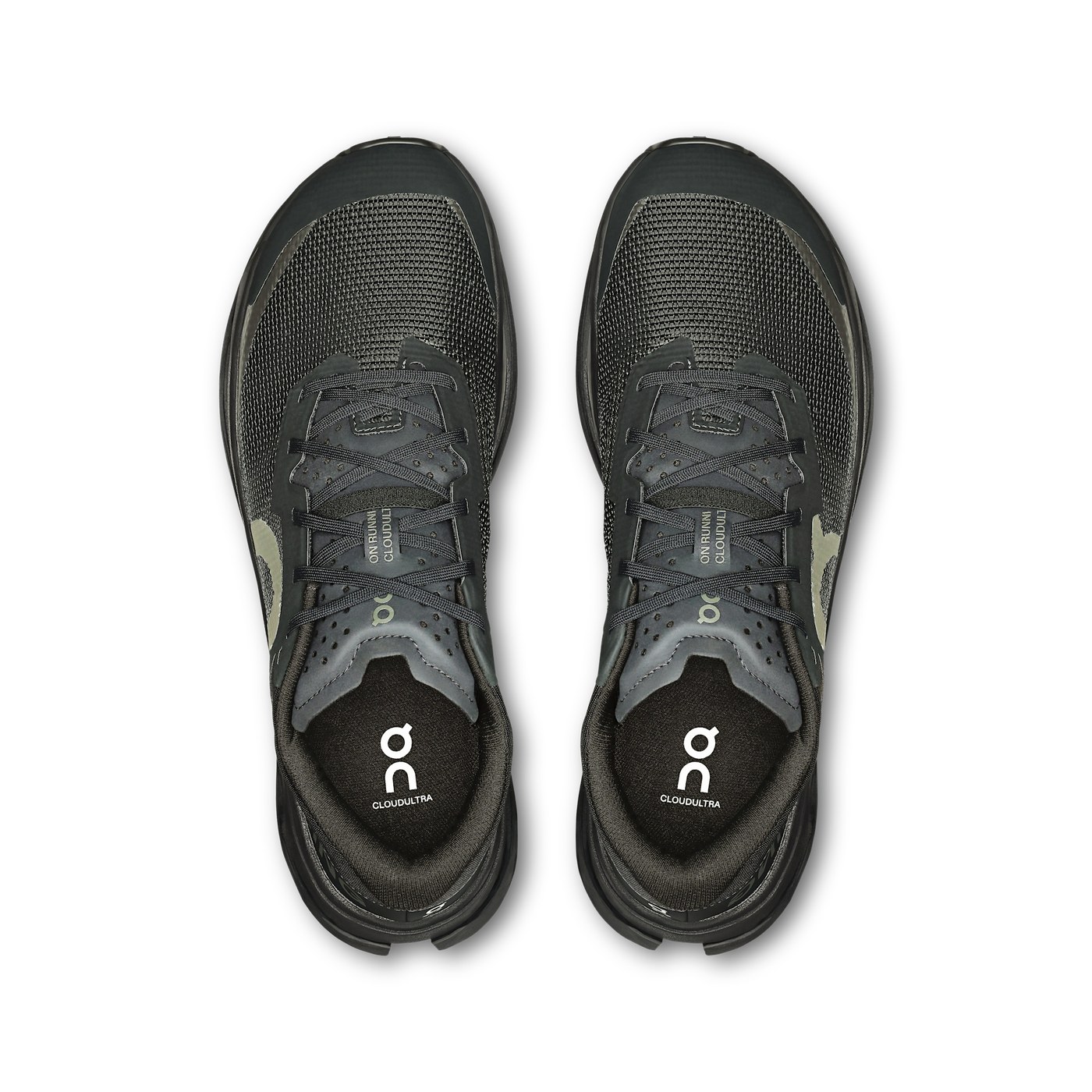
© On Running, official photo used for editorial purposes