Salomon sells the Aero Glide 4 as an eight-millimetre drop shoe. Independent lab measurements find eleven point seven. That gap of almost four millimetres is not a labelling footnote: it changes how the shoe lands under your foot, and it explains a good chunk of what people love or hate about this daily trainer with forty-one millimetres of foam under the heel.
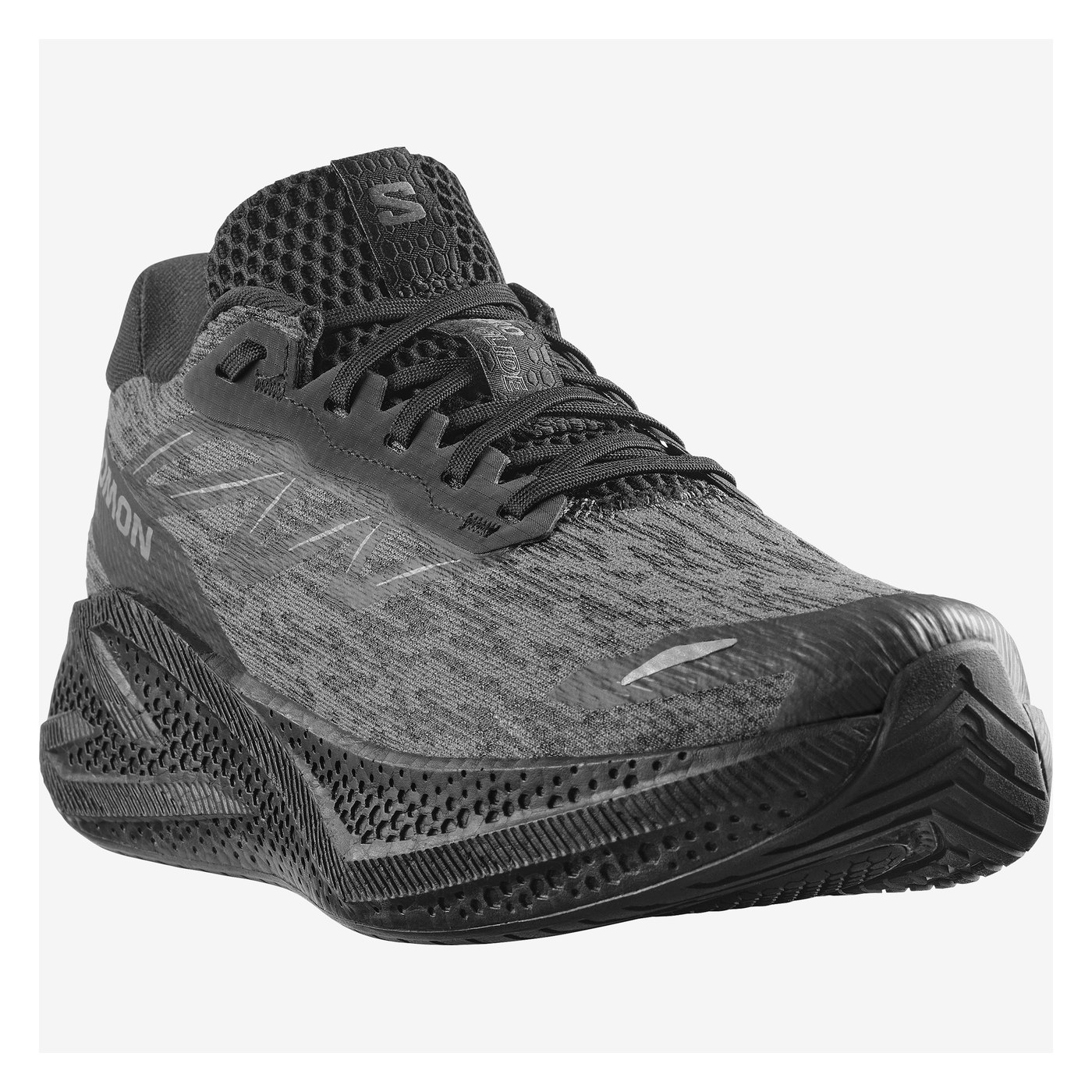
© Salomon, official photo used for editorial purposes
Salomon takes on the road: the Aero Glide 4 gamble
For years, Salomon built its reputation on scree fields and mountain passes, not on tarmac. The Annecy brand treated trail as its near-exclusive playground and left the road to Hoka, Brooks and Nike. The Aero Glide 4 changes that: the fourth generation of the line goes straight after the max-cushion daily trainer segment, the one where Hoka and Brooks have owned the best-seller charts for a decade.
The bet is clear. By bringing over its optiFOAM² foam, already used in its trail shoes, Salomon promises a rare compromise: thick cushioning without the weight that usually comes with it. Independent measurements back up part of that promise, with one big caveat on the shoe's actual geometry, which is a long way from the official spec sheet.
RunMorph's advice: before replacing your current training pair, compare the measured drop of the Aero Glide 4 with the one on your usual shoes. A gap of several millimetres with a Saucony Triumph 23 (10 mm) or a Brooks Ghost 18 calls for a gradual transition over two to three weeks.
Aero Glide 4: what Salomon claims vs what the lab measures
This is the heart of the matter. Independent measurement with lab calipers and a durometer gives numbers noticeably different from the ones Salomon publishes, and the biggest gap concerns exactly the element that drives how the stride feels: the drop.
| Metric | Salomon claim | Independently measured |
|---|
| Drop | 8.0 mm | 11.7 mm |
| Heel stack | 41.0 mm | 43.2 mm |
| Forefoot stack | 33.0 mm | 31.5 mm |
| Weight (EU 42) | 250 g (8.8 oz) | 255 g (9.0 oz) |
The drop gap (+3.7 mm, or 46% more than claimed) is not a rounding error. It comes from a heel that measures taller than advertised (43.2 mm vs 41 mm) combined with a slightly lower forefoot (31.5 mm vs 33 mm). The practical result: a shoe that rolls you forward more than advertised, good news for heel strikers, a red flag for midfoot or forefoot strikers counting on a flatter profile.
The fit: a forefoot that stays tapered despite the tweaks
Salomon pushes comfort with its inside-out construction, where seams and overlays sit on the outside of the mesh to avoid hot spots. On that front, feedback lines up: the fit feels soft on the foot, and the thin, well-padded tongue avoids squeezing the top of your foot.
Volume is a sharper story. The lab measures a forefoot width of 95.7 mm at the widest point, up from the previous version (92.8 mm), but a toe box width that stays at 71.2 mm, below the market average (73.2 mm). Vertical height, at 28.1 mm, is above average (27.1 mm) and leaves enough room so your toes are not pressed from above, even if width remains the sticking point. A wide foot, or one used to the generous toe boxes of Topo Athletic or Altra, will feel the difference from the first kilometres.
On the road: long runs and marathon pace, less convincing when you pick it up
Three independent sources were cross-checked for this section: a lab measurement protocol (impact, energy return, traction), a French field test run during a Rotterdam Marathon build with mixed use across easy runs and track intervals, and a second French test focused on everyday road running.
All three agree on one point: the cushioning soaks up fatigue very well over time. The Rotterdam Marathon test describes a shoe used for long easy runs as well as track intervals, praised for its versatility. The everyday-running test confirms the foam does not pack down over a two-and-a-half-hour run and keeps its properties from the first kilometre to the last, a point backed by the independent energy return measurement (72.2% at the heel, 73.2% at the forefoot, against an average of 58.7% across nearly 400 shoes tested).
Where they differ is finish and fit feel: one of the two French tests criticises the tongue shape, partly loose over its upper third with stitching judged average, while the other focuses mostly on heel hold and the width of the platform. At RunMorph, we read that split as a sign the shoe nails the fundamentals (cushioning, stability) while leaving some finishing details to improve, not as a disagreement on the overall quality of the product.
At which pace it works, at which pace it falls off
Easy runs and aerobic base: this is the shoe's home turf. The massive cushioning (152 units of shock absorption at the heel vs an average of 131) makes easy runs feel easy, with no unnecessary fatigue.
Long run: a very positive verdict, confirmed independently by the lab measurements and by both French field tests. The foam does not lose its properties after two and a half hours of continuous effort.
Marathon pace: a good compromise, carried by the "Daily running" sub-score of 91 out of 100 recorded in the lab. The real 11.7 mm drop helps an efficient heel-to-forefoot transition at steady pace.
Threshold and half marathon pace: more mixed. The "Tempo" sub-score tops out at 78 out of 100. The measured stiffness (18.3 N in flex, vs an average of 15.5 N) helps with propulsion, but the lack of an aggressive rocker limits the feeling of speed at this pace.
Short intervals: the openly weak spot. The "Race" sub-score drops to 58 out of 100, and the narrow forefoot combined with the high drop does not lend itself to sharp changes of pace. For this kind of session, a lower-drop shoe like the Adidas Adizero EVO SL is a better fit.
Major flaw: a measured drop 46% above the claim
This is not just a spec sheet discrepancy. A real drop of 11.7 mm instead of 8 mm changes stride biomechanics: more load on the heel and less on the Achilles tendon, but also less natural incentive to roll through to the forefoot. For a runner who specifically picks a low drop to strengthen the posterior chain or to ease patellar tendon pain, the gap changes the very nature of the purchase. RunMorph's recommendation: do not trust the marketing sheet alone on this model, and treat the shoe as a mid-to-high drop option, not a low-drop one.
Major flaw: an outsole that wears faster than average
The lab Dremel test measures 1.4 mm of damage on the Road ContaGRIP rubber, against an average of 1.1 mm across more than 400 shoes compared. The toe box gets a durability score of just 2 out of 5, despite a TPU reinforcement carried over from trail. Salomon partly makes up for it with a thicker-than-average outsole (3.8 mm vs 3.1 mm), which should limit the impact on total lifespan, but the signal is clear: this is not the most durable shoe in its category.
Aero Glide 4 vs Aero Glide 3: worth the upgrade?
| Aero Glide 3 | Aero Glide 4 |
|---|
| Energy return | Around 65% | 72.2% / 73.2% |
| Foam firmness (AC durometer) | 40.0 AC | 38.5 AC |
| Measured forefoot width | 92.8 mm | 95.7 mm |
| Fit | Very narrow, a frequent complaint | Wider but still tapered |
The answer is clear: if you own an Aero Glide 3 and want more pop, upgrade, the energy return gain is too big to ignore. If the narrow fit of version 3 never bothered you, there is no pressing reason to switch before your current pair is worn out.
Aero Glide 4 vs Saucony Triumph 23 and Nike Vomero Plus: the comparison
| Aero Glide 4 | Triumph 23 | Vomero Plus |
|---|
| Price | 160 € | 170 € | 180 € |
| Measured weight | 255 g | 272 g | 289 g |
| Measured drop | 11.7 mm | 10.0 mm | 9.6 mm |
| Energy return | High | High | High |
| Forefoot width | Average, narrow toe box | Average | Average |
The short version: the Aero Glide 4 is the lightest and cheapest of the three, with the best measured energy return of the trio. The Triumph 23 remains the most versatile pick for a wider foot. The Vomero Plus aims higher on price with softer foam, at the cost of 34 g more weight. On a tight budget and with a heel strike, the Aero Glide 4 wins on value for money.
Grip and durability: what does it cost per kilometre?
At 160 euros and with outsole durability measured slightly below average, RunMorph estimates a reasonable lifespan of 500 to 600 km before a noticeable loss of cushioning and grip, compared with the 700 to 800 km usually seen on a more durable daily trainer like the Brooks Ghost 18 (150 euros). That works out to about 0.29 euro per kilometre for the Aero Glide 4, versus about 0.19 euro for the Ghost 18. Traction remains a strong point regardless of wear: 0.65 on the wet concrete grip test, against an average of 0.52, enough to reassure you on rainy runs.
Our take from the road: who is it really for?
Three profiles clearly stand out from the combined observations. First, the marathoner or half marathoner in a build looking for a long-run shoe that can soak up volume without punishing the joints. Second, the beginner runner who puts protection ahead of pure performance and has no strong biomechanical sensitivity to drop yet. Finally, the runner in active recovery after an injury, for whom massive cushioning and stability matter more than pure pop.
On the flip side, forefoot strikers bothered by a high drop and wide feet cramped in a tapered toe box should look elsewhere: the Triumph 23 for volume, or the EVO SL for a lower, snappier profile.
RunMorph Coach verdict
The Salomon Aero Glide 4 earns its place among the best max-cushion daily trainers of 2026, with measured energy return that rivals far more expensive shoes. The overall score of 9.2/10 reflects a weighting that favours cushioning and responsiveness, the two qualities that define this type of shoe, over the more modest outsole durability. The gap between claimed and measured drop is what deserves the most attention before you buy: it does not call the product's quality into question, but it does change the marketing promise. Bought with your eyes open, the Aero Glide 4 is excellent value in the max-cushion segment.
FAQ
Is the Salomon Aero Glide 4 drop really 8 mm?
No. Salomon claims 8 mm, but an independent lab measurement records 11.7 mm, 46% more than the official figure.
How much does the Salomon Aero Glide 4 actually weigh?
255 g in EU size 42 according to independent measurement, against the 250 g claimed by Salomon, a 5 g gap with no practical impact.
Is the Salomon Aero Glide 4 good for short intervals?
Not really: its "Race" sub-score only reaches 58 out of 100 in the lab, against 91 out of 100 for everyday running.
How long does the Salomon Aero Glide 4 outsole last?
RunMorph estimates 500 to 600 km, below the 700 to 800 km of a more durable daily trainer like the Brooks Ghost 18.