Some shoes chase trends. Then there's the Salomon XA Pro 3D. Launched in the early 2000s, it was there when trail running was born in France, it has kitted out generations of fast hikers and it has outlived every fad. The ninth generation, on sale since 2023 and still in the catalogue in 2026 at 150 euros, has no interest in becoming a PB machine: it owns its tank profile, stable, protective, close to indestructible. At RunMorph, we checked the official specs against independent lab measurements and hundreds of reviews from French runners to find out whether this legend still deserves a spot in your shoe rack.
Salomon XA Pro 3D V9 review: the full test
7.2/10
- Outstanding stability: torsion all but locked out, footing always secure on descents and under load.
- Maximum protection: rock plate, nearly indestructible upper, very precise SensiFit lockdown.
- Record outsole durability: less than a millimetre of wear in the standard test.
The essentials in 3 sentences
The Salomon XA Pro 3D V9 is a fortress for the trails: a 3D chassis that all but locks out torsion, a full rock plate, an ultra-protective SensiFit upper and a Contagrip outsole that shrugs off more than 600 kilometres without flinching. The price: 346 g on the scale, a firm EnergyCell+ foam and cushioning that gives nothing away to anyone hunting for sensations. This is the shoe for fast hiking, easy all-season trail running and outings where safety matters more than speed.
7.2
/ 10 · RunMorph overall score
Who is it for?The fast hiker, the beginner trail runner or the weekend runner who wants a stable, protective shoe for easy to moderate trails, two or three outings a week, all year round.
Who should skip it?The racer looking for a lively pair to chase the clock, the technical runner on broken, muddy trails, or the runner who wants plush cushioning to stack up the miles.
Salomon XA Pro 3D V9: the trail pioneer owns its tank profile
XA stands for "X Adventure". Right from launch, the XA Pro 3D staked out ground nobody else held yet: running in the mountains with the protection of a hiking shoe and the agility of a running shoe. More than twenty years later, the line is still one of Salomon's best sellers in France, and the V9, released in 2023, carries on the mission with zero interest in winning over fans of carbon plates and oversized foams.
The positioning is unapologetic: rough terrain and mountains, mixed trail running and hiking, regular outings at moderate pace. The V9 actually shed a few grams compared with the V8 and gained forefoot flexibility, but it stays true to its DNA: an armoured shoe built around the 3D Advanced Chassis, the TPU piece set between the outsole and the foam that locks out torsion and protects the arch. Made in Vietnam, it sells for 150 euros in the standard version and 170 euros in Gore-Tex, and it also comes in a Wide fit.
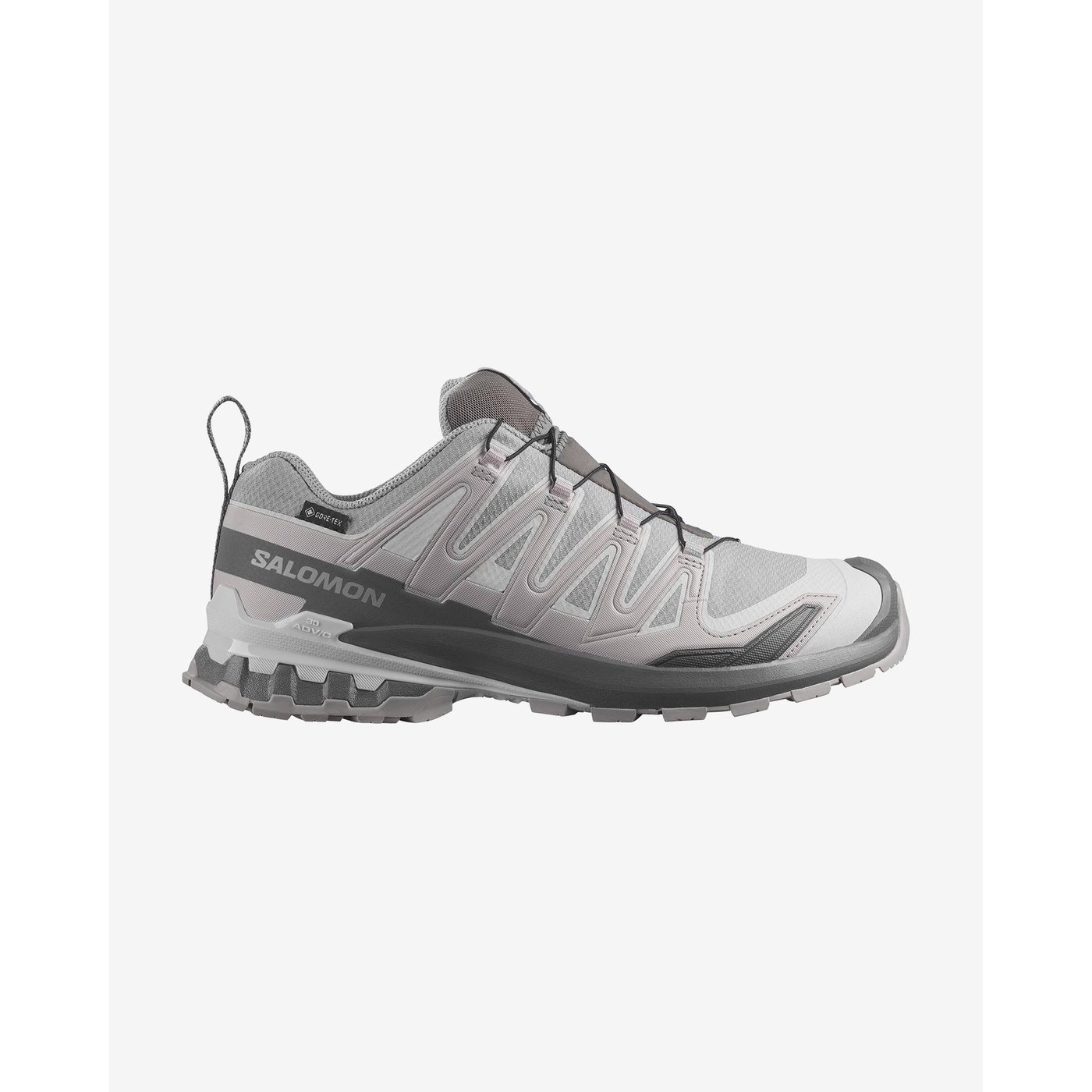
© Salomon, official photo used for editorial purposes
RunMorph's advice: before you fall for the legend, define your terrain. If you run in deep mud or on greasy ground, the Salomon Speedcross 6 and its 5 mm lugs will do better. If you want a more versatile Salomon for running, the Salomon Genesis is livelier. And if your wish list mixes long runs and comfort, compare it with the Brooks Cascadia 20.
Objective technical data: claimed vs measured
| Spec | Claimed by Salomon | Measured in an independent lab |
|---|---|---|
| Weight (men's reference size) | 323 g | 346 g (+7 %) |
| Heel / forefoot drop | 11 mm | 12.5 mm (31.7 mm / 19.2 mm) |
| Stack height | 29 mm / 17 mm | 31.7 mm / 19.2 mm |
| Foam | EnergyCell+ (EVA) | Firmness 31.0 HA, clearly firmer than average |
| Protection plate | Full rock plate | Confirmed, upper rated 5/5 for abrasion durability |
| Outsole | All Terrain Contagrip | 2.8 mm lugs, 0.8 mm of wear measured in the standard test |
| Torsional rigidity | 3D Advanced Chassis | 5/5, the highest possible score |
| Heel hold | Structured heel counter | Stiffness 4/5, but fragile padding (2/5 for durability) |
| Breathability | Reinforced mesh upper | 4/5 in the standard version, a pleasant surprise at this level of protection |
| Forefoot flexibility | Not disclosed | 23.8 N of force needed, stiff sole |
| Measured width | Standard fit (Wide version available) | 98.4 mm at the widest point, toebox narrowing to 73.2 mm |
| Price | 150 € (GTX: 170 €) | Seen from around 100 to 122 € at French retailers |
Two gaps deserve your attention. First, weight: 23 g more than claimed on the lab scale, a difference you feel when you string climbs together. Second, drop: 12.5 mm measured against 11 mm claimed, with an overall thicker sole than the spec sheet says. Nothing dramatic, but if you're aiming for a gentle transition to a lower drop, count one notch higher than planned. On the flip side, durability lives up to the reputation: less than a millimetre of rubber lost in the standard abrasion test, where the market average goes past a millimetre. The XA Pro 3D V9 ages slowly, and that's one of its biggest selling points.
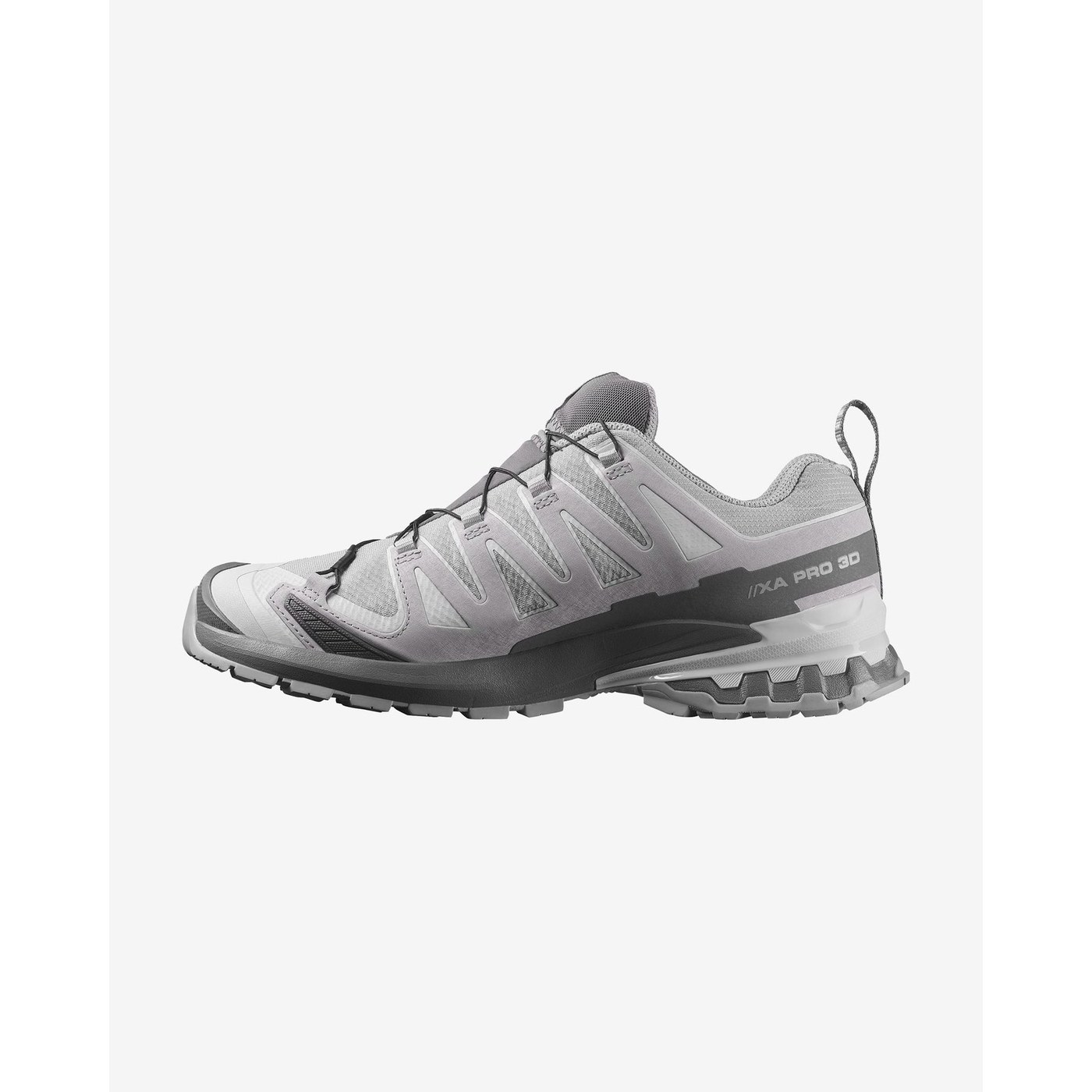
© Salomon, official photo used for editorial purposes
On the trail: a stable fortress that isn't chasing seconds
Let's get this straight right away: the XA Pro 3D V9 is not a running shoe in the racing sense. Its natural habitat is the one to three hour outing on forest trails, rocky paths and not-too-technical singletrack, at paces between 5:45 and 7:00 per km, or fast hiking with a pack on your back. In that setting, it's remarkably calm. The 3D chassis works wonders on descents: the shoe never twists, your foot stays flat even on off-camber footing, and the rock plate neutralises sharp stones. The SensiFit system and the Quicklace laces, tucked into their pocket on the tongue, lock down the midfoot with a precision few rivals can match.
But as soon as you speed up or the terrain gets tricky, the limits show. The EnergyCell+ foam, measured clearly firmer than the average modern trail shoe, makes every impact a little harsh: on fast downhill sequences or runs past two hours, your legs absorb what the shoe doesn't filter. The 2.8 mm lugs, perfect on dry ground, rocks and hardpack, quickly run out of answers in deep mud or wet grass. And at 346 g, you don't dance over the rocks: you move forward, steadily, like in a 4x4. That's exactly what its fans love about it, and exactly what racers hold against it.
Two longevity details to know before you buy. The upper is nearly indestructible (top score for abrasion in the lab), but the nearly 10 mm thick tongue needs a few break-in runs before you forget it's there. More importantly, the heel padding is the measured weak point of this generation: its durability is rated 2/5, which means collar comfort can wear out long before the outsole if you run a lot. French user reviews confirm that the collar goes first, well before the outsole. One last practical point: no reflective elements at all, so keep that in mind for night runs.
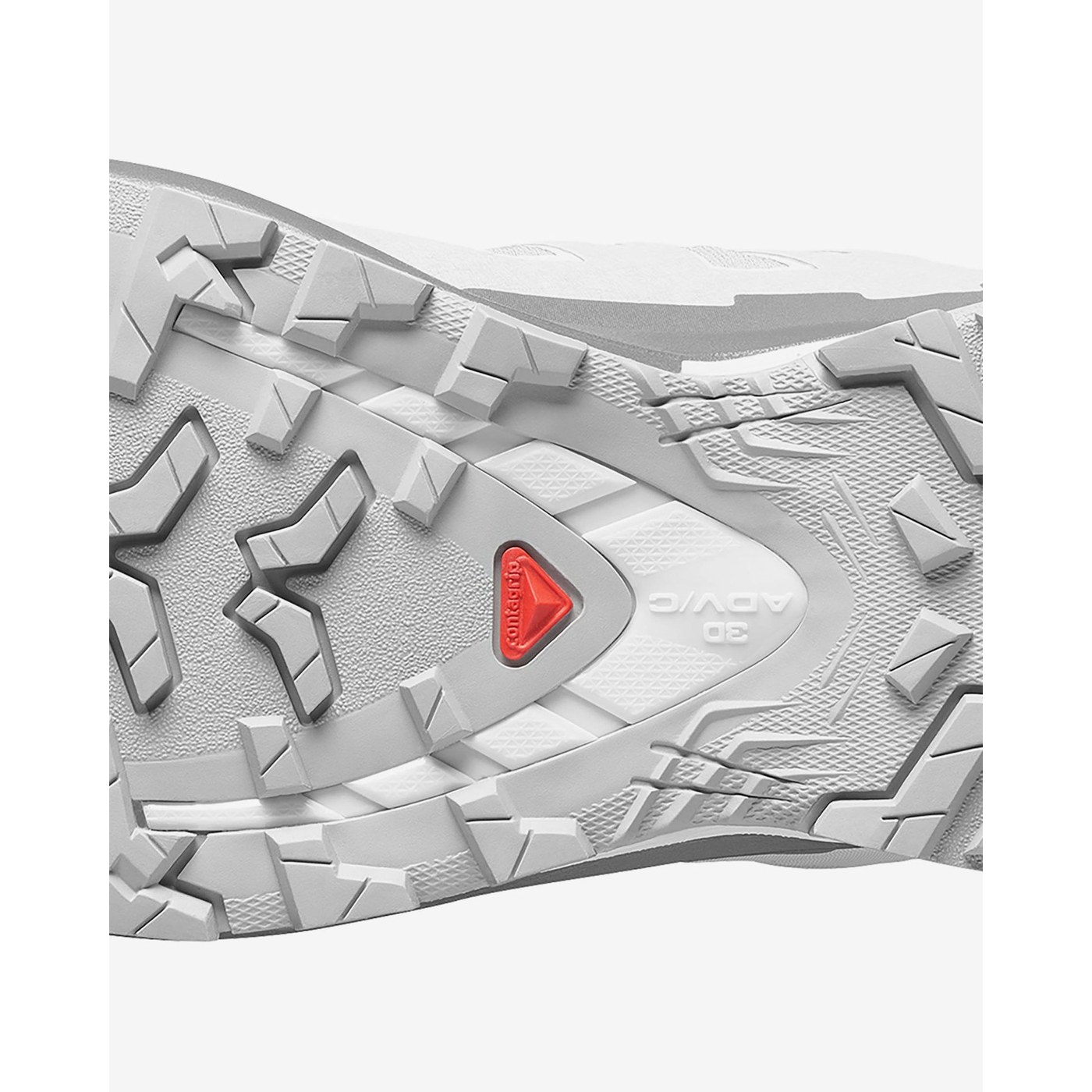
© Salomon, official photo used for editorial purposes
Standard, Gore-Tex or Wide: which version should you pick?
Salomon offers the V9 in three families, and the choice matters more than the colour. The standard version, 346 g measured and 150 euros, breathes best: its 4/5 ventilation score is a real surprise for such an armoured shoe, and it's the one we recommend from April to October. The Gore-Tex version goes up to 170 euros and around 350 g measured, meaning roughly 30 to 50 g extra depending on the weighing, in exchange for a membrane that keeps your feet dry in slush, wet grass and stream crossings. It's a seasonal call: GTX from November to March if you head out in foul weather, standard the rest of the year to keep your feet cool.
On fit, the standard last is generous through the midfoot (98.4 mm measured, wider than average) but the front of the toebox narrows noticeably: very wide feet or toes that like to splay will prefer the Wide version, sold at around 338 g and also available in Gore-Tex. Either way, sizing is true: take your usual size, maybe half a size up if you're planning long hikes with repeated descents.
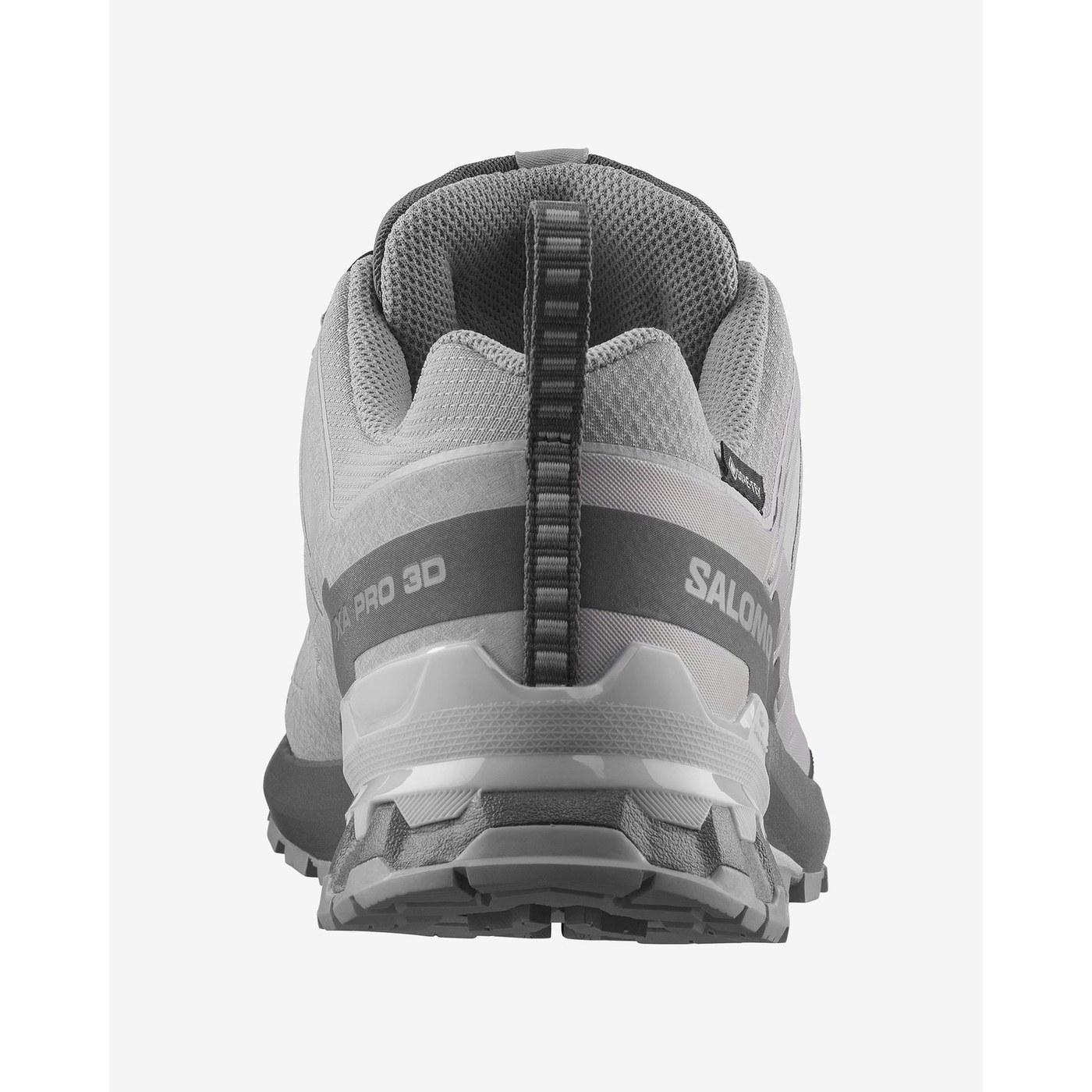
© Salomon, official photo used for editorial purposes
What the V9 does really well
- Outstanding stability: torsion all but locked out, footing always secure on descents and under load.
- Maximum protection: rock plate, nearly indestructible upper, very precise SensiFit lockdown.
- Record outsole durability: less than a millimetre of wear in the standard test.
- Trail and hiking versatility, with well-thought-out GTX and Wide versions.
- Reasonable price and frequent deals under 120 euros.
Its real limits
- 346 g measured, far from modern trail shoes: you feel it on the climbs.
- Firm, direct cushioning: little filtering over long distances or at speed.
- 2.8 mm lugs: not enough in deep mud and wet grass.
- Fragile heel padding: the first identified wear point.
- Real drop of 12.5 mm, higher than claimed: factor it into your transition.
Who is it for?
The fast hiker and the active walker
This is its historic profile. You walk fast, you jog the runnable sections, you sometimes carry a pack, you want zero sprained ankles and zero stones under your sole: the XA Pro 3D V9 is literally built for you. The chassis, the rock plate and the lockdown turn technical trails into a reassuring motorway, and the outsole will last several seasons.
The beginner or cautious trail runner
First trail race, comeback after injury, mostly easy to moderate terrain: the V9's stability acts like a safety net. It forgives sloppy foot placement, protects you from misplaced steps and doesn't care about conditions. At two or three runs a week over distances under 20 kilometres, it's a companion that never lets you down.
The four-season runner who wants one reliable pair
If your budget only allows one pair for everything (an easy run on dirt paths on Tuesday, a hike on Sunday, a rainy outing in November), the V9 in standard or GTX ticks every practical box. It isn't the most comfortable or the fastest, but it's the one that will still be around in three years.
Salomon XA Pro 3D V9 vs Speedcross 6 vs Brooks Cascadia 20: the comparison
| Criterion | XA Pro 3D V9 | Speedcross 6 | Cascadia 20 |
|---|---|---|---|
| Measured weight | 346 g | About 298 g | About 295 g |
| Measured drop | 12.5 mm | 10 mm | 8 mm |
| Lugs | 2.8 mm, all-round | 5 mm, built for mud | 4 mm, all-round |
| Torsional stability | 5/5, the benchmark | Good | Very good (Ballistic Rock Shield chassis) |
| Cushioning | Firm, direct | Firm to balanced | Softer and more forgiving |
| Ideal terrain | Hard, rocky trails, fast hiking | Mud, slick and soft ground | Long distances, ultra, versatility |
| Price | 150 € | 140 € | 140 € |
The comparison's verdict is crystal clear: against the Speedcross 6, the XA Pro 3D V9 wins on stability on dry ground, protection and durability, but carries 50 g more and loses a lot of bite in the slop. Against the Brooks Cascadia 20, it offers better lockdown and a tougher upper, but the Cascadia is lighter, more flexible and far more comfortable over long distances. If your programme includes ultras or long runs, the Trabuco Max 5 and its max cushioning will serve you better. The V9 remains the pick for pure toughness and mixed running and hiking.
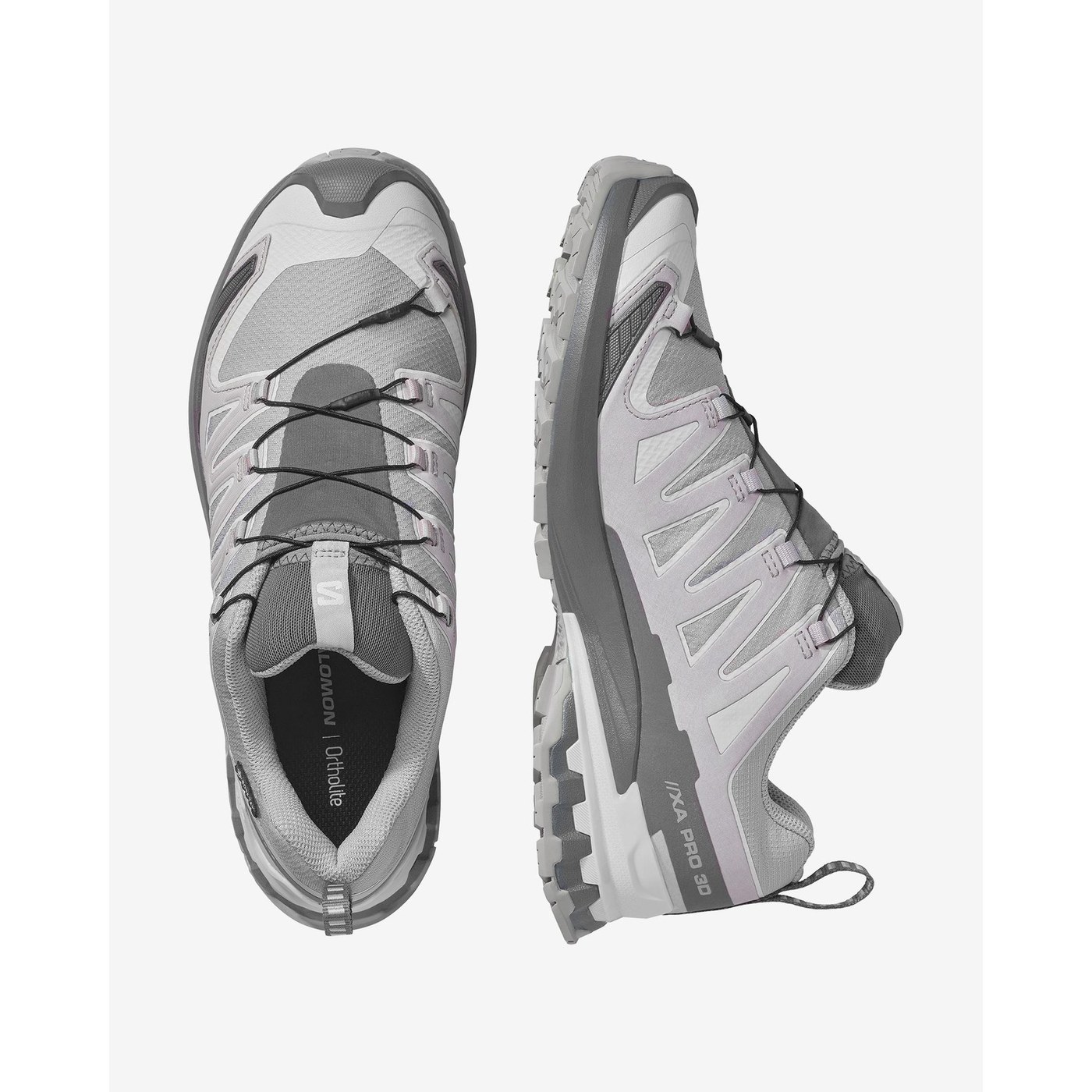
© Salomon, official photo used for editorial purposes
How to fit it into your RunMorph training plan
At RunMorph, we see the XA Pro 3D V9 as the shoe for base-building and recovery sessions. Easy long runs on rolling terrain, slow hill sessions where stability matters more than bounce, recovery weeks after a load peak: that's where it earns its keep, protecting your footing when fatigue sets in. Its real 12.5 mm drop also makes it an ally if you're coming back from Achilles tendon trouble, since the heel height takes strain off the posterior chain.
On the other hand, keep it away from your quality sessions: threshold, intervals, race-pace work. Its weight and stiffness would mask your feel and weigh down your stride. The ideal setup is to pair it with a livelier shoe for fast days and save it for the runs where you want to come home in one piece. In your RunMorph training plan, the easy aerobic sessions and weekend long runs are the perfect slot to get your money's worth.
The RunMorph Coach's verdict
The Salomon XA Pro 3D V9 is not the best trail shoe on the market, and it doesn't pretend to be. It's the safest: the one you lace up without thinking when the terrain is uncertain, the weather iffy or your legs tired. Its stability is the best we've come across in this segment, its protection is total, and its outsole outlasts most rivals. It pays for that armour with serious weight, harsh cushioning and grip that stays sensibly all-round rather than specialist. For fast hiking, easy all-season trail running and practical use two or three times a week, it's a safe bet, especially under 120 euros on sale. For racing, mud or long distances at running pace, look elsewhere. RunMorph score: 7.2/10.
Key takeaways for your training
- 346 g measured and a real 12.5 mm drop: the V9 is a tank, so schedule it for your easy runs, not your fast sessions.
- Maximum torsional stability and a full rock plate: the number one choice for fast hiking and rocky trails.
- 2.8 mm lugs: perfect on dry ground and hardpack, avoid it in deep mud.
- Near-indestructible outsole, but fragile heel padding: keep an eye on the collar after 400 kilometres.
- Standard for the warm season, Gore-Tex for winter, Wide if you have wide feet: three versions, one chassis.