Scott RC Pro TR' 10 Review: Ultralight 10 L Vest, One Real Flaw
7.3/10
✓One of the lowest weights in the 10 L segment (138 to 146 g depending on the retailer)
✓Very complete layout: 4 front pockets, tunnel pocket, back compartment, quiver loops
✓2 HydraPak 500 ml soft flasks included with purchase
✗Flask sleeves too soft once full: a flaw flagged independently by all three testers we consulted
Scott has sold trail vests in France for more than ten years, through every major specialist retailer (i-Run, Snowleader, Hardloop, Alpiniste). Yet no serious independent French review of its current range exists. The RC Pro TR' 10, the Swiss brand's flagship 10 L vest, keeps collecting user reviews on Outzer (average score 7.3/10 across three reviews) without ever getting a structured analysis. RunMorph fills that gap with the model Scott aims at trail runners targeting middle and long distances.
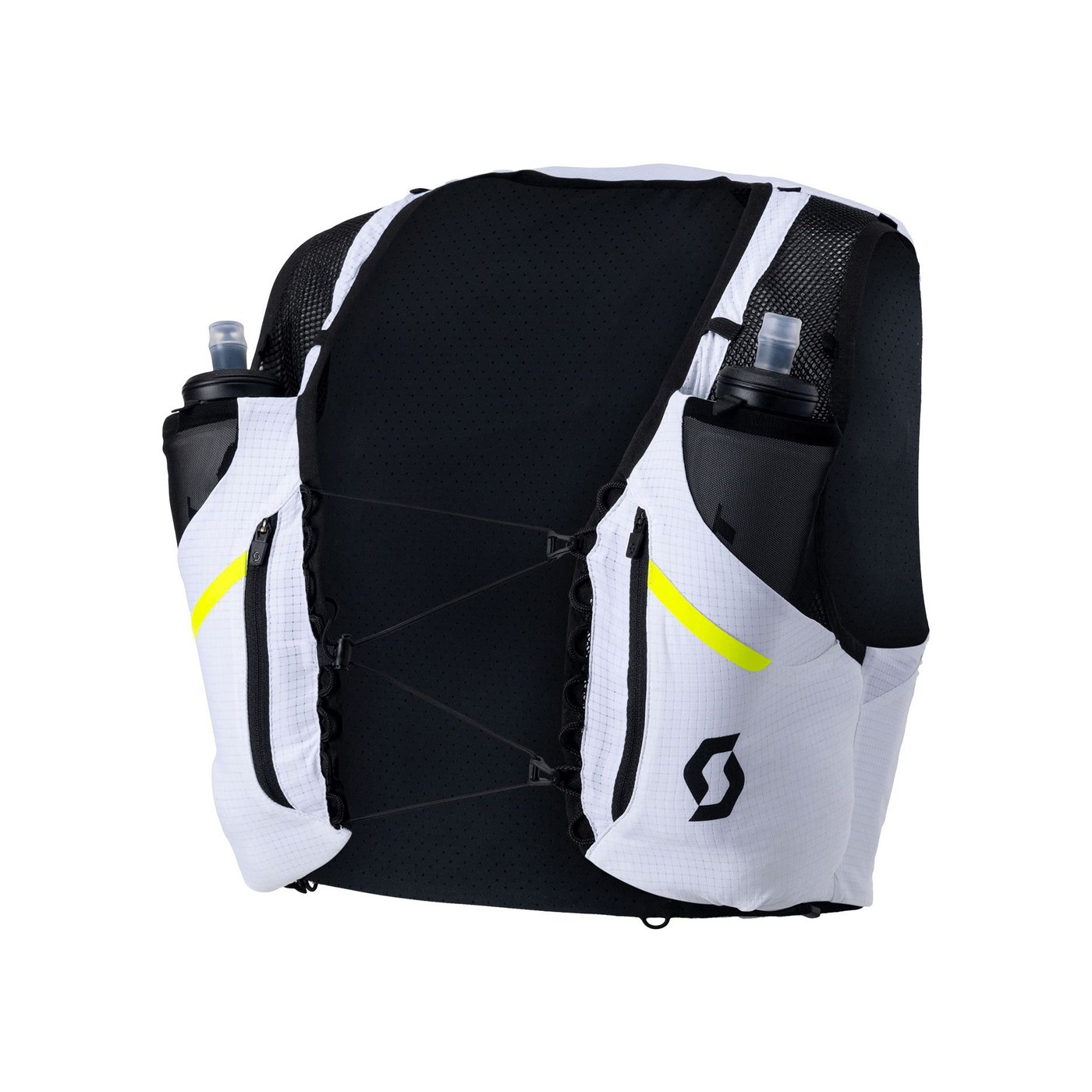
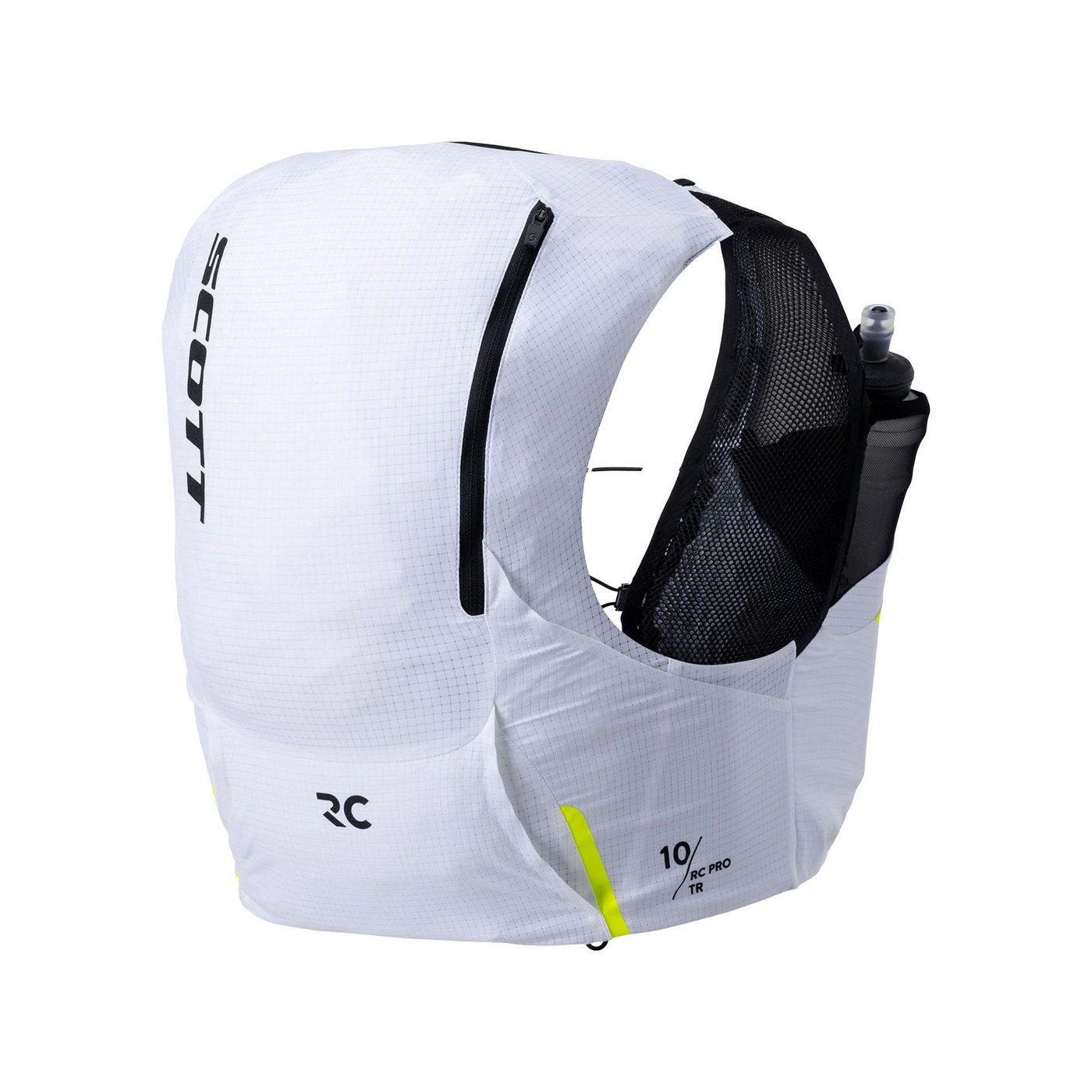
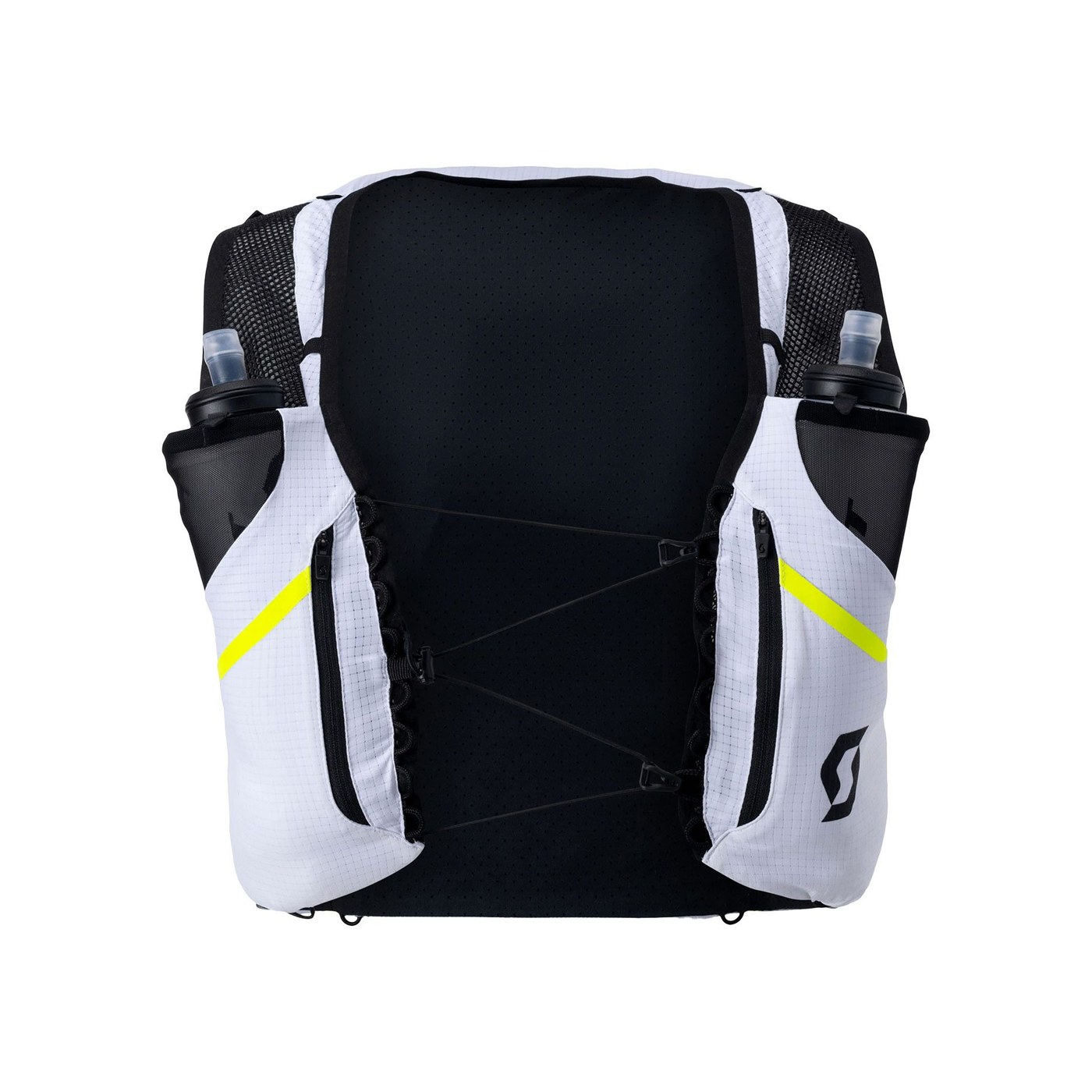
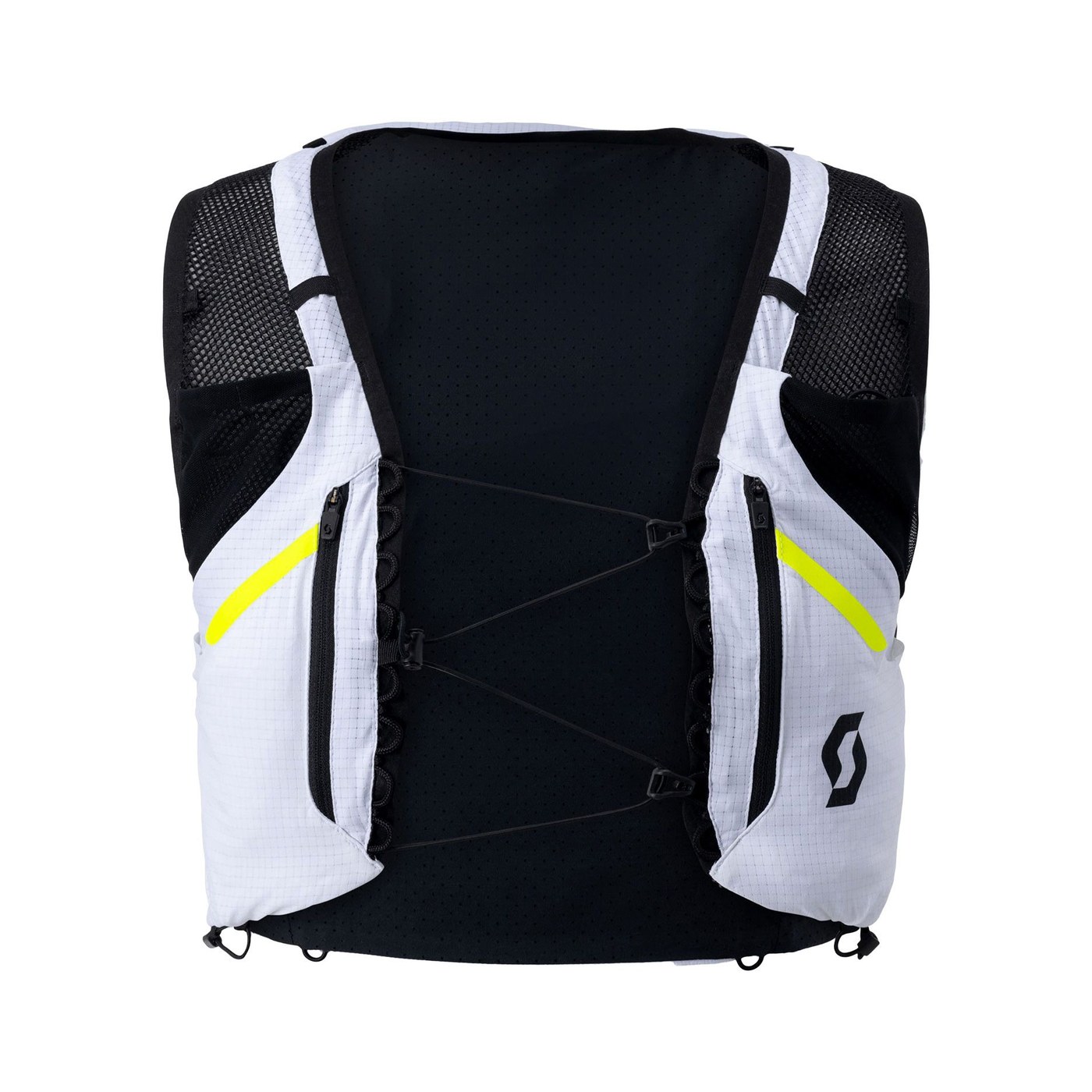
The Scott RC Pro TR' 10 is an ultralight 10 L running vest (138 to 146 g depending on the source, since the brand publishes no single official figure) built for outings of 2 to 8 hours. It stacks up storage (4 front pockets, a tunnel pocket, a waterproof back compartment) and fits remarkably well as long as you pick the right size, but the same weakness comes up in all three real-world reviews we read: the soft flask sleeves and the pole holder don't hold gear securely enough on technical descents. The promise of a vest that is both complete and light holds up overall, with one concrete caveat you need to know before buying.
7.5
/ 10 · RunMorph overall score
Comfort/stability
7.5 / 10
Capacity
8 / 10
Accessibility
6 / 10
Hydration
7 / 10
Value for money
7.5 / 10
Who is it for?Runners who want a very light 10 L vest for outings of 2 to 8 hours, from short trail races to long training runs, and who don't mind securing the soft flasks themselves with a simple accessory.
Who should skip it?Ultra runners who cover 60 to 100 km or more fully self-supported on technical terrain, or who want a pole holder that works reliably straight out of the box, with zero DIY fixes.
Scott, the Swiss giant that never broke through in French vest reviews
Scott is no stranger to trail running. The Fribourg-based brand has equipped elite runners for years with its Kinabalu and Supertrac shoes, which get plenty of coverage on French specialist sites. Vests are another story. Despite an RC range built over more than a decade (the old Trail RC TR' 10, recently replaced by the current RC Pro TR' 10), no leading French trail outlet has published a structured, data-backed review of the product. That gap is all the more surprising because the vest is stocked by nearly every major French retailer: i-Run, Snowleader, Hardloop, Alpiniste, Sportega, Precisionski. The only consolidated public feedback comes from the Outzer community, with three independent reviews and an average score of 7.3/10.
The "Pro" label deserves scrutiny before you buy. A vest billed as a benchmark for long distances has to deliver on accessibility on the move, not just on the scale. That is exactly the issue real users raise most often, and RunMorph documents it in detail below instead of simply repeating the product sheet.
On price, the RC Pro TR' 10 lists at 149.90 euros, but French retailers regularly sell it for 110 to 135 euros at the time of writing. That puts it closer to the mid-range segment than to the true high end.
Scott RC Pro TR' 10 specs: what the brand claims
Brand
Scott
Model
RC Pro TR' 10 (replaces the Trail RC TR' 10)
Volume
10 liters
Claimed weight
138 to 146 g depending on the retailer (no single official figure published by the brand)
Available sizes
S/M, M/L, L/XL
Front pockets
4 front pockets including 2 zippered, 2 stretch sleeves for soft flasks
Hydration bladder compatible
Yes, dedicated zippered back compartment (bladder not included)
Soft flasks included
2 HydraPak 500 ml soft flasks included
Fabric
Perforated stretch mesh and lightweight ripstop
Compression
Removable, adjustable sternum strap, cross lacing at the lower back
Pole holder
Vertical system + quiver loops
Reflective details
Yes, fluorescent yellow/reflective strips
UTMB mandatory gear compatible
Yes with an added hydration bladder, built-in whistle
Official price
149.90 euros (seen at 110 to 135 euros at French retailers)
RC Pro TR' 10 technology: what difference does it make on your back?
The RC Pro TR' 10 relies on a perforated stretch mesh that covers the entire back panel and a good part of the shoulder straps. In practice, you feel air moving from the very first strides, even over a technical shirt. The cross lacing at the lower back, visible on the front pockets, lets you adjust the vest's volume to your load: fully open at 10 L for a long run, cinched down for a two-hour outing with little gear.
The sternum strap is removable and adjustable, a detail that matters for slim builds and, at the other end, for broader frames. The zippered back compartment takes a hydration bladder (not included), while the tunnel pocket with dual access lets you stash a jacket or windbreaker without opening the whole pack. For immediate hydration, the two 500 ml HydraPak soft flasks come included and sit in stretch sleeves at the front.
The vertical pole holder and quiver loops answer the needs of trail runners who switch between running and carrying poles on steep sections. On paper, the feature set is complete: a built-in whistle for race mandatory gear, reflective strips, secure zippered pockets for valuables. That's a dense feature list for a vest under 150 g.
Field test: what real users report over 40 to 80 km
RunMorph read all three independent reviews of the RC Pro TR' 10 published by the Outzer community, the only French source offering detailed, data-backed user feedback on this exact model. No other French trail outlet has published a structured review of the product to date. We flag that explicitly here rather than present a summary that would suggest broader coverage than actually exists.
The first tester, an advanced 75 kg runner who bought the vest online for 110 euros, used it for a year on every type of terrain, including the UT4M 80 km challenge. His verdict: the vest hugs the back well, the compression straps do their job, and the built-in whistle ticks a welcome regulatory box. But he points to a concrete, measurable flaw: the soft flask sleeves don't grip tightly enough once the flasks are full, to the point that he had to add cord locks himself to keep them from falling out on technical descents. He also calls the pole holder's fastening system "a bit flimsy".
The second tester, a 77 kg trail runner who ran the 2024 Traversée des Dentelles with this vest, confirms its overall stability ("very effective and practical, doesn't bounce all over the place"), provided you get the right size. His only complaint matches the first tester's exactly: the flask sleeves don't hold gear securely enough once full, which forced him, too, to rig up a makeshift cord lock.
The third tester, younger (25 years old, 73 kg), who paid 120 euros for the vest in store, confirms its lightness and build quality ("doesn't wear out quickly"), but delivers the harshest criticism on accessibility. The pole holder, mounted low on the pack, interfered with his stride, and the flask pockets were too small, so he had to knot the drawcord to stop the flasks from moving around too much. His conclusion clashes with the first tester's: he sees the vest as a good fit for a beginner or for races of 40 to 50 km, but not optimized for longer distances.
RunMorph's advice: when all three reviews converge on one and the same issue (flask retention), that's no statistical fluke. It's a genuine design flaw you should plan for. Spending a few euros on cord locks or extra elastic fixes the problem from your very first run, before your first long run even comes around. Compare it with the Salomon ADV Skin 5, whose flask system holds much better out of the box.
The split between the first tester (a successful 80 km ultra) and the third (recommendation limited to 40-50 km) deserves to be named, not smoothed over. At RunMorph, we put this split down mainly to terrain profile and how carefully the vest is set up at the start. Properly adjusted and reinforced with extra retention, the RC Pro TR' 10 handles a standard ultra distance. Used as delivered with no adjustment, it shows its limits as soon as the terrain turns technical and the flasks are full.
Comfort and bounce: how stable is the RC Pro TR' 10?
Once you've picked the right size, the vest hugs the rib cage well, a point two of the three testers highlighted independently. The perforated fabric limits overheating even on summer runs, which the third tester confirmed after using it during a heat wave. The removable sternum strap allows fine-tuning, useful for body types that don't fit the standard template of a unisex vest.
Compartments and hydration: dense organization with room to improve
With 4 front pockets (2 of them zippered), a dual-access tunnel pocket, a zippered back compartment that takes a hydration bladder, and quiver loops, the RC Pro TR' 10 offers a very complete layout for a 10 L vest. That's a real strength against more minimalist rivals of the same volume. The two included 500 ml HydraPak soft flasks save you an immediate extra purchase, a strong value-for-money argument against vests sold without flasks.
The drawback is the same one identified in the field test: the flask compartments, too soft once full, don't hold gear securely enough on descents. It's an accessibility flaw more than a capacity one, which explains the harsher score on that specific criterion in the rating card above.
Scott RC Pro TR' 10 vs the competition: the comparison
Weight not disclosed by the brand, no hydration bladder included
More limited storage capacity
The RC Pro TR' 10 sits between the two: lighter and better equipped out of the box than the The North Face Summit Run 10L, but less minimalist and cheaper than the Compressport Ultrun Evo 10 V2. Its main asset remains the ratio of storage to claimed weight, rarely matched at this price.
One of the lowest weights in the 10 L segment (138 to 146 g depending on the retailer)
Very complete layout: 4 front pockets, tunnel pocket, back compartment, quiver loops
2 HydraPak 500 ml soft flasks included with purchase
Perforated mesh fabric that limits overheating, confirmed by one tester in heat wave conditions
Good overall stability once you pick the right size, with an adjustable sternum strap
Cons
Flask sleeves too soft once full: a flaw flagged independently by all three testers we consulted
Pole holder judged impractical, even a hindrance while running, by one tester out of three
No single official weight from the brand, with an 8 g gap between sources
Hydration bladder not included despite an official price close to 150 euros
Our field verdict: who is it for?
The RC Pro TR' 10 is a perfect match for runners preparing a short or mid-distance trail race, a technical half marathon or a long run of several hours, who put lightness first without giving up storage. The runner who'll get the most out of it is the one willing to spend a few euros on extra flask retention from the very first outing, rather than discovering the problem mid-race.
On the other hand, trail runners targeting an ultra of more than 80 km on very technical terrain, with multiple flask swaps and heavy use of the pole holder, will likely get more peace of mind from a vest whose retention system works out of the box, no DIY required.
This kind of vest fits naturally into preparation for a short trail race, an off-road half marathon or a weekend long run. To structure those runs with gradually increasing volume and intensity instead of going by feel, RunMorph training plans include weeks dedicated to the long run and trail pace, with the right gear for each phase of your build.
RunMorph Coach verdict
The Scott RC Pro TR' 10 deserves a close look from any runner shopping for a light, well-equipped 10 L vest, as long as you know its one real flaw before buying: flask and pole retention, flagged independently by each of the three testers we consulted. It's not an isolated detail. It's a design issue you need to fix from day one with a simple accessory. Once that fix is in place, the vest delivers on comfort, breathability and storage density for its weight.
7.5/10: a very good 10 L vest, held back by a recurring, documented design flaw in its retention systems, but still one of the most complete and lightest in its price bracket once that issue is fixed.
Key takeaways for your training
Real weight: between 138 and 146 g depending on the source, a gap worth knowing since the brand publishes no single official figure.
Plan a fix: add a cord lock or elastic to the flask sleeves from your first outing, a flaw confirmed by three independent testers.
Size comes first: stability depends directly on choosing the right size among the 3 available (S/M, M/L, L/XL).
Smart budget: the official price of 149.90 euros regularly drops to 110 to 135 euros at French retailers.
Target use: choose this vest for outings of 2 to 8 hours rather than for an ultra of more than 80 km on very technical terrain.