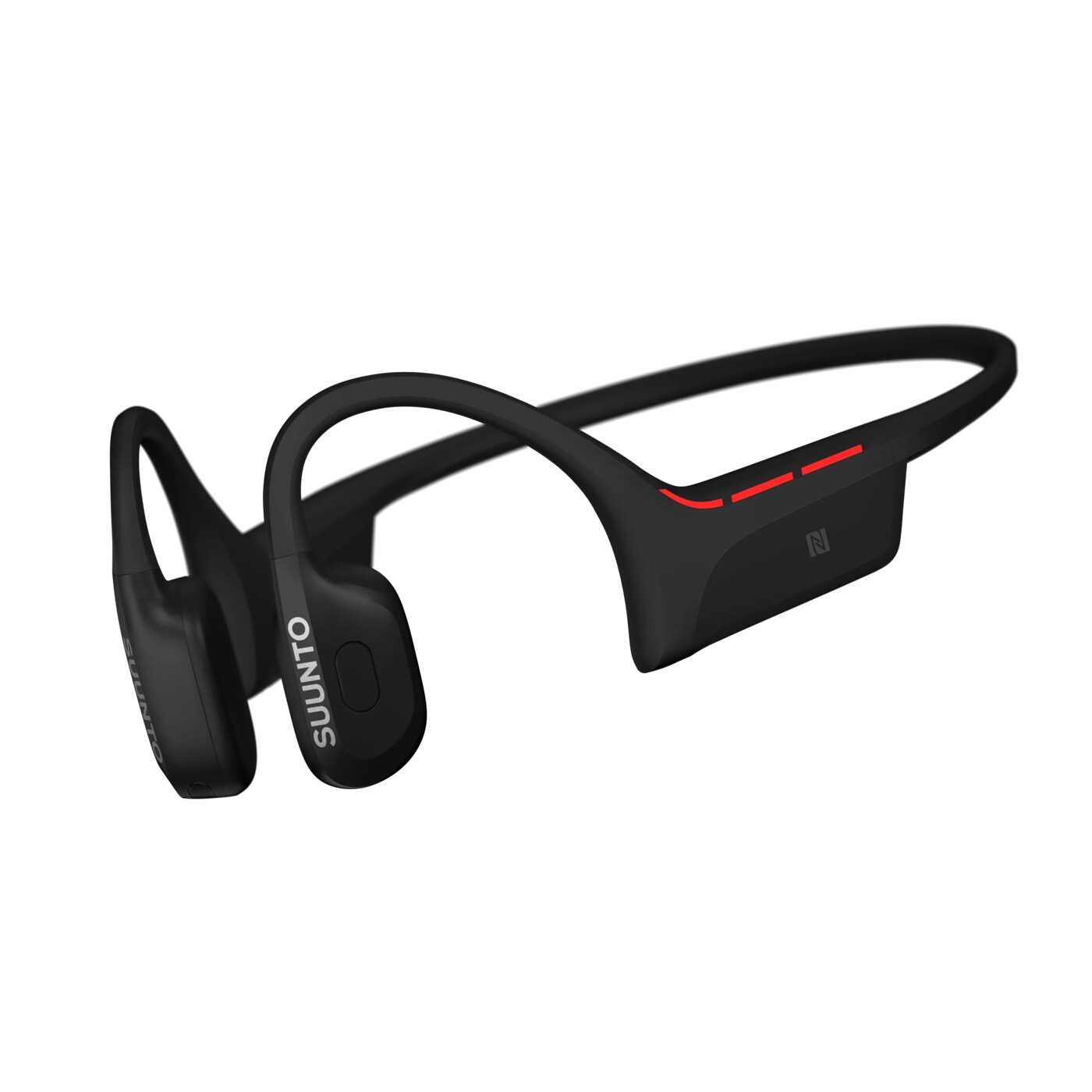
Suunto isn't known for headphones, but the Finnish brand entered the open-ear segment in 2023 with the original Wing and followed up in 2025 with the Wing 2. This second iteration keeps the design and doubles down on battery life with a built-in power bank case that adds 24 h. For a 30 h ultra or a multi-day fjord-and-tundra expedition, that's a real proposition. We wore the Wing 2 on trails, on the road and on recovery bike rides to weigh the trade-off between sound and battery life.
Suunto Wing 2 Review: 30 Hours With the Power Bank for Ultras
8.5/10
Positioning: bone conduction for extreme-duration use
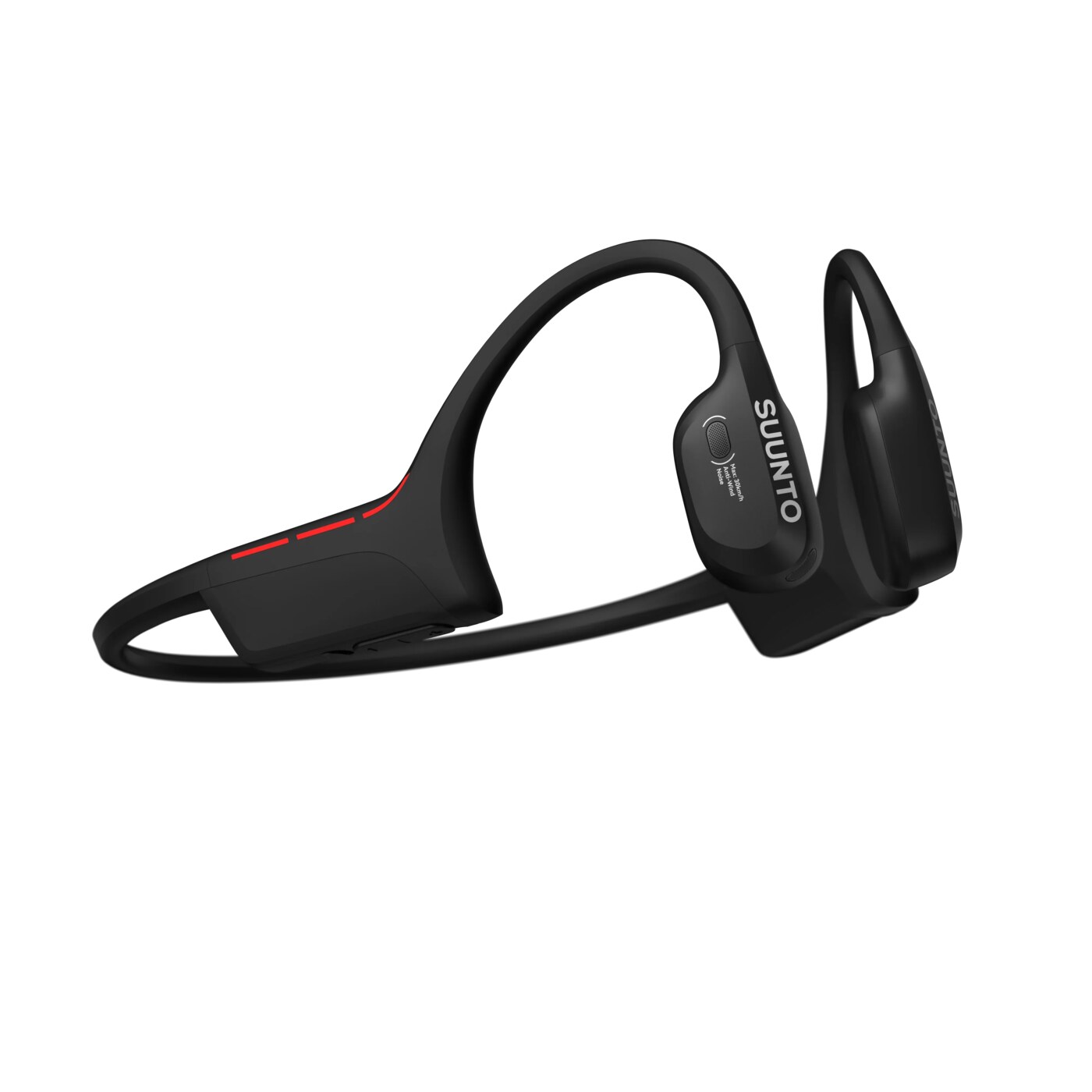
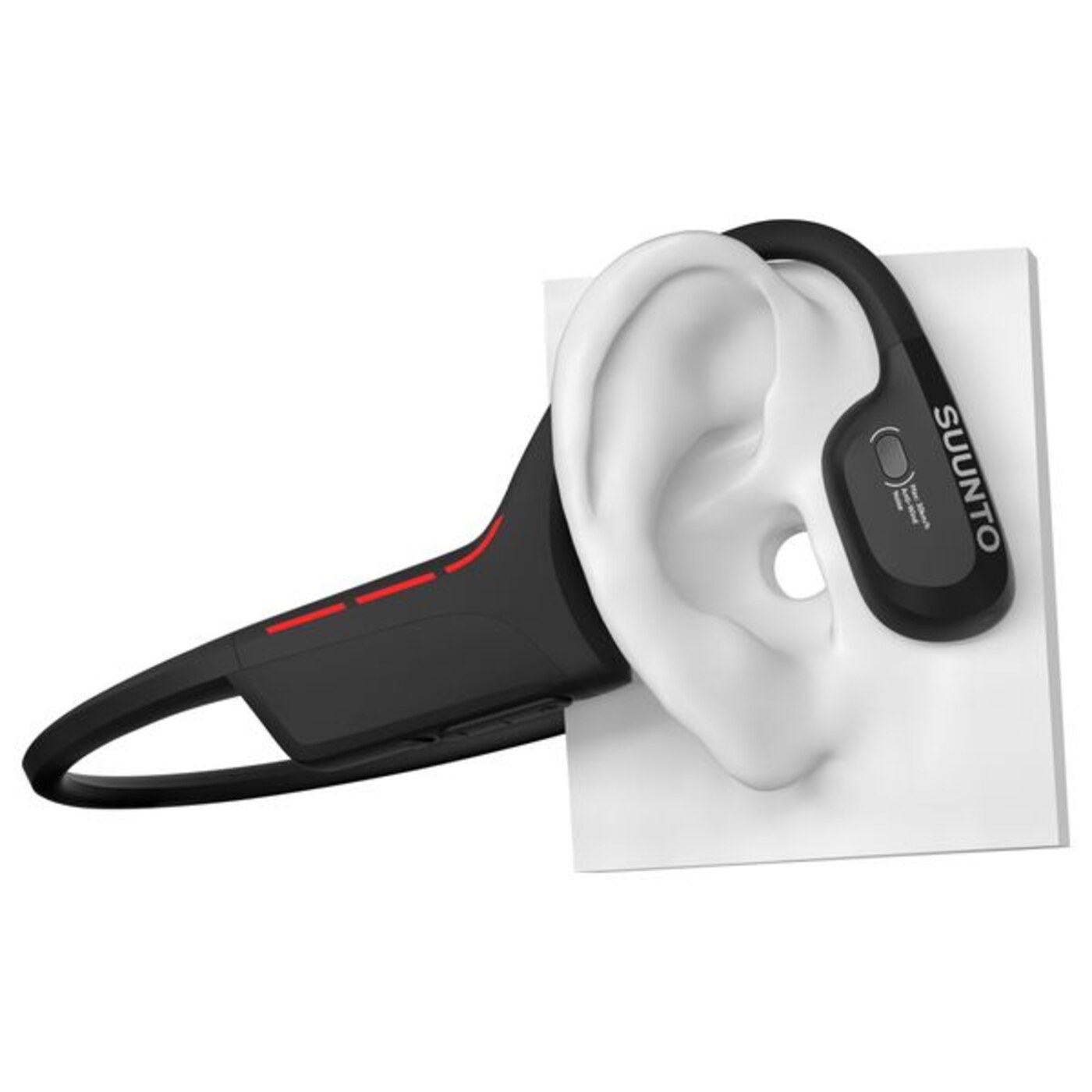
The Wing 2 keeps the same architecture as its predecessor: a titanium neckband behind your head, two bone transducers resting in front of the ear, ears completely open. No air-conduction speaker like Shokz DualPitch: Suunto sticks with 100% bone conduction. You pay for that choice in the bass, but it simplifies waterproofing and ruggedness. The IP66 rating (above the Shokz IP55) protects against water jets and fine dust, useful in the desert or in driving rain.
The headphones weigh 35 g (5 g more than the Shokz), add a USB-C port alongside the proprietary magnetic connector, and integrate rear red LEDs that pulse with your cadence, plus a sensor that can assess neck mobility or vertical jump to estimate neuromuscular fatigue. Paired with a Suunto watch, they read your training metrics into your ear in real time through text-to-speech.
The suggested retail price is around €169 in France, €30 less than the Shokz OpenRun Pro 2, and the power bank comes in the box as a bonus.
"RunMorph tip: if you're targeting an ultra of more than 24 h, a multi-day alpine traverse or a self-supported expedition, the Wing 2 is the only open-ear headphone that ships with a portable charging case in the box. That is exactly the use case you need to target to justify the investment."
Objective technical data
| Spec | Value |
|---|---|
| Brand | Suunto |
| Technology | 100% bone conduction (no air-conduction speaker) |
| Headphone weight | 35 g |
| Battery life, headphones only | 10 to 12 h |
| Battery life with power bank | +24 h (up to 30 h of usable time combined) |
| Fast charging | 5 min = 3 h of listening |
| Charging port | USB-C + proprietary magnetic connector |
| Water resistance | IP66 |
| Bluetooth | 5.3, multipoint with two devices, NFC |
| Codecs | SBC, aptX Adaptive |
| Microphone | Dual mic with wind noise reduction up to 30 km/h |
| Material | Titanium and silicone |
| Suggested retail price (France) | €169 |
Sources cross-checked: official Suunto France product page, Alltricks Wing 2 listing (€169) and i-Run listing.
Who are these headphones for?
The ultrarunner who spends the night on the trail
This is the Wing 2's signature use. Over 100 km or 100 miles with 24 h to 36 h of racing, you have neither the time nor the desire to deal with a full recharge at an aid station. The power bank case snaps onto the headphones' magnetic connector in a few seconds, and you keep racing while it charges. You head back out with several extra hours of battery life. No open-ear competitor includes this system in the box at the same price.
The self-supported multi-day adventurer
Five-day alpine trek, Pyrenees traverse, bikepacking expedition in Scandinavia: the built-in power bank saves you from carrying a dedicated battery for your headphones. It works in sub-zero temperatures down to -20 °C, a spec mainstream competitors rarely list. The case also protects the headphones in your pack.
The urban runner who wants to be seen at night
The red LEDs on the neckband are no gimmick. They pulse in time with your cadence in running mode (useful so a driver perceives human movement) and flash brightly when you turn your head to check traffic, much like a turn signal. If you run commute at night, that's a real passive safety benefit on top of your reflective vest and headlamp.
Audio quality and sound
Suunto has slightly improved the audio tuning over the original Wing but sticks with 100% bone conduction. The direct consequence: bass is less present than on the Shokz OpenRun Pro 2, which cheats with its air-conduction speaker. On an electronic track, you feel the kick drums vibrate on your cheekbone rather than hear them. On podcasts, audiobooks and acoustic music, the sound is very clean and more than good enough.
Max volume is decent, but you'll notice the difference in very noisy settings (major roads, the subway). In the mountains, in the forest, on smooth trails, the sound is immersive and never cuts you off from your surroundings. The hands-free head-motion mode is worth trying: a nod answers a call, a sideways tilt skips a track. Handy with thick winter gloves on. Voice prompts announcing laps or distance covered (paired with a Suunto watch) remain a differentiating strength for the brand.
Fit, comfort, weight
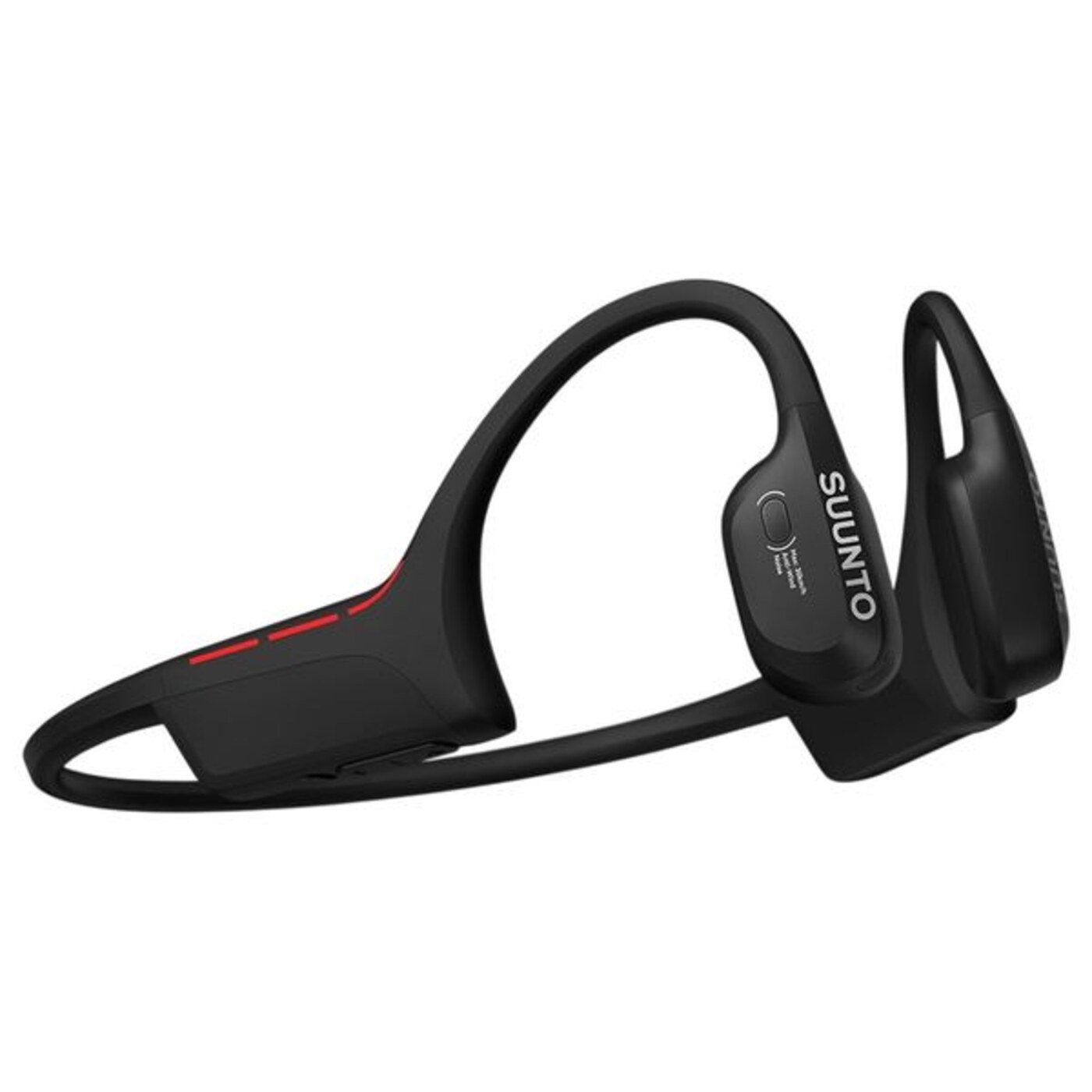
At 35 g, it's 5 g more than the Shokz, but you don't really notice the difference when wearing it. The silicone-covered titanium neckband is wider than the Shokz one, which gives slightly more contact area behind your head. Hold is excellent on the run: the headphones don't bounce on technical descents as long as your head stays reasonably steady. In extended use (a simulated 4 h run), we felt no pain and no noticeable pressure points.
A quick note on head shape: the neckband is slightly stiffer than the Shokz one, which can bother very narrow heads or women who wear their hair up high. Try them on in store before buying.
Battery life and charging
On their own, the headphones officially last up to 12 h. We got 10 to 11 h in real use with a music and podcast mix at 70% volume. Here's where it gets interesting: the power bank case adds 24 h. Combined, you can count on 30 h to 35 h of total listening without plugging into a wall outlet. That's unique in this segment, and it transforms these headphones for ultras.
Fast charging gives you 3 h of battery life in 5 minutes (better than the Shokz's 2 h 30 min). The USB-C port sits alongside a proprietary magnetic connector used to attach the external power bank. That's the part that is really practical on the move: you click the case onto the headphones, slide the whole thing into the chest pocket of your trail vest, and keep running while it charges.
Hearing safety and situational awareness
Like all open-ear headphones, the Wing 2 leaves your ears completely open. That's the number one passive safety factor on the road: you hear cars, bikes, other runners. It's also about hearing health: you don't crank up the volume to compensate for noise isolation, and your eardrums aren't exposed to a saturated sound environment.
Suunto takes the argument further with red LEDs that make you visible to others. It's the first time sports headphones have offered an active visibility system. On a winter run commute at 6 a.m., the combination (bone conduction + reactive LEDs) creates a safety bubble that nothing else in mainstream open-ear audio can match.
How it compares with the competition
Against the Shokz OpenRun Pro 2 (€199), you lose sound quality (no DualPitch, less bass), and you gain combined battery life (30 h vs 12 h) and visibility (LEDs). You pay €30 less. For pure urban road use where sound comes first, the Shokz keeps the edge. For ultras or expeditions, the Suunto pulls ahead.
Against the Bose Ultra Open (€350), the Suunto is far cheaper, better sealed (IP66 vs IPX4) and vastly more stable on the run. Bose plays on elegance and sound quality, Suunto on adventure and endurance. There's no real overlap in target audience.
Against the Apple AirPods 4 (€180), the Wing 2 remains the only one offering true bone conduction plus a built-in power bank. The open AirPods 4 let air through but block the ear canal. For running sessions over 6 h, the Suunto remains the only serious option.
How to fit it into your RunMorph training plan
If you're preparing for an ultra-trail with a RunMorph training plan, the Wing 2 goes with you on long runs of 4 h or more with zero risk of a dead battery. On night run commutes, the LEDs add a layer of safety when you run along poorly lit roadsides. On demanding trail outings, the app's Voice mode optimizes the coaching cues you can receive through a compatible Suunto watch.
Practical race-day tip: start with the headphones at 100% and the power bank at 100%. Midway through, as soon as the headphones drop below 30%, plug in the power bank during an aid station stop. You head back out with 12 h of battery life available.
RunMorph verdict
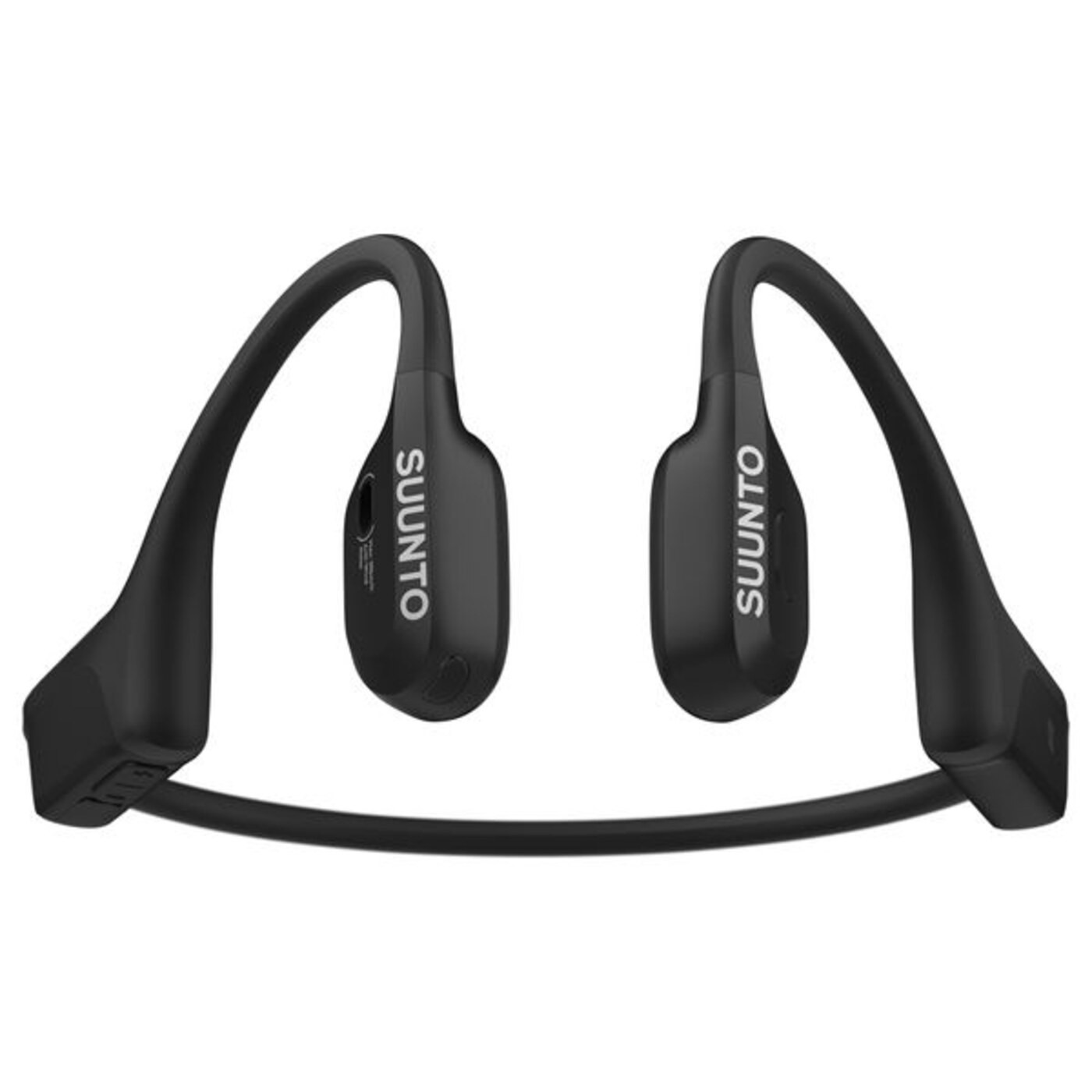
The Wing 2 doesn't try to compete with the Shokz OpenRun Pro 2 on sound quality. It aims to establish a category: open-ear headphones for extreme-duration use. The promise delivers. The built-in power bank is a real innovation, the visibility LEDs are genuinely useful, and the IP66 rating plus the -20 °C to +60 °C operating range open the door to the most demanding outings. At €169, the price is fair for the full package.
The headphones fall short on two objective points: the bass is noticeably behind Shokz DualPitch, and the neckband may bother narrower head shapes. For the pure urban runner who wants the best open-ear sound, the Shokz stays ahead. For the ultrarunner, the expedition adventurer and the night runner, the Wing 2 clearly takes the lead.
RunMorph score: 8/10. Recommended without reservation for ultra-endurance and expedition profiles. Acceptable but with room for improvement for everyday urban use.
Key takeaways for your training
- 30 h of combined battery life with the power bank: the only open-ear headphones that can cover a 24 h ultra without a wall outlet.
- Red LEDs that react to your cadence: real active visibility for night run commutes, not a gimmick.
- IP66 and a -20 °C to +60 °C range: usable in driving rain, in the desert or at high altitude in winter.
- 35 g titanium neckband: excellent hold with no discomfort on a 4 h run, but check that it suits your head shape.
- €169 with the power bank included: the best price-to-battery-life ratio in the premium open-ear segment.