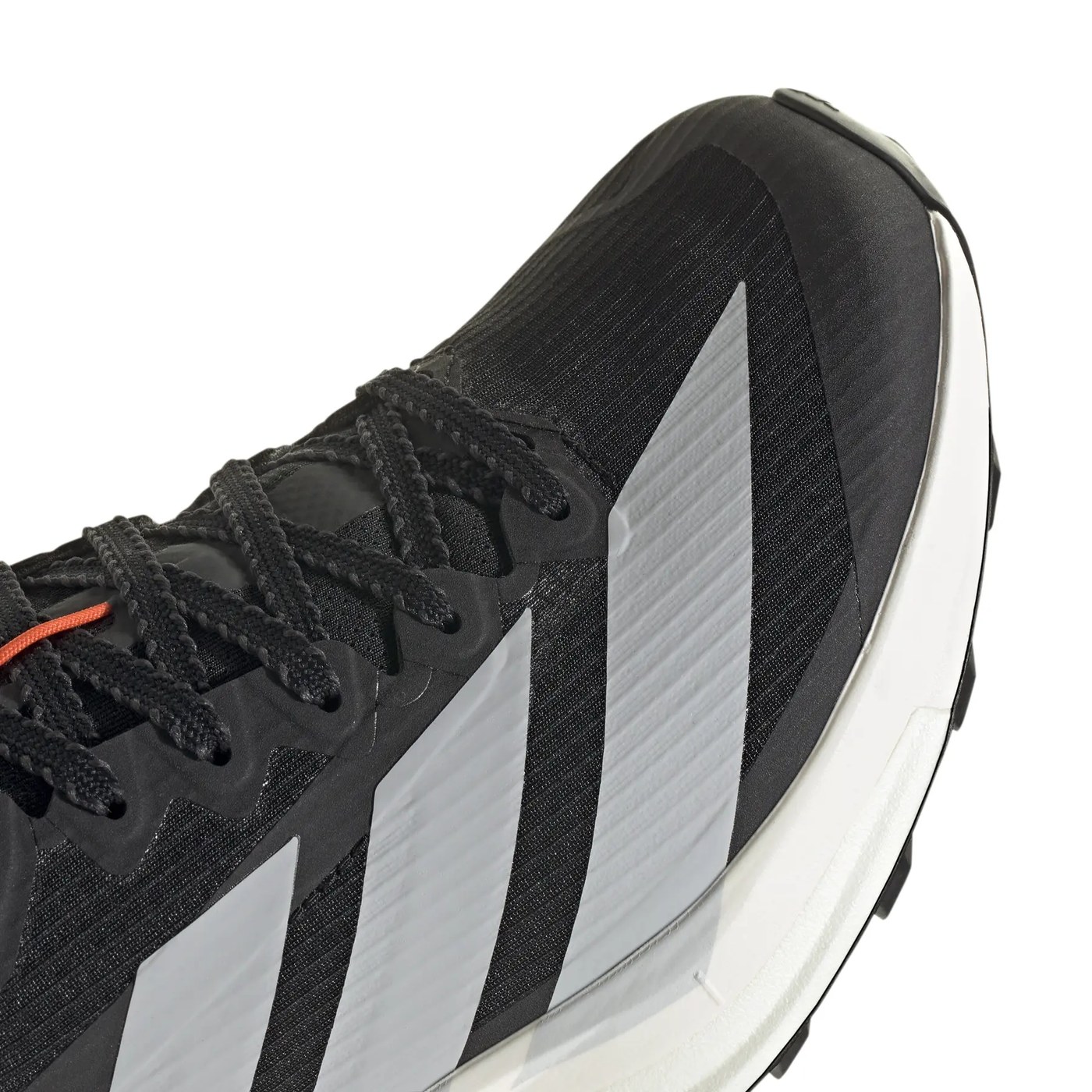
220 grams, a road super-shoe foam, a Continental outsole and zero plate: the adidas Terrex Agravic Speed 2 is the lightest trail shoe the three-stripes brand has ever built. Released on February 1, 2026 at €160, it targets short, fast races. At RunMorph, we pulled together independent lab measurements and field tests from France and abroad to tell you whether this minimalist racer deserves a spot in your rotation.
Adidas Terrex Agravic Speed 2: adidas's plateless trail racer (full review)
8.3/10
The bottom line in 3 sentences
The Agravic Speed 2 is the short-distance trail racer in adidas's 2026 lineup: 220 g claimed (232 to 238 g measured depending on size), Lightstrike Pro as the main foam layer with a Lightstrike rim, a full-coverage Continental outsole and, above all, no plate, unlike its big sister the Speed Ultra 2. The result: a lively, agile, low-to-the-ground shoe built for 10 to 42 km trails at a hard pace on runnable terrain. Its narrow fit and barely structured heel make it a midfoot and forefoot striker's shoe: heel strikers and anyone running in mud should look elsewhere.
8.3
/ 10 · RunMorph overall score
Who is it for?The fast trail runner who lands midfoot or forefoot and wants a plateless short-distance racer (10 to 42 km) that sits low to the ground and weighs next to nothing.
Who should skip it?Heel strikers, heavier runners or strong overpronators, and anyone running in mud or on very technical terrain: the narrow fit and 3 to 4 mm lugs hit their limits fast.
Adidas Terrex Agravic Speed 2: the short-distance arrow of the 2026 lineup
For 2026, adidas Terrex overhauled its entire trail range into four clearly differentiated models: the Agravic 4 for daily training, the Agravic TT for technical terrain, the Terrex Agravic Speed Ultra 2 for ultras, and this Agravic Speed 2 for short-distance racing. The German brand bills it as its lightest trail shoe to date, stripped of anything that doesn't deliver real performance.
The bet is a bold one: take the recipe behind the success of the Adizero EVO SL on the road (premium Lightstrike Pro foam, no plate, low weight, aggressive price) and move it onto the trails. Where the Speed Ultra 2 stacks 44 mm of foam and Energy Rods for ultras, the Speed 2 drops to 34 mm at the heel and ditches every stiffening element. Two distinct philosophies, two target distances.
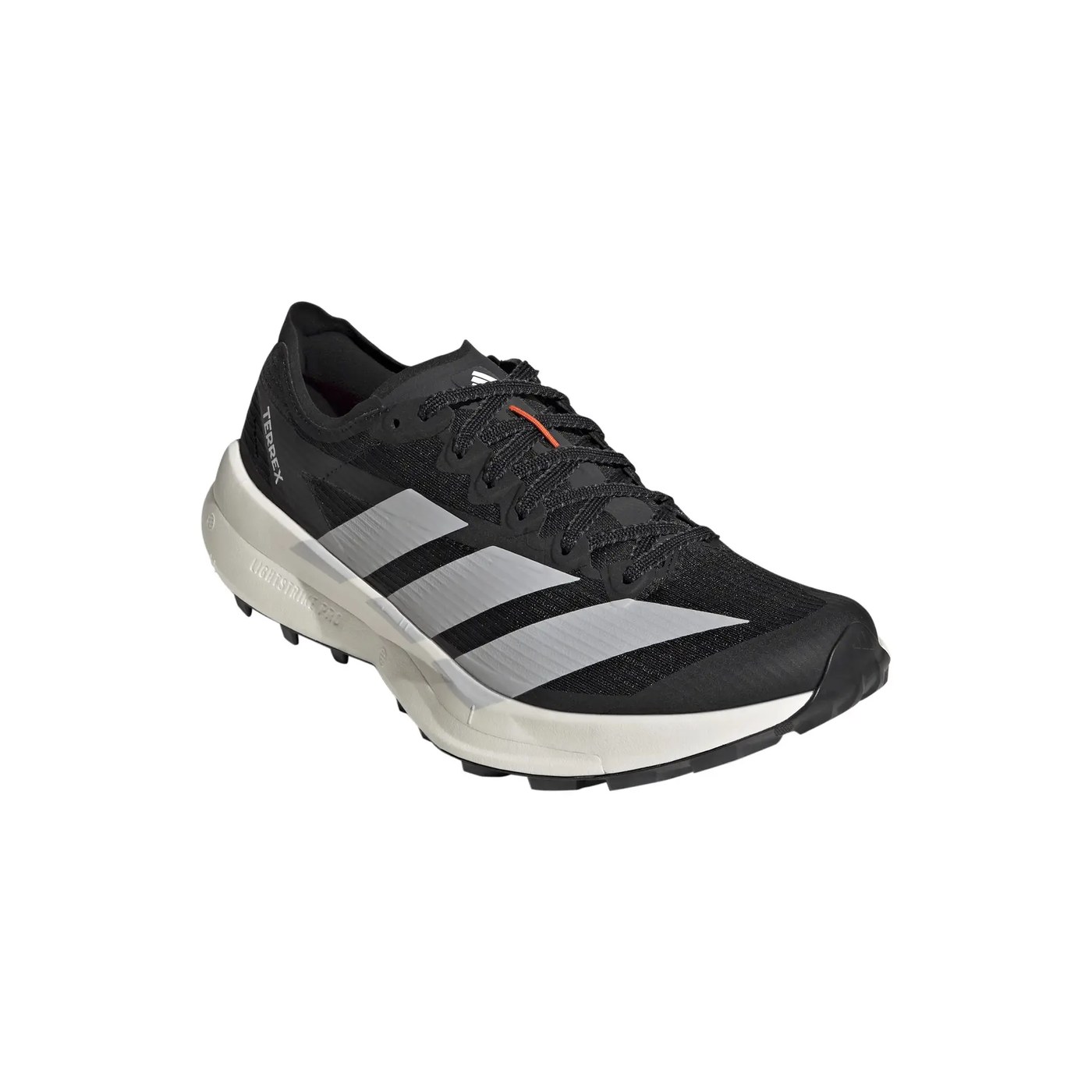
Objective technical data
| Spec | adidas Terrex Agravic Speed 2 |
|---|---|
| Weight | 220 g claimed (EU 42), 232 to 238 g measured in US 9 by independent labs and testers |
| Stack | 34 mm heel / 26 mm forefoot |
| Drop | 8 mm |
| Foam | Lightstrike Pro (main layer) + perimeter Lightstrike rim, no plate or rods |
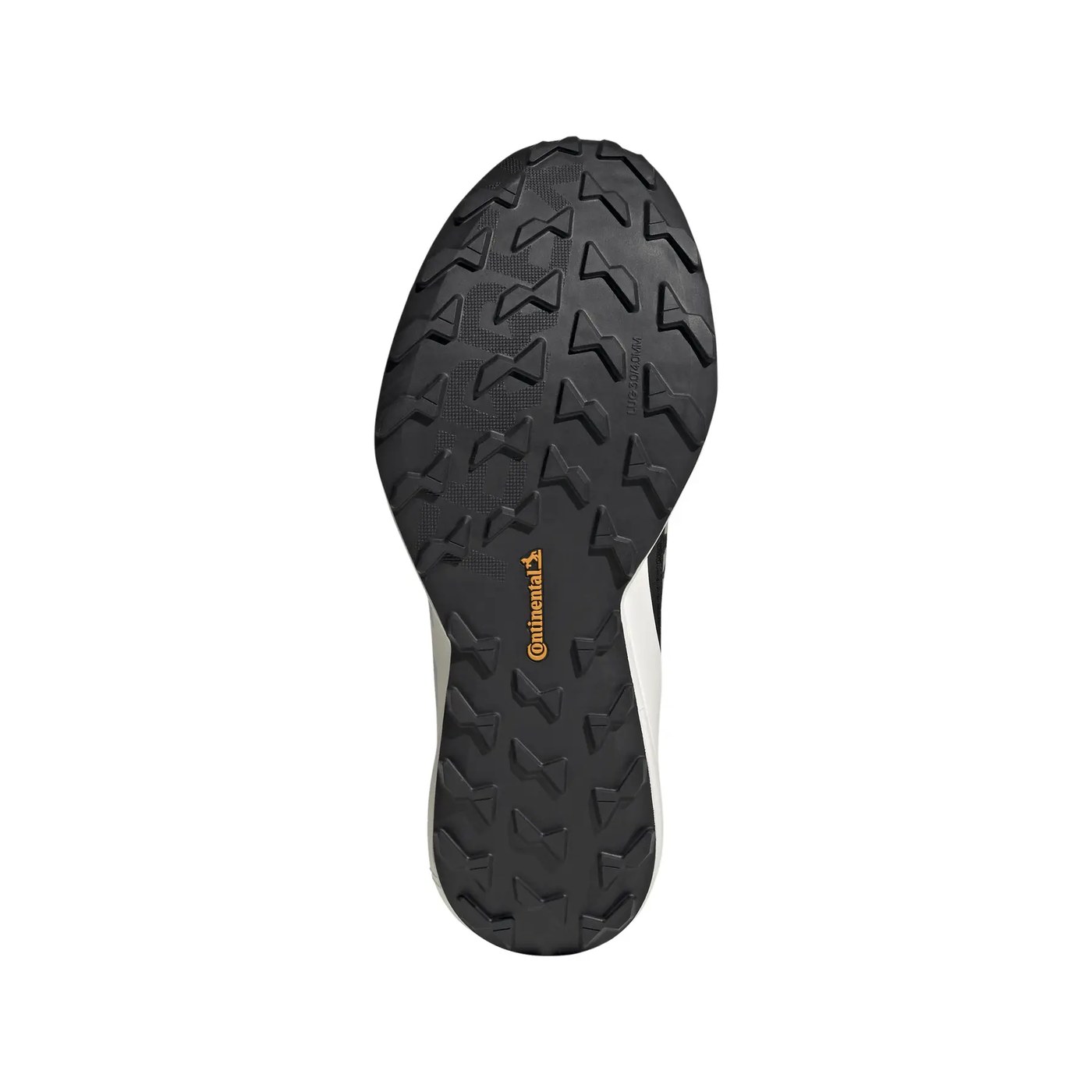
| Outsole | Full-coverage Continental rubber, 3 to 4 mm multidirectional lugs |
| Upper | Re-engineered technical mesh, seamless overlays, thin gusseted tongue |
| Flexibility | 11.9 N measured in the flex test (very flexible, trail segment average: ~14.7 N) |
| Breathability | Top score (5/5) in independent lab testing |
| Fit | Narrow, low-volume toebox, true to size |
| Price | €160 at launch (February 2026), seen between €108 and €148 in September 2026 |
On the trail: an EVO SL that grew up on singletrack
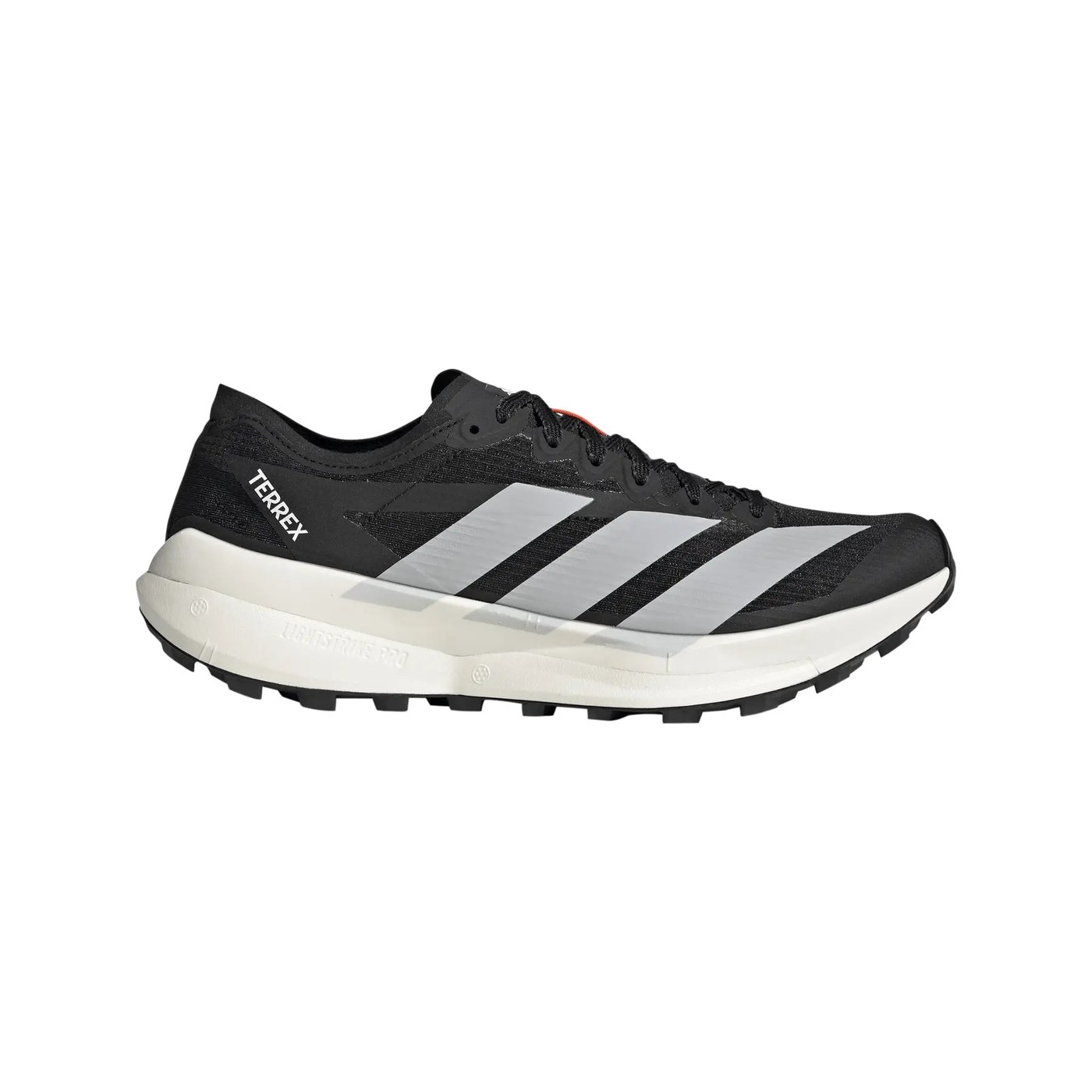
Testers agree: the Speed 2 runs like a fast road shoe that sprouted lugs. The Lightstrike Pro foam, the same one used in the road Adios Pro, delivers a crisp, immediate bounce, with very decent energy return for a plateless trail shoe. The flexibility measured in the lab (11.9 N, well below the segment average) translates underfoot into a smooth transition that follows the terrain instead of fighting it.
On runnable trails, forest roads and gravel, it's a joy between 3:45 and 4:45 min/km: the shoe disappears, the pickup is instant and the Continental outsole feels just as secure on wet rock as on dry dirt. Testers also point to remarkable traction on paved connecting sections, where the Speed 2 behaves almost like a road racer. On the other hand, as soon as the terrain steepens or gets sloppy, the 3 to 4 mm lugs and the narrow midfoot platform bring you back to reality: this is neither a mud crawler nor a technical descender.
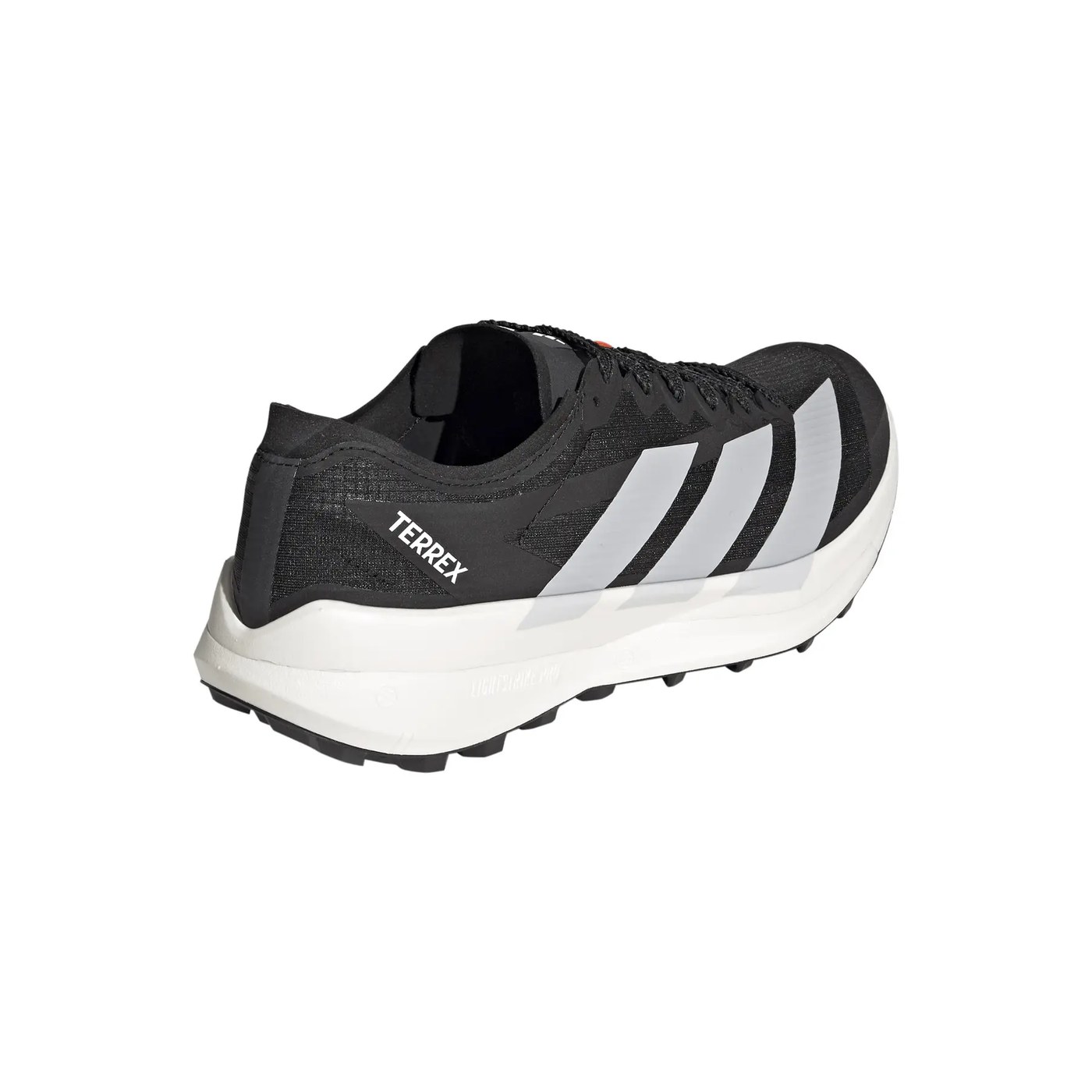
The number one watch-out, flagged by several independent tests: the fit. The toebox is narrow, overall volume is low, and the heel is almost unstructured (heel counter rated 1/5 for stiffness in the lab). If you land on your forefoot or midfoot, all good: the wide forefoot base (119.5 mm measured) gives a stable, precise platform. For a heel striker, the combination of a narrow heel (82 mm measured) and a soft counter can feel floaty, especially on tired descents. Runners with mild overpronation also report medial instability at the midfoot on long runs.
RunMorph's advice: if you want a short-distance trail racer with premium foam but the Speed 2's very narrow fit worries you, check out the Hoka Zinal 3 (253 g, 5 mm lugs, same price) or the Inov-8 TrailFly Speed V2, which grips better on wet rock. If you're aiming for ultras, go straight to the Speed Ultra 2.
Agravic Speed 2 vs Agravic Speed Ultra 2: head to head
It's the question everyone asks in the store: two shoes with almost identical names, two radically different uses. At RunMorph, we tested both, and the choice is actually simple.
| Criterion | Agravic Speed 2 | Agravic Speed Ultra 2 |
|---|---|---|
| Target distance | 10 to 42 km, short and fast races | 50 km to 100 miles, runnable ultras |
| Weight | 220 g claimed (232-238 g measured) | 269 g measured |
| Stack | 34 / 26 mm, low to the ground | 44 / 36 mm, max cushioning |
| Propulsion | No plate, maximum flexibility | Pebax Energy Rods, aggressive 30° rocker |
| Platform | Narrow at the midfoot and heel | Very wide up front, narrow at the back |
| Stability | Good for forefoot strikers, unstable for heel strikers | Demanding: midfoot strikers only |
| Price | €160 (seen from €108) | €230 |
Bottom line: the Speed 2 is the more versatile of the two day to day and the more accessible, both in price and in ride. The Speed Ultra 2 only makes sense if you're piling up ultra miles on runnable terrain. For technical trails, neither is ideal: that's the job of the Terrex Agravic TT, the third pillar of the range.
Pros and cons
Pros
- Featherweight: the lightest trail shoe adidas has ever made
- Lively, durable Lightstrike Pro foam, with no intrusive plate
- Full-coverage Continental outsole, excellent in dry and wet conditions
- Top-tier breathability, ideal in hot weather
- Aggressive price: €160, already around €110-135 at retailers
Cons
- Narrow fit and low toebox: wide feet will suffer
- Barely structured heel, unstable for heel strikers
- 3-4 mm lugs struggle in thick mud
- Minimalist upper: durability falls short on abrasive terrain
- Not built for ultras: stack too low beyond trail marathon distance
Who is it for?
The short-distance racer
Training for a 20 to 42 km trail race and want to finish strong? This is the bullseye. The Speed 2 rewards hard paces (under 4:30 min/km) with instant pickup and a weight you forget about late in the race.
The road runner moving to trail
You come from the road, you run in the EVO SL or something similar, and you want a fast first trail shoe that doesn't feel like armor? The switch will be almost seamless: same sensations, plus grip.
The trail runner who wants a speed pair in the rotation
You already have a do-it-all trainer (Peregrine, Speedgoat, Genesis) for training and want a dedicated pair for fast sessions and short races? The Speed 2 rounds out a rotation perfectly, with no overlap.
Against the competition
At €160 in the short-distance trail racer segment, the Speed 2 goes up against three benchmarks. The Hoka Zinal 3 (253 g, supercritical EVA foam, 5 mm lugs) offers better grip in slop and a more forgiving fit, but a less bouncy foam. The Salomon Genesis (€150) is more protective and versatile, at the cost of weight and liveliness. The Inov-8 TrailFly Speed V2 beats everyone on wet rock with its Graphene Grip, but costs more and pushes less hard on the pickup. The Speed 2 stands out as the best pure speed to price compromise of the four, as long as you accept its narrow fit.
How to fit it into your RunMorph training plan
The Speed 2 is a quality pair, not a volume pair. In a RunMorph plan, it naturally takes the fast-session slot on runnable terrain: forest fartleks, threshold work on the track, 45 to 75 minute tempo runs. It's also your race shoe for the short trails on your calendar. On the other hand, keep a more cushioned, protective shoe for weekend long runs: the 34/26 mm stack and the lack of underfoot protection won't forgive you on big days with lots of elevation.
Build your rotation smart: a versatile daily trainer for volume, the Speed 2 for speed, and you cover 90 % of situations in a short trail plan. If you don't have a structured plan yet, RunMorph's trail training plans build this kind of shoe rotation around your goals and race calendar.
RunMorph Coach's verdict
The adidas Terrex Agravic Speed 2 pulls off its bet: bringing the road super-trainer spirit to the trails, with no plate, no extra weight and no crazy price tag. It's an honest, effective racer that knows exactly what it is: an arrow for short races on runnable terrain. Its narrow fit and minimalist heel rule out some runners, and its short-distance focus makes it a poor fit for ultras. But in its niche, at €160 (and already much cheaper in practice), it's simply one of the best trail deals of 2026. Score: 8.3/10
Key takeaways for your training
- adidas's lightest trail shoe: 220 g claimed, 232-238 g measured, 34/26 mm stack, 8 mm drop.
- Plateless Lightstrike Pro foam: lively and durable, but less propulsive than a racer with rods or carbon.
- Full-coverage Continental outsole: deadly on dry ground, wet rock and paved connectors, limited in thick mud (3-4 mm lugs).
- Narrow fit and soft heel: for midfoot/forefoot strikers only, not recommended for heel strikers and wide feet.
- €160 at launch, seen from €108-135: the best value in the short-distance racer segment.