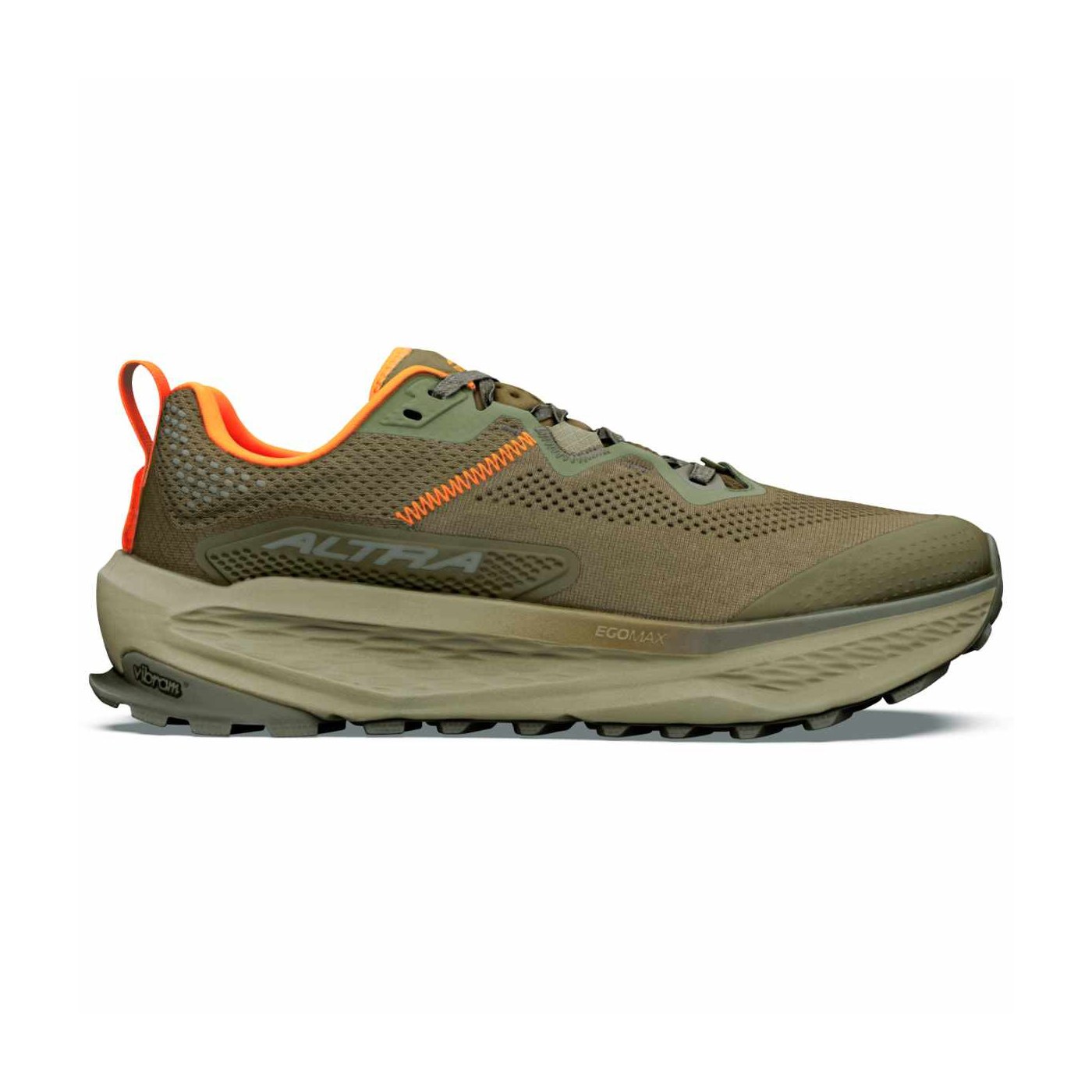
For years, Altra stuck to one simple idea: zero drop and a compressed EVA foam, end of story. With the Olympus 7, released on August 1, 2026, the Utah brand finally touches its signature formula. New EGO MAX foam, a redesigned upper, a Vibram Megagrip TractionLug outsole: on paper, this is the deepest overhaul Altra's max-cushion trail line has seen in years. RunMorph put this pair through its paces on dry trails, rock fields and long endurance runs to see whether the foam swap delivers.
Altra finally changes the foam on its max-cushion flagship
For six generations, the Olympus embodied a consistent Altra philosophy: zero drop, a roomy FootShape toe box, and a compressed EVA foam that favored durability over low weight. This seventh version keeps the first two pillars intact but finally tackles the third. The new EGO MAX foam replaces the molded EVA and, according to Altra, delivers 15% less weight and 10% more rebound than the previous generation.
The rest of the spec sheet follows the same measured modernization. The breathable mesh upper gets molded TPU overlays instead of the old stitched ones, the tongue gets thicker for more comfort, and an integrated collar wraps the ankle better. Underfoot, Altra keeps the duo that built the line's reputation: a Vibram Megagrip outsole with TractionLug lugs, and a wide platform that offsets the foam height with a stable base.
| Price | €199.99 |
|---|
| Weight (men's, EU 42) | 325 g |
|---|
| Drop | 0 mm |
|---|
| Stack height | 33 mm heel / 33 mm forefoot |
|---|
| Midsole | Altra EGO MAX |
|---|
| Outsole | Vibram Megagrip with TractionLug |
|---|
| Upper | Breathable technical mesh, molded TPU overlays |
|---|
| Use | Trail, long distance, ultra, fast hiking |
|---|
| Availability | August 1, 2026 |
|---|
EGO MAX: what the new foam really changes
On the trail, the difference from the old compressed EVA shows from the very first steps. EGO MAX absorbs impacts without turning mushy, with more noticeable energy return than before, especially late in a run when fatigue sets in and your stride falls apart. It's the kind of detail that doesn't jump off a spec sheet but changes how the shoe feels over three hours of effort.
Zero drop and the FootShape toe box remain the house signature, and the Olympus 7 pushes them to the max across the entire Altra range. If you want a lighter version with the same natural-shape philosophy, the Altra Lone Peak 9+ remains the faster option in the lineup.
The shoe takes some getting used to if you're coming from a traditional model: zero drop and the wide forefoot shift your footing differently from the very first runs.
The wide platform helps a lot on uneven ground. Unlike some max-cushion shoes that turn unstable past 30 mm of stack, the base of the Olympus 7 stays predictable, even on off-camber sections, thanks to a footprint that widens under the midfoot instead of narrowing.
RunMorph trail testing
On dry singletrack and rocky paths, the Olympus 7 does exactly what you expect from a protective max-cushion shoe: it filters out rocks without ever feeling like you're floating above the ground. The Vibram Megagrip outsole bites well on hardpack and rock fields, and the grip stays reliable even on dry rock on gentle slopes.
Long runs of more than two hours are where the shoe is most convincing. The generous cushioning and wide toe box limit the usual pressure points late in the effort, and the integrated collar holds the ankle well without causing irritation as the kilometers add up. For fast hiking or ultras, this ability to stay comfortable after several hours is the model's real added value.
On the flip side, in mud or soaked ground, the TractionLug lugs show their limits: they shed thick mud poorly, and the shoe loses confidence as soon as the ground gets sticky. And once you try to push the pace on technical singletrack with tight turns, the 325 grams and the stack height make themselves felt: the shoe responds, but without the snap of a lower, lighter model.
Fit and everyday comfort
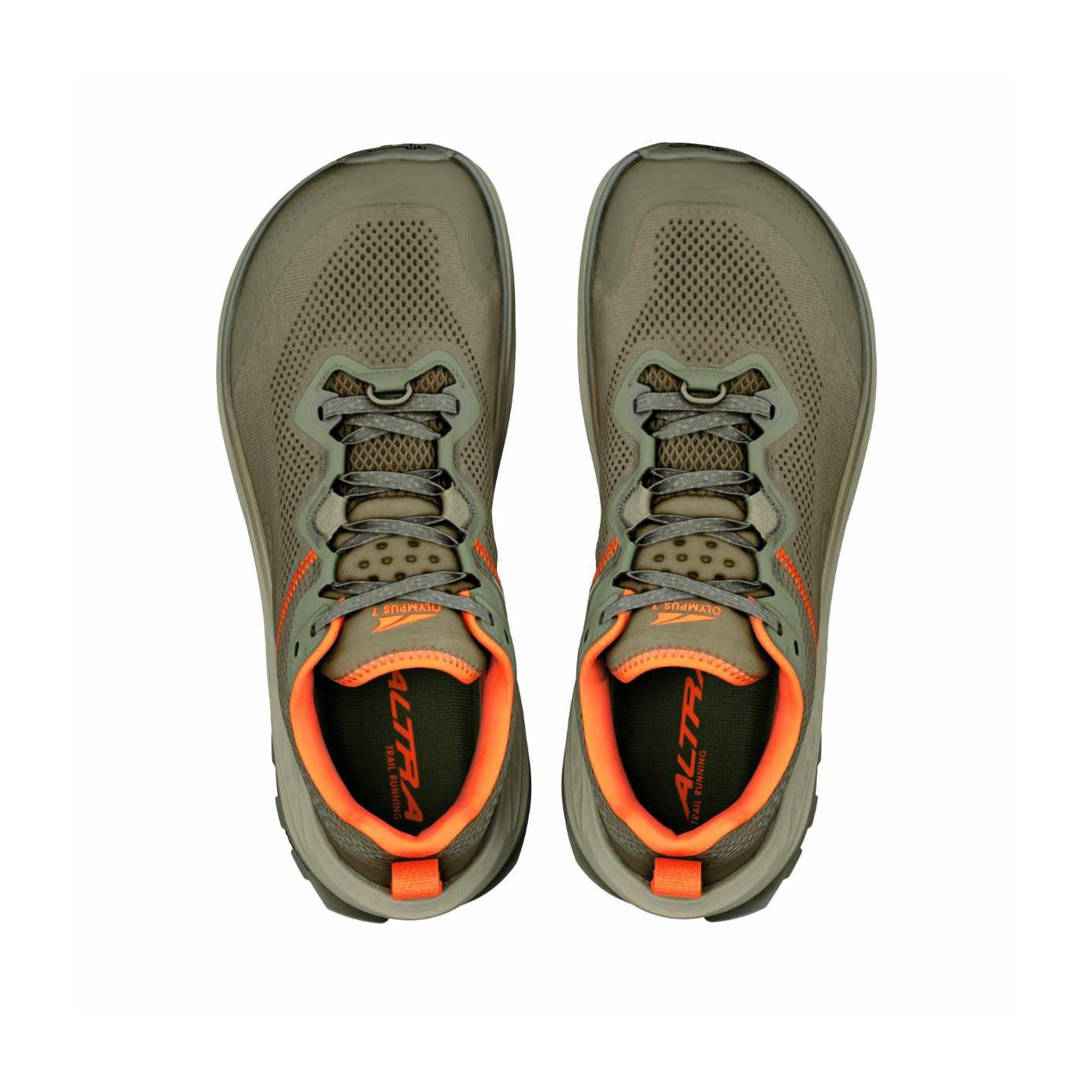
The FootShape toe box is still the brand's number one selling point, and on the Olympus 7 it delivers: your toes splay naturally without getting squeezed, a real plus when your feet swell after several hours on the move. The midfoot, on the other hand, locks down far better than you'd expect from a shoe this wide up front, thanks to lacing that lets you cinch precisely without creating pressure points.
The heel benefits from the new integrated collar, which wraps more than on the Olympus 6 and cuts down on rubbing during repeated climbs and descents. In use, we found no hot spots after a three-hour run on mixed trails, which confirms the work done on long-haul comfort. Fit-wise, the pair runs true to size overall, with a little extra volume to plan for if you wear thick socks on cold runs or overnight ultras.
Olympus 7 vs Hoka Mafate 5: which max-cushion trail shoe to pick
| Altra Olympus 7 | Hoka Mafate 5 |
|---|
| Drop | 0 mm | 8 mm |
| Stack height | 33 mm | 40 mm heel |
| Weight | 325 g | ~320 g |
| Toe box | Very wide (FootShape) | Standard to wide |
| Price | €199.99 | €190 |
| Profile | Natural, zero drop, protection | High stack, classic drop, stability |
Both shoes target the same crowd, long distance and ultra, but with opposite philosophies on drop. The Hoka Mafate 5 bets on a taller stack with an 8 mm drop for a more traditional feel, while the Olympus 7 stays loyal to zero drop and a platform that sits closer to the ground despite its 33 mm of foam. The choice mostly comes down to your stride habits: runners already converted to Altra's zero drop have no reason to switch, everyone else will find the Mafate 5 more instantly familiar.
Pros
- EGO MAX cushioning much livelier than the old EVA
- Very comfortable toe box over long distances
- Solid stability despite the foam height
- Reliable grip on dry and mixed terrain
Cons
- Lacks agility on fast technical terrain
- Lugs struggle in thick mud
- 325 g, heavy for a short or fast run
- Zero drop requires an adjustment period
On-trail take
The Olympus 7 delivers on its promise of long-distance comfort better than the previous generation, thanks to a foam that finally lives up to the rest of the shoe. It's still a specialist's pick: perfect for ultras and fast hiking, less relevant if you want a versatile pair for runs of varying intensity.
RunMorph verdict
The Olympus 7 fixes the main complaint leveled at the line for years: a foam that lacked life. With EGO MAX, Altra finally delivers a max-cushion trail shoe whose cushioning holds up over time without sacrificing stability or the brand's zero-drop signature. The result is a specialized but coherent shoe, built for runners who spend hours on the trails rather than those chasing speed.
Key takeaway
If you run ultras or long fast hikes and Altra's zero drop doesn't scare you, the Olympus 7 is one of the most comfortable max-cushion trail shoes out there right now. If you want snap or a shoe for short, hard runs, look instead at the Lone Peak 9+ or a model with a more traditional drop.