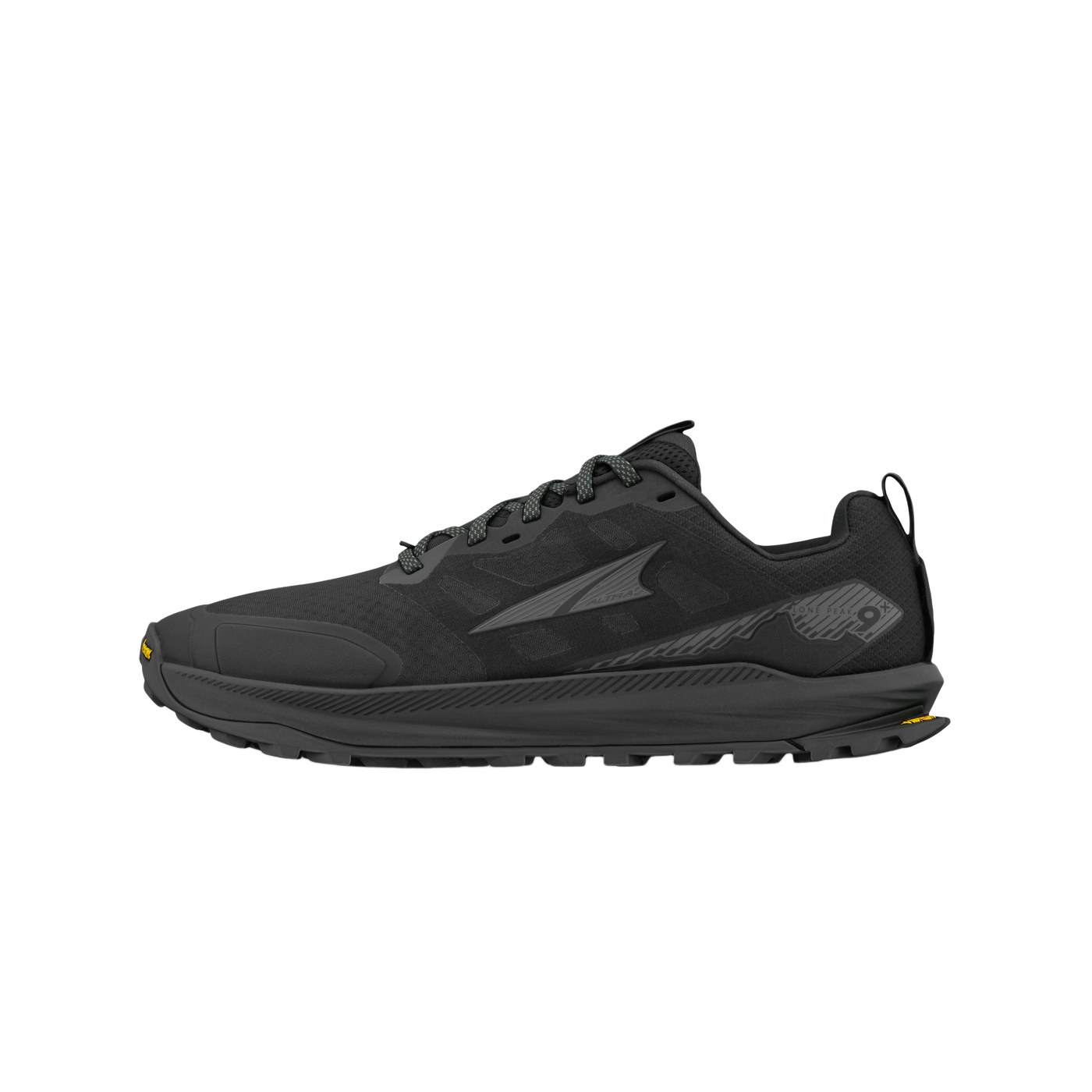
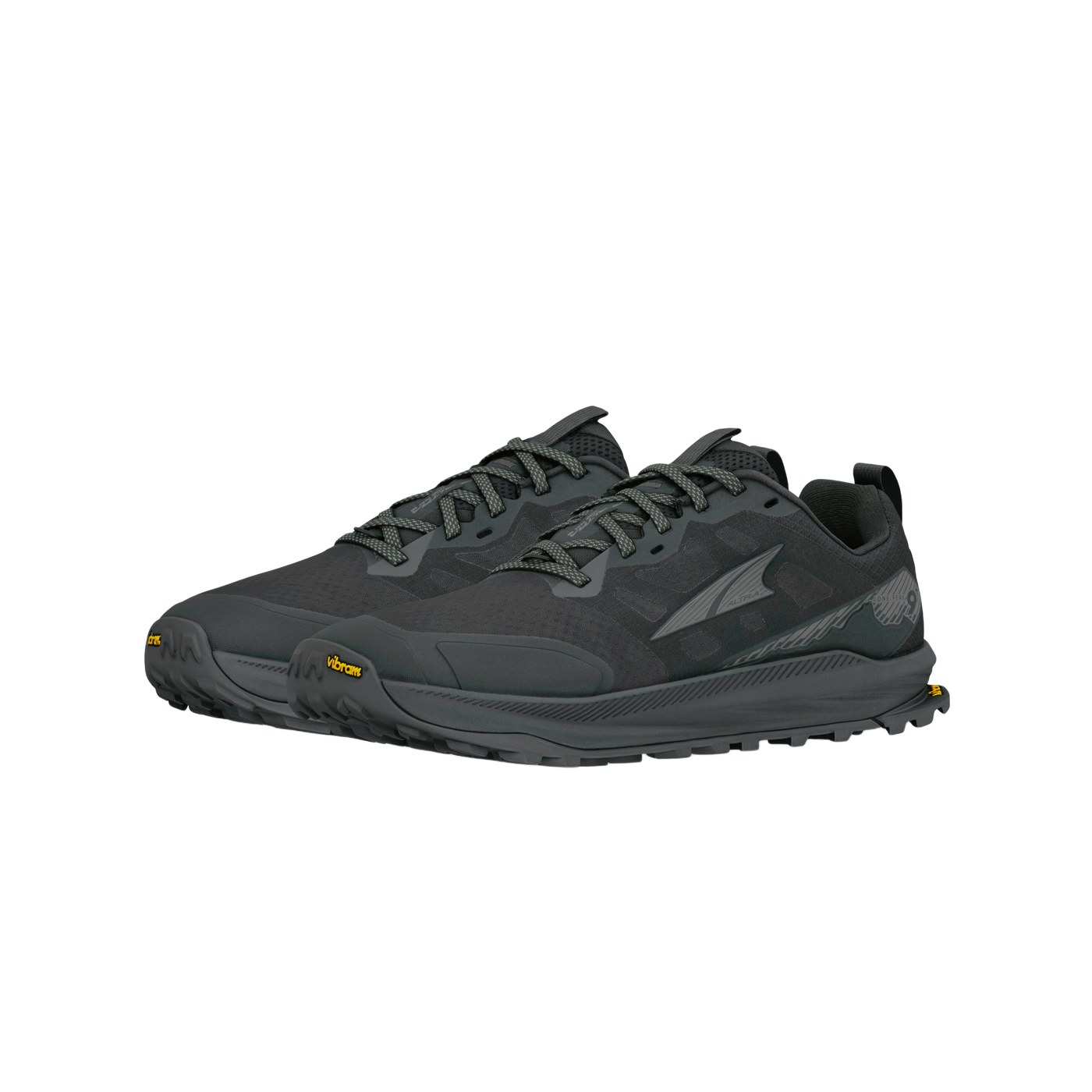
The Lone Peak is probably the most iconic shoe in zero-drop trail running. Version 9+, released in March 2025, adds a Vibram Megagrip outsole to a silhouette that has stayed true to itself: zero drop, a wide anatomical toe box and a moderate stack height. It speaks first to runners looking for a more natural stride, but it also wins over seasoned trail runners who want direct contact with the ground. At €150 in France, it clearly competes with the benchmark technical trail shoes.
Altra Lone Peak 9+ Review: Zero-Drop Icon Gets Vibram Megagrip
8.5/10
Altra Lone Peak 9+: the zero-drop icon switches to Vibram Megagrip
The Lone Peak is one of those models nobody argues about anymore. Launched more than ten years ago, it single-handedly carried Altra's zero-drop philosophy along the Appalachian Trail, through American ultras and on long expeditions. Version 9+, on sale since March 1, 2025, marks a big step: Altra replaced the traditional MaxTrac outsole with a full-length Vibram Megagrip. That new grip is what justifies the price bump of about fifteen euros over the standard Lone Peak 9.
With Vibram Megagrip, the Lone Peak can now take on benchmarks like the Hoka Speedgoat 7, the Salomon Speedcross 6 or the Saucony Peregrine 16 on technical terrain. It keeps its unique traits (0 mm drop, anatomical Original toe box, moderate 25 mm stack height) but gains the versatility it needed to go beyond long-distance hiking.
RunMorph tip: the Lone Peak 9+ is not a transition shoe. If your stride has never gone through zero drop, plan a 4 to 6 week adaptation period and build volume gradually, or you risk Achilles tendinopathy. For runners already comfortable with a low drop, such as those who like the Inov-8 TrailFly Speed V2 or other low-drop models, the switch is immediate.
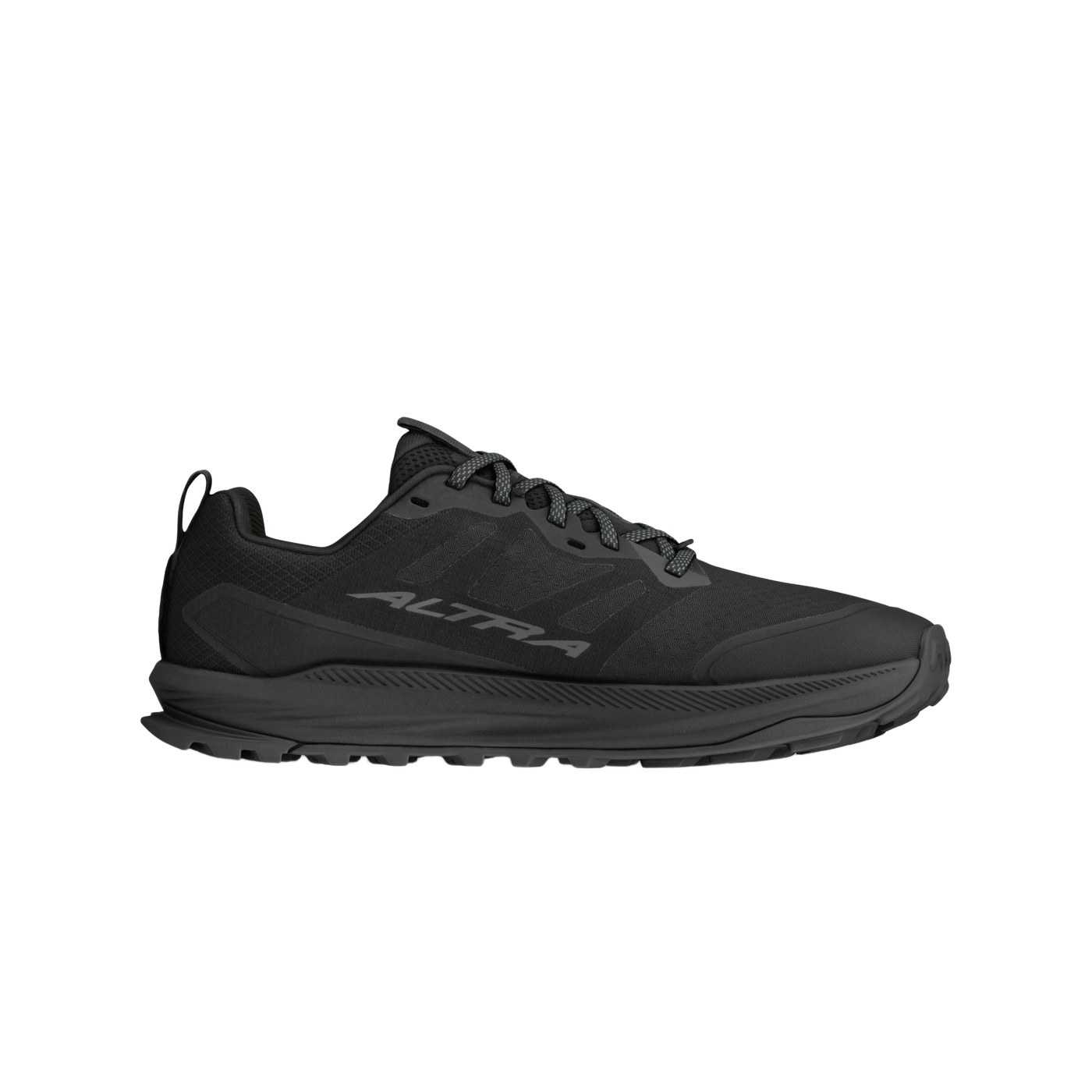
© Altra, official photo used for editorial purposes
Objective technical data
| Brand | Altra |
| Model | Lone Peak 9+ |
| Release | March 1, 2025 |
| Type | Technical trail, mid-distance, zero-drop |
| Drop | 0 mm |
| Stack height (forefoot / heel) | 25 mm / 25 mm |
| Weight (EU 42) | ~295 g (men's), ~264 g (women's) |
| Foam | Revised Altra EGO (lighter and softer) |
| Carbon plate | No (natural zero-drop philosophy) |
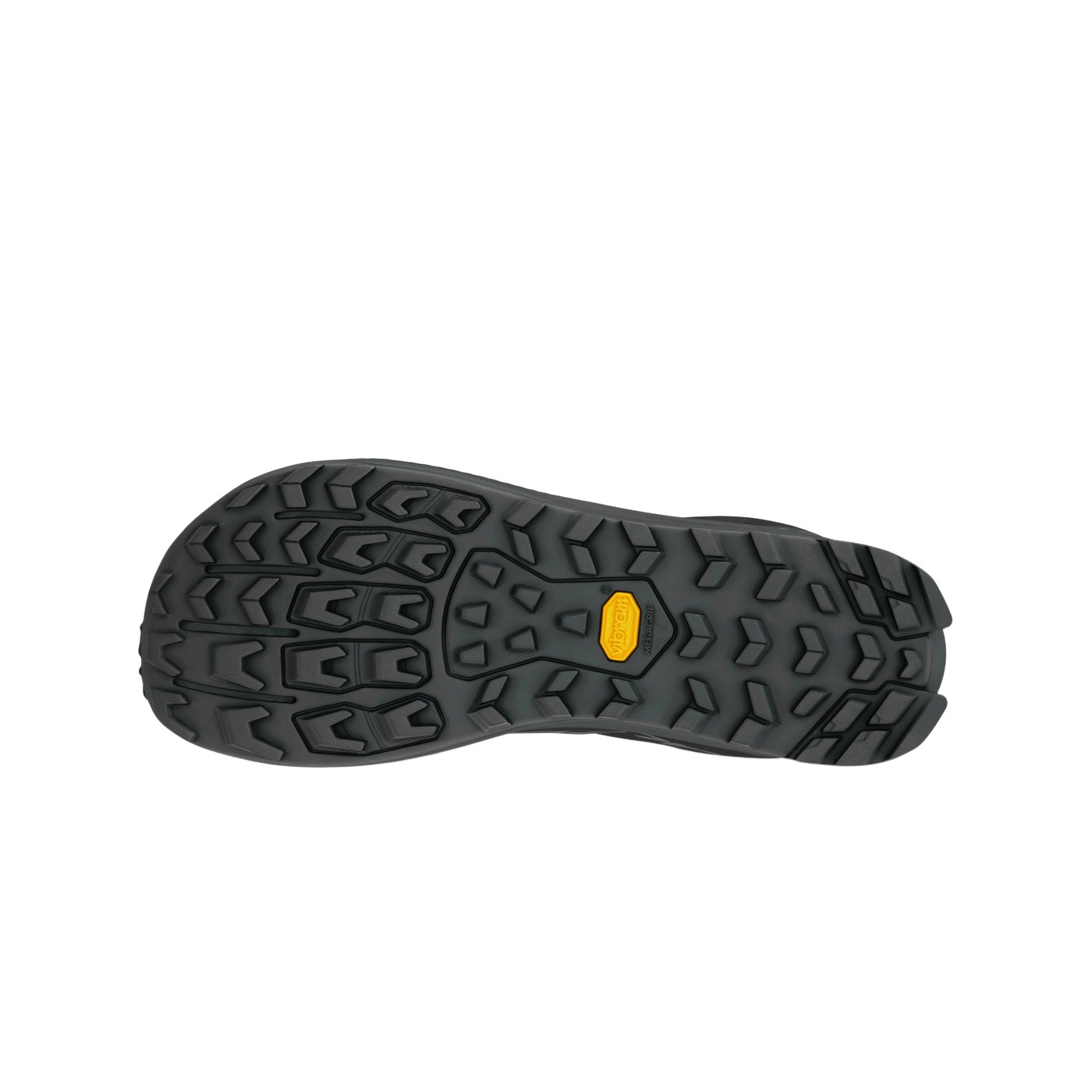
| Outsole | Full-length Vibram Megagrip |
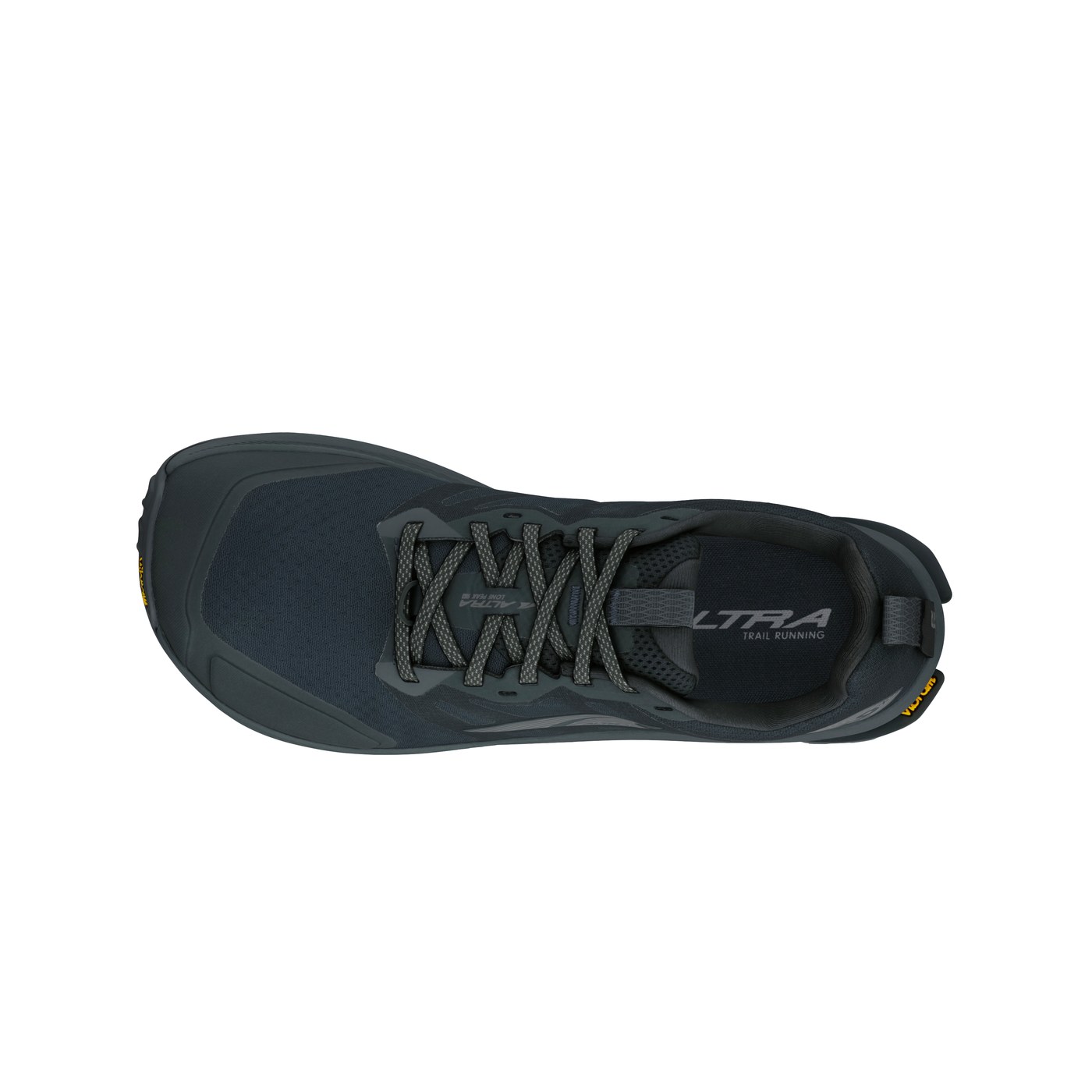
| Upper | 100% rPET ripstop mesh, no-sew overlays |
| Footshape | Original (roomy anatomical toe box) |
| Recommended distance | 10 to 50 km, up to ultra distance for lighter runners |
| Official price | €150 |
Who is the Lone Peak 9+ for?
Experienced trail runners who want direct contact with the ground
This is the number one target. The 0 mm drop paired with the moderate stack height gives you exceptional ground feel: you sense every stone and every root instantly. That level of proprioception lets you adjust your stride in real time and become more efficient on technical terrain. It is exactly what trail runners want after wearing out several pairs of Speedcross or Peregrine: to feel the terrain instead of fighting it.
Runners looking for an anatomical toe box
The Original FootShape, Altra's absolute signature, gives your toes complete freedom. It makes a big difference on long descents, where the foot naturally swells, and it is a decisive argument for runners who suffer from black toenails or have wide feet. Many athletes used to traditional brands discover with Altra how much room a trail shoe should really have.
Runners who mix trail running, hiking and fastpacking
The Lone Peak 9+ also excels on demanding hikes and long self-supported outings. That is actually its historical DNA. With Vibram Megagrip, it becomes a smart pick for versatile runners who alternate 30 km trail runs, high-altitude hikes and course reconnaissance. One pair covers several uses, which simplifies your pack and your gear budget.
© Altra, official photo used for editorial purposes
Comfort, ride and grip
The big news in this "+" version is, of course, the Vibram Megagrip. Independent testers around the world agree: grip improves dramatically over the old MaxTrac, especially on wet rock and damp dirt. The well-spaced 4 mm lugs shed mud quickly, though they cannot match a Speedcross in deep, sticky mud. For mixed technical trails, the compromise is excellent.
The revised Altra EGO foam is more flexible without turning mushy. Energy return stays modest (expected with a 25 mm stack height and no carbon plate), but lateral stability is impressive. That is the payoff of zero drop combined with a wide base: your foot stays centered, which reduces ankle fatigue on chaotic trails. On smooth terrain, efficiency is decent but falls short of a plated shoe, which confirms the model's technical focus.
The rPET ripstop mesh upper is breathable and drains well. The no-sew overlays limit friction points, and the tongue is more comfortable than on previous generations. Heel hold is good without being locked down, which matches the Altra spirit (let the foot work naturally). Some runners mention a roomy forefoot volume that may surprise narrow-footed runners: a Wide version exists for very wide feet, but most runners will be happy with the Regular fit.
How it compares with the competition
The Lone Peak 9+ plays in a category of its own, but a few models help you place it:
- Hoka Speedgoat 7 (€165): the opposite philosophy, with a massive 40/35 mm stack and a 5 mm drop. More comfort over long distances, less feedback. The Speedgoat protects you, the Lone Peak lets you feel the ground.
- Saucony Peregrine 16 (€145): 4 mm drop, 32/28 mm stack, PWRTRAC outsole. Much closer in spirit, but without the zero-drop identity or such a wide toe box. A good compromise for runners not ready to commit to 0 mm.
- Inov-8 TrailFly Speed V2 (€160): another lightweight specialist with a 4 mm drop, geared toward short races rather than mid-distance versatility. A shared minimalist approach, but a different use.
- Salomon Speedcross 6 (€150): the benchmark for mud and soft ground, with a 10 mm drop. Philosophically the opposite of the Lone Peak, but often compared because the price is nearly the same.
The right choice depends on your profile. For maximum comfort in an ultra, the Speedgoat 7 or the Hoka Mafate 5 do a better job. For feedback and freedom for your feet, the Lone Peak 9+ has no real direct equivalent from other brands.
How to fit it into your RunMorph training plan
If you are starting with the Lone Peak 9+ after several years in shoes with a traditional drop (8-10 mm), you need a gradual adaptation strategy. The rule of thumb: start with 20% of your weekly mileage in the new pair, add 10% per week, and never run two long runs back to back in zero drop until your calves and Achilles tendons have learned to handle the load. The RunMorph training plans build in this kind of adaptation naturally, alternating technical runs with recovery runs in higher-drop shoes.
For best results, use the Lone Peak 9+ for 15 to 40 km trail runs during the week, alongside a more cushioned shoe for your weekend long run. In a typical training block for a 50 km trail race, plan one technical easy run per week, one hill session at maximal aerobic speed and one reconnaissance run on the target course. If you are preparing for UTMB or CCC, the Lone Peak can handle the mid-length runs but should give way to a Salomon S/Lab Genesis or a Mafate 5 on race day if the distance exceeds 80 km.
© Altra, official photo used for editorial purposes
Our RunMorph verdict
The Lone Peak 9+ confirms that Altra remains the go-to brand for zero-drop trail shoes. The "+" version with Vibram Megagrip fixes the model's only real historical weakness, grip that left room for improvement, and opens the shoe to a wider audience than natural running purists alone. The Original toe box remains a decisive argument for wide feet and for long distances, where feet spread out over the hours.
Two structural limits remain: weight (~295 g in size 42 is no featherweight) and the zero-drop learning curve, which puts off runners in a hurry. If you accept the philosophy, the Lone Peak 9+ becomes a shoe you keep for years and replace with the next version without a second thought. If you want pure efficiency or a quick transition, look elsewhere.
RunMorph score: 8.5/10. An icon that owns its uniqueness and gains versatility thanks to Vibram Megagrip.
© Altra, official photo used for editorial purposes
Key takeaways for your training
- Zero-drop adaptation is essential: 4 to 6 weeks of gradual transition if you come from an 8-10 mm drop, or you risk Achilles tendinopathy.
- The Original toe box is a game changer on long runs: feet that spread on descents get the room they need. No more black toenails or rubbing on the sides.
- Vibram Megagrip is a real step up from MaxTrac: the "+" version now makes sense on wet rock and damp dirt, exactly where the standard Lone Peak showed its limits.
- Ideal distance 15-50 km: beyond that, the limited cushioning and lack of a plate end up taking a toll on your legs, except for light, highly technical runners.
- Best paired with a more cushioned shoe: team it with a Hoka Challenger 7 or an Asics Fuji Lite 6 for long runs, and keep the Lone Peak for technical sessions.