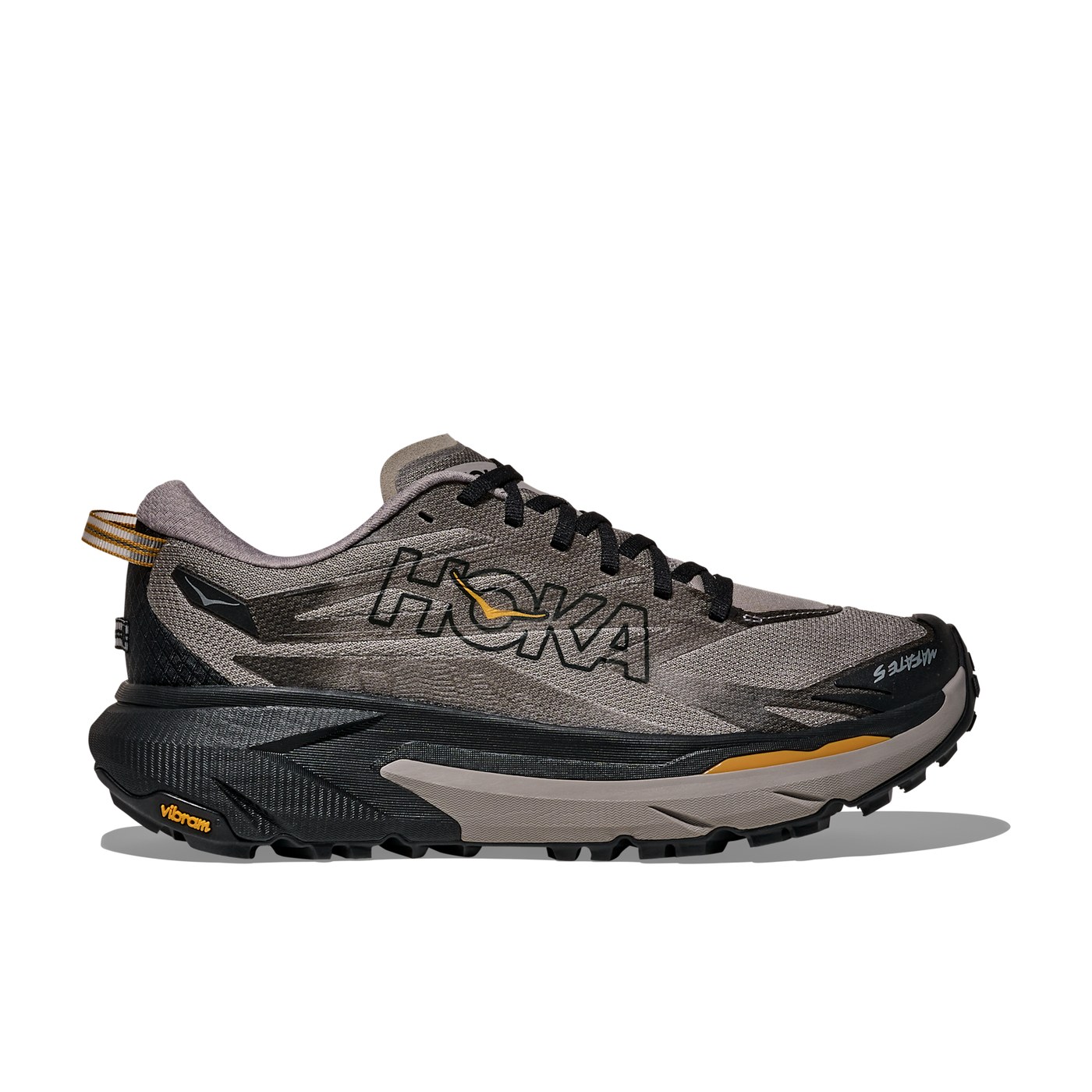
Meet the Hoka Mafate 5, the brand's signature ultra-trail shoe from California. Released on August 1, 2025, it marks a clear shift: a higher drop (8 mm versus 4 mm on the Mafate 4), a new dual-density supercritical foam, and a TPU Rocker Integrity plate that holds the shoe's geometry mile after mile. As a RunMorph coach, I analyzed it against the consensus of French-speaking testers and independent lab data. Here's who I recommend it to, and who should look elsewhere.
Hoka Mafate 5 Review: Max-Cushion Ultra Icon Moves to 8 mm Drop
8.5/10
Hoka Mafate 5: Hoka's flagship trail shoe, built for long distances
The Mafate is Hoka's ultra DNA. Ever since the first Mafate in 2010, this is the model where the brand lays out its philosophy: maximum cushioning, rocker geometry, full underfoot protection. The fifth version keeps that identity but fixes a recurring flaw of the Mafate 3 and 4: the mushy feel late in an ultra, and the rocker curve flattening out past 600 km. Hoka's answer fits in three letters: RIT, for Rocker Integrity Technology.
RunMorph's advice. If you want a technical ultra-trail shoe with generous cushioning and a geometry that doesn't collapse, the Mafate 5 is Hoka's benchmark right now. For a more race-oriented use (technical race day), go for the Hoka Tecton X 3 or the Hoka Speedgoat 7 instead.
© Hoka, official photo used for editorial purposes.
Objective technical data
| Brand | Hoka |
| Model | Mafate 5 |
| Official release | August 1, 2025 |
| Type | Trail, max-cushion, ultra-long distance |
| Drop | 8 mm |
| Forefoot / heel stack height | 37 mm / 45 mm |
| Weight (EU 42) | 320 g (men's), 270 g (women's) |
| Foam | Dual density: supercritical PEBA (top layer) + soft EVA (base) |
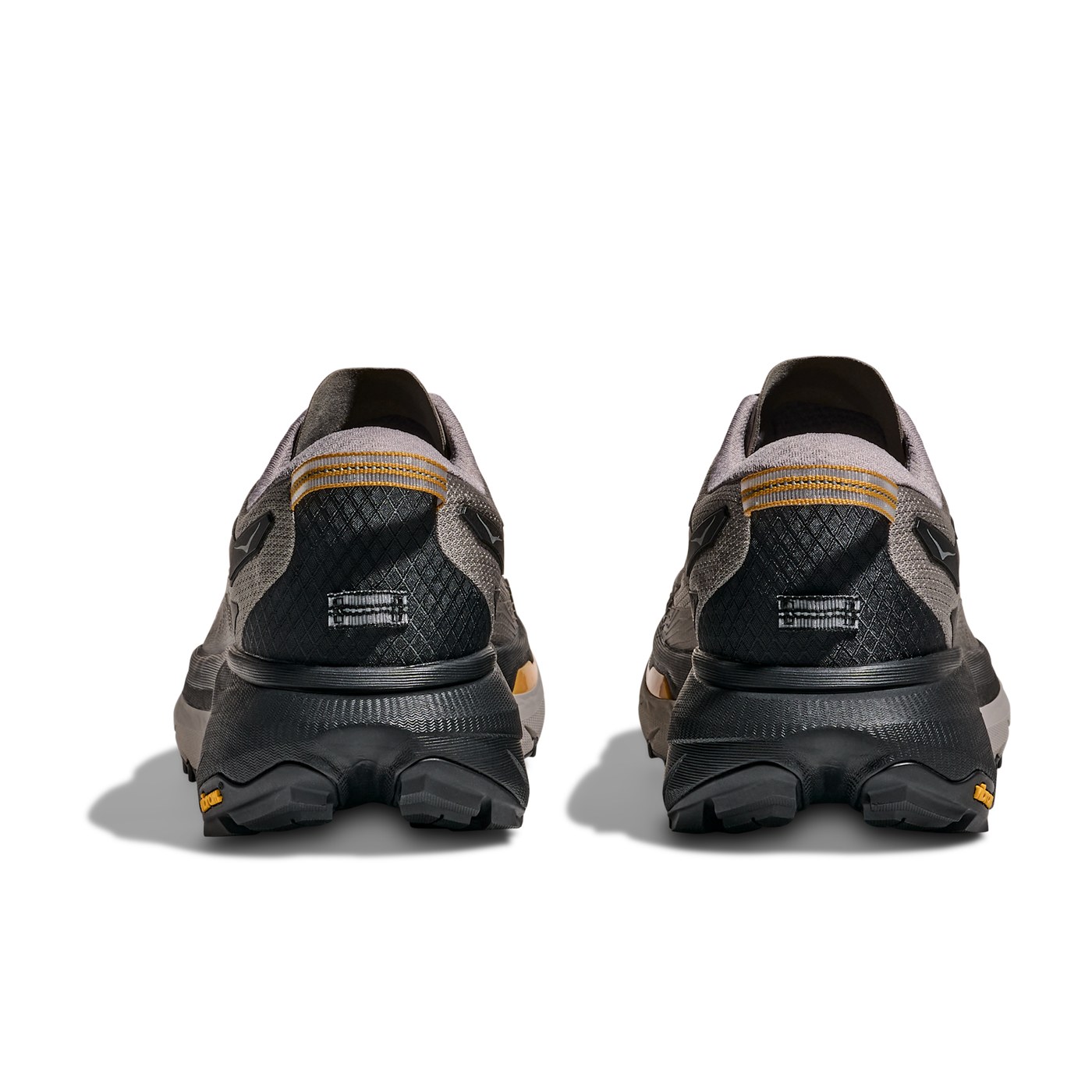
| Plate | TPU Rocker Integrity (preserves the rocker geometry) |
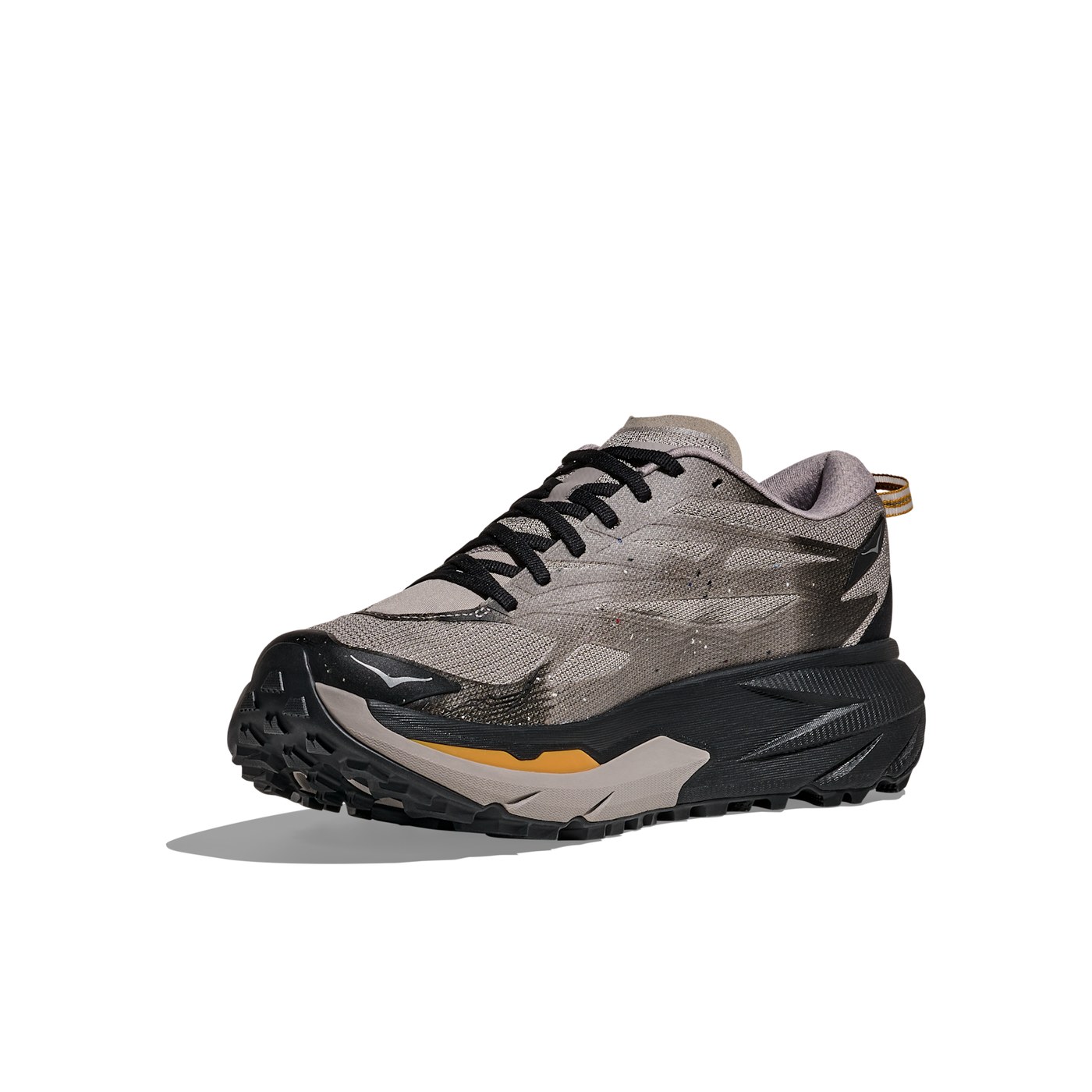
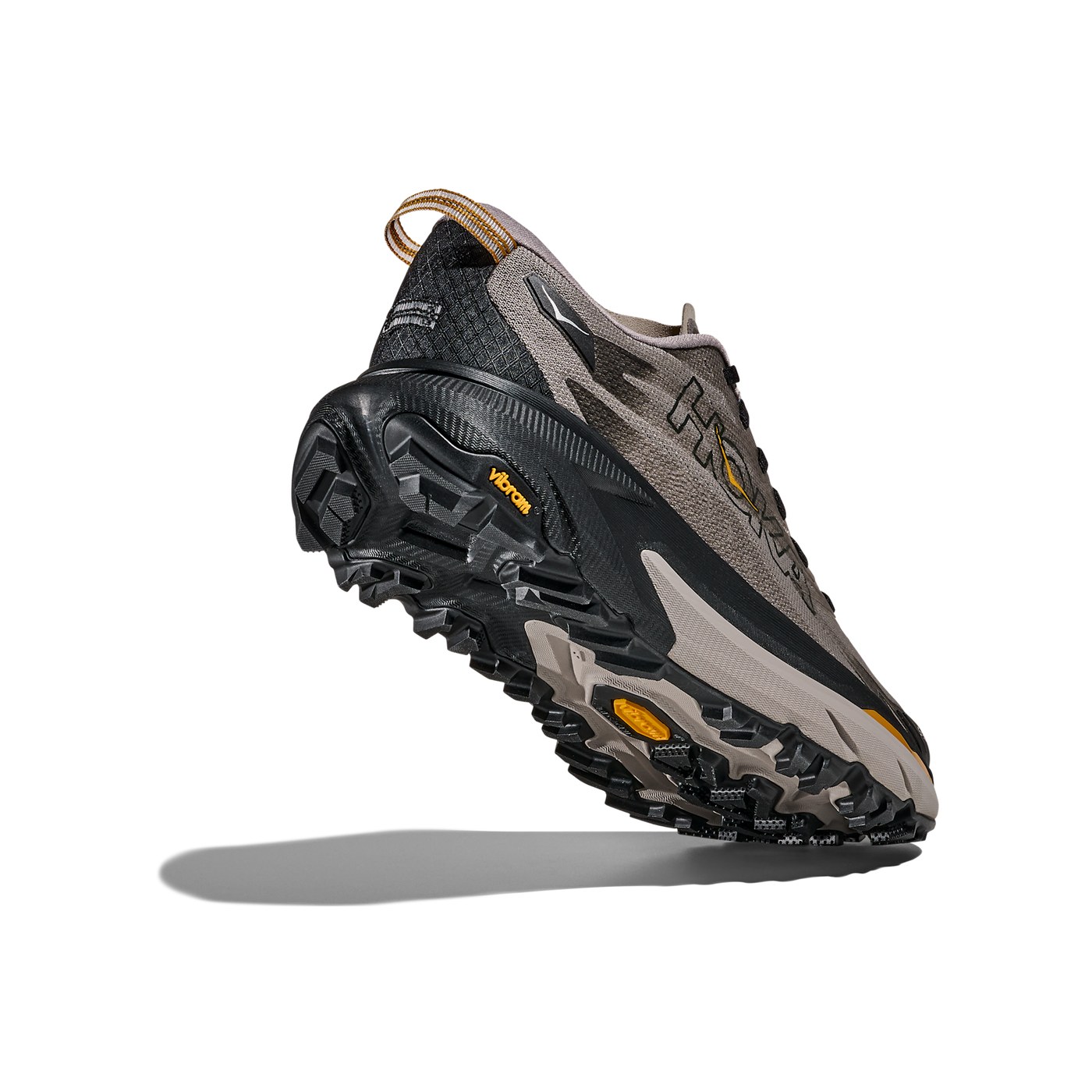
| Outsole | Vibram Megagrip, 5 mm lugs |
| Upper | Warp-knit + 360-degree thermo-molded TPU cage |
| Recommended distance | 40 km to 160 km (ultra-trail) |
| Official price | €190 |
Who is the Mafate 5 for?
Ultra runners who want comfort for 12 hours and up
This is the Mafate's core audience. On 80 to 160 km races, where your feet take thousands of impacts on rock, roots and long descents, the Mafate 5 delivers exactly what you expect: a thick layer of cushioning that soaks up fatigue, a rocker geometry that helps you roll forward when your cadence drops, and a TPU plate that keeps the foam from bottoming out after 60 km. If you're training for UTMB, the Diagonale des Fous or a 100-miler, it belongs on your shortlist.
Heavier, powerful runners who crush thin midsoles
With 45 mm of stack height and a dense EVA base, the Mafate 5 protects runners over 80 kg who flatten their shoes too early. French-speaking testers agree on this: the foam stays responsive even after 400 km, which wasn't always true of the Mafate 4. As a coach, I regularly recommend it to runners who complain that their max-cushion trail shoes pack out fast.
Runners looking for a versatile mountain trail shoe
The 5 mm Vibram Megagrip outsole handles a wide range of terrain: dry singletrack, wet rock, loose dirt, slick roots. Raising the drop to 8 mm (versus 4 mm on the Mafate 4) is a game changer for runners whose Achilles tendons suffer in very flat shoes. The 360-degree TPU cage shields you from rocks hitting the side, which is rare at this stack height. This shoe owns its mountain versatility without pretending to be a fast-and-light model.
© Hoka, official photo used for editorial purposes.
Comfort, ride and grip
Step in and the Mafate 5 surprises you: plush underfoot, yet structured. The warp-knit upper wraps the foot without squeezing, and the 360-degree TPU cage locks the forefoot in place without creating pressure points. Testers at Pacing Trail and at Trail and Running point out that the fit is more precise than on the Mafate 4, with a better-integrated inner bootie.
On the run, the dominant feeling is generous cushioning that filters out fatigue. The supercritical PEBA top layer gives enough rebound that you never feel like you're wading, and the EVA base absorbs the impacts of technical descents. The TPU Rocker Integrity plate doesn't feel like a classic carbon plate (no artificial propulsion): it works in the background to keep the rocker curve intact even as the foam tires.
Grip is excellent on dry trail and rock. The 5 mm Vibram Megagrip lugs bite into loose dirt and hold on wet rock. In pure greasy mud, it doesn't match a Salomon Speedcross 6 and its aggressive lugs, but it sits well above the max-cushion average.
How it stacks up against the competition
The Mafate 5 plays in a crowded segment. Here's how it compares with the market's benchmarks.
Vs. the Hoka Speedgoat 7 (€165, 290 g, 5 mm drop, stack 40/35): the Speedgoat 7 is nimbler, lighter and better suited to short and mid-length races (up to 50 km). The Mafate 5 takes over on long ultras and for runners who put maximum cushioning ahead of snappiness.
Vs. the Hoka Tecton X 3 (€230, 271 g, 5 mm drop, stack 40/35, Parallel Carbon carbon plate): the Tecton X 3 is Hoka's trail racing shoe, built for performance over 50 to 100 km. The Mafate 5 is more comfortable and more durable, but far less propulsive. It comes down to profile: chasing the clock or chasing protection.
Vs. the Brooks Cascadia Elite (€275, 276 g, 6 mm drop, stack 40/34, SpeedVault+ carbon plate): the Cascadia Elite is a carbon trail super shoe designed for fast ultras. The Mafate 5 targets the other extreme: more comfort, less propulsion, and a lower price (€190 versus €275).
Vs. the Salomon S/Lab Genesis (€200, 270 g, 8 mm drop, stack 32/24): the S/Lab Genesis is a versatile technical racing shoe, more precise but far less cushioned. If you want trail feel and agility, the Genesis beats the Mafate. For pure long distance, it's the other way around.
How to fit the Mafate 5 into your RunMorph training plan
The Mafate 5 earns its place in several training phases. On a RunMorph trail plan geared toward ultra or mountain racing, it can be your go-to shoe for weekend long runs (over 2 hours 30) and technical sessions with elevation gain. For short hill repeats or fast paces, it's too heavily cushioned to give you the feedback you need; switch to a more dynamic shoe like the Asics Fuji Lite 6 or the Saucony Peregrine 16.
My coaching advice: pair the Mafate 5 with the technical long runs in your plan, and save it for race day on courses over 60 km. For a 30 km trail race, it's overkill. Over 100 km, it's in its element.
© Hoka, official photo used for editorial purposes.
The RunMorph coach's verdict
The Mafate 5 fixes its predecessor's flaws and reasserts Hoka's position in comfort-first ultra-trail. Rocker Integrity Technology is the core argument: you get the same geometry at 0 km and at 500 km, and that matters when you're training for a race with an €800 entry fee. Raising the drop from 4 mm to 8 mm is more debatable: it opens the shoe to a wider audience (fragile Achilles tendons, runners transitioning from the road), but it disappoints Mafate loyalists who loved the very low geometry. It's a deliberate repositioning.
The weight (320 g in a men's EU 42) stays above the segment average, and the shoe is a poor fit for short races. The price (€190) sits in the upper-middle of the market but matches the claimed durability (the French-speaking press reports 800 to 1000 km before significant breakdown). For an ultra runner with a major goal race, it's a sound investment.
RunMorph score: 8.5/10. A benchmark in its segment, and one of the top 3 max-cushion ultra-trail shoes of 2026, alongside the On Cloudultra Pro and the Adidas Terrex Agravic Speed Ultra 2.
Key takeaways for your training
- Target distance: from 40 km, ideal between 60 and 160 km. Below that, pick a more dynamic shoe.
- Ideal runner: ultra runners, heavier runners (80 kg and up), runners who put long-haul comfort ahead of pure performance.
- New drop: 8 mm versus 4 mm on the Mafate 4. If you're coming from the Mafate 4, plan a gradual transition of 100 to 150 km.
- Geometry that lasts: the TPU Rocker Integrity plate keeps the rocker curve even after 500 km, unlike the Mafate 3 and 4.
- A smart investment: €190 for 800 to 1000 km of durability is a very competitive cost per kilometer in the ultra-trail segment.