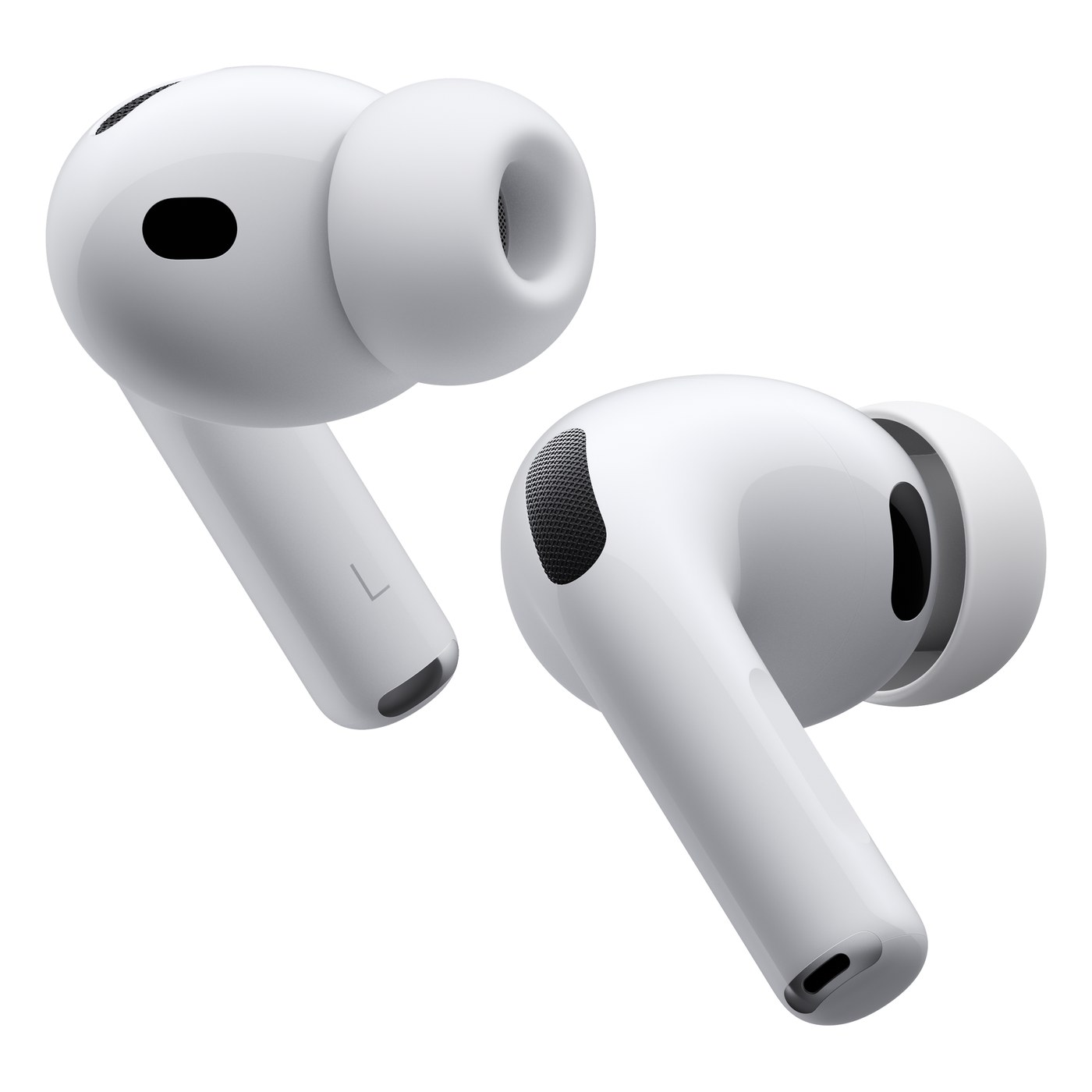
With the AirPods Pro 3, Apple does more than polish the Pro 2 formula. It puts a heart rate sensor inside each earbud, a bet aimed at the gym as much as the track. The real question: can a classic in-ear design, with no hook and no reinforced retention system, actually go the distance on a run?
© Apple, official photo used for editorial purposes
Apple AirPods Pro 3: a heart rate sensor added to a proven formula
Since their launch in September 2025, the AirPods Pro 3 keep most of the recipe that made the Pro 2 a hit (in-ear design, active noise cancelling, Transparency mode) and add something many sporty users had wanted for years: an optical heart rate sensor in each earbud. At 249 euros, they sit at the top of the segment, with regular deals between 198 and 249 euros depending on the retailer in mid-2026.
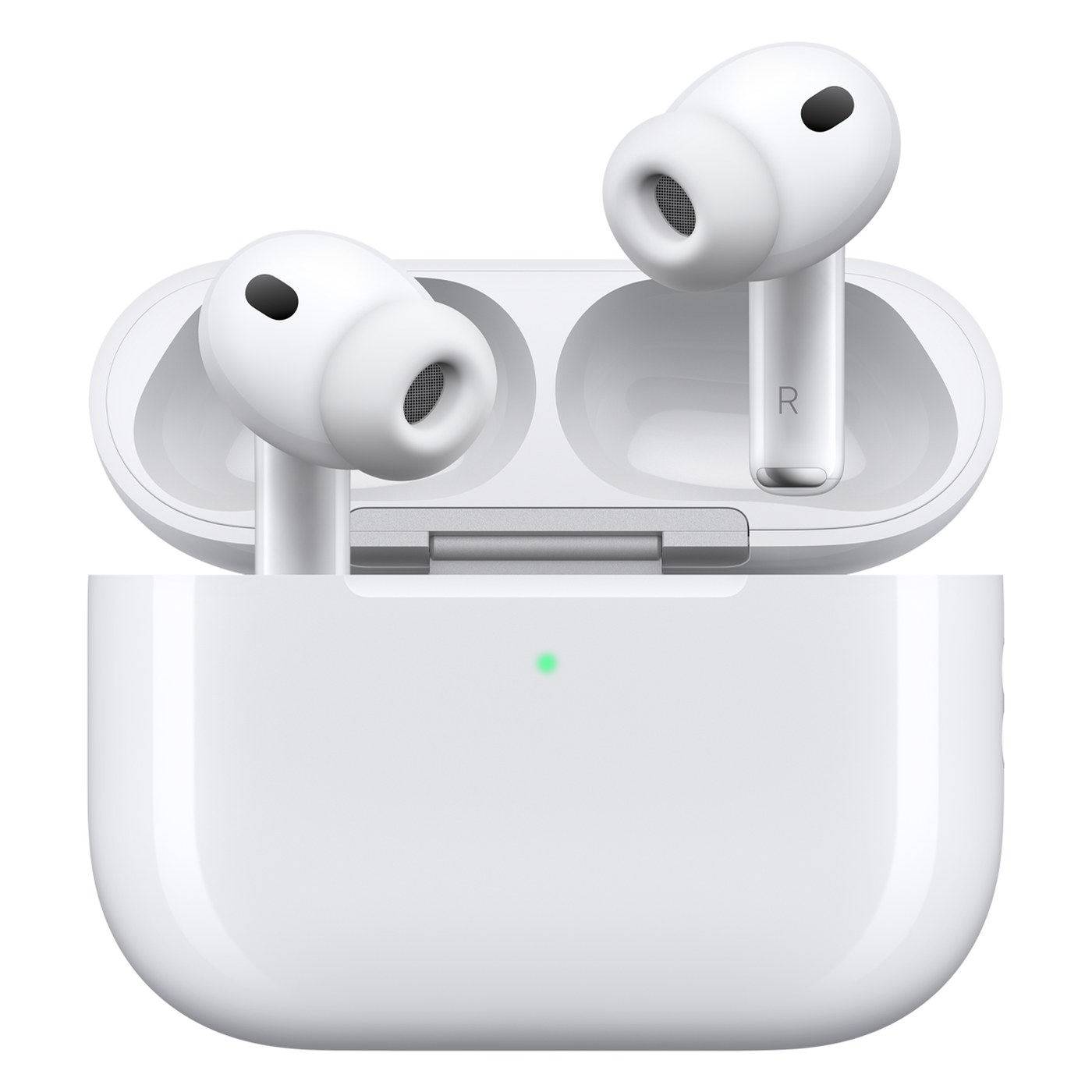
The charging case now supports USB-C and MagSafe, and the earbuds move up to IP57 certification (versus IP54 on the previous generation), which covers accidental immersion down to 1 meter for 30 minutes. Five ear tip sizes come in the box, including a new XXS size, to fit the narrowest ear canals.
RunMorph's advice: if heart rate tracking on the run is your absolute priority, the Beats Powerbeats Pro 2 with their ear hooks remain the safer pick for signal stability. The AirPods Pro 3 are better suited to mixed use (cycling, strength training, walking, relaxed easy runs) where head stability isn't pushed hard.
The built-in heart rate sensor: how it really performs
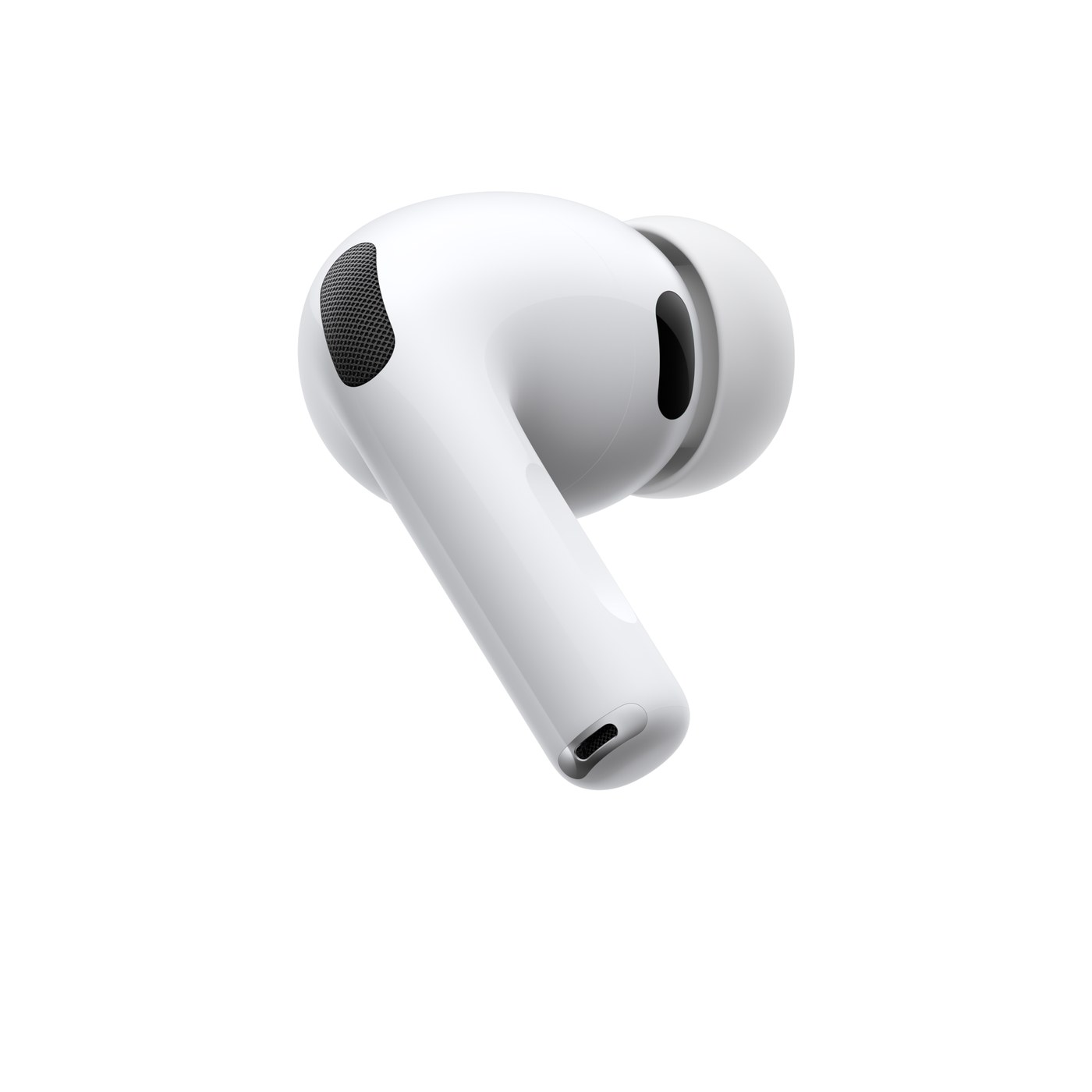
The new optical sensor uses an infrared diode that pulses 256 times per second to read blood flow in the ear canal, an area known for being relatively stable against motion artifacts. Heart rate, calories burned and effort intensity feed into the Fitness or Health app on iPhone in real time.
An independent test comparing the data against a benchmark chest strap found very good accuracy on the bike, indoors and outdoors, with a smooth, unbroken curve through both effort and recovery phases. In strength training, every set triggers a clearly defined heart rate rise, and the signal holds steady even under load, where some smartwatches struggle to stay reliable.
Running exposes a clearer limit. The same independent protocol shows the signal sometimes drops out mid-effort, with brief interruptions that skew some results: head movement during the stride appears to disrupt optical stability. The five ear tip sizes, including the new XXS, aim to improve hold and limit these micro-movements, but a good fit isn't always enough, depending on ear shape and running intensity.

© Apple, official photo used for editorial purposes
Real-world testing: ANC, battery life and everyday comfort
Apple claims 8 hours of battery life with ANC on. Several independent measurements land close to that, between 8 hr 28 min and 8 hr 42 min depending on protocol and listening volume, a clear step up from the 6 hours measured on the previous generation. Without noise cancelling, battery life climbs to around 10 hr 30 min. With the case, total battery life reaches about 30 hours, more than several direct rivals in the segment.
Active noise cancelling delivers 25 to 30 dB of attenuation in the low frequencies, enough to erase rumble on public transit or moderate wind outdoors. It's more restrained in the mids (10 to 15 dB), where some noise-cancelling rivals do better on voices and office noise. Adaptive Transparency mode, on the other hand, is universally praised as the segment benchmark: ambient sound stays natural, with no echo effect, and it switches over automatically in under 500 milliseconds as soon as you start talking.
On comfort, the 5.55 g weight per earbud limits ear fatigue over long six-to-eight-hour sessions. The hold stays reliable for standard to wide ear shapes during brisk walking, with possible slight pressure in narrower canals after two hours of continuous effort.
Apple AirPods Pro 3 vs Beats Powerbeats Pro 2 vs Shokz OpenRun Pro 2: head-to-head
| Criterion | AirPods Pro 3 | Beats Powerbeats Pro 2 | Shokz OpenRun Pro 2 |
|---|
| Format | In-ear | In-ear with ear hook | Open-ear bone conduction |
| Built-in heart rate sensor | Yes | Yes | No |
| Stability on the run | Needs work | Excellent (ear hook) | Excellent (no contact with the ear canal) |
| Situational awareness | Low except in Transparency mode | Low except in Transparency mode | High at all times |
| Battery life | 8 hr 30 min / 30 hr with case | 10 hr / 45 hr with case | 12 hr |
| Water resistance | IP57 | IPX4 | IP55 |
| Price | €249 | €299.95 | €179.99 |
Against the Beats Powerbeats Pro 2, which also pack a heart rate sensor and are developed by Apple, the AirPods Pro 3 lose on running stability (the Powerbeats' nickel-titanium hook doesn't budge, unlike a simple in-ear tip) but win on total battery life and price. Against the Shokz OpenRun Pro 2, the bone conduction benchmark RunMorph has already reviewed, the choice mostly comes down to your priority: sound quality (AirPods win) or safety and traffic awareness outdoors (Shokz win, leaving your ear canal completely open).
Pros and cons
Pros
- Built-in heart rate sensor, reliable on the bike and in strength training
- Adaptive Transparency mode among the best on the market
- Measured battery life clearly up on the previous generation
- Very comfortable to wear thanks to the low weight (5.55 g)
- IP57 rating, one of the best in the in-ear segment
Cons
- Heart rate signal sometimes drops out while running
- Codecs capped at AAC, no LDAC or aptX Adaptive
- Advanced features locked to the Apple ecosystem (iOS, macOS)
- No ear hook or reinforced retention system for intense training
- Pricey next to open-ear alternatives
© Apple, official photo used for editorial purposes
Our verdict from the field: who are the AirPods Pro 3 for?
The multisport athlete with an iPhone
Cycling, strength training, brisk walking: the heart rate sensor delivers on these activities, and automatic integration with the Fitness app means no extra device.
The casual runner doing easy aerobic runs
On a relaxed easy run at a steady pace, the signal stays mostly usable. Sudden pace changes and intervals are where the limits show most clearly.
The runner who wants precise heart rate data on the run
For hard intervals or time-targeted race prep, a dedicated ear-hook design like the Beats Powerbeats Pro 2, or a chest strap paired with a GPS watch, remains more reliable.
© Apple, official photo used for editorial purposes

© Apple, official photo used for editorial purposes
If you use the AirPods Pro 3 to track your easy aerobic runs or rides, pair them with a RunMorph training plan to structure your heart rate zones over time. For intervals and high-intensity sessions, add a chest strap or dedicated sensor until optical in-ear measurement gets more stable.
RunMorph verdict
The Apple AirPods Pro 3 largely win their bet: adding a usable heart rate sensor to earbuds that already excel at ANC, Transparency mode and battery life. On the bike, in strength training and on relaxed easy runs, heart rate tracking delivers, with accuracy close to a benchmark chest strap.
The limit lands exactly where RunMorph expects the most from this product. In intense running, head movement sometimes disrupts the signal, a flaw documented by independent measurements and no minor issue if you want to rely on it as your only heart rate tool for intervals. Add codecs capped at AAC and a 249 euros price, and these points hold back a higher score despite undeniable sound quality and comfort.
7.5/10: a very good all-round earbud with a promising heart rate sensor, but not yet the go-to tool for runners who want dependable interval data without a watch or chest strap.