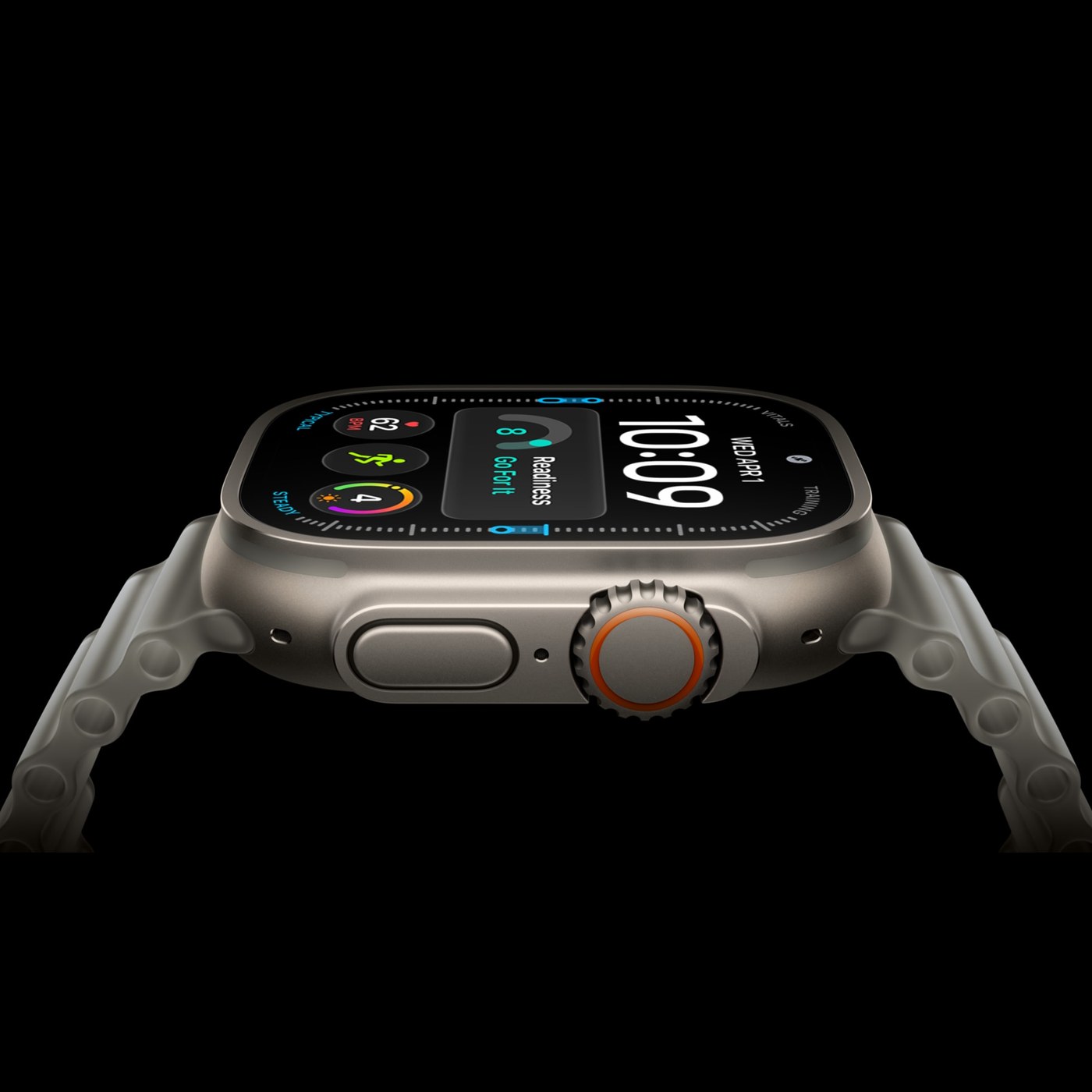
On September 18, 2026, the Apple Watch Ultra 4 hits French stores with a claim Apple would never have made three years ago: the brand says its watch can now carry a runner through a 100-miler, roughly 161 kilometers. The titanium case has barely changed since the Ultra 3, but Apple claims 50 hours of battery life in normal use, a new heart sensor system and a workout mode stretched to 45 hours. At RunMorph, we read every early French and international review published at launch to check what those numbers are really worth once the GPS is running on an actual trail.
© Apple, official photo used for editorial purposes
Apple Watch Ultra 4: the day Apple finally owns the word ultra trail
Ever since the first Ultra launched in 2022, Apple has pitched its flagship watch as an adventure watch in the broad sense: diving, hiking, trail running, but rarely ultra trail in the strict sense. With the Ultra 4, the brand shifts gears. In its official press release, it writes that the new extended workout mode is typically enough to finish a 100-mile race. It's the first time Apple has explicitly named that race format, historically the home turf of Garmin, Coros and Suunto.
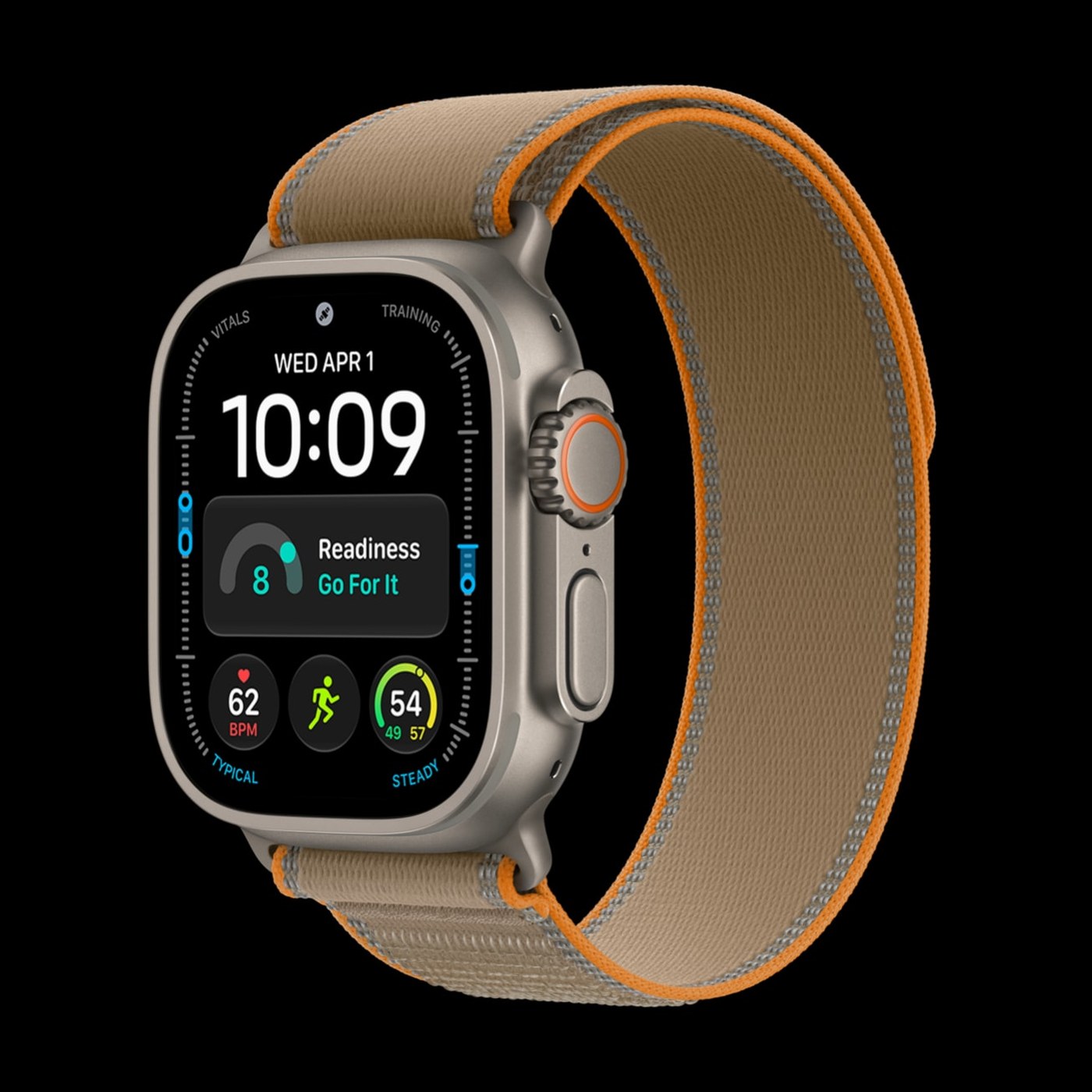
The rest of the spec sheet stays very close to the Ultra 3: same 49 mm titanium case, same sapphire crystal, same 3,000-nit LTPO3 OLED display. The real break happens inside, with a new S11 chip, a completely redesigned health sensor system and finer power management. The question is whether that gain is enough to make the Ultra 4 a real rival to the ultra trail specialists, or just a better health watch that can also run for a long time.
RunMorph's advice: before replacing an Apple Watch Ultra 3 that still works fine, check the comparison table further down this article first. The Ultra 4's real gain comes down to specific hours of battery life, not a design change.
© Apple, official photo used for editorial purposes
What Apple claims vs what was measured
With a watch that has only been on sale for a few hours, no French outlet has yet been able to check every number over several weeks. But the first independent reviews published at launch by several leading international outlets already take the edge off several of Apple's claims.
| Data point | Apple's claim | What early reviews show |
|---|
| Workout battery life | 45 h in extended mode, pitched as enough for a 100-miler | Only 25 h with full GPS and heart rate; beyond that, alerts and auto laps are switched off |
| Daily battery life | 50 h in normal use | An independent reading measured a 21-point battery drop over half a day including 3 h 30 of training, a pace consistent with the claim but not verified over the full duration |
| Weight and design | Presented as virtually unchanged from the Ultra 3 | 63 g measured vs 61.6 g on the Ultra 3, about 1.4 g more |
| Heart sensor accuracy | The most accurate heart sensor ever built into an Apple Watch | Less than 5 beats per minute off a Polar H10 chest strap over two runs, according to an independent reading of the same sensor system |
| GPS accuracy | The most accurate GPS of any sports watch, based on an internal protocol from August 2026 | Tested in urban environments only; no independent data from dense forest or deep valleys is available yet |
© Apple, official photo used for editorial purposes
Who is the Apple Watch Ultra 4 for?
The road runner already living on iPhone
For a runner training for a marathon or half marathon who never goes past three or four hours of continuous effort, the Ultra 4's 25 hours of full workout battery life are a non-issue. On top of that, you get the most accurate heart rate tracking Apple has ever offered and a daily readiness score that helps you dial in your training load.
The trail runner who goes up to short ultras
On races up to 50 or 60 kilometers, the Ultra 4 easily goes the distance with its 25 hours of full tracking, and the new offline mapping with route creation and Backtrack covers most navigation needs. On a real technical 100-miler in the mountains, though, the stripped-down extended mode leaves a doubt that RunMorph breaks down further in this article.
The multisport triathlete
With built-in swim, bike and run profiles, training load data and compatibility with the Apple Fitness ecosystem, the Ultra 4 remains a credible option for a triathlete racing sprint or Olympic distance. On a long-distance Ironman-type race, however, 25 hours of full-use battery life can become something to watch depending on your target finish time.
The Health Sensing System and the S11 chip: what changes on your wrist?
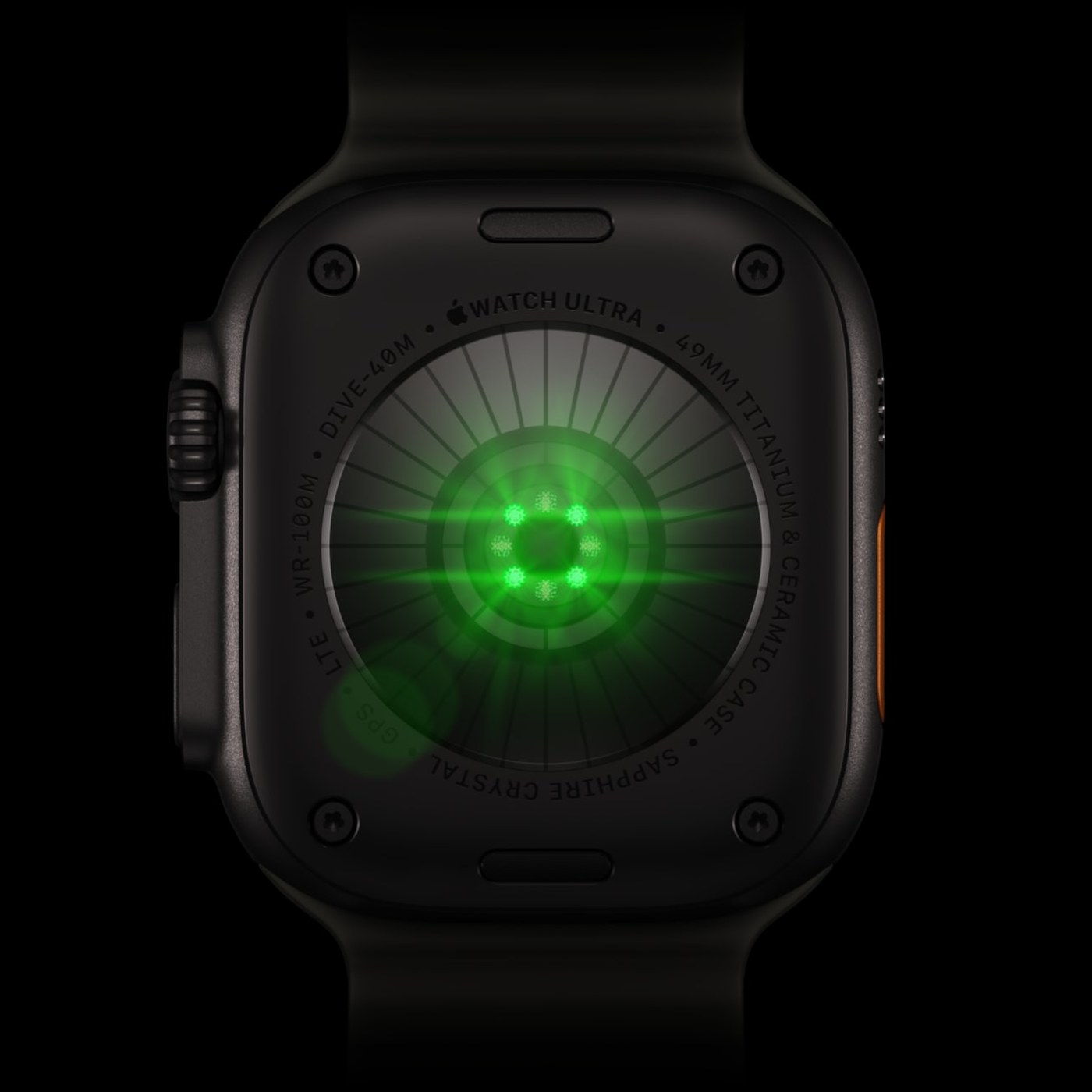
The real novelty of this generation isn't visible from the outside. Apple has built in a new sensor system called the Health Sensing System, paired with the S11 chip. In practice, heart rate is now measured every 5 seconds, including outside workouts, compared with much sparser readings on previous generations. Heart rate variability gets the same treatment.
© Apple, official photo used for editorial purposes
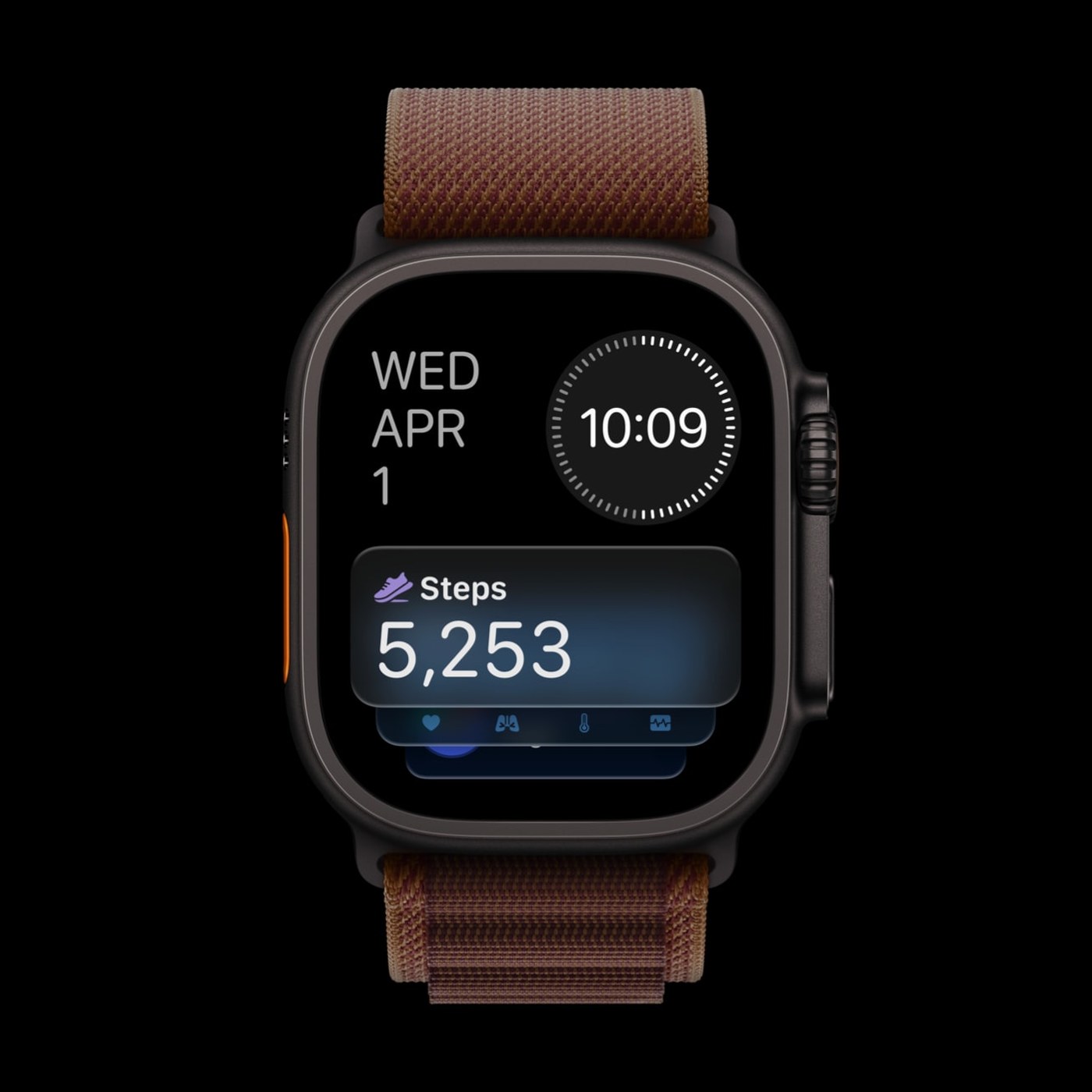
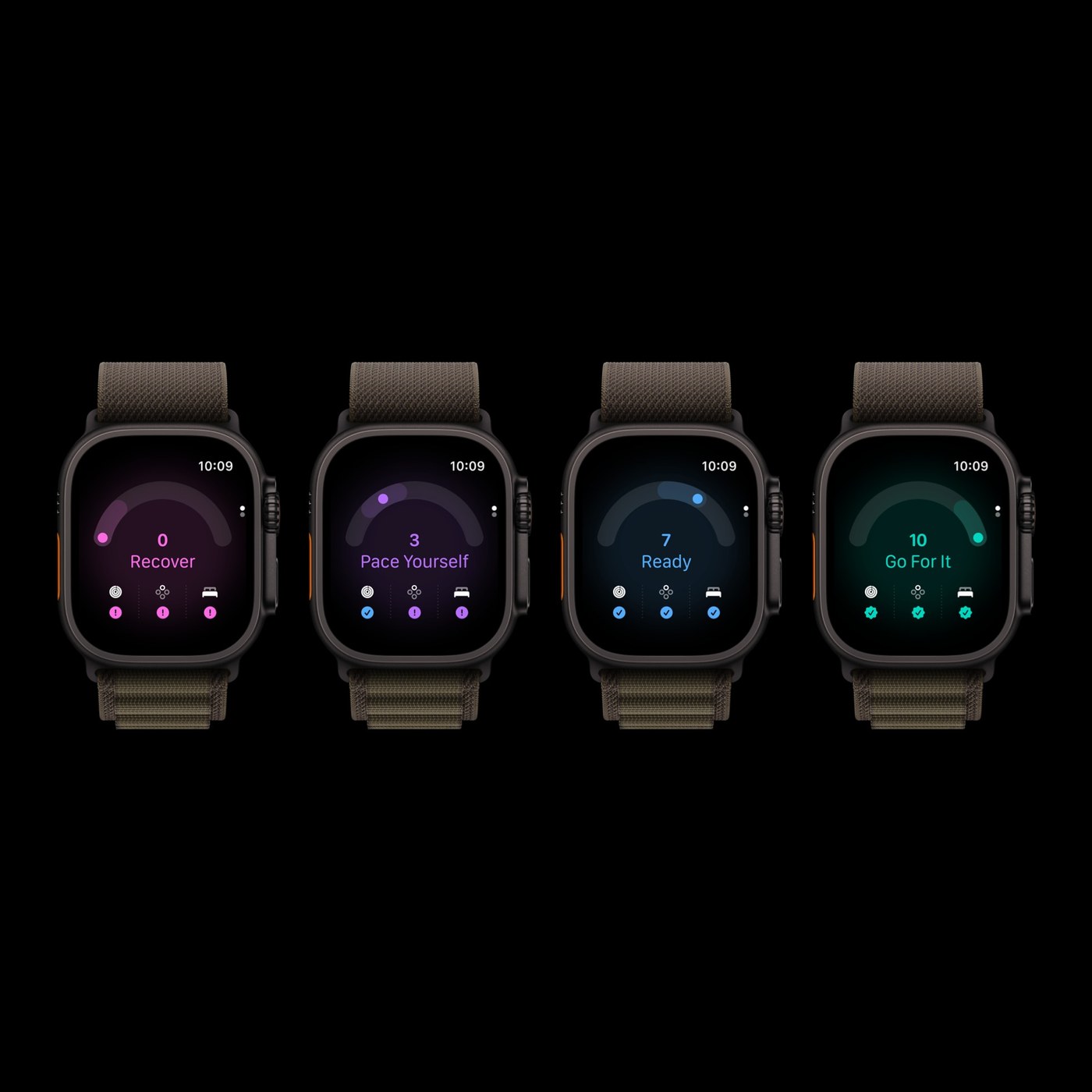
All that data feeds straight into the new Readiness score, which every morning rolls recent activity, sleep, resting heart rate, respiratory rate and wrist temperature into a score from 0 to 10, along with a recommendation from four levels: recover, ease off, ready, or push harder. There's nothing original about the concept: Oura, Whoop and Garmin watches have offered comparable recovery scores for years. The difference is mainly that Apple now builds this tool straight into watchOS, with no third-party app.
The number that matters isn't 45 hours, it's 25 hours
This is the most important point for a RunMorph reader considering the Ultra 4 for long trail runs. Apple is marketing an Ultra Extended Workout mode of 45 hours, stressing that it keeps a GPS fix every second. But that figure hides a key caveat, already flagged at launch by the French outlet u-Trail: to reach those 45 hours, the watch switches off alerts and auto laps, and several metrics become unavailable.
The number a demanding trail runner should really keep in mind is the Extended Workout mode, which keeps dual-frequency GPS and full heart rate tracking running for 25 hours. For a direct comparison, the Garmin Fenix 9 Pro claims 26 hours in full multi-band GPS, already slightly more, and the Coros Vertix 2S claims 43 hours in multi-band GPS, nearly double. Apple has genuinely improved on the Ultra 3, which topped out at around 20 hours in the same conditions, but the gap with the ultra trail specialists stays wide once you look at the full mode rather than the stripped-down mode pushed in the marketing.
GLONASS is gone, the only technical step back in this generation
Flaw spotted by RunMorph: the Apple Watch Ultra 4 drops Russia's GLONASS satellite constellation, which the Ultra 3 and Ultra 2 both had. It keeps dual-frequency GPS, Galileo, QZSS and BeiDou, but loses one of the five constellations the Ultra 3 picks up. Apple says the removal has no impact on accuracy, without publishing any independent verification protocol on this specific point so far.
For a runner who trains mostly in Western Europe, losing GLONASS probably has a limited impact in most cases, since dual-frequency GPS, Galileo and BeiDou already cover a large share of needs. It's still a notable fact: it's the first time since dual-frequency GPS arrived on the Ultra line that Apple has removed a constellation instead of adding one, right as the brand claims the most accurate GPS of any sports watch. No independent field test in dense forest or deep valleys, the two situations where an extra constellation helps most, had been published at the time of writing.
The field test: what early users are saying
A watch available since the same day doesn't have French reviews based on several weeks of trail running yet. So at RunMorph, we read three analyses published at launch in full to pull out an early consensus, adding the international reviews referenced by the French press, never named for readers.
The specialist French outlet u-Trail published the most critical analysis on battery life: it stresses that Apple's 45 hours don't reflect full use and that the most demanding race format, the 100-miler, stays theoretical until a tester has actually run that long with the watch. A mainstream French outlet rounding up the first international reviews lands on a more favorable consensus on health tracking, with a heart sensor judged more responsive and daily battery life judged comfortable enough to sleep with the watch without charging it every day. A third, more technical French outlet reports a timed test by a respected international outlet: over an eleven-hour window including three and a half hours of training, the battery went from 82% to 61%, a drain rate judged consistent with Apple's claims, though the exact 25-hour full-use limit couldn't be verified yet.
All three sources agree on one point: the Ultra 4's design won't convince anyone to switch watches, but the new sensor system and the Readiness score are a real step forward. They disagree, however, on how urgent the upgrade is for an Ultra 3 owner: the more health-focused outlets see the upgrade as worthwhile for heart rate tracking, while the outlet most critical on battery life thinks the gap with the trail specialists is still too wide to justify a switch for a trail runner already on Garmin or Coros.
Apple Watch Ultra 4 vs Apple Watch Ultra 3: should you upgrade?
| Criterion | Apple Watch Ultra 3 | Apple Watch Ultra 4 |
|---|
| Weight | 61.6 g | 63 g |
| Battery life, normal use | 42 h | 50 h |
| Battery life, sport with full GPS + heart rate | ~20 h | 25 h |
| Maximum extended mode | Not available | 45 h (reduced features) |
| Heart rate sampling | Sparse readings outside workouts | Every 5 seconds, continuously |
| Readiness score | None | Yes, scored from 0 to 10 |
| GNSS | Dual-frequency GPS, GLONASS, Galileo, QZSS, BeiDou | Dual-frequency GPS, Galileo, QZSS, BeiDou (GLONASS dropped) |
| Launch price | 899 euros | 899 euros |
For an Ultra 3 owner, the upgrade is mainly justified by the new continuous heart rate tracking and the Readiness score, two hardware and software additions that don't require giving up anything on the display or design. Battery life also genuinely improves, from 20 to 25 hours in full workout use. On the other hand, an Ultra 3 owner happy with their current tracking has no urgent reason to switch: the day-to-day difference stays small, and losing GLONASS wipes out part of the on-paper gain. The math is different for owners of a first-generation Apple Watch Ultra or an Ultra 2: for them, the jump to the Ultra 4 is a clearer win.
Apple Watch Ultra 4 vs Garmin Fenix 9 Pro and Coros Vertix 2S: the real trail comparison
| Criterion | Apple Watch Ultra 4 | Garmin Fenix 9 Pro | Coros Vertix 2S |
|---|
| Price | 899 euros | 1,099 to 1,299 euros | 699 euros |
| Battery life, full GPS + heart rate | 25 h | 26 h | 43 h |
| Battery life, maximum stripped-down mode | 45 h | 32 h (standard GPS) | 140 h (UltraMax) |
| Offline maps | Yes, with route creation | Yes, full topographic mapping | Yes, free worldwide |
| Ecosystem | iPhone required | Android and iOS | Android and iOS |
| Daily health tracking | The most complete of the three (Readiness, ECG, temperature) | Complete, training-focused | More limited, performance-focused |
This table boils down to one sentence: the Apple Watch Ultra 4 clearly wins on health tracking and price against the Fenix 9 Pro, but loses on pure sports battery life against both trail specialists. For a runner already living in the Apple ecosystem who doesn't go past 25 hours of continuous effort, the Ultra 4 remains a sensible choice and cheaper than the Fenix 9 Pro. For a trail runner targeting a real 100-miler or already invested in Android, the Coros Vertix 2S keeps a clear lead on battery life, for 200 euros less.
Pros and cons
Pros
- Heart rate measured every 5 seconds, less than 5 beats per minute off a chest strap according to an independent reading
- Full workout battery life up from 20 to 25 hours compared with the Ultra 3
- Readiness score built in natively, no third-party app
- Offline maps with route creation and Backtrack
- Price unchanged at 899 euros despite the hardware and software additions
Cons
- The 45-hour mode switches off alerts and auto laps, far from full use
- Loses the GLONASS constellation compared with the Ultra 3 and Ultra 2
- 25 hours of full battery life still falls short of the Coros Vertix 2S's 43 hours
- Closed ecosystem, iPhone required, no Android compatibility
- Design nearly identical to the Ultra 3, a letdown if you were hoping for a redesign
© Apple, official photo used for editorial purposes
Our field take: who is it really for?
At RunMorph, we recommend the Apple Watch Ultra 4 to a runner or trail runner already on iPhone, whose sessions range from easy runs to short ultra trail races, without going past a full day of continuous effort. The new heart rate tracking and the Readiness score make day-to-day training easier to read, which fits naturally into a structured build-up.
Your RunMorph training with the Ultra 4: whether you're preparing a marathon, a half or your first long trail run, pair the Ultra 4's continuous heart rate tracking with a
RunMorph training plan to dial in your workload week after week, instead of relying on the Readiness score alone.
RunMorph Coach verdict
The Apple Watch Ultra 4 is a good watch that improves where it matters most for health, and takes a step back on one specific point, the GLONASS constellation, right as it markets its GPS accuracy. The 45-hour figure, pushed across all of Apple's marketing, doesn't hold up to scrutiny: it's the 25 hours of full use that should drive a demanding trail runner's buying decision.
7.3/10. A score that rewards a real leap in health tracking and a genuine battery life gain, but refuses to reward marketing built around a number that doesn't match full use of the watch. Up against specialists like Garmin or Coros that deliver more sports battery life for the same price or less, the Ultra 4 remains an ecosystem choice before it's a pure performance choice.
FAQ
Does the Apple Watch Ultra 4 really last 45 hours on the trail?
No, not with every feature on. The 45 hours come from a stripped-down mode with no alerts and no auto laps. With full GPS and heart rate tracking, the claimed battery life drops to 25 hours.
Should you replace an Apple Watch Ultra 3 with the Ultra 4?
Not urgently. The gain boils down to 5 more hours of full workout battery life (20 to 25 hours) and heart rate measured every 5 seconds instead of sparser readings before, for the same 899 euro price.
Is the Apple Watch Ultra 4 suited to ultra trail running?
It works up to a short ultra of around 25 hours of continuous effort. Beyond that, the Coros Vertix 2S offers 43 hours of full use, nearly double, for 699 euros.
Why did the Apple Watch Ultra 4 lose the GLONASS constellation?
Apple hasn't given a specific technical reason. The brand only says the removal doesn't affect accuracy, without having published any independent verification protocol on this point to date.