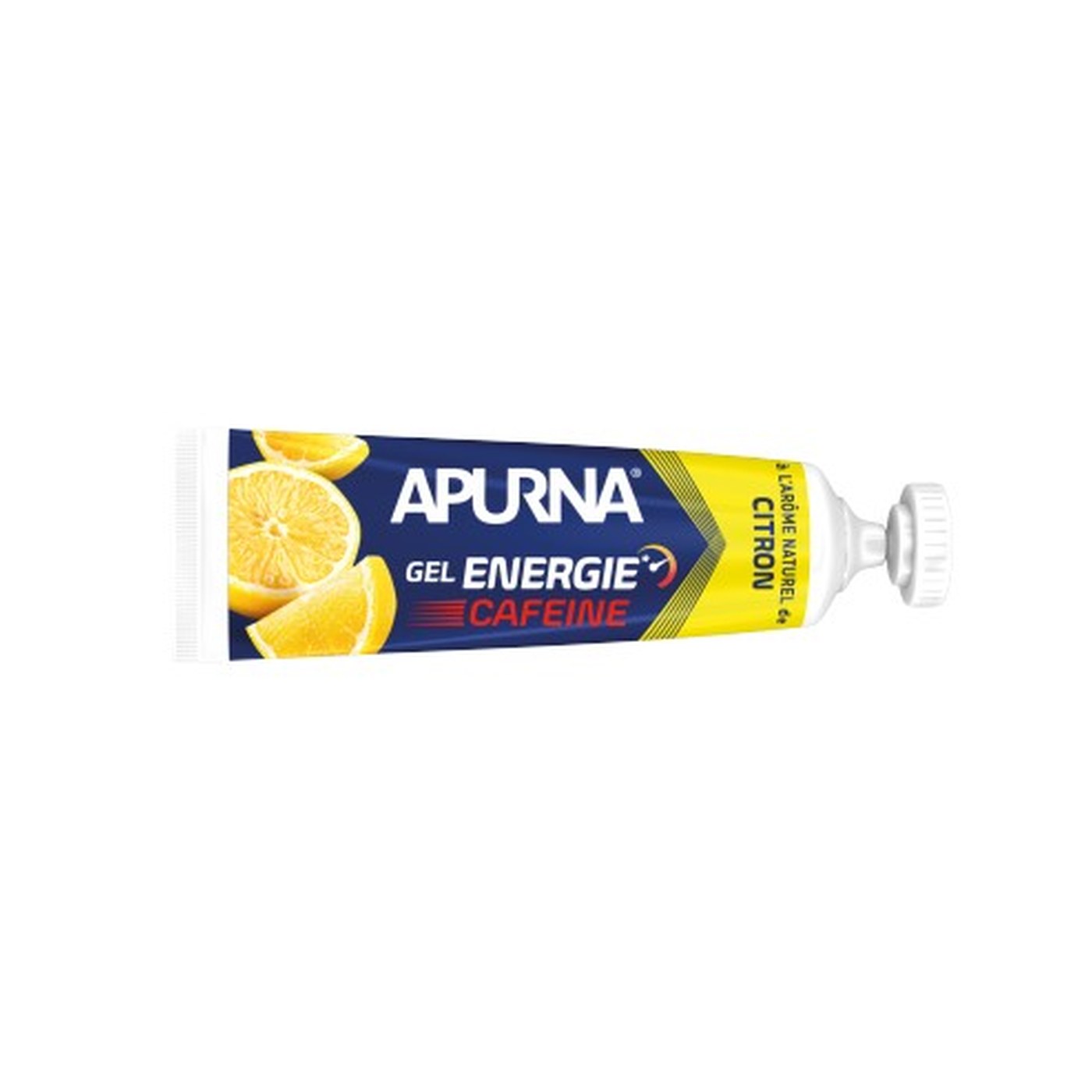
Apurna touts a patented whey protein technology, Prolacta, supposed to set its gels apart from the rest of the market. Except the caffeinated Gel Energie Citron, its best-selling and most affordable format at 2.50 euros a tube, doesn't contain a trace of it: 0 grams of protein on the label. This is a review of the product actually sitting on the shelf, not of the brand's marketing promise.
© Apurna, official photo used for editorial purposes
Apurna, the French brand that plays the whey card, except on its best-selling gel
Apurna belongs to the French dairy industry (Lactalis group) and makes part of its energy range at a factory in Les Éparres, in the Isère region. The brand built its reputation on a patented technology, Prolacta, a whey protein isolate added to some of its gels and recovery drinks to improve absorption. An independent dietitian-nutritionist tested that format in extreme conditions, during a frozen winter trail race, on an Apple/Banana gel from the old "Gel de l'effort" range: 1 g of protein per 27 g of gel, a texture that firms up slightly in the cold, but good digestive tolerance.
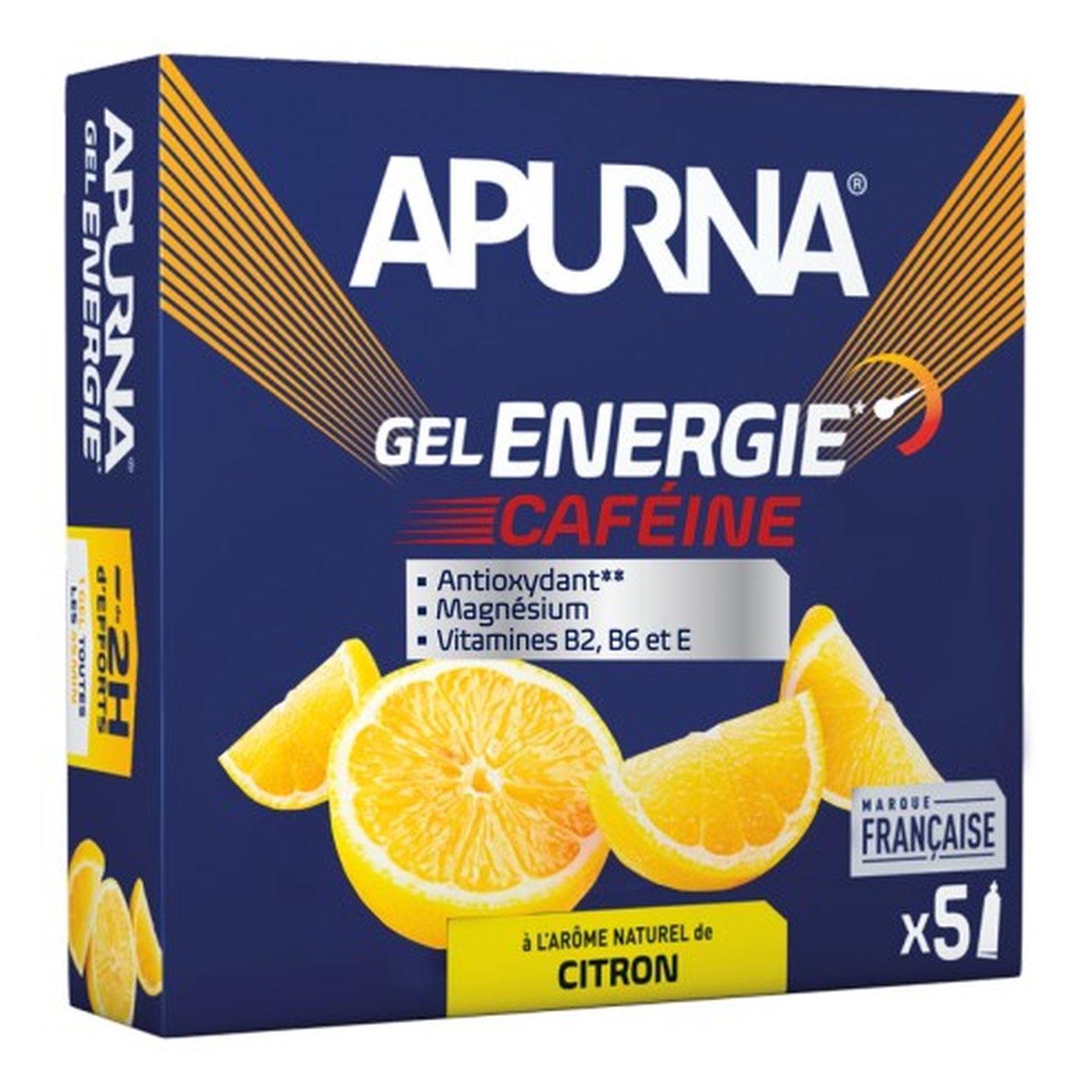
The problem is that the product actually front and center on shelves today, the Gel Energie Citron with caffeine (35 g tube, 2.50 euros each), has nothing to do with that formula anymore. Its ingredient list mentions neither Prolacta nor any protein at all: glucose syrup, water, fructose, lemon juice concentrate, minerals, caffeine and vitamins. So the brand's scientific differentiator does exist in its catalog, just not in the gel most runners buy first.
Carbs and caffeine: what this gel really delivers on the run
With 20.3 g of carbs for 81 kcal, the Gel Energie Citron sits well behind the so-called new-generation gels: the Maurten Gel 160 and the SiS Beta Fuel, both already reviewed by RunMorph, each deliver around 40 g of carbs per serving thanks to a more concentrated dual glucose-fructose source. Apurna does, however, stay in line with classic gels: the High5 Energy Gel shows 20 g of carbs on its actual label, practically the same level. To hit the 60 to 90 g of carbs per hour recommended for long efforts, you need three to four Apurna tubes per hour, versus two Maurten or SiS Beta Fuel.
The 74.6 mg of caffeine, on the other hand, puts it in the league of gels built for a jolt: that's the equivalent of a small espresso, enough for a noticeable effect without going overboard like the 100 mg-plus gels. A good card to play on a tough stretch late in a race, less relevant for repeated use on an ultra, where accumulated caffeine ends up disrupting sleep and digestion.
RunMorph's advice: save this gel for one- to two-hour runs or for a one-off boost late in a race. For an ultra-distance goal with a high carb intake, the Precision Fuel & Hydration PF 90 or the Maurten Gel Mix 480 cover far more ground with fewer servings.
© Apurna, official photo used for editorial purposes
The field test: taste and digestion pass, the badly resealing tube comes up everywhere
At RunMorph, the test material comes from three independent sources that didn't all test the exact same product in the range, an important point of transparency given how the formula has changed over the years. The oldest test, by an independent dietitian-nutritionist on a frozen winter trail race, covered the old Prolacta formula with whey protein: good digestive tolerance, but the gel firmed up slightly in the intense cold. That observation doesn't directly apply to the protein-free Gel Energie Citron Caféine reviewed here, but it confirms a constant at Apurna: digestion is not an issue, whatever the formula.
An experienced runner and triathlete, ambassador for a French retailer, tested a similar format (classic tube) at the Bordeaux marathon, downing three gels in 2h38 without any digestive trouble or throat irritation, which he puts down to the product's liquid texture. On the other hand, he regrets how bulky the tube format is compared with the brand's flat pocket format, even noting a mark left on his back by the tube slipped into a jersey pocket.
The most solid material comes from the community of runners who rated and reviewed the Gel Energie Fruits Rouges, the same range as the Citron reviewed here, at 8/10 across 17 verified reviews. They clearly converge on two opposite points. Taste and perceived effectiveness are consistently praised, with digestion described as easy in almost every review. But the flaw comes back, review after review, independently of each other: the tube doesn't reseal properly once opened, which becomes a problem as soon as a runner doesn't empty it in one go, and several users describe a pasty feeling at the end if the gel isn't taken with water. This isn't an isolated complaint, it's a recurring pattern in nearly a third of the reviews we consulted.
© Apurna, official photo used for editorial purposes
Apurna Gel Energie Citron vs Decathlon Gel 1:0.8 Lemon: the budget comparison
| Criterion | Apurna Gel Energie Citron | Decathlon Gel 1:0.8 Lemon |
|---|
| Carbs | 20.3 g | around 27 g |
| Caffeine | 74.6 mg | caffeine-free version reviewed by RunMorph |
| Unit price | 2.50 euros (2 euros in a pack of 5) | around 1 euro |
| Made in | France | range developed with pro cycling partners |
The simple reading: the Decathlon Gel 1:0.8 delivers more carbs for half the price, unbeatable value for a runner piling up training runs. Apurna's Gel Energie Citron earns its place mainly through its caffeine dose, missing from the Decathlon version reviewed by RunMorph, and through French manufacturing that some runners care about.
Apurna Gel Energie Citron vs High5 Energy Gel: two entry-level gels head to head
| Criterion | Apurna Gel Energie Citron | High5 Energy Gel |
|---|
| Claimed carbs | 20.3 g | 23 g claimed, 20 g measured on the label |
| Texture | Liquid, faulty tube closure | Very liquid, non-resealable packaging also called out |
| Price | 2.50 euros | around 1.25 euros in a box of 20 |
Both brands share the same structural flaw: soft packaging that reseals poorly once opened, reported independently by French and English-speaking testers on both products. The High5 stays cheaper when bought in bulk, while the Apurna stands out with its caffeine built right into the gel rather than sold as a separate variant.
Pros
- Reliable digestion, confirmed by several independent sources across the whole range
- 74.6 mg of well-dosed caffeine for a one-off boost
- Made in France and sensibly priced at 2.50 euros a tube
- Fruity taste that goes down well, not sickly according to most reviews
Cons
- Tube reseals poorly once opened, a recurring flaw in nearly a third of the reviews consulted
- 20.3 g of carbs per tube, well behind the new-generation 40 g gels
- The brand's Prolacta protein technology is absent from this specific product
- Texture sometimes described as pasty at the end without water
Our field verdict: where does this gel really belong?
The Gel Energie Citron Caféine belongs on one- to two-hour runs, as part of a structured training plan, rather than as the main fuel for an ultra-trail. To fit this kind of gel smartly into your prep, head to the RunMorph training plans: each plan spells out the nutrition needs by type of run, so you avoid bonking on a long run or, the other way round, overdoing the caffeine before an interval session that doesn't need it.
The RunMorph Coach's verdict
Apurna's Gel Energie Citron Caféine is an honest product: reliable digestion, decent taste, fair price for something made in France. But it doesn't play in the same category as the high-carb gels, and its closure flaw, documented independently by multiple testers, hurts it on long runs where you have to spread your intake over several hours. 6.7/10: a reliable top-up gel, not a default pick for ultra-distance.
FAQ
Does Apurna's Gel Energie Citron contain protein?
No. Unlike other products in the Apurna range that use the Prolacta technology (whey protein), this gel shows 0 grams of protein on its official label.
How many Apurna gels does it take to reach 60 g of carbs per hour?
With 20.3 g of carbs per 35 g tube, you need about three tubes per hour to reach 60 g, or roughly one gel every 20 minutes.
Is the Gel Energie Citron suitable for beginners?
Yes as far as digestion goes, widely validated by the reviews consulted. The 74.6 mg caffeine dose should still be tested in training before a first race, especially if you're sensitive to caffeine.
Can you reseal the tube after a first sip?
In theory yes, but several independent testers report that the closure fails in practice. Better to plan on finishing the tube in one go.