25 generations. That's how many iterations it took Brooks to finally line up its claims with reality: the new Adrenaline GTS 25 promises a 10 mm drop, and independent lab measurements confirm 10.2 mm. That level of honesty is rare in this market. On the flip side, the scale reads 295 g, 34 g more than the average road shoe tested, and Brooks owns it: every gram is there for comfort. At RunMorph, we cross-checked every available measurement and feedback from French runners to find out whether the stability benchmark still deserves its throne.
Brooks Adrenaline GTS 25 review: 295 g and proud of it, a drop that finally tells the truth
8.6/10
- Effective, never intrusive GuideRails stability (95/100 in the stability ranking)
- Claimed drop finally matches measured drop (10 mm / 10.2 mm)
- Exceptional outsole durability: 0.5 mm of wear in testing, 4.1 mm of rubber
The essentials in 3 sentences
The Brooks Adrenaline GTS 25 is the most polished stability shoe in the lineage: a DNA Loft v3 foam that's 27% softer, a real drop of 10.2 mm that finally matches the spec, and an outsole with the best measured durability in its category. It trades liveliness for absolute security, ideal for heel strikers and overpronators. Its real flaws: 295 g on the scale, modest energy return and merely average breathability.
8.6
/ 10 · RunMorph overall score
Who is it for?The overpronator or heel striker who stacks up daily runs and long distances, and who puts safety and durability ahead of the stopwatch.
Who should skip it?The runner looking for a snappy pair for intervals or races, very wide feet outside the dedicated widths, or anyone chasing the lightest possible feel.
Brooks Adrenaline GTS 25: the stability benchmark plays the comfort card
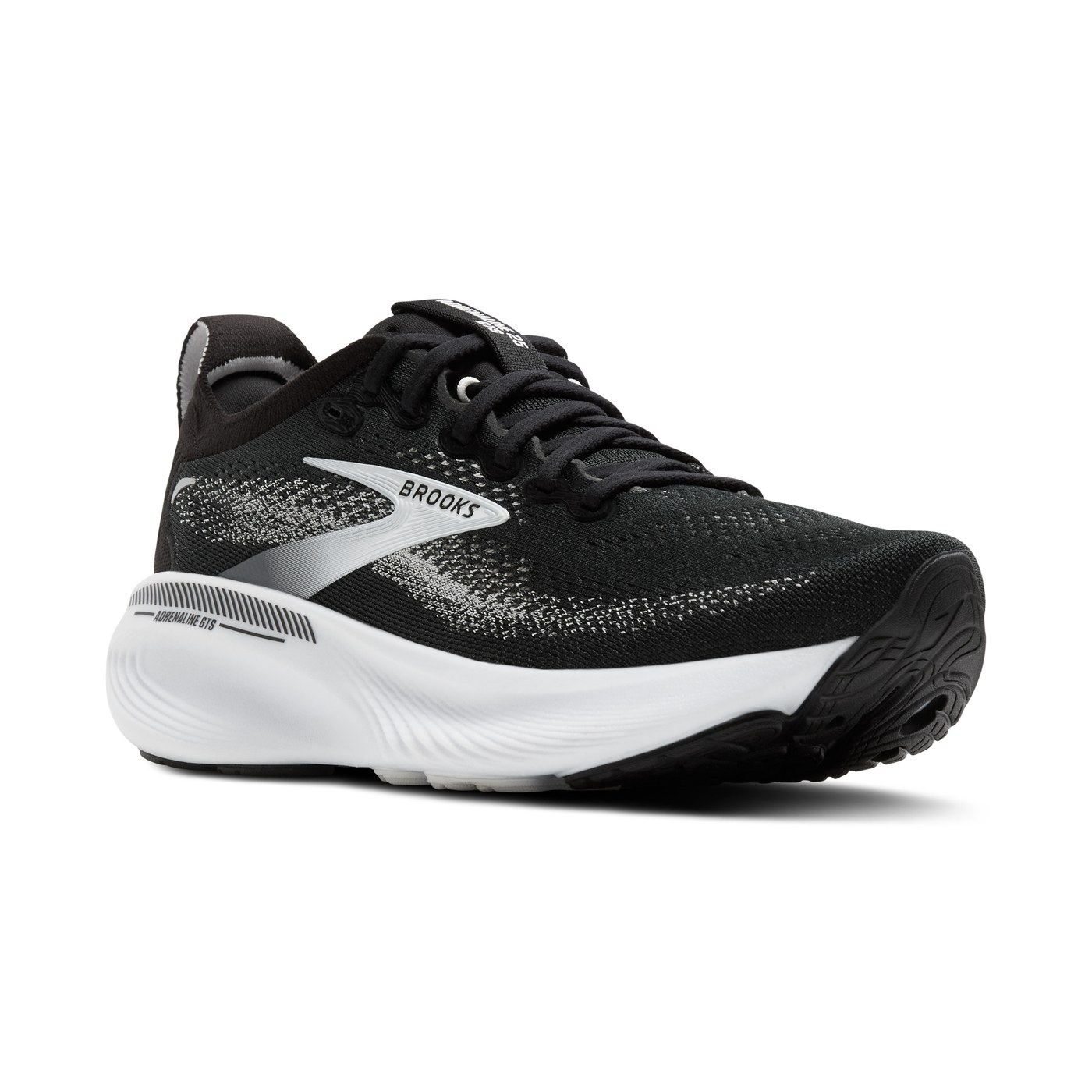
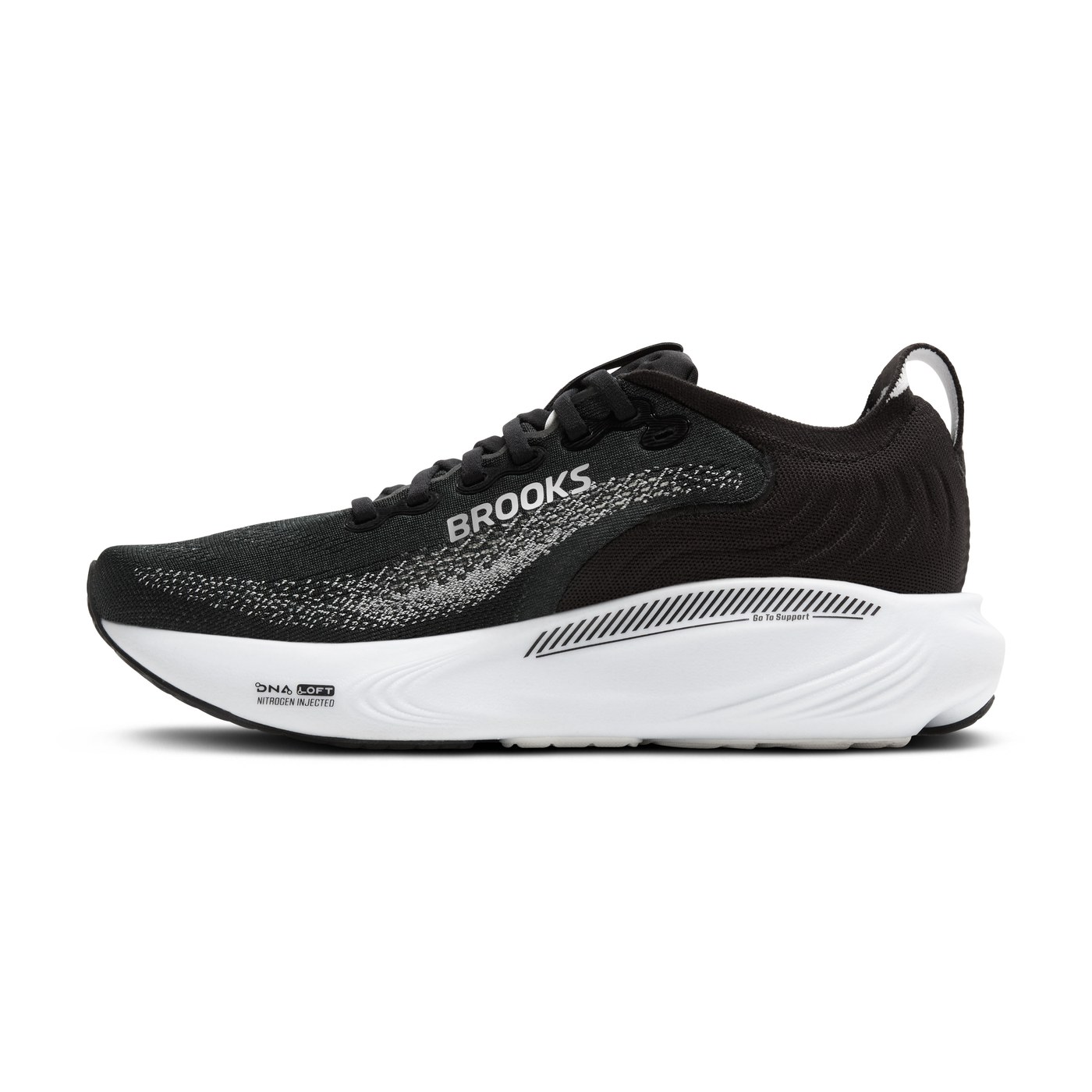
GTS stands for "Go-To Support": the shoe you reach for when you need support. Since 1999, the Adrenaline has been the pillar of that promise at Brooks, and one of the best-selling stability shoes in the world. Version 25, on sale since November 2025 at 160 euros, doesn't reinvent anything: it fixes, softens and owns its choices.
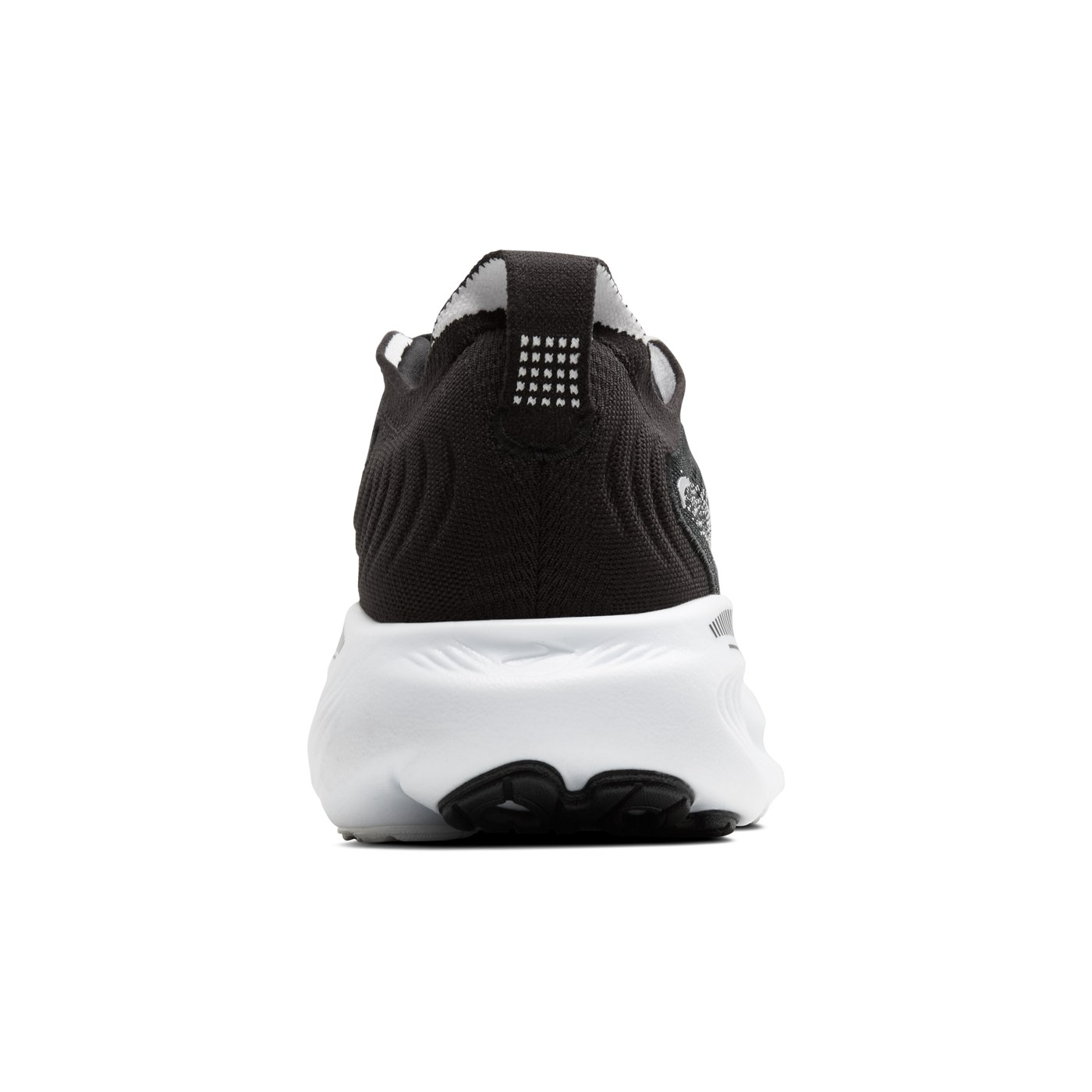
The big move this generation is the foam. The nitrogen-infused DNA Loft v3 has been reformulated: durometer readings show 34.5 AC, which makes it 27% softer than the GTS 24. To offset the stability loss that comes with a softer foam, Brooks widened the heel base to 100.7 mm, well above the market average of 91.1 mm. The GuideRails system, two rails on either side of the heel that only kick in when your stride drifts, remains the heart of the setup.
© Brooks, official photo used for editorial purposes
RunMorph's tip: if you're torn between soft and firm stability, first compare it with the Brooks Adrenaline GTS 24 (firmer, often discounted), the Asics Gel-Kayano 33 (more premium FluidSupport stability) and the Asics GT-2000 15 (252 g, lighter). The GTS 25 sits right between those three philosophies.
Objective technical data: claimed vs measured
| Spec | Claimed by Brooks | Measured in an independent lab |
|---|---|---|
| Weight (reference size) | 300 g | 295 g |
| Heel / forefoot drop | 10 mm | 10.2 mm (36.1 mm / 25.9 mm) |
| Stack height | 37 mm / 27 mm | 36.1 mm / 25.9 mm |
| Foam | DNA Loft v3 (nitrogen) | 34.5 AC, 27% softer than the GTS 24 |
| Heel shock absorption | Not disclosed | 138 SA (market average: 131 SA) |
| Heel / forefoot energy return | Not disclosed | 52.1% / 59.2% (averages: 58.7% / 61.4%) |
| Traction on wet concrete | Not disclosed | 0.59 (GTS 24: 0.48, average: 0.53) |
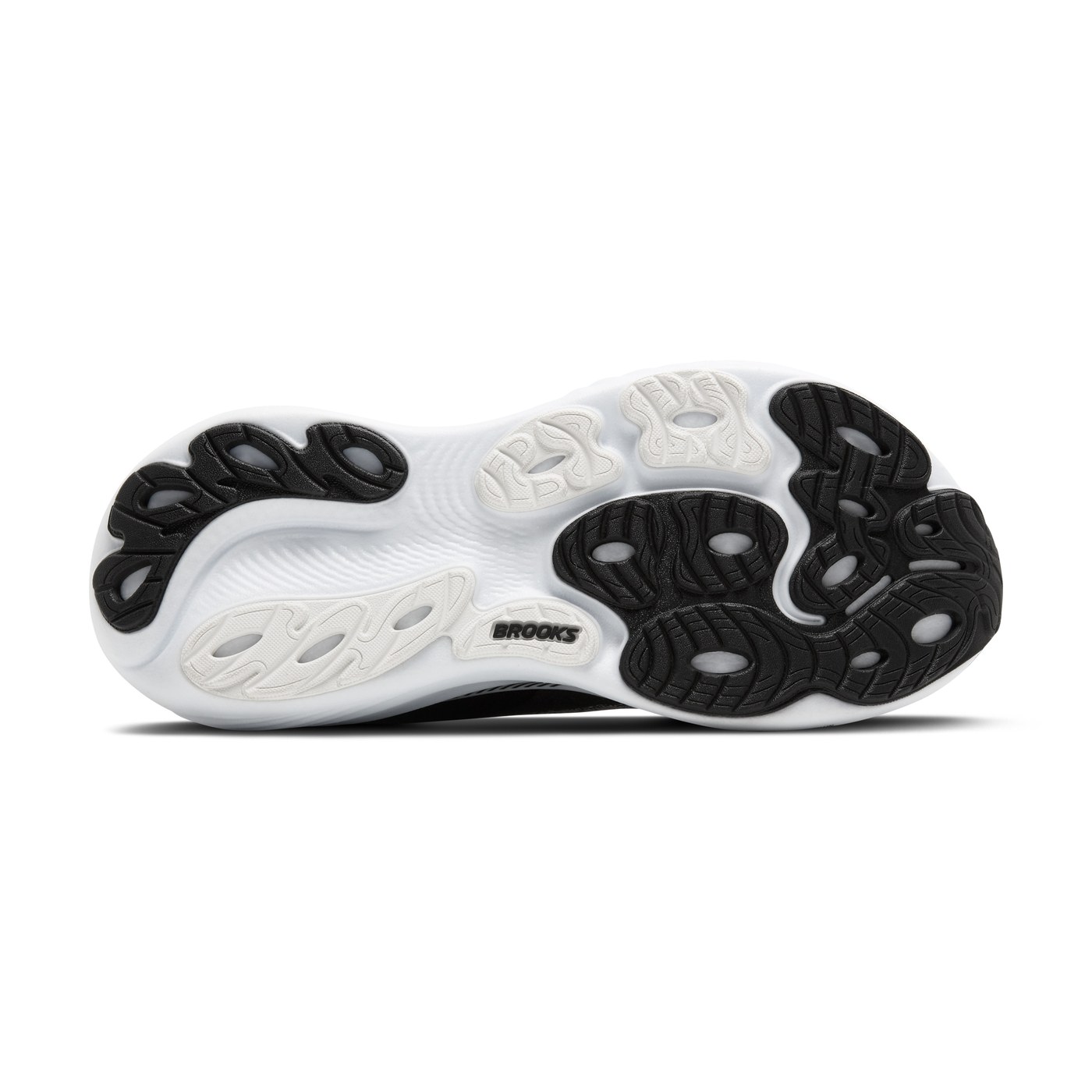
| Outsole wear in the standard test | Not disclosed | 0.5 mm (average: 1.1 mm), 4.1 mm of rubber |
| Breathability | Engineered mesh upper | 66 BR (average: 75 BR) |
| Available widths | 4 (narrow to extra wide) | True to size, 72.8 mm toebox |
| Price | 160 € | Seen from around 122 € at French retailers (Runnea) |
The standout fact in this table: for the first time in a long while on this line, the claimed and measured numbers overlap almost perfectly. The GTS 24, claimed at a 12 mm drop, measured 13.2 mm in the lab. The GTS 25 promises 10 mm and delivers 10.2 mm. A 0.2 mm gap, negligible, which opens the shoe up to runners who aren't pure heel strikers.
On the road: a daily trainer you can trust, not a rocket
The lab data paints an unambiguous profile, and real-world feedback confirms it: the GTS 25 is a daily training shoe, built to eat up zone 2 miles. The use-case ranking from the independent testing protocol is crystal clear: excellent for easy runs (91/100), average for tempo (56/100), off the mark for racing (39/100), and the absolute benchmark for stability (95/100).
In practice, here are the pace zones where it performs best:
| Pace | How the GTS 25 behaves |
|---|---|
| Faster than 4:45/km | Avoid: the weight and limited energy return cost you dearly |
| 4:45 to 5:15/km | Fine for short pickups, but no fun |
| 5:15 to 6:30/km | Its sweet spot: steady runs, medium-length runs, light tempo |
| Slower than 6:30/km | Perfect: easy runs, long runs, comebacks |
| Fitness walking and everyday wear | Excellent choice, the upper's comfort really shines here |
On long runs at moderate pace, the whole package works: the 138 SA of heel absorption (above average) protects repeated landings, the widened heel base keeps the final kilometers stable as your form breaks down, and the 0.59 traction on wet concrete is reassuring in the rain. It's the classic shoe that disappears underfoot, in the best sense of the word.
The real weak spot: 295 g, and Brooks doesn't care
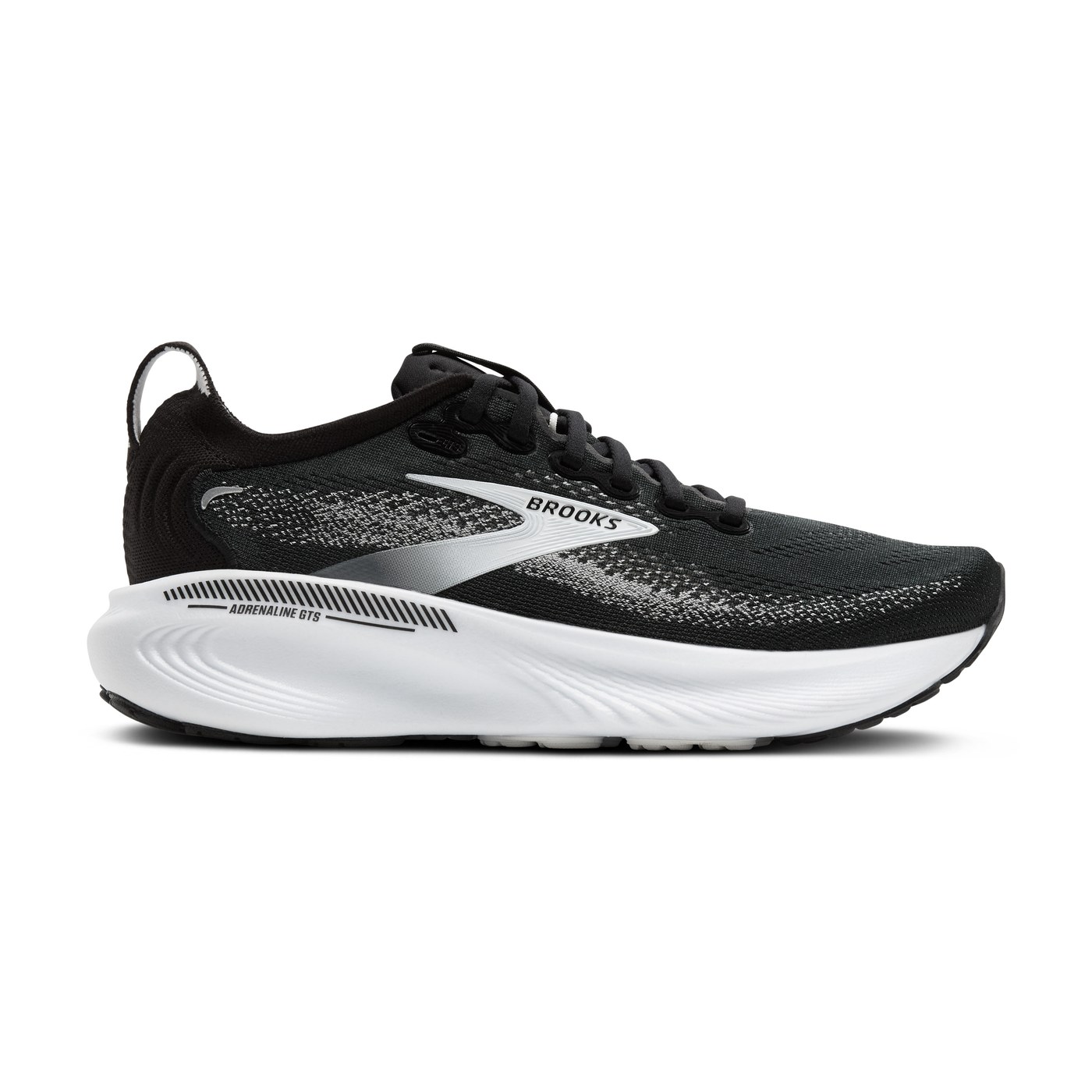
Let's put the number on the table: 295 g measured, against an average of 261 g across the hundreds of road shoes that have been through the lab. The GTS 25 is even slightly heavier than its predecessor, while the market trend is going the other way. Where does the weight come from? A deliberate choice: the tongue packs 12.5 mm of foam, more than double the average (5.8 mm), the collar is generously padded, the upper is double-layered engineered mesh, and the outsole runs 4.1 mm of rubber versus 3.1 mm on average.
Every gram has a job: comfort, support, durability. But on the run, those 295 g remind you they're there the moment you try to speed up. If you're coming from a 250 g pair, you'll feel the difference. If you want one shoe to do it all, intervals included, look instead at the Saucony Guide 19 (275 g) or the GT-2000 15 (252 g).
© Brooks, official photo used for editorial purposes
Second flaw: responsiveness takes a back seat
The DNA Loft v3 foam is comfortable, but it isn't designed to give energy back: 52.1% return measured at the heel and 59.2% at the forefoot, below market averages (58.7% and 61.4%). The feel underfoot is soft and controlled, but never bouncy. That's the price of the brief: a stable foam can't be as lively as a PEBA super foam. On slow runs, it doesn't matter. For everything else, it's a trade-off you need to accept with your eyes open.
Add breathability measured at 66 BR, below the 75 BR average: the thick, padded upper that makes the GTS 25 so comfortable also makes it warmer in summer. On long runs in serious heat, heavy sweaters will notice.
Who is it for?
The overpronator who wants a guide, not a brace
The GuideRails only step in when your knee collapses inward past a certain threshold. The rest of the time, you don't feel them. It's the least intrusive stability philosophy on the market, and the GTS 25 takes it to its best level yet: a wide heel platform, a firm heel counter rated 4/5 for stiffness, and a softened foam that never turns wobbly.
The heel striker who racks up long runs
With a real drop of 10.2 mm, 138 SA of heel absorption and an outsole that barely wears, the GTS 25 is cut out for runners who land heel first and run often. Heavier runners will also find what they need: the widened base and a foam that doesn't pack out quickly handle bigger frames better than ultra-soft foams.
The runner coming back, or with tricky feet
Four widths on offer, from narrow to extra wide: no major competitor offers as many in this segment. The fit is true to size, the upper has no irritating seams, and the shoe takes orthotics (the insole is removable). Labs actually rank it among the top picks for flat feet and plantar fasciitis-type issues.
Pros
- Effective, never intrusive GuideRails stability (95/100 in the stability ranking)
- Claimed drop finally matches measured drop (10 mm / 10.2 mm)
- Exceptional outsole durability: 0.5 mm of wear in testing, 4.1 mm of rubber
- Foam 27% softer than the GTS 24, above-average absorption
- 4 widths available, orthotic-friendly
- Much better wet traction (0.59 vs 0.48)
Cons
- 295 g: 34 g above average, you feel the weight as soon as you speed up
- Modest energy return (52.1% at the heel): zero bounce
- Below-average breathability (66 BR vs 75)
- No reflective details, surprising for a winter daily trainer
- Price creeping up to 160 €, even if French retailers are already slashing it
© Brooks, official photo used for editorial purposes
Brooks Adrenaline GTS 25 vs GTS 24: the comparison
| Criterion | GTS 24 (2024) | GTS 25 (2025) |
|---|---|---|
| Claimed / measured drop | 12 mm / 13.2 mm measured | 10 mm / 10.2 mm measured |
| Foam | DNA Loft v3 (firm version) | DNA Loft v3, 27% softer |
| Claimed weight | 283 g | 300 g (295 g measured) |
| Measured wet traction | 0.48 | 0.59 |
| Heel base | Standard | Widened to 100.7 mm |
| Upper | Engineered mesh | Redesigned mesh, 66.2% recycled materials |
| Launch price | 160 € (around 128 € at end of life) | 160 € (already around 122 € at some retailers) |
The comparison verdict is crystal clear: the GTS 25 is better everywhere that matters for its mission (comfort, traction, honest numbers), at the cost of a handful of grams. If you own the GTS 24 and it works for you, there's no rush to switch. If you found it too firm, the 25 answers exactly that complaint. And with the GTS 24 now heavily discounted, the choice comes down to budget as much as feel.
How it stacks up against the competition
In the daily stability segment, four models are fighting over the same runners:
- Asics Gel-Kayano 33 (7/10): more premium at 200 €, soft FluidSupport stability, but 298 g and a value for money that struggles against the Brooks.
- Asics GT-2000 15 (8.5/10): 252 g, lighter and livelier, less protective over very long distances. The pick for overpronators who run fast.
- Nike Structure 26: Nike's comeback in stability, comfortable but with forefoot durability that splits testers after 400 km.
- Hoka Arahi 9: the max-cushion alternative with H-Frame geometry, lighter on paper, with a different approach to support.
Against this pack, the GTS 25 doesn't win anywhere by knockout, but it doesn't lose anywhere either: it's the most balanced blend of support, comfort, durability and real-world price. Its global popularity ranking (top 2% of tracked road shoes) is no accident.
© Brooks, official photo used for editorial purposes
How to fit it into your RunMorph training plan
The GTS 25 is the go-to shoe for the sessions that build a runner: the easy runs that make up 80% of a good plan, the weekend long runs, the recovery jogs. It's precisely at those volumes that GuideRails stability protects your stride when fatigue sets in late in the run. Keep it for those sessions, and hold on to a lighter pair for interval days if your plan includes them.
With outsole durability measured well above average, expect 700 to 800 km of real use before critical wear, which works out to about 0.21 € per kilometer at the lowest price seen. An excellent ratio for a main rotation shoe. Your RunMorph plan tells you when to build volume: that's exactly when a stable, durable shoe like this one earns its keep. Check out the RunMorph training plans.
The RunMorph Coach's verdict
The Brooks Adrenaline GTS 25 is the most honest and most comfortable version of the lineage: a drop that finally matches the measurements, a softened foam that keeps its benchmark stability, improved traction and a near-indestructible outsole. It owns its 295 g as the price of uncompromising comfort, and that bet pays off for its audience. What it will never be: a fast shoe. Accept that deal, and you've got one of the safest daily trainers on the market.
8.6/10. Score converted directly from the independent lab score (86/100), which crowns the GTS 25 with a 95/100 stability rating and a 91/100 daily rating, dragged down by its tempo (56) and racing (39) scores. The best pure stability shoe right now, as long as you don't ask it to run fast.
© Brooks, official photo used for editorial purposes
Key takeaways for your training
- Benchmark stability: GuideRails + a heel base widened to 100.7 mm, without ever straitjacketing your stride.
- An honest drop: 10 mm claimed, 10.2 mm measured, a first for the line that broadens its audience.
- Record durability: 0.5 mm of wear in the standard test and 4.1 mm of rubber, expect 700 to 800 real km.
- 295 g and a flat ride: a trustworthy daily trainer for slow paces, not a tempo weapon.
- 4 widths to choose from: the best option on the market for wide feet or orthotics.
FAQ
Is the Brooks Adrenaline GTS 25 good for beginners?
Yes, it's actually one of the best possible choices: reassuring stability, true-to-size fit, four widths available and durability that pays back the purchase. The only hurdle for a beginner would be the 160 € price, already slashed to around 122 € at several French retailers.
What's the difference between the GTS 25 and the Ghost 18?
The Brooks Ghost 18 is the neutral version, without GuideRails, for strides that don't need support. If you don't know whether you overpronate, get your gait analyzed before choosing: unnecessary stability does nothing for a neutral runner.
Can you run a marathon in the Adrenaline GTS 25?
Yes, if your goal is to finish comfortably rather than chase a time: its heel absorption and late-race stability are real assets over 42 km. For a performance goal, a lighter, more responsive shoe is still the better call.
Does the GTS 25 fit true to size?
Yes, go with your usual size. The interior measures 96 mm wide with a 72.8 mm toebox, right in the average. Wide feet also get access to Wide and X-Wide versions, a rarity in this segment.