Released on February 1, 2026, the Brooks Glycerin Flex rounds out the Glycerin family from below: the same nitrogen-infused DNA Tuned foam as the Glycerin 23, but with a midsole cut by FlexZone grooves that hands your foot its freedom of movement back. Going against the grain of stiff rocker-based max-cushion shoes, it bets everything on natural flexibility. The bet only half pays off: the cushioning is sumptuous, the energy return far less so.
Brooks Glycerin Flex: DNA Tuned loosened up by FlexZone, the max-cushion that gives your foot its stride back
7.5/10
The essentials in 3 sentences
The Brooks Glycerin Flex takes the DNA Tuned foam from the Glycerin 23 (large cells in the heel, small cells in the forefoot) and pairs it with a segmented midsole whose FlexZone grooves let your foot roll through naturally. Shock absorption measured by an independent lab is excellent (143 SA at the heel, above the segment average), but energy return lags well behind (around 50 % versus over 60 % for the best daily trainers). This is the Glycerin for runners who find modern max-cushion shoes too stiff, not for chrono hunters.
7.5
/ 10 · RunMorph overall score
Who's it for?Everyday runners piling up easy miles (5:15 to 6:30 per km) who find rocker-based max-cushion shoes too restrictive and want a natural, rolling stride under big cushioning.
Who should skip it?Runners who want bounce and pop for fast sessions, wide feet (the snug knit upper runs warm), or rocker loyalists who don't want to load their calves through the transition.
Brooks Glycerin Flex: the third path in the Glycerin family
In 2026 the Glycerin family has three distinct versions, and the Flex is the most original of the lot. Where the Brooks Glycerin 23 plays the classic premium daily trainer card with an 8 mm drop, and the Brooks Glycerin Max 2 pushes the maximalist dial to 45 mm of stack with a pronounced rocker, the Glycerin Flex goes the opposite way: keep max cushioning while giving the foot back its ability to flex, wrap and feel the ground.
Brooks' reasoning boils down to a simple biomechanical observation: not every runner is happy in a stiff midsole that forces its geometry on you. Some of them, often experienced midfoot or forefoot strikers, prefer a shoe that follows the movement rather than steering it. FlexZone, an asymmetric flex groove at the midfoot combined with a forefoot split into pods, is the technical answer to that demand. The result: a high-stack shoe (36 mm claimed at the heel) that still bends almost like a minimalist.
This contrarian stance has already earned it a spot in a 2026 selection of the best training shoes picked by an international panel of testers, who praised its balance of low weight, plush cushioning and flexibility. On the road, the picture is more mixed: the Flex is an excellent easy-run shoe, but not a do-it-all.
RunMorph's advice: the Glycerin Flex doesn't replace the Glycerin 23 or the Glycerin Max 2, it offers a third ride within the same family. If you're after a lively daily trainer to mix up your paces, the Brooks Ghost AMP or the Hoka Mach 7 will do a better job. And to build your weeks around your new pair, check out the RunMorph training plans.
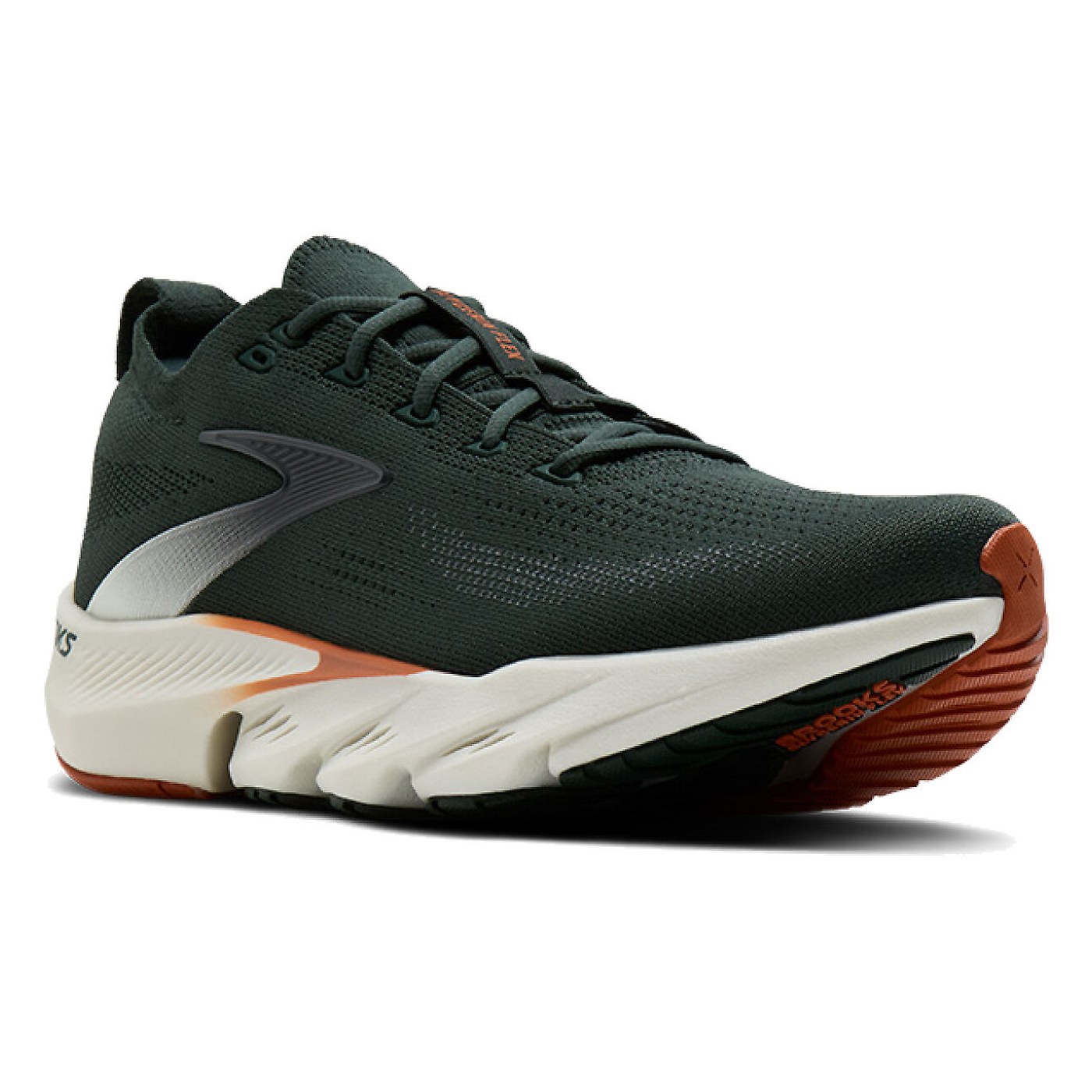
© Brooks, official photo used for editorial purposes
Objective technical data
| Spec | Detail |
|---|---|
| Brand | Brooks |
| Model | Glycerin Flex |
| Official release | February 1, 2026 |
| Type | Road daily trainer, flexible max-cushion |
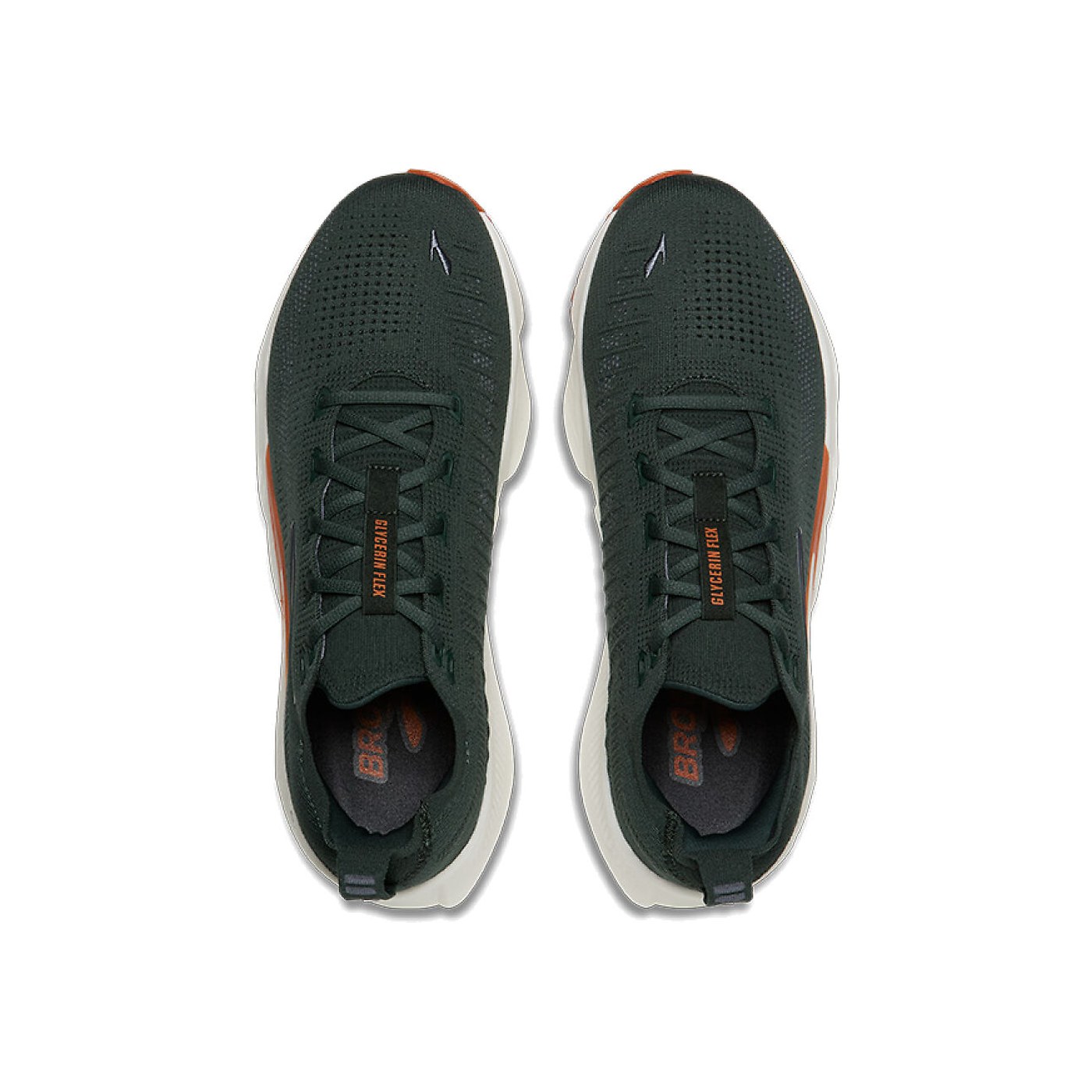
| Weight | 258 g (men's US9, 256 g weighed in EU 42) / approx. 226 g (women's) |
| Stack | 36 mm heel / 30 mm forefoot claimed (38/32 mm measured by an independent lab) |
| Drop | 6 mm |
| Foam | Nitrogen-infused DNA Tuned, dual cell structure (large cells in the heel, small cells in the forefoot) |
| Signature technology | FlexZone: asymmetric midfoot flex groove + segmented podular forefoot |
| Upper | Engineered flat knit, 58 to 63 % recycled materials, removable insole |
| Stability | Neutral (no GTS version so far) |
| Retail price | 180 € (seen between 138 € and 162 € on sale at French retailers) |
On the road: sumptuous cushioning, timid toe-off
Your first run in the Glycerin Flex surprises you with how soft the landings are. The nitrogen-infused DNA Tuned foam does its job, with shock absorption measured by an independent lab at 143 SA at the heel and 109 SA at the forefoot, above the segment average (around 131 SA). On long runs between 5:15 and 6:30 per km, that absorption translates into noticeably fresher legs at the end, even on the hard asphalt of the final kilometres.
The flexibility genuinely changes how the shoe runs. It bends at 12.2 N in the flex test, roughly 19 % softer than a standard Glycerin and well below the average for high-stack daily trainers (around 15.6 N). Your foot rolls through with no mechanical resistance: the forefoot wraps around the pods, and the transition follows your body's natural path instead of a forced rocking motion. For midfoot and forefoot strikers, that freedom is a treat.
The trade-off shows up as soon as you try to pick up the pace. Energy return measured by an independent lab tops out at 49 % at the heel and 51 % at the forefoot, far below the segment average (around 61 %). Put simply: the foam absorbs beautifully but gives little back. Tempo sessions, paces faster than 4:45 per km and progressive finishes demand real extra muscle work. Testers coming from rocker shoes also report hard-working calves during the first few runs, while the posterior chain adapts to the lack of a rocker.
Up top, the flat knit wraps the foot well with precise lacing, but it runs slightly small and breathes less well than the Glycerin 23's mesh: several testers noticed a hot spot at the front of the midfoot on summer runs. Breathability is decent (4/5 in testing), nothing more. Finally, traction measured at 0.60 and outsole wear limited to 1.3 mm in the abrasion test confirm a durable rubber that grips well on both dry and wet surfaces.
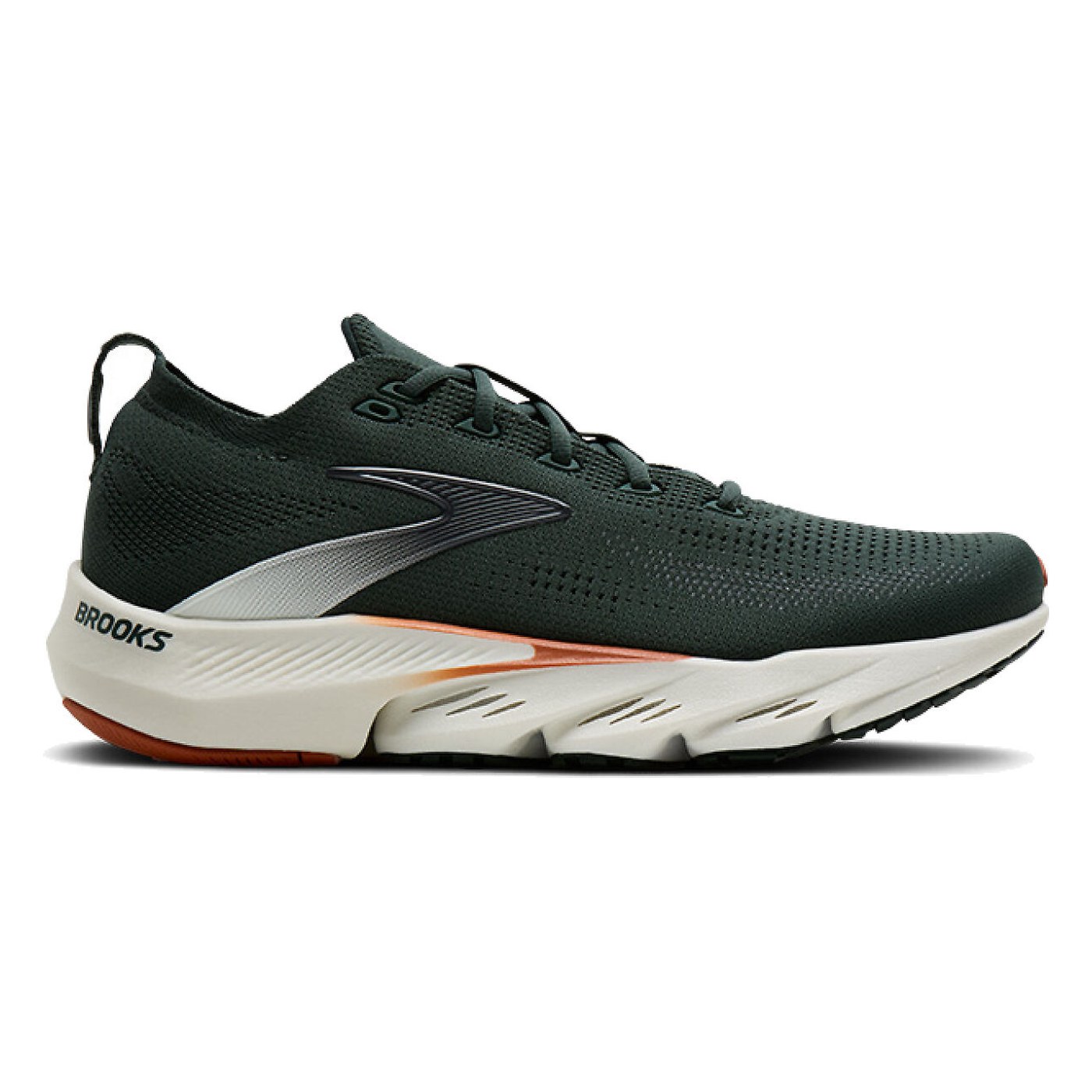
© Brooks, official photo used for editorial purposes
FlexZone: the groove that changes everything
FlexZone deserves a closer look, because it's what fundamentally sets this shoe apart from every other max-cushion on the market. The midsole is crossed by an asymmetric flex groove at the midfoot, extended by deep cuts along its whole length that form independent pods in the forefoot. Each pod can compress and flex on its own, which lets your foot find its own path when it meets the ground.
In practice, it feels like a shoe that bends exactly where your foot wants to bend, not where an engineer decided a rocker should tip you forward. Brooks backs this choice with years of biomechanical research showing that the body's preferred motion path varies hugely from one runner to the next. Torsional stability remains decent (12.9 Nm in testing), but the soft heel counter (2/5 in measured stiffness) confirms that comfort won over lockdown: hold comes from the lacing and the knit, not from a rigid structure.
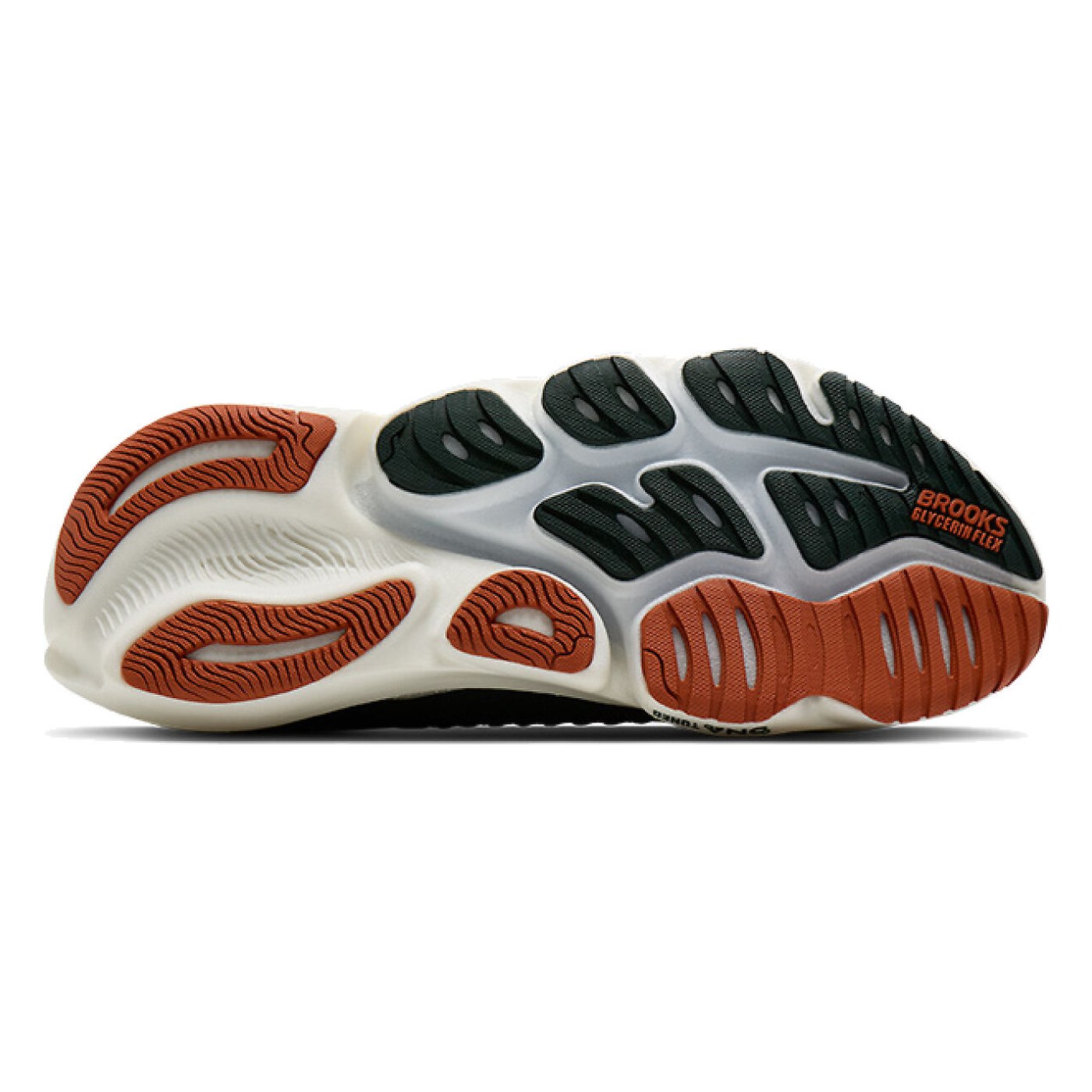
© Brooks, official photo used for editorial purposes
Who's it for?
The easy-mileage runner who wants a natural max-cushion
You run 3 to 5 times a week, mostly easy aerobic runs and long runs, and rocker-based max-cushion shoes make you feel like you're running on rails? The Glycerin Flex is built for you: big protective cushioning, a free roll-through, zero imposed mechanics. This is where it's at its best.
The heavier runner or comeback runner who puts protection first
With 143 SA of shock absorption at the heel, the Flex protects your joints remarkably well. For a runner over 85 kg, or someone returning from injury, it strikes an excellent balance between protection and ground feel, where a plate or a stiff rocker could disrupt a stride that's being rebuilt.
The all-round athlete, road and gym
Brooks also pitches it for gym sessions, and that makes sense: the flexible, stable-underfoot midsole works well for circuit training, brisk walking and strength work. One pair to run and train in is a real selling point at this price.
Pros and cons
Pros
- Above-average shock absorption (143 SA heel): remarkable protection over the long haul
- Real flexibility, unique in the max-cushion segment (12.2 N, FlexZone pods)
- 258 g: light for this much cushioning, over 40 g less than the Glycerin 23
- Serious durability: 1.3 mm outsole wear in testing, grippy rubber in the wet
- Comfortable knit upper with 58 to 63 % recycled materials
Cons
- Very low energy return (around 50 %): no help on toe-off, calves work harder
- Upper runs small and gets hot in high heat, midfoot hot spot reported
- 180 € retail, expensive for a shoe this specialised in easy running
- Soft heel counter: rearfoot lockdown could be better on descents
- No GTS version for runners who need support
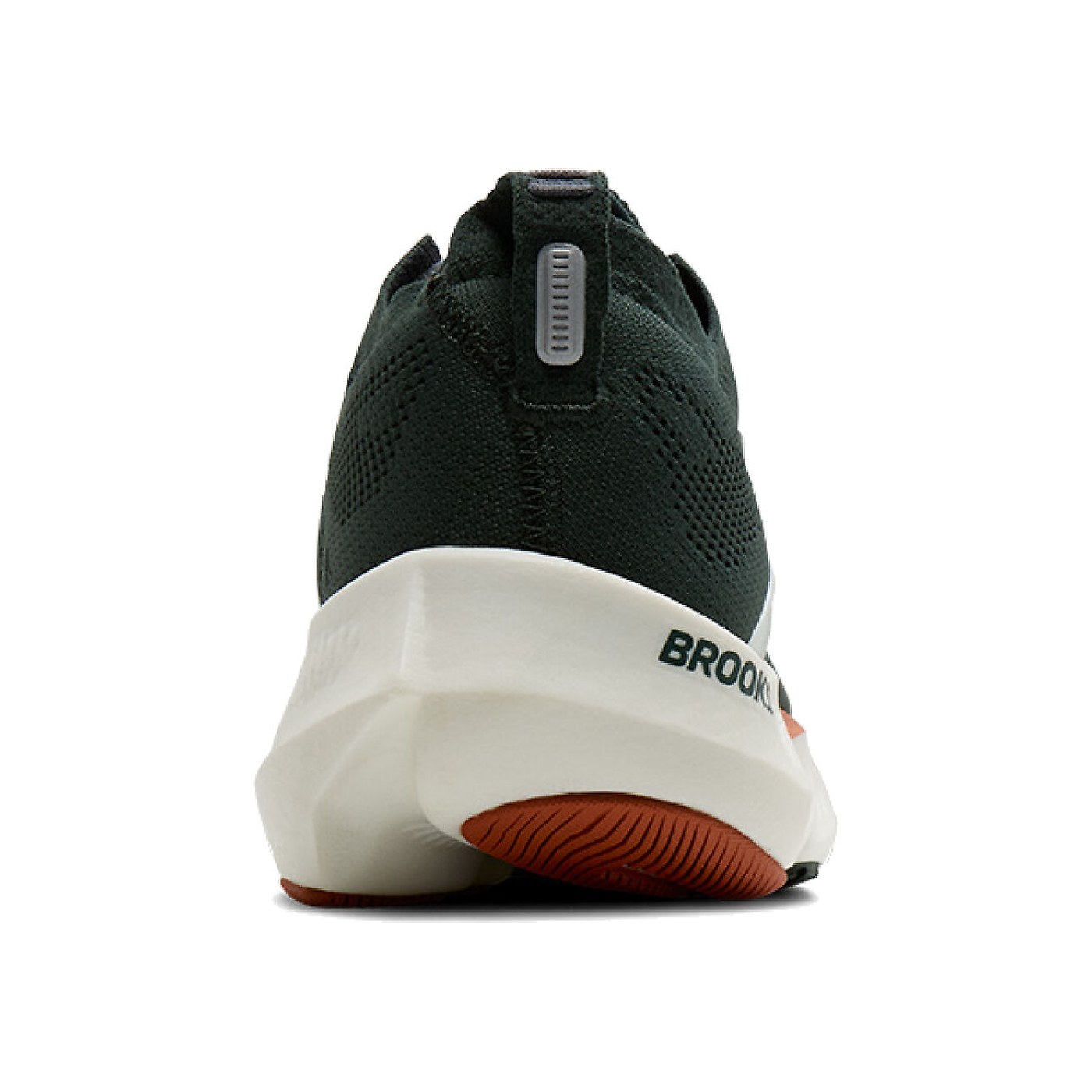
© Brooks, official photo used for editorial purposes
Glycerin Flex vs Glycerin 23 vs Glycerin Max 2: the comparison
The real question at Brooks in 2026 isn't whether the Glycerin Flex is a good shoe, but which Glycerin to pick. Here's the head-to-head in numbers, with the Hoka Clifton 11 as an outside referee:
| Model | Weight | Drop | Stack | Price | RunMorph score |
|---|---|---|---|---|---|
| Brooks Glycerin Flex | 258 g | 6 mm | 36/30 mm | 180 € | 7.5/10 |
| Brooks Glycerin 23 | 297 g | 8 mm | 38/30 mm | 180 € | 8.5/10 |
| Brooks Glycerin Max 2 | 318 g | 6 mm | 45/39 mm | 200 € | 8.5/10 |
| Hoka Clifton 11 | 252 g | 5 mm | 42/37 mm | 160 € | 8/10 |
Against the Glycerin 23, the Flex saves 39 g and gains total freedom to flex, but loses pace versatility: the 23 stays more consistent when you want to push at the end of a run. Against the Glycerin Max 2, the Flex plays a different sport: less stack, less rocker, more ground feel. The Hoka Clifton 11, 20 € cheaper, offers a more classic, smoother-rolling compromise without reaching the plushness of DNA Tuned. And if your wish list includes fast sessions, the Asics Novablast 6 or the Brooks Ghost AMP remain more versatile picks.
How to fit the Brooks Glycerin Flex into your RunMorph training plan
At RunMorph, we see the Glycerin Flex as a volume shoe: it should soak up 70 to 80 % of your weekly kilometres if you buy into its approach. Its home turf:
- Easy aerobic runs: every run between 60 and 75 % of your max heart rate, from 45 minutes to 1 h 30. The cushioning protects, the flexibility lets your foot work naturally.
- Long runs: up to 2 h 30 without fading; consistent shock absorption late in the run is its greatest strength.
- Active recovery: the day after hard sessions, when your legs are asking for softness without going onto a stiff, orthopaedic-feeling midsole.
For threshold sessions, 30/30s and marathon-pace work, add a livelier shoe to your rotation: the Hoka Mach 7 or the Brooks Hyperion Max 4 complement the Flex perfectly. Plan on around ten adaptation runs if you're coming from a rocker shoe: build volume gradually to let your calves and hamstrings get used to the extra work. To build the shoe rotation that fits your goal, check out the RunMorph training plans.
© Brooks, official photo used for editorial purposes
RunMorph Coach's verdict
The Brooks Glycerin Flex is a shoe of conviction: it stands for a vision of running where the foot stays in charge of the movement, with benchmark cushioning as its shield. Above-average measured shock absorption, flexibility unique in the max-cushion segment and a modest weight make it the best "natural" daily trainer in the Brooks lineup, and one of the few credible alternatives to the rocker-everything trend that has dominated the market for five years.
But that conviction comes at a price, literally and in performance: the lagging energy return confines it to pure easy running, the knit upper runs warm and small, and 180 € is still steep for a shoe that will never handle your fast sessions. The Glycerin 23, at the same price, covers more ground for most runners. The Flex is for those who know exactly why they're choosing it. RunMorph score: 7.5/10.
Key takeaways for your training
- Record shock absorption: 143 SA at the heel in independent testing, ideal for volume and for heavier or returning runners.
- Unique flexibility: 19 % softer than a standard Glycerin, the only max-cushion that lets your foot roll through freely.
- No pop: energy return around 50 %, keep it for easy and long runs, never for fast sessions.
- Manage the transition: plan around ten progressive runs if you're coming from a rocker shoe, your calves will work harder.
- Two-shoe rotation: pair it with a lively daily trainer (Mach 7, Hyperion Max 4) for faster paces, the Flex doesn't cover that ground.