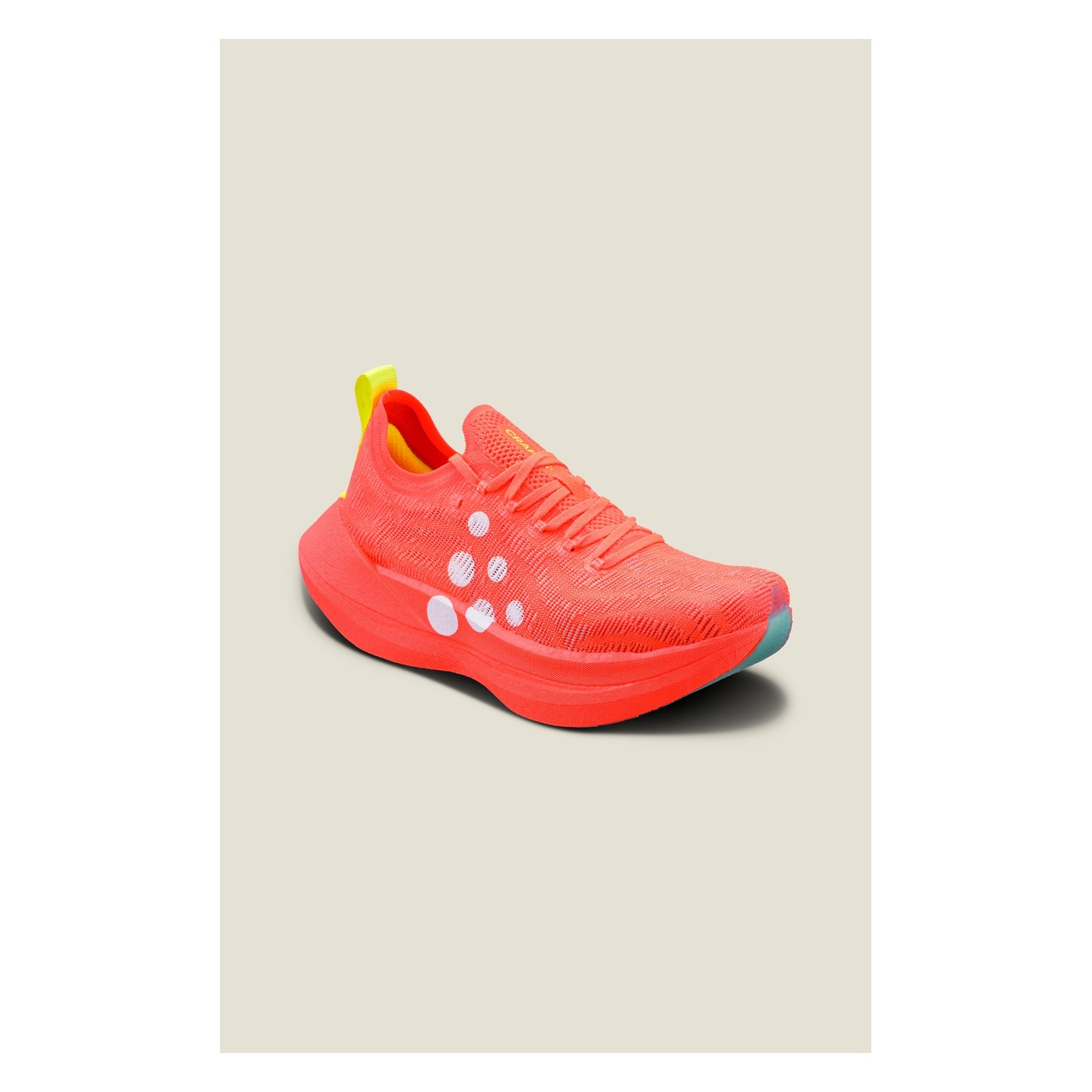
A Swedish brand known for technical base layers and cross-country ski suits is taking on running's most locked-down market: the carbon supershoe at 320 euros. It's a bold bet, almost detached from reality. And yet the Craft Kype Pro holds its own on the toughest test there is: how it feels on the run.
© Craft, official photo used for editorial purposes
Craft, the Swedish outsider crashing the supershoe party
Craft isn't a name that gets French running forums buzzing. The brand from Borås, Sweden, built its reputation on technical base layers, Nordic skiing and cycling long before it gave running a thought. Yet it recently started backing a small team of elite French road runners. The positioning is clear: break into the big leagues through the narrowest door there is, the carbon supershoe.
So the Kype Pro isn't an entry-level daily trainer. It goes straight to the top as the brand's technology flagship, lined up against the market benchmarks: the Adidas Adizero Adios Pro 4, the Hoka Rocket X 3 and the Saucony Endorphin Pro 5. It's a risky move: in this segment, buyers forgive nothing, whether on performance or on price.
RunMorph tip: before betting 320 euros on a brand you've never worn, compare it with a known benchmark like the New Balance SC Elite v6. How a shoe feels on the run always matters more than the brand's reputation, but the financial risk deserves a hard look.
© Craft, official photo used for editorial purposes
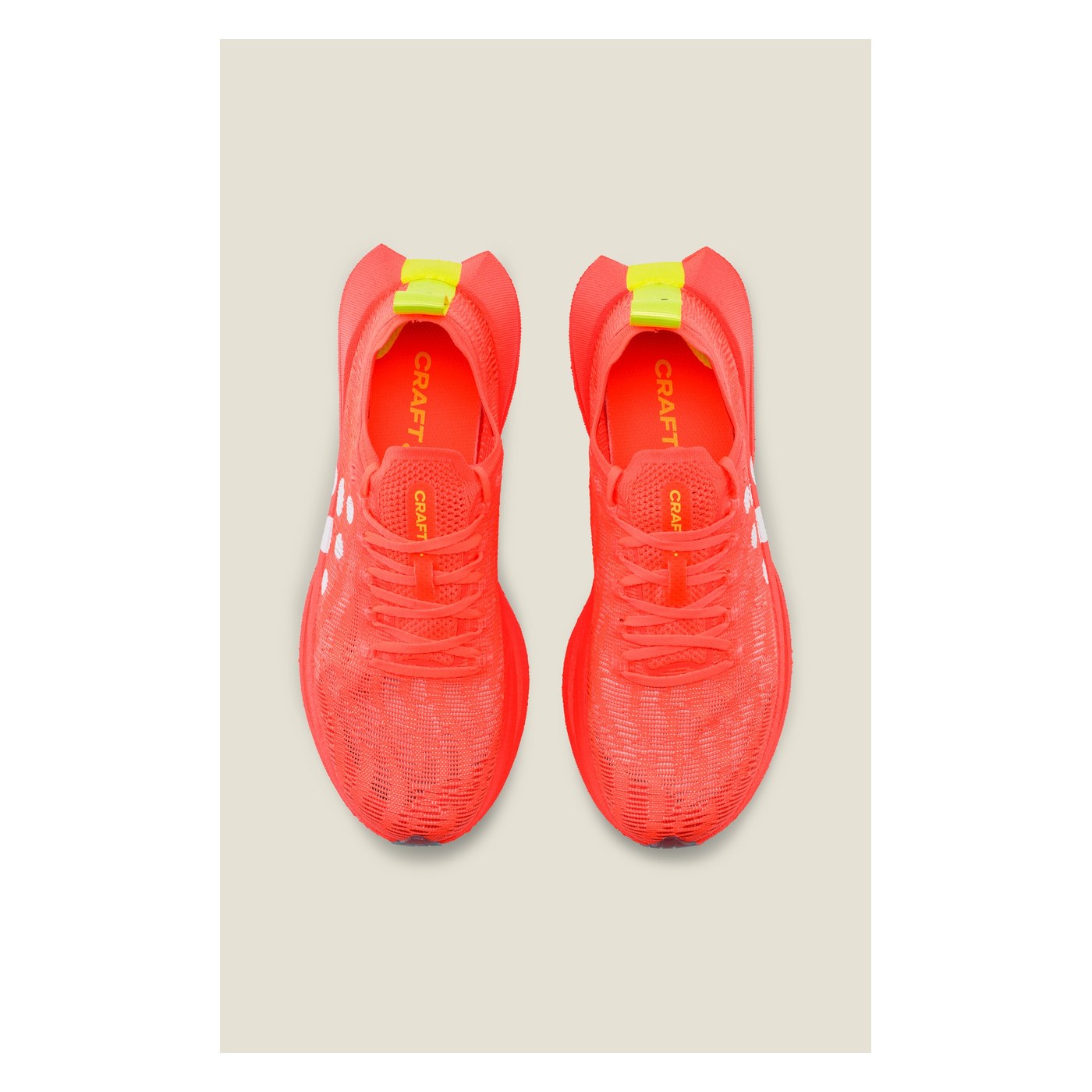
Kype Pro specs: what the ARRIS plate really changes
| Brand | Craft |
| Model | Kype Pro |
| Type | Road, carbon racing shoe (10 km to marathon) |
| Drop | 8 mm |
| Stack height forefoot / heel | 32 mm / 40 mm (official Craft data) |
| Claimed weight (UK8) | 200 g |
| Independently measured weight | 196 to 198 g depending on size and source (two independent reviews agree on under 200 g) |
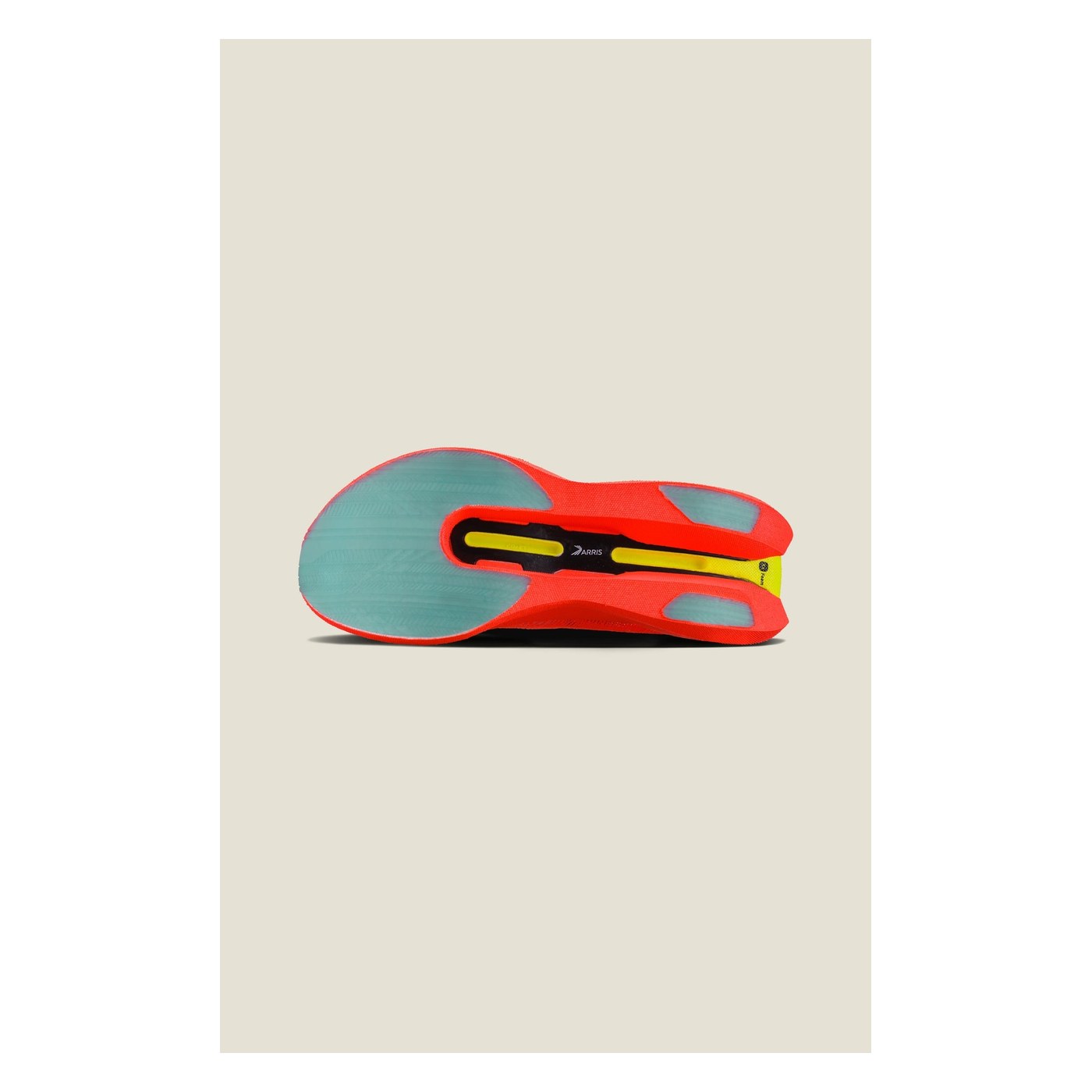
| Carbon plate | Yes, split-heel ARRIS plate, 14 g |
| Foam | Xx Foam with Pebax (Arkema) |
| Outsole | Vittoria Lightsole, inspired by the Corsa PRO Control bike tire |
| Upper | AeroMesh, 50% recycled polyester |
| Recommended distance | 10 km to marathon (half marathon is the sweet spot) |
| Official price | 320 euros |
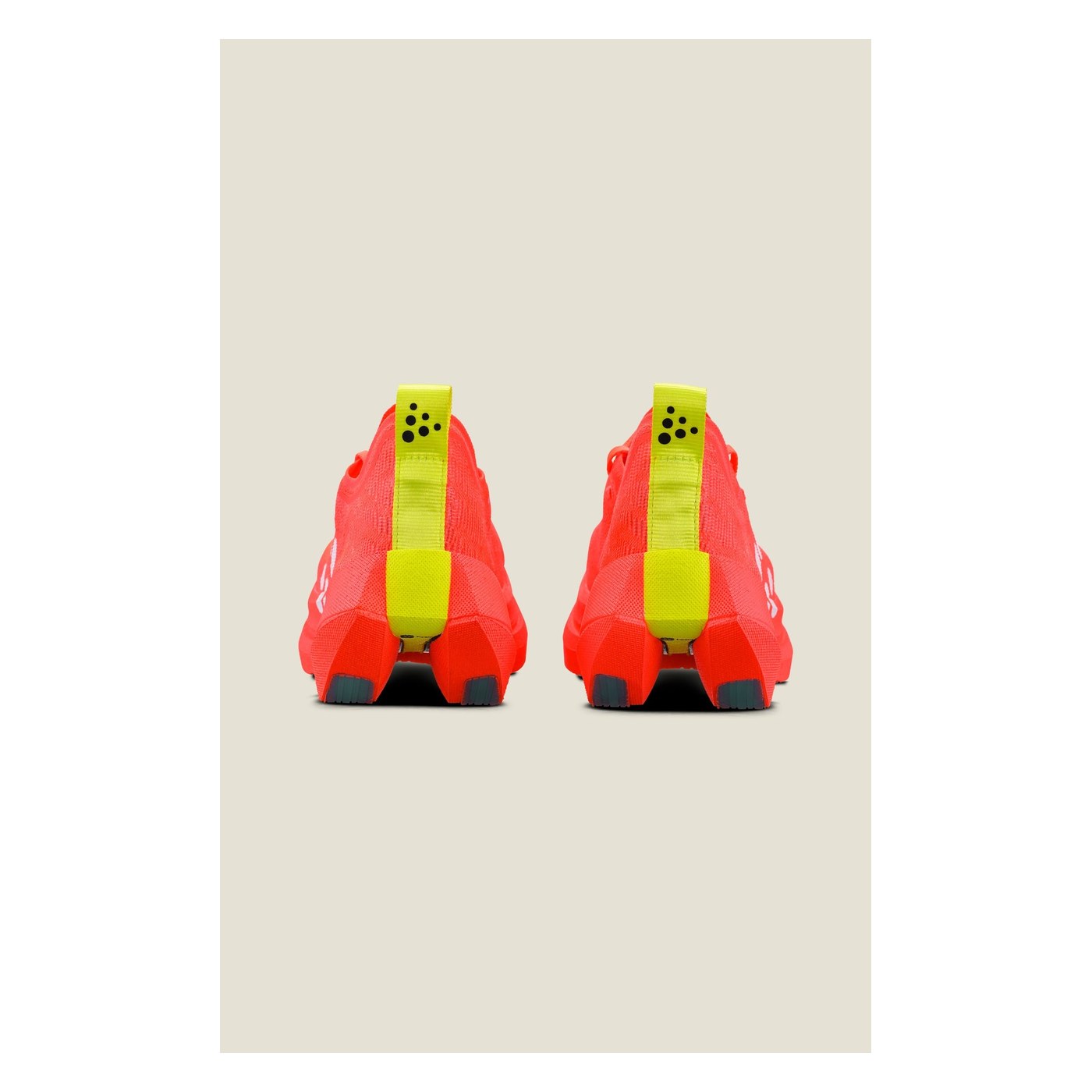
What really sets the Kype Pro apart from its rivals is a heel split in two. The idea: shrink the ground contact area to speed up toe-off and make every foot strike more efficient. It's paired with a carbon plate developed with US specialist Arris Composites and billed as 30% lighter than a conventional carbon plate. The whole build chases a single goal: turn every stride into propulsion rather than just cushioning.
Xx Foam and the Vittoria outsole: what changes underfoot?
Xx Foam is built on Pebax supplied by French chemical company Arkema, the same type of elastomer you find in most of the market's premium foams (ZoomX at Nike, PWRRUN HG at Saucony). Nothing revolutionary on paper, then. But according to independent feedback, the execution easily holds its own on energy return and lightness.
The real curiosity is the outsole. Craft brought in Vittoria, the Italian maker of high-end bike tires, to design a rubber compound inspired by the Corsa PRO Control tire. The approach: fine lugs that look more like a cycling tread than a classic running outsole. On paper, the idea serves performance on dry and wet roads. In real-world use, it has limits, which we cover below.
© Craft, official photo used for editorial purposes
The field test: 10 km to half marathon at race pace
Independent reviews agree on something rare for a supershoe: the Kype Pro manages to combine comfort and responsiveness, a pairing many carbon-plated shoes can't pull off. One tester who ran a 10 km in 30'40" and a half marathon in 1h06'57" in it gives it top marks for comfort and responsiveness. He praises a soft mesh that hugs the foot and a very pronounced forward roll as soon as the pace picks up. A second test, by an experienced marathoner (2h18 in the marathon, 1h04 in the half), confirms that sense of propulsion and describes a shoe that has nothing to envy the market benchmarks when it comes to pure ride feel.
The consensus from field testing puts the sweet spot between 10 km and the marathon for strong runners, with the shoe earning its keep from about 4'15/km. Go slower and, testers agree, you feel the shoe less: the plate and rocker need speed to show their worth. So this isn't a shoe for warm-ups or recovery easy runs.
On grip, the reviews partly overlap. One tester highlights good traction on wet roads during a half marathon run in the rain, while flagging a risk of slipping on shorter, more intense efforts where foot strikes are harsher. Another confirms the good wet grip without reservation. The real disagreement is over rubber durability. One of the three reviews we read in full, which ran over several weeks, reports visible crumbling of the outsole from the very first runs, even though grip itself is still rated satisfactory. The other two reviews, with lower cumulative mileage, don't mention it. At RunMorph, we take this isolated but concrete signal seriously: it's the kind of flaw that only shows up after several dozen kilometers, not at unboxing.
On stability, all three sources land on a nuanced verdict rather than a clear-cut one. Overall hold is good thanks to a soft, well-wrapping mesh. But the stack height (40 mm at the heel), combined with a plate that isn't very stiff at the edges, can feel slightly unstable at times, without ruling the shoe out for an experienced runner.
RunMorph tip: the Kype Pro rewards runners who already know how to drive off the forefoot. If your stride is more planted and your cruising pace is under 5'00/km, you risk paying 320 euros for a feel close to that of a more affordable daily trainer.
Craft Kype Pro vs Adidas Adizero Adios Pro 4: head to head
Against an all-round benchmark like the Adidas Adizero Adios Pro 4, the Kype Pro stands out with equally strong responsiveness, but pays dearly for its low brand profile and higher price.
| Criterion | Craft Kype Pro | Adidas Adizero Adios Pro 4 |
|---|
| Price | €320 | €250 |
| Weight | 196 to 200 g | 193 g |
| Drop | 8 mm | 6 mm |
| Plate | ARRIS carbon, split heel | Carbon Energyrods |
| Retail availability in France | Limited, mostly sold online | Wide, specialist and general sports retailers |
| Positioning | 10 km to marathon, fast paces | 10 km to marathon, all experienced runners |
So the difference isn't about pure performance, where the two models are evenly matched, but about the ecosystem. You can try on an Adios Pro 4 in most specialist running stores before buying; a Kype Pro, far less so. That's a factor you can't ignore on a 320-euro purchase.
© Craft, official photo used for editorial purposes
Our field verdict: who is it really for?
The Kype Pro targets a specific profile: runners already chasing performance goals, comfortable at fast paces, looking for a new ride feel and not put off by a little-known brand. It isn't meant to replace a pair of daily trainers, or to serve as a first carbon shoe for someone new to this kind of product.
This shoe fits into a targeted 10 km, half marathon or marathon build for runners with the strongest muscular base. To structure your tempo runs and interval sessions around this kind of gear, lean on a RunMorph training plan matched to your race goal.
RunMorph Coach verdict
The Craft Kype Pro is no marketing misfire. It's a genuine performance shoe, with responsiveness and comfort that have nothing to envy the best carbon shoes on the market. The problem isn't the product: it's the price. At 320 euros, it costs more than almost all of its direct competitors, without a retail network that can reassure a buyer who has never worn the brand. Add a durability warning sign on the outsole, and you get a very good product that undercuts itself on value for money. 7.6/10: a score that rewards pure performance without turning a blind eye to what holds buyers back.