Since February 2026, Decathlon's nutrition aisles have carried a new logo: 1:0.8. It's a glucose-to-fructose ratio pro pelotons have used for a decade, sold here at 2.49 euros a gel, while specialist brands charge between 2.80 and 4 euros for what is often a lower dose. At RunMorph, we tested the lemon gel to see whether the promise holds up beyond the price tag.
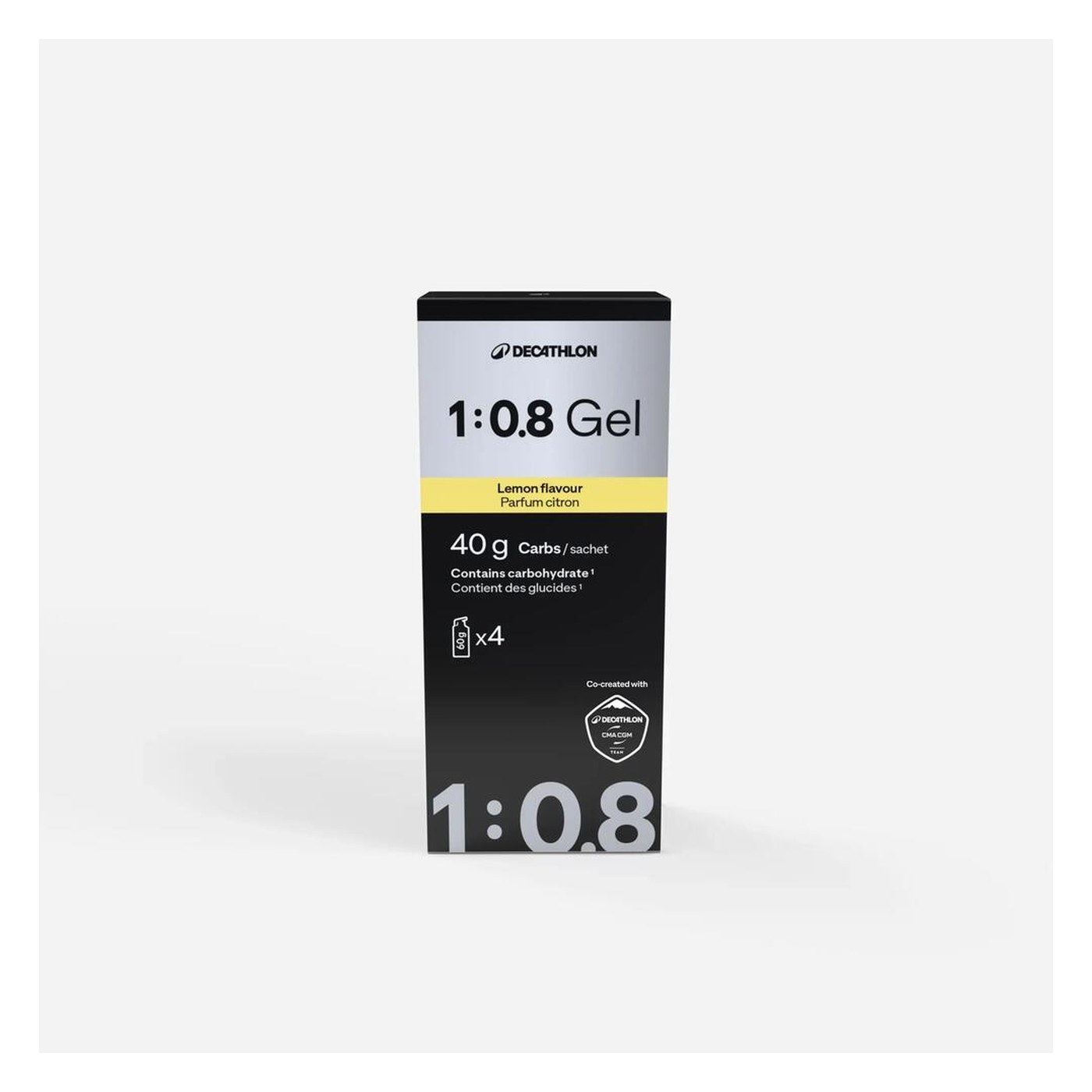
© Decathlon, official photo used for editorial purposes
Decathlon Nutrition and its bet on the 1:0.8 ratio
Aptonia is gone from the shelves. In its place, Decathlon Nutrition launched a ten-product range in February 2026, co-developed with the Decathlon CMA CGM pro cycling team, which joined the World Tour at the start of the season, and with Professor Julien Louis, the team's head of nutrition. The marketing message is blunt: up to 120 g of absorbable carbs per hour, double what runners were told to take ten years ago.
The real shift isn't physiological. Specialist brands have been using fructose-rich glucose-to-fructose ratios for several seasons to tap two separate intestinal absorption pathways (the SGLT1 transporter for glucose, GLUT5 for fructose). What Decathlon brings is access: a 40 g carb gel for 2.49 euros, when competitors routinely charge 1 euro more for what is often a lower dose.
The 1:0.8 ratio: what does it really change?
Glucose maxes out its intestinal transporter at around 60 g/h. Past that point, the excess sits in your gut and causes bloating and nausea. Fructose uses its own separate entry route, so combining the two sugars lets you move more carbs through without overloading your gut. The 2:1 ratio (two-thirds glucose, one-third fructose) has been the benchmark for about fifteen years when targeting 90 g/h. The more fructose-rich 1:0.8 goes after the next tier up, 100 to 120 g/h.
Here's the nuance the marketing skips. A landmark study published in 2013 found no statistically significant difference between 1:0.8 and 2:1 below 108 g/h. A more recent study, run in 2022 on highly trained cyclists, confirmed that a fructose-rich ratio at 120 g/h gets more of the ingested carbs absorbed, but with no measurable performance gain and no better sparing of internal stores. The international consensus published in 2016 actually says "2:1 or 1:0.8, with no notable preference." In other words, 1:0.8 isn't better in absolute terms. It only becomes relevant once your total target climbs above 100 g/h.
© Decathlon, official photo used for editorial purposes
Our field test: 3 hours of effort at 3 gels per hour
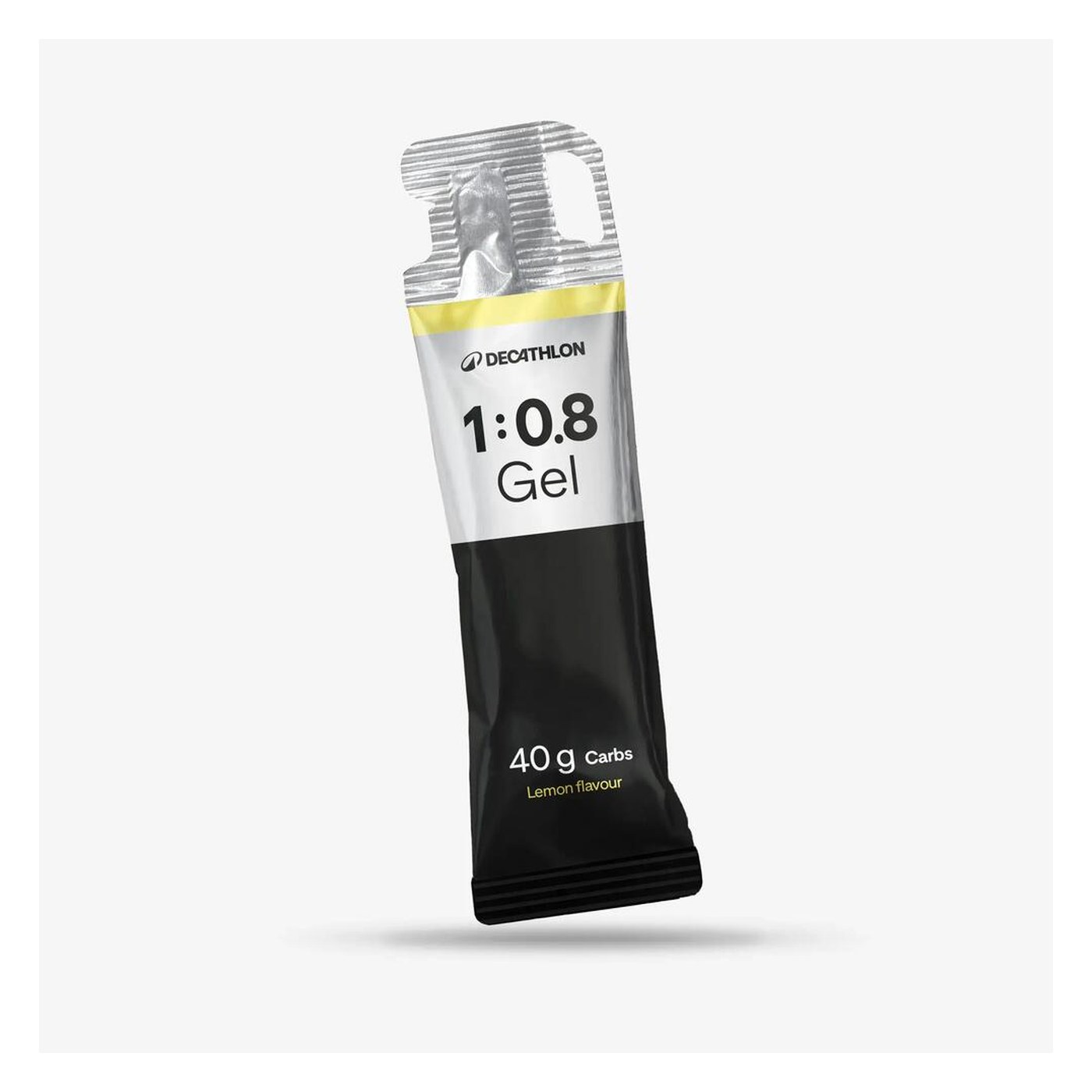
On a long run at marathon pace, the lemon gel's texture is runny without being syrupy, and it stays only mildly sweet despite packing 40 g of carbs. The energy kicks in gradually, with no sharp spike followed by a crash, which is exactly the profile you'd expect from a well-dosed glucose-fructose blend.
RunMorph's advice: never try a 3-gels-per-hour protocol for the first time on race day. At 40 g per pouch, this format is a lot for an untrained gut. Start with one gel every 45 minutes in training, add 10 g/h each week, and give yourself at least four weeks of gut training before you push the product to its full potential. Our full reviews of the Maurten Gel 160 and the SiS Beta Fuel reach the same conclusion on high-dose formats.
Independent tests agree on the essentials: no major digestive issues reported over a 2:30 to 3-hour run at marathon pace, easy one-handed use even on the move, and a wrapper that rolls up to fit in a vest pocket once empty. The same warning keeps coming up: without prior gut training, the risk of intolerance (bloating, nausea) climbs as soon as you stack 2 to 3 gels per hour. A 2020 study on 26 elite trail runners found that even after a specific training protocol lasting several weeks, 3 of the 26 athletes had to drop out with digestive problems at 120 g/h.
Opinions split mainly over how much science backs the ratio. Part of the French specialist press stays cautious, pointing out that Decathlon overreads a body of research that's more contested than advertised: 1:0.8 has never been proven superior to 2:1, and the real benefit only kicks in once you target 100 g/h or more. A more favorable reading argues that the real novelty isn't the ratio itself (premium brands already use it) but access: for the first time, a club runner on a tight budget can build high-carb fueling practice without compromising on formula quality. At RunMorph, we think both readings are right and don't contradict each other: the product is honest about its formulation, but its sales pitch goes further than the science actually settles.
Decathlon Gel 1:0.8 vs SiS Beta Fuel: head to head
Both gels share exactly the same 1:0.8 ratio and the same 40 g carb dose. The difference comes down entirely to price and availability.
| Criterion | Decathlon Gel 1:0.8 Lemon | SiS Beta Fuel |
|---|
| Carbs | 40 g | 40 g |
| Glucose-to-fructose ratio | 1:0.8 | 1:0.8 |
| Price per gel | €2.49 | €3.20 |
| Sodium | 100 mg | Included, lower dose |
| Availability in France | Every Decathlon store | Specialist retailers, online |
| Positioning | Affordable, broad range (gel, bar, drink, fruit chews) | Long-standing high-dose benchmark |
With identical dose and ratio, Decathlon saves you about 71 cents per gel, or more than 14 euros on a 20-gel ultra strategy. The Maurten Gel 160 still wins on its hydrogel texture, which feels gentler in the mouth for sensitive stomachs, with the same 40 g dose but a much higher price.
Pros and cons
Pros
- 40 g of carbs for €2.49, the best carbs-per-euro ratio on the market in this format
- No preservatives, no colorings, no artificial flavors
- Runny texture, mildly sweet lemon flavor, one-handed opening
- Full range available in store (gel, bar, drink, fruit chews) so you can mix up formats during a race
Cons
- The 40 g format is demanding for an untrained gut: gut training is essential before race day
- The 1:0.8 marketing claim is more assertive than the science actually supports
- Lemon flavor only for this review: if you don't like tartness, try the neutral or cola versions
- Limited benefit for efforts under 2 hours
© Decathlon, official photo used for editorial purposes
Our take from the field: who is it for?
The Decathlon Gel 1:0.8 Lemon is built for runners preparing a marathon or a long trail race who want to structure their carb strategy methodically without blowing their nutrition budget. Over 10 km or a short trail race, the benefit of a fructose-rich ratio stays theoretical: a standard 25-30 g gel is more than enough. It's on efforts of 3 hours or more, where your total target goes beyond 90 g/h, that the formula really makes sense.
RunMorph's tip: work this gel into your Sunday long runs to train your gut before race day. Our RunMorph marathon training plan is built around regular long-run blocks where you can test and fine-tune your fueling strategy, instead of waiting until the race to find out your stomach can't keep up.
The RunMorph Coach's verdict
The Decathlon Gel 1:0.8 Lemon delivers on its most important promise: bringing high-dose fueling, until now reserved for comfortable budgets, to everyone. The formula is clean, the flavor goes down well, and on carbs per euro it crushes the competition. What you shouldn't buy blindly is the scientific pitch for the 1:0.8 ratio itself, which specialist brands have used for a long time and whose superiority below 100 g/h is still debated. 8/10: a very good, honestly formulated product, as long as you put in the gut training it demands.