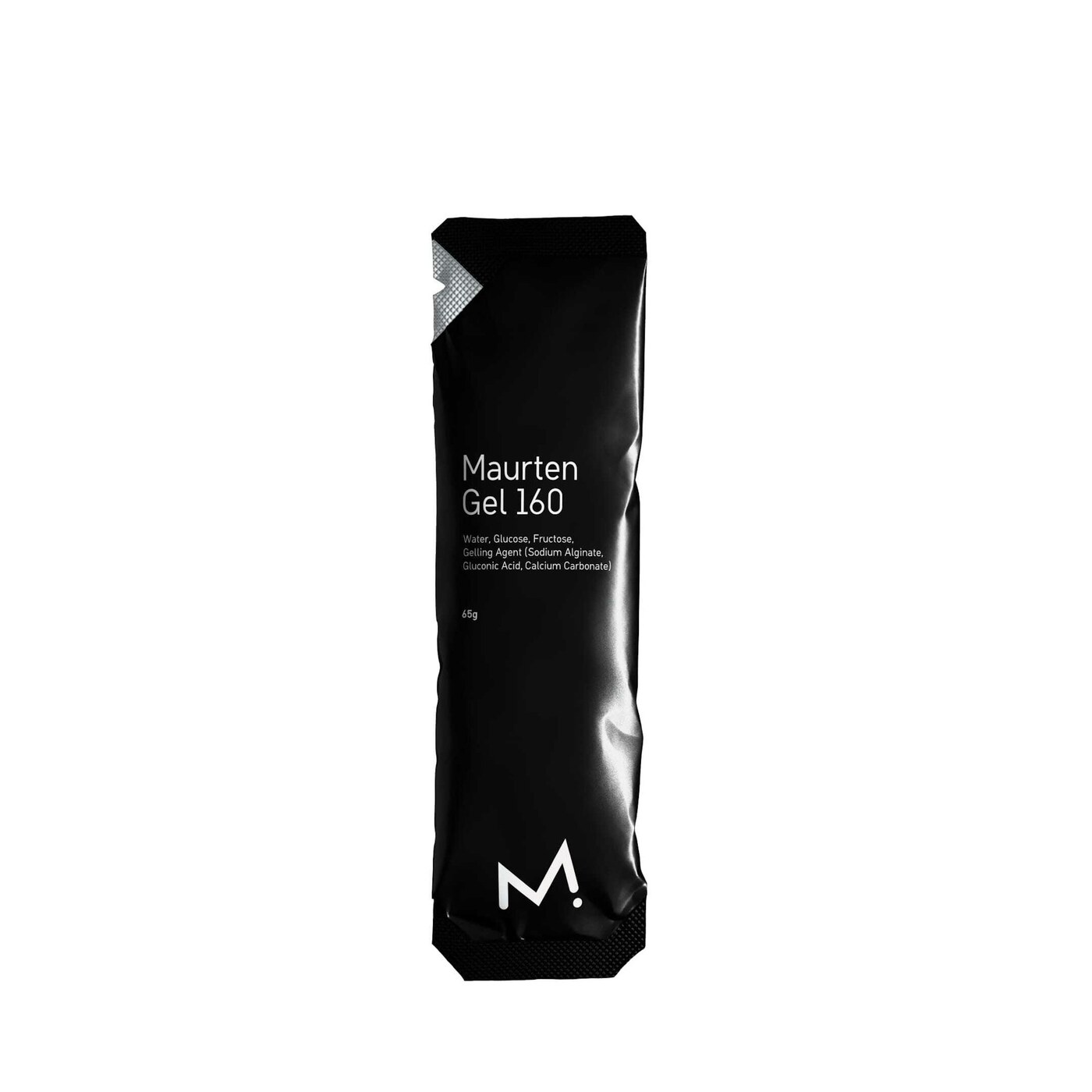
Forty grams of carbohydrates in a single sachet. No coloring, no flavoring, no preservatives. The Maurten Gel 160 is nothing like a classic gel: it is a hydrogel that moves through the stomach like a wet sponge and delivers its cargo straight to the intestine. On paper, it rivals half a flask of sports drink. Out on the course, it shakes up the habits of runners used to downing three gels an hour.
Maurten Gel 160 Review: 40 g of Hydrogel Carbs vs. Sports Drinks
8.5/10
A nutrition niche of its own in the gel world
The Maurten Gel 160 fills a very clear niche: the ultra-concentrated gel for runners who target 80 to 100 g of carbs per hour and are tired of juggling four 25 g sachets. With 40 g of carbs per serving, it does almost the job of two traditional gels. The Swedish brand, founded in 2015 by two biochemistry engineers, built its reputation on hydrogel technology: a blend of sodium alginate and pectin that turns into a gel on contact with stomach acid. The result: glucose and fructose travel encapsulated all the way to the duodenum.
In practice, you eat a sort of sticky fruit paste with no strong taste that goes down on its own. The 65 g sachet tears open, empties in two or three squeezes, and you skip the sweet, sticky aftertaste that clings to the back of your throat for ten minutes. The mix is calibrated: a 0.8:1 fructose-glucose ratio, designed to saturate both intestinal transporters, GLUT5 and SGLT1.
RunMorph tip: never try the Gel 160 for the first time on race morning. Its gel texture catches people off guard, and some runners find it harder to swallow than expected. Three training long runs are enough to confirm your tolerance.
Technical specs
| Spec | Value |
|---|---|
| Brand | Maurten |
| Model | Gel 160 |
| Sachet size | 65 g |
| Carbohydrates | 40 g (glucose + fructose) |
| Fructose:glucose ratio | 0.8:1 |
| Caffeine | 0 mg |
| BCAAs | 0 mg |
| Sodium | 30 mg |
| Fat / Protein | 0 g / 0 g |
| Calories | 160 kcal |
| Ingredients | Water, glucose, fructose, sodium alginate, gluconic acid, calcium carbonate |
| Price per unit | 4.49 to 4.99 euros |
| Box | Box of 12 sachets, around 54 euros |
Who is this gel for?
Marathon in 3 to 4 hours
This is the Gel 160's natural playground. In a marathon run around 3:30, you target 70 to 90 g of carbs per hour. With two Gel 160s spaced about an hour apart plus a bottle of energy drink, you hit the target without reaching for a gel every twenty-five minutes. Your fueling plan gets simpler, you have fewer wrappers to manage during the race, and you spare your stomach a string of sugar spikes.
Mid-length trail races of 4 to 8 hours
On a 50 to 70 km trail race, the Gel 160's concentration becomes a logistics advantage. Four sachets for four hours, tucked into the front pocket of a trail pack, are enough to sustain 40 g per hour. Add a salty energy drink for electrolytes and you are set. The gel format goes down surprisingly well after two hours of running, at the point where classic gels turn sickly sweet. No strong flavor, so no sensory overload.
Ultras of 100 km and beyond
In an ultra, the Gel 160 has its place, but in rotation. Its neutral taste works in its favor over long hours, and its calorie density lets you carry a lighter load. Just do not bet everything on it: with no meaningful sodium (only 30 mg) and zero caffeine, you have to mix it with other products. A typical dosing plan for a 100 km: one Gel 160 every hour, plus a caffeinated product mid-race and late in the race, plus a drink loaded with 300 to 500 mg of sodium per liter.
Texture, intake on the run and digestive tolerance
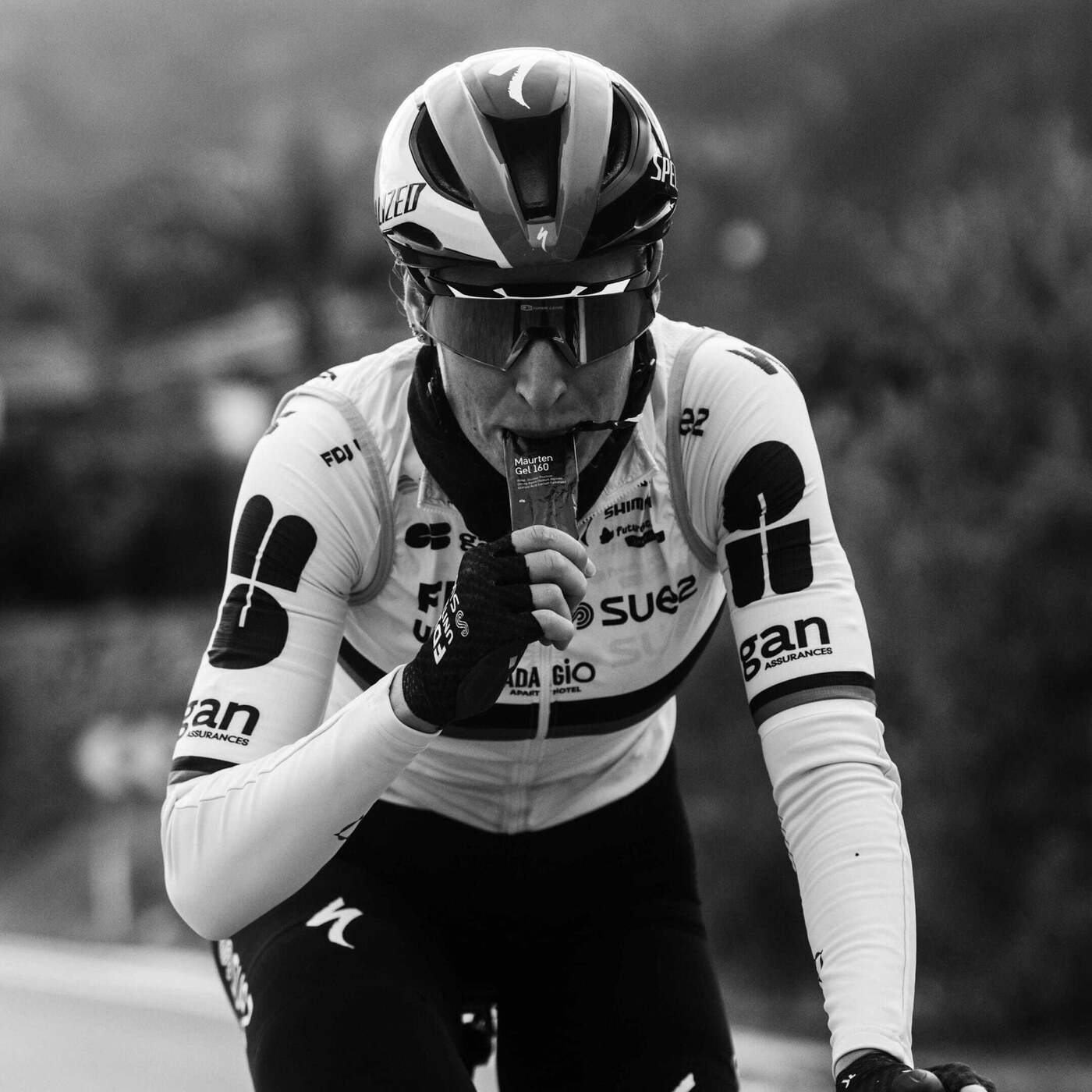
Texture is Maurten's signature selling point. On contact with saliva and stomach acid, the alginate forms a matrix that holds the sugars. You feel no violent sugar spike, and the pasty mouthfeel typical of traditional gels disappears. The sachet empties cleanly, with no sticky residue on your fingers, which makes a big difference in a race when you run with poles or want to keep your soft flask from getting sticky.
Digestive tolerance is where it shines. Across about twenty long sessions at two gels per hour, no sign of gut trouble was reported as long as hydration kept up. The rule still applies: a Gel 160 swallowed without water is a bad idea. The gelling process needs a minimum volume of fluid to work. Drink at least 200 ml in the minutes that follow.
Carbohydrate profile and absorption
A 0.8:1 fructose-glucose ratio is now considered the ideal range to saturate both intestinal absorption pathways. Research in the early 2010s showed that this split lets your muscles use 90 to 120 g of carbs per hour, versus a maximum of 60 g with glucose alone. Maurten follows this standard.
Where the Gel 160 stands out is absorption kinetics. Hydrogel technology slows release in the stomach and moves the glucose further down the digestive tract, where the intestinal lining absorbs it better and the osmotic load is easier to tolerate. For the runner, that means fewer stomach cramps at high doses. For a marathon run at 80 g of carbs per hour, that is a clear advantage.
Flavors and available versions
Maurten fully commits to total taste neutrality. The Gel 160 comes in just one version: plain. No chocolate, no lemon, no caffeinated version like the Gel 100 Caf 100. If you want caffeine, you need to switch to the 100 format (25 g of carbs, 100 mg of caffeine).
The flip side is the lack of taste stimulation in very long events. Some runners appreciate exactly this neutrality after five hours of effort. Others get fed up and look for a strong flavor to lift their motivation. If you are in the second group, add a few gels from another brand to your rotation.
How it compares to the competition
Compared with the Maurten Gel 100 (25 g of carbs, same hydrogel technology, around 3.50 euros), the 160 is cheaper per gram of carbohydrate and more practical over long distances. If you never go above 60 g of carbs per hour, the 100 is enough and costs you less per unit.
SiS Beta Fuel offers 40 g of carbs for about 2.50 to 3 euros per gel, with a 1:0.8 maltodextrin-fructose ratio. Much cheaper, more liquid texture, but no hydrogel technology. On price per gram of carbs, SiS wins. On digestive tolerance and comfort at high doses, Maurten keeps the edge.
Veloforte bets on natural ingredients (dates, honey, fruit) with about 25 g of carbs per gel for around 3 euros. A very different approach, more focused on flavor and natural ingredients, less optimized for pure performance.
Aptonia Decathlon offers gels with 25 g of carbs for about 1 euro, in strong flavors. The value for money is unbeatable for everyday training, but the formula is not calibrated for very high doses.
How to fit it into your RunMorph training plan
The current standard for trained marathon runners is 70 to 90 g of carbs per hour of running, and elite fields go up to 100 or even 120 g per hour. To hit that target without overloading your stomach, gut training matters as much as muscle training.
If you follow a RunMorph marathon, half marathon, 10K or trail training plan, bring in the Gel 160 as soon as your long runs include goal-pace work. Start with one gel at 1:30 into the run, then gradually add a second at 2:30. In your last month of marathon prep, schedule two back-to-back long runs with exactly the fueling timing you plan to use on race day.
For sodium, remember that the Gel 160 contains almost none. The target of 300 to 700 mg of sodium per hour for a heavy sweater has to come from elsewhere: a loaded energy drink, salt tablets, or a salty gel in rotation.
For UTMB and organized trail races, remember the course rules: gel wrappers must be kept and dropped in the bins provided at aid stations, never on the ground. A violation means disqualification.
RunMorph verdict
The Maurten Gel 160 does exactly what it promises: it lets you reach 80 g of carbs per hour with just two gels, in a gel format that stays surprisingly comfortable over the long haul. Hydrogel technology is not empty marketing: it delivers real digestive comfort at high doses. The limits are well known: no caffeine, no meaningful sodium, no flavor, high price. This is a specialized product to build into a well-thought-out fueling strategy, not a one-size-fits-all gel.
For a marathon run in 3 to 4 hours, it is an excellent choice. For an ultra, it has its place, but in rotation with other products. For your Sunday long run, it is overkill and too expensive.
Score: 8.5/10

Key takeaways for your training
- 40 g of carbs in one sachet: that is the main selling point, perfect for targeting 80 g per hour with two gels.
- 0.8:1 fructose-glucose ratio, in line with 2026 recommendations for very high doses.
- Hydrogel technology: better digestive comfort at high doses, but you need 200 ml of water right after.
- No caffeine, no flavor, almost no sodium: pair it with a loaded drink and a caffeinated gel.
- High unit price (4.49 to 4.99 euros): save it for races and marathon-specific long runs.