✗900 lm mode steps down from 2 h 30 min, can't be sustained
For years, Decathlon left the high-output headlamp segment to the mountain brands. With the Ontrail 900, the brand from northern France shifts gear: 900 lumens at peak, a removable battery and a price that breaks the rules of the premium market. The Evadict name has been selling poles and trail jackets for years. The question is whether the promise holds up on the toughest terrain there is: at night, on a technical descent.
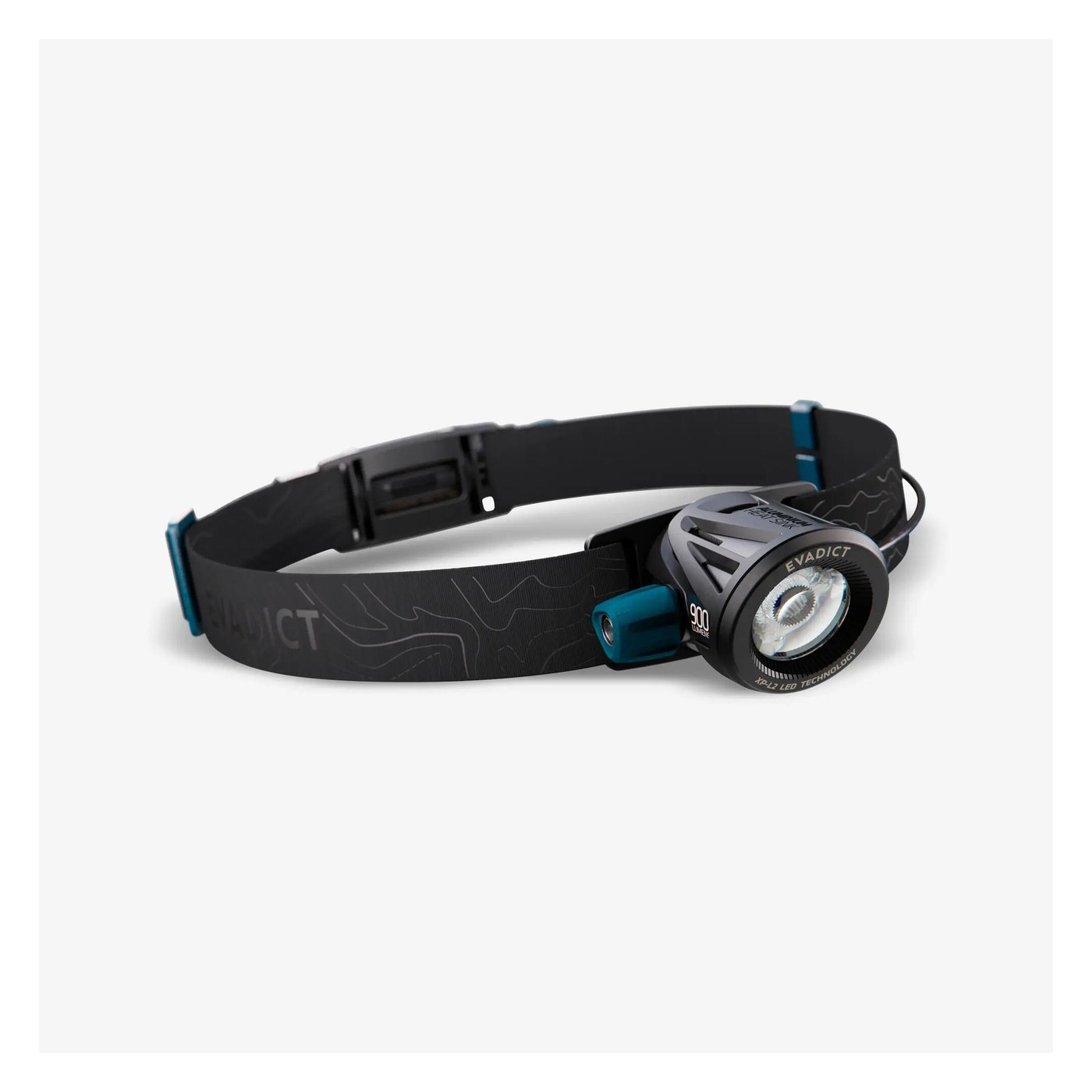
The Evadict Ontrail 900 is a trail headlamp with 3 power levels (100, 300, 900 lumens) and a removable, rechargeable lithium battery. It targets trail and ultra runners who want flexible battery life without blowing their budget. It delivers on value for money and comfort, but maximum output drops off fast and water resistance stays basic.
8
/ 10 · RunMorph overall score
Power
8 / 10
Battery life
7.5 / 10
Beam
7.5 / 10
Comfort/weight
8.5 / 10
Value for money
9.5 / 10
Who is it for?The trail runner who logs regular night runs and doesn't want to spend €150 on a mountain headlamp.
Who should skip it?The runner targeting a demanding ultra in prolonged wet conditions, or anyone who wants an automatic reactive mode.
In Decathlon's headlamp aisle, the Evadict brand has mostly been known for folding poles and technical jackets. With the Ontrail 900, it takes on a segment long held by the mountain brands: the high-output headlamp with a removable battery, built for multi-hour runs in total darkness.
On paper, the bet is simple: 900 lumens in boost mode, a battery you can swap mid-race and a comfortable strap, all for under €60, when the market benchmarks (Petzl, Silva, Black Diamond) tend to start between €90 and €180 for comparable output. At RunMorph, we've already reviewed premium headlamps like the Petzl Swift RL and the Silva Trail Speed 5R: the Ontrail 900 shows what Decathlon sacrifices, or doesn't, to hit this price.
RunMorph's advice: on a long ultra, always carry a spare battery (sold separately for €19.99 at Decathlon). That's the real case for a removable battery, more than the raw battery life of a single pack.
Ontrail 900 specs: what Decathlon stands behind
Spec
Value
Brand
Evadict (Decathlon)
Maximum output
900 lumens (100 / 300 / 900 lm modes)
Beam distance
50 m (100 lm) to 150 m (900 lm)
Battery life
up to 10 h in 100 lm mode, 3 h 30 min in 900 lm mode (steps down from 2 h 30 min)
Battery
3500 mAh lithium, removable and USB rechargeable, spare sold separately
Removable battery and CREE XP-L2 LED: what changes under the headband?
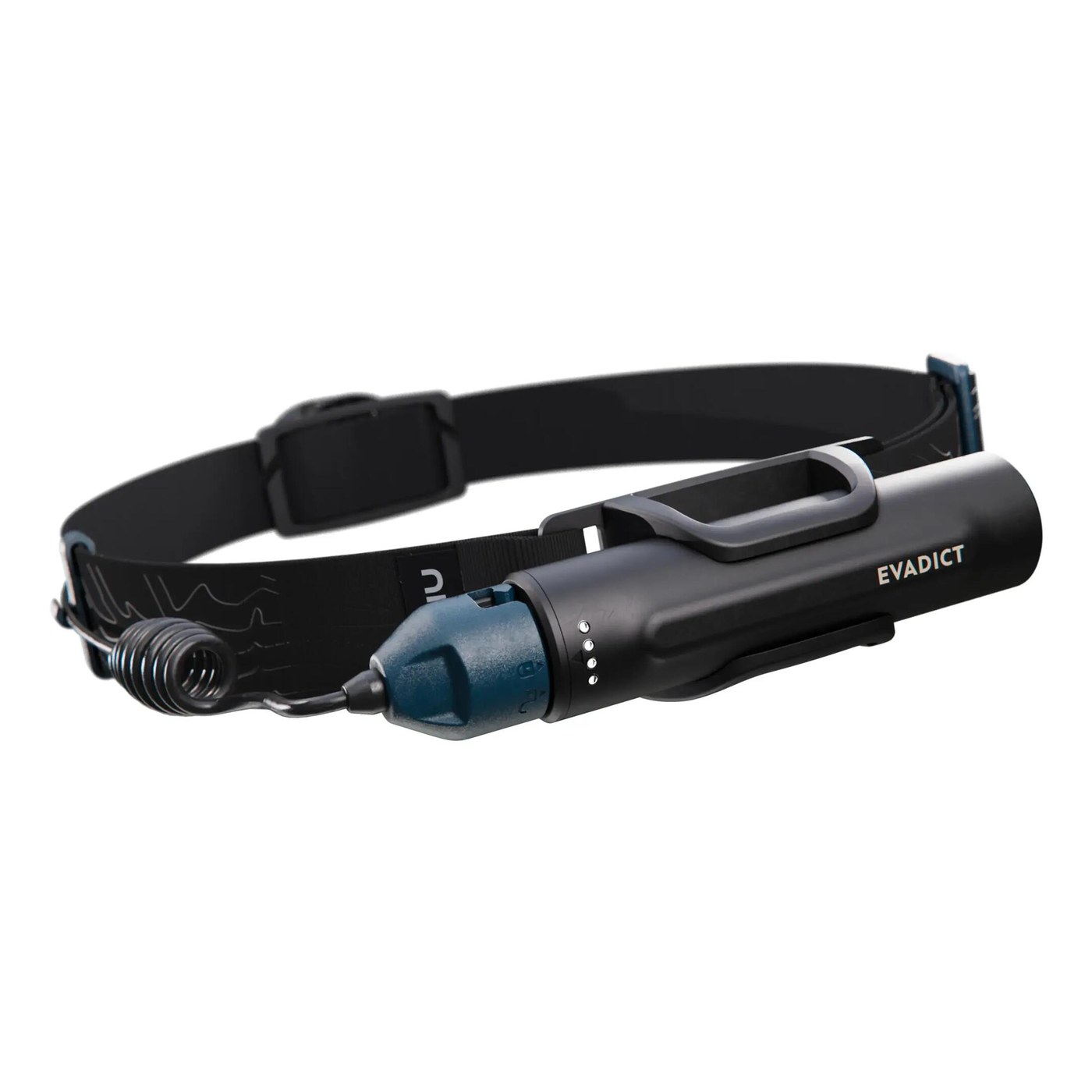
The big difference from entry-level headlamps is the rear-mounted, removable battery. It unclips from the rear housing in seconds and you can swap it mid-effort, a detail that matters a lot once a run goes past 4 or 5 hours. Decathlon also sells this 3500 mAh battery on its own, so you can head out with a second charge in your pack without buying a whole new lamp.
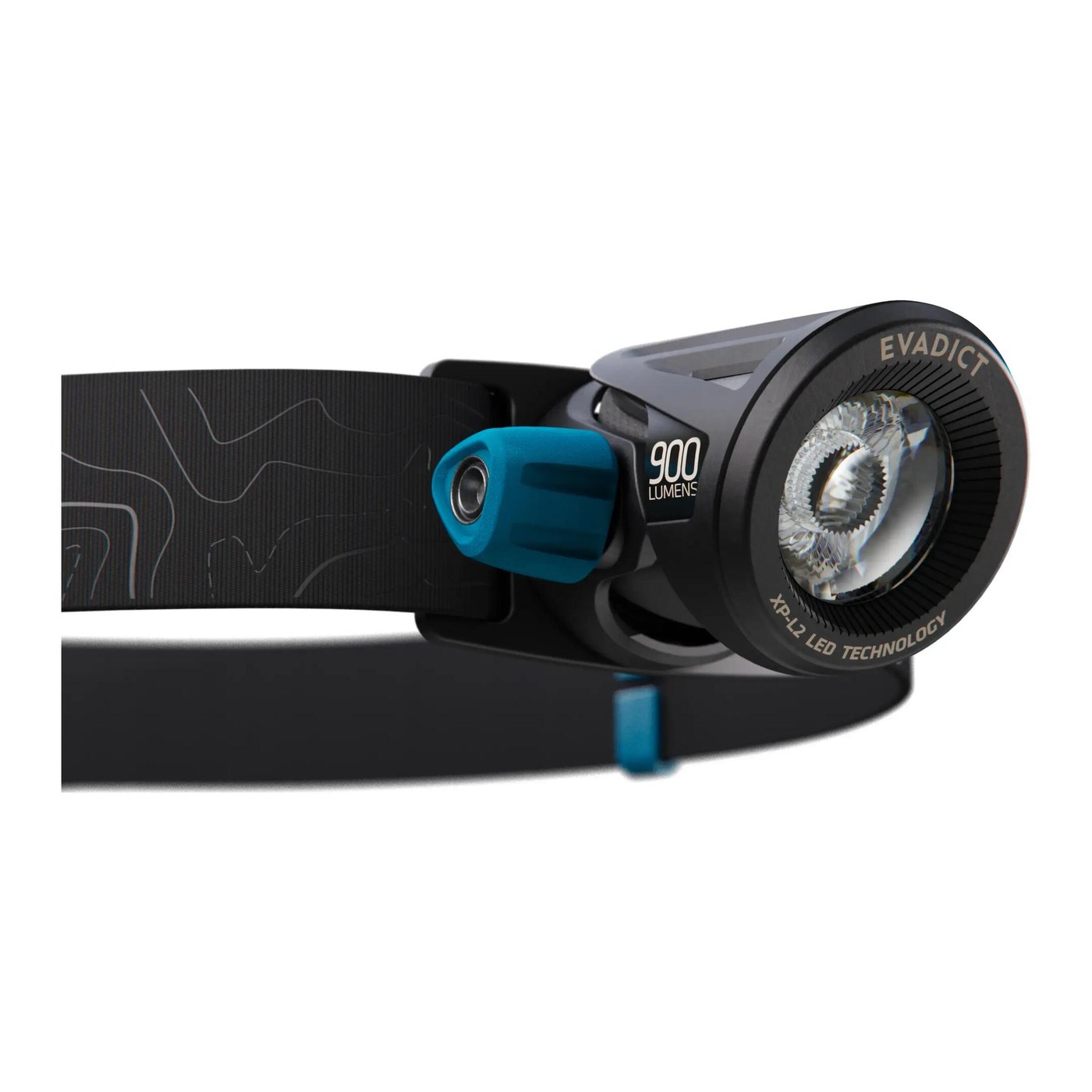
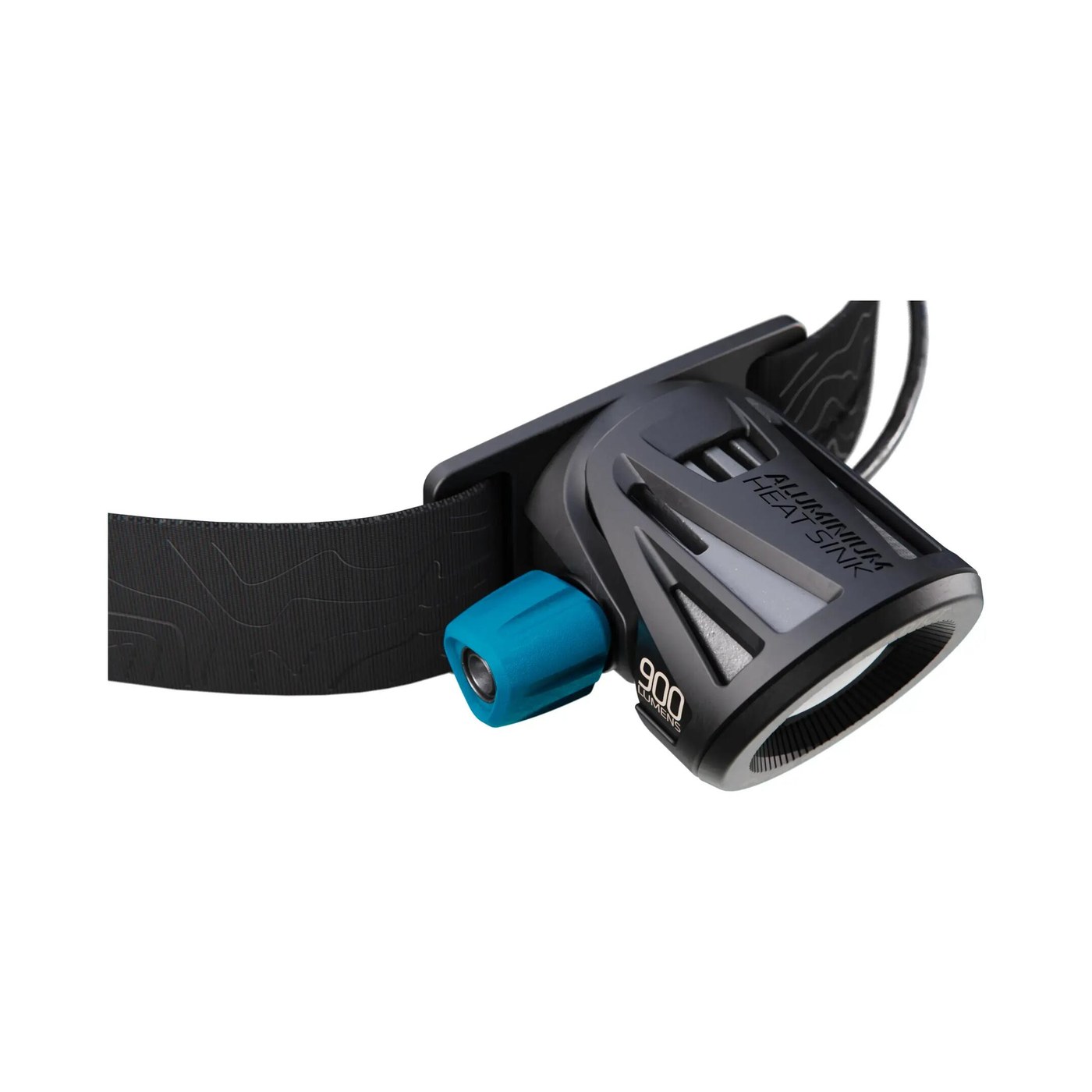
The CREE XP-L2 LED puts out a mixed beam, neither too narrow nor too wide, with a dial that switches between 100, 300 and 900 lumens. The catch, documented by the manufacturer and by independent field tests alike, is thermal management: the 900-lumen mode heats up fast and automatically steps down to 350 lumens after two and a half hours to protect the electronics. Put simply, boost mode is a short spotlight for a technical section, not a cruising setting for a whole night.
The tilt is fully free (no notches), so you can set the exact beam angle toward the ground on technical descents. The adjustable, washable strap spreads the weight between the front and back of the headband, something Decathlon clearly worked on to limit pressure points over several hours.
Field test: 2 to 5-hour night runs on rolling trails
On night runs of 2 to 5 hours, on rolling trails with technical sections (roots, scree, narrow singletrack), the 300-lumen mode quickly becomes the go-to cruising setting: wide enough to read the terrain ahead, without draining the battery in one evening. The 100-lumen mode handles runnable stretches and fast hiking perfectly, with enough battery life to last a full night without recharging.
The 900-lumen mode is for technical descents or dense forest where contrast is lacking. This is where the gap with a headlamp that has an automatic reactive mode, like the Petzl Swift RL, shows: you have to turn the dial by hand at every change of terrain, which takes some getting used to on your first runs.
On comfort, the wide strap and the weight shifted to the back (thanks to the rear-mounted battery) keep bounce well in check at an easy jog, and even at livelier paces around 5:30 per km. On the other hand, IPX4 (splash resistant, not submersible) calls for caution in prolonged heavy rain or deep stream crossings, unlike more waterproof benchmarks from the premium market.
Evadict Ontrail 900 vs Black Diamond Sprinter 500: head to head
At a similar budget, the most telling comparison is against the Black Diamond Sprinter 500, which is designed for urban running and daily runs rather than pure ultra-trail.
Criterion
Evadict Ontrail 900
Black Diamond Sprinter 500
Max output
900 lm
500 lm
Weight
139 g
123 g
Battery life at full power
2 h 30 min before step-down
3 h steady
Battery type
dedicated removable lithium
lithium or 3 AAA batteries (dual fuel)
Rear light
none
built-in flashing red
Target user
trail and ultra-trail
road running and light trail
Official price
€59.99
about €80
The Sprinter 500 keeps the edge on versatility (spare batteries available anywhere in the world) and road visibility thanks to its rear light, a real plus on roads open to traffic. The Ontrail 900 hits back with more raw power, a larger dedicated battery and a much lower price. That makes it the logical pick if you prioritize pure night trail running over mixed urban running.
Pros
Unbeatable value for 900 lumens at peak
Removable battery, spare sold separately
Well-judged comfort and weight distribution at 139 g
Simple dial, fully free tilt
Cons
900 lm mode steps down from 2 h 30 min, can't be sustained
Our field verdict: who is it for, and which RunMorph training plan?
The trail runner getting into night runs
Ideal for discovering night training without breaking the bank: the 300-lumen mode is plenty for the vast majority of training runs, and the headroom up to 900 lumens is reassuring on your first technical sections.
The ultra runner preparing for a race of more than 12 hours
The removable battery is a real selling point, provided you invest in a second spare battery from day one. Without it, battery life stays limited on very long formats.
The road runner who wants visibility above all
Less relevant here: with no rear light and a pure trail focus, the Ontrail 900 is less suited to running on open roads than a headlamp with a built-in flashing light.
To structure your night runs safely, whether you're following a RunMorph trail plan or heading out for a weekly long run, the Ontrail 900 lets you test different intensities without worrying about your headlamp budget. It's especially useful for fitting in hill sessions or technical intervals in winter, when night falls early and your plan can't wait for spring.
RunMorph Coach verdict
The Evadict Ontrail 900 delivers on its promise of an affordable headlamp for night trail running: 900 lumens at peak, a removable and rechargeable battery, well-judged comfort at 139 grams, all for under €60. The trade-offs (IPX4 water resistance, a boost mode that steps down, no rear light) are what you'd expect at this price, and they stay reasonable for standard trail use rather than the most demanding ultras in extreme conditions.
Value for money is the real selling point: you'll struggle to find equivalent power and flexible battery life for under €60 anywhere else on the market. 8/10, with special mention for the removable battery system, which changes how you use the lamp on long runs.
Key takeaways for your training
300-lumen mode for cruising: the most effective setting for most of your night runs on rolling trails.
A spare battery is a must: pack one as soon as a run goes past 3 to 4 hours in the dark.
900-lumen mode in short bursts: save it for technical descents, not continuous use.
IPX4 only: protect the lamp in heavy, prolonged rain or stream crossings.
A measured investment: an excellent entry point before you consider a premium headlamp as your ultra volume grows.