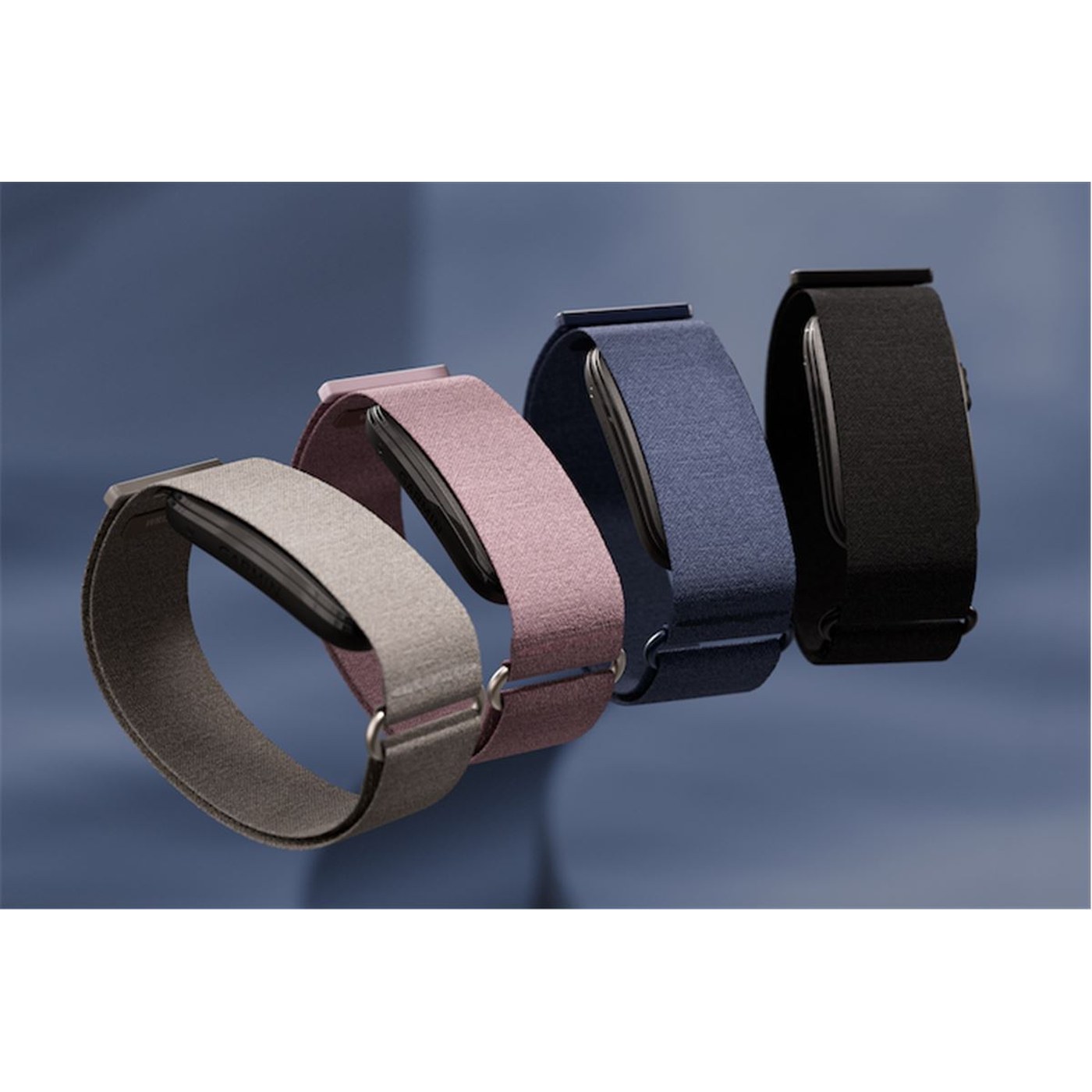
On sale since July 24, 2026, the Cirqa is a first for Garmin: a screenless smart band built entirely around recovery and sleep tracking, with no mandatory subscription. RunMorph wore it day and night for several weeks alongside a GPS watch to see whether this minimalist format delivers against rivals like Whoop and Oura.
© Garmin, official photo used for editorial purposes
Garmin creates a new category: the screenless band
Garmin is known for multisport watches with data-packed displays. With the Cirqa, the brand does the exact opposite and drops the screen altogether. The stated goal: a discreet format you wear day and night to track recovery, without adding one more distraction to your wrist.
This positioning takes direct aim at specialists like Whoop and Oura, which built their reputation on continuous, screenless physiological tracking. But where those rivals require a monthly subscription to unlock all your data, Garmin takes a different route: there are no recurring fees, and every metric stays free in the Garmin Connect app.
Elevate Gen 4, Body Battery and sleep tracking: what the Cirqa actually measures
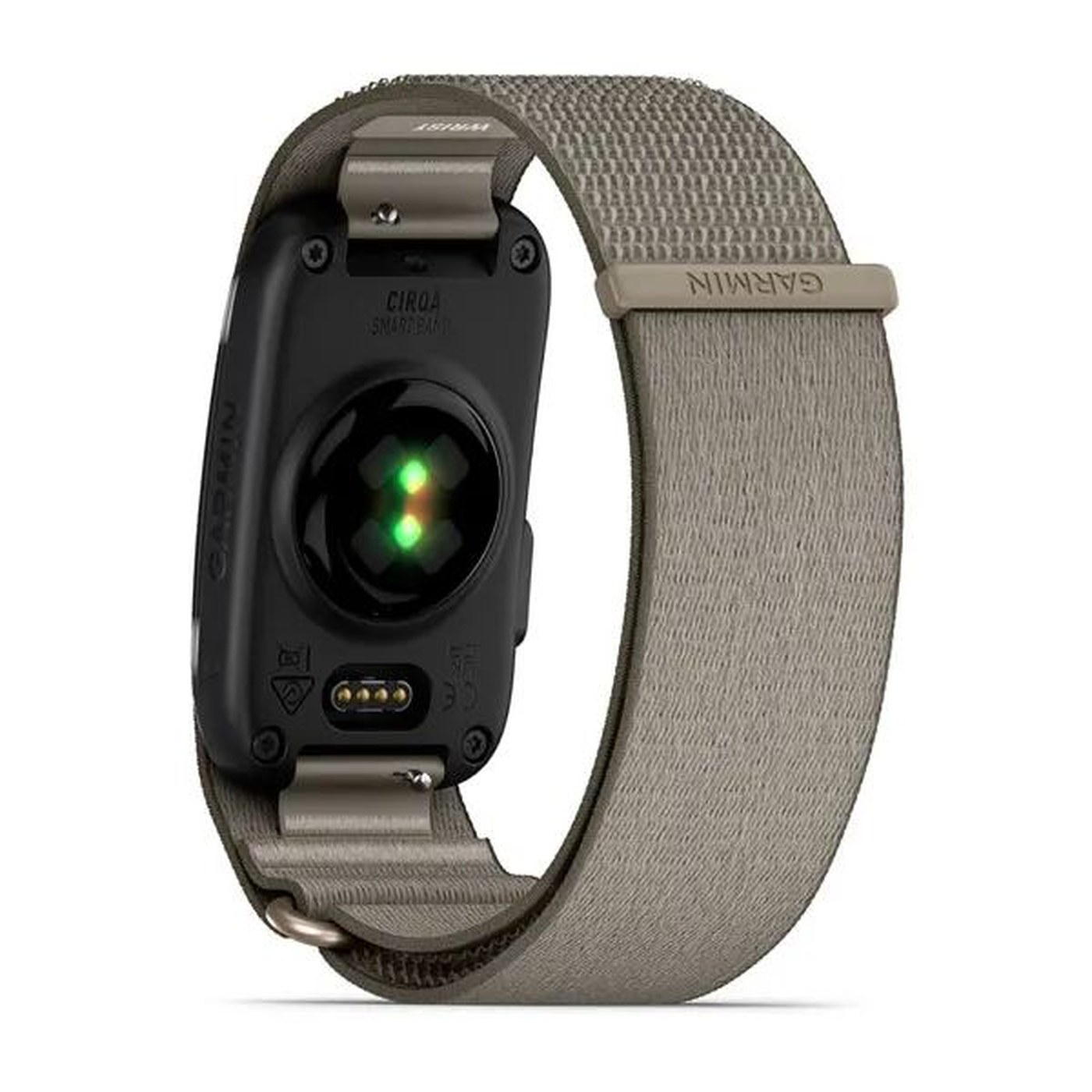
Inside its minimalist case, the Cirqa packs most of Garmin's sensor arsenal. The Elevate Gen 4 module measures heart rate continuously at the wrist, backed by a pulse oximeter for blood oxygen saturation and a skin temperature sensor, which is especially useful for menstrual cycle tracking and retrospective ovulation estimates. All of it feeds the proprietary metrics Garmin users know well: Body Battery for your overall energy reserve, Training Readiness for how ready you are to train, and heart rate variability (HRV) as a marker of nervous system fatigue.
RunMorph tip: if you'd rather have a complete watch with GPS and a screen to track your workouts on its own, the Garmin Venu 4 covers similar ground on health tracking and records your sport natively on top of that. For an accurate heart rate strap to pair with the Cirqa during workouts, the Garmin HRM 600 remains the brand's benchmark.
The band automatically detects and records a wide range of activities, even without a screen to confirm them in the moment: you can review and correct them later in Garmin Connect, and the system gets sharper the more you use it. More than 80 sport profiles are available, and you can also start one with the single physical button on the side of the case to track a session manually without pulling out your phone.
Field test: a band you forget about, sleep tracking that delivers
The first takeaway after several weeks of daily wear is comfort. The fabric strap, a NATO-style loop, causes zero discomfort at night, unlike a bulkier watch whose case can press into your wrist when you sleep on your side. That's the Cirqa's core selling point, and it keeps its promise: after a few days of adjustment, you literally forget you're wearing it.
On sleep, the stage breakdown (light, deep, REM) and the daily sleep score matched how we felt on waking throughout the test period, and daytime naps were detected reliably. Overnight heart rate variability, the most sensitive measurement of the lot, stayed reasonably consistent from night to night, without the occasional dropouts we sometimes see on entry-level trackers.
During the day, the Body Battery calculated from the Cirqa's data gave a broadly accurate read of accumulated fatigue, especially after heavier training weeks. The weak spot is wrist heart rate accuracy during exercise. No surprise for an optical sensor in a fixed position: intensity peaks during intervals lagged slightly behind a dedicated chest strap. That's a typical gap for this type of sensor, and it doesn't undermine day-to-day recovery tracking.
The lack of built-in GPS shows mostly when you train: to track an outdoor run accurately, the Cirqa has to stay connected to a smartphone you carry, which limits its value as a standalone workout tracker. In practice, we never used the band as our main running tracker during the test, only as a permanent companion to a GPS watch worn just for workouts.
© Garmin, official photo used for editorial purposes
Garmin Cirqa vs Garmin Venu 4: dedicated band or all-round watch?
| Criterion | Garmin Cirqa | Garmin Venu 4 |
|---|
| Price | €199.99 | From €469 |
| Screen | None | AMOLED |
| Built-in GPS | No (via smartphone) | Yes, multi-band |
| Weight | 20 g | Noticeably heavier |
| Battery life | 10 days | Several days in smartwatch mode |
| Sleep/recovery tracking | The product's top priority | Complete, with advanced sleep analysis |
| Subscription | None | None |
The Cirqa and the Venu 4 aren't built for the same job. The first is a discreet companion you wear nonstop; the second is a full smartwatch that handles sport tracking, basic navigation and notifications on its own. Your choice comes down to your setup: if you already own a GPS watch that you take off to sleep, the Cirqa fills exactly that gap. If you want a single device, the Venu 4 or a Forerunner is the better pick.
Our take: who it's for and how it fits your RunMorph training
The Cirqa is aimed first at regular runners who already own a GPS watch and want to understand their recovery better without wearing that watch 24 hours a day. It's a specific profile: you're training for a time goal and want to adjust your training load day by day, using sleep and HRV data that's more reliable than what a watch picks up when you take it off at night for comfort.
If you're a beginner or casual runner looking for one device to track your runs, the Cirqa clearly isn't the priority: a regular GPS watch, cheaper and more versatile, covers the basics better. It's a companion product, and Garmin owns that. Its value shows in how you use it over time, not in the spec sheet alone.
To put the Cirqa's recovery data to work in your training, pair it with a RunMorph plan that adjusts your training load to your real fitness on the day. 👉 Explore RunMorph training plans.
RunMorph Coach verdict
The Garmin Cirqa pulls it off: serious recovery tracking with no screen and no subscription, in a format you genuinely forget on your wrist. It's not a GPS watch replacement, and Garmin doesn't claim otherwise. It's a smart companion for anyone who wants to know their real fatigue instead of guessing. 8/10: a strong start for a new product category at Garmin, best for runners who already own a sports watch and want the missing piece on the recovery side.