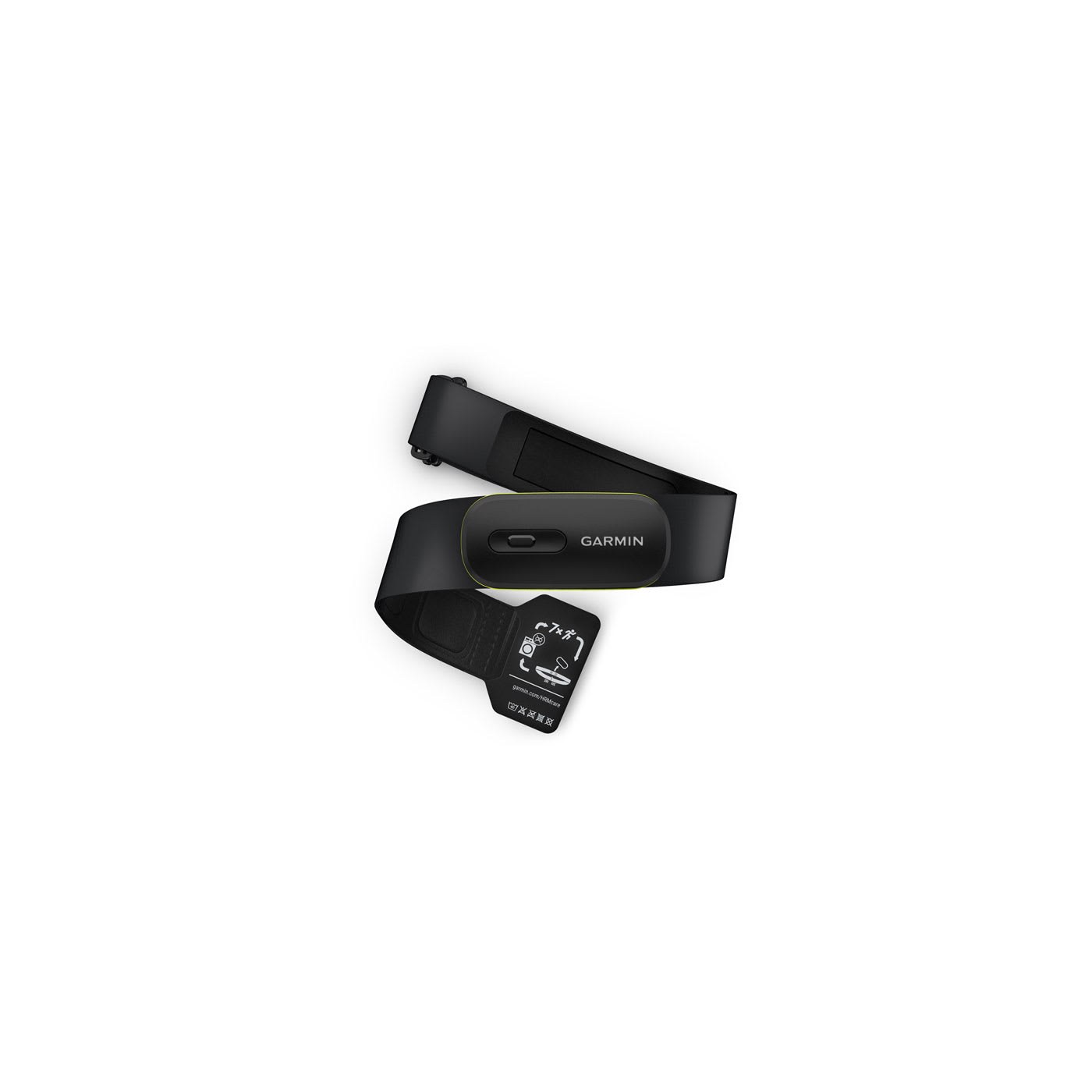
Garmin made a big move in May 2025. The HRM 600 replaces the HRM-Pro Plus and brings brand-new metrics like step speed loss. It's a rechargeable chest strap that works on its own and can record a session without a watch. On paper, it's the new benchmark. Out on the road, does its accuracy hold up against the Polar H10? Here's our answer after several weeks of heart rate training and interval sessions.
Garmin HRM 600 Review: The Chest Strap Taking On the Polar H10
8.5/10
Garmin HRM 600: the strap that reinvents the Garmin ecosystem
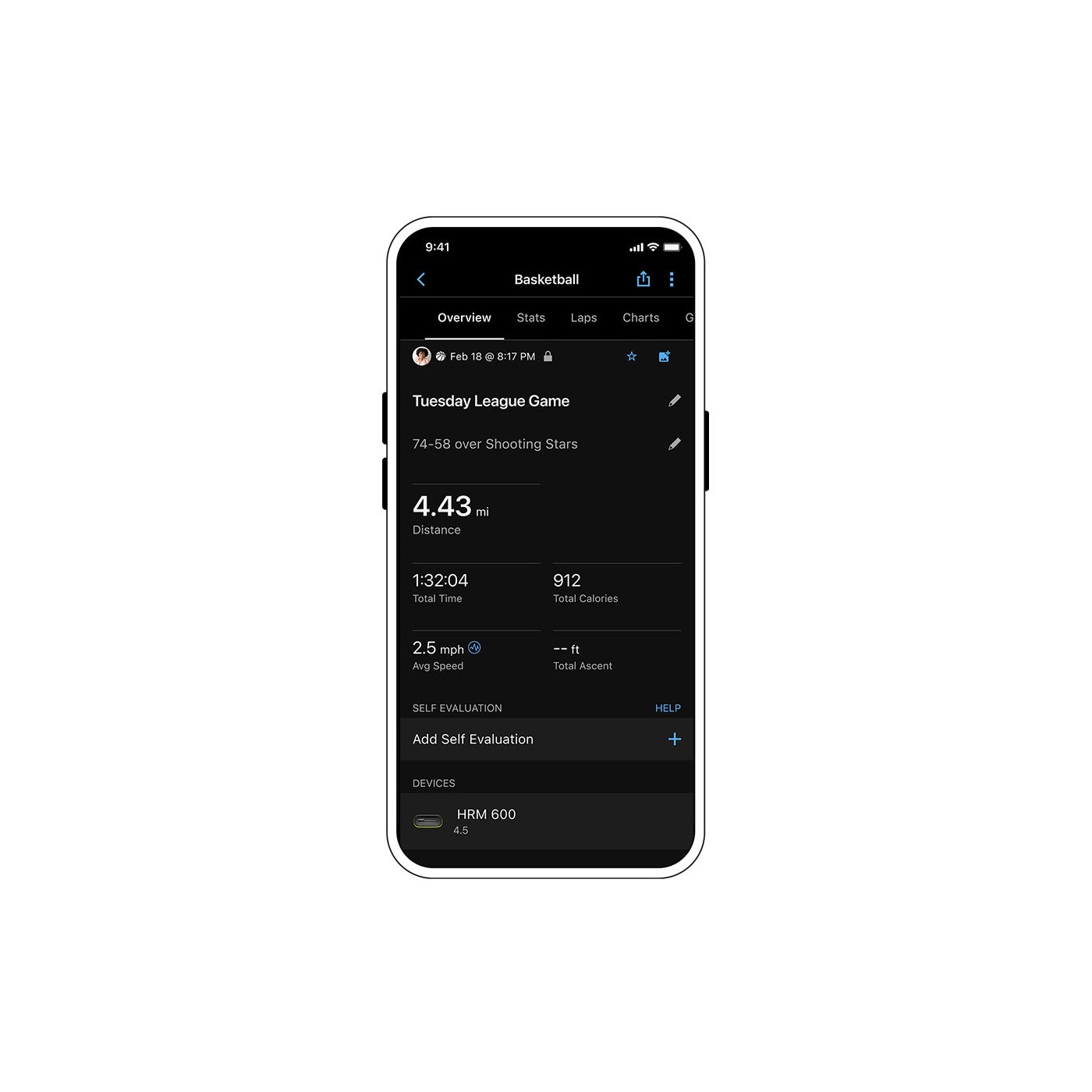
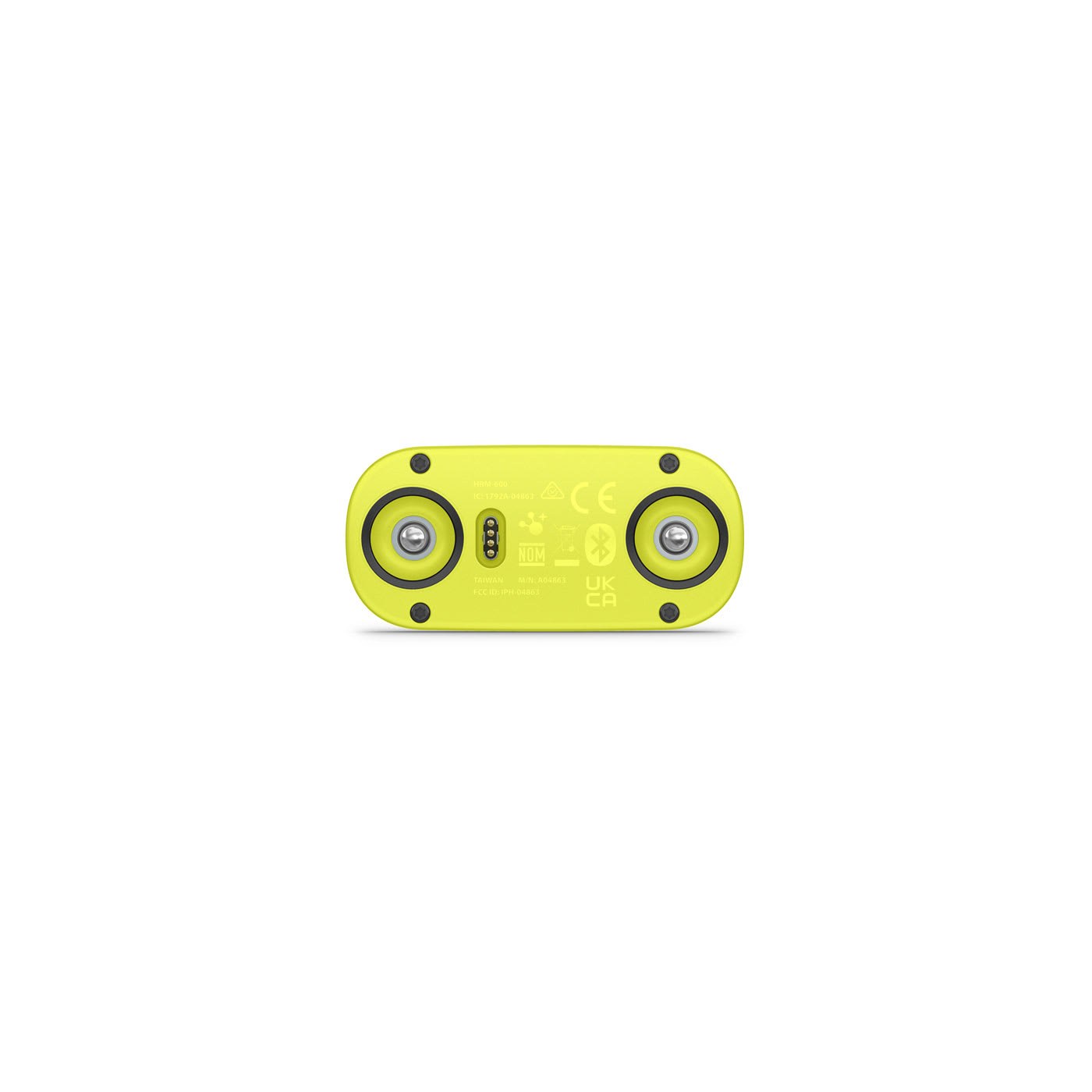
The HRM 600 isn't a simple update. Garmin rethought everything. A rechargeable battery replaces the coin cell, the module clips on and off so the strap can go in the washing machine, and the built-in accelerometer captures running dynamics in real time. Above all, the strap now works on its own: it stores up to 18 hours of activity with no watch on your wrist, and the data syncs later via Garmin Connect.
The official French price is 169.99 euros. That's ten euros more than the HRM-Pro Plus at launch, justified by the two-month battery life, the new running metrics and standalone recording. The entry ticket stays high, but the promise moves into a different category.
RunMorph's advice: the HRM 600 targets runners who already use the advanced metrics on their Forerunner or Fenix. If you only use your Garmin watch for heart rate and GPS, the HRM 200 at 89 euros is enough. The 80-euro jump only makes sense if you actively track vertical oscillation, ground contact time and step speed loss.
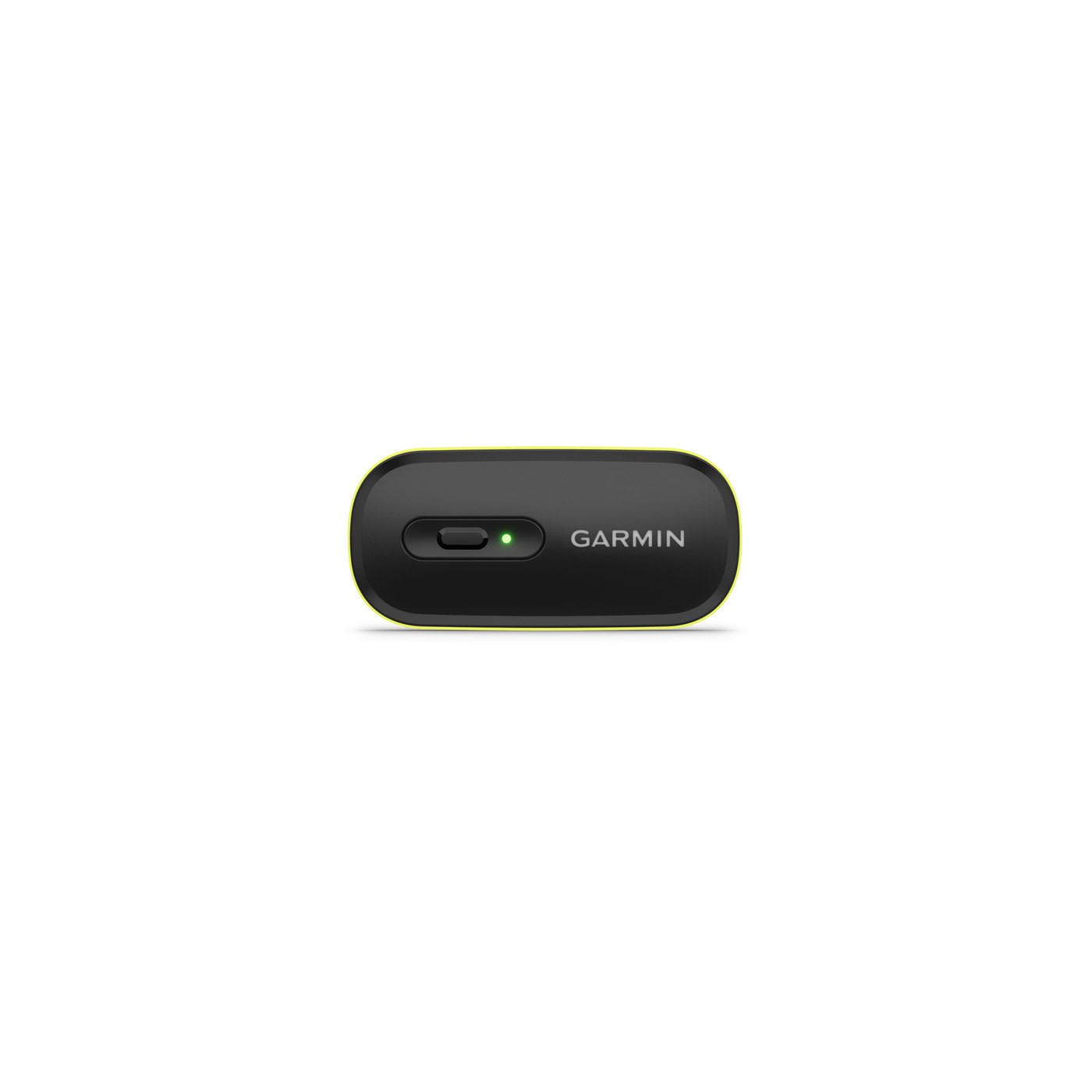
Objective technical specs
| Feature | Value |
|---|---|
| Brand | Garmin |
| Model | HRM 600 |
| Sensor type | Electrocardiographic chest strap |
| Protocols | ANT+, Bluetooth Low Energy (multi-connection) |
| Battery life | 2 months (USB-C rechargeable battery) |
| Internal memory | 18 hours of standalone activity |
| Running metrics | HR, HRV, vertical oscillation, ground contact time, GCT balance, stride length, cadence, step speed loss |
| Water resistance | 5 ATM (50 m, swim-proof) |
| Module weight | 14 g (strap excluded) |
| Strap sizes | XS-S (60-85 cm), M-XL (80-119 cm) |
| Official French price | 169.99 euros |
Who is this sensor for?
The threshold and VO2max runner who relies on HRV
If you build your weeks around lactate threshold, the HRM 600 sends beat-to-beat HRV data, which Training Status and Endurance Score use on the Forerunner 970 or Fenix 8. Acute load tracking gets more accurate than with an optical wrist sensor. On a 6x1000 m session, heart rate response lag is around one second, versus 4 to 7 seconds at the wrist depending on temperature and sweat.
The ultra trail runner who piles up the hours
Two months of battery life changes everything over a long training block. No more worrying about a dead battery the day before a 6-hour run. Even better, the 5 ATM rating handles river crossings, and the internal memory saves your heart rate if your watch goes to sleep on low battery. At UTMB or CCC, that safety net is there.
The triathlete and multisport athlete
The HRM 600 records heart rate underwater and transmits over ANT+ to Edge bike computers and over Bluetooth to indoor apps like Zwift. You go from bike to run without swapping sensors, and pool swims sync after the session via Bluetooth download. Multi-protocol support remains the long-standing strength of Garmin chest straps.
Heart rate accuracy
This is the crux. Garmin promises high-end accuracy, and several independent tests published in spring 2025 confirm behavior very close to the Polar H10, long considered the lab benchmark. On short intervals (200 m to 400 m), the HRM 600 catches peaks and recoveries with less than 2 seconds of lag. No major heart rate dropouts during transitions. The curve stays smooth, even when the strap shifts slightly with sweat.
On long runs at moderate intensity, gradual cardiac drift is tracked with no artificial jumps. The ECG signal sent by the module avoids arm-movement artifacts, which often corrupt optical wrist sensors after two hours of running. The HRM 600 stays consistent from start to finish.
One small weakness: cold starts. During the first ten seconds, the curve can be a little erratic before the electrodes make solid contact with your skin. A splash of water or electrolyte gel on the strap fixes it in about thirty seconds.
Advanced running metrics
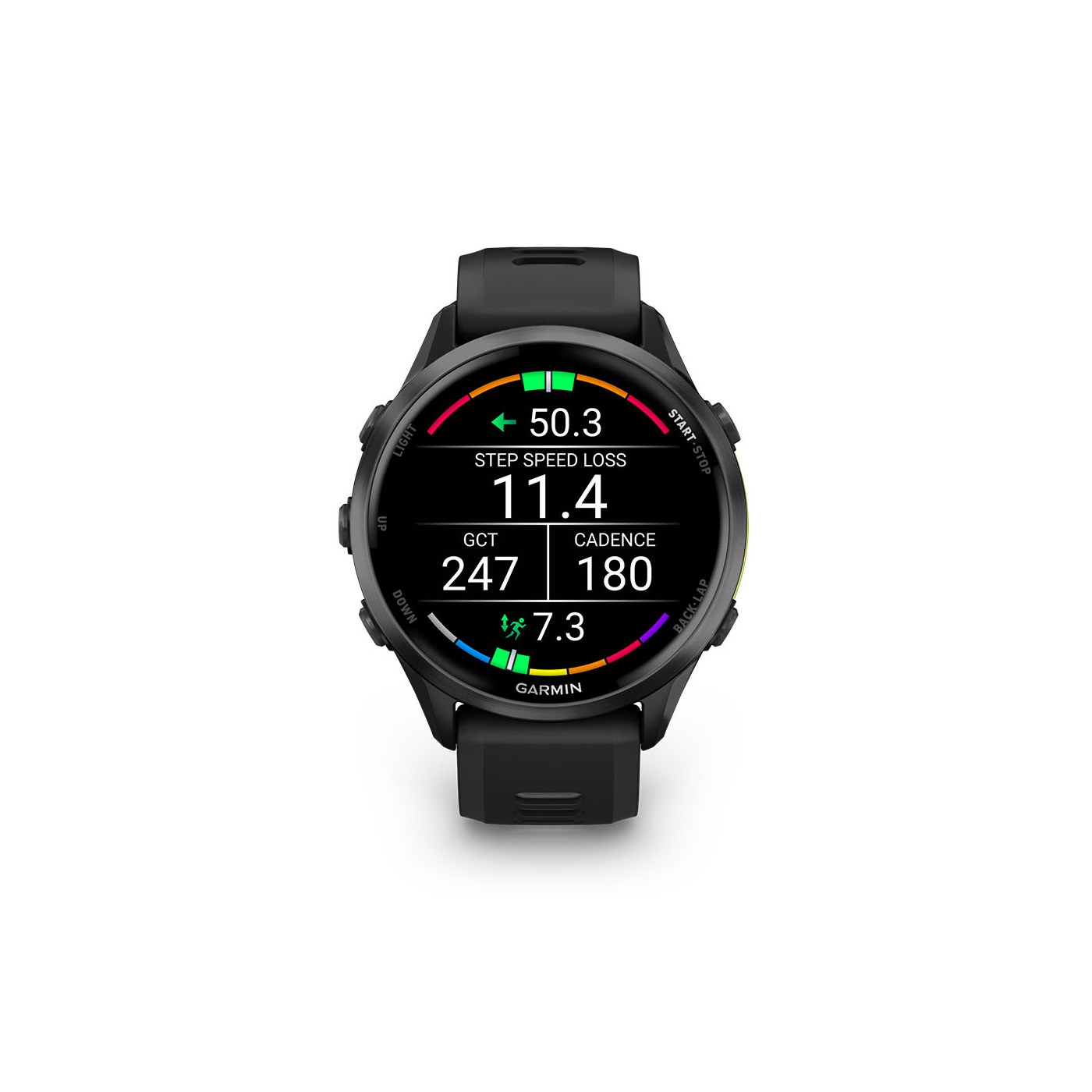
This is where the HRM 600 pulls away from the competition. The internal accelerometer measures vertical oscillation (how much you bounce with each stride, in cm), ground contact time (GCT, in ms), GCT balance between your left and right leg (as a percentage), stride length and cadence. Older HRM-Pro models already provided this data, but there's something new: step speed loss.
Step speed loss expresses, as a percentage, how much your center of mass slows down at ground contact. The lower the number, the more smoothly your stride rolls forward without wasted braking. In practice, an elite runner shows a step speed loss of around 5 to 8%. A less efficient runner climbs to 15 or 20%, a sign of a heel strike landing too far in front of the body or an overly bouncy stride. The metric pushes you to fix your technique without buying a dedicated sensor like Stryd.
Heads-up: these metrics only show up on a compatible Garmin watch (Forerunner 165 and up, Fenix 7 and up, Epix). If you use an Apple Watch or a Coros, you get heart rate over Bluetooth but not running dynamics.
Connectivity and pairing
The HRM 600 broadcasts over ANT+ and Bluetooth Low Energy simultaneously. Over Bluetooth, it connects to three receivers at once. So you can link your Garmin watch, your Zwift smart trainer and your smartphone in parallel, without having to choose. Over ANT+, the channel is reserved for Garmin watches and bike computers and other compatible devices, with no limit on receivers.
Initial pairing takes ten seconds. Start the heart rate sensor search on your watch, lightly wet the electrodes, and the sensor ID shows up right away. Firmware updates go through Garmin Express or Garmin Connect over Bluetooth. No proprietary connector: charging is via USB-C, which makes life easier when you travel.
How it compares with the competition
Polar H10 remains the gold standard for lab-grade accuracy, with its dual electrode zone and 5 kHz transmission for gym equipment. But the H10 runs on a CR2025 coin cell (400 hours), measures no running metrics and stores only one session internally. Price: about 99 euros. The heart rate purist's pick.
Wahoo Tickr X covers basic running dynamics (cadence, oscillation) and supports multiple Bluetooth connections. Coin cell, 500 hours of battery life, priced around 90 euros. No step speed loss, no long standalone recording, no swimming. A middle-ground pick for multisport runners outside the Garmin ecosystem.
Garmin HRM-Pro Plus, now being phased out, already offered standalone recording for swimming and running dynamics. The HRM 600 adds the rechargeable battery, step speed loss and 5 ATM water resistance, but loses on price (the Pro Plus sells on clearance for around 100 euros). If you're not chasing the latest metrics, the Pro Plus is still an excellent plan B.
How to fit it into your RunMorph training plan
The HRM 600 shows its full value in a structured approach. In a VO2max plan, beat-to-beat accuracy lets you confirm that your 105% of max HR really matches your theoretical target. On long runs, HRV tracking feeds your Endurance Score and tells you when to push the volume or back off.
On trails, step speed loss reveals where your technique breaks down: the last third of a race, fast descents, muscle fatigue. You spot flaws before they turn into injuries. In a RunMorph training plan, the metric shapes your core and plyometrics sessions in a targeted rather than generic way.
The trap to avoid: drowning your sessions in numbers. Keep one priority metric per block (HRV during base building, GCT during the taper, step speed loss for stride work). Otherwise, you end up chasing data instead of just running.
RunMorph verdict
The Garmin HRM 600 is the most complete chest strap on the market in 2026. Accuracy close to the Polar H10, unmatched running dynamics, two months of battery life, pool-proof water resistance and standalone recording. The 170-euro price tag makes sense for a committed Garmin user. For everyone else, the ecosystem stays closed: without a compatible Forerunner or Fenix, you pay a lot for a heart rate sensor you'll only use at 30% of its potential. Our score: 8.5/10. We take off one point for the elitist price and half a point for the lack of 5 kHz transmission, which is useful at the gym.
Key takeaways for your training
- Heart rate accuracy on short intervals on par with the Polar H10, with less than 2 seconds of lag.
- Step speed loss: the brand-new metric to fix your stride without a dedicated sensor like Stryd.
- USB-C rechargeable battery, two months of battery life, no more coin cells to replace.
- 5 ATM water resistance with standalone recording: swim heart rate data finally becomes usable.
- Without a compatible Garmin watch, you pay a lot just to get raw heart rate.