The essentials in 3 sentences
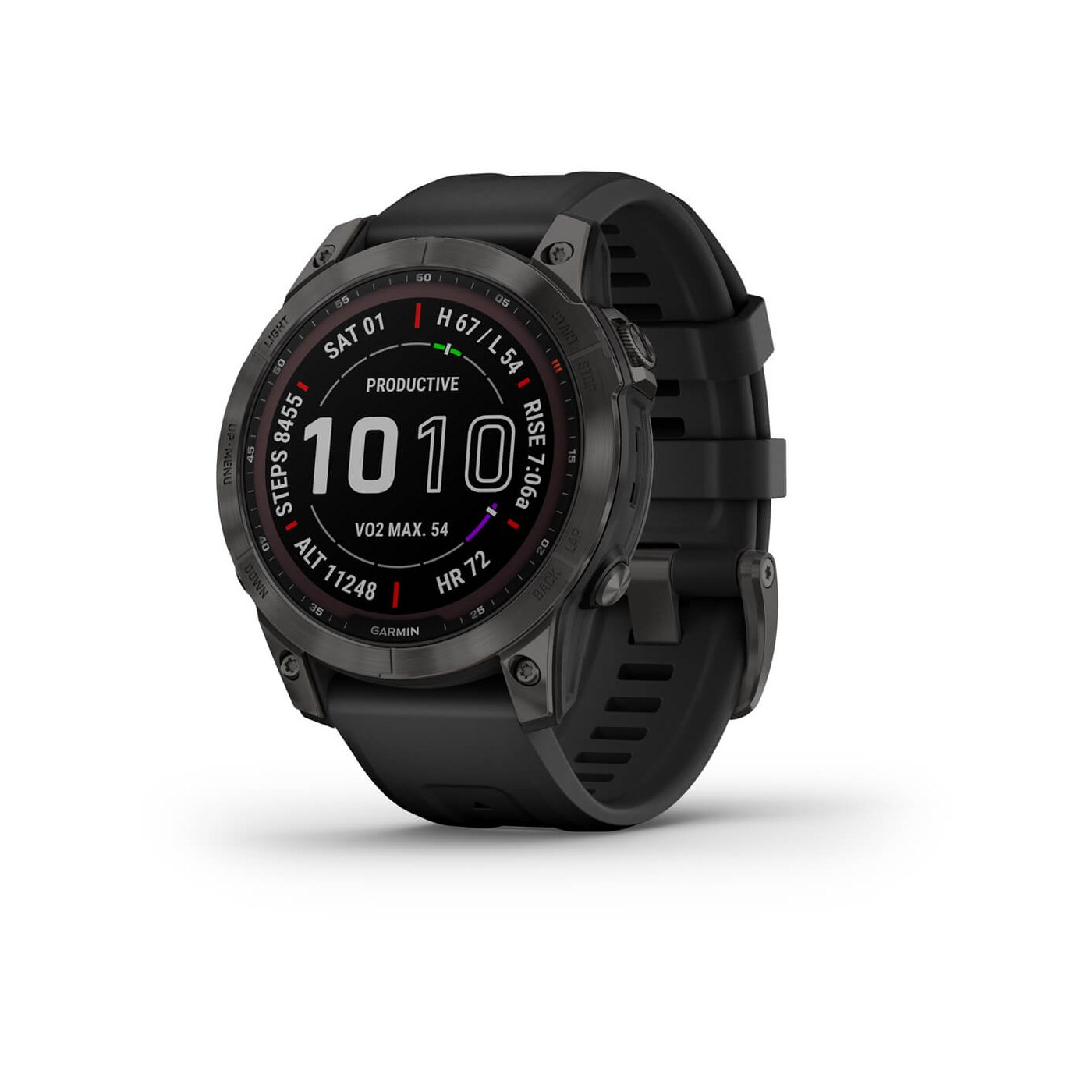
The Garmin fenix 7 Sapphire Solar remains a multisport outdoor reference thanks to its dual-frequency GPS, its built-in TopoActive mapping and a solar battery life that crushes every AMOLED rival. Its transflective MIP screen shows its age next to the color panels of the fenix 8 and 9, and its 4th-generation heart rate sensor still lags on intense efforts. At a discounted 2026 price, it remains a defensible choice for anyone who puts battery life and ruggedness above screen comfort.
7.5
/ 10 · Overall RunMorph score
Metrics and recovery
7.5 / 10
Who it is forTrail runners and hikers who want huge solar battery life and full mapping without paying the price of a recent AMOLED.
Who it is not forRoad runners who want a bright color screen and a latest-generation heart rate sensor for interval work.
Garmin fenix 7: the generation that held the top spot for three years
Launched in January 2022, the Garmin fenix 7 was for a long time THE reference outdoor watch at RunMorph, before the arrival of the fenix 8, fenix 8 Pro, then fenix 9 and fenix 9 Pro. Three generations later, it is still actively sold, widely reviewed by the press and regularly recommended in 2026 buying guides, carried by a simple argument: at roughly half its launch price, it still offers one of the best solar battery lives on the market.
RunMorph's advice: before jumping on the fenix 7, compare it with the fenix 7 Pro (brighter screen, improved heart rate sensor) and with the fenix 8 if your budget allows for AMOLED. The fenix 7 remains the best entry point into the range if battery life matters more to you than screen comfort.
Who is the fenix 7 for?
The trail runner and the long-distance hiker
This is the profile the fenix 7 was designed for, and it remains the most relevant one in 2026. The preloaded TopoActive mapping covers the whole of Europe with no subscription, smartphone-style touch zoom makes it easy to read on the move, and the solar battery life makes a multi-day trip without recharging realistic, something no rival AMOLED offers at this price point.
The road runner who values longevity over the screen
For a runner stacking up long runs and busy weeks without wanting to recharge every two days, the fenix 7 stays consistent: 18 days of daily use and 37 hours of multi-band GPS cover a lot of ground. What it lacks, on the other hand, is the indoor readability of an AMOLED screen and the most recent recovery metrics (Training Readiness, HRV Status), reserved for the Elevate Gen5 sensors on newer models.
The multisport triathlete
The 60+ sport profiles and the multisport mode with transitions cover the needs of an amateur triathlete, but without the most advanced automations (a full Triathlon Coach, for example) reserved for the Forerunner 970 and newer fenix models. A triathlete who wants structured coaching should look instead at the Forerunner 970.
© Garmin, official photo used for editorial purposes
GPS accuracy and heart rate sensor: what real-world tests say
On satellite accuracy, the consensus among the French reviews read for this article is clear. Sport-Passion describes the dual-frequency GPS on the Sapphire Solar version as "ultra-precise", with a clear gain in cities and under forest cover compared with a standard single-frequency chip, a gain that independent measurements put at around 50% improvement in difficult areas. L'Horloge du Coureur (an aggregated reading across several fenix-range watches) confirms a clean track, including on an athletics track, a terrain that is notoriously tricky for many GPS watches.
The 4th-generation Elevate optical heart rate sensor is the most debated point. Runagora notes that "heart rate is not always accurate", a classic flaw of wrist-based sensors but more pronounced here than on watches fitted with the Elevate Gen5 sensor (used on the fenix 8 and newer). In plain terms, for an easy run or a long run, the gap with a chest strap stays minimal. For intervals or a sudden acceleration, it is better to pair the watch with an external HRM-type sensor if you want usable data to structure your sessions.
Mapping and navigation
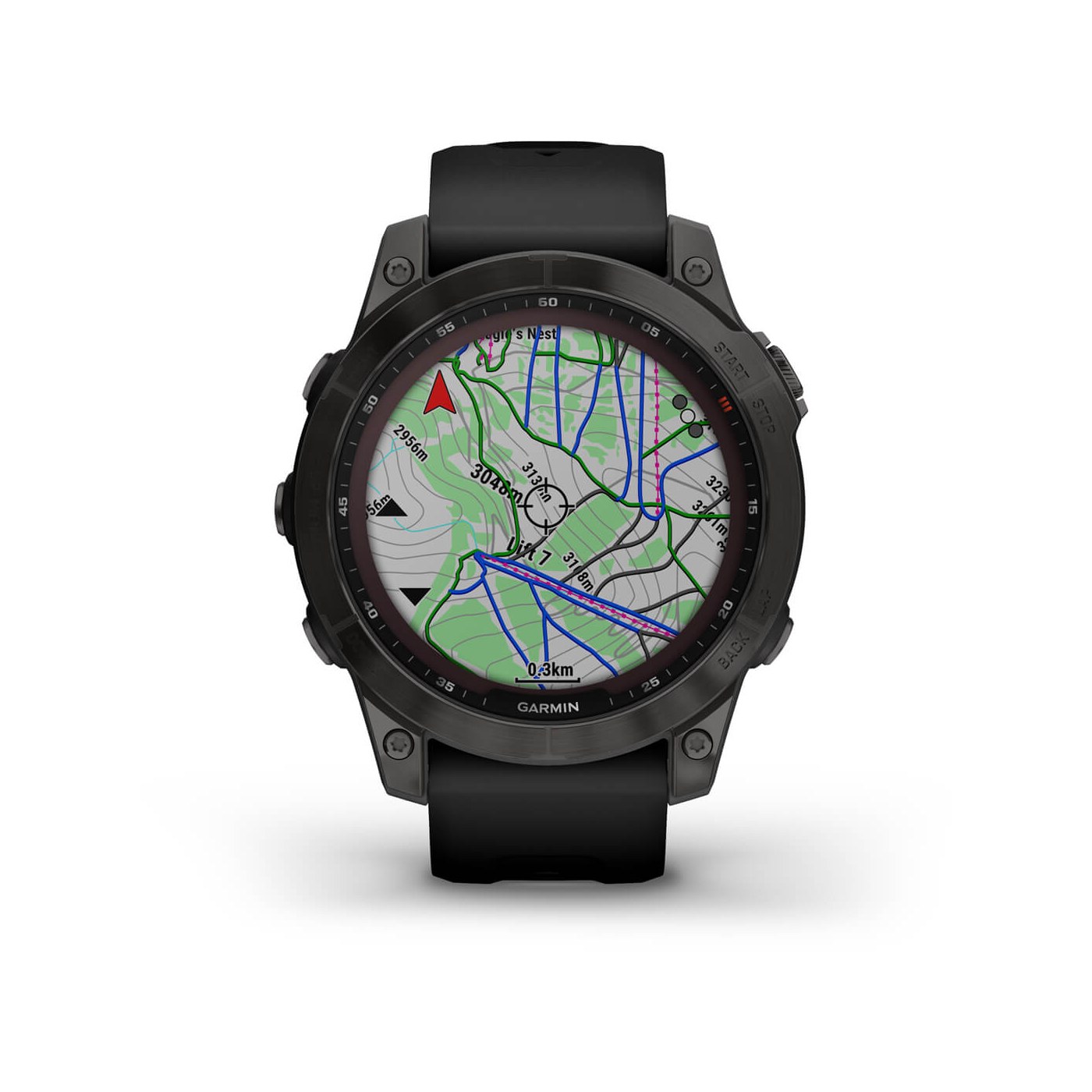
This is one of the big selling points of this fenix 7 Sapphire Solar: topographic mapping covering Europe is included out of the box, with no extra cost or subscription, with contour lines and turn-by-turn navigation on imported routes. The touchscreen allows pinch-to-zoom like on a smartphone, a feature that Journal du Trail highlights as a genuine convenience in the field, alongside the physical buttons that still work with gloves on.
The limit lies in the size and resolution of the screen: 1.3 inches and 260 x 260 pixels in grayscale (MIP), against much larger and brighter color panels on recent AMOLED watches. Reading a complex map in the shade of dense woodland is still possible, but less comfortable than with a high-resolution backlit screen.
Training and recovery metrics
The fenix 7 carries the full Garmin suite of its era: VO2max, training load, training status, Body Battery, sleep score, and Stamina mode, which shows remaining energy in real time during effort, a feature appreciated by ultra-trail runners for managing their pace over long distances. What is missing, on the other hand, are the most recent metrics in the Garmin ecosystem: no Training Readiness and no detailed HRV status on waking, indicators that arrived with the Elevate Gen5 sensors on the fenix 8 and later models. For anyone who relies heavily on this morning data to calibrate the day's session, that is a real gap.
Real battery life: the argument that still justifies buying it in 2026
This is where the fenix 7 Sapphire Solar keeps a genuine lead. Manufacturer figures claim 18 days in smartwatch mode, 57 hours in standard GPS and up to 578 hours in UltraTrac mode with outdoor solar input. In practice, Runagora reports more than 15 days of battery life under intensive daily sporting use, and Journal du Trail confirms that the solar input makes a noticeable difference on long daytime outings, a genuine plus for ultra-trail runners heading out for several days with no chance to recharge. No AMOLED watch, even a recent one, comes close to these figures under sustained GPS use: it is the trade-off of a frugal MIP screen against a more comfortable but more power-hungry color screen.
Garmin fenix 7 vs fenix 7 Pro: the comparison
The most common question before buying a fenix 7 in 2026 is whether the few extra tens of euros for the fenix 7 Pro are worth it.
| Criterion | fenix 7 | fenix 7 Pro |
|---|
| Heart rate sensor | Elevate Gen4 | Improved Elevate Gen4 + advanced features |
| LED flashlight | No | Yes |
| Microphone / speaker | No | Yes (calls, Voice Pins) |
| Mapping | TopoActive Europe | TopoActive Europe + improved Multi-Band |
| Current 2026 price | 500-650 € | 650-800 € |
In short, the fenix 7 Pro adds a flashlight and a microphone/speaker that are useful on expeditions, for a premium that stays reasonable. If your use is limited to running and day hikes, the base fenix 7 already covers every essential need.
Comparison against the competition
Against the fenix 8, the gap comes down to the screen: a bright AMOLED and faster mapping on the fenix 8, against a more sober MIP that uses half as much power on the fenix 7. Against the Garmin Enduro 3, more focused on pure ultra-endurance with even longer battery life but without as polished a touchscreen, the fenix 7 remains the most versatile choice between running, trail and everyday use. Against the Suunto Vertical 2, another solar reference in the segment, the fenix 7 wins out on the richness of the Garmin Connect software ecosystem, for a price that is now comparable on the used and promotional market.
Pros
- Solar battery life among the best on the market, up to 578 h in UltraTrac
- TopoActive Europe mapping included with no subscription, handy touch zoom
- Accurate dual-frequency GPS, including in cities and under forest cover
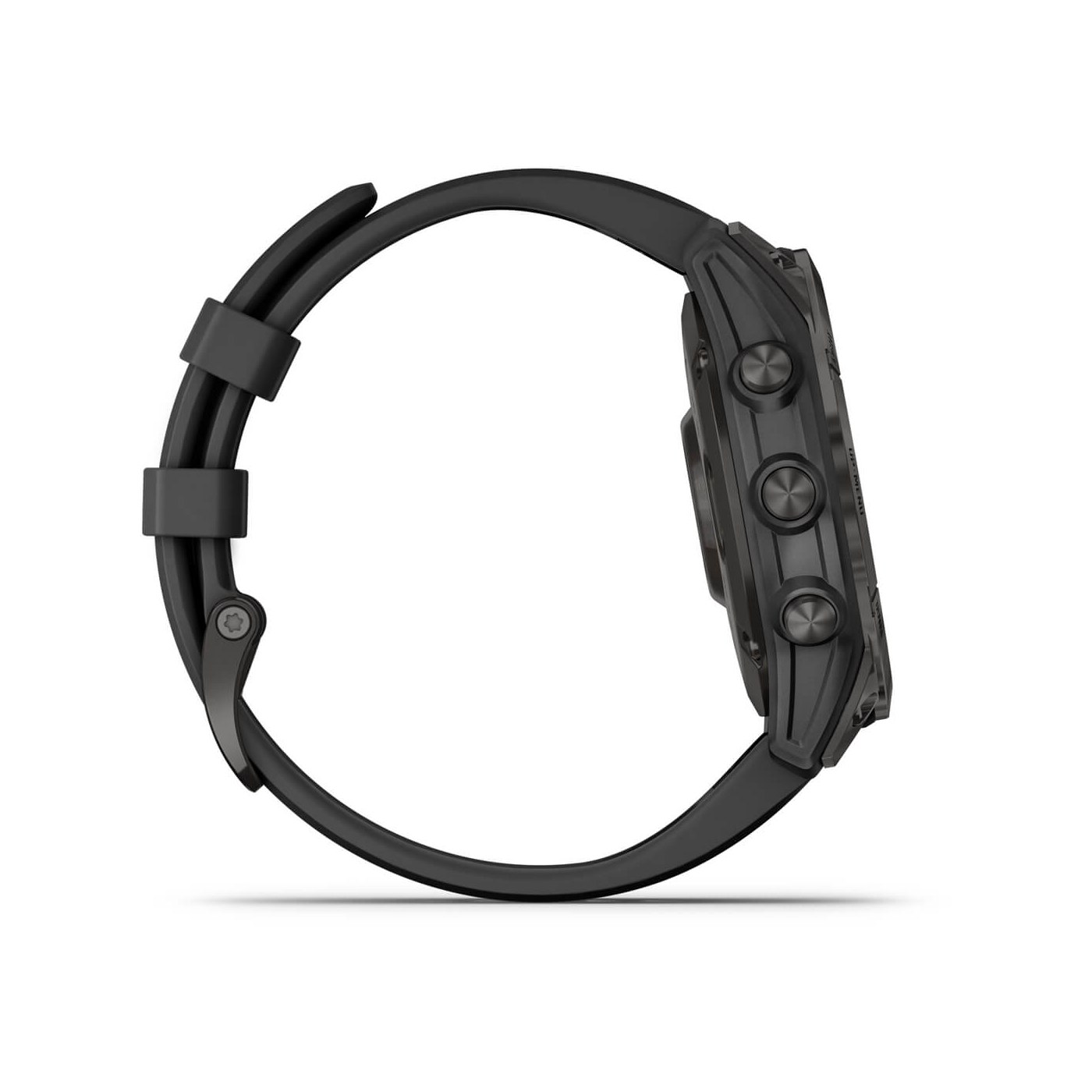
- Rugged titanium case, 10 ATM, reliable under intensive use
- Discounted 2026 price against newer AMOLED generations
Cons
- MIP screen lags behind AMOLED panels on visual comfort
- Elevate Gen4 heart rate sensor less reliable on intense efforts
- No Training Readiness or detailed HRV status on waking
- No flashlight or microphone/speaker (reserved for the Pro version)
- No built-in Wi-Fi for quick syncing
How to fit it into your RunMorph training plan
On a RunMorph trail plan, the fenix 7 naturally finds its place thanks to its onboard mapping and battery life: you can follow your recon route without fearing a dead battery mid-long-run. Pair it with your RunMorph trail plan to turn every session in the field into usable data (elevation gain, pace, heart rate) and adjust your training load week after week.
© Garmin, official photo used for editorial purposes
RunMorph Coach's verdict
The Garmin fenix 7 is no longer the most advanced watch in Garmin's lineup, far from it: three generations have surpassed it since its launch. It nonetheless remains a coherent choice for anyone who prioritizes solar battery life and built-in mapping over the comfort of a color screen, at a price that is now far more accessible than at launch. The aging heart rate sensor and the absence of the most recent recovery metrics are the two limits to know about before buying. 7.5/10.