Garmin Forerunner 55 Review: 37 g, €159 and Still Going Strong
7/10
Five years after launch, the Garmin Forerunner 55 still tops the sales charts for entry-level GPS watches in France. No AMOLED screen, no maps, no dual-frequency GPS: on paper, the spec sheet looks dated next to the Forerunner 70 and the Coros Pace 4 that have come out since. And yet, at 159 euros from most French retailers in 2026, a large part of the specialist press still recommends it without reservation as a first watch. RunMorph went back through the most rigorous French reviews and compared the GPS and optical heart rate accuracy data to settle the question: does the Forerunner 55 still deserve a spot on a new runner's wrist in 2026?
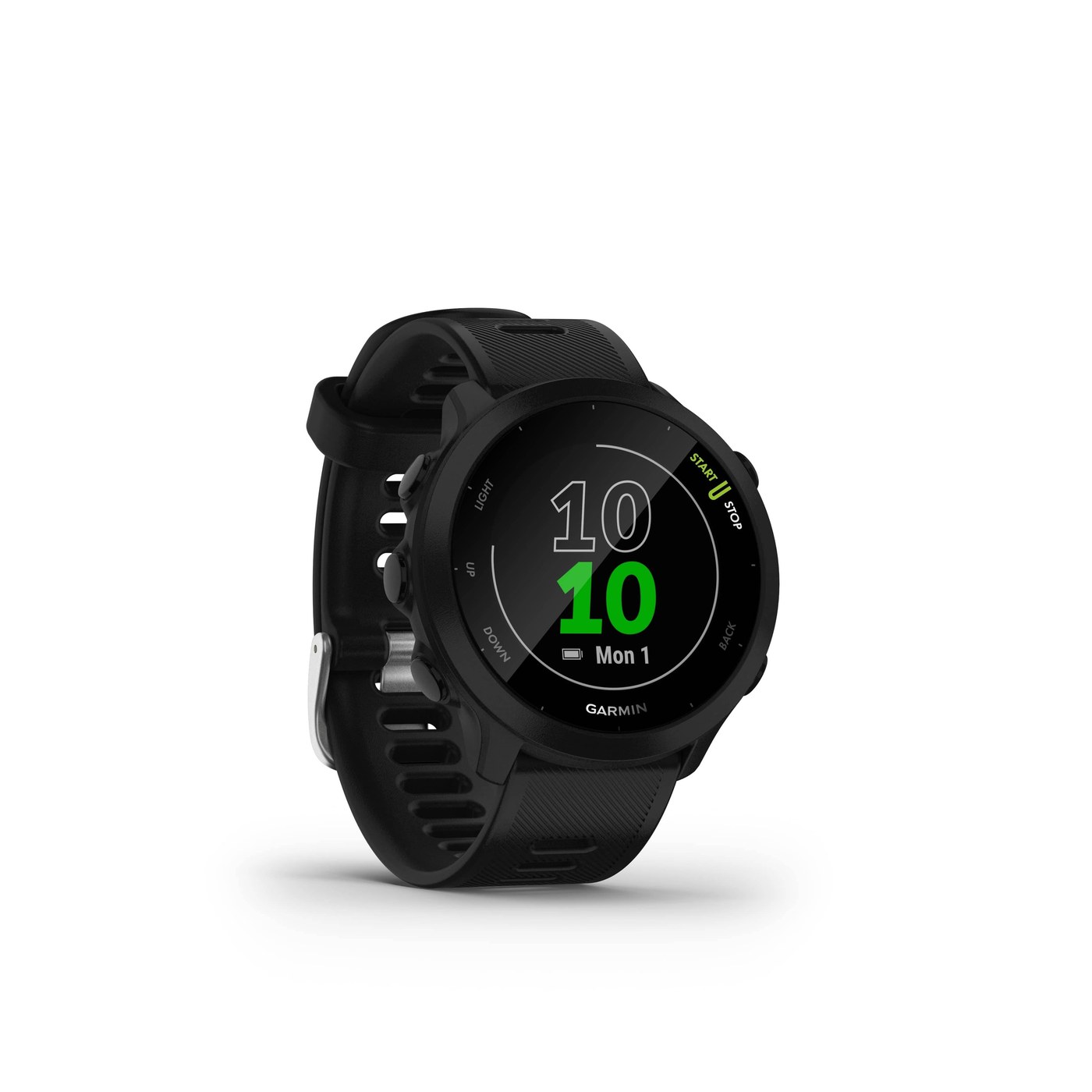
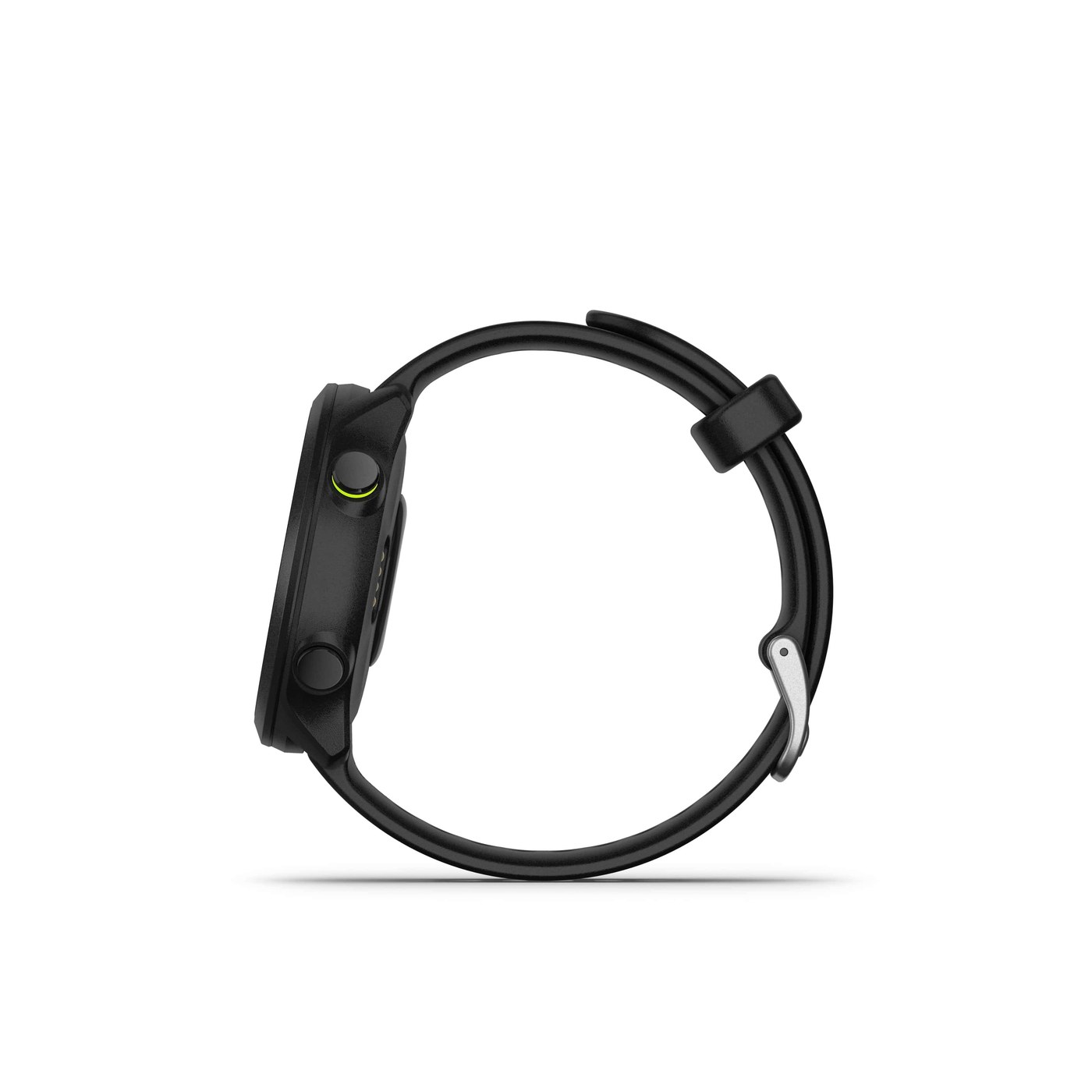
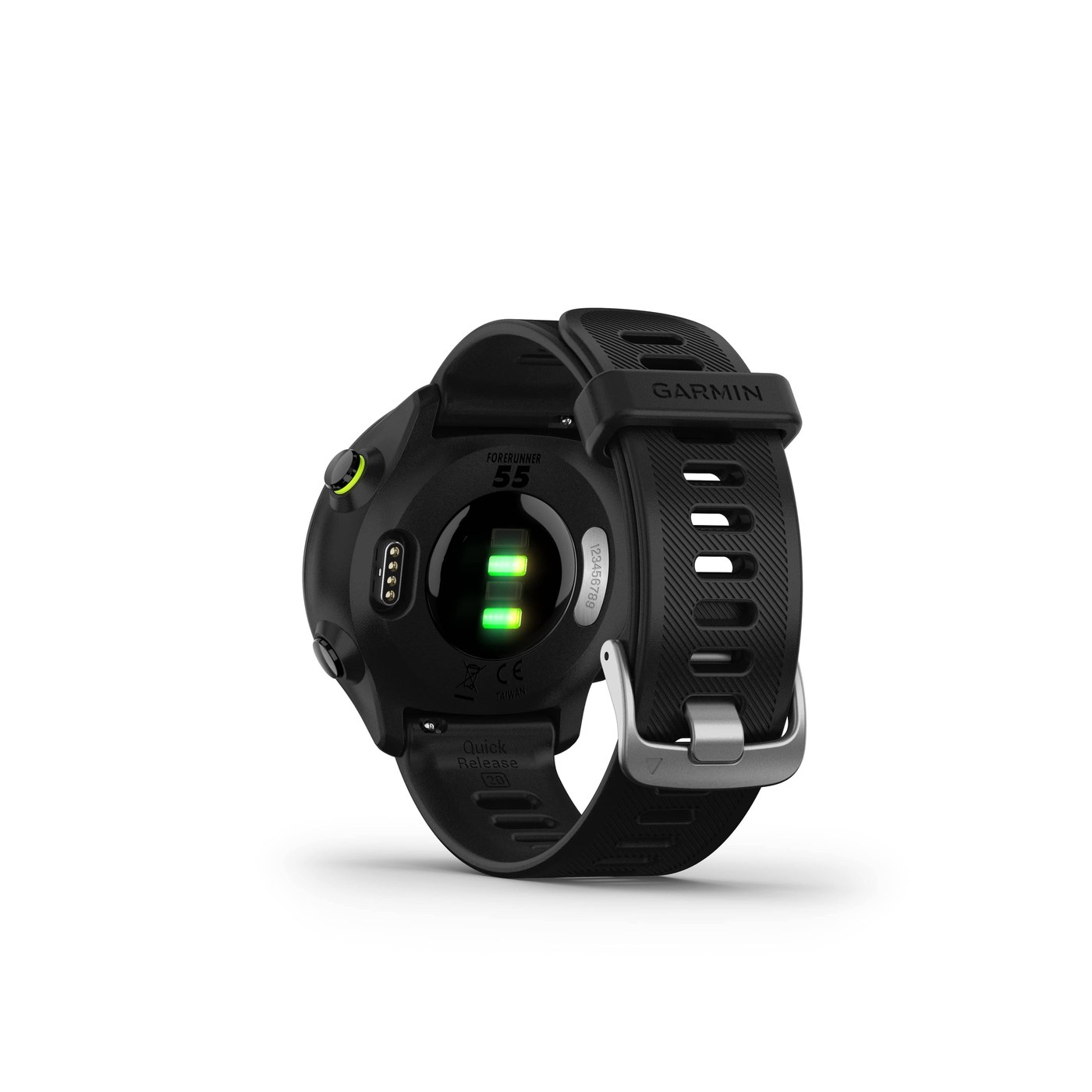
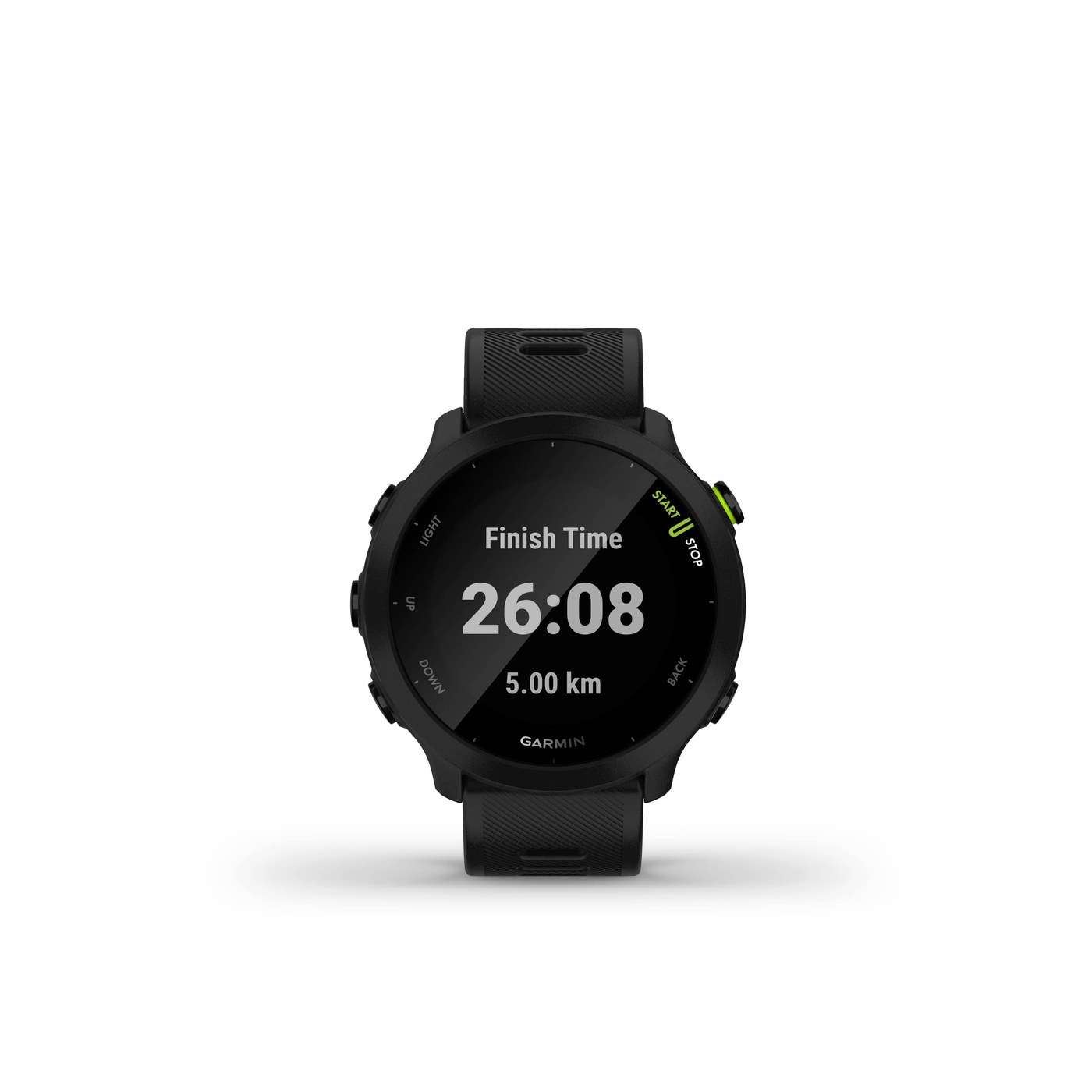
The Garmin Forerunner 55 is an entry-level GPS watch released in 2021, with no maps and no AMOLED screen, built for new runners and casual athletes who want the basics without breaking the bank. The single-frequency GPS gets the job done day to day but falls clearly behind recent multiband models, and the optical heart rate sensor proved unreliable in the most rigorous independent tests. The promise of excellent value for money holds up: at 159 euros in 2026, it's still one of the cheapest and most complete GPS watches you can buy to get started.
7.0
/ 10 · RunMorph overall score
GPS accuracy
6.5 / 10
Battery life
6 / 10
Mapping
1.5 / 10
Metrics
7.5 / 10
Value for money
9 / 10
Who is it for?New runners, casual athletes, and anyone who wants a simple, light, reliable GPS watch for everyday use without paying for features they'll never touch.
Who should skip it?Trail runners who need maps or a barometric altimeter, and runners who train by heart rate and want accurate readings without a chest strap.
Garmin Forerunner 55: the watch that refuses to retire
Launched in June 2021 to replace the Forerunner 45, the Forerunner 55 should have stepped aside when the Forerunner 70 arrived in 2026, the first entry-level Garmin with an AMOLED touchscreen. But Garmin never pulled it from the lineup, and the French press keeps reviewing and recommending it five years after release. The reason is simple: at 159 euros from most retailers, it still costs 90 euros less than the Forerunner 70. And it covers what a new runner actually needs: tracking distance, pace and heart rate without unnecessary complexity.
That positioning is no accident. Garmin knows the entry-level market is won on psychological price points as much as on specs, and the Forerunner 55 has built a solid reputation among new runners in France. The flip side is that the spec sheet hasn't moved since 2021: single-frequency GPS, a non-touch MIP screen, no maps, no contactless payments. Up against a Coros Pace 2 that's also getting old but is still on sale, or against its own little sister, the Forerunner 70, the question deserves a straight answer rather than the usual marketing spin.
Garmin Forerunner 55 specs
Brand
Garmin
Model
Forerunner 55
Release
June 2021
Case size
42 x 42 x 11.6 mm
Weight
37 g (silicone band)
Display
Anti-glare color transflective MIP, 1.04" (26.3 mm), 208 x 208 px, non-touch
Battery life
20 h in GPS-only mode / 14 days in smartwatch mode
GNSS
GPS, GLONASS, Galileo (single-frequency, no L1+L5 dual-frequency GPS)
Sensors
Elevate wrist-based optical heart rate sensor. No SpO2, no ECG, no barometric altimeter
Mapping
None (breadcrumb trail and basic GPX courses only)
Sport profiles
Running, track running, cycling, pool swimming, HIIT, yoga and around ten others
Music storage
None
Contactless payments
No
Water rating
5 ATM
Smartphone connectivity
Bluetooth, Garmin Connect, Garmin Connect IQ
Price
€199 at launch, around €159 in 2026 from most French retailers
PacePro, Track Run, Garmin Coach: what do they really change?
The Forerunner 55 doesn't shine on sensors, but it inherits some of the software tools from Garmin's higher-end models, and that's where part of its real value lies. Track Run mode automatically recalibrates the GPS position when the watch detects a track, which corrects some of the usual single-frequency GPS errors on short intervals and 200-400 m reps. PacePro lets you set a target pace for a course or distance and guides you in real time, accounting for elevation, a feature usually reserved for far more expensive watches. Garmin Coach offers free built-in training plans for a 5K, a 10K or a half marathon, synced straight to the watch.
On top of that come wellness metrics that are fairly complete for the price: Body Battery to gauge your energy reserves, fitness age, respiration and menstrual cycle tracking, estimated VO2 max, and a post-workout recovery time estimate. What's missing, and it stands out in 2026, is the Training Readiness found on models with the Elevate Gen 5 sensor (like the Forerunner 165), which combines sleep, training load and HRV into a sharper daily recommendation.
Field test: how good are the GPS and optical heart rate, really?
This is the most important point to document honestly, and independent French reviews don't tell quite the same story depending on the protocol. One comparison test run over several weeks had the Forerunner 55 record alongside three multiband GPS watches (including a Forerunner 255 and a Fenix 7S Sapphire) on identical routes in the city and in the woods. The verdict is clear: the Forerunner 55's track stays "very decent" in open areas but drifts visibly under trees, between buildings and in covered passages, where multiband GPS keeps a track faithful to the actual route. The review consistently recommends GPS+Galileo mode over GPS-only to narrow that gap, at the cost of slightly higher battery drain.
The optical heart rate sensor was compared against a Garmin HRM-Dual chest strap using the same protocol: the results are described as "rather mediocre, with major dropouts," to the point that the source explicitly recommends a chest strap for any serious heart rate training. Reviews agree less on this than on GPS: other field tests, comparing the Forerunner 55 with a high-end Garmin Enduro on the same runs, found no notable difference in track accuracy or elevation (a gap of around 20 m over 14 km), despite the Forerunner 55 having no barometric altimeter at all. At RunMorph, here's how we read it: the Forerunner 55's GPS and heart rate accuracy is good enough for easy recreational runs or a loose time goal, but it isn't up to precise threshold heart rate training or a reliable track in dense forest. Comparing it to a pricier single-frequency watch hides the real issue: against multiband GPS, now common even on watches at 250-300 euros, the gap is real and measured.
RunMorph's advice: if your goal is to track your progress on road or track on a tight budget, the Forerunner 55 does the job. If you're aiming for threshold training with accurate heart rate zones, add a Bluetooth-compatible chest strap: it's the most cost-effective way to make this watch reliable for under 200 euros in total.
Battery life, on the other hand, draws no disagreement between sources: Garmin's claimed 20 hours in GPS mode and 14 days in smartwatch mode hold up in real-world use in French reviews, which is far from a given in this price bracket. It's a real step up from the Forerunner 45 (around 13 hours of GPS), even if 20 hours now sits at the low end of the market: the Coros Pace 2, sold at the same price, claims and delivers around 30 hours in full GPS mode.
Garmin Forerunner 55 vs Coros Pace 2: which watch should you start with?
Both watches compete for the same budget and the same audience, with different technical priorities. The Coros Pace 2 bets on battery life (30 hours of full GPS versus 20 hours) and featherweight build (29 g in the nylon version), while the Forerunner 55 bets on the Garmin Connect ecosystem, richer in free training plans and Connect IQ widgets.
Criterion
Garmin Forerunner 55
Coros Pace 2
Weight
37 g
29 g (nylon) / 35 g (silicone)
GPS
Single-frequency GPS/GLONASS/Galileo
Single-frequency multi-GNSS
GPS battery life
20 h
30 h (60 h in UltraMax mode)
Mapping
None
None
Ecosystem
Garmin Connect, Garmin Coach, PacePro
Coros App, native Stryd power meter support
2026 price
€159
€129 to €169
On paper, the Coros Pace 2 has better battery life and a lower weight, but its non-touch MIP screen and dial-based interface are less intuitive for a first-time sports watch user. The Forerunner 55 keeps a clear edge in guidance (Garmin Coach, PacePro, Track Run mode), which matters a lot to a beginner. Then there's the Forerunner 70, released by Garmin in 2026 for around 249 euros: AMOLED touchscreen, multi-GNSS GPS and Training Readiness on top, for 90 euros more. Enough to make you hesitate, but not enough to win by default if price stays your number one criterion.
Garmin Forerunner 55 pros and cons
ProsExcellent value for money at 159 euros in 2026 Just 37 g, very comfortable on the wrist Claimed battery life (20 h / 14 days) confirmed in real-world use Garmin Coach, PacePro and Track Run included Very complete Garmin Connect IQ ecosystem
ConsSingle-frequency GPS lags behind multiband models Optical heart rate rated unreliable in independent testing No maps, no barometric altimeter Non-touch MIP screen with dated resolution Only one case size available
Our field verdict: who is the Garmin Forerunner 55 for in 2026?
The Forerunner 55 remains a rational first purchase: it covers everything a new runner or casual athlete needs to track distance, pace, calories and heart rate without getting lost in complex menus. It also suits a more experienced runner looking for a light backup watch, or an occasional multisport athlete (pool swimming, cycling, HIIT) who doesn't want to pay for maps or multiband GPS they'll never use.
It hits its limits, though, as soon as training gets more demanding: a runner chasing a precise marathon time goal, or who needs a reliable GPS track in the woods or on trails, will look elsewhere. To build real progress, the watch is only ever a measuring tool: it has to fit into a coherent training plan. That's exactly what RunMorph offers with its personalized training plans, designed to take a beginner from the first easy run to the first 10K, using the distance and pace data the Forerunner 55 records without any trouble.
The Garmin Forerunner 55 hasn't aged as well as the spec sheet might suggest, but it remains an honest choice on a tight budget. Its single-frequency GPS lags well behind the multiband models that are now common, and its optical heart rate sensor failed to convince in the most rigorous independent tests. These aren't details: they're real limits to know before you buy. What saves it is honestly stated and confirmed battery life, a Garmin software ecosystem that's still remarkably complete for the price, and a price tag that, five years after release, remains one of the lowest on the market for a GPS watch of this quality. RunMorph score: 7.0/10, a good product to get started with, but one that quickly shows its limits once your training gets structured.
Key takeaways for your training
Make heart rate reliable: add a Bluetooth chest strap if you're targeting precise heart rate zones, since the Forerunner 55's optical sensor showed its limits in independent testing.
Choose GPS+Galileo mode: it noticeably improves track accuracy over GPS-only mode, at the cost of a slight drop in battery life.
Use Track Run mode for your interval sessions on the track: it corrects much of the usual GPS drift on short efforts.
Don't rely on elevation data: without a barometric altimeter, elevation figures stay approximate, especially in forest or under tree cover.
Structure your progress with a plan: the watch measures, but the training plan is what builds your fitness over time.