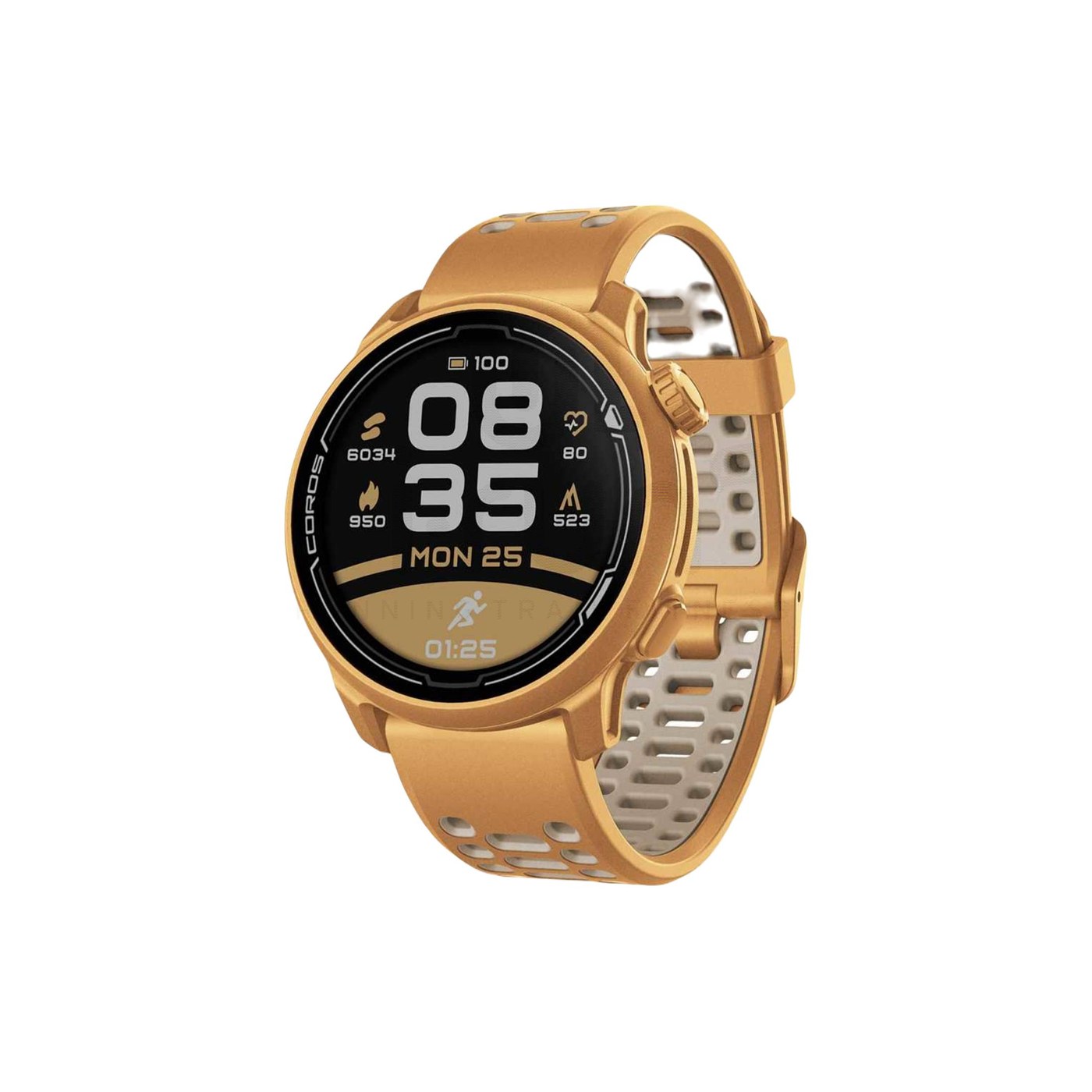
In January 2021, one small watch shifted the balance of power in the running GPS watch market for good. Five years and three generations later (Pace 3, Pace 4, Pace Pro), the Coros Pace 2 is still on sale, still recommended and still able to hold its own against far pricier models. RunMorph strapped it on again to see what's really left of it in 2026.
© Coros, official photo used for editorial purposes
Coros Pace 2: the value-for-money bet that changed the brand
When Coros launched the Pace 2 in January 2021, the brand was still an outsider next to Garmin, Suunto and Polar. Its flagship models at the time, the Vertix and the Apex Pro, targeted ultra-trail and mountaineering: niche markets. The Pace 2 marked a change of strategy. It went after weekend runners and amateur triathletes with a watch under 200 euros that gave up almost nothing on features. The bet paid off. Five years later, the brand has added three more generations to the same line (Pace 3, Pace 4, Pace Pro), all already reviewed on RunMorph, and Coros has become an established name in the French running scene.
The "Pace" name sells because it promises the essentials without the frills. But in 2026, the question is no longer whether the Pace 2 was a good deal at launch (it was, no debate). The question is whether it's still worth buying now that three newer watches from the same family surround it, at barely higher prices.
RunMorph's advice: before you fall for the rock-bottom price of the Pace 2 on clearance sites, compare it line by line with the Pace 4. Once discounts kick in, the feature gap is sometimes wider than the actual price gap.
Pace 2 specs: what's dated and what still holds up
| Brand | Coros |
| Model | Pace 2 |
| Release | January 2021 |
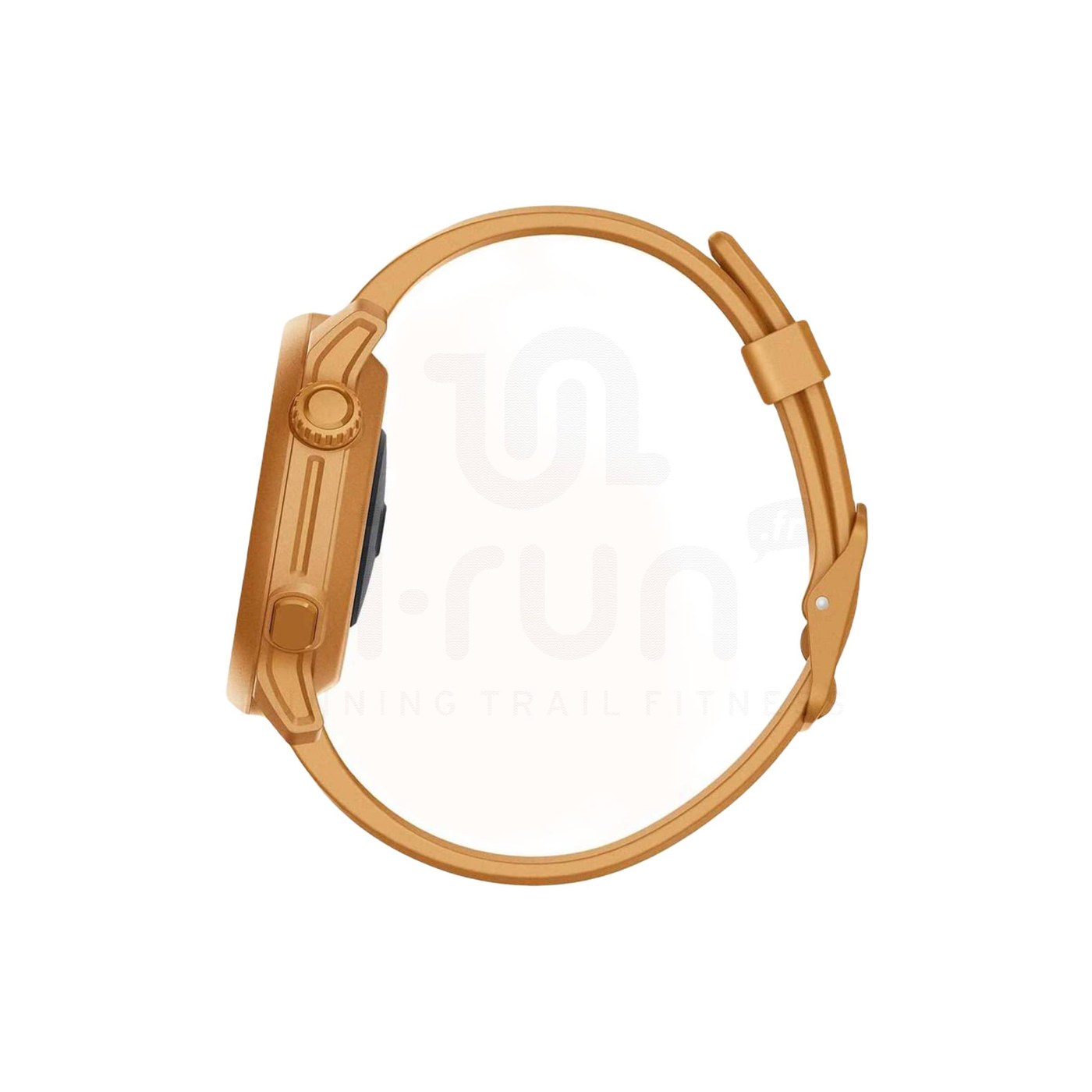
| Case | 42 x 42 x 11.7 mm, glass fiber reinforced polymer, Gorilla Glass 3 mineral glass |
| Weight | 29 g (nylon band) / 35 g (silicone band) |
| Display | Always-on transflective MIP, non-touch, controlled with the main button and the Digital Dial |
| GNSS | GPS, GLONASS, Galileo, QZSS multi-constellation. No L1+L5 dual frequency (only arrived with the Pace 3) |
| Sensors | Optical heart rate sensor (new generation at launch), SpO2 added via update, barometric altimeter, compass, accelerometer |
| Mapping | No full mapping. Breadcrumb trail and GPX route following only |
| Sport profiles | Running, track, treadmill, cycling, indoor cycling, pool and open water swimming, triathlon, rowing machine, strength training |
| Music storage | No (phone control only) |
| Contactless payment | No |
| Water resistance | 5 ATM |
| Battery life | 20 days smartwatch / 30 h full GPS / 60 h in UltraMax mode (reduced GPS) |
| Smartphone connection | Coros app (iOS and Android), no dedicated web platform at the time |
| Price | 199 euros at launch, usually between 129 and 169 euros in 2026 depending on the retailer |
© Coros, official photo used for editorial purposes
The spec that jumps out five years on: no dual-frequency GPS. In 2021, hardly anyone under 300 euros had it. In 2026, Coros's Pace 3 (2023) and Pace 4 (2025) both pack this technology, which cuts down on signal bounce in the city or under tree canopy. It's not a deal-breaker for a road or track runner, but it's a real technical gap you need to know about before buying.
Field test: what runners who've used it for years really say
RunMorph cross-checked three independent, in-depth French reviews of the Pace 2 (Journal du Trail, RunMag, Sport-Passion) to see whether the consensus still holds in 2026, several years after the model's release.
On GPS accuracy, the consensus is clear: testers rate it "above average" for a watch at this price, with special praise for the track run mode, which several of them describe as impressively accurate. On battery life, the feedback lines up too. The claimed 30 hours in full GPS mode hold up in real-world use, and a runner with a moderate routine (3 to 4 runs a week) only charges the watch once every two to three weeks. Several testers confirmed this independently over several months of use.
Opinions also line up on build quality: the plastic case is seen as the deliberate trade-off for the price, far from the titanium or sapphire finish of the brand's own Apex Pro and Vertix. One tester notes that the nylon band holds up remarkably well over time, while another questions how it will cope with heavy sweat in the very long run, without reaching a conclusion for lack of hindsight at the time of the review. As for the wrist-based optical heart rate sensor, all sources agree it works fine for standard training. It can't match a chest strap on high-intensity efforts or short intervals, though, a classic accuracy gap for this type of sensor and not specific to the Pace 2.
Several reviews single out one real differentiator: native compatibility with the Stryd power meter, rare at this price in 2021 and still valued by runners who structure their training by power zones rather than by pace alone. The watch also works with the Coros Pod 2, the more affordable Coros accessory that refines pace data without measuring power in watts.
Coros Pace 2 vs Coros Pace 4: the comparison that settles it
| Coros Pace 2 | Coros Pace 4 |
|---|
| Release | 2021 | 2025 |
| Weight | 29 g | 32 g |
| Display | Transflective MIP | 390x390 px AMOLED touchscreen |
| GPS | Single-frequency multi-GNSS | Multi-band dual-frequency L1+L5 |
| Heart rate | 1st-generation Pace optical sensor | New generation, 5 LEDs and 4 photodiodes |
| GPS battery life | 30 h / 60 h eco | 41 h all constellations / 38 h dual frequency |
| Price | 129 to 169 euros in 2026 | 269 euros |
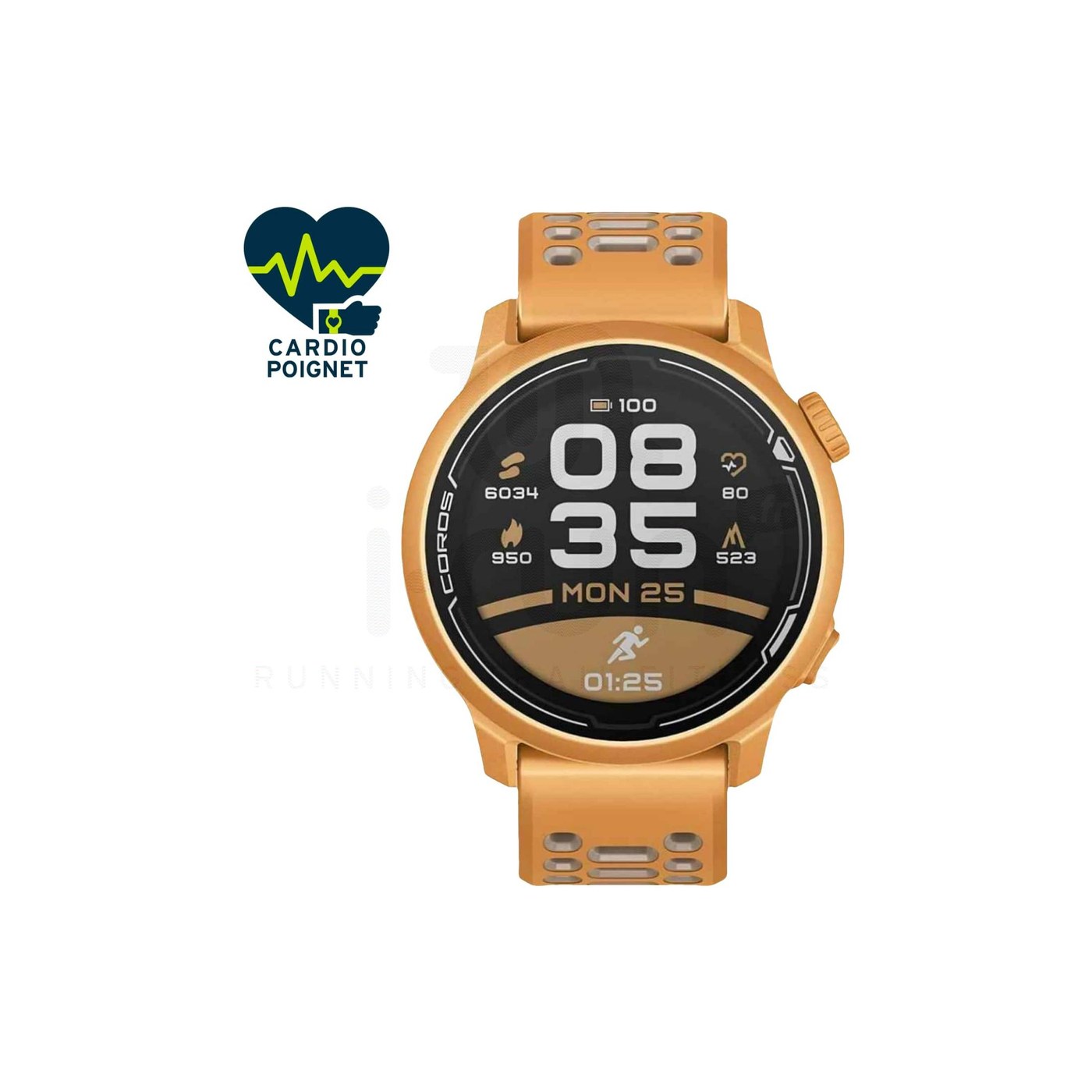
The actual price gap in 2026 (around a hundred euros) is smaller than it was at launch, and that changes everything. The Pace 4 brings an AMOLED touchscreen that's far easier to read in sunlight, a dual-frequency GPS that's objectively more accurate in tough environments, and a newer-generation heart rate sensor. On a tight budget, the Pace 2 is still a defensible pick. As soon as your budget can absorb the 100 to 140 euro difference, the Pace 4 is the more rational choice in 2026.
© Coros, official photo used for editorial purposes
Our field verdict: who does the Pace 2 still make sense for in 2026?
The Pace 2 targets a specific profile: the runner starting a regular routine who wants reliable GPS without breaking the bank and doesn't need mapping or an AMOLED display to improve. For that runner, it's still a defensible pick, especially since its price has dropped sharply since 2021. For a triathlete or a trail runner navigating self-supported, though, the lack of mapping and the single-frequency GPS become real limits as soon as the terrain gets tricky.
Whether you're starting your first 10K plan or training for a half marathon, the accuracy of a GPS watch, even an entry-level one like the Pace 2, is more than enough to track your paces and weekly volume. Pair it with a
RunMorph training plan built around your goal to turn that raw data into measurable progress, week after week.
The RunMorph Coach's verdict
In 2021, the Coros Pace 2 did what no watch under 200 euros had done before: it offered reliable GPS, a barometric altimeter and complete training plans with no visible compromise on features. Five years later, it hasn't aged badly. It has simply been overtaken by its own family. The Pace 3 and especially the Pace 4 offer more accurate GPS and a more readable display for a price premium that has become reasonable in 2026. The Pace 2 is still an honest first purchase, never a long-term choice for a runner who's improving fast. 7.5/10: a score that rewards value for money that's still excellent, without turning a blind eye to shortcomings that are now well documented against competition, including in-house, that has come a long way.