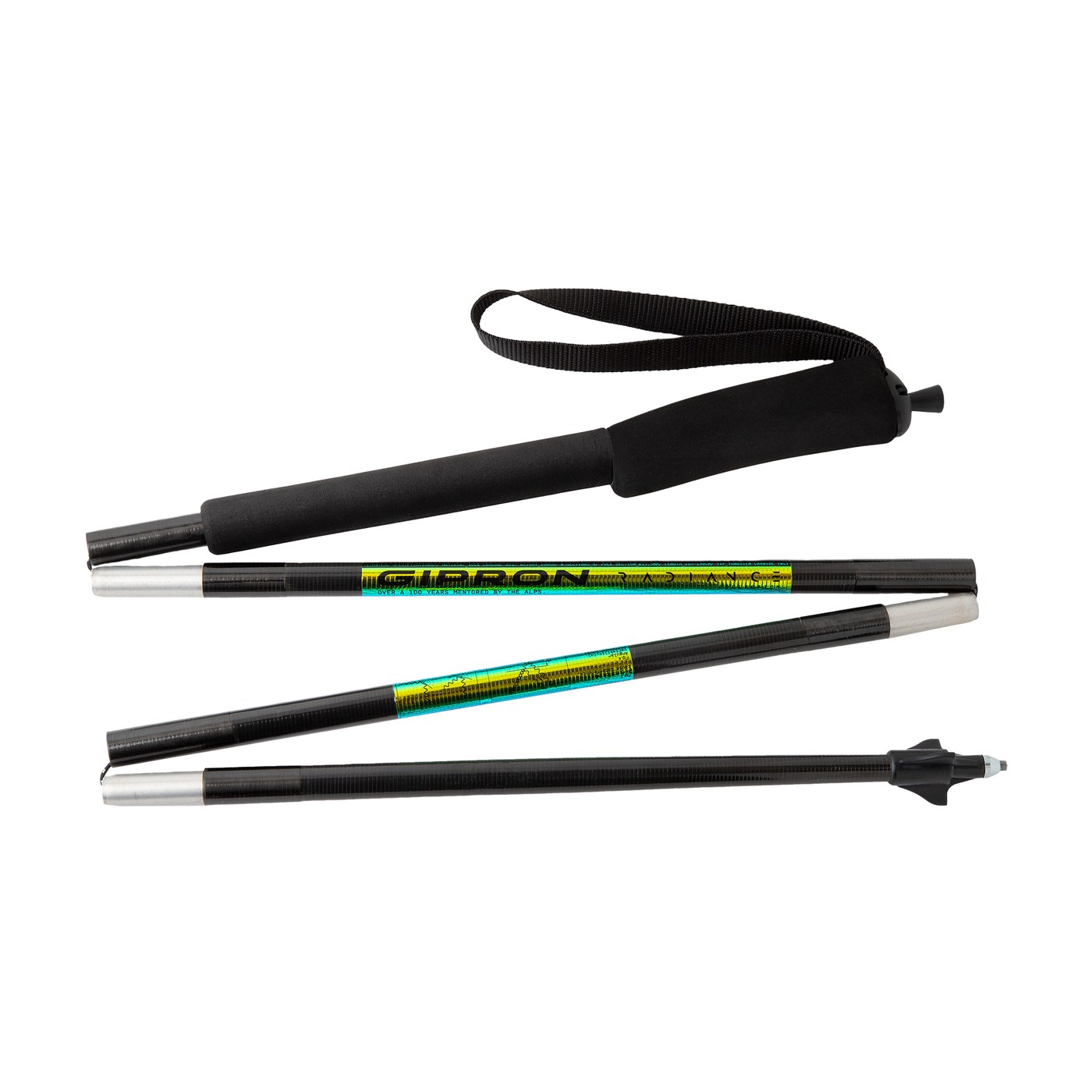
Before Black Diamond made the Flick Lock famous on its folding poles, a small Italian craft brand had already invented it. Gipron still builds its poles by hand near Milan, and its Radiance Carbon 4, also sold as the #310 Mont-Blanc Carbon 4, claims 108 grams per pole. The price has gone in a very different direction.
© Gipron, official photo used for editorial purposes
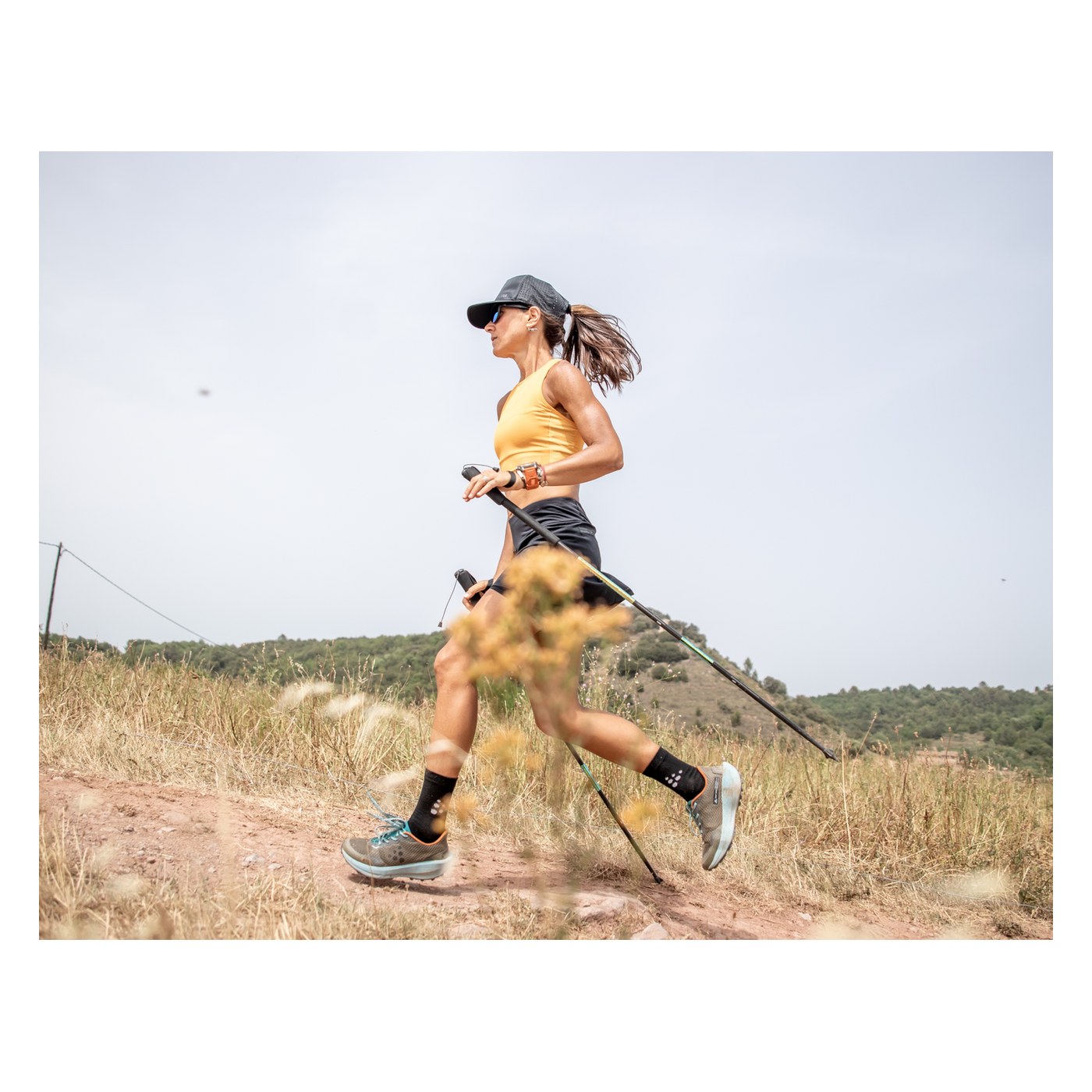
Gipron Radiance Carbon 4: a pole from the brand that invented the Flick Lock before Black Diamond
Gipron is an Italian craft brand based in Vanzago, near Milan, that has been making hiking and trail poles for almost a century. According to the field test published by iZiTREK, Gipron developed a quick-clamp system on its folding poles before the Flick Lock, now tied to Black Diamond and an industry standard, took over the market. It's a fact that barely shows up anywhere else, and the Radiance Carbon 4 tested here doesn't even use that system.
This pole, sold as the #310 Mont-Blanc Carbon 4 on the brand's official store and under the "Radiance" collection name elsewhere, targets runners who want to cut the weight in their hands without giving up the durability of European manufacturing. It follows earlier generations that were noticeably heavier and cheaper, a comparison worth making before getting into the current spec sheet.
Gipron Radiance Carbon 4 specs
| Brand | Gipron |
| Model | Radiance Carbon 4 (official reference #310 Mont-Blanc Carbon 4) |
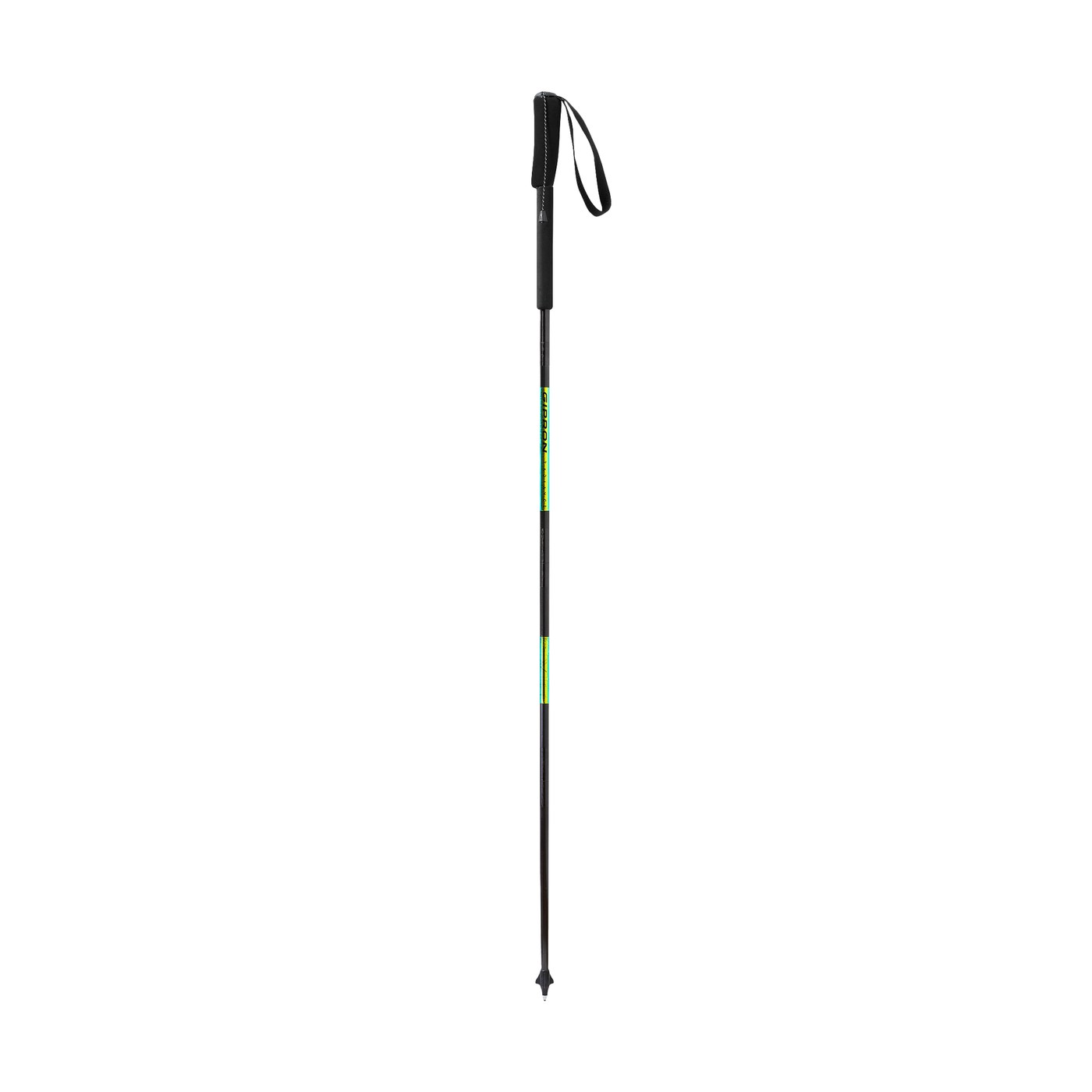
| Type | Folding trail pole, 4 carbon sections |
| Material | 100 % carbon |
| Diameter | 13.5 mm |
| Claimed weight per pole | 108 g |
| Estimated weight per pair | about 216 g |
| Available lengths | 105, 110, 115, 120, 125, 130 cm (fixed sizes, not telescopic) |
| Locking system | Tensioned Kevlar cord, no Flick Lock |
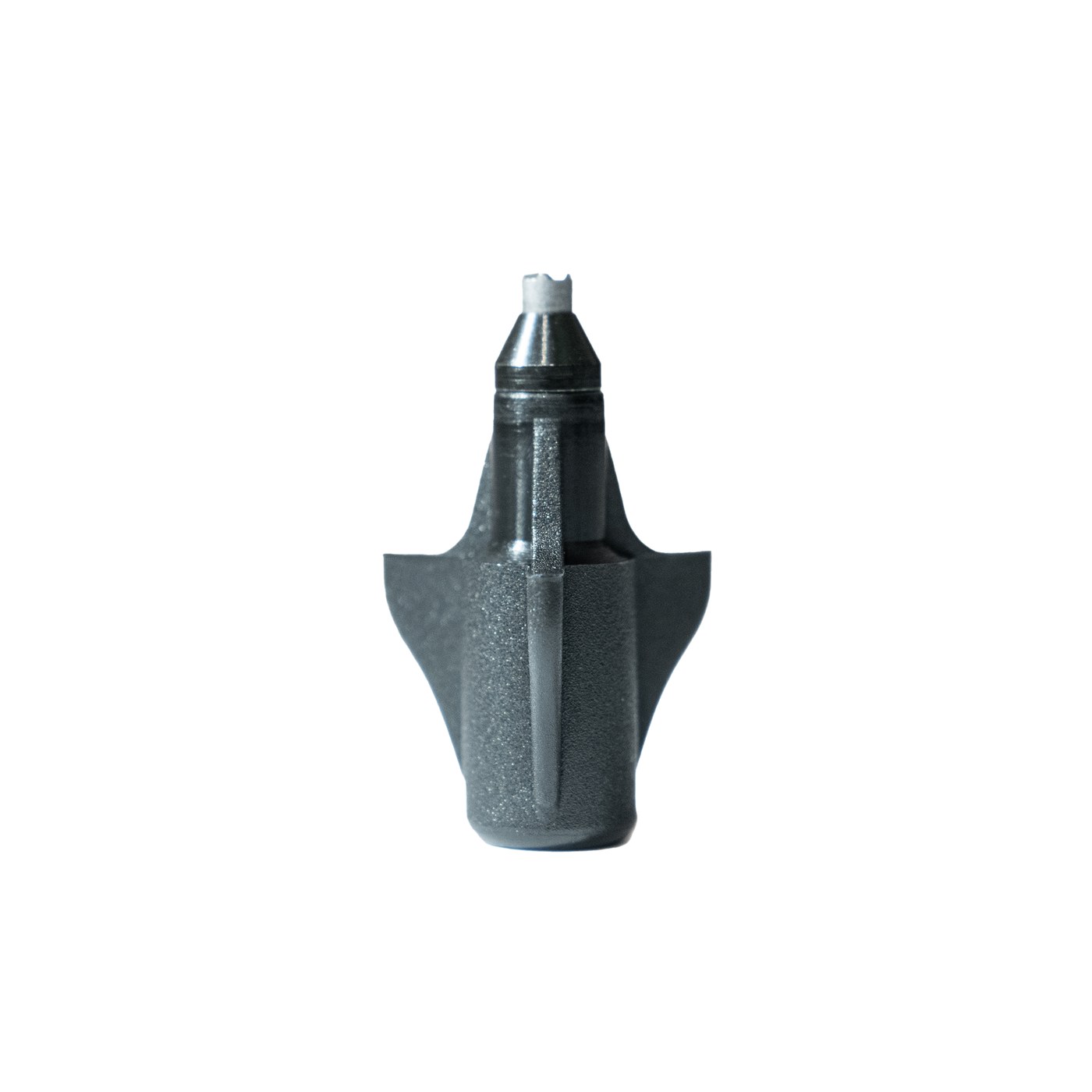
| Basket / tip | "Concorde" basket, aerodynamic shape inspired by the supersonic jet |
| Grip | Foam, fixed nylon wrist strap |
| Manufacturing | 100 % Italy |
| Spare parts | Replacement section sold individually, about 40 euros according to an independent test |
| List price | 210 euros per pair |
| Observed availability | Listed as out of stock in every size on the official store at the time of testing |
© Gipron, official photo used for editorial purposes
The Concorde basket and Kevlar lock: two deliberate technical choices
The "Concorde" basket gets its name from an aerodynamic shape directly inspired by the supersonic jet, designed to cut drag on every plant rather than to stay stable in deep snow. For pure trail use, this choice puts lightness and ground penetration ahead of a classic wide basket.
The 4 sections lock via a tensioned Kevlar cord, without the Flick Lock system the brand helped bring to market in the first place. That saves weight and means fewer mechanical parts that can break, at the cost of slower adjustment than a lever lock: the cord needs the occasional retightening over time to keep optimal tension, something field feedback over several years of use confirms.
The field test: what users report
Three independent French-language sources were cross-checked for this test, a pretty good haul for a niche brand the mainstream specialist press barely covers.
The most complete test, published by iZiTREK, is based on several years of real use by the same tester, including trips to Greenland and the Mauritanian desert since the original purchase in 2018. Only normal tip wear is reported over that period, plus one broken section after an odd fall during a river crossing that put an unusual sideways load on the pole, a case the tester clearly separates from a failure in normal use. The tester also points out that Gipron poles have been used by a UTMB winner, which doesn't change the technical assessment of the product.
An older test, published in 2014 by the blog My Trail Story, covered a previous generation of the same model, then rated at 350 grams per pair (about 175 grams per pole, versus 108 grams today) and sold for around 65 euros, with a tungsten tip. That tester already noted a cord lock that works well once you get the hang of it, and a pole that "holds really well" and "doesn't vibrate". Comparing the two eras shows a clear shift: weight per pole dropped by about 38 %, but the list price more than tripled over the same period.
© Gipron, official photo used for editorial purposes
Gipron Radiance Carbon 4 vs Leki Ultratrail FX.One Superlite
| Gipron Radiance Carbon 4 | Leki Ultratrail FX.One Superlite |
|---|
| Weight per pole | 108 g | 137 g |
| Estimated weight per pair | about 216 g | about 274 g |
| Locking system | Tensioned Kevlar cord, no lock | Push-Button (button at the top) |
| Folded length | Not disclosed by the brand | 35 cm with included pouch |
| Available lengths | 105 to 130 cm, fixed sizes | 105 to 130 cm, fixed sizes |
| List price | 210 euros | about 190 euros |
The Gipron is lighter on paper, but the Leki gives you a push-button folding system that's faster to handle mid-race and a compact 35 centimeter storage pouch, a concrete advantage if you stow and pull out your poles often during a race. It comes down to priorities: the Gipron for the grams saved, the Leki for faster handling and actual availability in stores.
© Gipron, official photo used for editorial purposes
Our field verdict: who is it for?
The Radiance Carbon 4 is first and foremost for runners who make weight in hand their absolute priority and are willing to live with a slower locking system and sometimes tricky availability in return. Its repairable Italian build also makes it a smart pick if you want to keep the same poles for years instead of replacing them.
RunMorph Coach verdict
The Gipron Radiance Carbon 4 delivers on lightness and relies on repairable craftsmanship you can trust for the long haul. The score is held back, though, by value for money that has clearly slipped compared with the brand's previous generations and by uncertain availability at the time of testing, two factors that weigh as much as raw performance in the buying decision.
7.7/10: one of the lightest poles in its category, for runners who value repairability and accept its premium price tag.
© Gipron, official photo used for editorial purposes