For years, Decathlon was the store where you bought cheap running shoes without expecting much. The Kiprun Kipride Max changes that. As the first stone of a completely rethought lineup, it goes straight after the €180-200 max-cushion benchmarks with a three-component foam and a €149.99 price tag. It's a bold bet. Does it hold up over 20 kilometers?
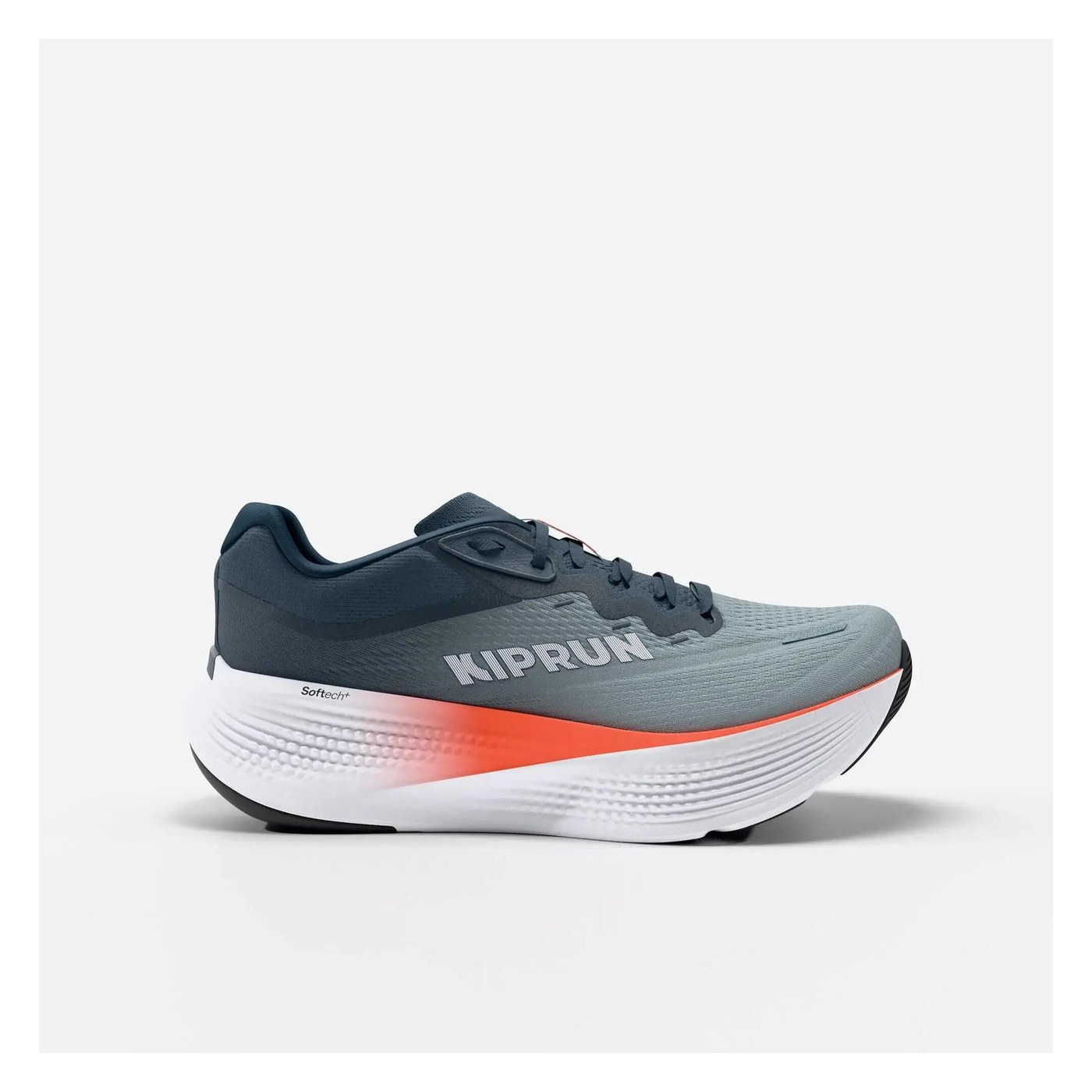
© Kiprun, official photo used for editorial purposes
Kiprun reshuffles the deck: goodbye to cryptic model names
For fifteen years, Decathlon's running brand drifted between obscure code names like KS900.2 or MT Cushion, a system that confused runners more than it guided them. In early 2026, Kiprun made the call: the lineup now narrows down to three clear franchises. Kipstorm for speed and carbon plates, Kipsummit for technical trail and ultra, and Kipride for everyday comfort and versatility. The Kipride Max is the flagship of that last family, the one meant to carry 80% of a runner's weekly volume.
The price is the real declaration of war: €149.99 for a 42 mm stack height and a three-component foam, while the Asics Gel-Nimbus 28 and the New Balance Fresh Foam X 1080v15 go past €180. Kiprun no longer plays in the cheap backup-shoe league. It targets the premium shelf head-on, without the premium price.
RunMorph tip: if your current rotation revolves around a Hoka Clifton 11 or a Saucony Ride 19, give the Kipride Max a try before you replace your pair at full price. The comfort gap is small. The price gap isn't.
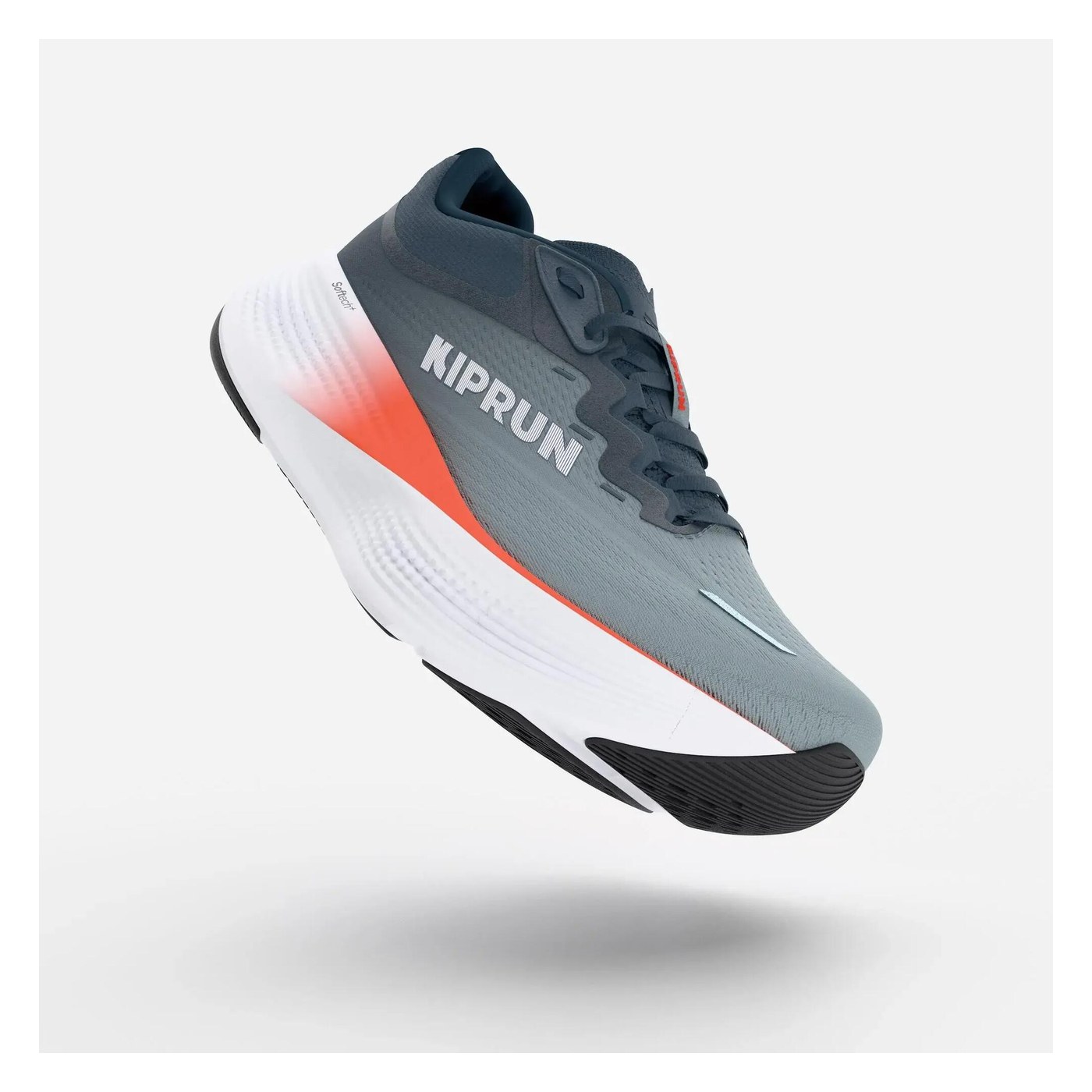
Kipride Max specs: the race for a light, tall stack
© Kiprun, official photo used for editorial purposes
| Spec | Kiprun Kipride Max |
|---|
| Brand | Kiprun (Decathlon) |
| Type | Road, max-cushion daily trainer |
| Weight (men's, EU 42) | 271 g |
| Weight (women's) | about 230 g |
| Drop | 6 mm |
| Stack height (forefoot / heel) | 36 mm / 42 mm |
| Foam | Softech+ (EVA + PEBA + OBC) |
| Carbon plate | No |
| Upper | 3D Warp Knit knitted mesh, 98% recycled |
| Recommended distance | 10 km to marathon, recovery runs |
| Official price | €149.99 |
The number that stands out is the weight: 271 g for a 42 mm heel stack, 6% lighter than the old KS900.2 despite 3 mm more foam. On paper, Kiprun has solved the toughest equation in the max-cushion segment: add volume without adding mass.
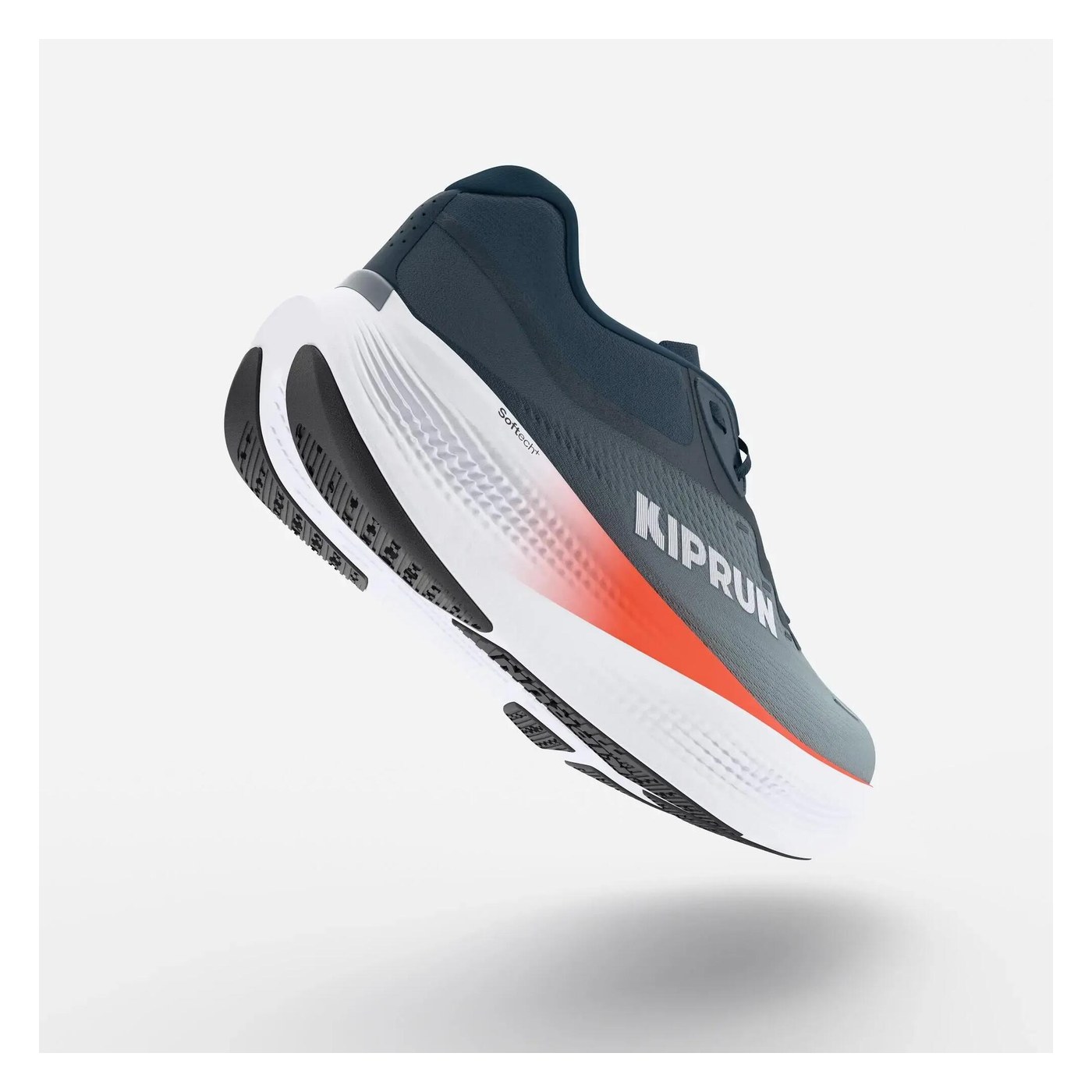
Softech+ technology: what does it change underfoot?
© Kiprun, official photo used for editorial purposes
Softech+ stacks three materials, each with a specific job. EVA provides the base structure and keeps the midsole from going all over the place at footstrike. PEBA, the same foam family you find in carbon-plated racing shoes, brings the bounce and energy return. OBC (olefin block copolymer) handles resilience, meaning the foam's ability to keep its properties stride after stride instead of packing down.
Kiprun claims 34% more cushioning and 69% more energy return than the old MFOAM in the KS900.2. Treat those marketing figures with the usual caution, but the on-road feel broadly backs them up: the foam doesn't collapse underfoot like basic EVA, it gives back part of the energy it absorbs.
The fit relies on a Warp Knit knitted mesh upper made from 98% recycled polyester, paired with a 360-degree collar and a 3D mesh tongue. The Fitting Sniper lacing system uses wings that lock down the midfoot without creating pressure points, a detail several independent testers praise from the very first wear.
The field test: from slow recovery runs to tempo at 4'15/km
At RunMorph, this analysis draws on consistent feedback from several independent real-world tests of this exact model, adding up to several hundred kilometers on asphalt: long runs, easy recovery runs and harder sessions.
The point that comes up every time is how consistent the cushioning stays over time. Several testers note that past 90 minutes of running, Softech+ foam still delivers the same protection as in the first kilometer, where classic EVA starts to pack down. One test covering 200 km of asphalt found no sign of foam compression, with cushioning that stayed generous from start to finish.
The field tests also agree that the shoe feels lighter than its actual weight. At 271 g, the Kipride Max is no featherweight on the scale, but several testers say they quickly forget the weight once they're moving, thanks to a midsole geometry and rocker that make it easy to roll forward onto the forefoot.
Responsiveness is the real surprise in the independent tests: one tester pushed down to 4'15/km over several tempo segments with no sinking feeling, as the foam returned enough energy to hold the pace. It's still a mileage shoe, not a speed shoe. Beyond that threshold, the stack's inertia kicks in and the weight limits responsiveness on sudden pace changes.
Opinions split on two specific points. First, real-world lifespan: Kiprun claims more than 1,000 km, but the independent tests point instead to a 600 to 800 km range depending on runner weight and surfaces. That's a cautious estimate, since a model launched in January 2026 hasn't been around long enough to know for sure. Second, traction: one test reports a rubber that lacks bite on wet city streets, especially on cobblestones and manhole covers. The other tests we reviewed don't explicitly flag it, most likely because they didn't run in the rain on the same surfaces. Our advice at RunMorph: stay careful on wet, smooth pavement until more field feedback confirms or rules out this issue.
Kipride Max vs Hoka Clifton 11: head to head
| Criterion | Kiprun Kipride Max | Hoka Clifton 11 |
|---|
| Weight (EU 42) | 271 g | about 250 g |
| Heel stack height | 42 mm | about 39 mm |
| Drop | 6 mm | 5 mm |
| Foam | Softech+ (EVA/PEBA/OBC) | Compression-molded EVA |
| Responsiveness | Pronounced bounce thanks to PEBA | More neutral, pronounced rocker |
| Price | €149.99 | €150 |
The Hoka Clifton 11 remains the benchmark for lightweight daily trainers, with a lower weight and a finely tuned rocker. But the Kipride Max fights back with more foam and livelier bounce thanks to PEBA, where the Clifton relies on a more conventional EVA. The price is nearly identical, so the choice comes down mostly to feel: more underfoot and more bounce with the Kiprun, more lightness and agility with the Hoka.
Against the Saucony Ride 19, the Kipride Max wins on long runs thanks to its larger foam volume, while the Ride keeps the edge on ground feel and breathability. Against the Asics Gel-Nimbus 28 and the Nike Vomero Plus, the Kipride Max can't fully match the refinement of their materials, but it closes the comfort gap for €30 to €50 less.
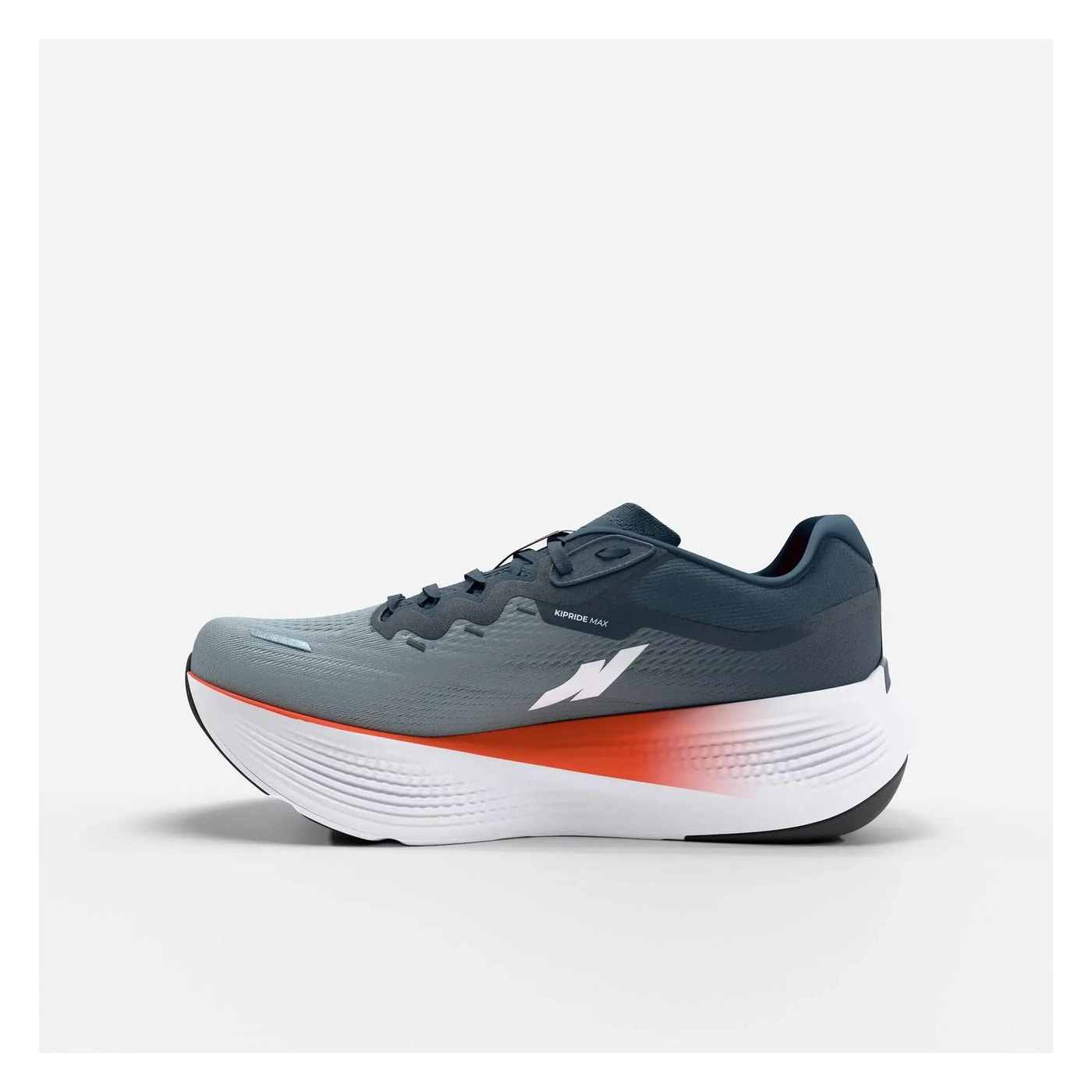
Pros and cons
© Kiprun, official photo used for editorial purposes
Pros- Unbeatable value at €149.99 for this level of foam
- Consistent cushioning confirmed by independent tests over several hundred cumulative km
- Feels lighter than its actual weight (271 g)
- Surprisingly responsive down to 4'15/km for a mileage shoe
- Wraparound fit, zero pressure points reported straight out of the box
Cons- Real-world lifespan still uncertain (600 to 800 km estimated vs 1,000 km claimed)
- Weaker traction on wet city streets, according to one test
- Sluggish on sudden pace changes and short intervals
- Decathlon's brand image still puts some runners off
Our field take: who is it for?
The Kipride Max is built for runners who log three to five runs a week and want one pair to absorb most of their volume: recovery runs between 5'00 and 6'00/km, long runs of 15 to 30 km, aerobic base training. Runners from 70 kg up, for whom joint protection is a limiting factor, will find a serious ally here. On the other hand, if you're chasing tight 10 km times or you live on short intervals, look for a more responsive model in the Kipstorm franchise.
Pair it with your RunMorph plan
Whether you're piling up the miles of a marathon build or locking in your Sunday long runs ahead of a half, the Kipride Max fits naturally into a RunMorph training plan built on volume and consistency rather than pure speed.
RunMorph Coach's verdict
The Kipride Max delivers on its promise: credible max cushioning, responsiveness that goes beyond its comfort positioning, and a price that puts real pressure on the established benchmarks. It's not a perfect shoe. Real-world lifespan still needs time to assess, wet-surface traction deserves watching, and the Decathlon image still holds back some runners attached to the big heritage brands. But at €149.99, no direct rival offers this level of foam and comfort. 8/10, with a special mention for value, which redefines what you can expect from a shoe under €150.