Leki Cross Trail Lite Carbon Review: Built for Versatility
7.5/10
Over the past three years, the carbon trail pole market has narrowed down to a single selling point: grams. Z-fold poles, ultra-short sections, minimalist grips. The race for lightness ended up leaving behind a whole group of runners who don't race skyraces, but do a long run in the mountains on Saturday and a technical hike on Sunday. Leki's answer is the Cross Trail Lite Carbon, a telescopic (not folding) pole built for that hiking-and-trail double duty, while the brand's Ultratrail FX.One range targets pure racing.
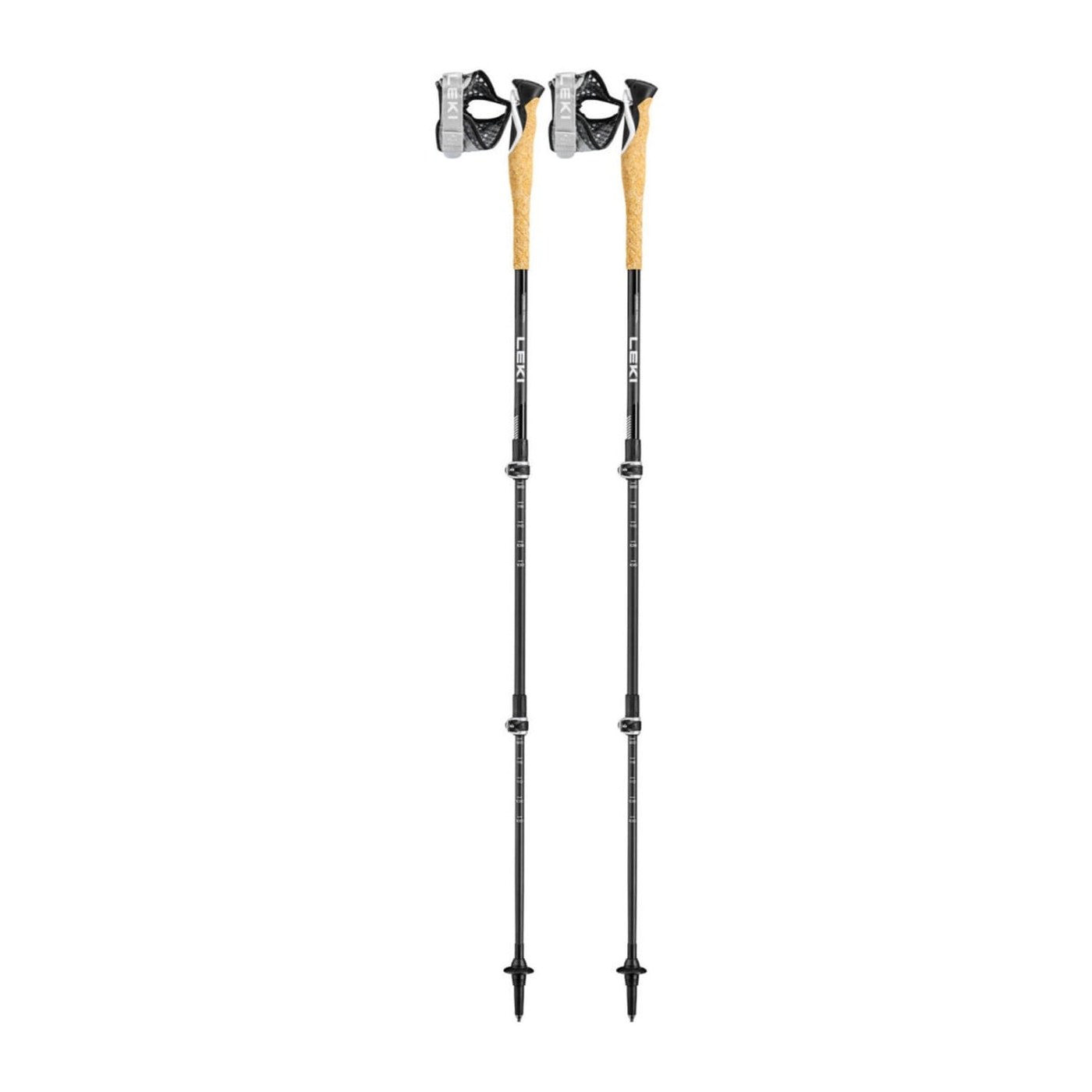
The Leki Cross Trail Lite Carbon is a 3-section telescopic carbon pole with continuous adjustment from 100 to 135 cm, built for fast hiking and all-around trail running rather than racing against the clock. Its hybrid Cross Shark grip and clip-in Trigger Shark Mesh strap give you a very secure hold, but at 213 g per pole and 65 cm collapsed, it sits far from the brand's ultralight folding benchmarks like the FX.One Superlite. It's a reliable, versatile pole if you switch between hiking and trail running, not a tool designed to beat a time.
7.5
/ 10 · RunMorph overall score
Weight
5.5 / 10
Folding
6 / 10
Hold/strap
8.5 / 10
Grip/tip
8 / 10
Value for money
7.5 / 10
Who is it for?Active hikers who also run trails and want one pole for both.
Who should skip it?Racers who time every transition and want the lowest possible weight.
Leki Cross Trail Lite Carbon: a pole built for versatility, not racing
Leki now splits its "Trail Running poles" lineup into two clearly separate families. On one side, "Competition" and "Training", with the Ultratrail FX.One we've already reviewed on RunMorph: Z-fold poles, ultra-short when folded, made for skyraces and ultra trails where every gram and every second of transition counts. On the other, the "Cross Trail" family, with the Cross Trail Lite Carbon as its carbon flagship: three-section telescopic poles with continuous adjustment that openly give up on chasing the lightness record.
The technical choice is clear and deliberate: an external clamp telescopic system (Speed Lock 2 Plus) instead of a Z-fold. The direct consequence: the Cross Trail Lite Carbon weighs 213 g per pole versus 137 g for the FX.One Superlite, or 152 g more per pair. That's not a manufacturing flaw. It's the price of a much wider adjustment range (100 to 135 cm, continuous, versus fixed sizes in 5 cm steps on folding poles), which lets you shorten the poles hard on a steep climb and lengthen them again on a runnable stretch, without switching gear.
Cross Trail Lite Carbon specs: the numbers that matter
Feature
Value
Brand
Leki
Model
Cross Trail Lite Carbon
Type
3-section telescopic pole, hiking/trail hybrid
Material
PRC 1000 carbon (Performance Racing Carbon)
Claimed weight
213 g per pole (about 426 g per pair)
Adjustable length
100 to 135 cm, continuous adjustment (Vario)
Collapsed length (storage)
65 cm
Section diameters
16 / 14 / 12 mm
Locking system
Speed Lock 2 Plus (external clamp)
Grip
Cross Trigger Shark, 2K foam + grip extension
Strap
Trigger Shark Mesh Strap, clip-in glove-style strap, sizes M / L / XL
Basket
Nordic Teller, swappable by hand
Tip
Flex Tip, carbide
Official price
€170 per pair (usually €127 to €170 depending on the French retailer)
Speed Lock 2 Plus and the Cross Shark grip: what changes in your hand?
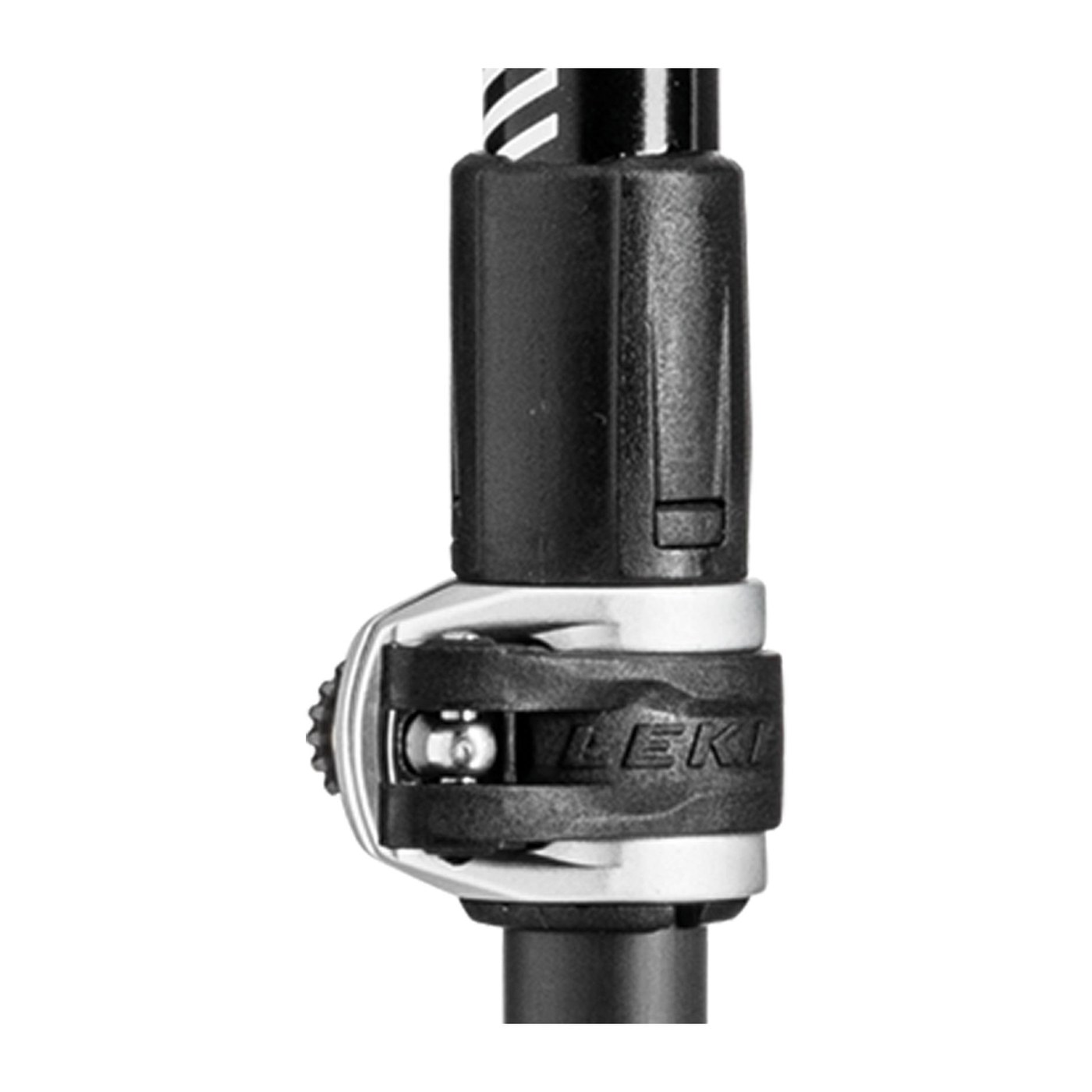
The PRC 1000 carbon shaft absorbs impacts without sending too much vibration into your wrist, something most high-end carbon poles share. The real difference is the locking system. The Speed Lock 2 Plus is an external clamp that pinches the shaft to lock in your chosen length. It holds firmly and lets you adjust each section quickly, but every pole has two clamps to work, so four for the pair. During a timed race transition, this system is mechanically slower than deploying or folding a Z-pole, where one move per pole does the job.
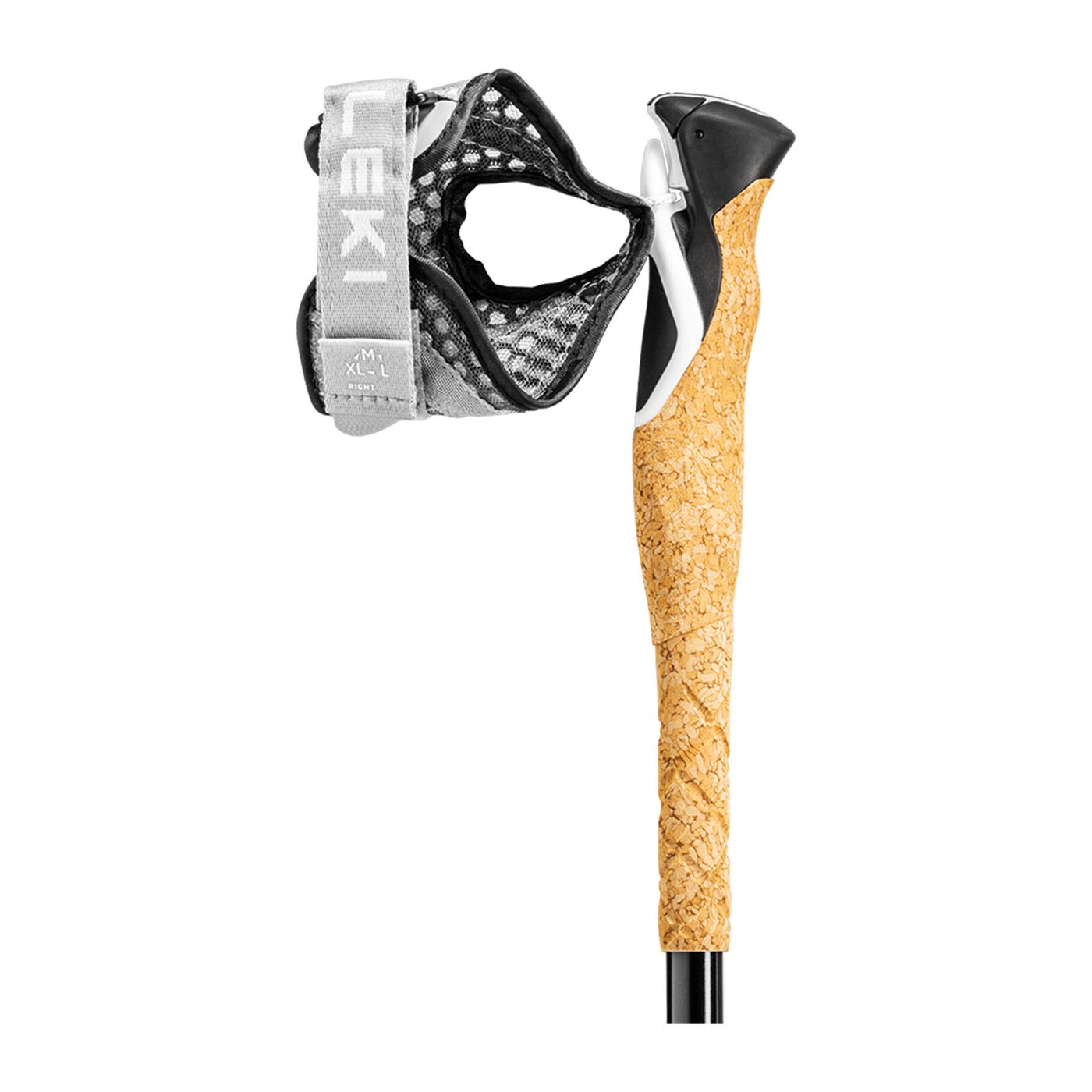
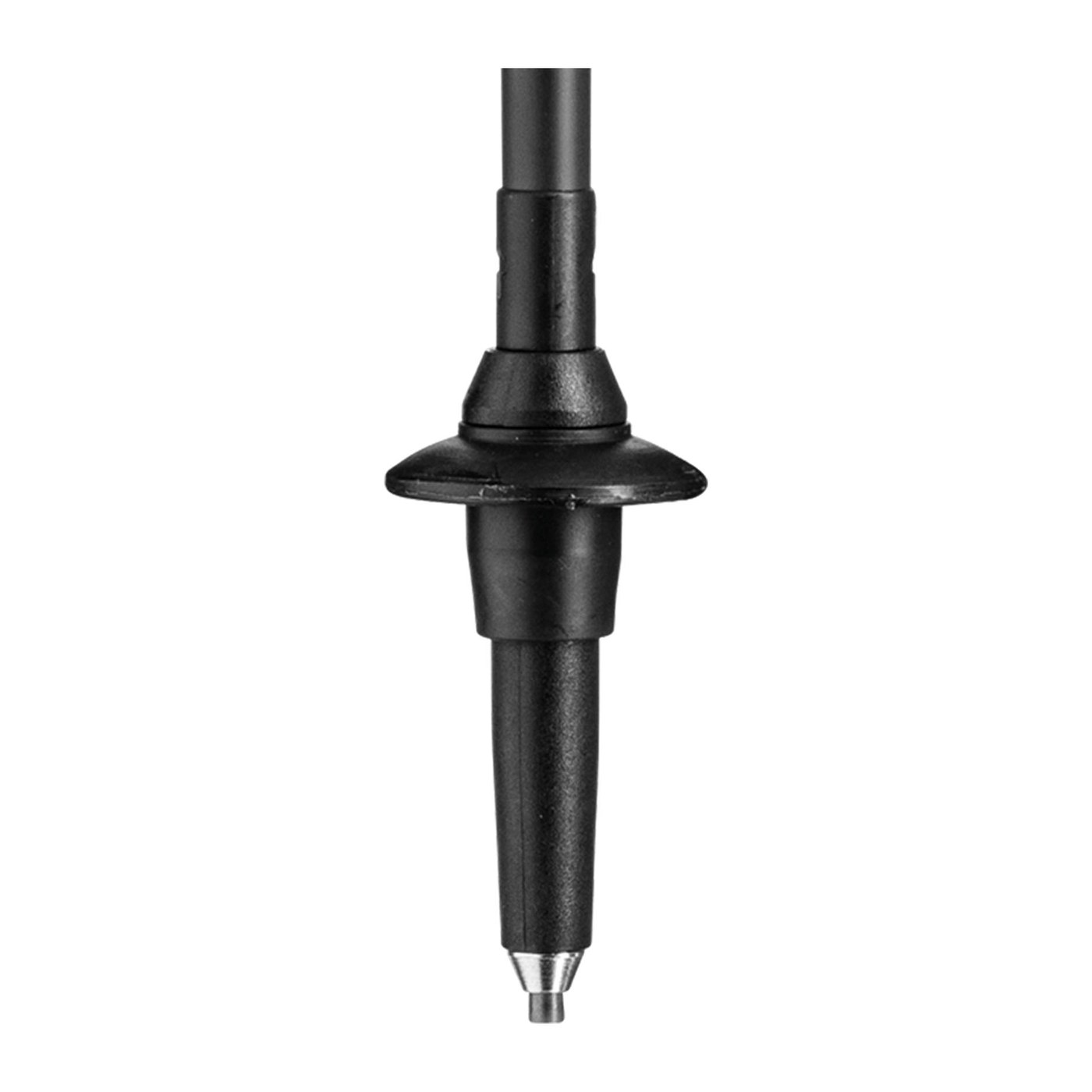
The Cross Trigger Shark grip is the product's real selling point. It pairs a 2K foam grip with a synthetic cork-finish grip extension, handy for sliding your hand down on traverses or off-camber ground without letting go of the pole. The Trigger Shark Mesh Strap works as a clip-in glove-style strap: you slip it on like a glove, click it onto the grip with one sharp move, and a safety release frees your wrist if you fall or snag the pole. The breathable mesh keeps sweat from building up on long runs. On the ground, the Nordic Teller basket (compact, swappable by hand) and the Flex Tip strike a solid balance between grip and flex on roots, rocky ground and loose trails, without being as aggressive as a dedicated racing carbide tip.
Real-world tests of this exact pole are still scarce in France, since most French-language specialist sites cover the FX.One racing range more than the Cross Trail family. So RunMorph relies here on independent measurements taken over several long runs and on a verified user review posted directly on the manufacturer's site, rather than inventing a consensus that doesn't exist yet for this model.
The independent measurements cover a seven-hour fast traverse (about 48 km, mixing downhill running and power hiking on the climbs) and a mountain hike with a child in a front carrier, so a heavier load than usual. Both times, the verdict is the same: you forget the Cross Trail Lite Carbon's weight after a few kilometers, the grip stays comfortable even with sweaty hands, and the strap mesh wicks sweat well. The tip grips the terrain "without biting in too hard", which shows good versatility between loose trail and rock. The one downside these same measurements call out explicitly is transition speed: adjusting the four Speed Lock clamps takes noticeably longer than folding or unfolding a Z-pole, a real handicap if you're racing against the clock with quick aid station stops.
A verified user review on the manufacturer's product page confirms the poles hold up in tough conditions. After two outings of more than 35 km, including an eleven-hour day with about five hours in 50 cm of fresh snow, the user describes poles that kept pace without faltering, and praises the confidence and support they gave on unstable ground. The only drawback noted: the grip's imitation cork finish, which this user, used to real cork, found a bit misleading. So opinions differ mostly on a secondary point (the look and feel of the grip) rather than on the pole's core function, which every available review agrees on.
RunMorph's tip: shorten the Cross Trail Lite Carbon hard (100 to 110 cm) on technical sections and steep slopes, then lengthen it to around 130-135 cm on runnable stretches or on the approach. That's exactly where continuous telescopic adjustment beats the fixed step lengths of a folding pole like the Leki Ultratrail FX.One.
Leki Cross Trail Lite Carbon vs Raidlight Compact Z Carbon: head to head
Both poles target the same runner, someone who switches between hiking and trail running without chasing pure racing, but with two opposite folding philosophies.
Criterion
Leki Cross Trail Lite Carbon
Raidlight Compact Z Carbon
System
3-section telescopic, Speed Lock 2 Plus
Z-fold, 3 sections
Weight per pole
213 g
185 g
Length
100 to 135 cm, continuous adjustment
Fixed sizes, quick folding
Tip
Carbide (Flex Tip)
Rubber
Transition speed
Slower (4 clamps to adjust)
Faster (Z deployment)
Positioning
All-around hiking/trail, fine adjustment
All-around hiking/trail, minimal bulk
Price
€170 per pair
Comparable, premium range
In short, the Cross Trail Lite Carbon wins on fine adjustment and length versatility, while the Compact Z Carbon wins on folding speed and slightly lower weight. The choice mostly comes down to your main use: more hiking on varied off-camber terrain for the Leki, more trail running with frequent stowing in your pack for the Raidlight.
Pros and cons
Pros
Continuous adjustment from 100 to 135 cm, no fixed steps, ideal on rolling terrain
Very comfortable hybrid Cross Shark grip, breathable mesh strap proven over a seven-hour outing
Versatile Flex Tip that grips without overdoing it on every type of ground
Proven durability over several long outings, including an eleven-hour day in fresh snow, with no weakness reported
Reliable Speed Lock 2 Plus locking that holds under load, even when carrying a heavy pack
Cons
213 g per pole, well above the brand's ultralight Z-fold benchmarks (137 g for the FX.One Superlite)
65 cm collapsed, almost twice as bulky as a Z-fold pole (35 to 43 cm)
Adjusting four clamps is slower than unfolding or folding a Z-pole during a race transition
Synthetic cork grip finish that at least one user, used to real cork, found "a bit misleading"
Our field take: who is it for, and for which RunMorph use?
The Cross Trail Lite Carbon targets the runner preparing a trail or ultra trail goal who still puts in hiking miles beforehand: long runs in the mid-mountains, course recon at a mixed walk-run pace, training blocks based out of mountain huts. Its continuous adjustment range makes it a smart tool for staying safe on off-camber ground and technical descents without juggling two pairs of poles.
To strengthen your mountain long runs during a RunMorph trail or ultra trail buildup, pairing this pole with a suitable RunMorph training plan lets you build your elevation gain progressively instead of fighting tired legs at the end of every outing. It's not the tool to pick, though, if your goal is a short, fast race where every transition counts: there, a Z-fold pole is still the better fit.
The RunMorph Coach's verdict
The Leki Cross Trail Lite Carbon delivers on its hiking-and-trail versatility promise without chasing lightness at all costs. The Cross Shark grip and mesh strap rank among the best on the market in this segment, and continuous length adjustment is a real asset if you vary your terrain. But at 213 g per pole and 65 cm collapsed, it clearly gives up weight and bulk to the Z-fold poles in its own lineup, and the locking system costs you transition speed. A good buy for active hiking and all-around trail running, not for racing. RunMorph score: 7.5/10.
Key takeaways for your training
Adaptive adjustment: shorten on technical climbs, lengthen on the flats to get the most out of every section of your run
Payload: the strap still holds reliably under a heavy load, useful on self-supported long outings
Race transitions: plan extra time at aid stations if you stow and redeploy your poles often
Winter versatility: the Nordic Teller basket helps you keep your footing on packed snow or loose ground
A complementary pair: save it for hiking and trail training, and keep a Z-fold pole for race day if your budget allows