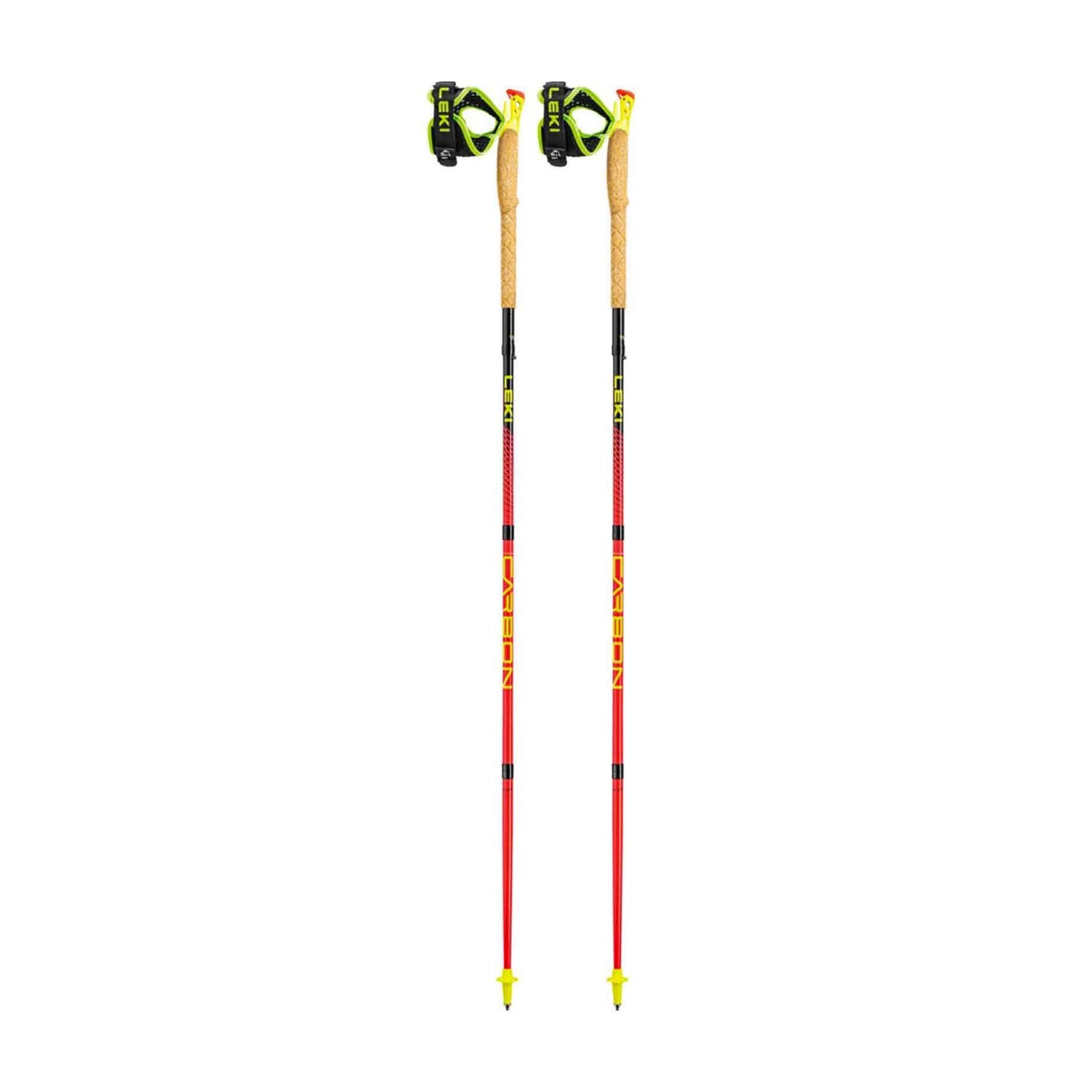
Leki built its reputation on the Shark System, a strap system that changed the way trail runners hold their poles. The Ultratrail FX.One Superlite, already reviewed by RunMorph, is its race version. The standard FX.One targets a wider audience: runners who want the same Trail Shark system in a version built to last.
© Leki, official photo used for editorial purposes
Leki and the Trail Shark: ergonomics before the race for grams
Leki has made poles since 1948, first for skiing, before becoming a trail running benchmark thanks to the Shark System: a strap that stays attached to the pole handle rather than to the runner's wrist. That changes everything. Instead of sliding your hand into a classic strap, you bring your wrist to the handle and the loop clips in automatically, even mid-climb, without a second thought. RunMorph has already reviewed the race version of this system with the Leki Ultratrail FX.One Superlite, built purely for racing. The standard FX.One uses exactly the same Trail Shark system, but in a construction designed for regular training.
The difference lies in tube diameter: 16/14/14/14 mm on the standard FX.One versus 14/12/12/12 mm on the Superlite. The extra carbon adds a little weight (about 174 g per pole versus 137 g) but also delivers much better resistance to side impacts, the classic weak point of ultralight poles under heavy use.
RunMorph's advice: if you plan to use your poles several times a week in training, pick the standard FX.One over the Superlite. The Superlite's 37 g saving per pole doesn't justify the extra fragility over time. Save it for race day.
The Trail Shark system: what does it change on the trail?
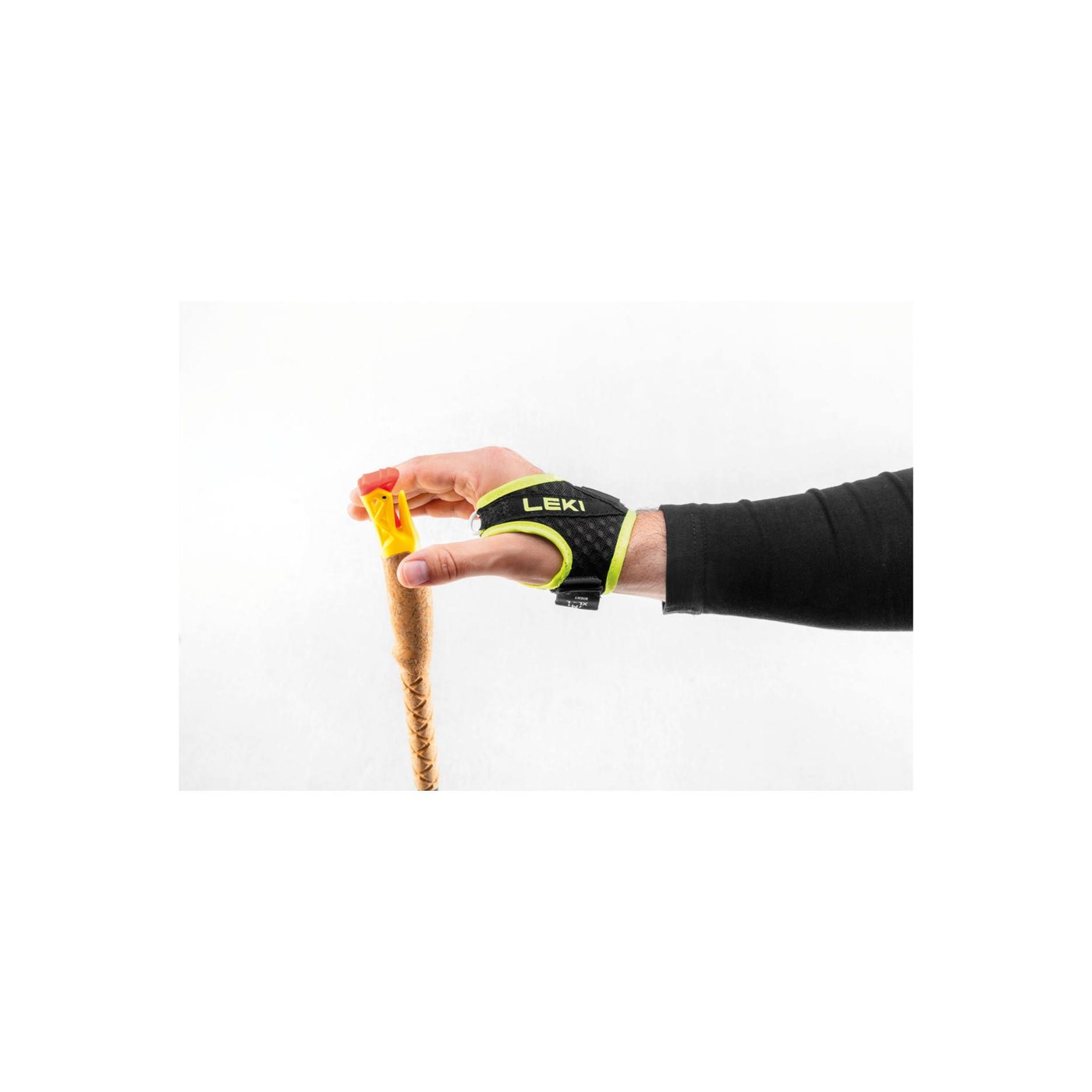
The Trail Shark rests on a simple principle: the strap stays attached to the pole handle, not to the runner's wrist. To use it, you bring your wrist to the handle and the mesh loop clips in automatically, without looking, even mid-climb. To let go of the pole, you just pull your wrist back and the loop releases. In practice, your hand no longer has to squeeze the pole to transmit power: the push goes straight through the loop to the center of the pole, which cuts forearm fatigue on long runs.
The extended cork handle completes the setup. On a steep section, you can slide your hand 10 to 15 cm down the handle without bending your wrist, a real ergonomic gain on 30-40% slopes. The one drawback our French testers noted: the Trail Shark takes 2 to 3 runs to become instinctive, the time it takes to find the loop's notch without thinking.
© Leki, official photo used for editorial purposes
Field test: sustained climbs and long runs in mid-altitude mountains
On sustained climbs, the Trail Shark's benefit is obvious. The push goes through the loop with no gripping effort, so you can hold a steadier rhythm over several hundred meters of elevation gain. On a benchmark route timed twice, once with poles and once without, the measured gap reached several minutes over a 1:45 run. That fits with studies pointing to an efficiency gain of around 20% with intensive pole use.
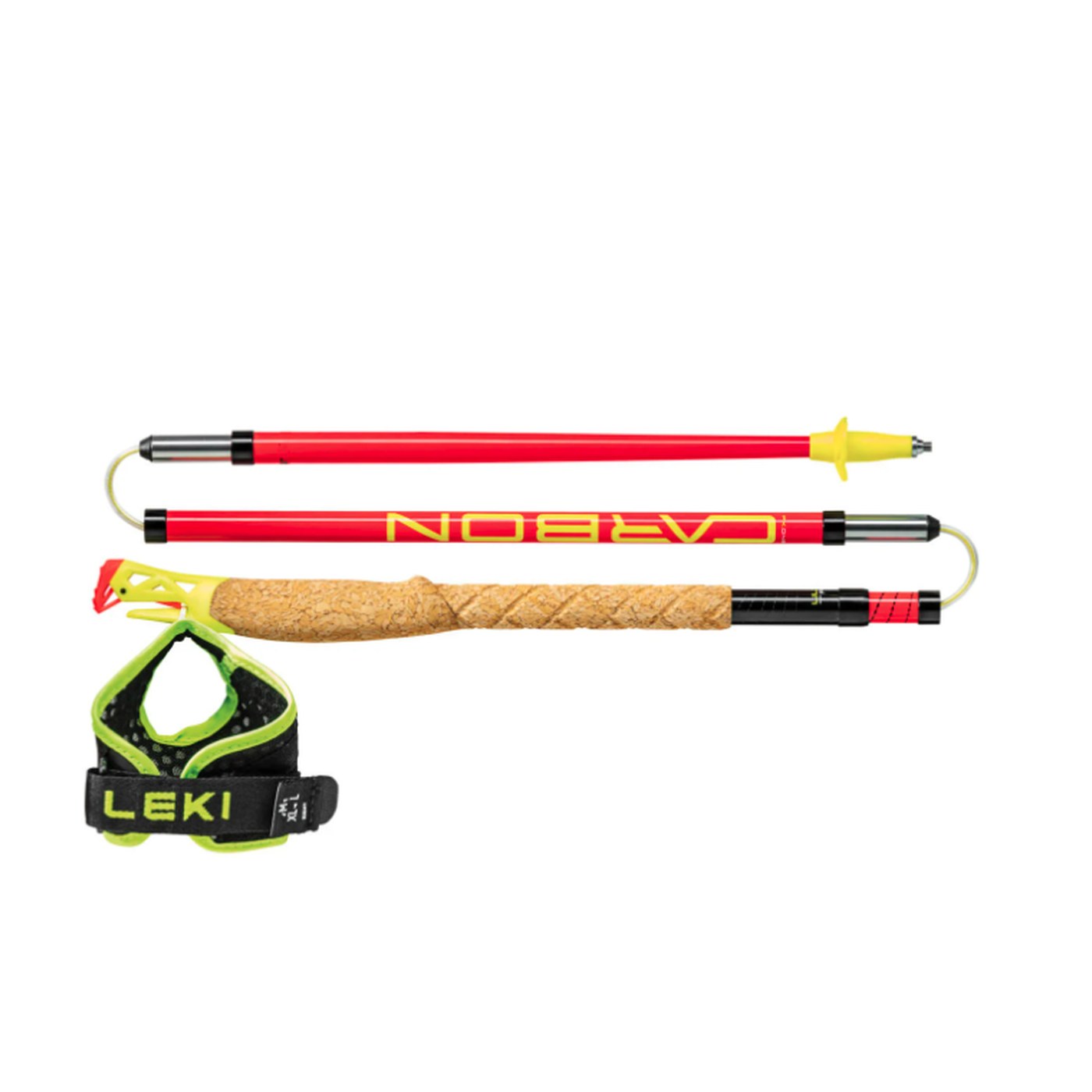
The HRC carbon sends very little vibration back on each pole plant, even on scree, and the tungsten carbide tip paired with the minimalist Trail Running Basket gives solid grip on dry rock and technical trails. Folded, the pole measures 36 cm, a size that fits almost every trail vest quiver on the market (Salomon, Compressport, Raidlight, Decathlon).
RunMorph's advice: if budget is holding you back, look at the Kiprun Bâtons Trail Carbone, far more affordable, or the Guidetti Platinium Néo for an equally premium French alternative.
Leki Ultratrail FX.One vs FX.One Superlite: which version to choose
Choosing between the two FX.One versions comes down to how you'll use them: regular training or pure racing.
| Criterion | FX.One (standard) | FX.One Superlite |
|---|
| Weight per pole | ~174 g | ~137 g |
| Tube diameter | 16/14/14/14 mm | 14/12/12/12 mm |
| Folded length | 36 cm | 35 cm |
| Recommended use | Training and racing | Racing only |
| Durability | Excellent | Fair (thin tubes) |
| Price | ~€190 | ~€170 |
For 95% of trail runners, the standard version remains the smarter choice. The thicker tubes handle side impacts better, and the 37 g per-pole saving of the Superlite doesn't make up for the loss of durability over several seasons of regular use.
Leki Ultratrail FX.One pros and cons
Pros
- Unique Trail Shark system for power transfer
- Extended cork handle, very ergonomic on steep slopes
- Rugged HRC carbon, little vibration on each pole plant
- Spare parts sold individually, repairable over several seasons
- Fits every trail vest quiver on the market
Cons
- High price (~€190) for occasional use
- Learning curve of 2 to 3 runs to master the Trail Shark
- Heavier than the Superlite
- Fixed sizes in 5 cm increments, no continuous adjustment
© Leki, official photo used for editorial purposes
Our field verdict: who is the Leki Ultratrail FX.One for?
Trail runners who train regularly in mid-altitude mountains
This is the ideal profile. The rugged 16/14/14/14 mm tubes take repeated outings with no fear of breakage, unlike thinner models.
Runners preparing an ultra trail with big elevation gain
The Trail Shark limits forearm fatigue on long climbs, a real asset when you use your poles for hours on end during a race.
Occasional runners who head to the mountains 3 to 4 times a year
The price gets hard to justify. An entry-level model like the Kiprun Bâtons Trail Carbone is more than enough for this kind of use.
RunMorph pick: poles make the most sense in plans with big elevation gain. To structure your hill sessions and bring poles into your preparation step by step, check out the RunMorph training plans built for trail.
RunMorph Coach verdict
The Leki Ultratrail FX.One confirms the Trail Shark as the benchmark among trail poles. It's not the lightest in its class, nor the cheapest, but it's probably the one with the best balance of ergonomics, durability and performance for regular training. Price remains the main barrier for occasional runners.
For trail runners who want gear that lasts several seasons without sacrificing ergonomics, it's hard to do better. 8.5/10, with a reservation on value for money for low-volume runners.