This is the gel of world records. Since 2016, Maurten's black sachet has ruled the aid stations of the biggest marathons on the planet, from Berlin to Boston, Chicago and New York. Its promise comes down to one technology: hydrogel, a matrix that encapsulates 25 g of carbs and carries them through your stomach without it ever noticing. At RunMorph, we pulled apart the ingredient list, cross-checked real-world feedback from French runners and got the calculator out to find out whether the Gel 100 deserves its status, and its €3.70 price tag.
Maurten Gel 100 review: hydrogel, flawless digestion, steep price, no filter
8.4/10
- Benchmark gut tolerance, hydrogel technology proven in racing
- 25 g of carbs for 40 g: one of the best weight-to-energy ratios
- 6 ingredients, zero flavourings, colourings or preservatives, vegan formula
The bottom line in 3 sentences
The Maurten Gel 100 is the gel that dragged sports nutrition into the hydrogel era: 25 g of carbs encapsulated in a biopolymer matrix, 6 ingredients, zero flavourings, zero preservatives, and a gut tolerance that has become the benchmark for the whole field. Its firm, gummy-like texture and neutral taste split opinion, but nobody disputes how well it works on efforts longer than 2 hours. Its real weaknesses: one of the highest prices on the market and next to no sodium.
8.4
/ 10 · RunMorph overall score
Who is it for?The marathoner or trail runner aiming for 60 to 100 g of carbs per hour who wants digestion with no surprises, especially if they have already ditched other gels because of nausea.
Who should skip it?The runner on a tight budget, anyone who wants a flavoured gel they actually look forward to, or the heavy sweater counting on their gel for sodium.
Maurten Gel 100: the black sachet that reinvented the gel
Before 2016, an energy gel was a sweet, flavoured syrup, often sickly by the second hour of effort. Maurten, a small Swedish company, showed up with a radical idea: encapsulate the carbs in a hydrogel, a biopolymer structure based on alginate and calcium carbonate, so they pass through the stomach without breaking down there and get absorbed directly in the intestine. Ten years on, the Gel 100 is the official fuel of the world's biggest marathons and the gel most elite runners ask for.
The spec sheet fits on one line: a 40 g sachet, 25 g of carbs, 100 kcal, 6 ingredients. Water, glucose, fructose, calcium carbonate, gluconic acid, sodium alginate. Full stop. No flavourings, no colourings, no preservatives, and a vegan-friendly formula. The 0.8:1 fructose-to-glucose ratio is calibrated to maximise intestinal absorption: recent research shows this ratio lets you use up to 100 g of carbs per hour, versus roughly 60 g with glucose alone.
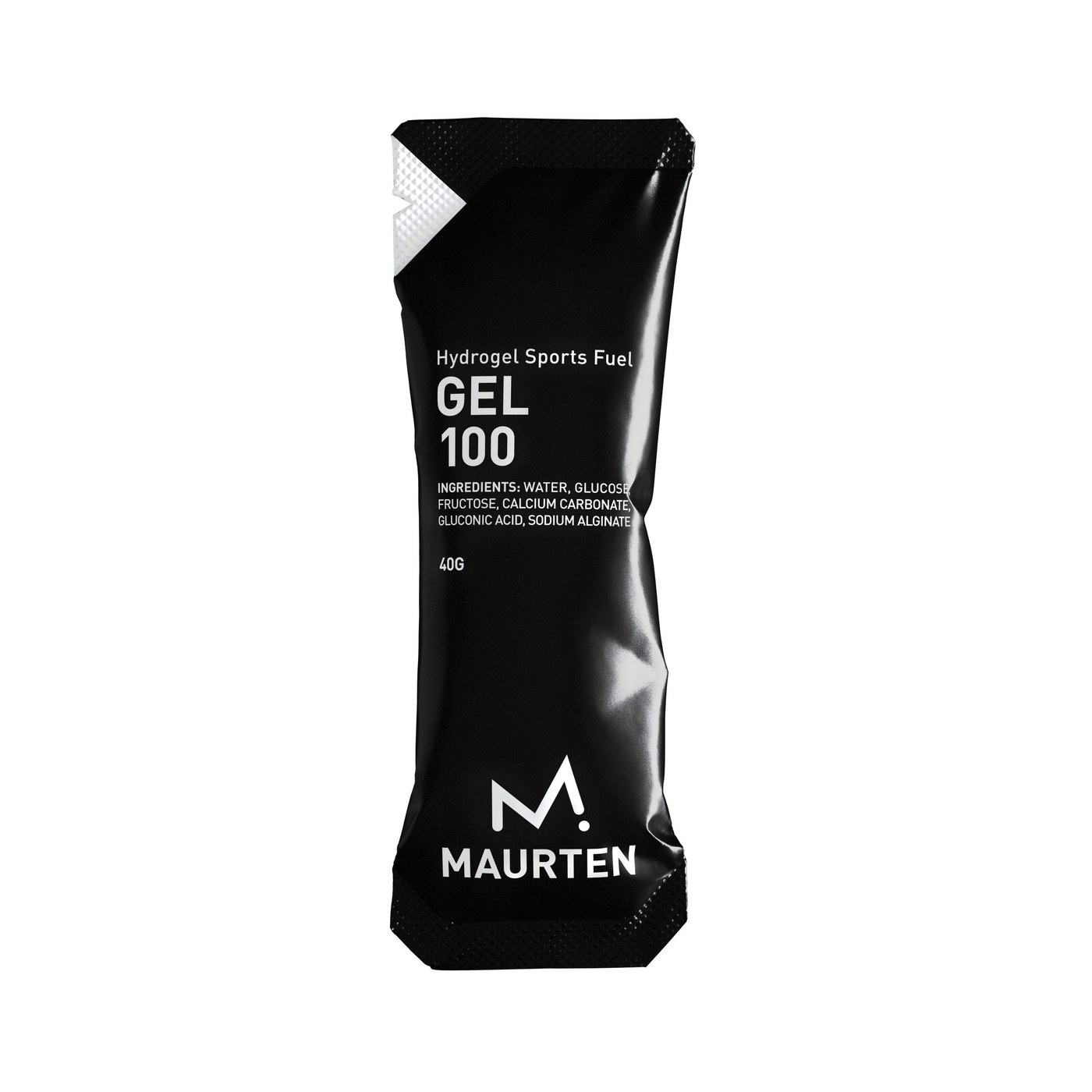
© Maurten, official photo used for editorial purposes
RunMorph's advice: before you buy a box of 12, read our review of the Maurten Gel 160 (same technology, 40 g of carbs per sachet) and the one of the SiS Beta Fuel, its direct rival on digestion. If your budget is tight, our review of the Decathlon Energy Gel+ at €1.83 puts the prices back in perspective.
Objective technical data
| Spec | Value | Useful benchmark |
|---|---|---|
| Carbs per sachet | 25 g (of which 25 g sugars) | 62.5% of total weight, record concentration |
| Energy | 100 kcal / 425 kJ | That's where the product name comes from |
| Sachet weight | 40 g | One of the best weight-to-energy ratios on the market |
| Fructose-to-glucose ratio | 0.8:1 | Up to 100 g of absorbable carbs per hour |
| Salt | 50 mg per sachet | About 20 mg of sodium: next to nothing |
| Caffeine | 0 mg (Caf 100 version: 100 mg) | The caffeinated version costs €4.30 at i-Run |
| Ingredients | 6: water, glucose, fructose, calcium carbonate, gluconic acid, sodium alginate | The shortest list in the segment |
| Additives | No flavourings, colourings or preservatives | Unique at this level of concentration |
| Flavours available | Just 1: neutral | A deliberate anti-flavour-fatigue choice |
| Street price (France) | €3.70 each, €41 for a box of 12 (i-Run) | €0.148 per gram of carbs, among the most expensive |
Digestion: the Gel 100's real reason to exist
Maurten's whole pitch rests on a problem every runner knows: at high intensity, the stomach slows down its emptying, and carbs that sit there cause nausea, bloating and sometimes a flat-out refusal to eat anything more during the race. Hydrogel tackles this mechanically: the alginate matrix sets on contact with stomach acid, encapsulates the carbs and only releases them in the intestine, where they get absorbed.
Real-world feedback from French runners points the same way: the Gel 100 is consistently named among the best-tolerated gels by runners with sensitive stomachs, including by sports dietitian Nicolas Aubineau, who rates it 4/5 in his reference comparison and highlights its exemplary digestibility. French comparisons of gels for marathon and triathlon put it top of the list for athletes who gave up on classic syrups after bad experiences. It's also why you find it at the official aid stations of the Berlin, Boston, Chicago and New York marathons: organisers know that thousands of amateurs tolerate it without any prior training.
© Maurten, official photo used for editorial purposes
An honest caveat: "better tolerated" doesn't mean "magic". The 100 g of carbs per hour remains a theoretical ceiling that assumes a trained gut. If you jump from zero gels to four Gel 100s an hour on race day, your stomach will complain, hydrogel or not. The technology lowers the risk, it doesn't remove it.
Taste and texture: neutral, almost austere
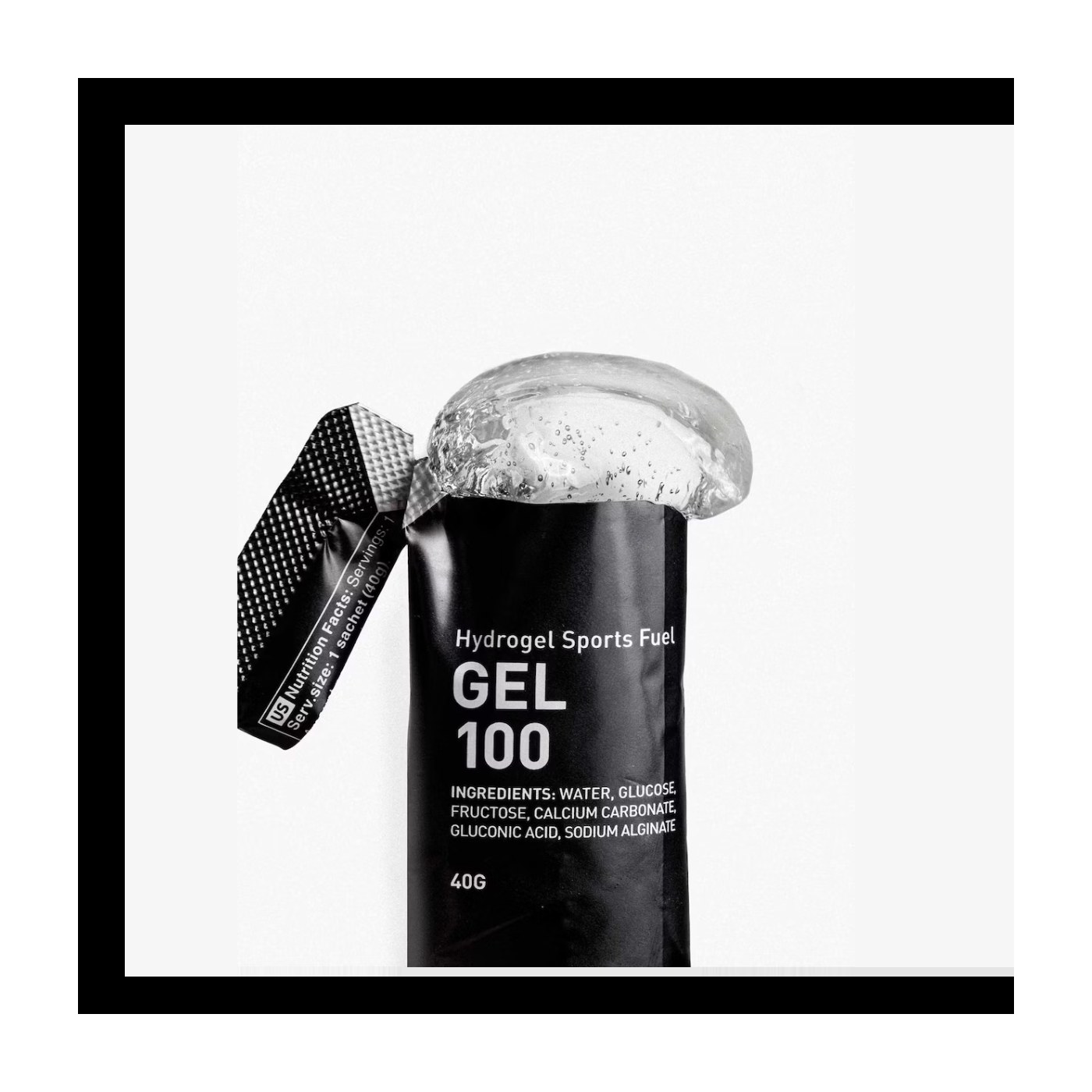
Open the sachet: what comes out looks nothing like a classic gel. It's a firm, translucent jelly that holds together, closer to a gummy sweet than a syrup. The taste is deliberately neutral, described by most testers as flat, very lightly sweetened lemonade. No chemical strawberry, no cloying vanilla: nothing to love, but above all nothing that turns your stomach by the third sachet.
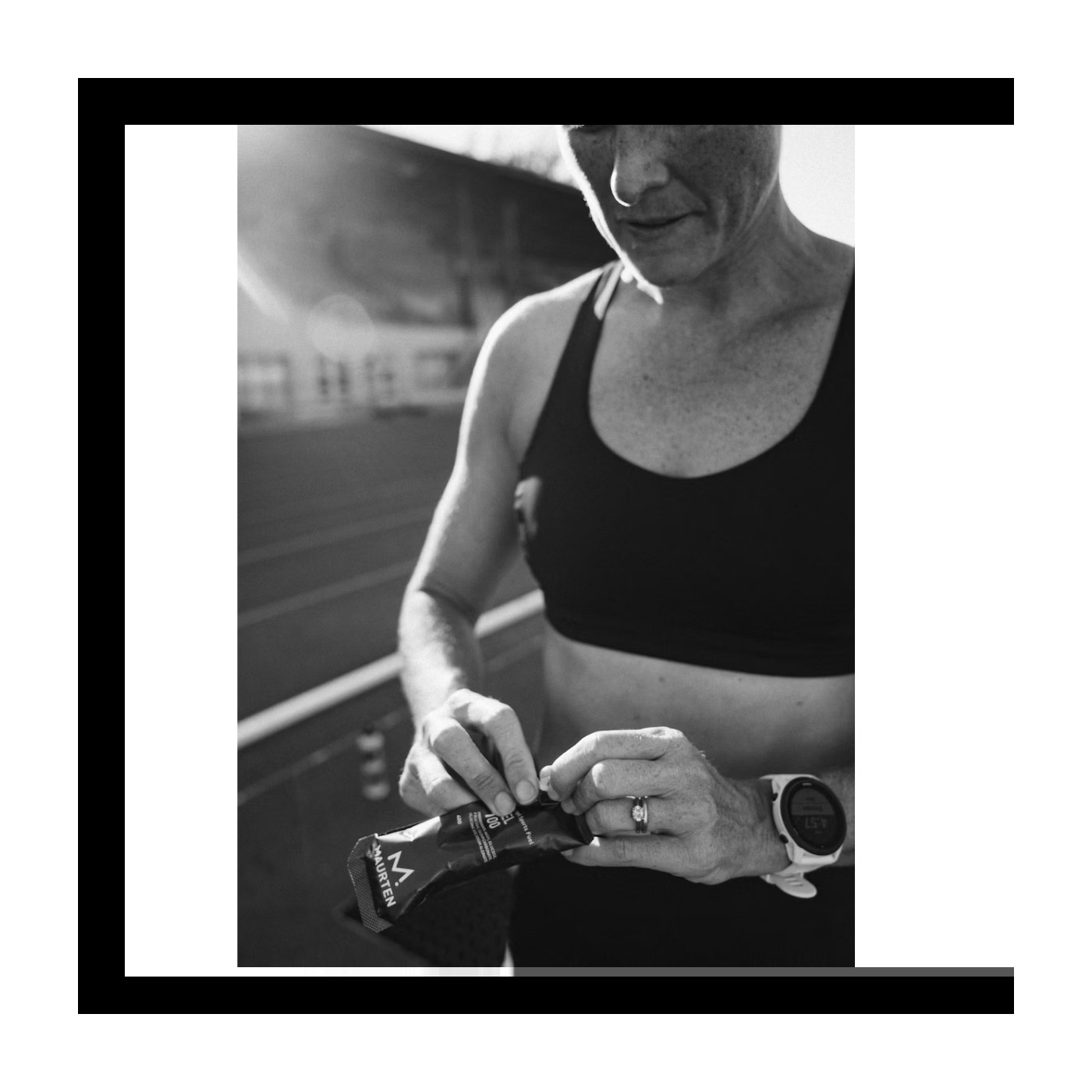
It's a bet that splits opinion. Runners who hate sweet, fruity gels adopt it instantly. Those who rely on a pleasant taste to make themselves eat during a race find it dreary. The firm texture has one concrete upside: you can take it without water and it doesn't stick to your fingers, a real plus when you're tearing open a sachet at 18 km/h. The only practical gripe raised by several users: the tear tab sometimes takes two attempts when your hands are sweaty or gloved.
The big flaw: €3.70 a sachet
Let's get the calculator out. At €3.70 each (€41 for a box of 12, so €3.42 per gel), every gram of carbs costs about €0.148. That's almost two and a half times the cost of the Decathlon Energy Gel+ (€0.061 per gram) and clearly more than the Neversecond C30 (€3.50 for 30 g, so €0.117 per gram). A marathon fuelled with three gels an hour for 3 h 30 means around ten sachets: more than €35 of nutrition for a single race, not counting drinks or training.
Over a 12-week plan where you test your fuelling on every long run, the bill climbs fast. That's the price of the technology and the premium positioning: Maurten doesn't compete on price, it competes on digestive reliability. If your stomach handles classic gels, the spend is hard to justify. If you've already blown a marathon because of nausea at kilometre 30, think of it as insurance.
© Maurten, official photo used for editorial purposes
Second flaw: a sodium desert
Each sachet contains 50 mg of salt, so about 20 mg of sodium. On a long effort in serious heat, where a runner can lose 400 to 1000 mg of sodium per hour, that's a token contribution. Dietitian Nicolas Aubineau says so explicitly in his analysis: the Gel 100 is excellent for energy, inadequate for electrolytes.
In practice: if you run for more than 2 hours, especially in summer, you need a separate sodium source, either an electrolyte drink like the Drink Mix 320, which keeps you in the same hydrogel ecosystem, or salt tablets. It's not an oversight by the brand, it's a choice to specialise: the Gel 100 handles energy, the rest is on you.
Who is it for?
The marathoner chasing a time
When you're targeting sub-4, sub-3:30 or faster, your carb strategy matters as much as your training: 60 to 90 g per hour, started early, never interrupted. The Gel 100 was designed for exactly that, with a light sachet that slips into a belt and digestion that holds up when the intensity rises. It's the most thoroughly proven gel in elite marathon running.
The runner with a fussy stomach
If you've already suffered nausea mid-race with syrupy gels, hydrogel is the most serious option on the market. The biopolymer matrix mechanically gets around the problem of slowed stomach emptying. Test it in training first, but there's a good chance you'll finally be able to eat as much as your plan demands.
The trail runner building an ultra strategy
In ultras, enemy number one of fuelling is flavour fatigue: after six hours, many runners can't stand anything sweet anymore. The Gel 100's total neutrality then becomes an asset, and its firm texture goes down better than a syrup when your palate is worn out. Add savoury food and electrolytes, and you've got a solid foundation.
Pros
- Benchmark gut tolerance, hydrogel technology proven in racing
- 25 g of carbs for 40 g: one of the best weight-to-energy ratios
- 6 ingredients, zero flavourings, colourings or preservatives, vegan formula
- Neutral taste that fights flavour fatigue, effective on efforts over 3 hours
- Firm texture you can take without water and that doesn't stick
- Available everywhere in France, singly or in boxes of 12
Cons
- €3.70 a sachet: among the most expensive gels on the market
- About 20 mg of sodium per sachet: negligible on long efforts
- Just one flavour, austere if you like flavoured gels
- Tear tab sometimes fiddly with sweaty hands
- The 100 g of carbs per hour promise requires a trained gut

© Maurten, official photo used for editorial purposes
Maurten Gel 100 vs Gel 160: head to head
| Criterion | Gel 100 | Gel 160 |
|---|---|---|
| Carbs per sachet | 25 g | 40 g |
| Sachet weight | 40 g | 65 g |
| Energy | 100 kcal | 162.5 kcal |
| Technology | Hydrogel, 0.8:1 ratio | Hydrogel, 0.8:1 ratio |
| Street price per unit | €3.70 | €5 |
| Cost per gram of carbs | €0.148 | €0.125 |
| Ideal use | Small doses, split every 20-30 min | Big intakes, fewer sachets to manage |
Both share the same technology: the choice comes down to logistics. Three Gel 160s an hour give you 120 g of carbs from three sachets; you'd need almost five Gel 100s for the same dose. On the flip side, the small format lets you split your intake finely, one sachet every 20 minutes, which a lot of stomachs prefer. Wallet-wise, the Gel 160 is cheaper per gram of carbs (€0.125 versus €0.148): if your plan goes above 75 g per hour, the big format wins on every count.
How it stacks up against the competition
In the premium high-carb gel segment, four rivals are fighting for the same runners:
- SiS Beta Fuel: 40 g of dual-source carbs (1:0.8 ratio) for around €2.90, more flavoured, with digestion also praised by testers. The most direct rival, and clearly cheaper.
- Neversecond C30: 30 g of carbs for €3.50, designed by a former WorldTour team scientist, excellent on digestion but with packaging that sometimes jams.
- Decathlon Energy Gel+: 30 g of carbs plus caffeine for €1.83. Half the price per gram, with a formula heavier on additives.
- Apurna Gel Energie Citron: the French answer, 20.3 g of carbs and 74.6 mg of caffeine for €2, with a more carefully crafted taste.
Against this field, the Gel 100 wins neither on price nor on taste. It wins where it matters for its audience: digestive reliability, a simple formula and track record, since no rival can point to ten years of results at the world's biggest races. For a product-by-product breakdown, check out our roundup of the best energy gels of 2026.

© Maurten, official photo used for editorial purposes
How to fit it into your RunMorph training plan
The basic rule: race nutrition gets tested in training, never on race day. Use your weekend long runs to build your carb tolerance step by step. Start with one sachet per hour, move up to two, then three if your goal calls for it. Your gut adapts within a few weeks, and that's documented: the more you train it to absorb, the more it absorbs.
For a marathon, a classic Gel 100 strategy: one sachet 15 minutes before the start, then one every 25 to 30 minutes from kilometre 5, aiming for 50 to 75 g of carbs per hour depending on your weight and experience. Add water at the aid stations and a sodium source if you're running longer than 2 h 30 or in serious heat. Your RunMorph plan is built around your training volume: slot your nutrition test runs into the long runs it schedules, and show up on race day with a dialled-in protocol. Check out our marathon training plans.
The RunMorph Coach's verdict
On paper, the Maurten Gel 100 isn't the best gel on the market: it's expensive, low in sodium, flavourless, and its promise of 100 g of carbs per hour is only reachable with training. But it's the gel least likely to let you down: benchmark digestion validated by ten years of racing at the highest level, a remarkably simple formula and a format that vanishes into a belt. At RunMorph, we see it as premium insurance: you're not paying for the taste, you're paying to never have to think about it.
8.4/10. Digestibility (9.5) and energy supply (9) carry the score, dragged down by value for money (5.5) and the lack of electrolytes (4). If your stomach handles classic gels, a SiS Beta Fuel or a Decathlon Energy Gel+ will do the job for less. If digestion is your weak spot, this is the first gel to try.
Key takeaways for your training
- 25 g of hydrogel carbs per 40 g sachet: 0.8:1 fructose-to-glucose ratio, up to 100 g per hour with a trained gut.
- Benchmark digestion: the hydrogel matrix carries the carbs through the stomach, first choice for sensitive stomachs.
- Minimal formula: 6 ingredients, zero flavourings, colourings or preservatives, a single neutral flavour that fights flavour fatigue.
- Next to no sodium: about 20 mg per sachet, so plan an electrolyte drink or salt tablets beyond 2 hours.
- €3.70 a sachet: test single sachets on your long runs before investing in the €41 box of 12.
FAQ
Do you need to drink water with the Gel 100?
Not necessarily, unlike concentrated syrup gels: the hydrogel texture is already hydrated and goes down on its own. A few sips of water after each sachet are still a good habit, especially if you're not taking an energy drink as well.
What's the difference between the Gel 100 and the Gel 100 Caf 100?
Same hydrogel base, same 25 g of carbs, plus 100 mg of caffeine (about a large espresso) for €4.30 a sachet. Save the caffeinated version for the last third of the race, when mental fatigue kicks in, and stick to one or two.
Is the Gel 100 suitable for beginners?
Yes, and it's actually a great first gel: its gut tolerance spares you the nasty surprise that puts so many runners off sports nutrition. The only drawback is the price: if your budget is limited, start by testing your tolerance with a cheaper gel and save the Maurten for race day.
Can you run a marathon on Gel 100 alone?
Yes for energy, at 2 to 4 sachets per hour depending on your strategy. No for electrolytes: with about 20 mg of sodium per sachet, you need to add a sodium source as soon as the effort goes past two hours or the temperature climbs.