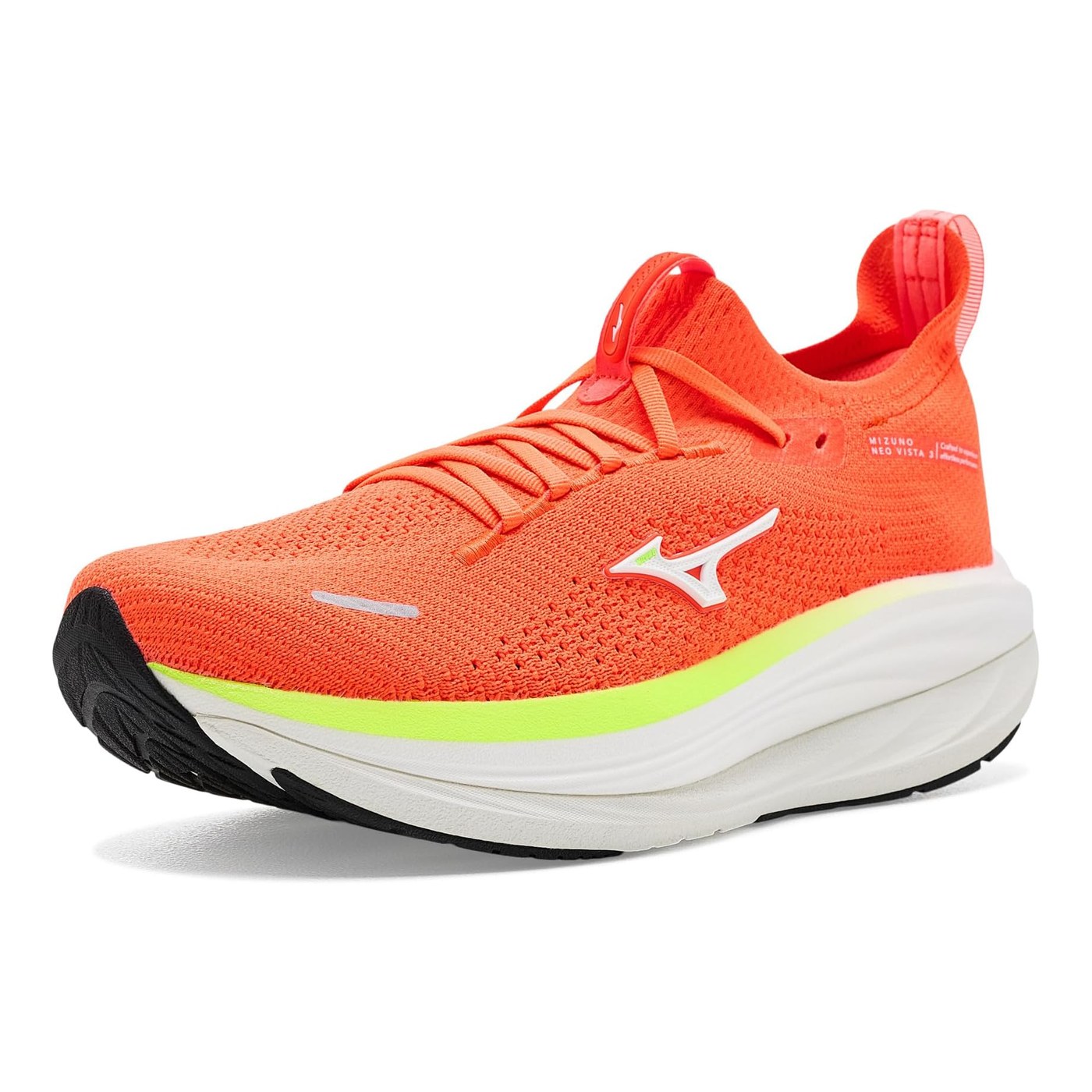
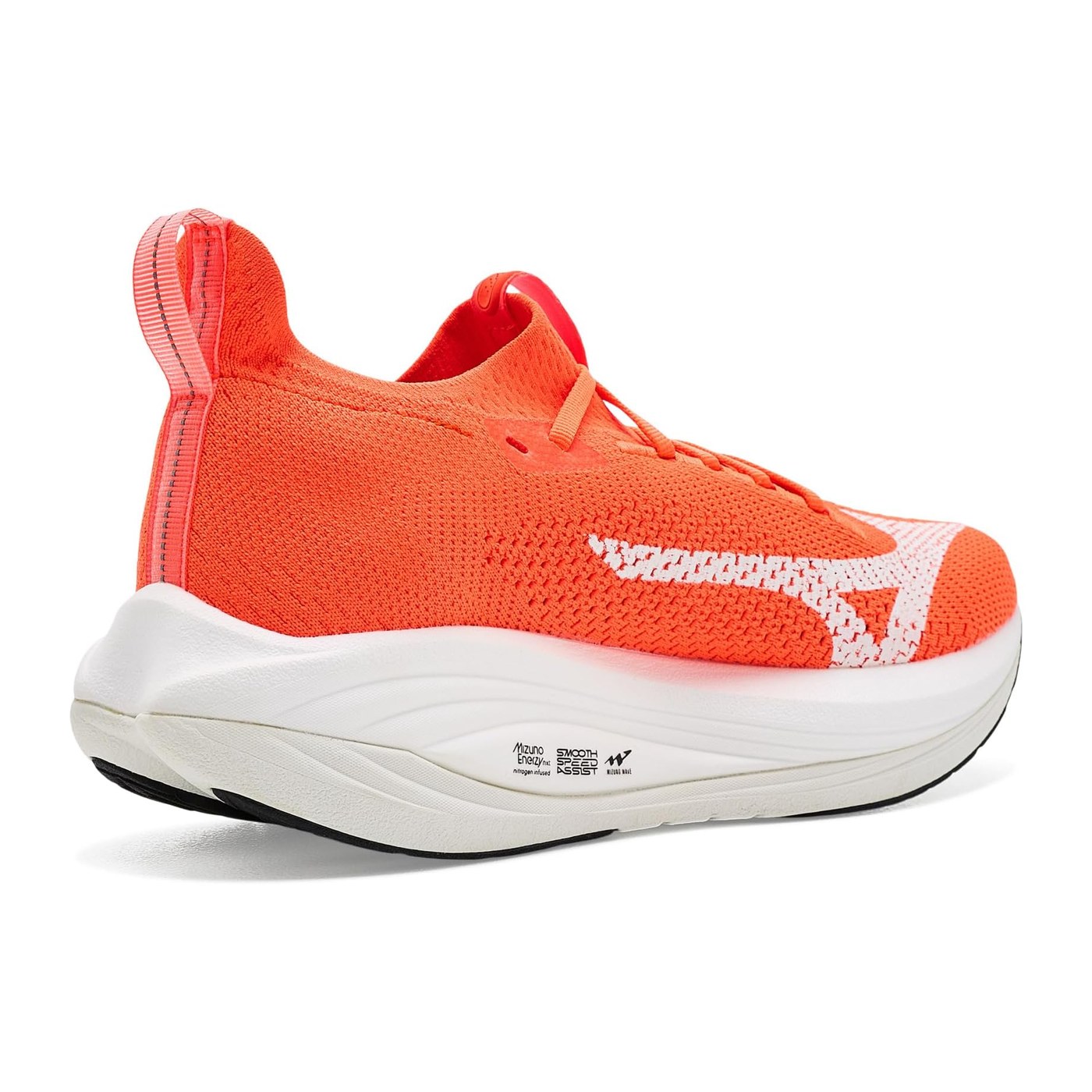
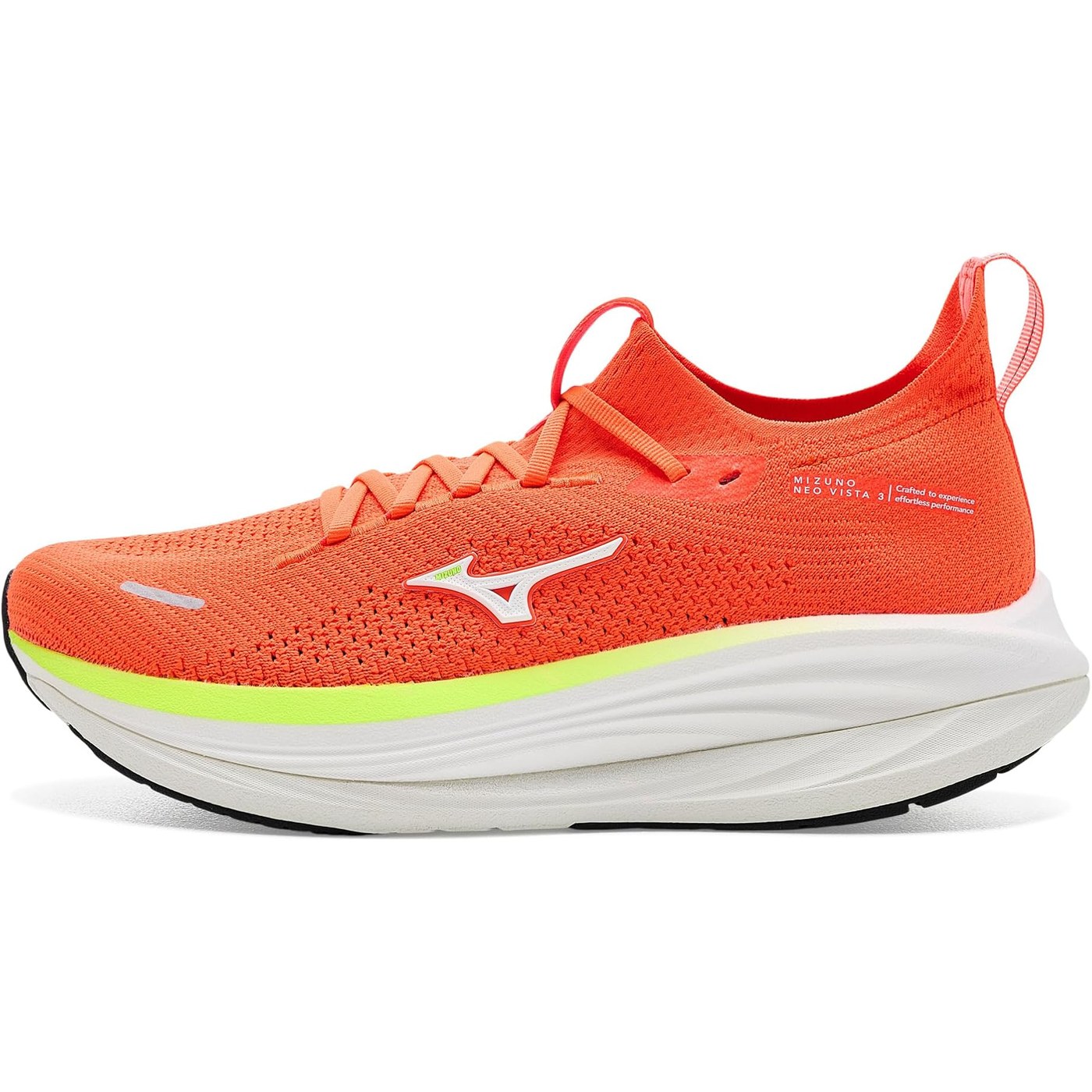
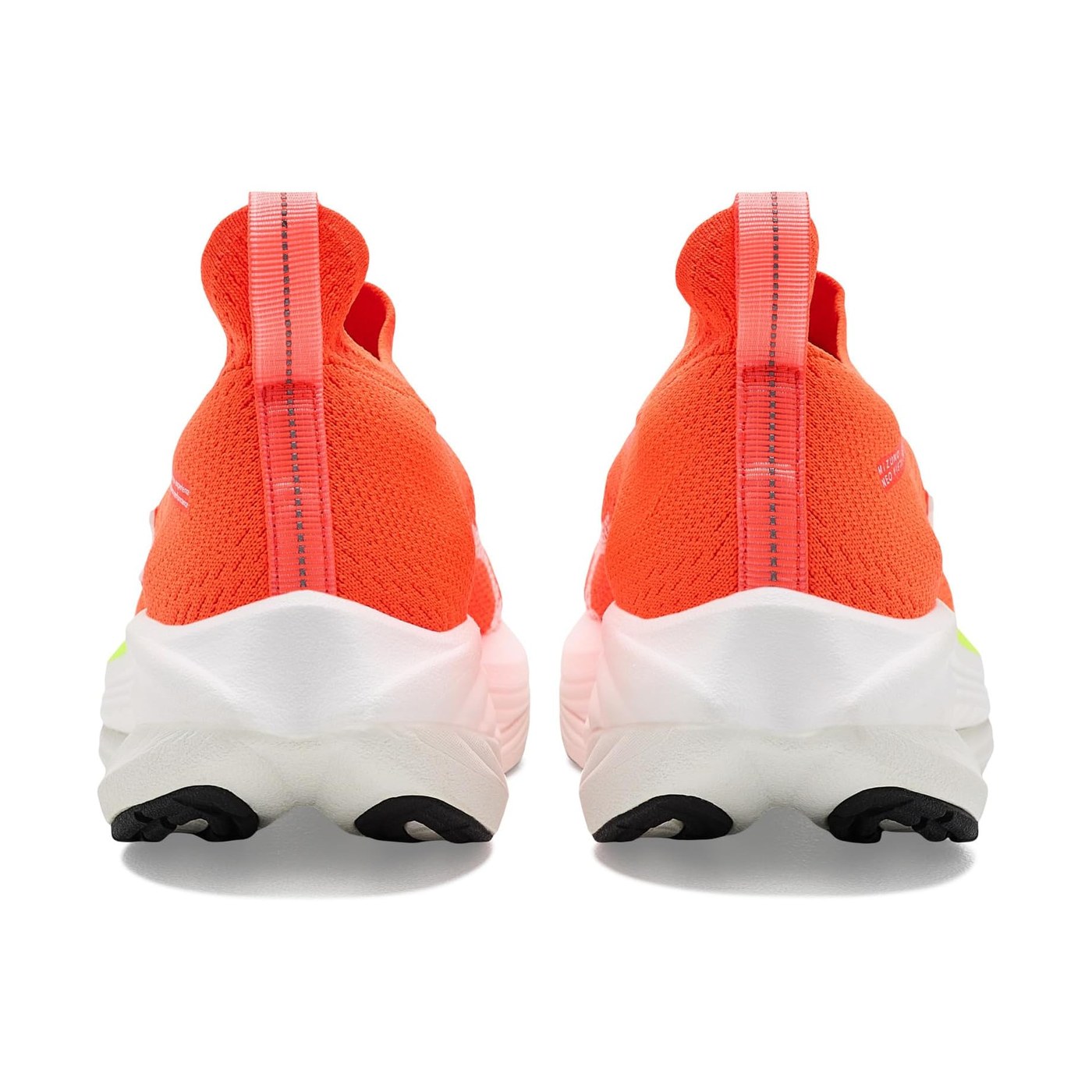
Mizuno claims a 44.5 mm heel stack for the Neo Vista 3. An independent lab measures 48.7 mm, and a physical therapist who tested his own pair gets 50 mm, a full 5.5 mm more than the spec sheet. RunMorph cross-checked three full reviews to understand this unusual gap on a super trainer that also splits its own testers on heel comfort.
The Neo Vista 3 launched on June 20, 2026 and refines the formula that earned the Neo Vista 2 a top-tier rating from a leading US review team: dual-layer Enerzy NXT foam and a new split 3D Wave Plate. All three sources agree on very protective cushioning and a lively ride for such a tall super trainer, but they clearly disagree on the measured stack height and on heel comfort, with one tester reporting painful Achilles pressure that the other two sources never mention.
Who is it for?Runners with narrow to average feet who want a highly protective super trainer for long runs and threshold sessions, not a race-day shoe.
Who should skip it?Runners with wide feet, anyone with sensitive Achilles tendons or a Haglund's deformity, and those looking for a very aggressive plate for short intervals.
Mizuno Neo Vista 3: why review it now?
The Neo Vista 3 was released on June 20, 2026, continuing a line that has changed Mizuno's image in barely three years. The first Neo Vista, launched in 2024, surprised everyone with its playful, bouncy feel, a far cry from the Japanese brand's long-standing reputation for firm shoes. The Neo Vista 2, in 2025, pushed the stack even higher, to the point of losing some of its versatility across paces. This third generation aims for a middle ground: a slightly lower stack, a more structured upper, and a new split 3D Wave Plate that, according to one of the US testers, adds a genuine springboard effect under the midfoot.
RunMorph's advice: if you have a history of Achilles tendinitis or a Haglund's deformity, try the Neo Vista 3 on in a store before buying online, because the heel collar caused problems for one of the three testers we looked at. If you'd rather have a more propulsive carbon-plated super trainer for racing, the Brooks Hyperion Max 4 plays in a different category.
Specs: what Mizuno claims
Brand
Mizuno
Model
Neo Vista 3
Release
June 20, 2026
Type
Super trainer, daily training and long runs with pace surges
Claimed drop
8 mm
Claimed stack
44.5 mm heel, 36.5 mm forefoot
Claimed weight
9.3 oz / 263 g, reference size US M9
Foam
Dual-layer Enerzy NXT, nitrogen-infused TPU on top of an EVA base
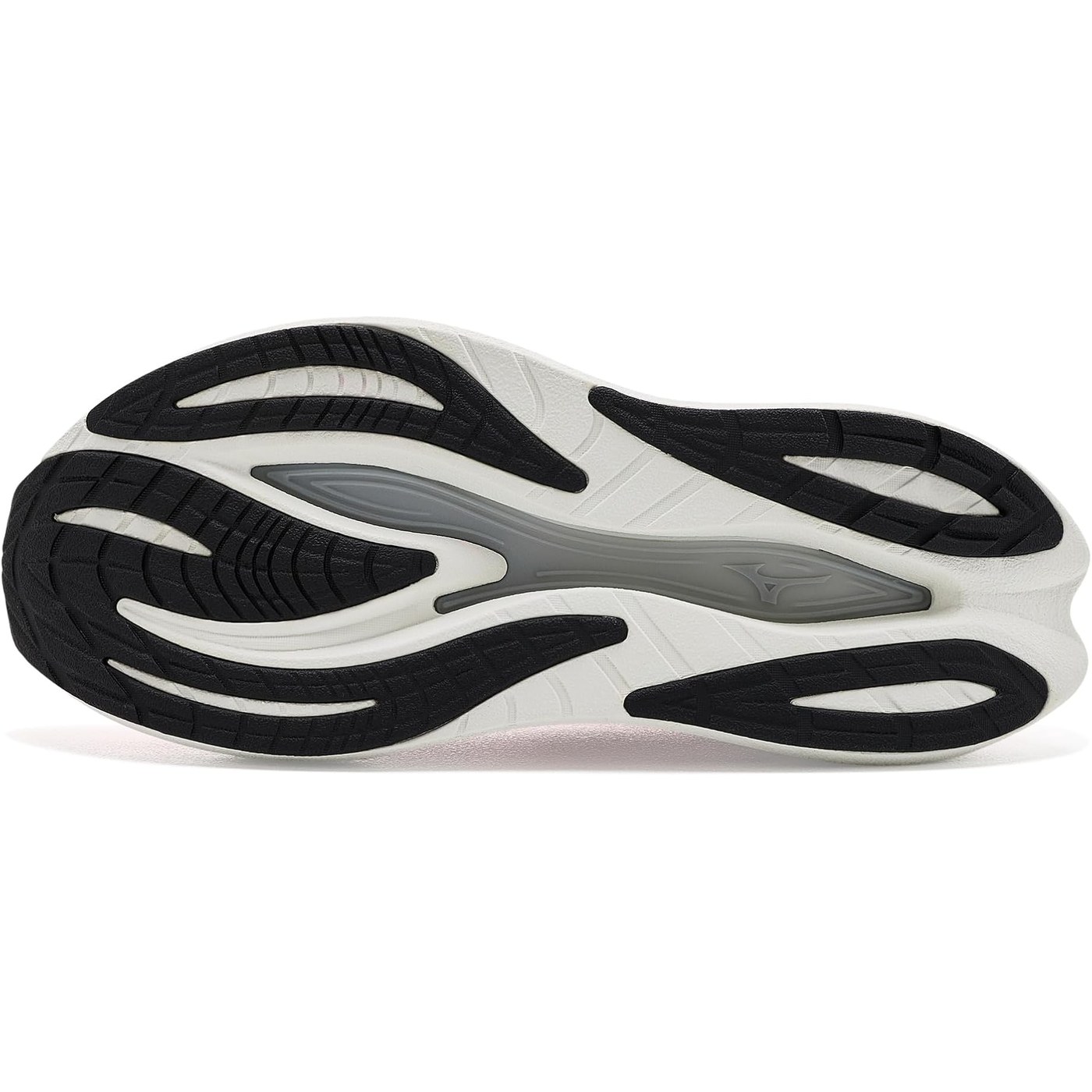
X10 rubber, deep groove best kept to smooth surfaces
Available widths
Standard only, no wide version
Official price
$200 / $199.95 depending on the retailer
Neo Vista 3: Mizuno's claims vs what was measured
This is the most surprising finding RunMorph came across on this model, and it isn't about weight but about the stack height itself. Mizuno and one US review team put the stack at 44.5 mm at the heel and 36.5 mm at the forefoot. An independent lab, which weighs every pair and measures it with calipers following a fixed protocol, gets 48.7 mm at the heel and 40.5 mm at the forefoot on its own pair, 4.2 mm more than claimed. A physical therapist who reviewed the shoe measured 50 mm at the heel and 42 mm at the forefoot by hand, the biggest gap of the three sources.
Weight falls within a tighter range, but the numbers still don't line up: 263 g claimed by Mizuno and confirmed by the US review team in a US M9, 266.2 g measured by the lab on the same reference size, and 272 g recorded by the physical therapist. RunMorph found no official explanation for the stack gap, but the most likely explanation is a difference in where it's measured: some protocols include the removable insole in the total height, others don't. The drop, on the other hand, holds steady: the lab measures 8.2 mm against 8 mm claimed, a negligible gap that all three sources confirm without reservation.
Metric
Claimed (Mizuno / US review team)
Independently measured
Heel stack
44.5 mm
48.7 mm (lab) and 50 mm (physical therapist)
Forefoot stack
36.5 mm
40.5 mm (lab) and 42 mm (physical therapist)
Weight (US 9)
263 g
266.2 g (lab) and 272 g (physical therapist)
Drop
8 mm
8.2 mm measured by the lab, negligible gap
A 4 to 5.5 mm difference in heel height is not a detail: it can tip a shoe from training territory into the same league as the tallest racing super shoes on the market. If stack height is a deal-breaker for you, RunMorph recommends going by the range measured by the two independent sources rather than the official figure.
The Neo Vista 3 keeps the same foam architecture as its predecessor: a softer, bouncier top layer of nitrogen-infused Enerzy NXT sitting on a firmer EVA-based Enerzy NXT layer that provides support and cuts down the modelling-clay feel of earlier versions. The change is in the plate: a new fibreglass and nylon Wave Plate with a three-part split design. The central section curves upward while the medial and lateral sides curve downward, a bit like a small springboard under the midfoot, as one of the US testers describes it.
The physical therapist confirms that this fibreglass plate adds structure to the transition without aggressive propulsion: it mainly stabilises a very tall, very soft platform rather than actively pushing you forward. The lab, for its part, rates energy return at just 6.2/10, a figure that confirms the Neo Vista 3 is first and foremost a comfort and protection shoe, not a running-economy machine.
Fit: a real point of friction between the three sources
This is where the three reviews diverge most clearly, and RunMorph chooses to report it in full rather than smooth over the contradiction. Two testers from the US review team describe a snug fit that becomes comfortable once broken in, with a one-piece knit upper that wraps the foot well, and none of the team's three testers flagged any particular issue.
The physical therapist tells a very different story. He wears his usual size with no length issues, but reports a thick piece of padding at the top of the heel that presses directly on his Achilles tendon and its insertion from the very first run, a discomfort that came back on every run and that no lacing adjustment could fix. He gives the fit a C+, well below every other criterion he rates. His outlet does specify, however, in an editor's note attached to the review, that other team members without a Haglund's deformity or Achilles sensitivity had no similar problem when trying the same pair.
The lab, whose protocol doesn't specifically test Achilles comfort, still records an excellent 9.7/10 for true-to-size fit, with length and forefoot width very close to standard sizing. The general consensus: the Neo Vista 3 fits true to size and suits narrow to average feet well, but the heel collar design calls for a try-on first for anyone who has had Achilles problems before.
On the road: what the three sources say
RunMorph read three independent sources in full before making a call: an independent lab protocol with hard measurements and systematic weighing, a cross-tested field review signed by three testers from a US review team, and a biomechanics-focused review by a physical therapist with 35 miles logged at the time of publication.
All three sources agree on the essentials: the dual-layer Enerzy NXT foam delivers very protective cushioning, especially at the heel, and the overall ride stays lively despite the impressive stack height. The US review team describes a "poppy", energetic feel that sets this version apart from the previous one. The physical therapist confirms a "bouncy but balanced" ride, better balanced than version 2, which some found too mushy.
The disagreement is about the added value of this third generation. One of the US testers feels the update is too minor to justify the full $200 price against a discounted Neo Vista 2, which drags his overall grade down to a B despite excellent design and performance marks. A colleague in the same review takes the opposite view outright: for her, the bouncier foam and the new plate are a real step forward at the same price. RunMorph reports this split within the same review team rather than forcing an artificial verdict.
Long runs at moderate pace: this is the unanimous sweet spot across all three sources. The lab rates it 7.5/10 for long runs, and the physical therapist confirms the foam keeps its protection even after several dozen kilometres.
Threshold and tempo sessions: the physical therapist explicitly signs off on this use, noting that the fibreglass plate adds enough structure to hold sustained paces without the shoe feeling out of its depth.
Easy daily training: the lab gives it 6.7/10, a decent but unremarkable score, judging the shoe a bit heavy and not very responsive for the most relaxed runs under its lab protocol.
Marathon at a recreational pace: the physical therapist believes some recreational runners could use the Neo Vista 3 as a race-day alternative if they don't have the budget for a real carbon super shoe, a use the lab partly confirms with a 7.1/10 score.
Short intervals and 5K to 10K: the acknowledged weak spot. The lab gives it just 6.3/10 for this use, judging the shoe too heavy and not responsive enough for the fastest efforts, despite a rocker that helps the transition a little.
First red flag: the heel collar and the Achilles tendon
Already covered above, this point deserves to be upgraded from a review anecdote to a genuine red flag. The thick padding at the top rear of the heel, designed to add comfort and structure, caused real and lasting discomfort for the physical therapist throughout his test. It isn't a universal flaw: his outlet notes that other testers without Achilles sensitivity noticed nothing similar, and neither the US review team nor the lab report the issue. But the warning is still worth heeding: if you have a history of Achilles tendinitis or a Haglund's deformity, try the pair on in a store before ordering online.
Second red flag: not a shoe for wide feet
One of the US testers is explicit on this point: with a regular-plus foot, he already feels close to the edges of the platform, despite the stretchy knit. And there is no wide version of this model, a choice that confirms the deliberately narrow positioning of the Neo Vista 3. The forefoot width measured by the lab is nonetheless very close to standard sizing, which points to a snug but not abnormally narrow fit for an average-width foot.
Pros and cons
Pros
Very protective cushioning confirmed by all three sources, especially at the heel
New 3D Wave Plate adds pop without sacrificing perceived stability
Excellent true-to-size fit (9.7/10 from the lab), go with your usual size
Good durability noted by the physical therapist after 35 miles, no noticeable wear
Price holds at $200 despite the plate upgrades
Cons
Stack measured up to 5.5 mm higher than the official claim, depending on the source
Heel collar caused real Achilles discomfort for one tester
Not recommended for wide feet, no wide version available
Deep outsole groove best kept to smooth surfaces, road and track only
Update judged minor for the price by part of the US review team
Neo Vista 3 vs its predecessor: is the upgrade worth it?
Criterion
Neo Vista 2
Neo Vista 3
Stack
Higher, sometimes found too mushy by the physical therapist
Slightly lower according to Mizuno, but measured higher than version 2 by two independent sources
Plate
Classic design, less structure
Split 3D Wave Plate, springboard effect under the midfoot
Fit
Length issue reported by several US testers
Length issue fixed, but new Achilles discomfort for one tester
Positioning
Top-tier rating from the US review team, the benchmark in its segment
A-tier rating, a welcome update but judged incremental by part of the team
Who should move to version 3: runners who gave up on the Neo Vista 2 because it ran long, an issue fixed on the new version. Who can stick with the old one: anyone who already owns a Neo Vista 2 in good shape and was never bothered by its fit, since the performance gain remains incremental according to some of the testers.
Neo Vista 3 vs Asics Superblast 3 and Hoka Skyward X 2
Model
Measured stack
Plate
Price
Mizuno Neo Vista 3
48.7-50 mm heel
Fibreglass and nylon, split 3D
$200
Asics Superblast 3
Very high, softer according to the physical therapist
No plate
Not specified
Hoka Skyward X 2
Very high as well
H-shaped carbon plate
Not specified
The physical therapist is blunt about the Asics Superblast 3 comparison: both models are among the pioneers of extreme-stack super trainers, but the Superblast 3 is clearly softer, almost unstable in his view, while the Neo Vista 3 offers a more balanced ride thanks to its plate. The fit is also very different: more traditional and roomy on the Asics, snugger and more wrapping on the Mizuno. Against the Hoka Skyward X 2, the lab clearly sides with the Hoka for long runs beyond 20 km, thanks to a carbon plate judged more propulsive and cushioning that holds up better over distance, while still crediting the Neo Vista 3 with a more natural, more stable ride for daily training.
How to fit it into your training
In a road rotation of 3 or 4 pairs, the Neo Vista 3 takes the long-run and threshold-session slot, where you want very protective cushioning without giving up on responsiveness altogether. It can also serve as an active recovery shoe after a hard race, thanks to the impact absorption confirmed by the lab. Keep a lighter pair for short intervals, though: according to all three sources, the Neo Vista 3 isn't built for that.
To build a marathon or half-marathon block around this super trainer, the RunMorph training plans with a progressive long-run block are a good fit: use this pair for your high-volume weeks, and keep a lighter shoe for the pure speed sessions of the cycle.
Durability and cost per kilometre: what it really costs
The physical therapist reports 35 miles with no noticeable wear on the X10 rubber and no cracking in the Enerzy NXT foam, which bodes well for longevity on a super trainer with this much stack. None of the three sources gives a final mileage figure, but RunMorph uses a conservative estimate of 550 km, in line with the durability seen over the first miles and with the model's training-first rather than racing positioning.
At $200 and an estimated 550 km, the Neo Vista 3 works out to about €0.34 per kilometre at the current exchange rate, a competitive figure for a super trainer with dual-layer foam and a structuring plate. It's one of the strongest arguments for this shoe against rivals that sometimes cost more for a comparable positioning.
The Mizuno Neo Vista 3 confirms that the Japanese brand has changed its game for good since 2024. Cushioning remains the unanimous strong point across all three sources, and the new 3D Wave Plate adds a real dose of pop without costing the shoe its stability. It's a coherent super trainer for anyone looking to protect their legs on long runs and threshold sessions.
The stack gap measured by two independent sources, up to 5.5 mm more than the official claim, remains the most surprising finding of this review and is worth keeping in mind if stack height is a deal-breaker for you. The Achilles problem reported by one tester, even though the other two sources don't confirm it, justifies a try-on in store before buying for runners prone to this kind of sensitivity.
For $200, you get a well-built super trainer, with clear room for improvement on heel collar comfort. It's a solid choice for the right runner profile, but not a no-brainer for everyone.
7.5/10.
Key takeaways for your training
The real stack sits between 48.7 and 50 mm at the heel, against 44.5 mm claimed: check this gap if stack height matters to you.
Go with your usual size, the lab rates its true-to-size fit as excellent.
Try it on in store if you have a history of Achilles issues: the heel collar caused real discomfort for one tester.
Skip it if you have wide feet: there's no wide version and the fit stays snug.
Count on about 550 km before replacing it, for a cost of about €0.34 per kilometre.
RunMorph Coach verdict
As a coach, I see the Neo Vista 3 as an interesting option for runners who pile up volume on long runs and threshold sessions and need very protective cushioning without giving up on responsiveness entirely. I still urge caution for anyone who has had Achilles trouble: the physical therapist's feedback on the heel collar is no anecdote, even if it doesn't seem universal. I also recommend trying the pair on in store if your feet are wide, as this shoe is clearly designed for narrow to average feet. The overall score of 7.5/10 rewards real cushioning and responsiveness, without ignoring the stack gap measured by two independent sources or the red flag on heel comfort.
FAQ
What is the real stack height of the Mizuno Neo Vista 3?
Mizuno claims 44.5 mm at the heel, but two independent sources measure 48.7 mm and 50 mm, a gap of 4.2 to 5.5 mm depending on the source.
How much does the Neo Vista 3 really weigh?
Mizuno claims 263 g in a US M9, confirmed by one US review team. An independent lab measures 266.2 g and a physical therapist 272 g on the same reference size.
Is the Neo Vista 3 good for wide feet?
No, there's no wide version and a tester with a regular-plus foot says he already feels close to the edges of the platform, despite the stretchy knit.
How many kilometres can you expect from a pair?
No source gives a final figure, but the physical therapist found no wear after 35 miles. RunMorph uses a conservative estimate of 550 km, for a cost of about €0.34 per kilometre.