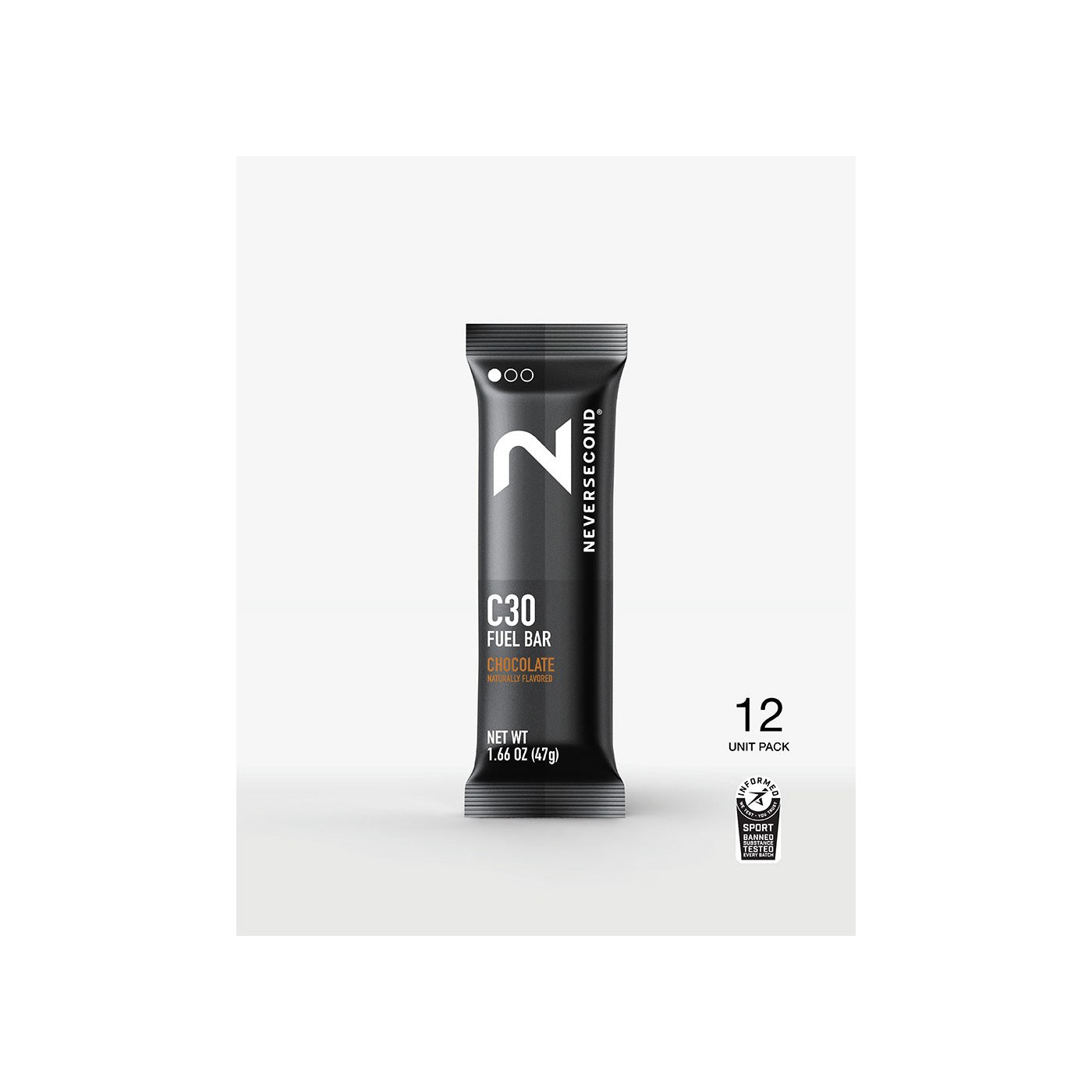
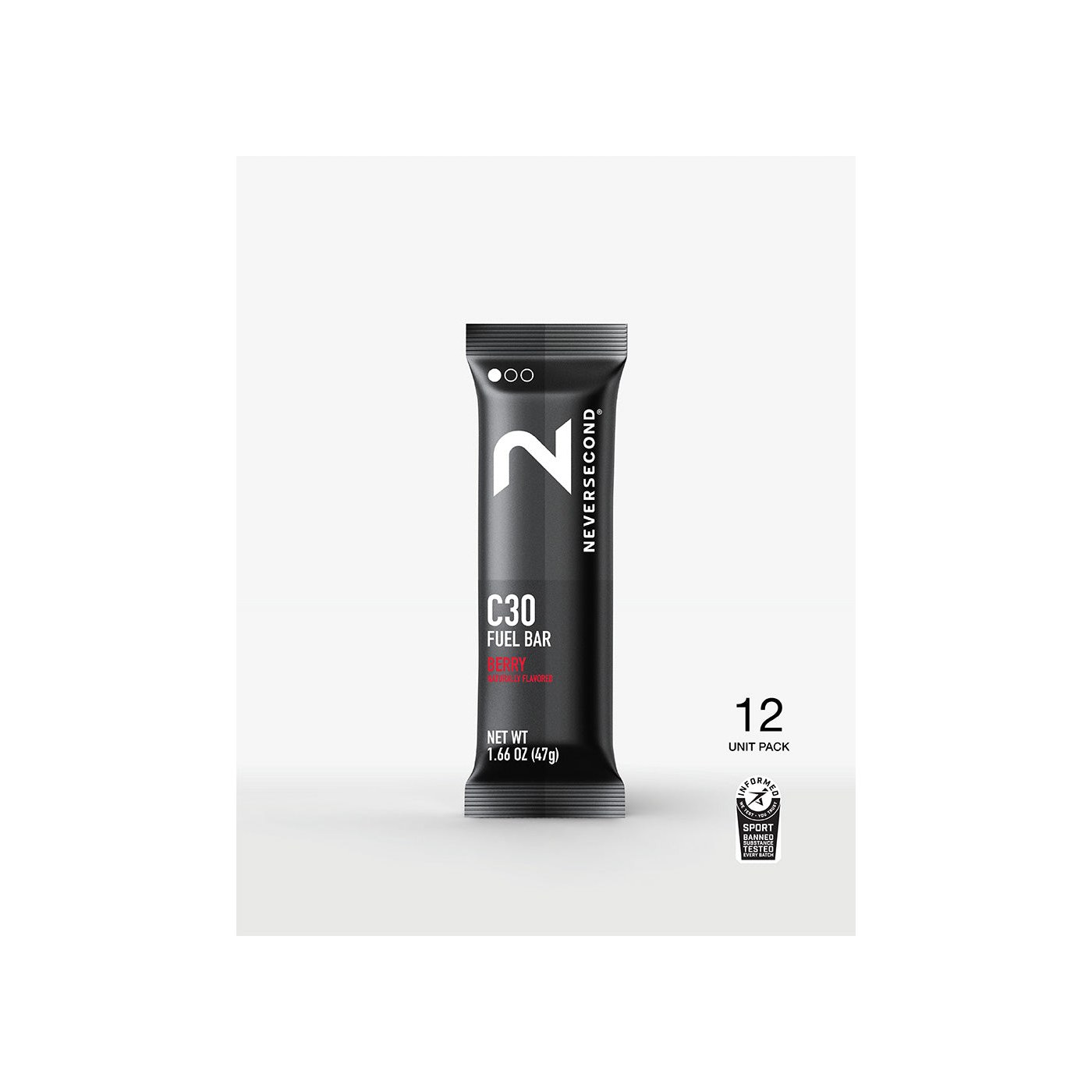
Neversecond built its entire reputation on a single product, the C30 Energy Gel, and on a naming system meant to make sports nutrition simple: every product carries a letter for its main macronutrient and a number for the amount in grams. C30 means 30 grams of carbs, whether the product is a gel, a drink or now a bar. The Swedish brand has just extended that system to a solid format with the C30 Fuel Bar. On paper, the equation stays simple: same C30, same 30 grams of carbs, same 2:1 glucose/fructose ratio as the gel RunMorph has already tested. Yet one gap jumps off the label: sodium drops from 200 mg in the gel to just 30 mg in the bar. RunMorph compared the official nutrition facts and read the available tests to work out what this change of format really changes on the run.
Neversecond: from science-led gels to a solid bar
Neversecond made its name in the ultra-trail world with an openly science-led approach: a carb ratio backed by research on gut absorption, sodium dosed to the milligram, and a modular system called C-Series that in theory lets you combine gels, drinks and now bars to hit an hourly carb target without thinking about each product on its own. The brand, which sponsors athletes such as Jim Walmsley and Katie Schide, built its reputation almost entirely on its C30 gel, already tested by RunMorph, before widening its range.
The C30 Fuel Bar answers a real need for ultra-distance runners: after several hours of effort, the liquid texture and sweet taste of gels become hard to get down, something countless ultra runners have described. So Neversecond offers a chewable alternative that targets the same absorption speed as a gel, rather than a classic energy bar designed for hiking or snacking.
Formula: the 2:1 ratio and a bar half as sweet as the gel
The 2:1 glucose to fructose ratio is not a standalone marketing line at Neversecond: it rests on a well documented gut absorption mechanism. The two sugars use different transporters, which lets the body take in more carbs per hour than with a single source. It is the same ratio as in the C30 gel, and Neversecond presents it as the common thread running through its whole C-Series range.
The bar's ingredient list (oat flour, dates, glucose syrup, coconut oil, fructose, glycerine, plus cocoa powder for the chocolate flavour) reveals a detail few product pages point out: of the 30 grams of carbs claimed, only 14 grams are listed as sugars on the nutrition label. The difference comes from the oat flour and glycerine, which provide complex carbs that don't count as sugars. In practice, gram for gram the bar is half as sweet as the C30 gel, where almost all of the 30 grams of carbs come from glucose syrup and fructose in liquid solution. That is a plausible explanation for the not-too-sweet taste reported in the available field feedback, the exact opposite of many rival energy bars.
Field test: taste, texture and digestion in solid form
At the time of writing, RunMorph has found no French-language field test dedicated to this specific bar among its usual sources (Lepape-Info, u-Trail, Wanarun, Running-Test, Le Comparatif du Trail): French press coverage is still focused on the brand's C30 gel. We flag this rather than hide it, in line with RunMorph's editorial rule on recent or niche products. Two real sources were read in full for this section: a detailed English-language field test and a verified customer review from a specialist retailer, both used internally and never named.
The most thorough field test we found covered several real situations: a four-hour fasted long run with two bars and one gel, an indoor interval session, a post-run snack and an emergency use after two hours of running in temperatures above 30 degrees. On the chocolate version, the tester describes a taste close to regular milk chocolate with a hint of date, a pleasant surprise for someone expecting an overly sweet bar. The texture, soft and easy to chew, delivers in both heat and cool weather, without sticking to the teeth or hardening. No digestive trouble was reported across all the runs tested, which backs up Neversecond's stated goal of digestion as fast as a gel despite the solid format. One drawback: without water on hand, small bits of chocolate can stay stuck to your teeth, a minor but real annoyance mid-race.
A verified customer review from a US specialist running retailer, posted after an ultra run in hot conditions, describes a bar that tastes good and is easy to swallow mid-effort, with no mention of digestive issues. This feedback lines up with the detailed field test on the two key points: approachable taste and trouble-free digestion. That said, neither review covers high-intensity use, where a solid format is generally less suited than a liquid gel.
RunMorph's tip: on a long run of more than three hours, alternating the C30 gel and bar lets you vary textures without changing flavour or carb dosing. Just keep an eye on your total sodium intake for the session, which comes mostly from the gel rather than the bar.
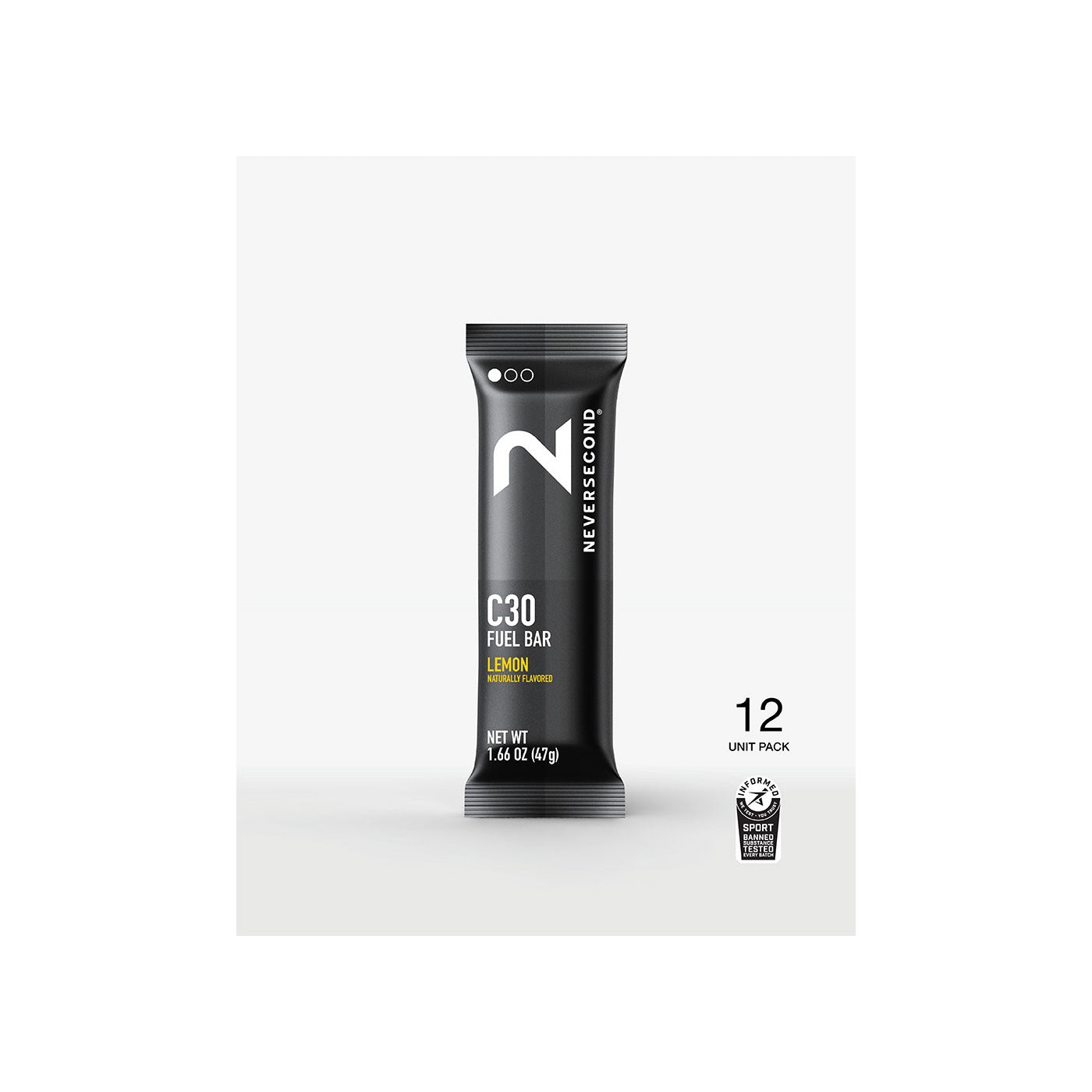
Neversecond C30 Fuel Bar vs C30 Energy Gel: when to pick the bar over the gel
Both products share the C30 name and the same 30 grams of carbs at a 2:1 ratio, but they don't meet the same need. The table below sums up the differences based on Neversecond's official product sheets.
| Criterion | C30 Fuel Bar | C30 Energy Gel |
|---|
| Format | Solid bar, 47 g | Liquid gel, 60 ml |
| Carbohydrates | 30 g | 30 g |
| Sodium | 30 mg | 200 mg |
| Energy | 180 kcal | 120 kcal |
| Water needed | Recommended to rinse your mouth | No, liquid texture |
| Best use | Long runs, alternating with the gel | Intervals, steep climbs, quick intake |
| Price | €3.00 each | €3.50 each |
The gel stays the default choice when intensity climbs or your hands are already busy with poles: it goes down in seconds with no chewing and on its own covers a good chunk of an hour's sodium needs. The bar earns its place on runs over two hours at a moderate pace, when gel fatigue sets in and something to chew feels like a meal rather than fuel. Either way, a heavy sweater will need a dedicated sodium source on top (salt tablets or an electrolyte drink): the bar alone only provides 30 mg, far from the 300 to 700 mg per hour recommended for ultra distances in hot weather.
Neversecond C30 Fuel Bar vs Maurten Solid 160: head to head
In the premium energy bar segment, the closest benchmark is the Maurten Solid 160, already tested by RunMorph.
| Criterion | Neversecond C30 Fuel Bar | Maurten Solid 160 |
|---|
| Weight | 47 g | 55 g |
| Energy | 180 kcal | 202 kcal |
| Carbohydrates | 30 g, of which 14 g sugars | 40 g, of which 17.2 g sugars |
| Sodium | 30 mg | about 244 mg (0.61 g salt) |
| Price | €3.00 each | €3.45 to €3.50 each |
The Maurten Solid 160 gives you 10 more grams of carbs and nearly 200 mg more sodium per bar, for a barely higher price: judged purely on intake per euro spent, it wins. The C30 Fuel Bar fights on different ground: consistency with a nutrition system already built around the C30 gel, and a texture that the available feedback rates as lighter. The simple takeaway: if you already run on Neversecond products, the C30 bar keeps things simple; if you want the most carbs and sodium per bar, go for the Maurten Solid 160.
Our field verdict: who is it for?
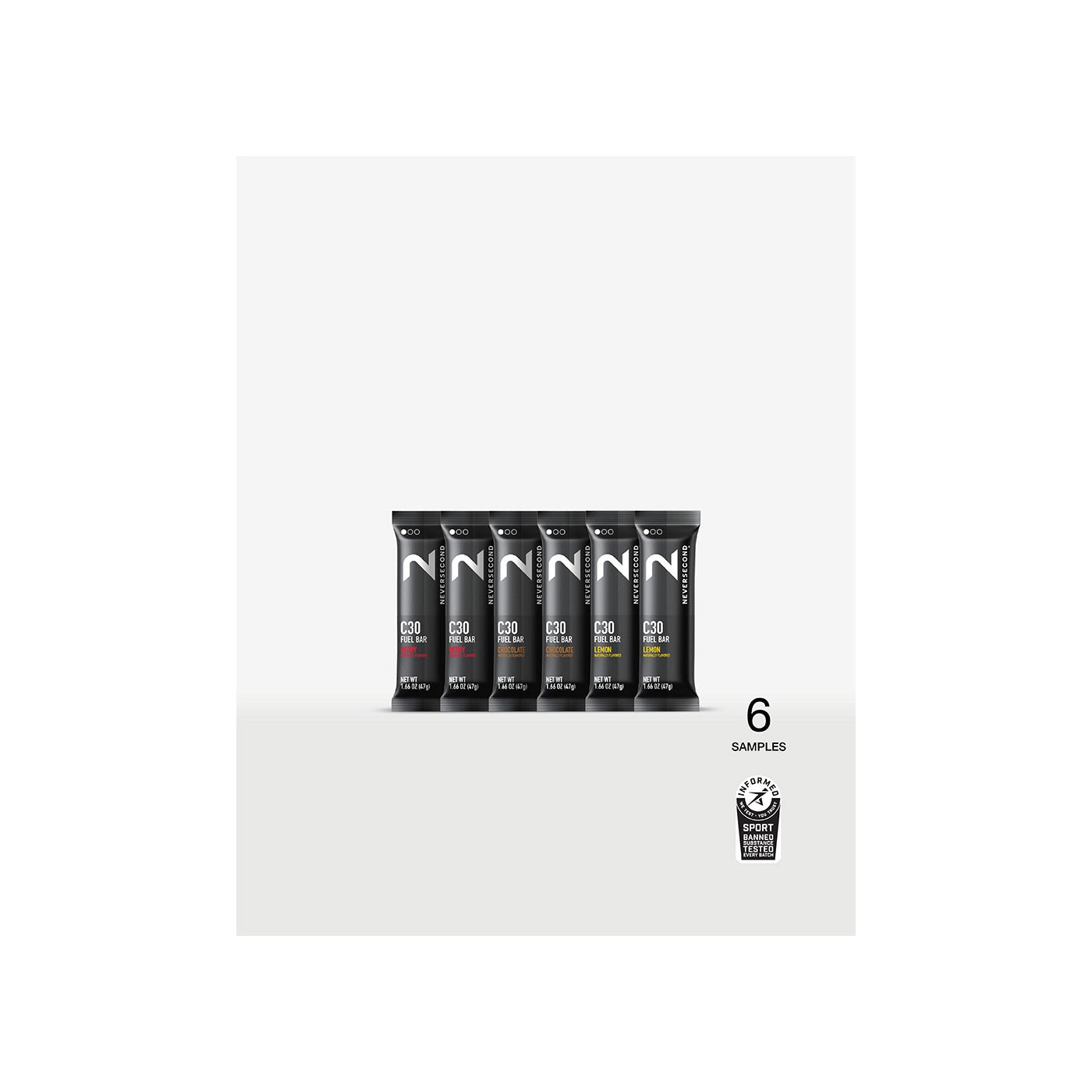
The Neversecond C30 Fuel Bar is aimed first at ultra-trail and long-run runners who already use the C30 gel and want a chewable alternative to break the flavour monotony without changing their dosing system. It also suits runners who struggle to digest gels on efforts over two hours, as long as you accept topping up your sodium with another product. It makes less sense for high-intensity work, intervals or steep climbs, where the gel's liquid format is still quicker to take.
This bar belongs in a long trail or ultra build rather than a 10K or half marathon plan. To structure your long runs and test your nutrition strategy in real conditions, head to the RunMorph trail training plan, which includes progressive long runs suited to this kind of fuelling.
RunMorph verdict
The Neversecond C30 Fuel Bar delivers on its promise of fast digestion in a solid format, with a texture that stays pleasant in both heat and cold and a taste that several independent reviews rate as less sweet than the average energy bar. It is a well executed product at its core. Its score is held back, though, by two concrete issues: a near-zero sodium content that partly undermines the pitch of a C-Series system consistent with the gel of the same name, and a €3.00 price tag that puts it at the top of the market with no obvious technical justification on that point. RunMorph score: 7.2/10. A very good way to add variety if you are already sold on the Neversecond ecosystem, but a harder sell as a first purchase against a Maurten Solid 160 that packs more sodium for a similar price.