The Polar Pacer is four years old. Yet it is still sitting on the shelves of several French retailers in 2026, next to a newer Pacer Pro and a more advanced Ignite 3. RunMorph went back through the real-world tests published on this entry-level watch to find out whether it still deserves a spot in a running bag, or whether it is nothing more than leftover stock sold at a discount.
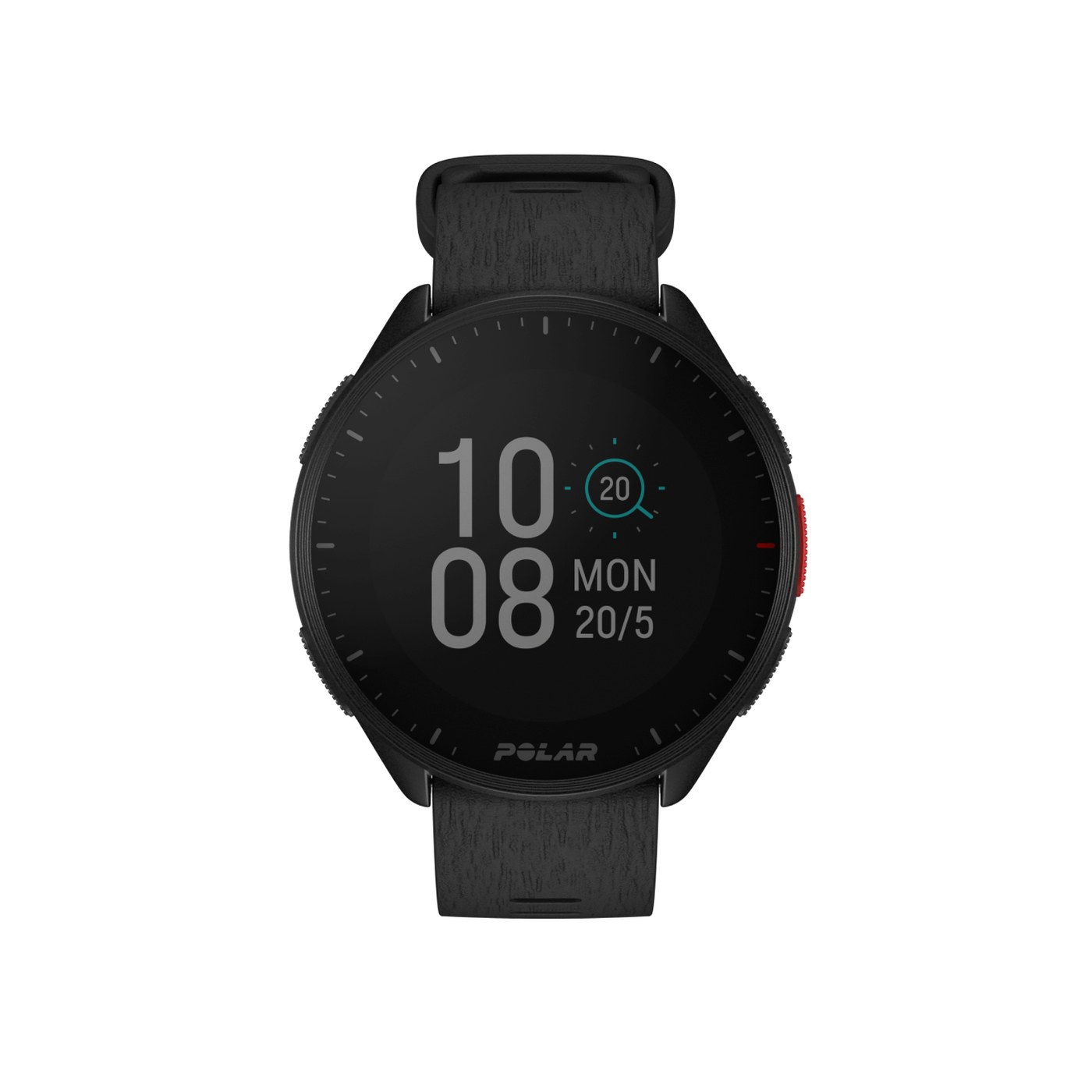
© Polar, official photo used for editorial purposes
Polar Pacer: Polar's historic entry point into running
Launched in 2022 alongside the Pacer Pro, the Polar Pacer aimed for something simple: deliver the essentials of a running watch without the advanced features reserved for higher-end models. Four years on, it remains on the shelves of several French retailers, often sold below its launch price. Its positioning has not changed: a general-purpose running watch, built for easy runs, interval sessions and progress tracking, with no outdoor ambitions or heavy multisport focus.
RunMorph's advice: before buying a Pacer in 2026, always compare its street price to that of the Polar Pacer Pro. Once the gap drops under 80 euros, the Pro becomes the better choice almost every time.
© Polar, official photo used for editorial purposes
Who is the Polar Pacer made for?
The beginner runner structuring their first sessions
FitSpark suggests a tailored session every day, and the running performance test gives a first fitness estimate with no extra gear needed. If you are discovering structured training, it is a solid, legible base on a screen that stays readable in bright sunlight.
The regular runner chasing a 10K or a half marathon
Training Load Pro and Nightly Recharge give a decent read on training load and recovery. The limits show up mainly as you approach a specific goal, when the lack of mapping and barometric elevation leaves you without fine-grained bearings on an unfamiliar route.
The demanding trail runner or triathlete
With no barometer, no compass and no form of navigation, the Pacer is not built to leave marked trails. For triathlon, the 130 sport profiles cover the transition well, but the Pacer Pro or a Vantage add tools that this use eventually demands.
GPS accuracy and heart rate reliability: what the real tests show
Clubic measured a GPS chip that struggles in dense urban areas or heavy tree cover: total distances stay accurate, but the track can drift from the real route. An independent measurement comparing the Pacer to a reference watch confirmed very close distances on a one-hour run, with an identical average pace, even though top speed and instant cadence proved less reliable. Both readings agree on the essentials: total distance is trustworthy, second-by-second detail far less so.
The Precision Prime optical heart rate sensor earns a clear thumbs-up from Clubic, which rates it close to a Polar H7 chest strap with only rare outlier spikes. A separate independent measurement nuances that finding: accurate at steady pace, on a treadmill and on a rowing machine, but prone to aberrant maximum heart rate spikes once intensity climbs, a gap that narrows noticeably with an external chest strap. At RunMorph, this divergence reads as a classic trait of entry-level optical sensors: reliable at threshold, less solid during short intervals.
Mapping and navigation: the absence that weighs on it
No mapping, no track-back, no off-course alert. This is the most consistent point across the tests reviewed: every independent source flags this limit, reserved for the Pacer Pro and higher ranges. For running on familiar or urban routes, the impact stays minor. For exploring an unfamiliar trail, the Pacer forces you to carry a phone or memorize the route beforehand.
Training and recovery metrics
FitSpark, Nightly Recharge, Training Load Pro and the running performance test add up to a complete suite for a watch at this price. Clubic did, however, test the new walking VO2max test and found it unreliable: the reading dropped to 23, far below the 38 to 44 typically measured for a comparable profile, while the running test proved noticeably more accurate. At RunMorph, the recommendation is simple: always favor the running performance test over the walking one to estimate VO2max on this watch.
© Polar, official photo used for editorial purposes
Real battery life: the gap with the spec sheet
Polar claims 35 hours in GPS mode, 100 hours in Ultra mode and seven days as a connected watch. Two independent real-world tests agree on a noticeably lower figure in regular use: around five days, with a marked drop at night due to sleep tracking, or 15 to 20% of battery lost per day according to one independent measurement. That same source rates it as less long-lasting than direct rivals sold at the same price, such as the Garmin Forerunner 55 or the Coros Pace 2. Battery life in pure GPS mode, on the other hand, comes closer to the claimed figures during occasional use.
Comfort and build quality
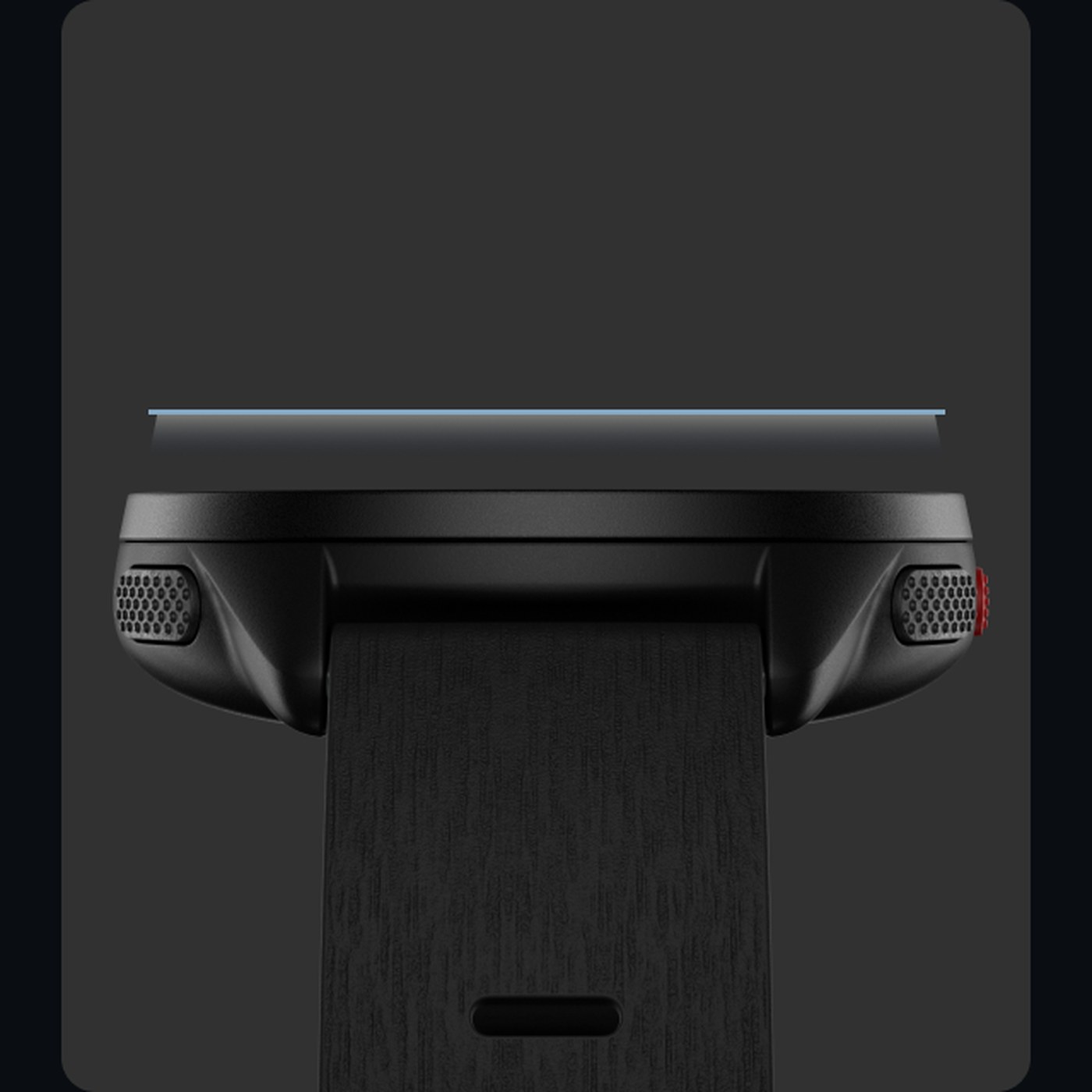
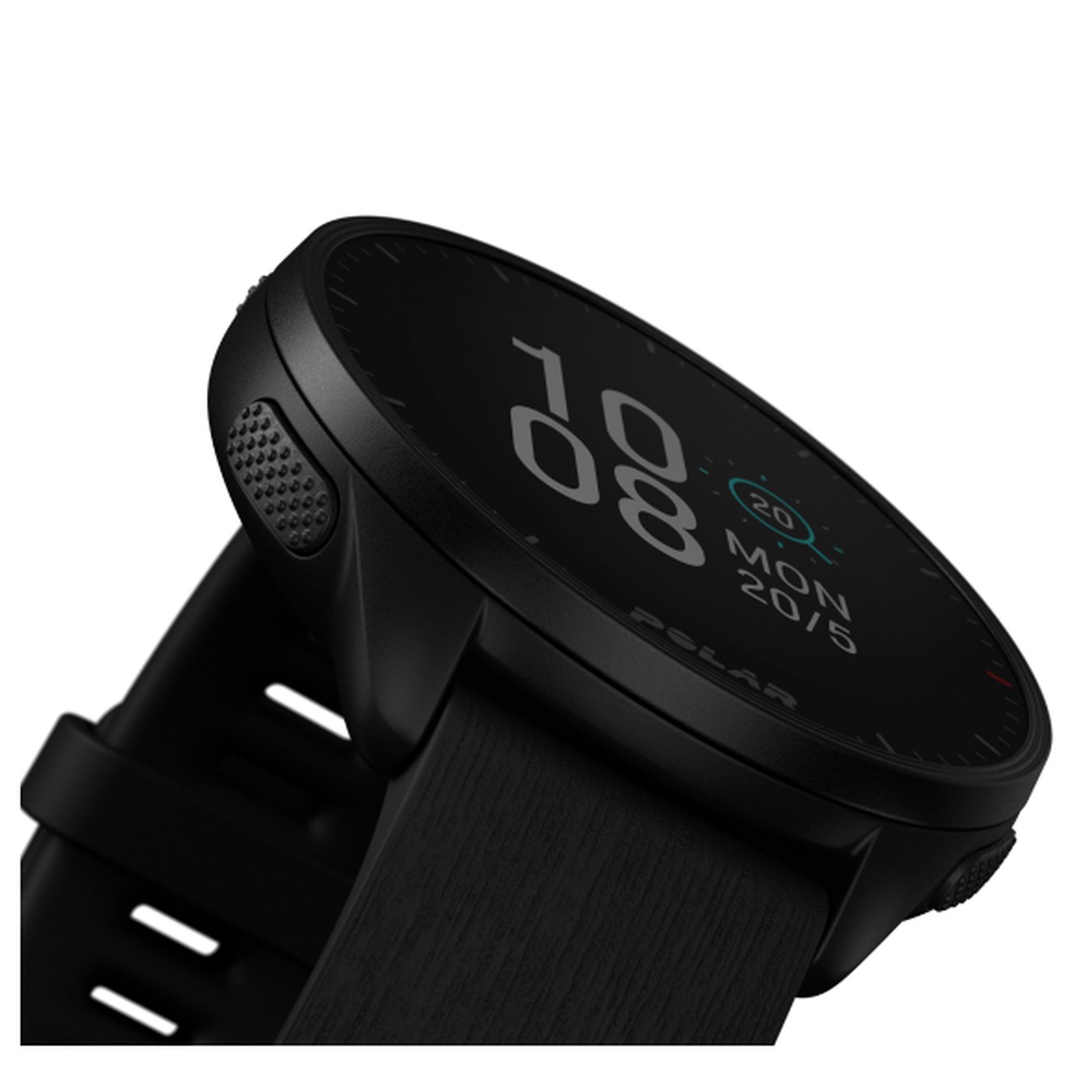
With its 40 g and 45 mm case, the Pacer ranks among the lightest running watches in its category. Testers agree on this point: worn on the wrist, it disappears, including during sleep. The black bezel around the MIP screen, on the other hand, comes up repeatedly as the most-cited aesthetic flaw, shrinking the usable display area relative to the case's actual size.
© Polar, official photo used for editorial purposes
Pros
- 40 g, among the lightest in its category
- Reliable optical heart rate at steady pace
- Complete training suite for the price (FitSpark, Training Load Pro)
- Street price often under 180 € in 2026
- 130 sport profiles including triathlon
Cons
- No mapping or navigation
- No barometer, no compass, no SpO2
- Real battery life around 5 days versus 7 claimed
- Walking VO2max test unreliable
- Thick screen bezel that reduces usable display area
Polar Pacer vs Coros Pace 2: the comparison
Launched at almost the same price, both watches target the same runner. The Coros Pace 2 is 11 g lighter and claims a more generous battery life, but shares with the Pacer the lack of mapping and multi-band GPS.
| Criterion | Polar Pacer | Coros Pace 2 |
|---|
| Weight | 40 g | 29 g |
| GNSS | GPS/GLONASS/Galileo/QZSS single frequency | GPS single frequency |
| Claimed GPS battery life | 35 h | 30 h |
| Mapping | No | No |
| Advanced metrics | FitSpark, Training Load Pro | Training Hub, EvoLab |
| Street price 2026 | 130 to 180 € | 129 to 169 € |
In practice, the two watches cancel each other out on the essentials. At RunMorph, the choice mostly comes down to preferred software ecosystem: Polar Flow for a more structured training follow-up, EvoLab for a more raw-data-oriented approach.
© Polar, official photo used for editorial purposes
Against the Pacer Pro: what do the extra 100 € actually buy you?
The Polar Pacer Pro adds a barometer, a compass, running power measured at the wrist, track navigation and a sturdier steel case, for just 41 g. Its launch price was 299 €, but the gap seen in stores often falls under 100 € in 2026. At that level, at RunMorph, the Pro becomes the default choice as soon as budget allows: it fixes nearly every limit found on the base Pacer, without giving up weight or battery life.
How to fit it into your RunMorph training plan
The Polar Pacer suits a 10K or half-marathon build-up on familiar routes, where tracking training load matters more than navigation. Pair it with the RunMorph 10K plan to make full use of Training Load Pro and Nightly Recharge over a complete training cycle.
RunMorph verdict
The Polar Pacer does what it promises: tracking a running training plan with lightness and no complication, at a price that has dropped noticeably since launch. It does, however, pay for its age with gaps that feel increasingly glaring next to newer rivals: no mapping, no SpO2, no multi-band GPS, and real battery life that does not keep the seven-day promise. Against its own Pacer Pro, the price gap seen in 2026 no longer really justifies settling for the base version. 6.8/10: a good pick only if the price drops clearly below that of the Pro.