On paper, the Polar Pacer Pro has little new to sell in 2026: launched in 2022, no AMOLED screen, no dual-frequency GPS, not a trace of color maps. And yet, at 41 grams on the wrist and under €300 (often far less in 2026), it remains one of the watches coaches recommend most to runners who care more about structured training than about tech showmanship.
Polar Pacer Pro Review: 41 g of Structured Training Under €300
8/10
- Just 41 g: one of the lightest GPS watches on the market
- Very complete Polar Flow software suite (Training Load Pro, Recovery Pro, FitSpark)
- Precision Prime optical heart rate sensor, reliable on easy aerobic runs
- No full maps, only breadcrumb and Komoot turn-by-turn navigation
The essentials in 3 sentences
The Polar Pacer Pro is an ultralight GPS watch (41 g) built for structured training, not for showing off hardware. It bets on Polar's software ecosystem (Training Load Pro, Recovery Pro, FitSpark) rather than on the screen or maps, with comfortable battery life of 35 to 100 hours depending on the mode. The trade-off works as long as you accept the lack of full maps and dual-frequency GPS, two limits that weigh more and more against the 2026 newcomers.
8
/ 10 · RunMorph overall score
Who is it for?The runner who wants serious training guidance (Training Load, Recovery Pro) in an ultralight watch, without paying for an AMOLED screen or maps they will never use.
Who should skip it?The trail runner who navigates unfamiliar terrain with no cell signal or paper map, or the runner who wants a bright screen and state-of-the-art multi-band GPS accuracy.
Polar Pacer Pro: the watch that bet against the market
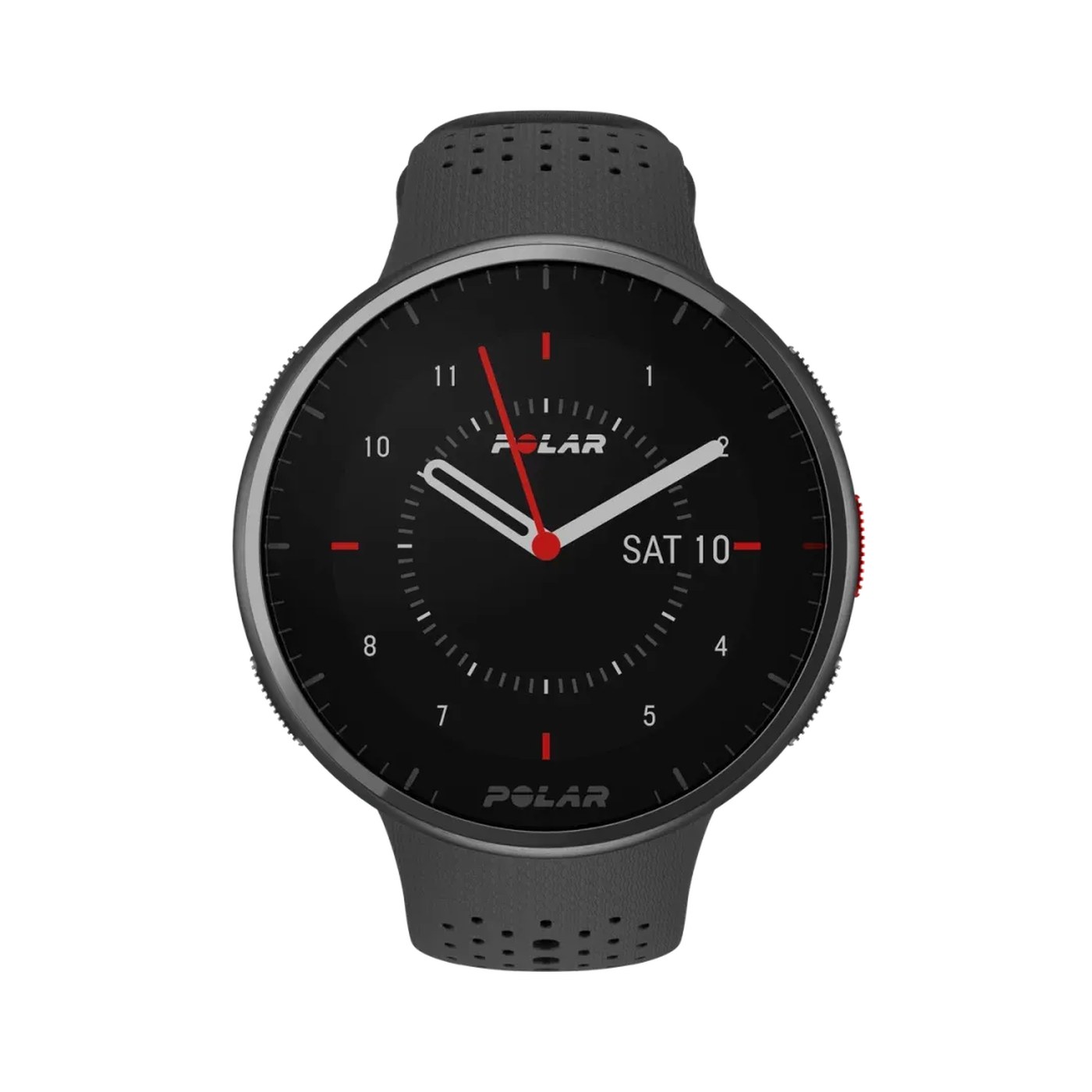
Since 2024, the trend at Garmin, Coros and Suunto has been clear: AMOLED screens everywhere, dual-frequency GPS as standard, color maps even on entry-level models. The Polar Pacer Pro, launched in April 2022, made exactly the opposite call: a simple but always-on color screen, single-frequency GNSS and zero maps. The bet: spend the hardware budget on lightness (41 g, one of the lightest GPS watches RunMorph has ever tested) and on software, where Polar has excelled since the 1980s with heart rate measurement.
Four years after launch, that bet still holds in 2026, driven by very aggressive discounts (€139 to €287 depending on color and retailer, versus €299.90 at launch) that push the Pacer Pro into the ultra-affordable segment, just below the Coros Pace 4 and the Garmin Forerunner 70. At RunMorph, our take is simple: the Pacer Pro has not aged on the software side, but its screen and GPS have clearly aged against 2026 standards.
© Polar, official photo used for editorial purposes
Polar Pacer Pro specs: lightness as the core argument
| Brand | Polar |
| Model | Pacer Pro |
| Release | April 2022 |
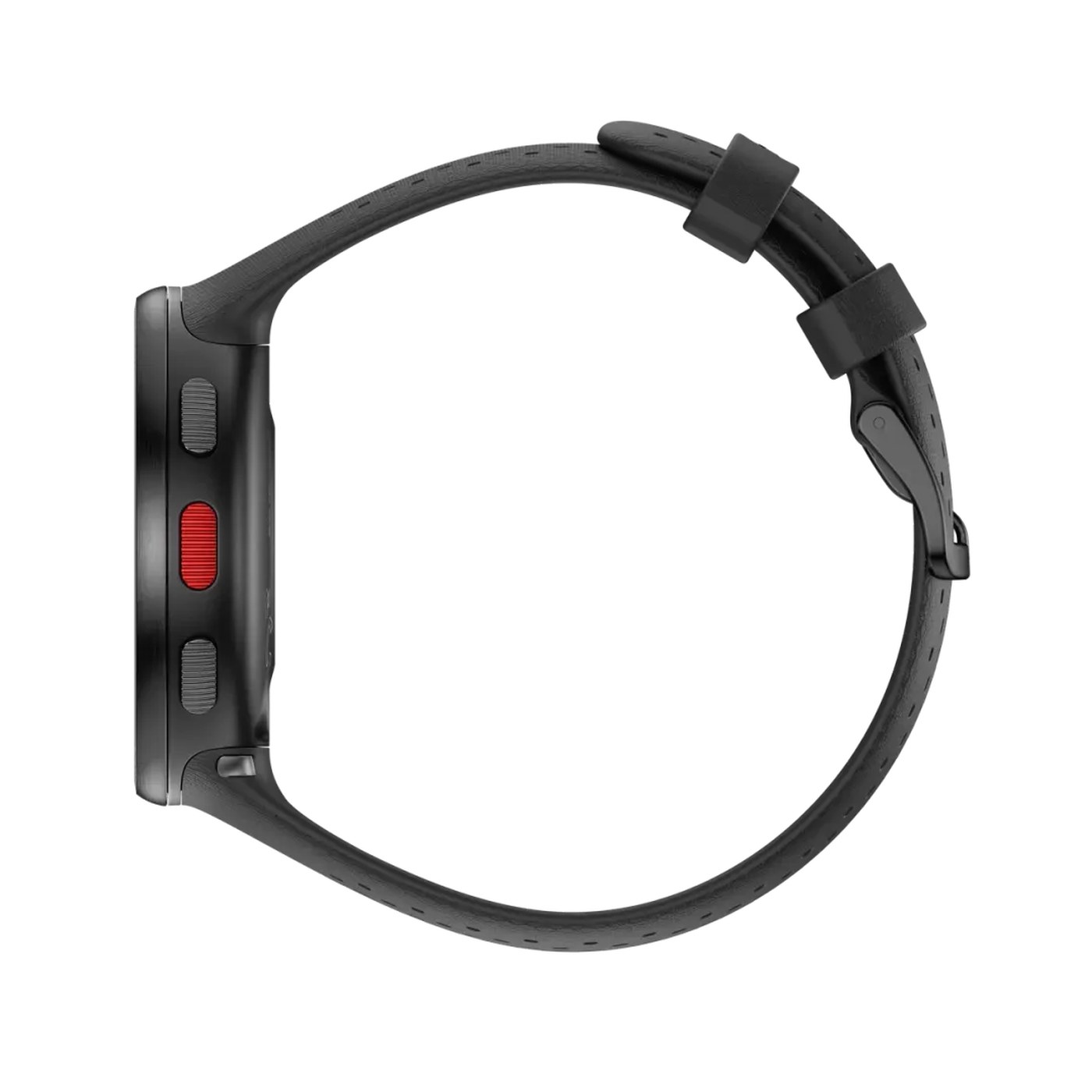
| Case | 43 mm, aluminum + Corning Gorilla Glass 3, 11.1 mm thick |
| Weight | 41 g (silicone strap, size S-L) |
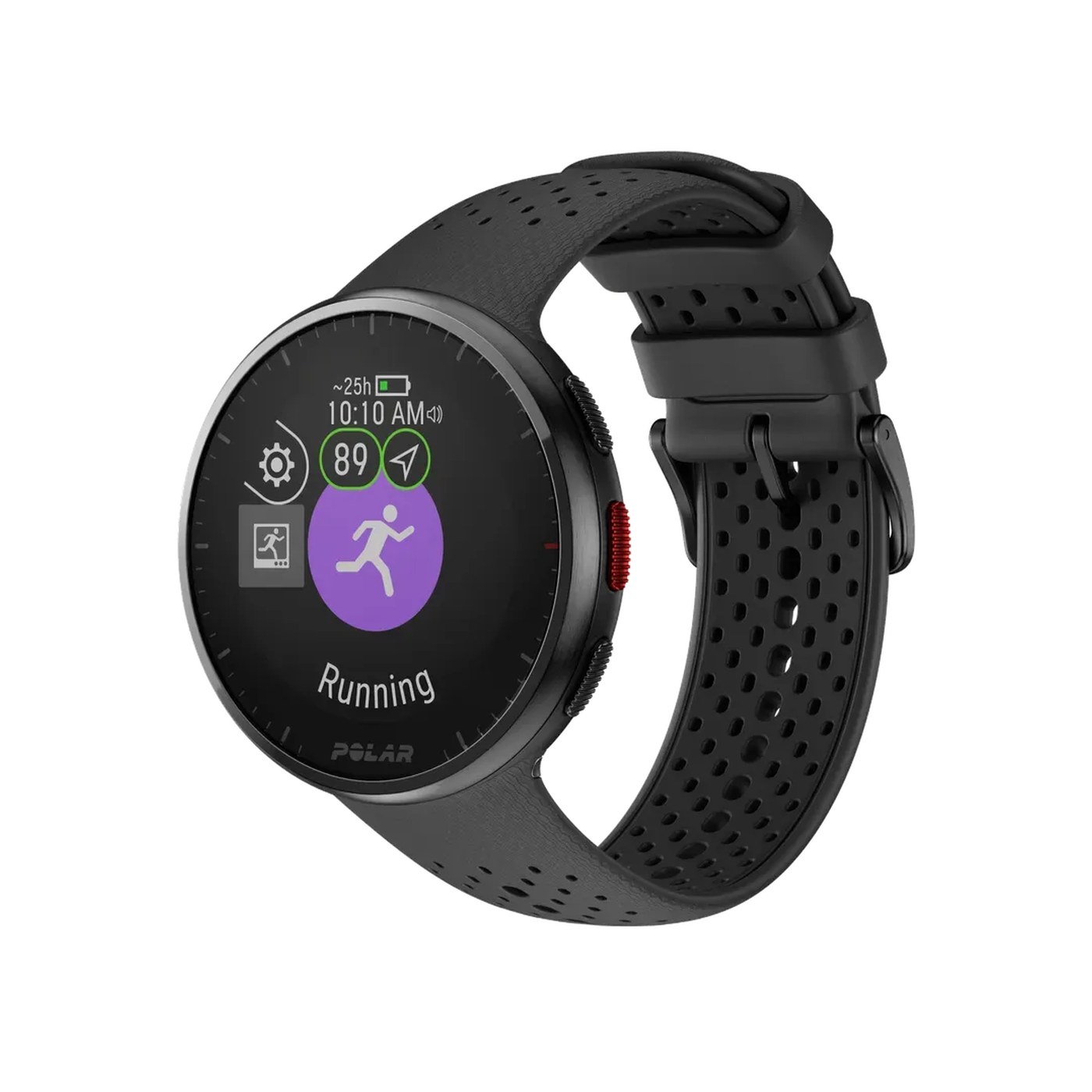
| Screen | Always-on color, 1.2 inches (3 cm), 240 x 240 px resolution, anti-smudge glass |
| GNSS | GPS, GLONASS, Galileo, QZSS (single frequency, NO dual-frequency L1+L5) |
| Heart rate sensor | Optical Precision Prime generation 3.5 (wrist) |
| Other sensors | Barometer, magnetometer compass, accelerometer |
| Maps | No (Komoot turn-by-turn and breadcrumb navigation only) |
| Sport profiles | 130+ |
| Onboard music | No (phone music controls only) |
| Contactless payments | No |
| Battery life | 35 h GPS + wrist heart rate, up to 100 h in power-saving mode, 7 days in smartwatch mode |
| Water resistance | WR50 (swimming, not recommended for diving) |
| Connectivity | Bluetooth, Polar Flow app (iOS/Android), FlowSync software |
| Price | €299.90 at launch, between €139 and €287 depending on color and retailer in mid-2026 |
Precision Prime and the Polar Flow suite: what changes on the wrist?
The Precision Prime generation 3.5 optical heart rate sensor remains the Pacer Pro's number one technical argument. Unlike a basic optical sensor that relies on green LEDs alone, Precision Prime combines several technologies (optical measurement and skin-contact detection) to cut motion artifacts, especially on thin wrists or during abrupt pace changes in intervals. On easy aerobic runs, independent measurements show a near-perfect match with a reference chest strap; the gap only widens slightly on very hard efforts with big swings in rhythm.
The real differentiator is the Polar Flow software suite, inherited from the Vantage and Grit X watches. Training Load Pro (combined cardio, muscle and perceived load), Recovery Pro, Nightly Recharge, FitSpark (daily workout suggestions), Running Program and Running Index form a coherent, mature package that few rival brands offer at this price. The Polar Vantage V3, part of the RunMorph catalog, carries the same philosophy with far more advanced hardware (ECG, AMOLED, multi-band GPS) for more than double the price.
© Polar, official photo used for editorial purposes
The field test: from easy pace to intervals, what lightness really changes
We tested it on runs ranging from 5'30/km recovery easy runs to 3'50/km short reps, and the Pacer Pro disappears on the wrist. At 41 grams, it weighs almost half as much as a Garmin fenix and noticeably less than a Coros Pace 4, which is already very light. On a long run of more than two hours, you clearly feel the difference on your wrist: no pressure marks, no hindrance to your arm swing on climbs.
On the GPS side, the track stays largely faithful in open terrain (parks, open roads), with a claimed accuracy of plus or minus 2% on distance. In dense forest or urban canyons, however, the lack of dual frequency shows: a few track deviations appear here and there, where a recent multi-band watch would correct most signal bounces. On battery life, the standard training mode (35 h) is more than enough for a marathon and its build-up; only runners targeting an ultra beyond 24 hours will need to switch on power-saving mode (up to 100 h), at the cost of GPS recording degraded to 1 or 2 minutes.
RunMorph's advice: the Pacer Pro is a perfect fit for a 10K, half marathon or marathon build on known routes or with a GPX track. For a technical trail in unfamiliar terrain, go for a watch with full maps such as the Suunto Race 2 or the Garmin Forerunner 965.
© Polar, official photo used for editorial purposes
Polar Pacer Pro vs Coros Pace 4 vs Garmin Forerunner 70: the comparison
In the sub-€300 segment, the Pacer Pro takes on two rivals from the RunMorph catalog that are clearly more recent on the tech side.
| Criterion | Polar Pacer Pro | Coros Pace 4 | Garmin Forerunner 70 |
|---|---|---|---|
| Weight | 41 g | 32 to 40 g | ~40 g |
| Screen | Always-on color LCD | AMOLED touchscreen | AMOLED touchscreen |
| GNSS | Single frequency | Multi-band L1+L5 | Multi-GNSS (not multi-band) |
| GPS battery life | 35 h / 100 h eco | 41 h / 38 h dual-freq | 20 h / 16 h All Systems |
| Training suite | Polar Flow (very complete) | EvoLab | Training Readiness / Body Battery |
| Maps | No | No (breadcrumb) | No (breadcrumb) |
| Typical 2026 price | €139 to €287 | €269 | €249.99 |
More dynamic and modern on screen than the Pacer Pro, the Coros Pace 4 offers objectively better GPS (multi-band) for an equivalent launch price. The Garmin Forerunner 70 bets on the Garmin Connect ecosystem, which has a much larger user base but goes less deep into physiological analysis than Polar Flow. Still, the Pacer Pro is the lightest of the three and, once discounts kick in, often the cheapest in France.
Pros
- Just 41 g: one of the lightest GPS watches on the market
- Very complete Polar Flow software suite (Training Load Pro, Recovery Pro, FitSpark)
- Precision Prime optical heart rate sensor, reliable on easy aerobic runs
- Flexible battery life: 35 h in full mode, up to 100 h in power-saving mode
- Very aggressive pricing in 2026 thanks to frequent discounts
Cons
- No full maps, only breadcrumb and Komoot turn-by-turn navigation
- Single-frequency GPS: less accurate than a multi-band model in dense forest
- No touchscreen beyond waking the display, less modern than an AMOLED panel
- No onboard music or contactless payments
Our field verdict: who is the Polar Pacer Pro for?
The runner starting structured training
Yes, without reservation. FitSpark suggests a tailored session every day based on your recovery, and Running Program builds a complete plan toward a goal from 5K to marathon. It is an excellent learning entry point, more guided than a high-end watch that can drown you in options.
The occasional trail runner on marked trails
With reservations. On known or marked trails, the Pacer Pro gets the job done. As soon as you need to navigate unfamiliar terrain with no cell signal, the lack of full maps becomes a real obstacle: look instead at a watch with offline maps.
The triathlete or multisport athlete
Yes, with good results. More than 130 sport profiles cover swimming, cycling and running with transitions, and the watch's lightness is a real asset in the water. Advanced running metrics (estimated running power, Running Index) usefully round out a triathlon build without blowing up your gear budget.
Training for a marathon or half built on training load rather than maps? The Pacer Pro slots naturally into a personalized RunMorph training plan: the Training Load and Recovery Pro data from the watch feed directly into adjusting your interval sessions and long runs.
The RunMorph Coach's verdict
Four years after launch, the Polar Pacer Pro is still one of the lightest GPS watches in its price bracket, and one of the most polished on the software side. At RunMorph, we recommend the Pacer Pro without hesitation to any runner who wants a structured training plan and serious recovery analysis without paying for an AMOLED screen or maps they will never use. On the other hand, the trail runner who regularly navigates unfamiliar terrain, or the runner who wants the best GPS accuracy available in 2026, should look elsewhere, toward recent multi-band watches.
With discounts that often put it under €200 in France in mid-2026, its value for money even becomes one of the best in the RunMorph catalog in this segment.
8/10: a light, well-designed watch for structured training, held back only by GPS and maps that show their age against the 2026 newcomers.
Key takeaways for your training
- Record lightness: 41 g on the wrist, ideal for long runs and multisport without discomfort.
- Complete Polar Flow suite: Training Load Pro, Recovery Pro and FitSpark to structure every training week.
- Flexible battery life: 35 h in full mode covers a marathon, up to 100 h in power-saving mode for very long outings.
- No maps: save runs in unfamiliar terrain for a watch with full offline maps.
- Excellent value in 2026: frequent discounts make it a highly competitive option under €200.