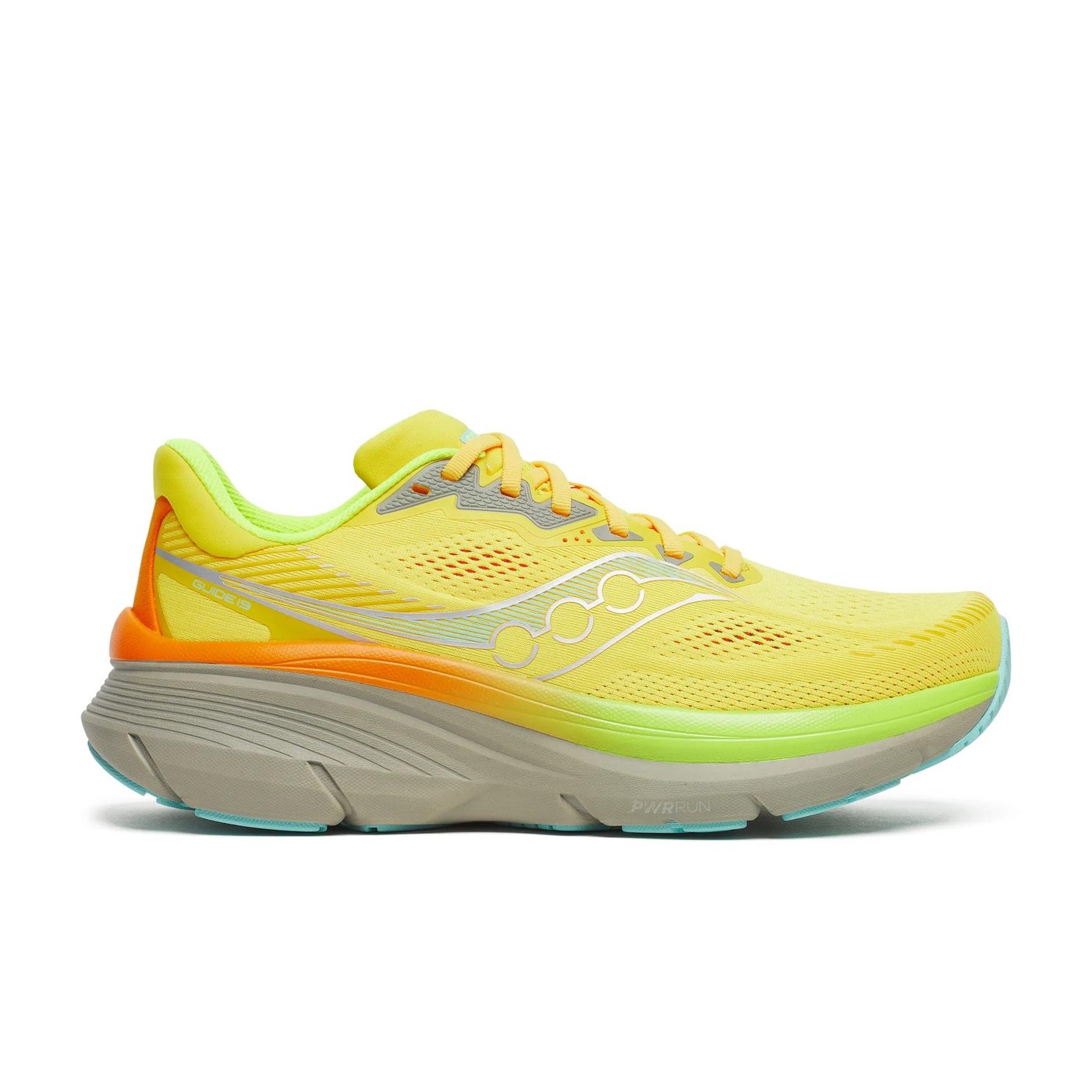
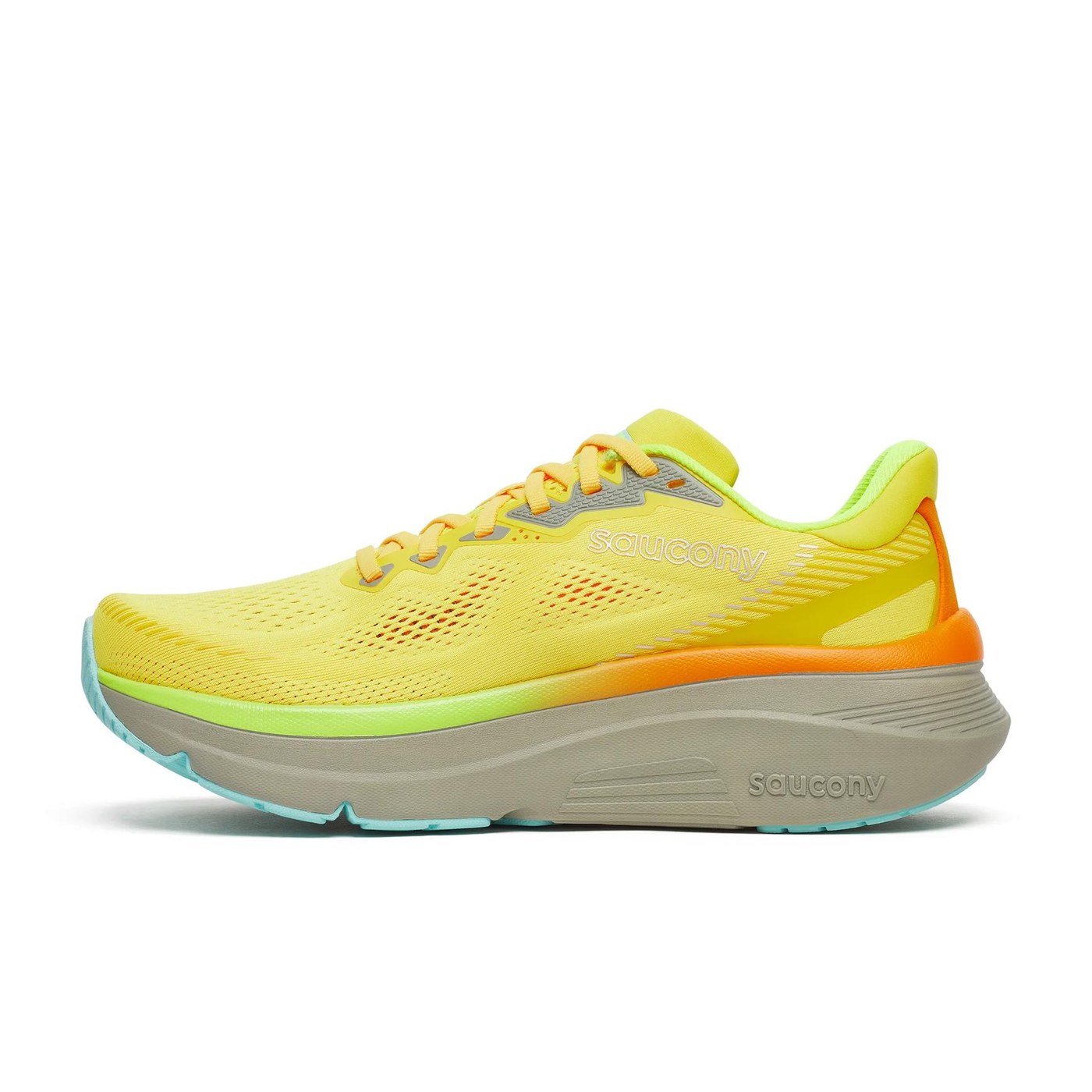
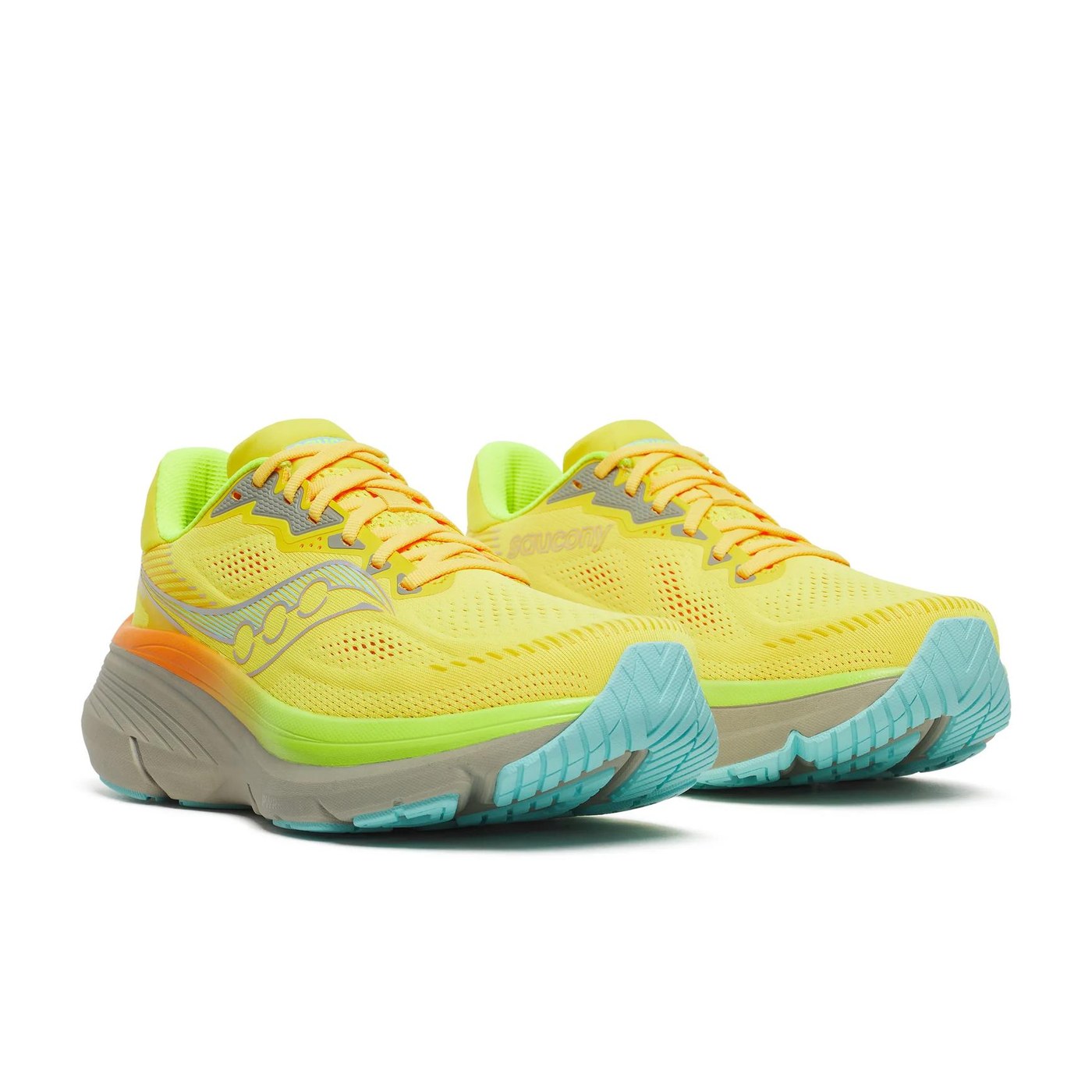
Saucony Guide 19 Review: Stability That Guides, Not Corrects
8/10
For years, stability in France meant heavy, stiff, punishing shoes designed to force a runner's pronation back into line. Saucony takes the opposite approach with the Guide 19: no more aggressive dual-density wedge, just a discreet CenterPath system that guides you without ever lecturing you. A new, softer PWRRUN foam, a drop lowered to 6 mm, a wider platform. At RunMorph, we put it under the microscope to find out who this new-generation supportive daily trainer is really for, and whether it deserves a spot in your rotation.
The Saucony Guide 19 is a stability daily trainer for the road, built for runners who overpronate mildly or simply want reassuring support on their easy runs. Its strength is invisible support (the CenterPath system) paired with a softened PWRRUN foam that finally makes it comfortable on long, easy runs. The trade-off: it gives up all snap in exchange for that security, so this is not a shoe for picking up the pace.
8 / 10 · RunMorph overall score
Cushioning
8/10
Stability
9/10
Comfort
8.5/10
Liveliness
6.5/10
Value for money
7.5/10
Who it is forRunners who overpronate mildly, beginners, and anyone stacking up easy runs and long runs who wants reassuring support without stiffness.
Who it is not forNeutral runners with an efficient stride who want bounce for intervals or racing: the Guide deliberately holds back your toe-off.
Saucony Guide 19: stability changes its philosophy
For years, choosing a stability shoe meant accepting a compromise: more support, but at the cost of weight, stiffness and an orthopedic feel. The Guide, Saucony's long-running stability line, relied for a long time on a denser wedge of foam on the medial side (the famous medial post) to slow the collapse of the arch. Over the past few seasons, the whole industry has changed course: the talk now is of guided stability rather than corrected stability. The Guide 19 is where that shift lands at Saucony.
The medial post is gone, replaced by the CenterPath system: a wider platform underfoot, raised foam sidewalls that wrap the heel and midfoot, and a geometry designed to channel the foot toward a neutral transition. At RunMorph, we see this approach winning over a far wider audience than severe overpronators alone: plenty of runners who tire late in a long run, or who are coming back from injury, appreciate this reassuring frame without feeling boxed in.
Released in the US in late 2025, the Guide 19 hit French stores on March 1, 2026 at an official price of €160, in a wide range of men's and women's colorways. The 6 mm drop marks a shift: the Guide moves closer to current standards, lower than the 8 mm that stability shoes traditionally used.
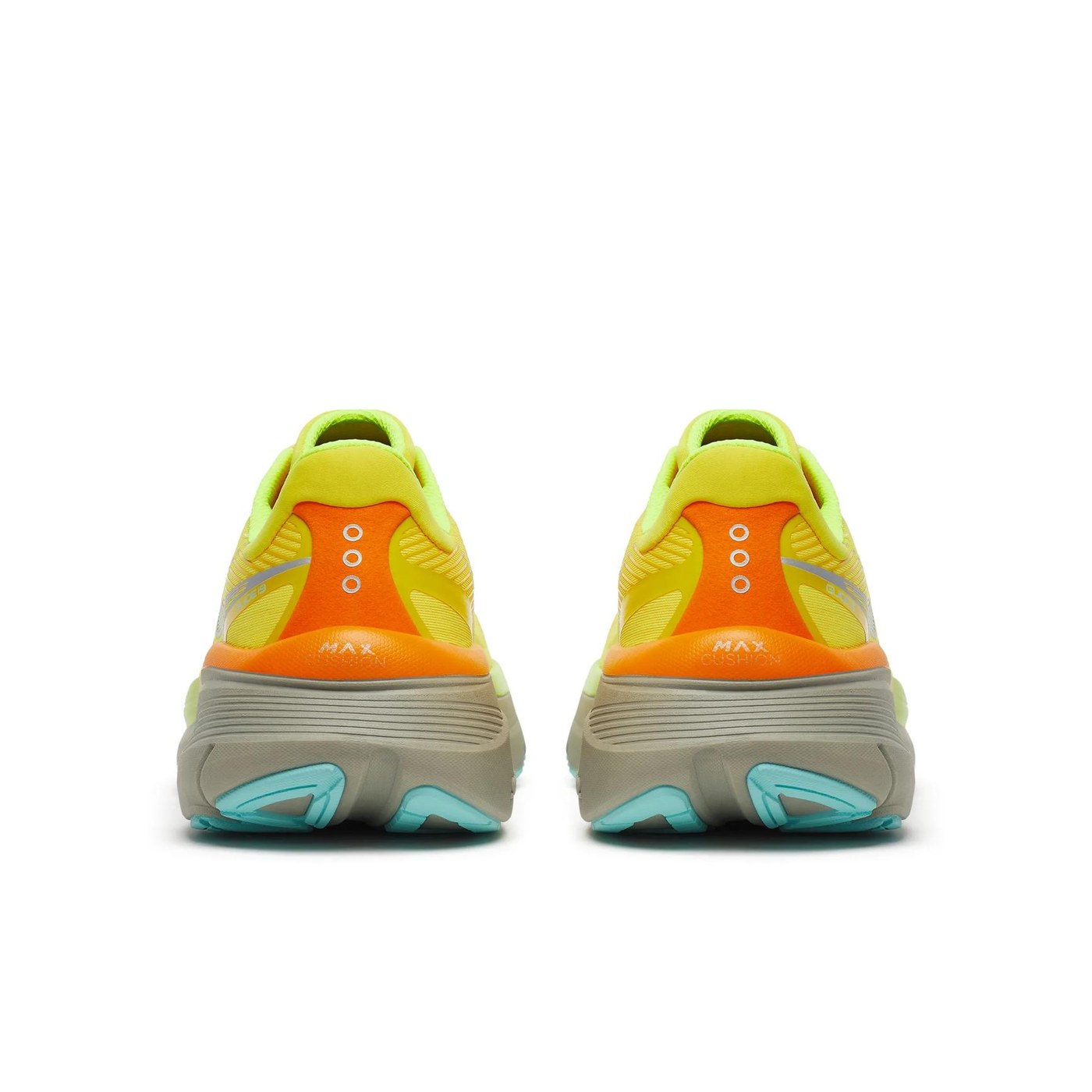
The heart of the matter is how the Guide 19 holds you without constraining you. CenterPath relies on three levers: a wider base (especially on the medial side) that increases ground contact and naturally limits the foot rolling inward, high foam sidewalls that rise along the heel to lock down the rearfoot, and a wraparound fit. Independent measurements back up the promise: the support is there, but you never feel the hard spot of an old-school medial post. It's stability you forget about.
The other big change is the foam. In the Guide 19, PWRRUN has been reformulated for a much softer feel than previous generations, which had a reputation for being firm and a bit harsh. The result: the Guide welcomes the foot better, cushions more at the heel and finally feels pleasant at slow paces. The international consensus among testers points to the flip side, though: as the pace climbs, this foam compresses more than it rebounds, and the shoe absorbs your push-off instead of returning it.
RunMorph's advice: if you're torn between the Guide 19 and its neutral sibling, the Saucony Ride 19, ask yourself one question: do you need guidance? If your shoes wear noticeably more on the inside, or your ankles roll inward late in a long run, the Guide will give you valuable support. If your stride is already stable, the Ride 19 will be more versatile and livelier.
On the road: from 4:30 to 6:00 per kilometer
On asphalt, the Guide 19 shows its playground right away: easy-run paces, between 5:00 and 6:00 per kilometer. That's where everything clicks. The transition is smooth, the heel is well held, and the softened foam soaks up impacts without ever giving you that stiff-floor feeling we dreaded in older Guides. On a 20 km long run at an easy pace, the foot stays aligned and fresh, with no pressure points, which is exactly what you want from a modern stability shoe.
Pushing toward 4:30 to test its limits, the picture changes. The Guide doesn't like it. The 275 g weight makes itself felt, the wide platform slows your roll onto the forefoot, and the PWRRUN smothers your toe-off. That's not a flaw, it's a positioning choice: the Guide 19 never claimed to be a tempo shoe. At RunMorph, we see it as a mileage companion, the one that protects your easy kilometers so a livelier pair can take over on quality days.
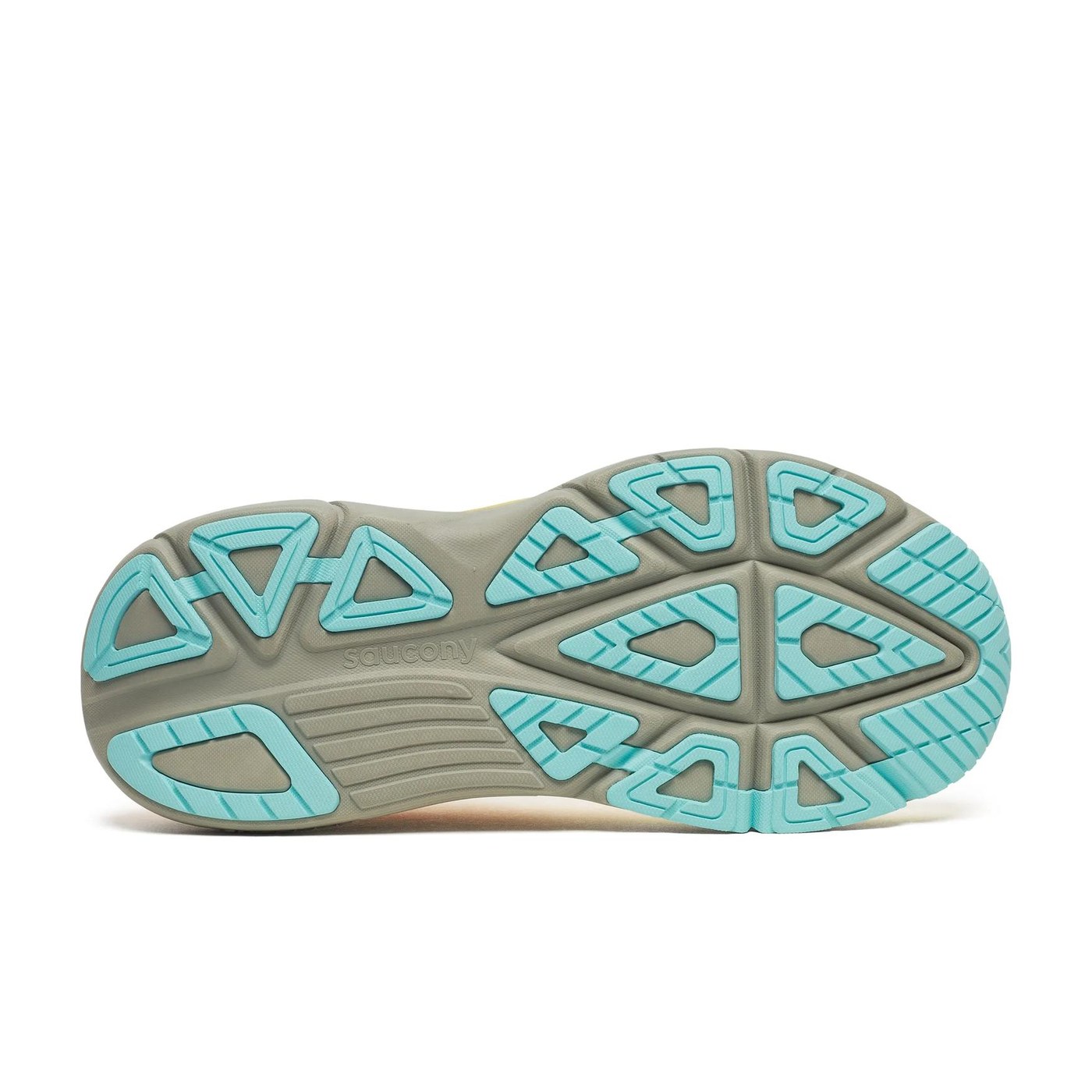
On durability, the XT-900 rubber outsole with its triangular pattern generously covers the wear zones. Grip on dry roads is flawless, a little more cautious on smooth wet surfaces. Estimated mileage sits at the high end for daily trainers, between 700 and 900 km before the foam loses its softness, which makes it a sensible investment for everyday use.
Saucony Guide 19 vs Ride 19, Ghost 18 and Pegasus 42: the comparison
The question everyone asks: do you need the stability version or a good neutral daily trainer? Here's how the Guide 19 stacks up against three benchmarks RunMorph has already put to the test.
The Guide 19 is the only one with a real support frame: the Ride 19, its neutral twin, shares the same foam and price but leaves the foot completely free, which makes it more versatile and a bit livelier. The Brooks Ghost 18 remains the safe bet for neutral comfort, with a higher drop that takes load off the calves. The Nike Pegasus 42, more versatile and peppier, handles pace changes better. If support isn't your priority, these three neutral shoes are easier to live with. If you want to secure your stride, the Guide 19 is the only one that ticks the box.
What we liked
Enveloping CenterPath stability that never feels punishing
This is the natural target. If your old shoes wear on the inside, if a professional has mentioned pronation to you, or if you feel tension in your knee or ankle over long distances, the Guide 19 gives you a reassuring frame without the stiffness of older models.
Beginners and runners returning to training
Many runners coming back after a break or an injury want security above all. The wide platform and heel hold make it a very stable shoe for building volume with confidence, at controlled paces.
High-mileage runners
The right choice if you log plenty of easy kilometers and want to spare your joints. The Guide 19 excels as an easy-run and long-run companion. Keep it for easy sessions rather than speed days.
Go from shoe to plan. A stability shoe like the Guide 19 makes the most sense inside a structured training block: it protects your easy kilometers while you build toward your 10K, half marathon or marathon. Explore RunMorph training plans and match the right pair to the right session.
The Saucony Guide 19 pulls off its bet: making stability desirable. By dropping the medial post for the CenterPath system and softening its PWRRUN foam, it wipes out everything that made stability shoes off-putting. The support is there, discreet and effective, and comfort has taken a real leap forward.
The downside is deliberate: the Guide 19 puts security ahead of liveliness, and its flat toe-off confines it to easy paces. That's not a flaw if you know why you're buying it. For runners who overpronate, are just starting out or log high mileage, it's one of the best options on the market, with a comfort-to-support ratio that's hard to beat at €160. For neutral runners looking for versatility, the Ride 19 or the Ghost 18 will be a better fit.
Final score: 8/10.
Key takeaways for your training
Guided stability: CenterPath supports without correcting, ideal for mild to moderate overpronation.
More comfort: the new, softer PWRRUN transforms heel landings and long runs.
A mileage shoe: save it for easy runs and long runs, not speed sessions.
6 mm drop: a bit lower than older Guides, so transition gradually if you're coming from a higher drop.
Solid durability: 700 to 900 km of use before the foam gets too soft.