Released on April 30, 2026, the Brooks Ghost 18 carries the torch for the best-selling neutral running shoe in the world. No carbon plate, no marketing hype: just a daily trainer polished down to the millimeter that you can lace up every morning without a second thought. We put it through its paces to see whether the 18th version really deserves your trust, and above all, who it's built for.
Brooks Ghost 18 Review: The Best-Seller Rebuilt in Nitrogen Foam
8/10
Brooks Ghost 18: the everyday shoe you've been waiting for?
If you're looking for a shoe to soak up your 30 to 60 km a week with no surprises, the Ghost has been the default answer for ten years. Version 18, released at the end of April 2026, doesn't reinvent anything, and that's exactly what Brooks wants. The Seattle brand stays on course: gradual refinement, a slightly softer DNA LOFT v3 foam, a redesigned upper and a new Ortholite X-60 sockliner. In short, smooth the edges, break nothing.
As a RunMorph coach, I see plenty of runners overcomplicate their rotation. You don't need four different pairs. You need a shoe that carries you through 80% of your sessions and never makes you think. That's exactly the job the Ghost 18 is after.
RunMorph tip: the Ghost isn't a shoe for big one-off performances. It's a shoe for consistency. Over a 12-week training block, consistency is what makes you progress, not intervals at 5% of your vVO2max in a Nike Vaporfly 4. Save the super shoes for the days that really count.
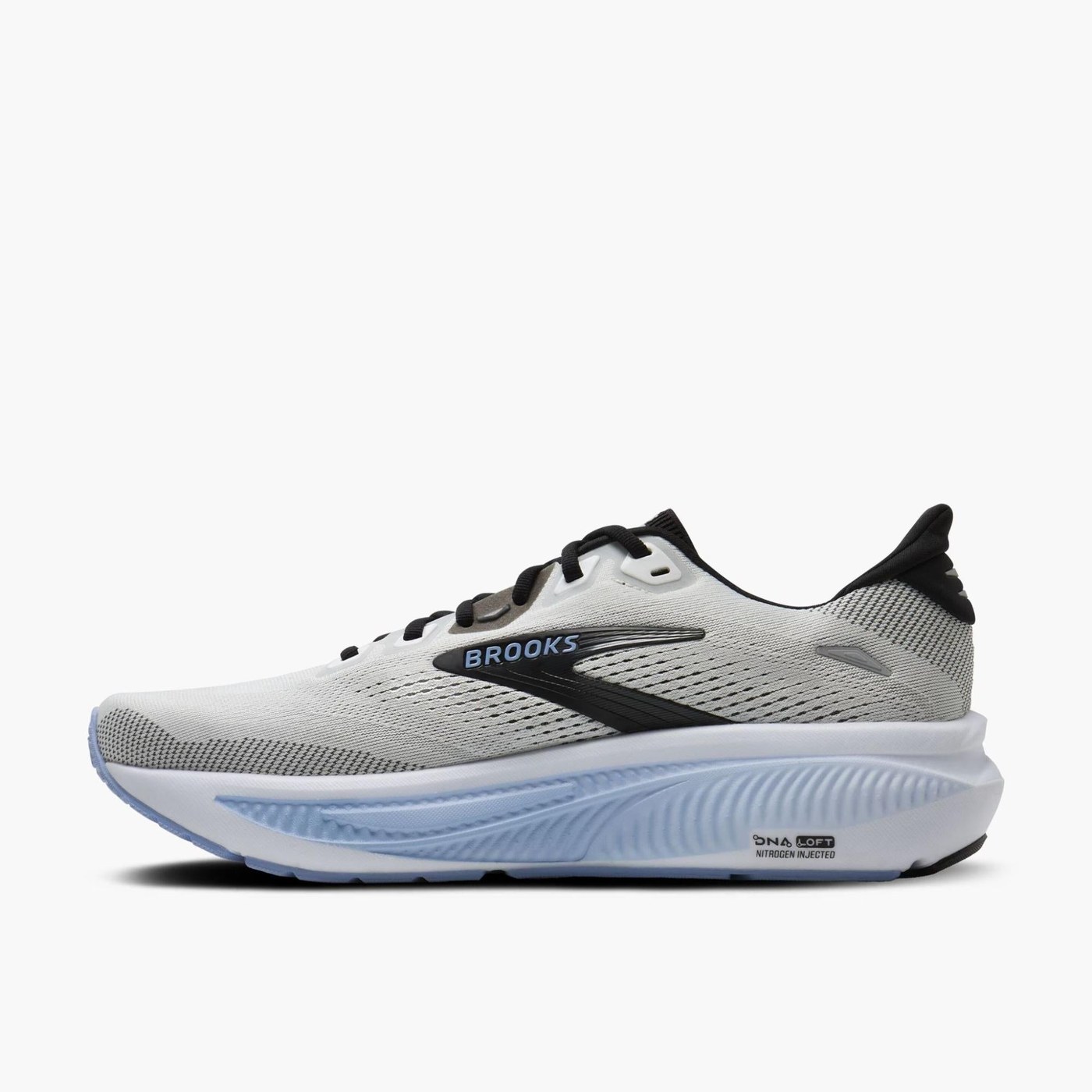
© Brooks, official photo used for editorial purposes
Objective technical specs
| Brand | Brooks |
| Model | Ghost 18 |
| Official release | April 30, 2026 |
| Type | Neutral road daily trainer |
| Drop | 10 mm |
| Stack height (heel / forefoot) | 36 mm / 25 mm |
| Weight (men's EU 42) | 289 g |
| Weight (women's EU 39) | 255 g |
| Foam | DNA LOFT v3 (nitrogen-infused) |
| Carbon plate | No |
| Sockliner | Ortholite X-60 |
| Outsole | RoadTack (nitrogen-infused rubber) |
| Recommended distance | 5K to marathon |
| Available widths | Standard, Wide (2E), Extra Wide (4E) |
| MSRP | €150 |
A few points deserve a closer look. The drop stays at 10 mm, which has become rare in 2026, now that most competing models have moved to 6 or 8 mm. If you've always run in 10 mm, you'll feel right at home. If you're coming from an 8 mm Hoka Clifton 10 or a moderate-drop Asics Gel-Nimbus 28, your shins will notice the change during the first week.
The 36 mm heel stack puts the Ghost 18 in a comfortable but sensible zone, far from the maximalist UFOs. For the first time, the DNA LOFT v3 foam gets an Ortholite X-60 layer underfoot: according to lab measurements, impact feel gains a few percent in softness compared with the Ghost 17, without turning floaty.
Who is the Ghost 18 for?
The weekend runner who wants to improve without getting hurt
You run three or four times a week, 30 to 50 km in total. You string together easy runs, a weekend long run, maybe a threshold session. You don't want to agonize over drop or plate stiffness. The Ghost 18 is made for you: extra widths if you need them, enough cushioning to absorb your 60-minute runs, and proven durability (field feedback on the line puts it around 700 to 900 km).
The marathoner preparing for a first 42.195 km
In a marathon build, your long run will grow from 90 minutes to 2 h 30 or even 3 hours. You need a shoe that carries you without wrecking you. The Ghost 18 won't deliver a record time, but it will faithfully absorb those long sessions. Pair it with a livelier shoe for intervals and a super shoe for race day.
The runner coming back from injury
Plantar fasciitis, Achilles tendinitis, shin splints: if you've been through these classics, you know that returning to running depends on cushioning and protection. The 10 mm drop takes load off the calf and the Achilles tendon (useful after tendinitis). Peak heel pressure is smoothed out by the Ortholite + DNA LOFT v3 combination. It's a very solid shoe for a gradual comeback.
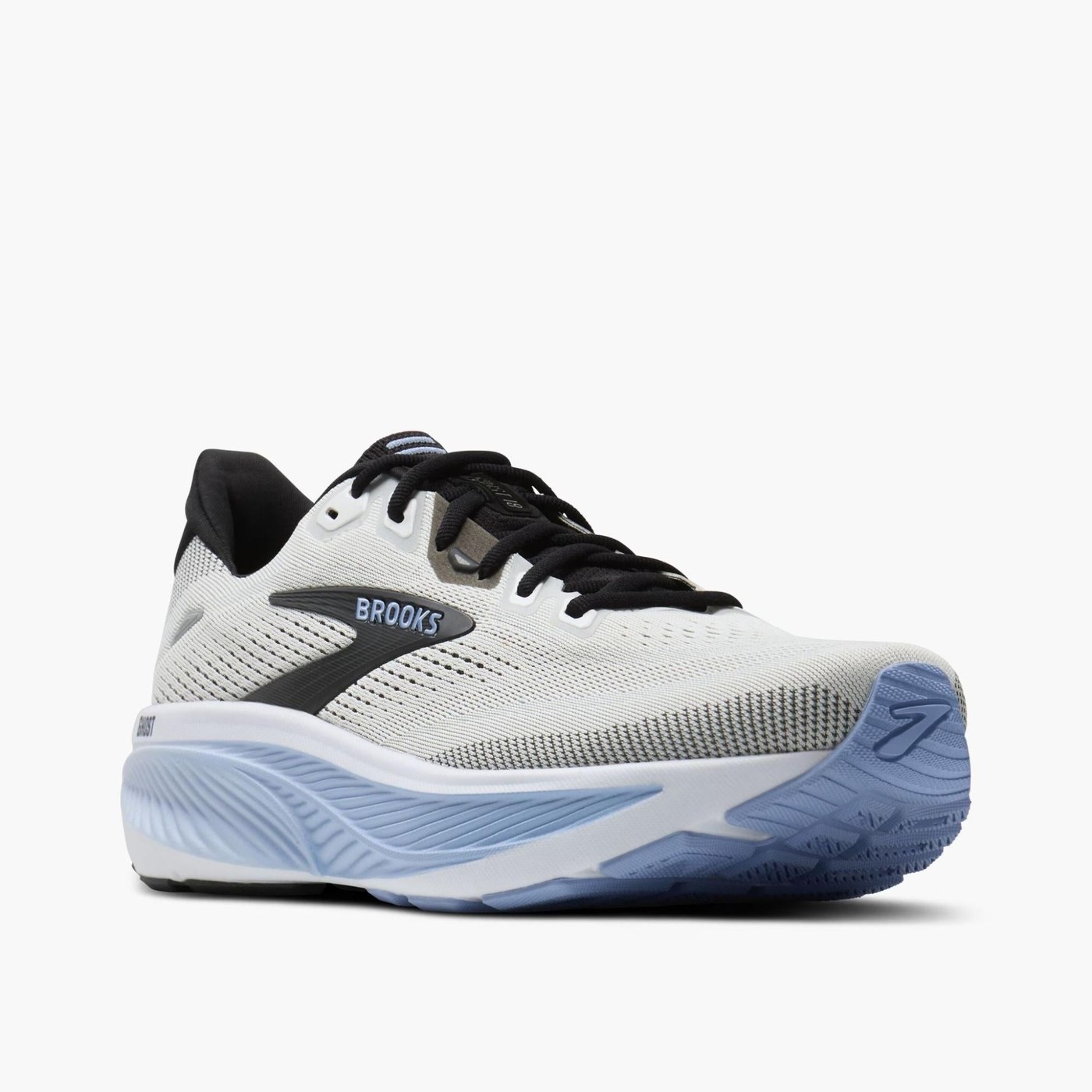
© Brooks, official photo used for editorial purposes
Comfort and fit
The most tangible change on the 18 is the upper. Brooks swapped the flat mesh of the 17 for a two-tone engineered air mesh, more open through the midfoot and more structured around the eyelets. The tongue moves to flat-knit (flat knit with light padding), a request that came up often in user feedback on the Ghost 17. The result: a more accommodating fit with no pressure points, and decent ventilation for warm spring runs.
The heel counter stays structured without being rigid. Forefoot width is comfortable in the standard version. If you have wide or very wide feet, Brooks still offers Wide (2E) and Extra Wide (4E) options, a rarity among the major brands that deserves credit.
On the run
On easy runs at 5:30/km, the Ghost 18 does what you ask: it disappears underfoot. That's the hallmark of a good daily trainer. You don't think about the shoe, you think about your stride, your breathing, the scenery.
When you push toward threshold (around 4:00/km for a trained runner), the Ghost 18 shows its limits. It lacks the energy return of an Asics Superblast 3 or a Hoka Mach 7. It stays honest, but it doesn't pull you along. That fits its positioning: daily trainer, not super trainer.
On long runs (90 minutes or more), this is where it shines. Protection is generous, the subtle rocker helps your stride roll through, and the Ortholite X-60 limits foot fatigue. Lab data shows minimal loss of responsiveness after 5 km, the bare minimum for a long-distance shoe.
Outsole and grip
RoadTack rubber is a nitrogen-infused compound that's lighter than the classic Brooks Trail outsole. The pattern features notched elements on the medial side and at the rear, with a flex zone at the forefoot. On dry roads, grip is total. On wet roads, it's decent without being exceptional: if you often run on wet cobblestones or slippery curbs, take your time in the corners.
Durability of this rubber sits in the upper half of the segment. Expect 700 to 900 km before the wear zones (outer heel for heel strikers, medial side for overpronators) really start to dig in.
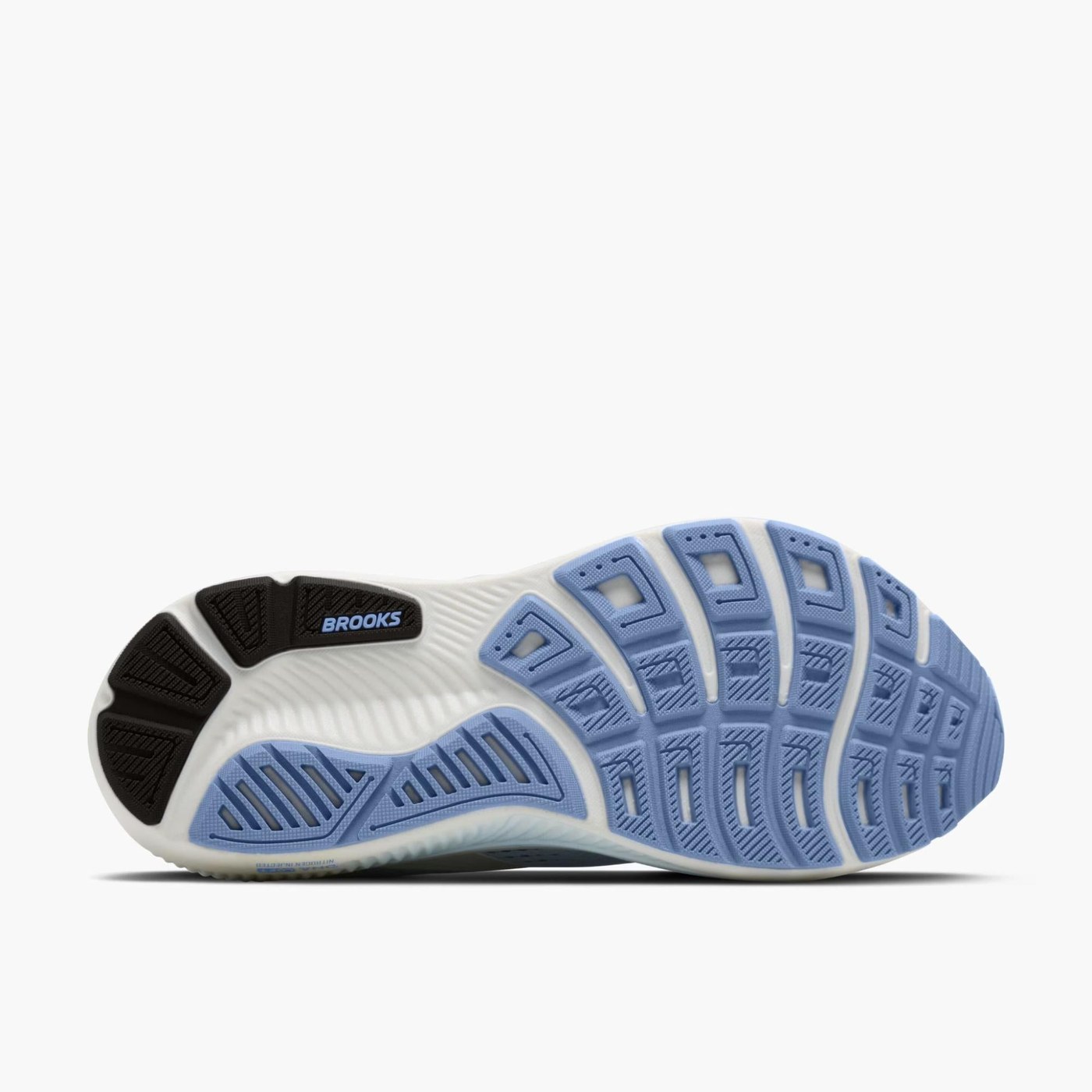
© Brooks, official photo used for editorial purposes
How it stacks up against the competition
The Ghost 18 enters an ultra-crowded segment: the neutral daily trainer with balanced cushioning, around €140 to €160. Here's how it stacks up against the benchmarks:
Hoka Clifton 10 (€155, 248 g, 8 mm drop, 42/34 stack): lighter, softer, lower drop. The Clifton 10 is more versatile across paces, but its pronounced rocker makes it feel more distinctive underfoot. If you like a pillow-soft feel, go Hoka. If you like clean ground contact, stick with Brooks.
Asics Gel-Nimbus 28 (€180, 295 g, 8 mm drop, 41.5/33.5 stack): softer, taller, pricier. The Nimbus 28 is the weapon for marathon long runs. The Ghost 18 is more versatile day to day and €30 cheaper.
Nike Pegasus 42 (€140, 280 g, 10 mm drop, 33/23 stack): same drop, same spirit, but livelier thanks to ZoomX and the Air Zoom units in the heel. The Pegasus 42 is faster, the Ghost 18 more protective and more stable on long runs.
New Balance Fresh Foam X 1080v15 (€180, 280 g, 6 mm drop, 38/32 stack): lower drop, bouncier ride. The 1080v15 has a foam with more pronounced energy return, while the Ghost 18 keeps a more predictable feel.
Comparison verdict: the Ghost 18 remains the default choice when you're unsure. Not the fastest, not the softest, not the cheapest, but the one least likely to let you down.
How to fit the Ghost 18 into your RunMorph training plan
As a coach, here's where I'd place the Ghost 18 in the rotation of a runner preparing for a 10K, half marathon or marathon:
Easy runs and base endurance runs: the Ghost 18 is your anchor shoe. 80% of your sessions can be done in it. It absorbs the load, protects you from repeated microtrauma, and lets you show up fresh for quality sessions.
Long run: yes, up to 2 h 30. Beyond that, if you're preparing for a marathon or an ultra, you might prefer a higher-stack shoe like the Gel-Nimbus 28.
Threshold sessions and intervals: not the best tool. Keep the Ghost 18 for the warm-up and cool-down, and switch to a livelier shoe (super trainer or racing shoe) for the reps.
Racing: for a nature race or a relaxed 10K, yes. To chase a time over a half or full marathon, go for a carbon-plated super shoe.
If you want a structured plan that makes the most of this versatility, check out the RunMorph training plans: they're designed to adapt to your current mileage and your main shoe.
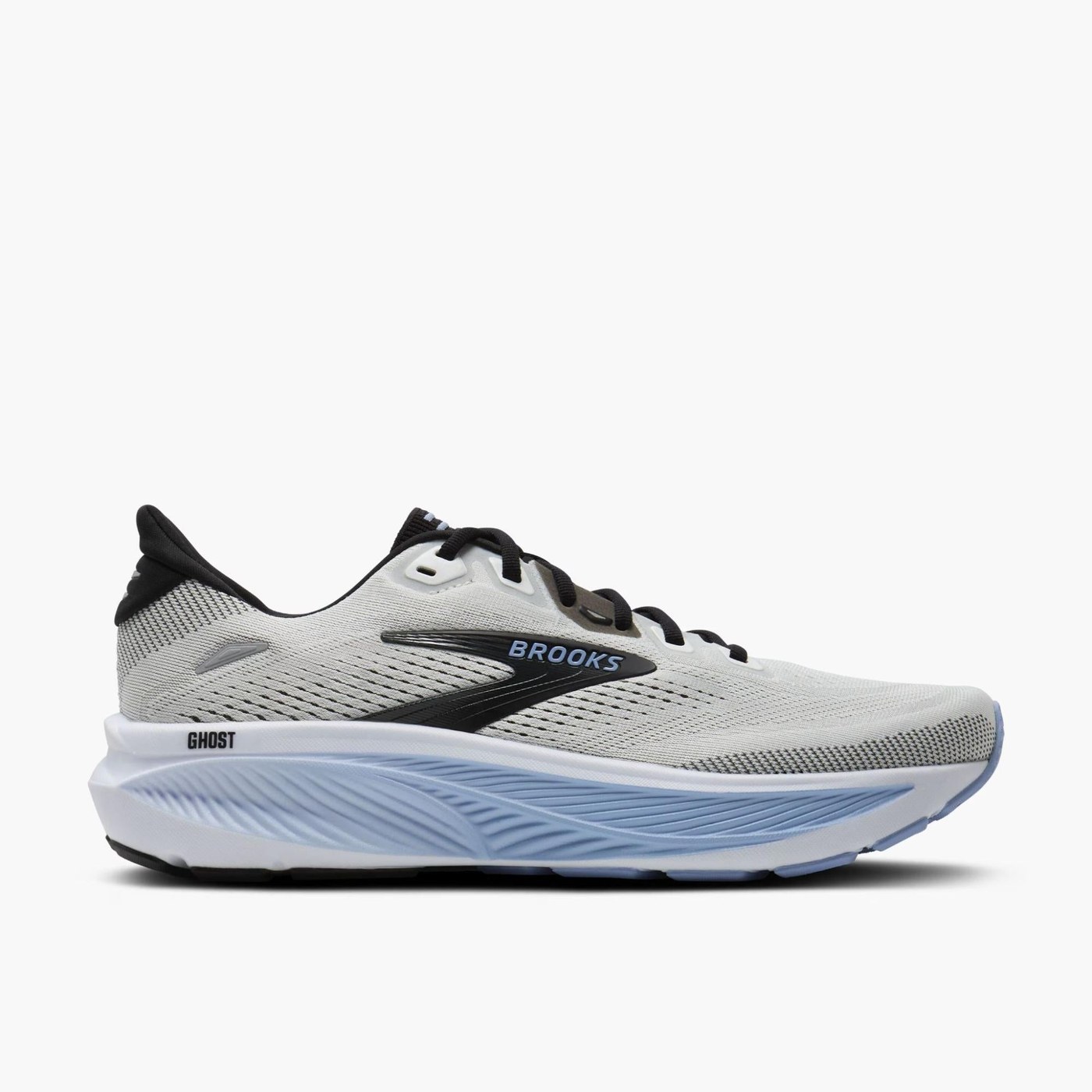
© Brooks, official photo used for editorial purposes
The RunMorph Coach's verdict
The Brooks Ghost 18 won't make the cover of the specialist magazines. It won't get a marathon-length review on YouTube. And that's precisely why it matters. In a running shoe market saturated with promises (carbon, PEBA, supercritical, bounce), there's still room for the shoe that quietly does its job.
For €150, you get a predictable, durable, accommodating shoe, available in several widths, that will handle 80% of your weekly volume for 700 to 900 km. It's an excellent deal if you run for consistency, and a smart pick if you're returning after a long break.
RunMorph score: 8/10. The Ghost 18 loses points on weight (a bit heavy next to the Clifton 10) and on its lack of pop at faster paces. It earns all its credit on reliability, durability and range of widths.
Key takeaways for your training
- Signature daily trainer: the Ghost 18 is built to carry your easy runs and long runs, not your fast sessions.
- 10 mm drop: the familiar feel of the classic Ghost, useful if you're coming back from a calf or Achilles tendon injury.
- Three widths available: standard, Wide and Extra Wide, a rare advantage in this segment in 2026.
- Proven durability: 700 to 900 km depending on your stride, which makes it one of the best values per kilometer.
- Pair it with a super shoe: the Ghost 18 doesn't replace a racing shoe, but it frees up your performance pair for the days that count.