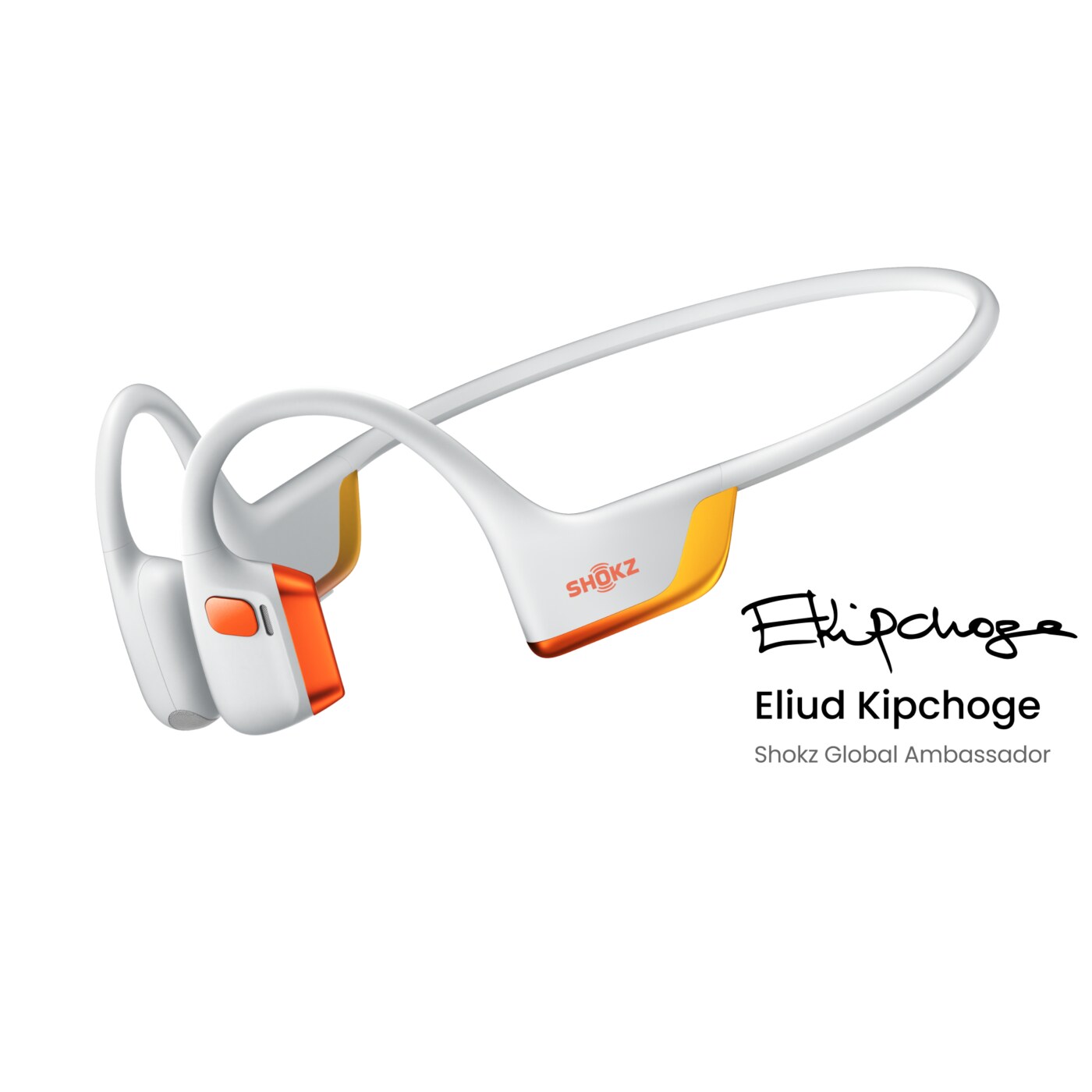
For years Shokz ruled bone conduction for sports with no real competition, but with one recurring flaw: hollow bass. The OpenRun Pro 2, released in 2024, tackles the problem head-on with a hybrid design that pairs vibration on the cheekbone with a small air-conduction speaker. We wore it every day, on long runs, during intervals and on recovery rides to see whether it delivers on its promise.
Shokz OpenRun Pro 2 Review: 12-Hour Battery and DualPitch Bass
8.5/10
Positioning: bone conduction finally becomes versatile
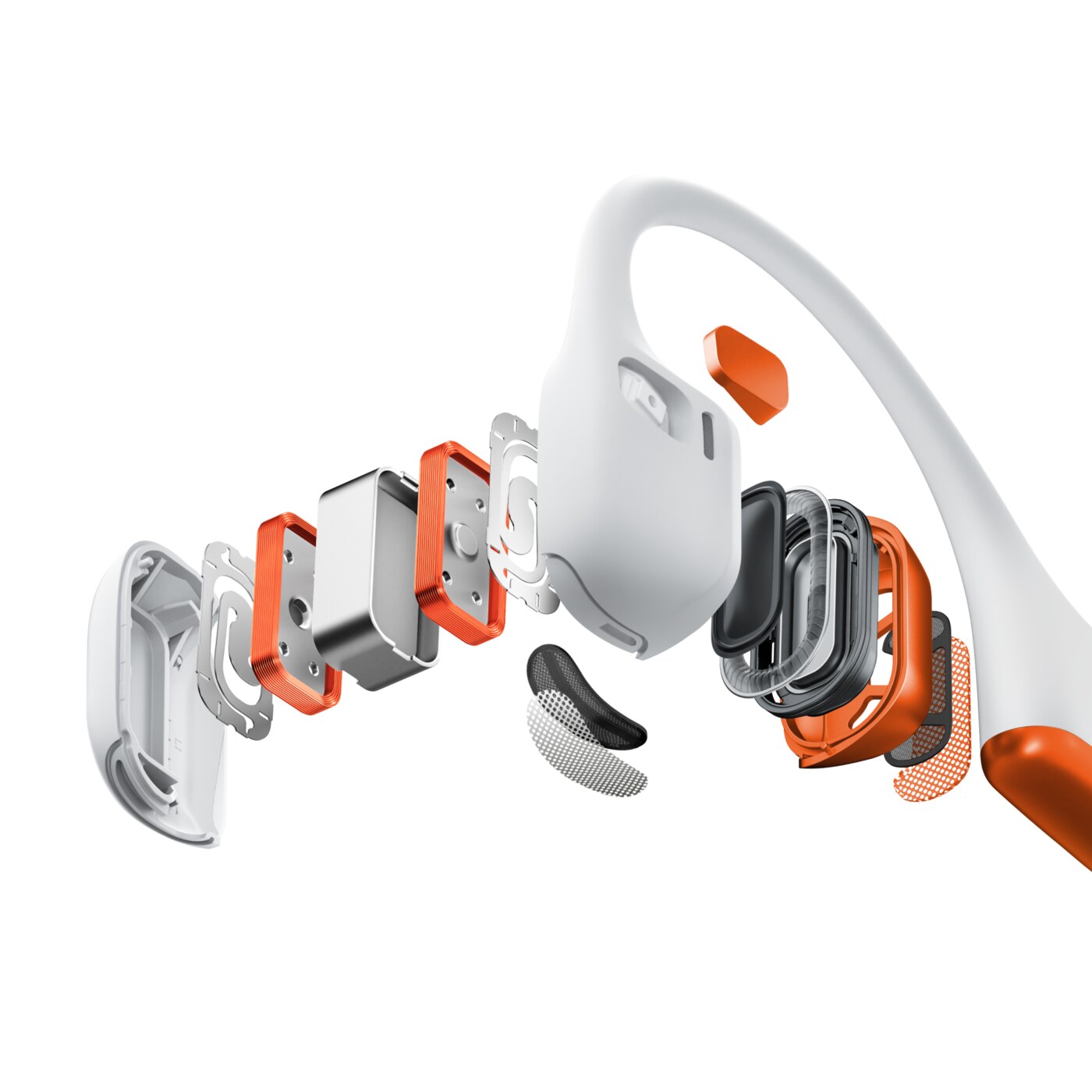
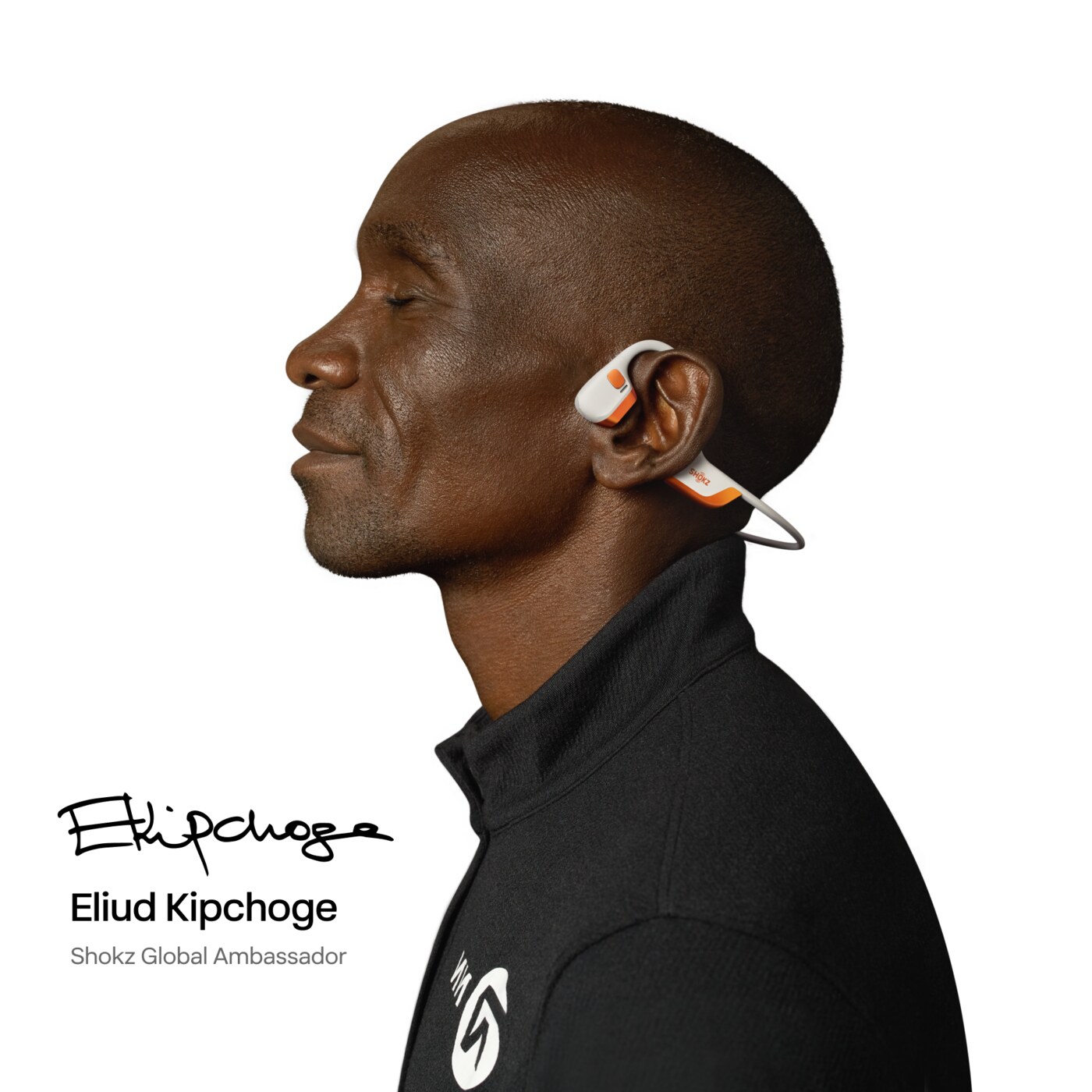
The OpenRun Pro 2 keeps the format that made the original Pro a hit: a titanium band behind the neck, two transducers resting in front of the ears, open ears and a built-in mic. What really changes is what Shokz calls DualPitch. In practice, bone conduction still delivers mids and highs through vibration on the temporal bone, but a small air-conduction speaker aimed at the ear handles the low frequencies. This is the first time a pair of Shokz sports headphones delivers audible bass without distorting or buzzing unpleasantly on the cheekbone.
The headphones weigh 30.3 g on our scale, finally switch to USB-C, move up to 12 h of official battery life and keep the IP55 rating against sweat and splashes. The recommended price sits around €199 in France, which puts them up against the Bose Ultra Open and above the Suunto Wing 2 at €169.
"RunMorph tip: if you run in the city, on bike paths or along roads, bone conduction is not a comfort feature but a safety issue. The OpenRun Pro 2 is the first model where choosing safety no longer costs you sound quality."
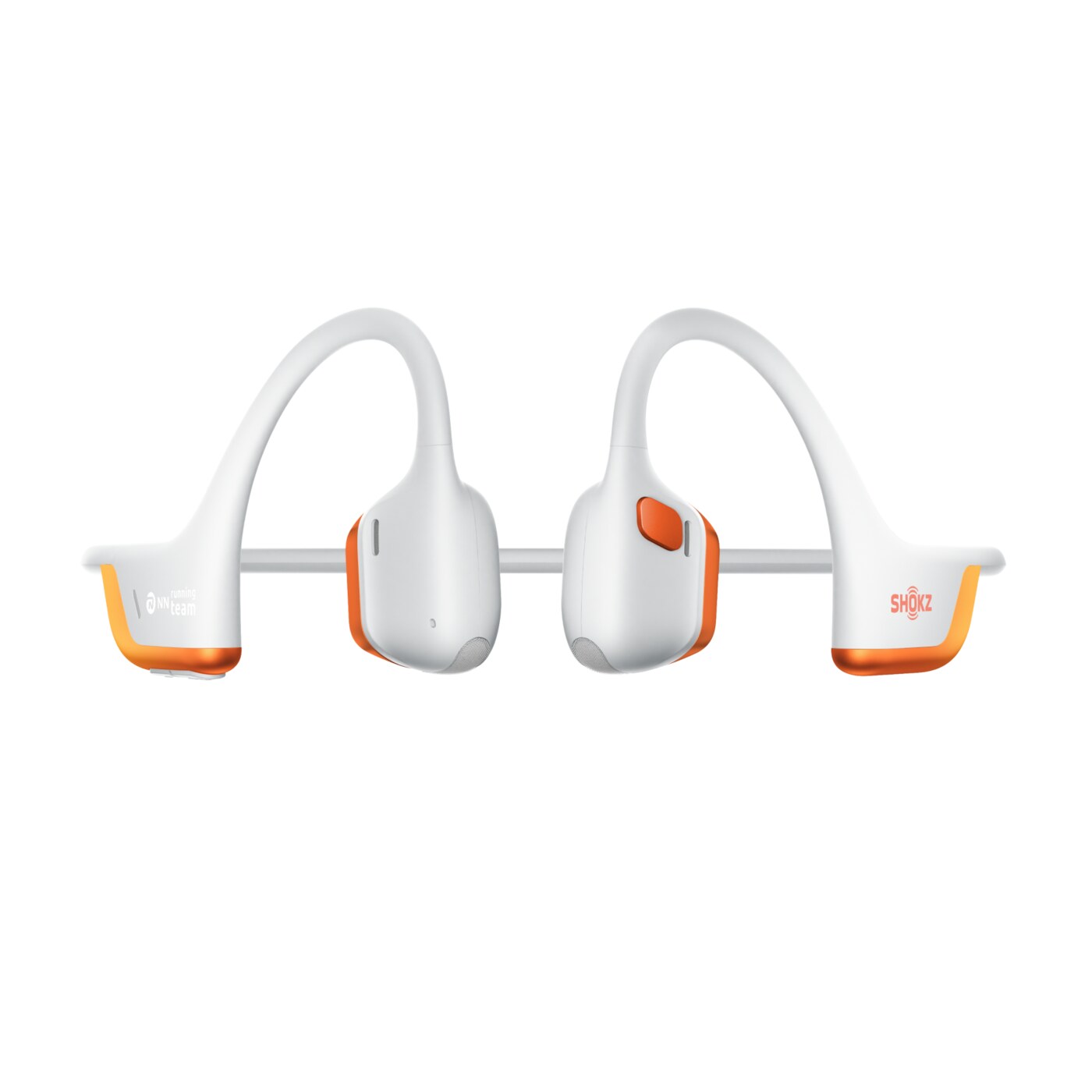
Objective specs
| Spec | Value |
|---|---|
| Brand | Shokz |
| Technology | Bone conduction + air-conduction speaker (DualPitch) |
| Weight | 30.3 g |
| Claimed battery life | 12 h music / 10 h calls |
| Fast charging | 5 min = 2.5 h of listening |
| Charging port | USB-C |
| Water resistance | IP55 |
| Bluetooth | 5.3, multipoint with two devices |
| Codecs | SBC, AAC |
| Mic | Dual noise-canceling mics |
| App | Shokz App (EQ, updates) |
| Recommended price (France) | €199 |
Cross-checked sources: official Shokz France spec sheet, plus the Alltricks and i-Run product pages.
Who are these headphones for?
The city runner who needs to hear traffic
This is the runner the OpenRun Pro 2 was designed for. You run on sidewalks, cross intersections and follow bike lanes where bikes and scooters fly by at 25 km/h. Open ears let you hear everything coming from outside your field of vision. With noise-canceling in-ear earbuds, you lose that critical information. Here, you keep your podcast cranked up and your eardrums stay connected to the outside world.
The distance runner who goes out for 2 h or more
The 12 h of battery life cover a week of runs on most training plans. More importantly, you can wear the headphones for 3 h straight without pain, which you cannot do with most in-ear earbuds once your ears start to stew. Bone conduction does not seal anything off: your ear is never plugged and the canal stays ventilated. On damp long runs or half marathons in light drizzle, DualPitch makes the whole package easier to accept, with bass that finally shows up.
The group or club runner
Do you string together track reps while a coach calls out your splits, or run in a pack and want to chat without taking your headphones off? The OpenRun Pro 2 blocks nothing out. Turn the volume down a notch and keep hearing instructions without breaking your audio routine. It also works well on runs with a partner, where one of you plays the music without cutting off the other.
Audio quality and sound
Bone conduction has long suffered from two limits: ghost bass and a drop in volume as soon as wind or traffic picks up. Shokz partly solves both. The bass does not reach the level of sealed in-ear earbuds, but the air-conduction speaker makes the kick drums of an electronic track or the bass line of a well-produced podcast audible. This is no longer the flat signature of the Aeropex.
Vocals are crisp: podcasts, audiobooks and calls come through perfectly. Max volume is enough to cover the noise of an avenue with traffic at 50 km/h, which was not the case before. Above 30 km/h on a bike, you start losing detail in the wind, which is inherent to open-ear technology.
The Shokz app offers four presets (Standard, Voice, Outdoor, Private) plus a custom EQ. Private mode reduces bone vibrations so the person next to you on the bus cannot hear what you are listening to, a useful feature on public transit.
Fit, comfort, weight
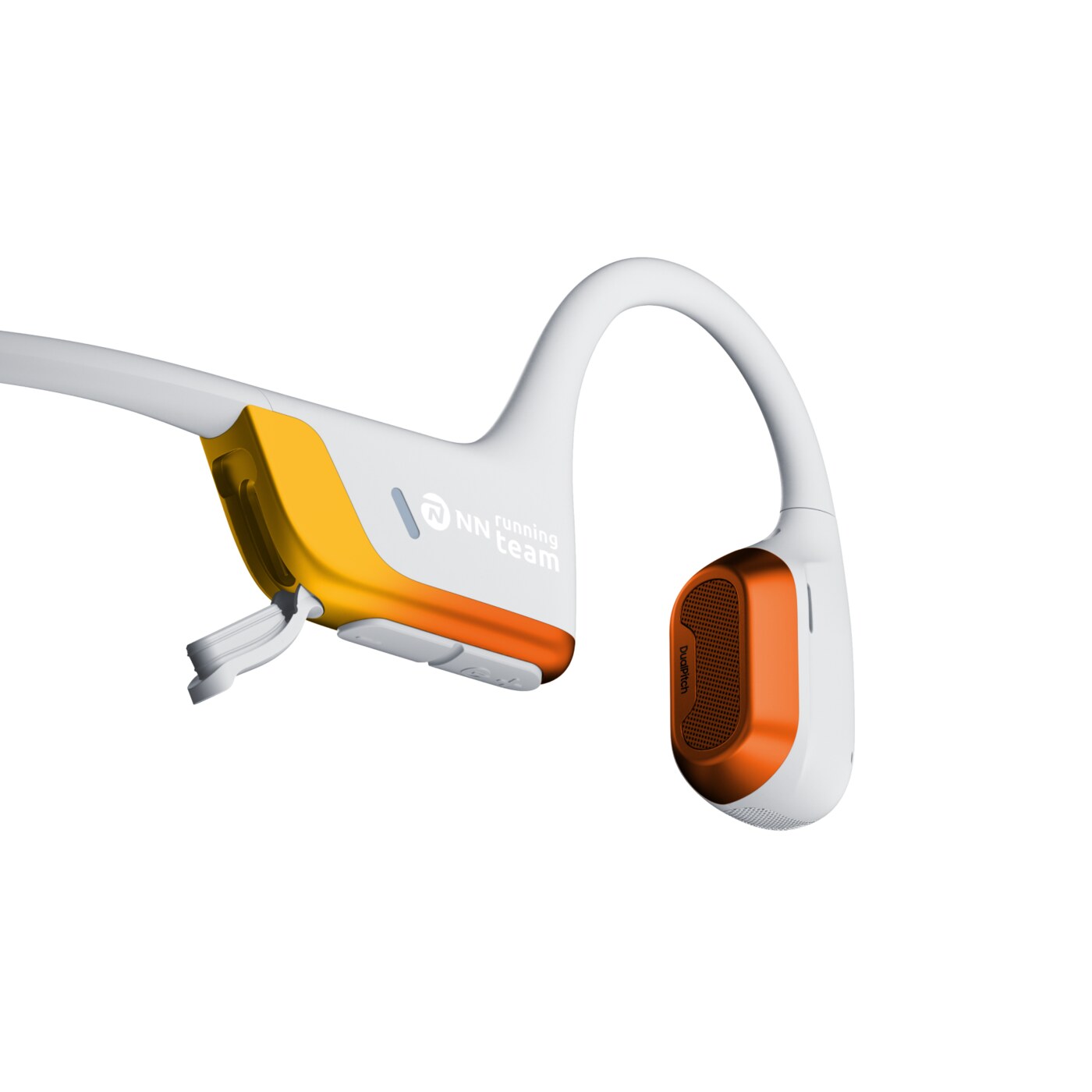
The titanium band stays flexible even after several hundred openings. The headphones do not move, whether you are running, cycling or doing strength work. The only time we saw them slip: a technical mountain bike descent on a rough, broken trail, which is well outside running use. At 30 g, you forget they are there after five minutes. We felt no pain after three hours of continuous wear, unlike in-ear earbuds that end up heating the ear canal.
One thing to watch: the band can rub against a cap or beanie depending on your head shape. If you wear sunglasses with thick arms, check compatibility in store before buying. Shokz offers a Mini version for smaller heads (OpenRun Pro 2 Mini variant, same price).
Battery life and charging
The claimed 12 h are based on moderate volume during music playback. In our measurements, we got 10 h 30 min of real-world use at 70% volume with a mix of podcasts and music. That is in line with what you should expect from sports headphones in 2026. Fast charging is a real plus: 5 minutes give you 2 h 30 min of listening, perfect when you realize the night before a long run that the battery is dead. Allow about 1 h for a full charge via USB-C.
The switch to the universal connector deserves credit: you can now use the same cable as your phone, your e-bike or your headlamp. It was the main criticism of previous models, and it is gone.
Hearing safety and situational awareness
The core argument for the OpenRun Pro 2, and for the whole open-ear category, is hearing your surroundings with no filter at all. For a city runner along major roads, that is a concrete safety factor: you hear a silent electric vehicle coming up behind you, you hear a bike cutting in, you hear a pedestrian stepping out of a shop. On runs longer than 2 h, the open design also protects your eardrums: you are not forcing artificially high volume into your ears to make up for sound isolation. That is better for your hearing in the long term.
On the other hand, on committed trail runs through the forest on smooth paths with little traffic, the safety argument takes a back seat. Bone conduction is still relevant for comfort, but open-fit earbuds like the AirPods 4 will deliver better sound quality for the same price.
How it compares
Compared with the standard OpenRun (non-Pro), you get DualPitch, USB-C and longer battery life for about €60 more. The gap is justified if you listen to a lot of music. If you mostly listen to podcasts and use the headphones less than 5 h a week, the standard model is still excellent value for money at around €130.
Against the Bose Ultra Open (around €350), the Shokz is less discreet visually but far more stable at fast paces and much cheaper. Bose bets on an elegant ear-clip design, Shokz bets on a band that never moves. For pure running, the Shokz has the edge. For mixed city/office/sport use, the Bose wins on discretion.
Against the Apple AirPods 4 (around €180), the Shokz remains the only one offering true bone conduction. The open-ear AirPods 4 are in-ear earbuds that let a little air through but do not leave the ear canal clear. If you want to hear 100% of the traffic, bone conduction has no equivalent in the Apple ecosystem.
How to fit it into your RunMorph training plan
If you follow a RunMorph training plan, the OpenRun Pro 2 goes with you on long runs with no risk of losing it along the way (the band stays around your neck at aid stations), on interval sessions where you want to hear your coach or your pace group, and on recovery days on the road bike where safety comes first. The Voice mode in the app optimizes audiobooks and mental training podcasts, useful on long solo runs.
Before hard race-day efforts, charge it the night before: 5 minutes are enough to get back 2 h 30 min of listening if you forgot.
RunMorph verdict
The OpenRun Pro 2 is the first truly polished take on bone conduction for sports. DualPitch fixes the long-standing bass problem without sacrificing the main advantage of open ears. USB-C ends a major annoyance. The 12 h battery life covers almost every training plan. At €199, the price is still high in absolute terms but in line with the rest of the premium open-ear market. The only real direct competitor, the Suunto Wing 2, bets on an external power bank and a trail/expedition angle that Shokz is not trying to cover.
RunMorph score: 8.5/10. Recommended for any urban or suburban runner who wants to combine music, safety and long runs. Less relevant for technical trail running in enclosed terrain, where bone conduction serves no real purpose.
Key takeaways for your training
- Bone conduction + DualPitch: you hear your surroundings AND your bass, for the first time with no compromise.
- 30 g and a titanium band: you can wear them for 3 h without pain, ideal for long runs.
- 12 h of battery life, USB-C, 5 min fast charge: no more dead battery before an interval session.
- IP55: sweat, light rain and splashes are no problem at all.
- €199: priced in line with the segment, justified by DualPitch and build quality.