August 8, 2026Under Armour Velociti Elite 3 Review: RunMorph's Full Verdict
7.5/10
Under Armour has never been a heritage running brand. But over the past two years, the Baltimore brand has racked up real marathon wins with its athlete Sharon Lokedi (Boston course record, New York win), always in the Velociti Elite. Version 3 is supposed to turn that marketing argument into a true super shoe. RunMorph read the independent reviews published on this exact model to check whether the promise holds up, instead of just relaying the product sheet.
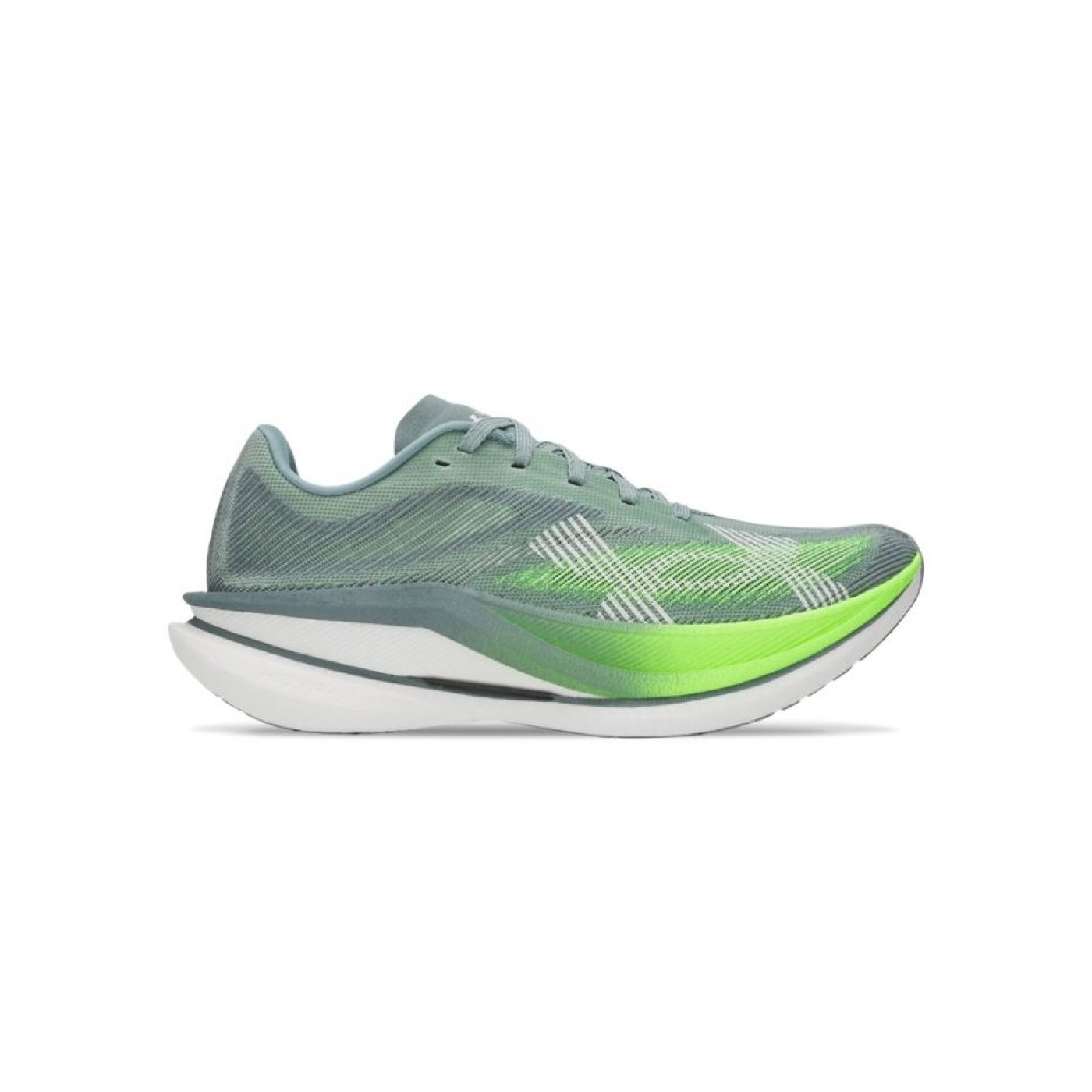
Photo used for editorial purposes
The essentials in three sentences
The Under Armour Velociti Elite 3 is a carbon racing shoe with a very low drop (2 mm), built for the half and the full marathon rather than pure speed. It's heavy for its category (232 g), needs 30 to 50 km of break-in before it gets truly responsive, and its HOVR+ foam still trails the best on the market despite a real improvement over earlier versions. Durability, on the other hand, is a clear strength, confirmed by several independent testers.
7.5
/ 10 · RunMorph overall score
Who is it for?Experienced runners training for a half or full marathon, comfortable with a very low drop and a midfoot to forefoot strike, and ready to accept a break-in of several dozen kilometers.
Who should skip it?Heel strikers with limited ankle mobility, or anyone looking for a light carbon shoe for short intervals: several testers report Achilles tendon discomfort and weight that holds it back at fast paces.
Under Armour Velociti Elite 3: the carbon shoe that still has to prove itself against the benchmarks
Until now, Under Armour had never appeared in RunMorph's reviews, even though the brand has had a running line for several years. The Velociti Elite 3 is the flagship of that line. Now in its third generation, it finally fixes a structural flaw of the first two versions, which used superfoam in only half of the midsole (the other half was classic EVA). Version 3 switches to full-length, full-height HOVR+ foam, which technically makes it the brand's first true super shoe.
The sales pitch looks solid on paper: Sharon Lokedi won the New York City Marathon and set a course record in Boston in versions of this shoe. But an elite win tells you nothing about how an amateur runner feels over 42 km, and that's exactly what independent reviews can check.
Velociti Elite 3 specs
| Spec | Value |
|---|
| Weight (US M9 / EU 42.5) | 221 to 232 g depending on the measurement |
| Heel / forefoot stack height | 37.5 mm / 35.5 mm |
| Drop | 2 mm (among the lowest in the super shoe market) |
| Foam | Full-length HOVR+ (beaded foam) |
| Plate | Full-length carbon, aggressive rocker |
| Upper | Leno Weave, low volume, non-gusseted tongue |
| Outsole | Partial exposed rubber (road and track, not recommended off pavement) |
| Recommended use | Half marathon to marathon, tempo sessions |
| Official price | About €250 (seen as low as €139 on sale) |
The first number to remember: 2 mm of drop. That's one of the lowest ever seen on a carbon-plated running shoe. It's not a marketing detail but a real biomechanical constraint, and it comes up in every independent review we read.
Full-length HOVR+: what the new foam really changes
The major technical difference between version 3 and its two predecessors fits in one sentence: the HOVR+ superfoam now covers the entire midsole, heel included, whereas versions 1 and 2 mixed superfoam and classic EVA. On paper, that's the change that finally puts the Velociti Elite in the true super shoe category.
In practice, several independent testers have documented a specific behavior: the foam is clearly firm out of the box and only becomes truly responsive after 20 to 30 km of use. A French amateur tester described it as a demanding shoe that forgives nothing, while a US clinical review put a precise number on the break-in it needs. This isn't an isolated flaw reported by a single source. Several reviews carried out independently of each other agree on it, which makes it reliable information rather than a subjective impression.
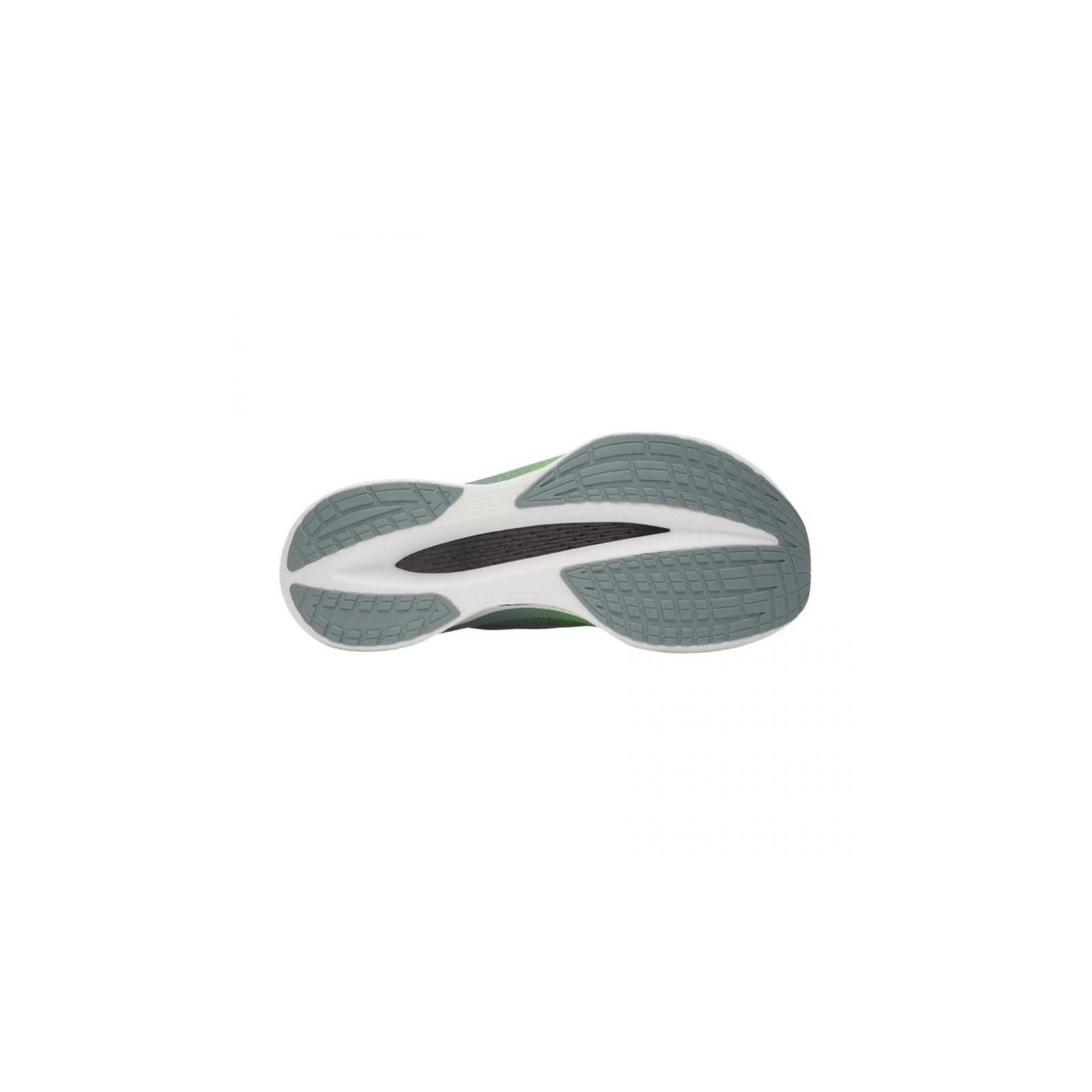
Photo used for editorial purposes
Field test: what runners who actually wore it say
RunMorph read and synthesized several independent reviews of this exact pair instead of stopping at the official product sheet. The points of agreement are clear. First, the initial firmness: a US clinical review by a sports physical therapist reports that the heel stays stiff and unresponsive for the first few kilometers before gradually softening, while the forefoot remains very rigid for the shoe's entire lifespan because of the plate's big rocker. On the French side, an amateur tester independently confirms that firmness. He describes it as a hard-work shoe that loads your calves rather than sparing them, and advises against going beyond an hour and a half in it without specific training.
Next, the 2 mm drop. Several testers raise the same warning: extra load on the Achilles tendon and calf. One clinical review explicitly reports Achilles tendon discomfort after the test runs, with a clear recommendation not to use this shoe without good ankle mobility and well-conditioned calves. This isn't a generic safety disclaimer. It's a precise physiological observation from a healthcare professional who wore the shoe personally.
Finally, weight. Here again the independent sources agree: at 221-232 g depending on the measurement, the Velociti Elite 3 is flagged as one of the heaviest super shoes on the market today, heavier than almost all of its direct rivals. One tester explicitly notes that it struggles at very fast paces (short intervals, 5 km) and feels far more at home on long efforts (half, marathon, tempo), which lines up with the use the brand itself recommends.
RunMorph's advice: if the low drop tempts you but you've never run in less than 6 mm, don't make the Velociti Elite 3 your first carbon long run. Break it in over 30 to 50 km of short sessions before you consider a marathon in it, and keep an eye on how your Achilles tendon feels, as several independent reviews recommend. For an easier transition, the Saucony Endorphin Pro 5 remains a more accessible alternative with a more conventional drop.
Velociti Elite 3 vs Saucony Endorphin Pro 5: the comparison
The comparison with the Saucony Endorphin Pro 5 is a must: US independent reviews cite it directly as the most relevant benchmark for the Velociti Elite 3, since both target the same use (half to full marathon, experienced runners).
| Criterion | Under Armour Velociti Elite 3 | Saucony Endorphin Pro 5 |
|---|
| Weight | 221 to 232 g | Lighter (category benchmark) |
| Drop | 2 mm (very low) | More conventional drop |
| Break-in needed | 20 to 30 km before full responsiveness | Responsive out of the box |
| Elite race record | Lokedi wins (NYC, Boston record) | Established market benchmark |
| Official price | About €250 | Standard super shoe price |
The Velociti Elite 3 doesn't dethrone the Endorphin Pro 5 on immediate responsiveness or on weight. Its only real differentiator is its very low drop, which will appeal to one specific runner profile (forefoot strike, running mechanics already used to low drops) and leave everyone else indifferent, or even uncomfortable.
Pros and cons
What we liked
- Above-average durability: one tester reports only minimal wear after 80 km, despite a partially exposed outsole
- Secure low-volume fit, praised independently by several testers
- A very pronounced rocker that ends up paying off on long efforts once the shoe is broken in
- A real elite track record (not just a marketing promise): marathon wins actually earned in this model
What we liked less
- One of the heaviest super shoes on the market today, a real handicap at fast paces
- 20 to 30 km of break-in before the foam becomes responsive, which makes the first runs disappointing
- The 2 mm drop is repeatedly flagged as a source of extra load on the Achilles tendon
- Non-gusseted tongue that bunches up and needs adjusting every time you put the shoe on: a minor but recurring flaw
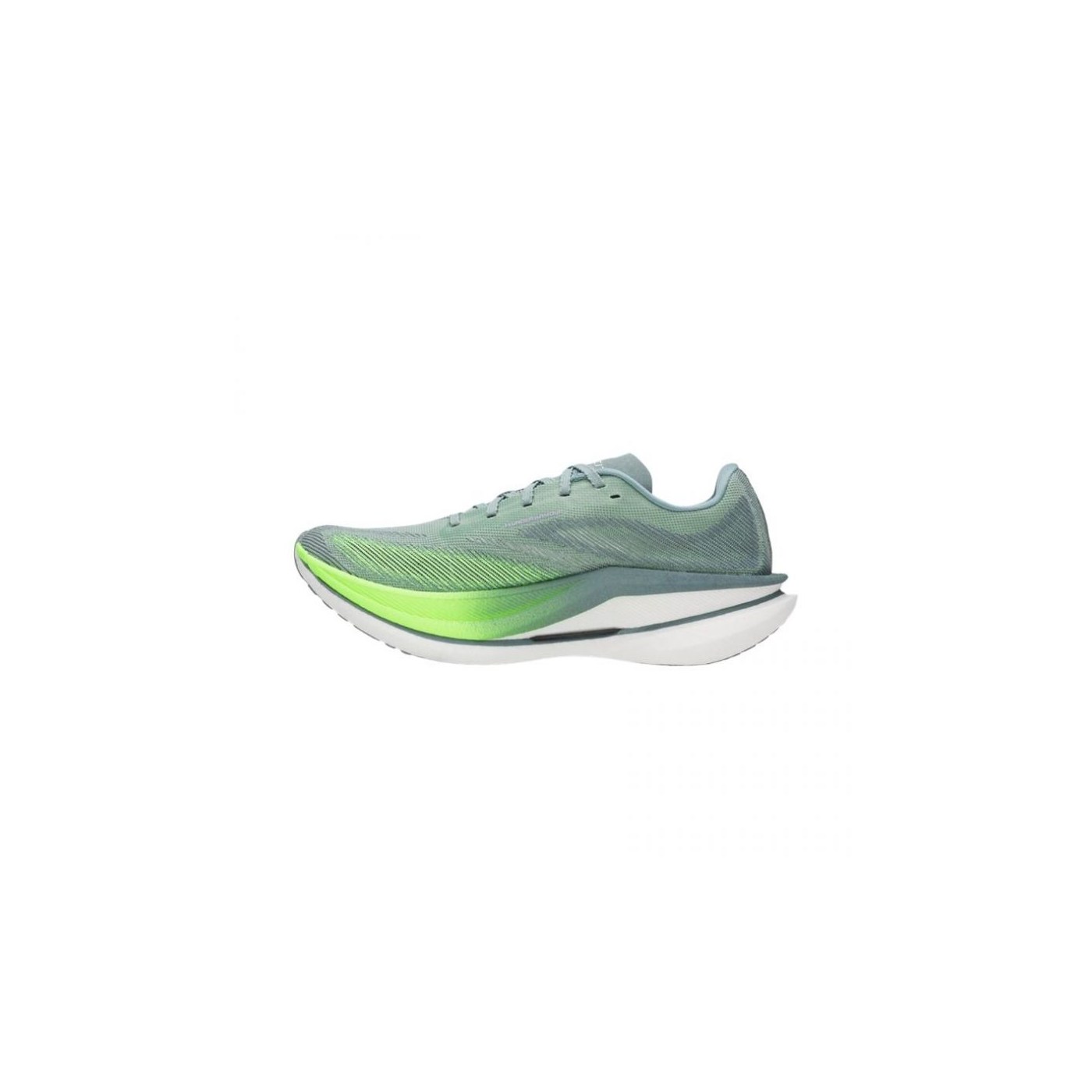
Photo used for editorial purposes
Our take: who is the Velociti Elite 3 for?
Experienced marathoners with forefoot running mechanics
Yes, without reservation, as long as you accept a serious break-in before your goal race. The low drop and pronounced rocker reward a stride that's already adapted to this kind of geometry.
Runners trying carbon shoes for the first time
No. A 2 mm drop is a poor entry point: the independent reviews unanimously say you need solid ankle mobility and strong calves before taking the plunge.
Runners chasing a 10 km personal best or doing short intervals
No again. The weight holds this shoe back at fast paces; a lighter carbon shoe is a better choice for that kind of goal.
To find out whether your body is ready for a low-drop carbon shoe like this one, a structured build-up beats an impulse buy. The RunMorph training plans gradually add the calf strengthening and ankle mobility work you need before you bring this kind of demanding gear into the final weeks of a marathon or half marathon build.
RunMorph Coach's verdict
The Under Armour Velociti Elite 3 delivers on a real technical promise: it's finally a true super shoe, with an elite track record that isn't just marketing. But the independent reviews converge on concrete limits that RunMorph won't gloss over to please the brand. It's heavy, it needs an unusual break-in for a racing shoe, and its very low drop doesn't suit every runner, with a risk of Achilles tendon strain reported by several independent sources. It's not a bad shoe. It's a niche shoe that deserves an honest score rather than a token pat on the back.
RunMorph score: 7.5/10. Real technical potential and a genuine elite track record, but its weight and drop reserve it for a specific runner profile, not the majority.
Under Armour Velociti Elite 3 FAQ
Is the Velociti Elite 3 a good first carbon shoe?
No. A 2 mm drop is too specific for a first purchase. The independent reviews recommend already well-conditioned ankle mobility and calf muscles before you use it.
How long does it take for the Velociti Elite 3 to become responsive?
About 20 to 30 km, according to an independent clinical review. The HOVR+ foam is much firmer out of the box than after break-in.
Is the Velociti Elite 3 good for short intervals or the 10 km?
Not really. Its weight, among the highest in the super shoe category, holds it back at fast paces. It's more at home from the half to the marathon.
Is the Velociti Elite 3 durable?
Yes, it's one of its real strengths, confirmed independently: one tester reports only minimal wear after 80 km despite a partially exposed outsole.
Key takeaways for your training
- Very low drop: 2 mm, among the lowest in the super shoe market, requires specific running mechanics.
- Break-in needed: plan on 20 to 30 km before the HOVR+ foam becomes truly responsive.
- Weight to factor in: 221 to 232 g, among the heaviest in its category, less suited to very fast paces.
- Watch your Achilles tendon: several independent reviews recommend good ankle mobility before use.
- Target use: half marathon and marathon for experienced runners, not a first carbon purchase.