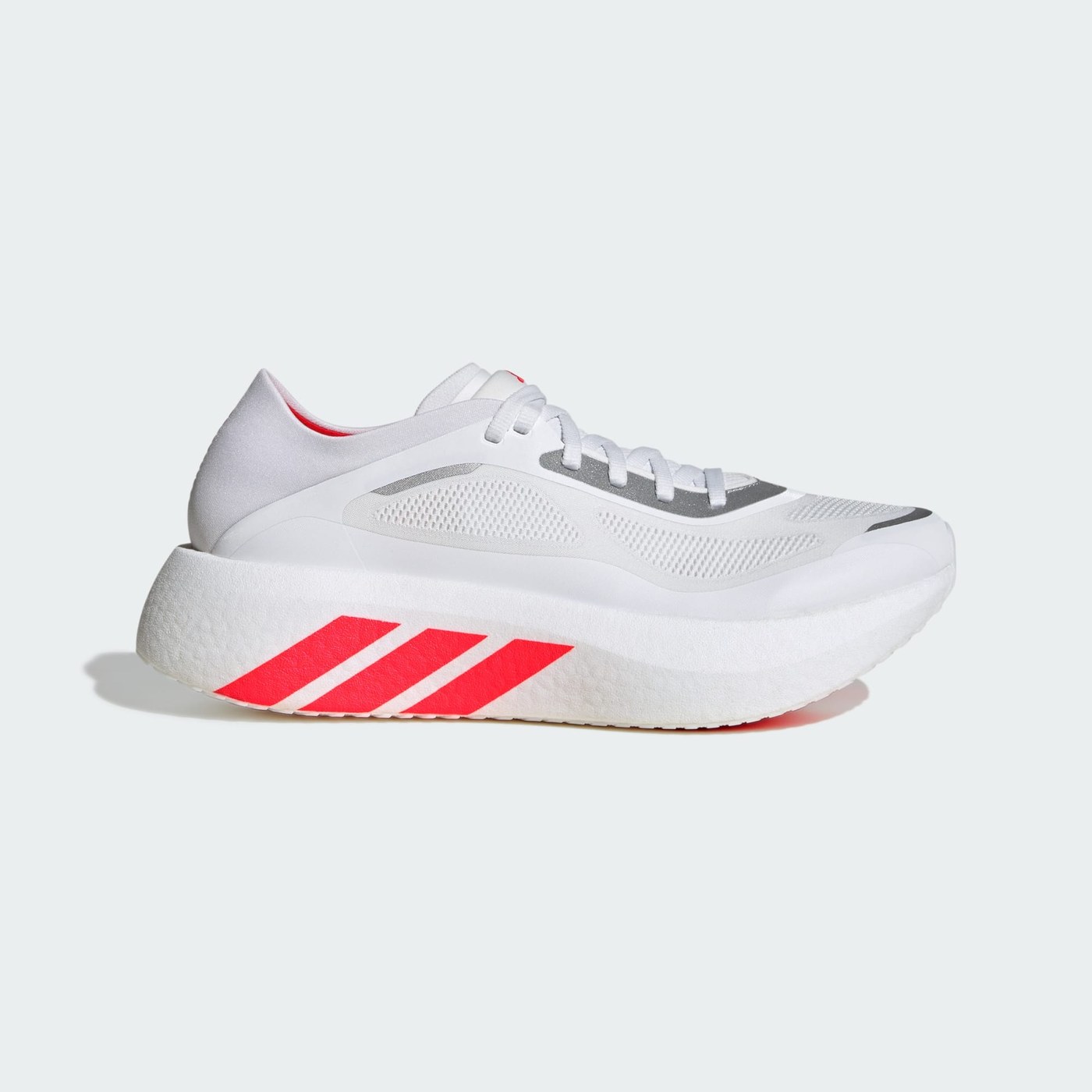
On sale since August 1, 2026, the Hyperboost Run is the accessible version of Adidas's Hyperboost range, which launched a few weeks earlier with the Hyperboost Edge. Same signature foam, a lower stack height, the same €170 price: RunMorph put this new daily trainer through its paces to see whether it holds up in a segment that's already crowded.
© Adidas, official photo used for editorial purposes
Adidas beefs up its Hyperboost range with a more accessible model
After the launch of the Hyperboost Edge, a premium super trainer with no carbon plate and a 45 mm stack height, Adidas is rounding out the range with the Hyperboost Run. The idea is simple: keep the same Hyperboost Pro cushioning platform, but with a more restrained stack height and a shape built for broader everyday use, from easy runs to tempo work. Same price as the Edge (€170), clearly different positioning.
The key thing to understand: the Hyperboost Run doesn't replace the Edge. It targets runners who want the feel of Hyperboost Pro foam without committing to the most cushioned model in the range, and who aren't necessarily chasing very long distances.
Hyperboost Pro and Continental inserts: what difference do they make on the run?
Hyperboost Pro foam is the heart of this shoe. With 38 mm of stack height at the heel, it sits firmly among highly cushioned running shoes without going to the extremes of the Edge. The LIGHTTRAXION outsole adds Continental rubber inserts under the forefoot, from the same trusted brand found on Formula 1 tires, for stronger grip on wet roads. The heel, with 3D-printed elements and a wider platform, aims for stability and secure hold across a wide range of foot shapes.
RunMorph tip: for similar use on a slightly smaller budget, the Asics Novablast 6 is still the benchmark in the accessible daily trainer segment. For more cushioning and distance, the Adidas Hyperboost Edge offers a higher stack height within the same range.
On the road: lively foam, a stifling upper
We tested the Hyperboost Run on runs of 8 to 18 kilometers, at easy pace and at tempo. The first finding matches independent lab measurements: Hyperboost Pro foam delivers responsive energy return and a surprisingly light feel for a 38 mm stack height, without ever feeling like an unstable platform. The 6 mm drop, lower than the usual market average of 8 mm, encourages a more natural midfoot stride.
The weak spot, widely backed up by independent lab measurements, is breathability. The Hyperboost Run ranks among the lowest scores recorded recently on this criterion, even behind some winter shoes with waterproof membranes. On the road, that means clear heat buildup inside the upper as soon as temperatures climb, and slower-than-average drying after a run in the rain. A serious red flag if you run in hot weather or your feet sweat a lot.
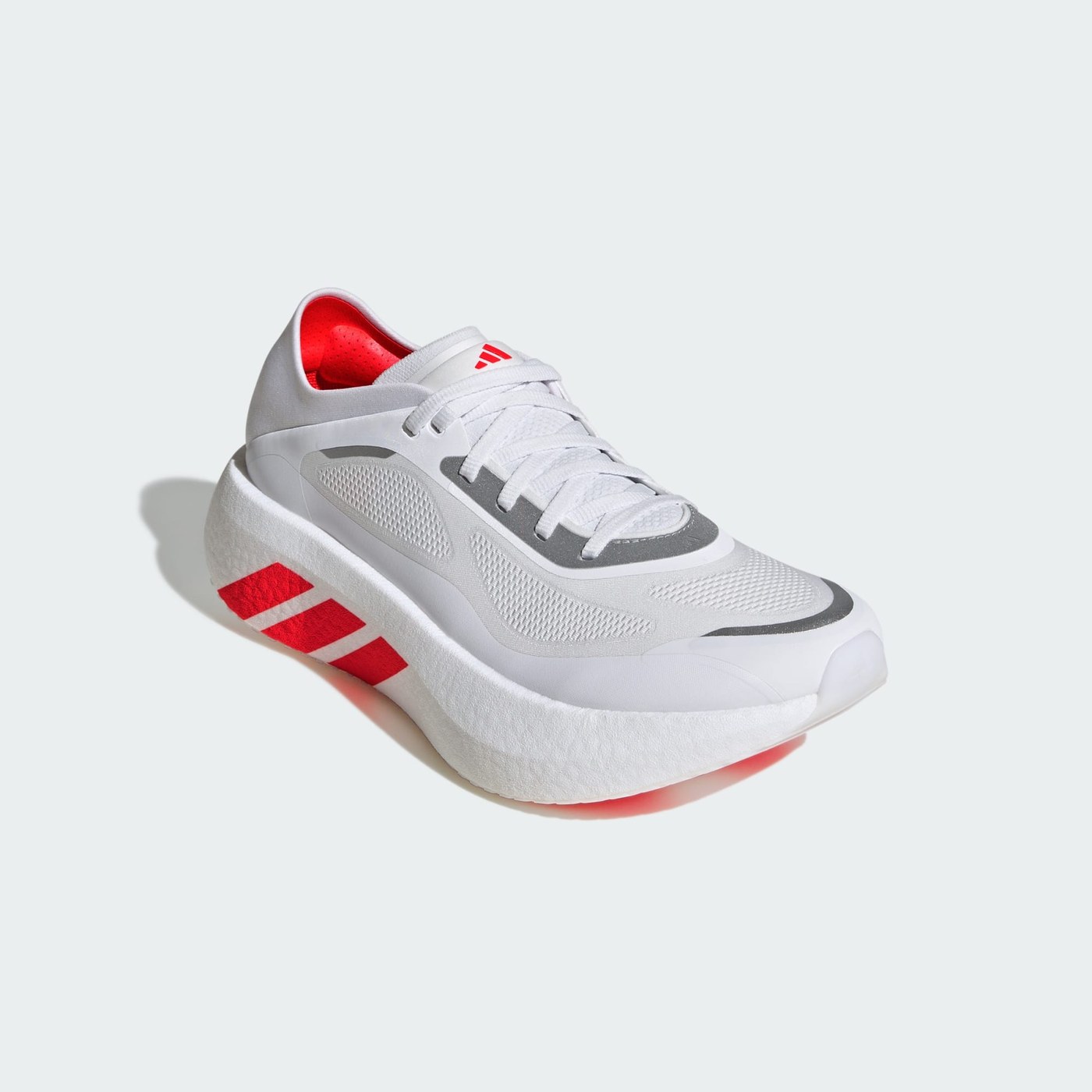
That's all the more surprising because Adidas chose to expose more mesh on the Primeweave upper than on the Edge, with no measurable gain in the lab. The fit, on the other hand, is standard and reassuring: no discomfort in the forefoot and no pressure points on the toes during the longest runs of our test. A plus that contrasts with our reservations about ventilation.
On stiffness, the shoe stays firm in flex, which makes sense with more than 30 mm of stack height under the forefoot. That's not a flaw in itself, just an expected trait of this type of platform. Torsional rigidity stays moderate, which avoids the stiff-plank feel sometimes associated with high-stack shoes. The deliberately soft heel reinforces the shoe's neutral character and the absence of aggressive guidance, consistent with a model built for versatility rather than stability.
© Adidas, official photo used for editorial purposes
Hyperboost Run vs Asics Novablast 6: head to head
| Criterion | Adidas Hyperboost Run | Asics Novablast 6 |
|---|
| Price | €170 | €160 |
| Heel stack height | 38 mm | 41.5 mm (men's) |
| Drop | 6 mm | 8 mm |
| Weight (men's) | 247 g | 253 g |
| Foam | Hyperboost Pro | FF Blast MAX / FF Turbo² SQUARED |
| Outsole | LIGHTTRAXION + Continental | ASICSGRIP |
Both shoes target the same versatile everyday runner, with very similar weight and price. The Hyperboost Run stands out with its lower drop (6 mm vs. 8 mm) and the distinctive grip of its Continental inserts, while the Novablast 6 keeps a slight edge in overall upper breathability.
Our take: who is it for, and which RunMorph training does it suit?
The Hyperboost Run is built for runners who head out 3 to 5 times a week and want a comfortable, lively shoe for their whole routine, without chasing pure performance or very long distances. For hot-weather sessions, or if you sweat a lot, take the breathability issue very seriously before buying, even if that means switching to a better-ventilated alternative. In mild weather or for winter runs, this weakness matters much less.
Value for money is more questionable at €170: that's the same price as the Hyperboost Edge, which is more premium on paper with its higher stack height and dedicated heel pads. If you're torn between the two Hyperboost models, start by comparing your actual use (shorter, versatile runs for the Run; high mileage and long runs for the Edge) rather than relying on the entry-level positioning the name suggests.
To fit this daily trainer into your training, pair it with a RunMorph plan matched to your weekly volume and your target distance. 👉 Explore RunMorph training plans.
RunMorph Coach verdict
The Hyperboost Run confirms the potential of Hyperboost Pro foam in a more accessible package than the Edge, with Continental grip that makes a real difference on wet roads. Breathability, confirmed as a genuine weakness by independent measurements, remains the main obstacle to an unreserved recommendation. 7.5/10: a lively, well-built daily trainer, best for runners who don't always train in serious heat.