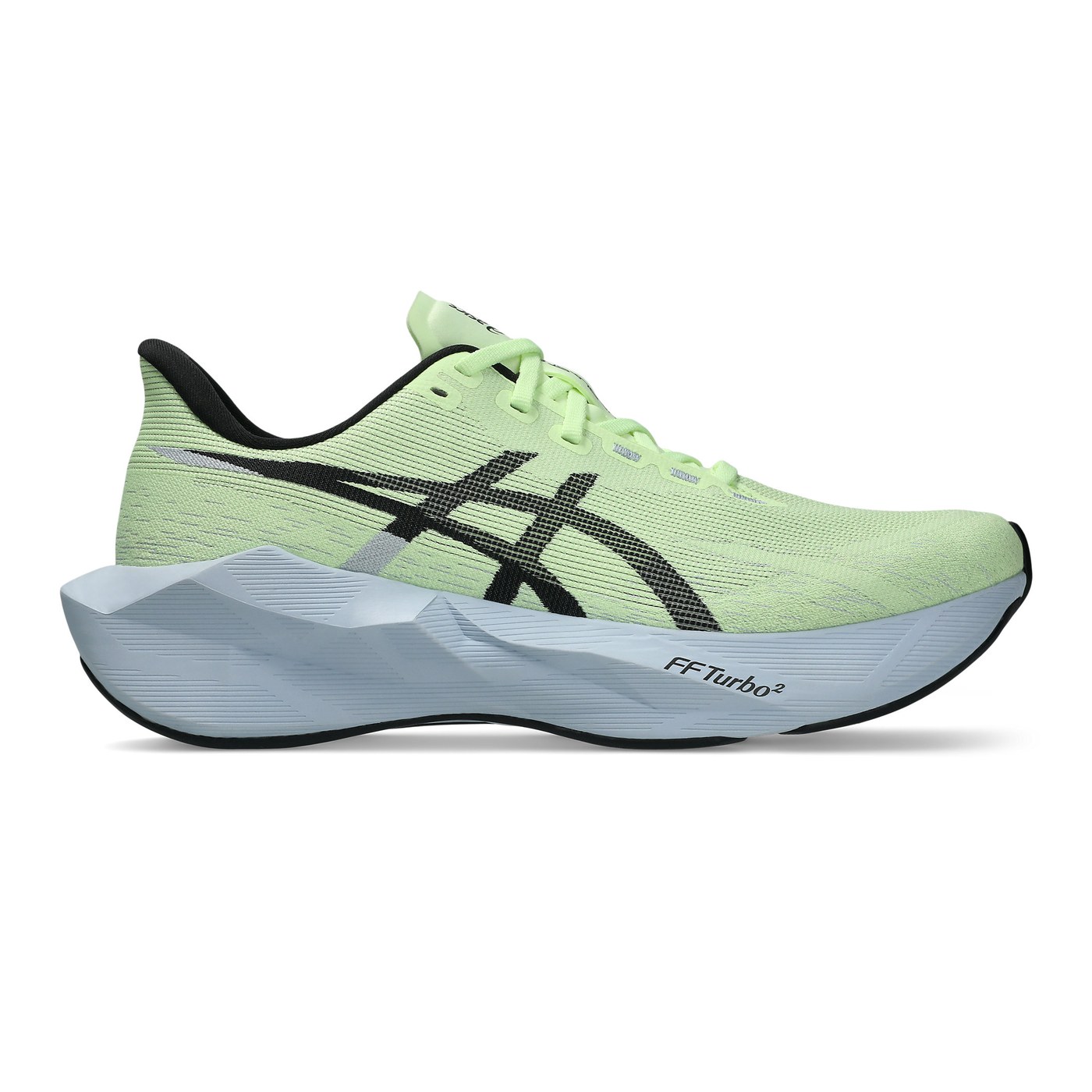
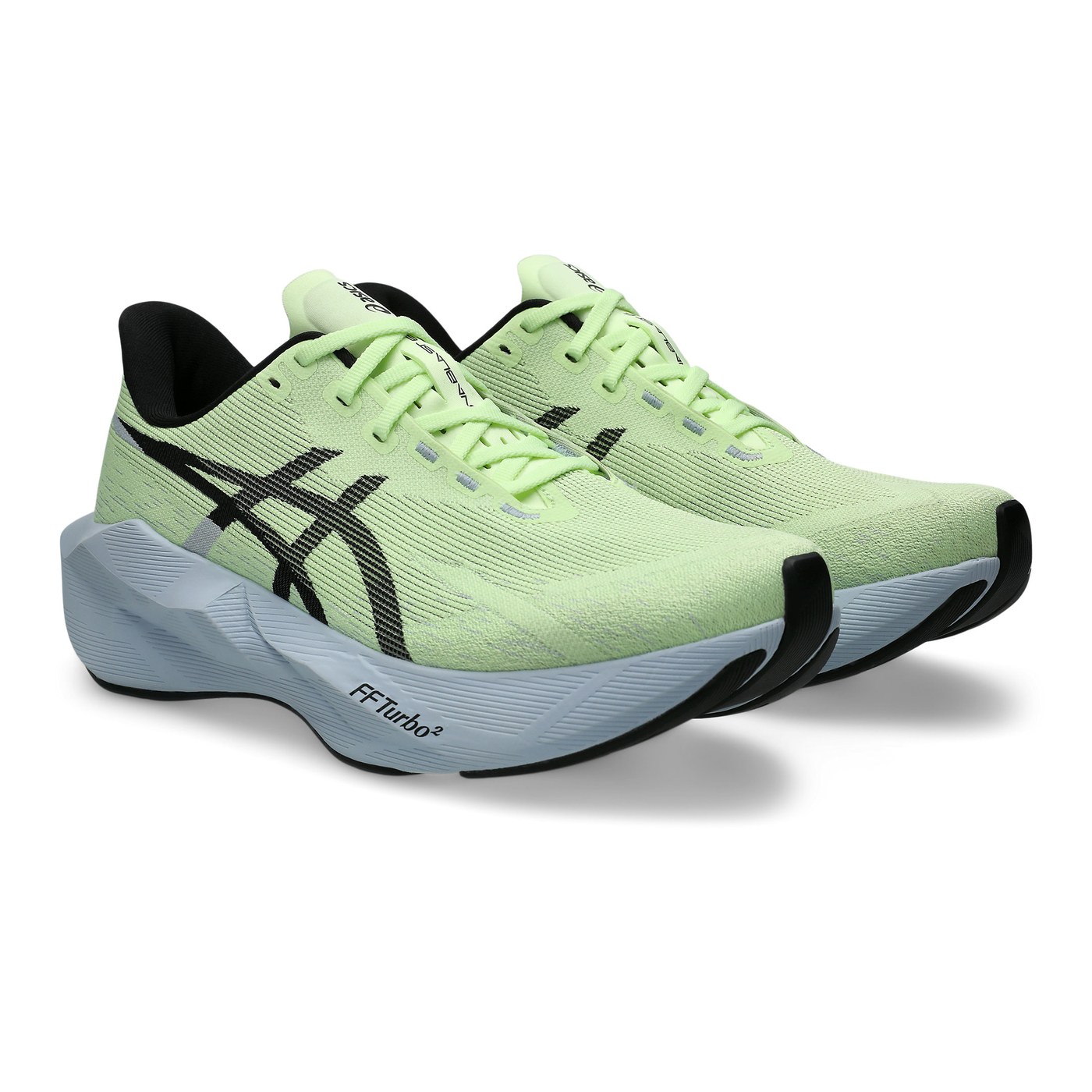
Asics has set July 1, 2026 as the release date for the Novablast 6, and it finally drops the bomb fans of the line were waiting for. FF Turbo² foam now sits under the forefoot. A first for the Novablast. Until now, Asics kept this tech for the Megablast and the Sonicblast, two shoes that sit much higher in its performance lineup. 41.5 mm of stack height at the heel, 33.5 mm at the forefoot, an 8 mm drop, 253 g on the i-Run scale in EU size 42, a redesigned ASICSGRIP outsole and a €160 price tag. This review tells you who it is really built for, what the dual foam changes, and why the Novablast 5 will never be your default pick again.
Asics Novablast 6 Review: FF Turbo² Wakes Up Strava's Favorite
8.5/10
Asics Novablast 6: Strava's most-logged daily trainer switches to dual foam
The Novablast is not just another daily trainer. Asics says it plainly: it is one of the fastest-growing running lines in the world. In 2025, the Novablast 5 even became the most-logged running shoe on Strava in its category. So this is no quiet launch. It is the Asics flagship for fun daily training. And for the first time in six versions, the brand is touching its foam recipe.
The Novablast 6 keeps its DNA: the trampoline feel you recognize from the first strides, the sculpted geometry that lands like no other daily trainer, and high cushioning without the heaviness. But one major detail changes. Under the forefoot, in the trampoline module that defines the shoe, Asics now uses FF Turbo² foam. It is a supercritical foam with very high energy return that had never left the brand's racing models.
RunMorph's advice: the Novablast 6 is NOT a simple continuation of the Superblast 3 or the Gel-Cumulus 28. It sits between the two: snappier than the Cumulus, more versatile and less demanding than the Superblast 3 at fast paces. If you want ONE road shoe to handle 80% of your sessions, from relaxed easy runs to heart-rate tempo runs, this is its zone. If you log a lot of very slow runs above 6 min/km, the Cumulus 28 remains the better fit. If most of your workouts happen between 4 min/km and 5 min/km, the Superblast 3 keeps the edge.
© Asics, official photo used for editorial purposes
Objective specs
| Brand | Asics |
| Model | Novablast 6 |
| Official release | July 1, 2026 (announced May 29, 2026 in Kobe) |
| Type | Road, neutral daily trainer |
| Drop | 8 mm |
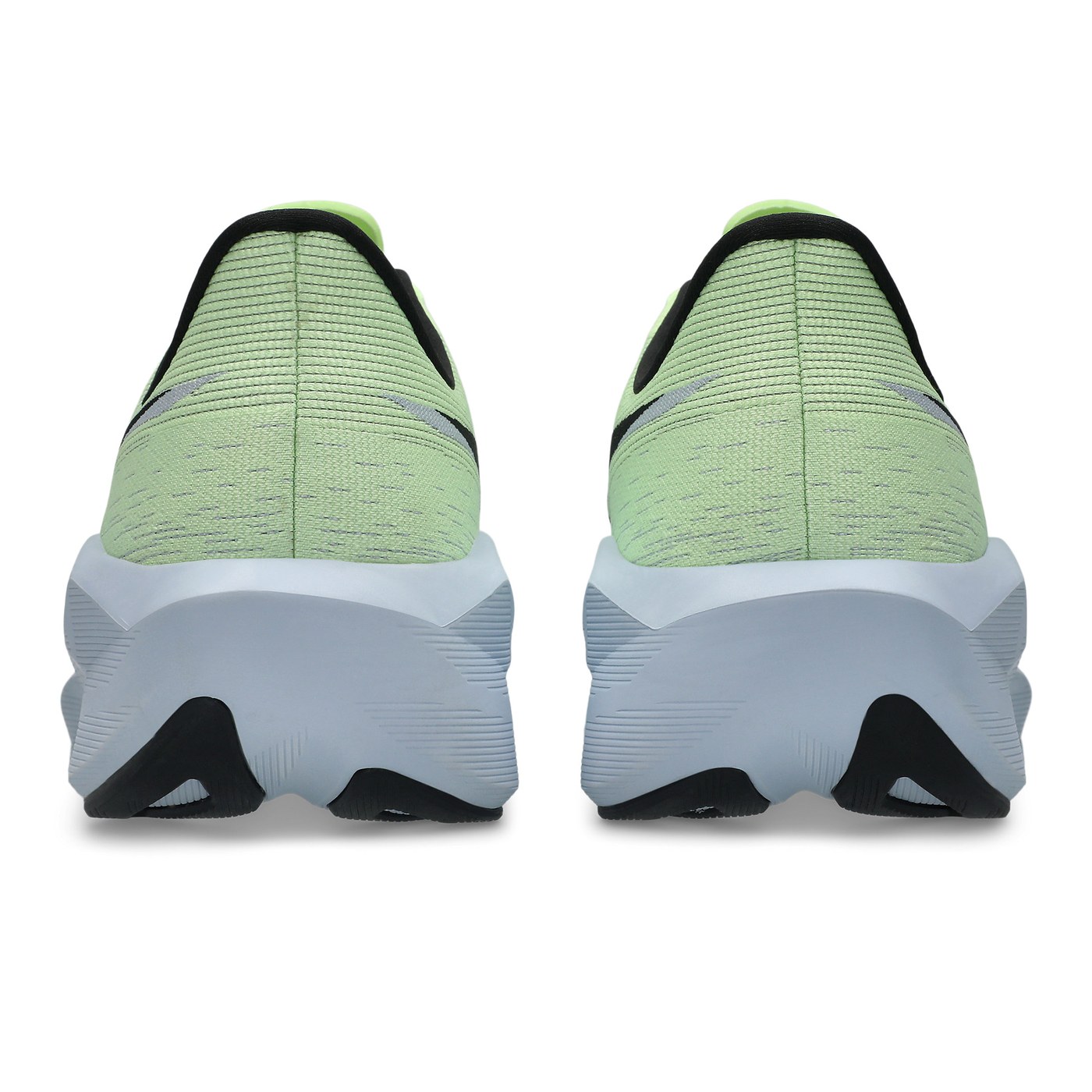
| Heel / forefoot stack height | 41.5 mm / 33.5 mm |
| Weight (men's EU 42) | 253 g (218 g for the women's version in size 39) |
| Carbon plate | No |
| Main foam | FF Blast Max (heel and midfoot) |
| Forefoot foam | FF Turbo² (trampoline pod, a first on the Novablast) |
| Outsole | ASICSGRIP forefoot + AHAR LO |
| Upper | Optimized technical mesh (Engineered Woven) |
| Tested colorway | Lime (1011C243-750) |
| Recommended distance | 5K to marathon, easy runs to heart-rate tempo runs |
| Official price | €160 |
Who is the Novablast 6 for?
The runner who wants one road shoe for everything
The Novablast 6 is built for a one-shoe rotation. You run 3 to 6 times a week, you mix easy runs, long runs, fartlek and tempo, and you have no desire to stack four pairs by the front door. The dual foam changes the game: the FF Blast Max in the heel absorbs slow easy runs without slapping, and the FF Turbo² in the forefoot wakes the shoe up as soon as you shift to 10K or half marathon race pace. No Novablast had delivered on that promise until now. The V5 felt mushy once you pushed faster than 5 min/km. The V6 fixes exactly what needed fixing.
The 60 to 85 kg runner training for a 10K or a half
The weight sweet spot is clear. Under 60 kg, 41.5 mm of cushioning can feel oversized and disconnect you from the ground. Above 85 kg, the Asics foam starts to bottom out on long runs and loses its bounce after 25 km. In between, it is the ideal playground. The V6 gives you a shoe that forgives a bad legs day but answers when you add intensity. Whether you are building for a 10K or a half, it covers 80% of your sessions. For the marathon, it works for easy runs and long runs if you are aiming for under 4 hours, but on race day you will lace up an Asics Magic Speed 5 or something faster.
The runner coming back from injury or looking to limit impact
41.5 mm of stack height at the heel means protection. Many athletes returning from Achilles tendinopathy or plantar fasciitis look for a neutral, high-cushion daily trainer that absorbs impact without stiffening the transition. The Novablast 6 checks those boxes. A moderate 8 mm drop, a rocker geometry that helps you roll through, and FF Blast Max foam that cushions without letting your foot float. Use it for the first 6 to 8 weeks of your comeback, then alternate with a more minimal pair once your confidence is back.
© Asics, official photo used for editorial purposes
What the FF Turbo² + FF Blast Max dual foam really changes
This is THE headline change on the V6, and you feel it from the first strides. The V5 used a single slab of FF Blast Max across the entire midsole. Comfortable and bouncy, but the forefoot dragged at toe-off when you picked up the pace. Plenty of runner feedback pointed to that sluggish push-off faster than 5 min/km.
The V6 tackles the problem head-on. The forefoot trampoline module switches to FF Turbo², the same supercritical foam found in the Megablast and the Sonicblast. This foam returns more energy than FF Blast Max. The feel: when you hit toe-off, the forefoot pushes you forward instead of collapsing passively. The Novablast 6 comes "alive" underfoot, where the V5 stayed polite but muted above threshold.
Asics does not swap out the main foam, though. The heel and midfoot keep FF Blast Max, which remains excellent for pure comfort and impact absorption. This split reflects a clear design choice: cushion where you need it (at heel impact) and propel where you need it (at push-off). It is exactly the logic Asics applies to its Superblast 3, transferred to a shoe that costs €40 less.
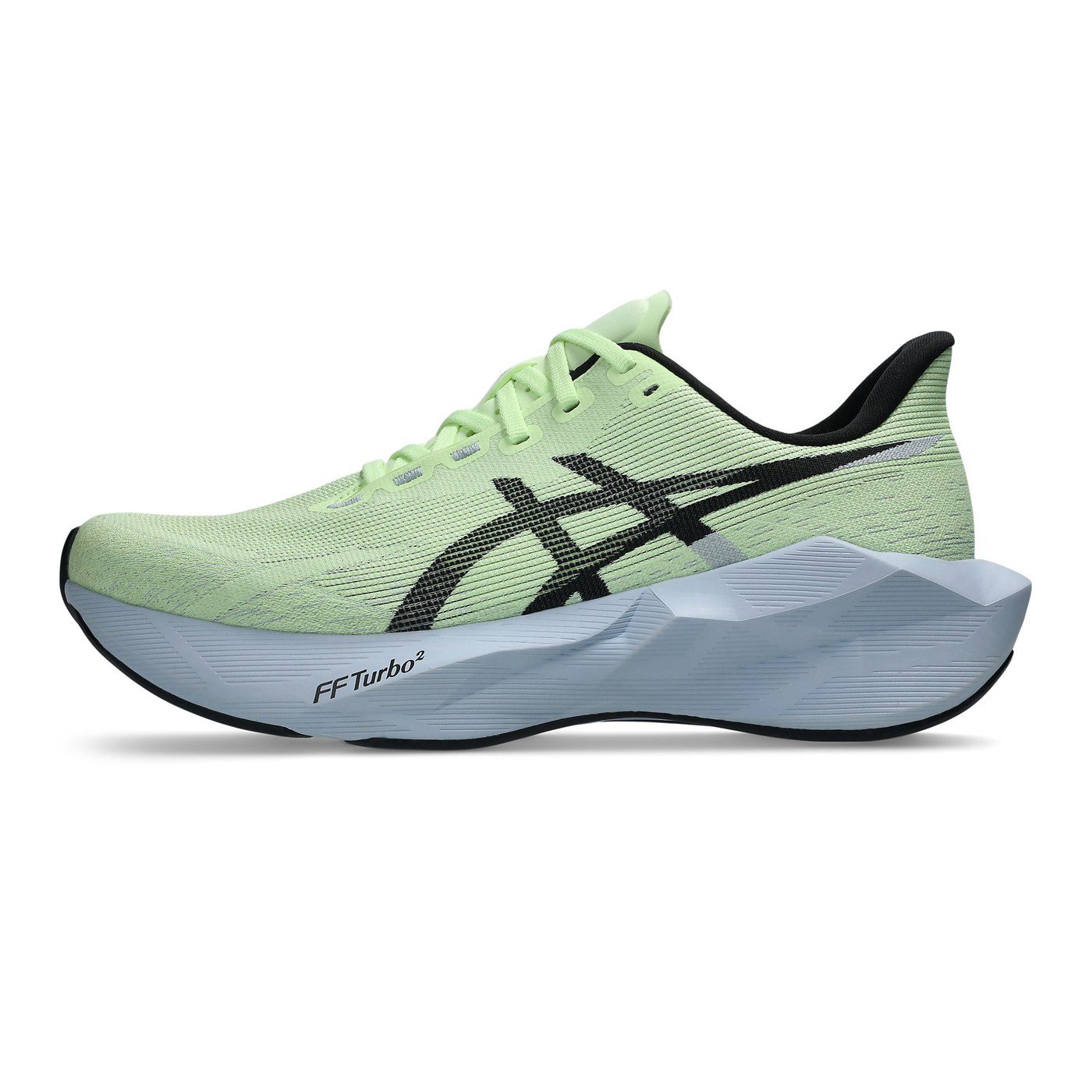
The geometry remains the signature of the line. The sculpted pods visible on the lateral side absorb and give back, and the subtle rocker guides the transition without forcing it. You do not feel a plate, you do not feel a catapult effect, you feel a livelier forefoot. The difference shows up as a few seconds per kilometer when you move from an easy run at 5 min/km to 4:20 min/km.
ASICSGRIP: the end of the wet-road ordeal
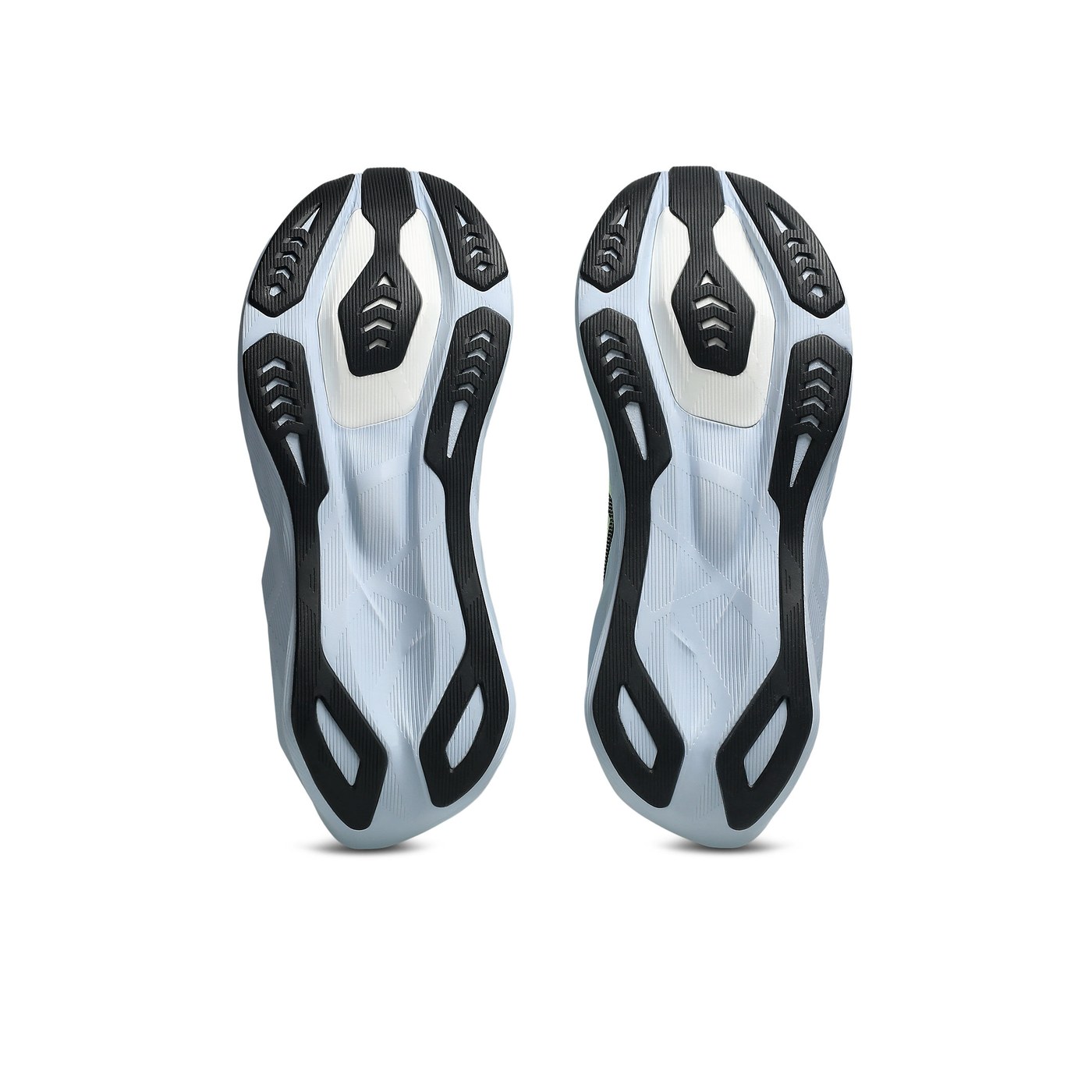
The other change matters just as much. Since launch, the Novablast 5 had carried a terrible reputation on damp pavement. The AHAR LO rubber on the forefoot was light and durable, but it slipped on wet morning cobblestones and on painted crosswalks. It is one of the most frequent complaints in the runner feedback gathered on the V5.
Asics fixes it by bringing ASICSGRIP to the forefoot. It is the rubber used on the Metafuji Trail racing shoe, a compound designed to bite into wet rock. Adapted for the road, it gives the Novablast 6 the reliable grip the V5 never had. You can now head out on a drizzly Tuesday evening in October without fearing a slide in the corners. A small line on the spec sheet, a big difference in your legs.
AHAR LO stays on the rest of the outsole for durability. So Asics gives up nothing on the shoe's lifespan. Expected mileage remains in the 700 to 900 km range depending on the runner, identical to the V5. That is the standard range for a premium daily trainer in 2026.
How it stacks up against the competition
In the segment of lively neutral daily trainers between €150 and €180, the Novablast 6 faces crowded competition. Two profiles stand out as direct comparisons.
Against the Hoka Mach 7 (€160, 235 g, 5 mm drop), the Novablast 6 is taller (41.5 mm vs. 35 mm of heel stack height), more protective and more versatile. The Mach 7 stays faster at top speed and lighter, but it is less forgiving on long runs. If you want a daily trainer that is not too built up, the Mach is still the right call. If comfort comes first and you still want bounce, the Novablast 6 takes the edge.
Against the New Balance Rebel v5 (€160, 223 g, 6 mm drop), the Novablast 6 is heavier (+30 g) and taller. The Rebel remains a more tempo-oriented super trainer, with its nylon plate and PEBA. The Novablast 6 targets broader use: heart-rate tempo runs are on the table, but it also stays comfortable on slow easy runs, which the Rebel really is not.
Against its stablemate, the Asics Gel-Cumulus 28 (€160, 8 mm drop), the difference is clear: the Cumulus is the "total comfort" daily trainer with FF Blast Plus Eco, softer, plusher and less dynamic. The Novablast 6 makes everything livelier. If most of your running is slow aerobic base work, the Cumulus still makes sense. If you vary your paces through the week, the Novablast 6 will get more use.
Against the Hoka Clifton 10 (€155, 252 g, 8 mm drop), it is a duel between high-cushion neutral daily trainers. The Clifton 10 is more stable and more predictable. The Novablast 6 is more playful and livelier. Pick by feel: Clifton for steady, uneventful mileage, Novablast 6 for the fun of running.
Against the Brooks Ghost 18 (€150, 280 g, 12 mm drop), the Novablast 6 is clearly more dynamic and 27 g lighter. The Ghost 18 remains more stable and more universal, perfect for beginners. The Novablast 6 asks for a reasonably clean stride to make the most of its bounce.
© Asics, official photo used for editorial purposes
How to fit it into your RunMorph training plan
The Novablast 6 can do almost everything, but it truly excels at three jobs.
In a 10K or half marathon build: it soaks up easy runs, handles VT2 threshold sessions and fartleks, and holds up on long runs up to 25 km. If you follow a 10K- or half-specific RunMorph plan, this pair covers 70 to 80% of your weekly volume. Save a carbon-plated shoe (Magic Speed 5, Endorphin Pro 5 or Vaporfly 4) for race day.
In a marathon build: the Novablast 6 serves as your all-purpose training shoe. Easy runs, slow long runs, race-specific sessions. On race day, it falls short if you are chasing an ambitious time. It can still work as a backup option if you are aiming for 3:30 or slower and do not want to invest in a carbon shoe.
For a gradual return from injury or a two-shoe rotation: the Novablast 6 shares the load with a lighter, more minimal shoe (Hoka Mach 7, New Balance Rebel v5). It takes the tired days and the long runs, while the other pair handles tempo runs and short races.
The RunMorph 10K in 8 weeks plan or the Half marathon in 12 weeks plan make full use of this Novablast's versatility. You do not have to decide before the session starts: you head out with confidence and adjust the intensity to how you feel that day.
RunMorph Coach's verdict
The Novablast 6 does not reinvent the line. It sharpens it, exactly where the V5 showed its limits. The FF Turbo² + FF Blast Max dual foam fixes the V5's only real flaw (a forefoot that went to sleep above threshold), ASICSGRIP ends the wet-grip ordeal, and the tighter upper locks the foot down better without choking breathability. Three targeted tweaks on a base that already worked well. The result: the most versatile, most complete and most balanced Novablast in the line.
The €10 gap with the V5 (€160 vs. €150) is reasonable given the technical changes. If you already own the V5 and find it too mushy above threshold, upgrading to the V6 is a real answer, not just a bigger number on the box. If the V6 is your first Novablast, it is one of the easiest daily trainers on the market to recommend in 2026.
Final RunMorph score: 8.5/10. The missing half point: at heart, this is still a daily trainer with an 8 mm drop and high cushioning, so it does not suit very heavy runners (90 kg+) who want firmer support, or minimalist purists who prefer a low drop and low stack height. For everyone else, it is the default pick for fall 2026.
© Asics, official photo used for editorial purposes
Key takeaways for your training
- Dual foam, for real: FF Turbo² in the forefoot plus FF Blast Max in the heel is a genuine technical first on the Novablast. It fixes the V5's lazy forefoot and gives you bounce at 10K and half marathon race pace.
- Grip you can finally trust: ASICSGRIP replaces AHAR LO on the forefoot. You can run on a drizzly Tuesday evening without worrying about slipping in the corners. A small detail, a lot of peace of mind.
- Sweet spot: 60 to 85 kg: this is the runner profile where the Novablast 6 shines. Below that, you feel perched too high. Above it, the foam bottoms out on long runs and loses its bounce after 25 km.
- The go-to daily trainer for fall 2026: this pair handles 70 to 80% of your weekly volume in a 10K or half marathon build. Keep a carbon shoe for race day and you have a clean rotation.
- Not your marathon PR shoe: to chase an ambitious time under 3:30, go for a carbon racer (Endorphin Pro 5, Vaporfly 4) or a faster super trainer (Superblast 3).