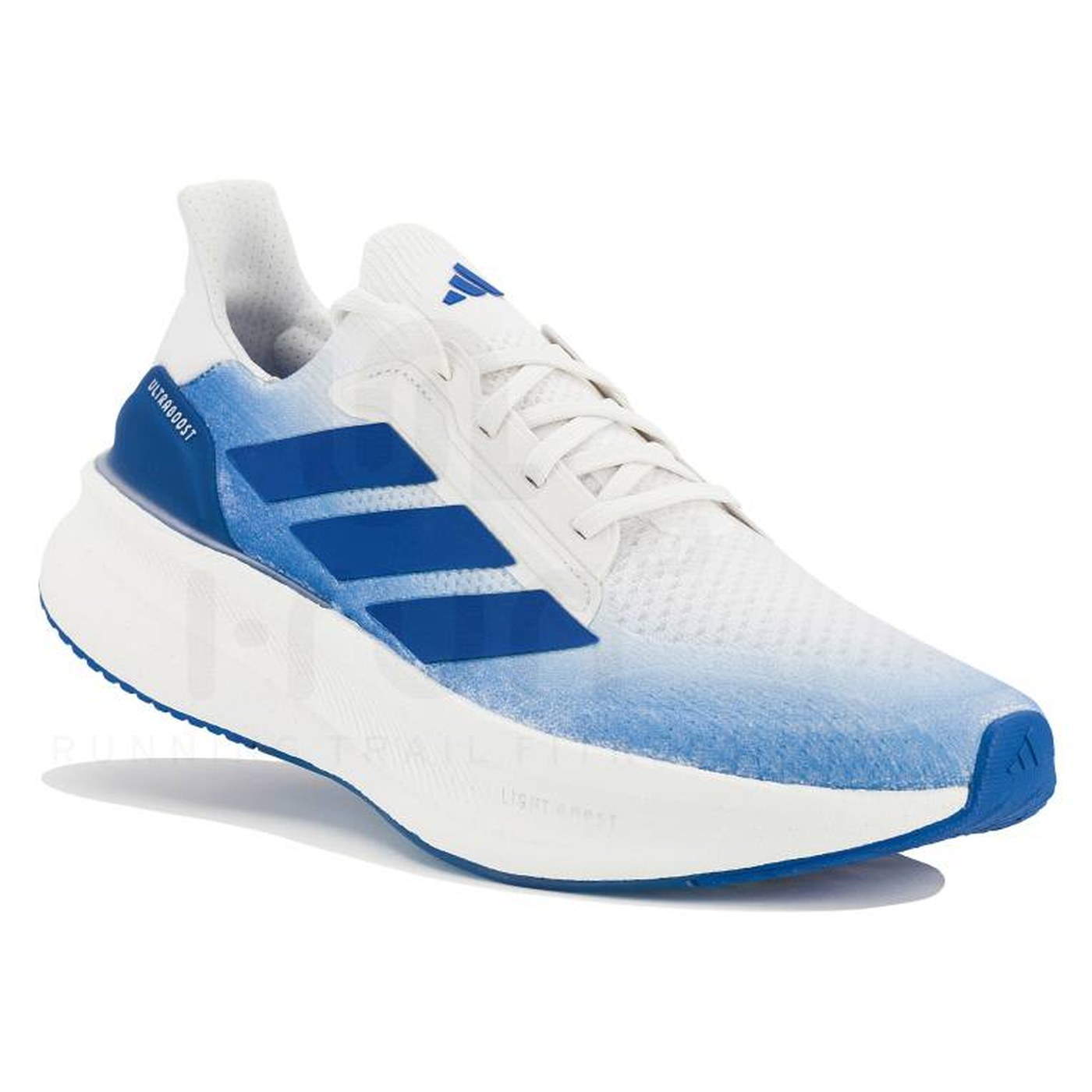
For years the UltraBOOST was a lifestyle shoe that happened to run. With the 5X, adidas flips the script: make the iconic silhouette genuinely fast on the road without giving up the comfort that has driven its success since 2015. 17 grams lighter than the UltraBOOST 5, a new Light BOOST foam, a reworked midfoot hold: on paper, the pitch is clear. RunMorph tested the Team Royal Blue colorway to find out whether the UltraBOOST finally has real running legs.
© adidas, official photo used for editorial purposes
UltraBOOST 5X: adidas takes another shot at dynamic comfort
The UltraBOOST line built its reputation on shaky ground: a lifestyle shoe that also claims to be a serious running shoe. For several generations, BOOST foam delivered remarkable comfort but a weight that gave away its true calling, more street than speed. With the 5X, adidas reworks the equation around Light BOOST, a foam billed as 30% lighter, and a slimmed-down midfoot support system that shaves 17 grams off compared with the regular UltraBOOST 5.
The result aims to be a premium daily trainer, sitting between the max-cushion comfort of a Hoka Bondi 9 and the liveliness of a Nike Pegasus 42. At RunMorph, we see this middle ground, comfortable but not mushy, as exactly where adidas has historically struggled to win over running purists against Nike, Hoka or Saucony. So the question the UltraBOOST 5X raises is simple: has the brand finally found the right balance?
RunMorph tip: if you are mainly after a shoe for intervals and fast sessions, look at the adidas adizero Adios Pro 4 instead. The UltraBOOST 5X is built for mileage and comfort, not raw speed.
Light BOOST: what changes underfoot?
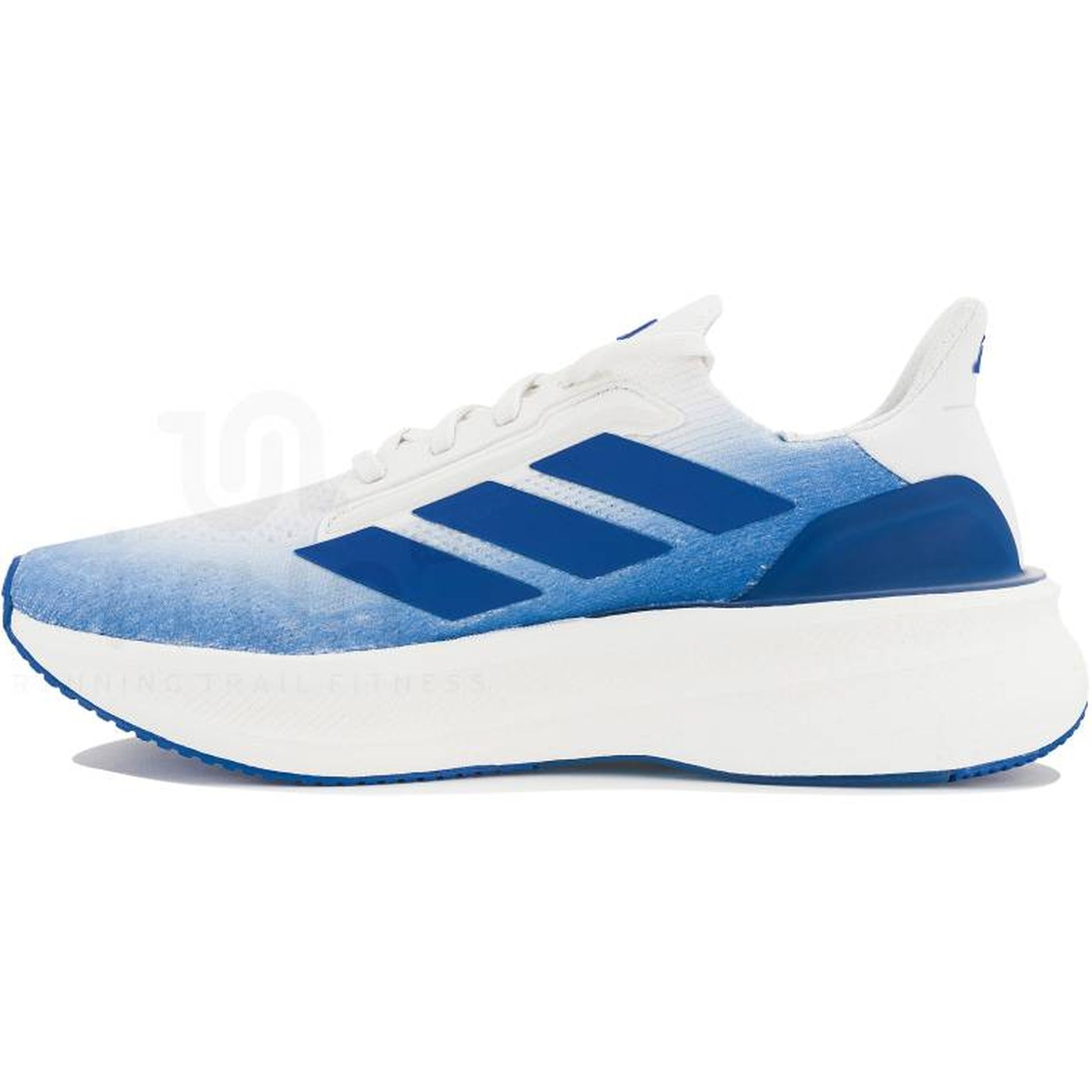
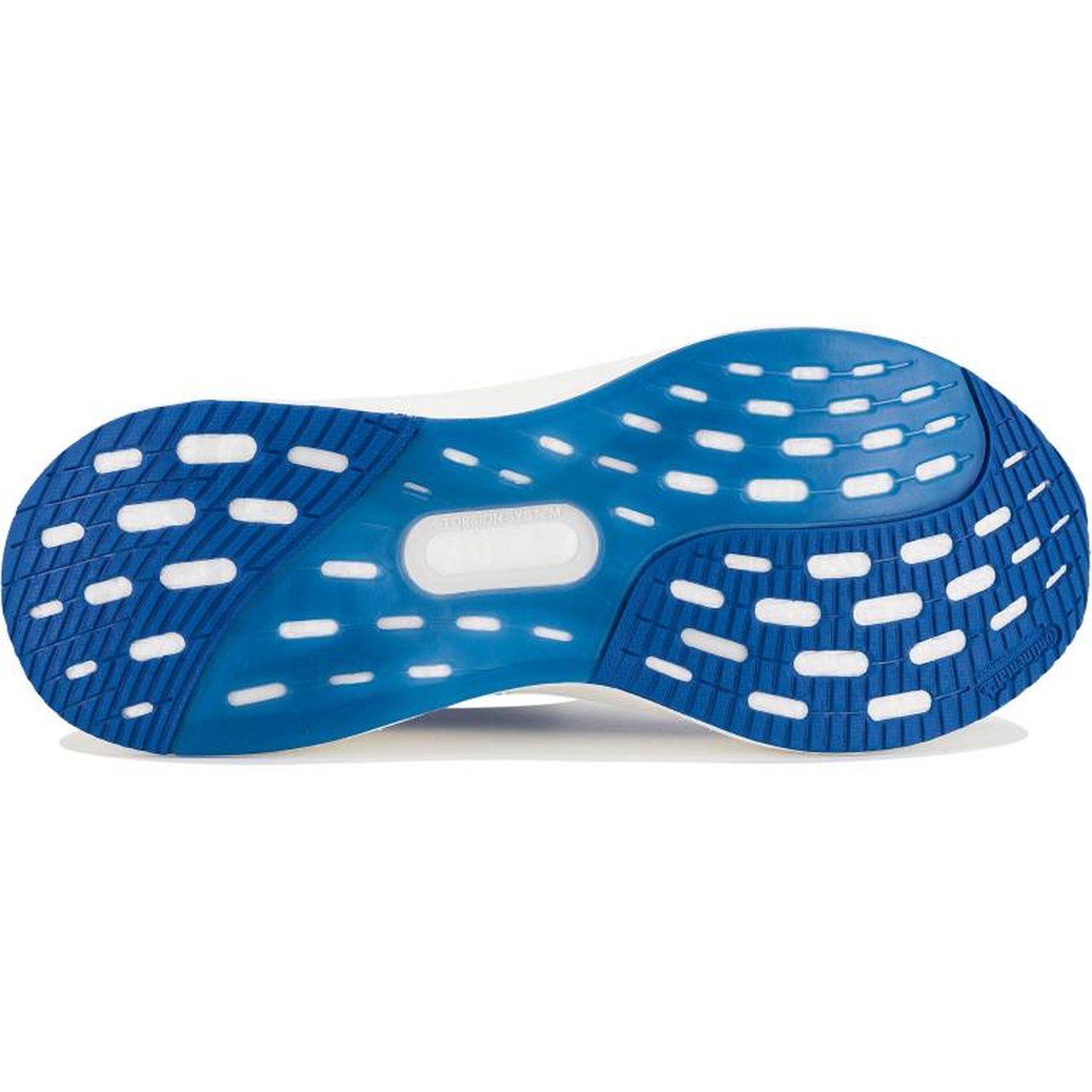
Light BOOST keeps the principle of the small expanded foam pellets that made Boost technology famous, but at a lower density. On the road, that means cushioning that stays plush on impact without the heavy feel of the first UltraBOOST generations. The Torsion System, a stabilizing plate under the midfoot, frames this generous foam so it does not turn unstable late in a run, when fatigue starts to break down your stride.
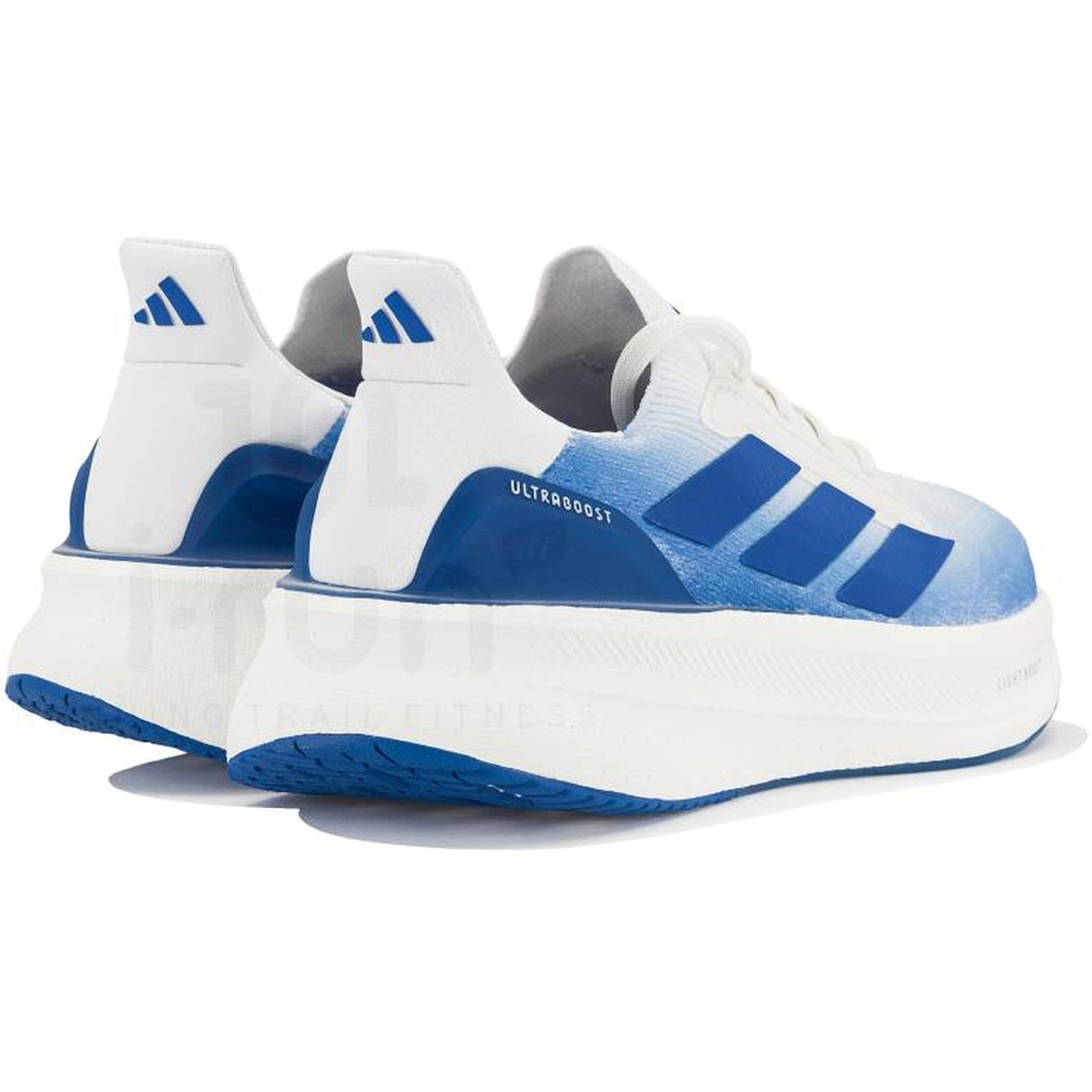
The next-generation Primeknit upper rounds things out with a wraparound fit that breathes better than previous versions. Heel hold has been reinforced, which limits rubbing over long distances, a flaw regularly pointed out on older UltraBOOST models.
© adidas, official photo used for editorial purposes
On the road: long-distance comfort, but speed has its limits
An in-depth test run over more than 500 km by a French tester confirms the comfort promise: the foam absorbs impact effectively and delivers noticeable energy return from the very first strides, with outsole wear rated minimal after that distance, which points to a total lifespan in the 800 to 1000 km range. The same test notes surprising versatility over a full half-marathon training run, with decent responsiveness on short pickups (200-400 m), though it never rivals a race shoe.
On grip, the Continental rubber outsole earns praise from that same test for its traction on wet roads and packed paths, even in heavy rain. On the other hand, a customer review posted on i-Run by an experienced runner reports unexpected wear on trails over time, which contrasts with the very positive long-distance test: the gap most likely comes down to intensity and terrain, since the UltraBOOST 5X is designed first and foremost for roads and groomed paths, not technical trail.
On liveliness, several French tests agree: the shoe lacks snap for fast paces and intervals, a structural trait tied to its comfort-first purpose rather than a design flaw. Compared with the regular UltraBOOST 5, the 5X is also described as noticeably lighter (around 20 grams according to measurements), which improves the dynamic feel without fundamentally changing the shoe's profile.
RunMorph tip: the UltraBOOST 5X fits perfectly into the mileage of a marathon or half-marathon build, on long runs and recovery jogs. Pair it with a
RunMorph training plan that structures your paces, and keep your interval sessions for a lighter pair.
UltraBOOST 5X vs Nike Pegasus 42: head to head
| adidas UltraBOOST 5X | Nike Pegasus 42 |
|---|
| Drop | 10 mm | 10 mm |
| Stack forefoot / heel | 29 / 39 mm | 23 / 33 mm |
| Weight | 263 to 292 g | 280 g |
| Cushioning | Very generous, plush | Firmer, closer ground feel |
| Responsiveness | Decent, not built for speed | Good daily trainer balance |
| Price | 180 euros | 140 euros |
The Pegasus 42 stays lighter and livelier when you change pace, with a lower entry price. The UltraBOOST 5X wins on pure long-run comfort and on the durability reported by real-world tests. The choice mostly comes down to priorities: liveliness and budget for the Pegasus, maximum comfort and longevity for the UltraBOOST 5X.
© adidas, official photo used for editorial purposes
Our verdict from the road: who is the UltraBOOST 5X for in 2026?
Regular runners building 40 to 70 km a week, with plenty of easy runs and a weekend long run, will find the UltraBOOST 5X a comfortable, durable companion. If you prioritize speed, intervals or a very light race shoe, look elsewhere: that is not what this model is for, and the shoe makes no attempt to hide it.
To soak up the miles of a marathon build or lock in your long runs toward a half, the UltraBOOST 5X slots nicely into a
RunMorph training plan that structures your mileage and your paces.
© adidas, official photo used for editorial purposes
RunMorph Coach verdict
The UltraBOOST 5X delivers on a real promise: a comfortable shoe that no longer completely sacrifices liveliness for cushioning, unlike some earlier generations. The 500 km logged by independent testers confirm solid durability and comfort that goes the distance. But the lack of snap at fast paces is real, and the 180 euro price puts the shoe up against competitors that often offer more versatility for less. 8.0/10: a very good premium daily trainer, clearly best kept for mileage and comfort rather than performance.