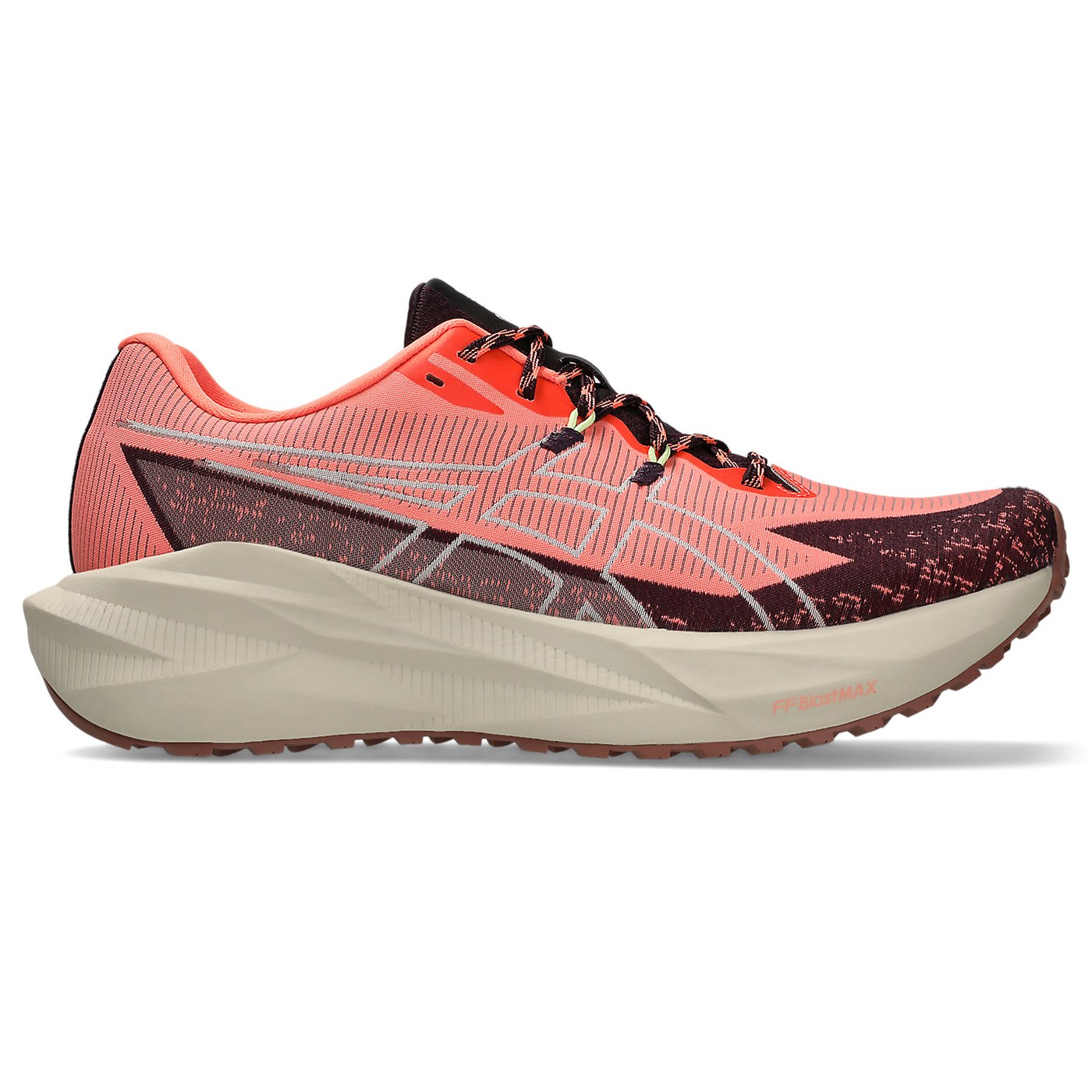
On sale since August 1, 2026, the Blazeblast launches an all-new trail franchise for Asics, the first one designed from the ground up for runners who are new to trail or who mix pavement with smooth, runnable paths. RunMorph took it on gravel, forest paths and technical sections to see whether that promise of accessibility holds up in the real world.
© Asics, official photo used for editorial purposes
An all-new trail franchise from Asics
Asics makes a bold move by launching the Blazeblast as an entirely new franchise, not just a trail version of an existing road model. The goal is clear: offer an accessible way into trail running for runners who add trail sections to their road runs or who are just starting out, with no ambition to take on technical ultra-endurance.
The link to the Novablast, the liveliest road daily trainer in the Asics lineup, is deliberate. The Blazeblast borrows its bouncy spirit and its FF Blast Max foam, adapted here for all-terrain use with an Asicsgrip outsole and a lug pattern built for gravel rather than the mountains.
FF Blast Max and Trampoline Pod: betting on bounce on the trail
The Blazeblast's technical core is FF Blast Max foam, already known at Asics for its generous energy return on the road. In the forefoot, the "Trampoline Pod" construction goes a step further: a dedicated zone designed to amplify the sense of propulsion during the stance phase, with the aim of creating an "impulse experience" rather than simple passive cushioning.
RunMorph's tip: for a more versatile, more technical option in the Asics trail lineup, the Asics Fuji Lite 6 remains the affordable benchmark for grip. To get the FF Blast Max feel on the road, the Asics Novablast 6 is the daily trainer the Blazeblast draws directly from.
The 43 mm heel stack and the 8 mm drop, closer to road habits than the lower drops usually found on trail shoes, confirm the intent: a smooth transition for runners coming off the pavement. The Asicsgrip outsole, with its 2.5 mm lugs, openly accepts a trade-off: decent grip on gravel and dry ground, without the depth you need for mud or steep slopes.
On the trail: lively on smooth paths, out of its depth on technical terrain
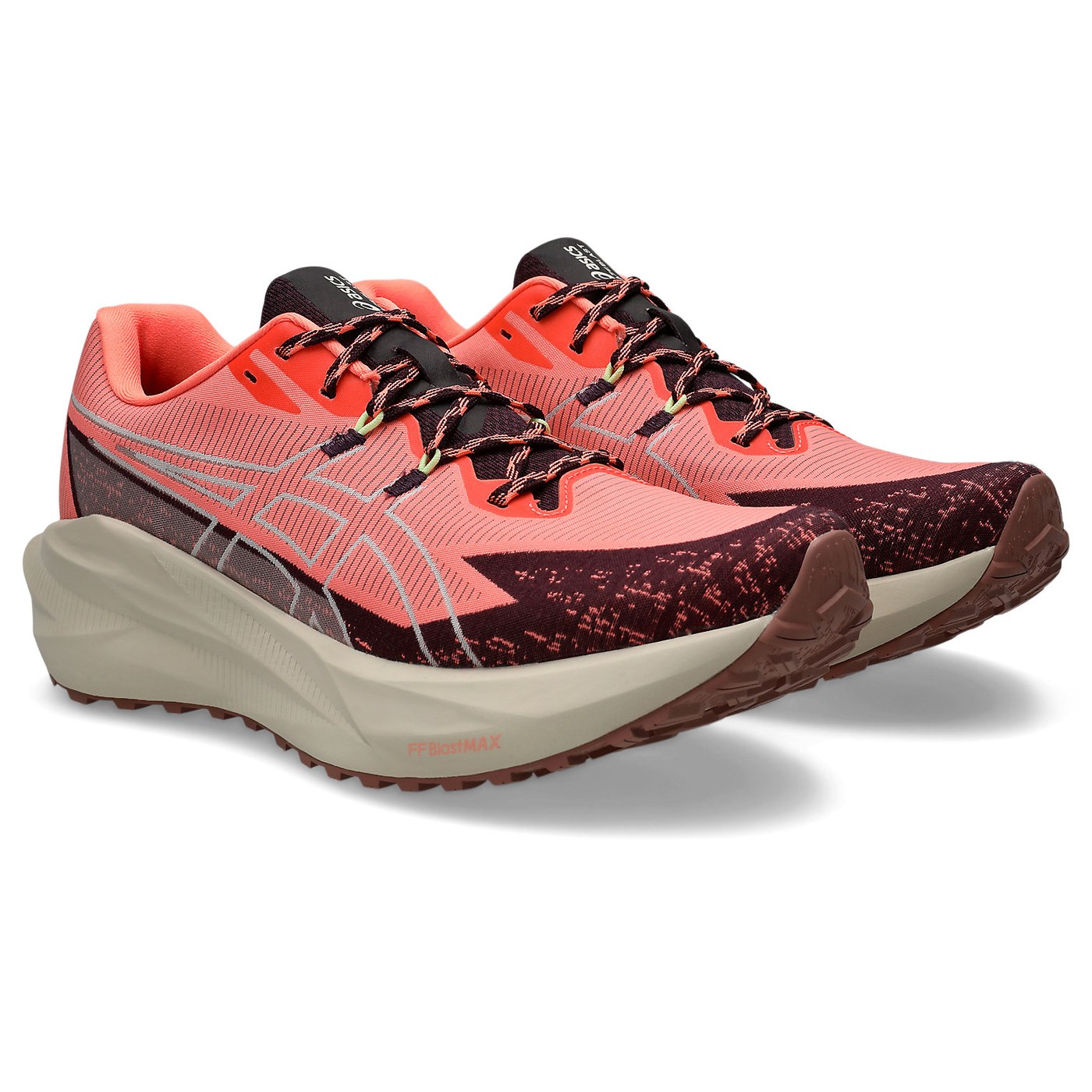
On gravel and smooth forest trails, the Blazeblast delivers. The FF Blast Max foam gives you an instantly noticeable bounce, very close to the Novablast's feel on the road. That makes it an enjoyable shoe for stringing together long mixed runs without ever feeling weighed down by the heft or stiffness of a burlier trail shoe. You feel the forefoot Trampoline Pod mostly when you speed up, with a clear push on every surge.
The generous stack and the 8 mm drop, higher than the trail average, ease the transition for road runners: your stride stays natural, without the adjustments that lower-drop trail shoes often demand. The modest weight (252 g) adds to that light, lively feel on runnable sections.
The limits show up fast once the terrain gets tricky. On wet trails, roots or steep grades, the 2.5 mm lugs run out of bite and the shoe tends to slip, proof that the Blazeblast was never meant for technical trail. No surprise given how Asics positions it, but keep it in mind if you're eyeing this pair for mountain runs or muddy winter trails.
© Asics, official photo used for editorial purposes
Asics Blazeblast vs Asics Fuji Lite 6: which entry-level trail shoe should you pick?
| Criteria | Asics Blazeblast | Asics Fuji Lite 6 |
|---|
| Price | €160 | €130 |
| Drop | 8 mm | Lower, classic trail profile |
| Weight (men's) | 252 g | Comparable |
| Lugs | 2.5 mm | Deeper, better grip |
| Positioning | Accessible trail, gravel and smooth paths | Versatile trail, more varied terrain |
| Feel | Lively, road-style | More trail-oriented |
Both models target runners who are starting out or who stick to non-technical trails, but with different philosophies. The Blazeblast bets on liveliness and a smooth transition from the road, even if that means giving up some grip. The Fuji Lite 6 stays truer to classic trail codes, with better grip on varied terrain at a lower price. Your choice comes down to the trails you run: gravel and smooth paths for the Blazeblast, rougher terrain for the Fuji Lite 6.
Our take: who is it for, and which RunMorph training does it suit?
The Blazeblast is aimed first at road runners who want to add trail sections to their runs without radically changing the feel underfoot, and at trail beginners looking for an affordable first pair for non-technical routes. It's also a good way to vary your training surfaces without giving up the liveliness you enjoy on the road.
If you're an experienced trail runner heading into the mountains, onto technical trails or out in wet weather, the Blazeblast is clearly not the right pick: go for a trail shoe with deeper grip. This new franchise fully owns its entry-level positioning, and that's exactly what makes it a coherent product for its target audience.
To build this accessible trail shoe into your progression, pair it with a RunMorph plan that alternates road runs and off-road sections to match your level. 👉 Explore RunMorph training plans.
The RunMorph Coach's verdict
The Asics Blazeblast pulls off its bet of bringing lively, road-style trail running to more runners, with convincing FF Blast Max foam and a Trampoline Pod that adds real pop on surges. The franchise clearly owns its limits on technical terrain, which isn't a flaw but a coherent positioning choice. 7.5/10: an excellent gateway to trail for road runners, best kept for smooth paths and gravel rather than technical mountain terrain.