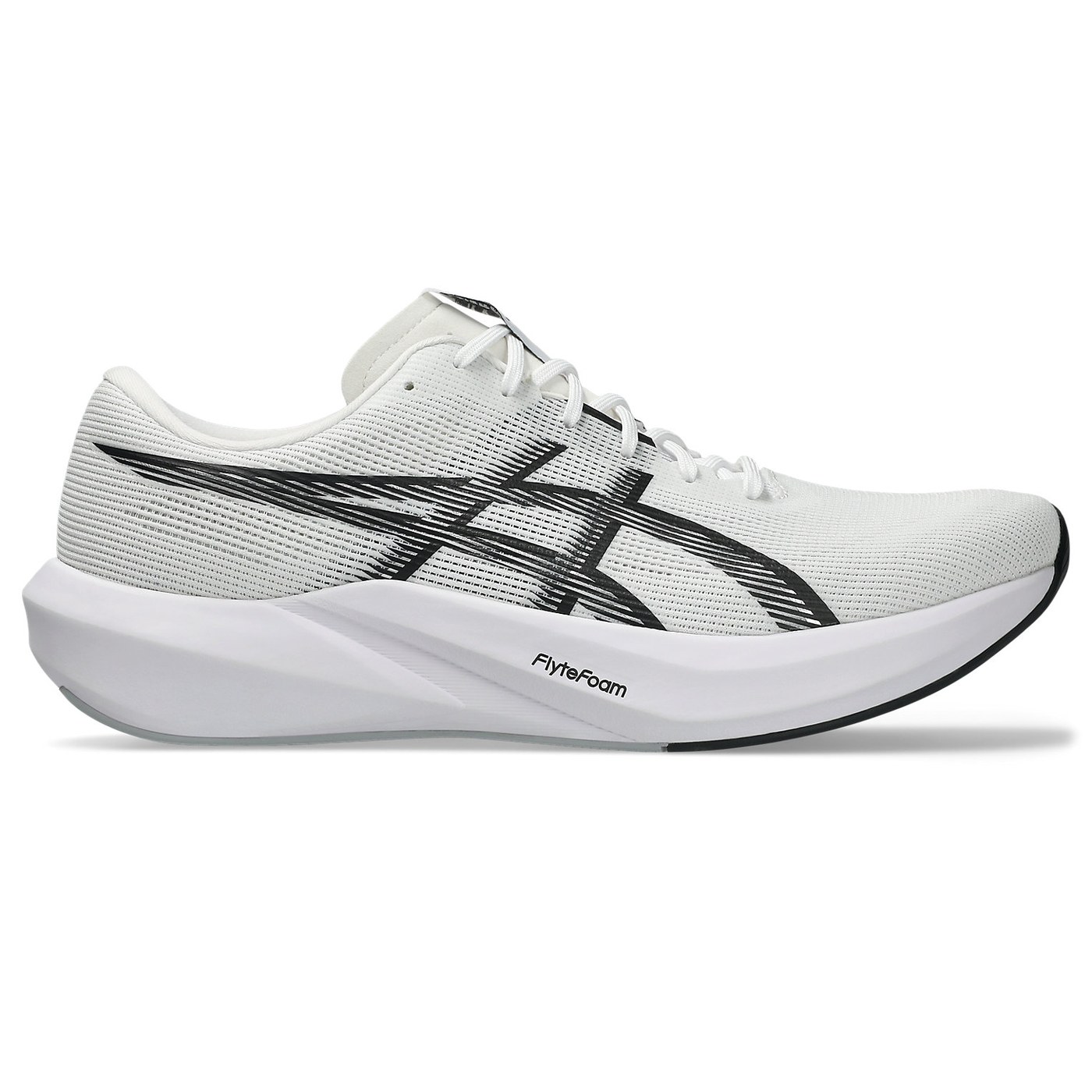
✓Very affordable price for a dedicated speed shoe (110 USD)
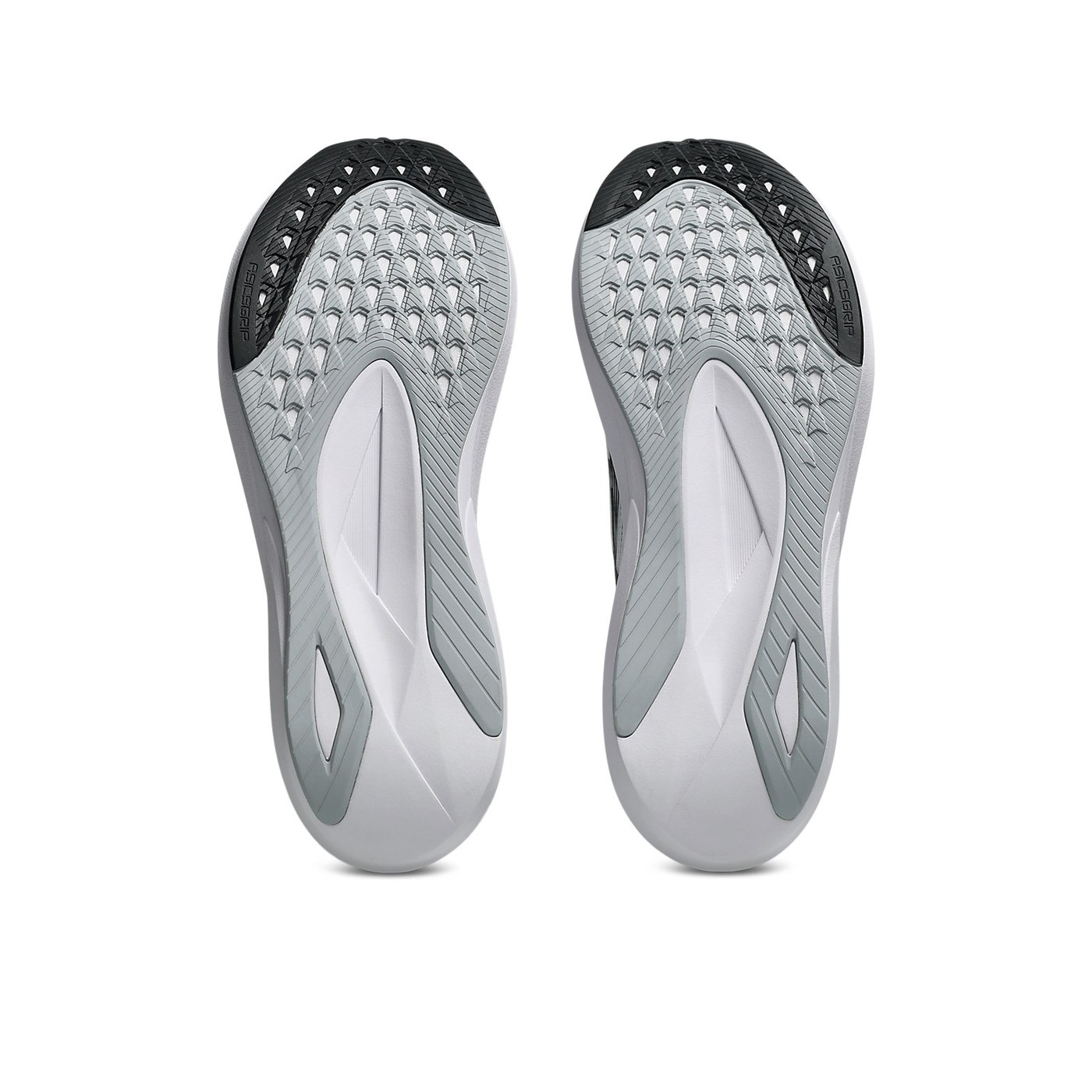
✓New ASICSGRIP rubber that goes straight at the series' old weak spot
✓Weight kept in check despite the extra foam (220 g listed)
✗Improved grip not verified on wet surfaces at the time of publication
The Hyper Speed 6 launched on July 16, 2026, with barely any marketing push, almost buried by the Novablast 6 release the same week. It's the sixth generation of a line few runners in France know well: a plateless fast-training and racing shoe that sells for around 110 USD in the US and sits below the Magic Speed 5 in the Asics lineup. No hyped premium foam, no plate, no loud campaign. Just a targeted update on three specific points: more foam, a lower drop, and a new outsole rubber meant to fix a flaw the series has carried for years.
This review pulls together what can be verified so far: the spec sheet published by Asics, the first real-world feedback posted in the three weeks after launch, and an honest look at the limits of those sources. Let's be upfront: researching this shoe online is frustrating, for a reason that has nothing to do with the shoe itself.
A good update to an already solid model, but judged on thin evidence for now, with little real-world mileage behind it.
Cushioning
Responsiveness / bounce
Lightness
Grip
Value for money
Who is it for?
Runners who want a speed shoe without a carbon plate, with a more flexible feel underfoot
A light second pair for intervals, tempo runs and 5 to 10 km races
Tight budgets: at 110 USD, it costs half as much as an entry-level carbon shoe
Who should skip it?
Marathoners chasing the pop of a carbon plate (look at the Magic Speed 5 instead)
Wide feet: standard width only, no wide version
Runners who want long-term feedback and durability reports before buying
A line little known in France, refreshed
The Hyper Speed series has been around at Asics for a long time, but it has always lived in the shadow of the more visible lines: Magic Speed for affordable carbon, Metaspeed for elite racing. It built its reputation elsewhere, mainly in Japan, as a reliable, cheap speed shoe popular with high school runners and club runners who want a dedicated interval pair without breaking the bank.
Version 6 doesn't change that positioning. It's still a plateless fast-training and racing shoe, built for intervals, tempo runs and short races. What version 6 changes comes down to three precise technical tweaks, all confirmed by the official Asics product page and cross-checked by two independent testers who got the shoe in the first days of sale.
Brand
Asics
Model
Hyper Speed 6
Release date
July 16, 2026
Use
Road, fast training and plateless racing (intervals, tempo, 5-10 km)
Drop
6 mm (vs 7 mm on the Hyper Speed 5)
Stack height (heel / forefoot)
32 mm / 26 mm
Listed weight (unisex)
220 g / 7.8 oz (a pair weighed independently in US 9.5 came in at 213 g)
Foam
In-house midsole foam, +2 mm in the forefoot and +1 mm in the heel vs the v5. Asics doesn't name the compound on this model
Plate
None. Plateless by design
Outsole
ASICSGRIP in the forefoot (replaces the AHAR LO on the v5)
Upper
Breathable engineered mesh, standard lacing, standard width only
Recommended distance
Intervals, tempo, 5 to 10 km. Half marathon possible for experienced runners
MSRP
110 USD / 12,100 JPY (no official French price announced when this review was published)
RunMorph score
7.3 / 10
What actually changes underfoot
Three changes, and they're linked. Asics adds 2 mm of foam in the forefoot and 1 mm in the heel, which takes the stack to 32 mm at the heel and 26 mm at the forefoot. That mechanically drops the heel-to-toe drop from 7 to 6 mm. And the outsole gets a new compound, ASICSGRIP, placed in the forefoot in place of the AHAR LO used until now.
That last point is the most interesting, because it answers a recurring complaint about every previous Hyper Speed: the AHAR LO rubber held the road well in the dry but slipped on wet surfaces. A Japanese tester who has followed the series for several versions puts it bluntly in a review posted three days after launch: in his view, it has been the line's constant weak spot for years, and ASICSGRIP is supposed to finally fix it.
Within the Asics lineup, the natural comparison is the Asics Magic Speed 5, which packs a full-length carbon plate and a named foam, FF Blast Plus. The Hyper Speed 6 targets a different use: cheaper, more flexible, without the forced propulsion of a plate. It isn't a stripped-down Magic Speed. It's a different format.
RunMorph's advice: don't expect carbon-shoe sensations from the Hyper Speed 6. It's built for runners who want to keep natural flex underfoot during fast training, even if that means giving up some raw bounce. If you want the leverage of a plate for a time goal, the Magic Speed 5 is still the logical pick at Asics.
The real weak spot: too little mileage to judge seriously
This is where this review has to be honest rather than reassuring. At the time of writing, the Hyper Speed 6 has been on the market for barely three weeks. In practice, that means three awkward things.
First, the improved grip has only been checked on dry roads. The tester who documented the rubber change most thoroughly says so himself: he has only run in the pair once, in dry conditions, and couldn't yet confirm whether ASICSGRIP delivers in the rain, exactly where the old AHAR LO rubber let runners down. So the series' long-standing problem isn't solved. It's announced as solved on paper, and that's not the same thing.
Second, the extra foam costs the shoe part of its identity. A tester who owns the previous version says it straight: with this much extra material, he no longer thinks you can really call it a low-stack shoe. Runners who loved the Hyper Speed 5 precisely for its minimalist feel and direct ground contact get a slightly taller, slightly less raw shoe. Nobody knows yet whether the model comes out better balanced overall or whether the line's identity gets diluted.
A search trap to know about: if you look for reviews of this shoe online, a good share of the results actually cover a completely different model: the Gel-Hyperspeed 6 released in 2014, a different shoe that just has a similar name. Detailed, well-ranked reviews of that old pair keep showing up in "Hyper Speed 6 review" searches, which completely muddies the information available on the 2026 model. Always check the publication date and the photos before trusting a review you find online for this model.
Finally, the spec sheet itself has a small inconsistency. It's not serious in itself, but it's worth flagging: Asics lists 220 g, while a pair weighed independently in US 9.5 came in at 213 g. Nothing shocking, since gaps of a few grams between listed and real weight are common in the industry, but it shows how limited the verification on this model still is at this stage.
On the road: who it's really for
On paper and based on the first impressions available, the Hyper Speed 6 is cut out for three uses: intervals on the track or road, tempo sessions, and 5 to 10 km races. The two testers who have worn it describe the stability and the lockdown from the lacing as good, which fits the series' reputation.
For the half marathon, the Asics product page stays cautious and doesn't explicitly list it as a target distance, even if the 32/26 mm stack leaves more room than a true minimalist flat. For the marathon, on the other hand, no serious source recommends this model: not the brand, not the first testers. The foam wasn't designed or marketed to handle that distance, and with no plate and no identified premium foam, there's no reason to push it that far.
Easy runs and recovery jogs aren't its playground either. This shoe is built first and foremost to go fast, not to cruise.
Against the competition: Saucony Endorphin Speed 5
The most useful comparison isn't with another plateless flat (few are well documented right now) but with the Saucony Endorphin Speed 5. It sits in a similar versatility segment, even though the philosophy differs on one key point: the plate.
Asics Hyper Speed 6
Saucony Endorphin Speed 5
Plate
None
SPEEDROLL nylon
Weight
220 g (listed)
235 g (men's EU 42)
Drop
6 mm
8 mm
Foam
Not publicly named
PWRRUN PB (PEBA, dual layer)
MSRP
110 USD
€200
Main use
Intervals, tempo, 5-10 km
Tempo to marathon, versatile super trainer
The price gap sums up the difference in positioning. The Endorphin Speed 5 aims for versatility all the way to the marathon thanks to its nylon plate and named PEBA foam, for almost twice the price. The Hyper Speed 6 targets a narrower use (short to middle-distance speed) at a much more affordable price. It's not the same shoe for the same runner: the Hyper Speed 6 is for runners who want a cheap tool for occasional speed work, the Endorphin Speed 5 for those who want one pair that can do it all.
What's heading the right way
Very affordable price for a dedicated speed shoe (110 USD)
New ASICSGRIP rubber that goes straight at the series' old weak spot
Weight kept in check despite the extra foam (220 g listed)
Plateless format, a plus if you don't like the stiffness of carbon
What still falls short
Improved grip not verified on wet surfaces at the time of publication
Loss of the "low stack" identity that made earlier versions so appealing
Standard width only, no wide option
Too few independent reviews and durability reports so far
RunMorph's take from the road
It's hard to give a final call on a shoe that has been out for three weeks. What comes through in the first feedback is a coherent, targeted update: Asics identified the real problem with the line (grip on wet surfaces) and answered it with a concrete rubber change, not just a new colorway. The price is still unbeatable for a dedicated speed shoe. But promises on paper don't replace real-world mileage, and nobody, Asics included, has any long-term data yet on this version's durability or how it behaves in the rain.
If your goal is to structure your speed sessions without spending a fortune, the right-shoe question is worth putting to someone who knows your profile and your race goals.
Need help building your training plan and working out which pair to use for each type of session?
The Hyper Speed 6 earns its place if you want a cheap, plateless speed shoe for intervals and tempo work. Asics did the work where it counted, on the outsole rubber, without blowing up the price or the weight. But buy it knowing what you're getting: independent reviews are still scarce, wet-weather behavior isn't confirmed, and the "minimalist flat" feel that built the series' reputation has been diluted a bit by the extra foam. That's not a dealbreaker. It's a matter of setting your expectations right before you buy.
Key takeaways
Released July 16, 2026, 220 g listed, 6 mm drop, 32/26 mm stack, 110 USD, no plate
New ASICSGRIP rubber in the forefoot to fix the long-standing wet-grip weak spot, but not yet verified in the rain
More foam than the v5 (+2 mm forefoot, +1 mm heel), at the cost of part of the original "low stack" feel
Built for intervals, tempo runs and 5 to 10 km races, not for the marathon or easy runs
Watch out when searching for reviews online: many results actually cover an old 2014 model with an almost identical name
More from RunMorph
Asics Magic Speed 5: the Asics carbon tempo shoe at half the price of the Metaspeed
Saucony Endorphin Speed 5: 235 g, PWRRUN PB and a nylon plate to eat up every tempo run
Asics Novablast 6: FF Turbo² in the forefoot and 253 g to wake up the most-worn daily trainer on Strava
Asics Metaspeed Sky Tokyo: the Asics carbon shoe built for long-striding marathoners