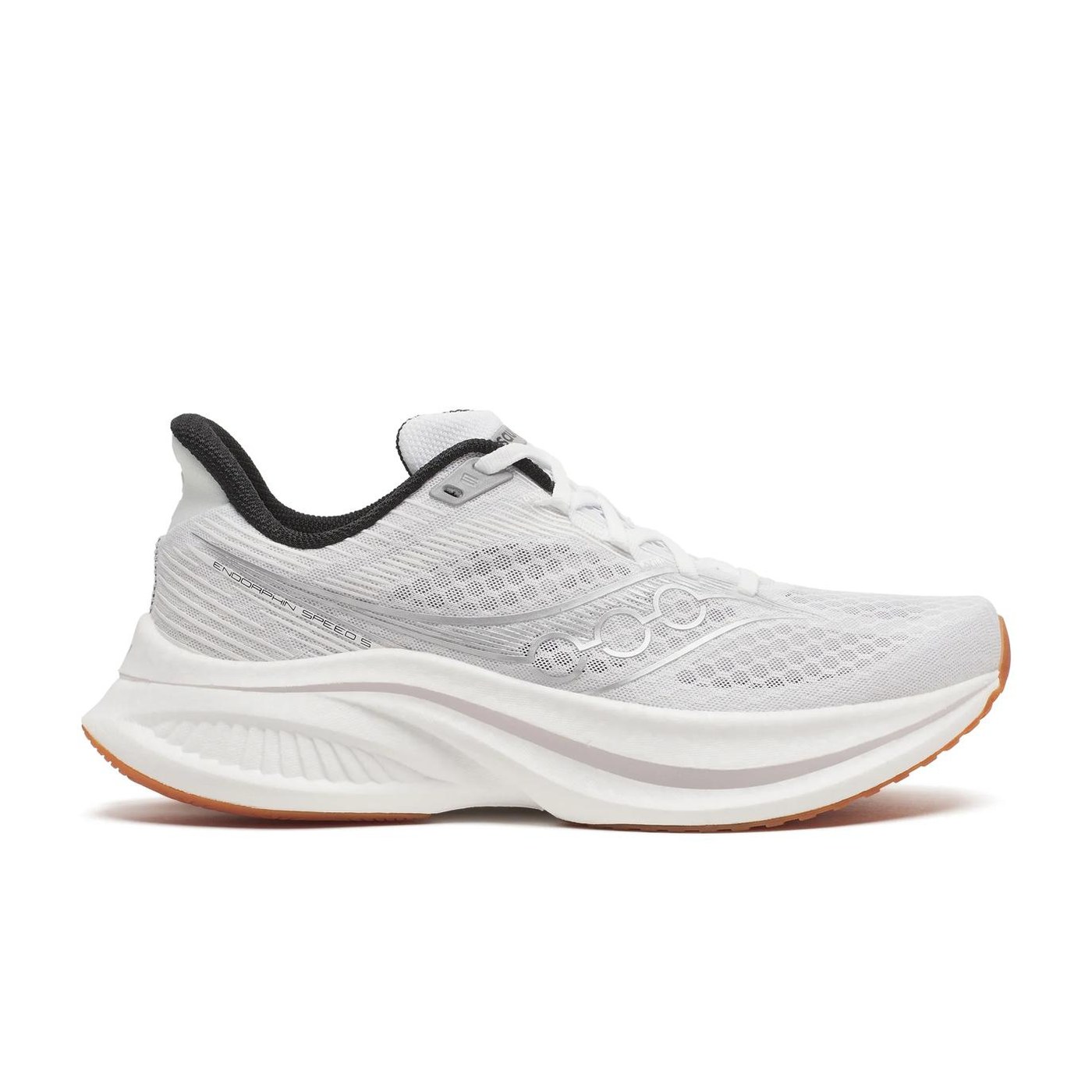
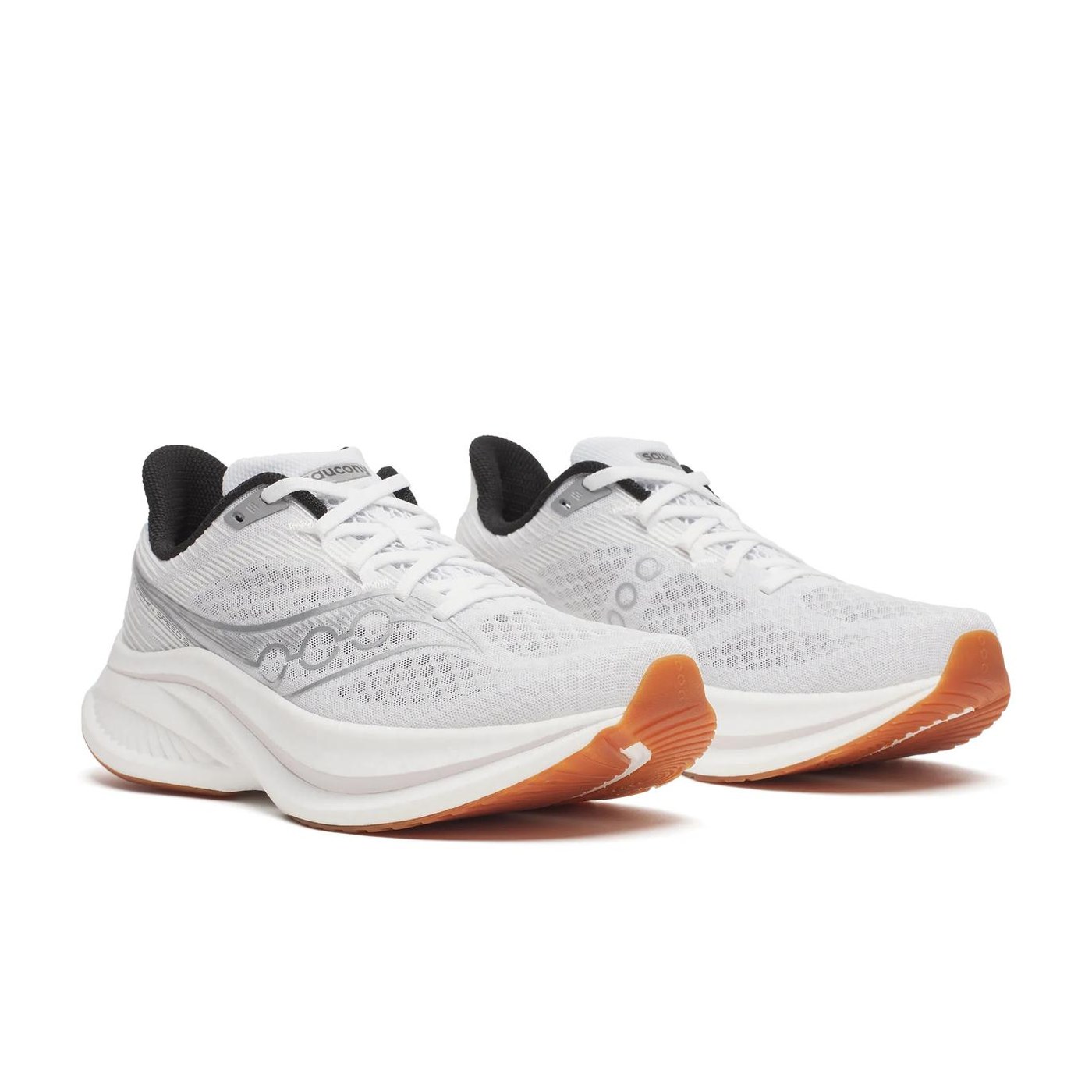
The Endorphin line redefined what a fast shoe could do without a carbon plate. The Saucony Endorphin Speed 5, released in 2025 and now widely tested in France, carries that line forward with very few visible changes. PEBA-based PWRRUN PB foam, a more flexible nylon plate, a more breathable upper. No revolution. Clean, almost surgical execution on a product that was already at the top. The real questions: does the fifth version justify its €200 price tag, and who is it actually for?
Saucony Endorphin Speed 5 Review: 235 g, PWRRUN PB, Nylon Plate
9/10
Saucony Endorphin Speed 5: the PEBA and nylon tempo shoe that is still the benchmark
The Saucony Endorphin Speed 5 is the fifth generation of the model that popularized the nylon plate in a fast training shoe. It's not a pure racing shoe like the Saucony Endorphin Pro 5, and it's not a max-cushion daily trainer like the Saucony Triumph 23. The Speed sits in the hybrid zone: an affordable super trainer that handles tempo runs, intervals, long runs at a steady pace, and even a marathon if you know how to manage it.
At RunMorph, we've seen that the Speed 4 was already a favorite among runners who wanted maximum versatility without spending €250 on a carbon-plated shoe. The Speed 5 sticks to exactly the same formula. A light upper refresh, a reworked plate, a tweaked outsole at the heel. That's it. And it's more than enough.
RunMorph tip: don't fall into the "I need a carbon plate to get faster" trap. Most amateur runners gain more from two clean tempo sessions a week in a Speed 5 than from wearing out a Nike Vaporfly 4 on recovery runs. The nylon plate delivers propulsion without forcing a carbon plate's stiffness on you. That's exactly what lets you repeat hard sessions without wrecking your calves.
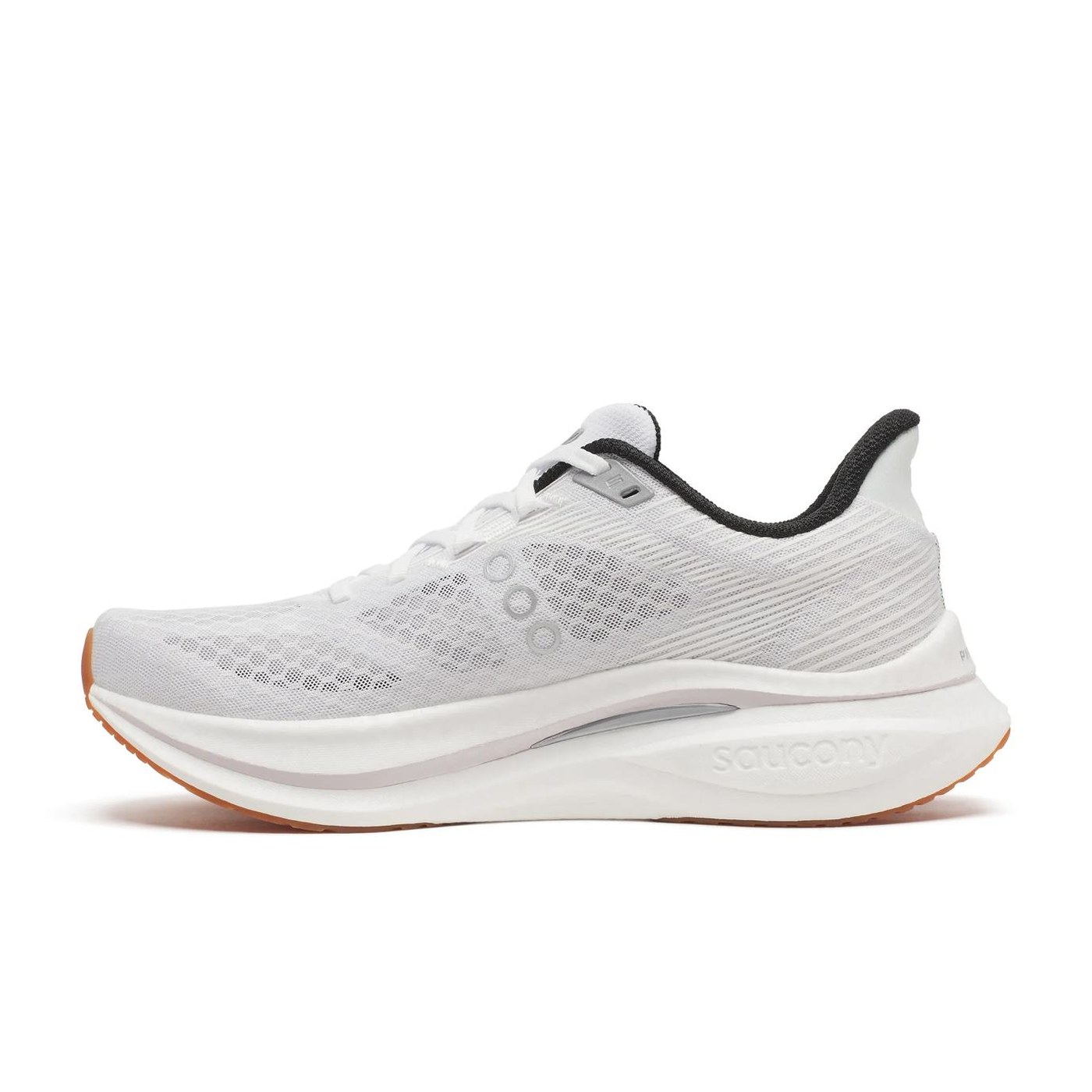
© Saucony, official photo used for editorial purposes
Technical specs
| Brand | Saucony |
| Model | Endorphin Speed 5 |
| Official release | 2025 (widely available in France from July) |
| Type | Super trainer / tempo, road |
| Drop | 8 mm |
| Stack height (heel / forefoot) | 36 mm / 28 mm |
| Weight (men's EU 42) | 235 g |
| Weight (women's EU 39) | 215 g |
| Foam | PWRRUN PB (PEBA, dual layer) |
| Plate | SPEEDROLL nylon, single medial wing (two wings on the v4) |
| Outsole | XT-900 (carbon rubber) |
| Upper | Single-layer hexagonal engineered mesh |
| Recommended distance | 5 km to marathon (up to the half for most runners) |
| Features | Vegan, partly recycled materials |
| Retail price | €200 (often available for €150-170 on sale) |
Two numbers deserve a closer look. At 235 grams in a size 42, the Speed 5 sits in the "light" zone without going skeletal, and that's deliberate. Saucony refuses to join the race for sub-200 g super shoes. The bet: keep a shoe that works for daily training, holds up, and doesn't go flat after 300 km like some carbon racing shoes.
The 8 mm drop is the classic compromise. Your calves don't suffer, heel strikers aren't penalized, and switching to an Endorphin Pro 5, also at 8 mm, feels completely natural. Consistent.
Who is the Endorphin Speed 5 for?
The intermediate runner who wants one shoe for everything
You run 40 to 70 km a week. You're aiming for a comfortable 10 km, a half marathon at a solid pace, maybe a marathon this year. You don't want to own three pairs. The Speed 5 is the ideal anchor shoe. Easy run at 5:30 / km? It holds up. Tempo session at 4:00 / km? It drives you forward. Long run at 4:50 / km? It soaks it up. A 10 km race? You start relaxed, with no sense that the shoe is holding you back.
The experienced marathoner looking for a reliable super trainer
If you run marathon block after marathon block and save your carbon shoes for race day, the Speed 5 takes over for 80% of your quality sessions. You get the same SPEEDROLL roll-through as the Endorphin Pro 5, without the tiring stiffness of a carbon plate. You can log 100 km a week in it without building up the muscular debt that comes from running in carbon all the time.
The runner who can't stand stiff carbon plates
Not everyone gets along with carbon plates. Some strides experience them as a rigid cage that dictates the rhythm. The Speed 5's nylon plate propels you without locking you in. Plenty of runners who gave up on the Nike Vaporfly 4 or the Asics Magic Speed 5 because of sore calves end up here and finally find a shoe that lets them run freely.
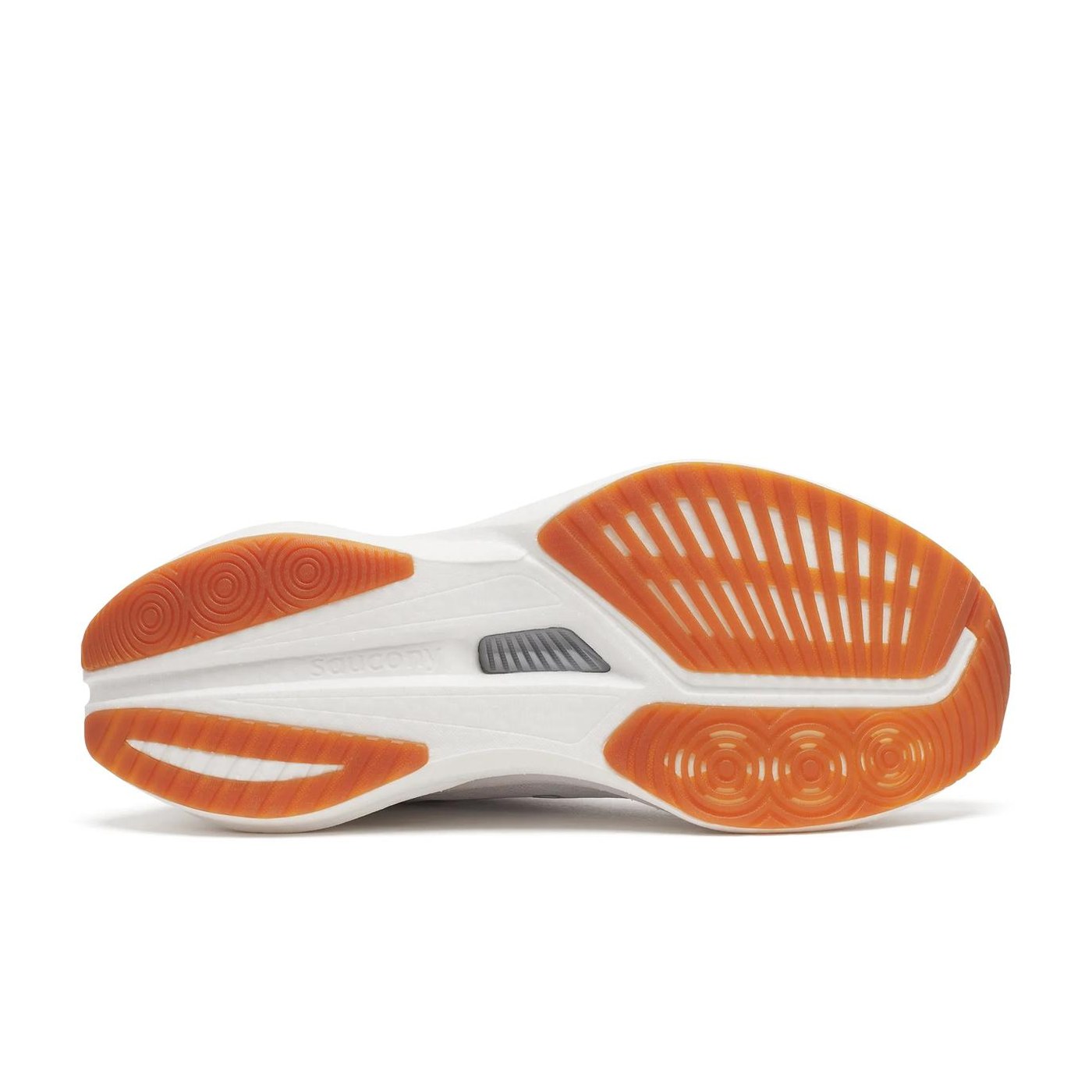
© Saucony, official photo used for editorial purposes
Comfort and fit
The big change on the v5 is the upper. Saucony drops the dual-layer construction of the v4 and goes back to a single-layer hexagonal engineered mesh upper, as on the v3. Breathability takes a big leap. On an easy run at 28 °C, your foot really breathes, without the stuffy feeling the v4 was starting to give on long summer runs.
The fit is classic Saucony: precise through the midfoot, roomy in the forefoot. No need to go up half a size: your usual size works for almost every foot shape. Wide feet fit without pinching. The gusseted tongue, classic but effective, stops any lateral sliding when you pick up the pace.
The heel counter has been redesigned with a more structured 3D shape. The collar sits slightly higher than on the v4 to lock the foot in better. French testers reported no irritation over the first 200 to 300 km. Nice touch.
On the run: foam, plate, transitions
First kilometer. If you've run in the v4, the feel at impact is instantly familiar. PWRRUN PB at the bottom, nylon plate in the middle, PWRRUN PB on top: the PEBA foam sandwiches the plate and delivers that strangely balanced cushioning, neither too soft nor too firm. The SPEEDROLL geometry does the rest: the heel-to-toe roll is smooth, almost effortless.
At tempo pace (around 4:00 - 4:20 / km), the shoe shows its real talent. Energy return is clear without being harsh. It doesn't have the explosive pop of a carbon shoe. It doesn't give you the "running without shoes" feeling typical of super shoes either. Something in between. More controllable, more predictable, more repeatable session after session.
At easy pace (5:00 - 5:30 / km), the Speed 5 works too. But it isn't optimized for that. You feel the plate wanting to take you faster and the foam asking to be loaded. Not a flaw, just how it's meant to be used. For pure recovery runs, go for the Saucony Triumph 23, which is more forgiving.
On long runs at a steady pace (4:30 - 4:50 / km, 20 to 30 km), this is where the magic happens. Fatigue builds differently than in a carbon shoe. Your calves and Achilles tendon stay fresh longer. Your stride stays light even past the hour-and-a-half mark. For runners under 75-80 kg, a marathon is entirely doable in the Speed 5. Above that, the cushioning starts to show its limits in the second half of the race.
Outsole and grip
Saucony's carbon XT-900 rubber remains the brand's secret weapon for durability. Its strategic coverage, slightly revised from the v4, fixes the only real flaw reported on the previous generation: premature heel wear for heel strikers. The layout is more conventional and more linear. Expected lifespan goes up accordingly: count on 800 to 1,000 km before the heel area really wears down.
On dry roads, grip is excellent. On wet roads, it stays very good without reaching the level of shoes with Continental or Vibram rubber. The deeper central longitudinal groove helps the shoe flex but can trap gravel on forest paths. Keep the Speed 5 for roads and smooth paths. For technical trails, look instead at a trail shoe like the Saucony Peregrine 16.
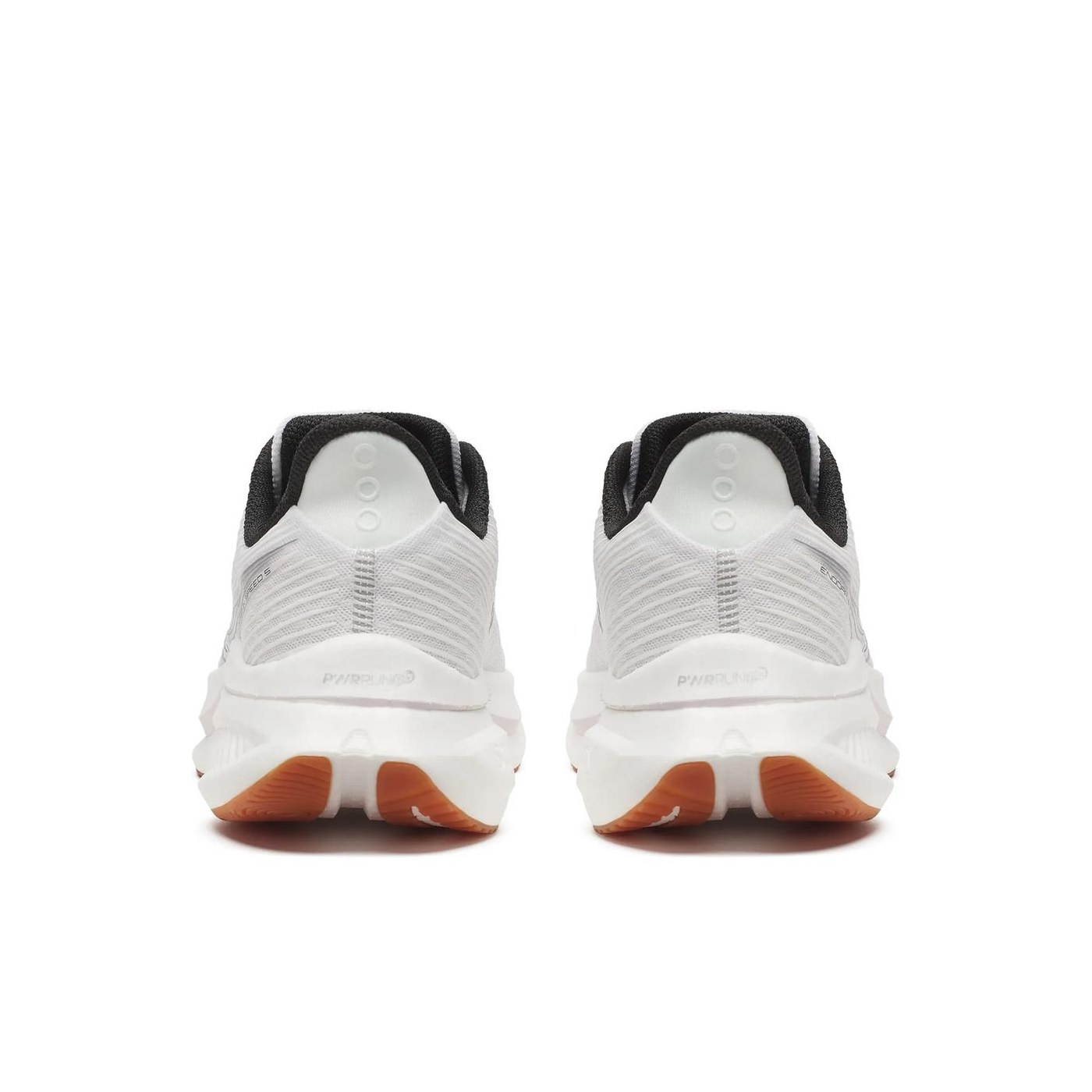
© Saucony, official photo used for editorial purposes
How it stacks up against the competition
The nylon-plate super trainer category has become ultra-competitive in 2026. Here's how the Speed 5 compares with the benchmarks:
Hoka Mach 7 (€160, 248 g, 5 mm drop, 37/32 stack): lighter, no plate, lower drop. The Mach 7 is more forgiving for forefoot strikers and easier on the wallet. The Speed 5 is more structured, more propulsive thanks to its plate, and less tiring for the calves on long runs thanks to its 8 mm drop.
Asics Magic Speed 5 (€180, 250 g, 5 mm drop, 38/33 stack, carbon plate): the fundamental difference is that the Magic Speed 5 uses a carbon plate. More pop, more propulsion, but also more perceived stiffness. If you want to learn to run in carbon without breaking the bank, the Magic Speed 5 is a better bridge. If you want the versatility of a nylon plate, the Speed 5 is unbeatable.
Adidas Adizero Boston 13 (€160, 253 g, 6 mm drop, 36/30 stack, Energyrods): the Boston 13 relies on fiberglass Energyrods rather than a full plate. The ride feels more "flexible", less driven by a plate effect. The Speed 5 is livelier in real tempo sessions, while the Boston 13 is more versatile for pure easy runs.
Puma Deviate Nitro 3 (€170, 264 g, 10 mm drop, 36/26 stack, PWRPLATE carbon plate): heavier, with a higher drop and a full-length carbon plate. The Deviate Nitro 3 is faster in a straight line but less agile through turns. The Speed 5 stays more versatile if you want a single Swiss Army knife.
Bottom line: the Speed 5 remains the best compromise when you want one shoe for 90% of your sessions. Not the fastest, not the softest, not the cheapest. The one that disappoints you least, with zero learning curve.
How to fit it into your RunMorph training plan
The Speed 5 has a very clear place in a well-built rotation. Here's where to slot it in depending on your goal:
10 km training: your main shoe. Easy runs, fartlek, tempo sessions, race day. You can skip a carbon shoe with no regrets. The Speed 5 carries you from the warm-up to the 35th minute of your goal race.
Half marathon training: your anchor shoe for quality sessions (threshold, goal pace, long runs at marathon pace). Keep a separate shoe for easy runs to preserve the PEBA foam, and consider a carbon shoe for race day if you're chasing a time.
Marathon training: your main super trainer for race-specific blocks (marathon-pace sessions, progressive long runs). Save the carbon shoe for the race itself. For runners under 75 kg, the Speed 5 can even handle the full marathon without falling apart.
Trail: no. Stick with the Saucony Peregrine 16 or similar. The Speed 5 is designed for asphalt and smooth paths only.
If you want a structured plan to get the most out of this versatility, take a look at the RunMorph training plans: they're designed to adapt to your current mileage and your main shoe.
RunMorph Coach verdict
The Saucony Endorphin Speed 5 is one of the most mature shoes on the market in 2026. It doesn't reinvent anything because it doesn't need to. The v4 was already excellent, and the v5 fixes its few flaws (heel durability, upper ventilation) while carrying over everything that matters. PWRRUN PB foam unchanged. Nylon plate refined for more flexibility. SPEEDROLL geometry retained. This is a surgeon's work, not an architect's.
What sets the Speed 5 apart from the rest of the market is its rare ability to coexist with a carbon racing shoe without making it redundant. The Endorphin Pro 5 is the record-breaking machine. The Speed 5 is the mileage factory that makes those records possible. Keep the two roles separate and you get a complete training system for under €450.
One small gripe about the official price: €200 is steep for what is a minor update. Fortunately, French retailers (i-Run, Alltricks, Decathlon) quickly drop it to between €150 and €170, which puts the Speed 5 in a far more attractive spot.
9/10. Formidable versatility, above-average durability, a unique feel from the nylon plate. The only real criticism: for a heavier marathoner aiming for sub-3 hours, the cushioning can come up short over the last 10 kilometers.
Key takeaways for your training
- Maximum versatility: the Speed 5 covers 90% of a trained runner's sessions, from easy runs to the marathon. One pair is enough for a full 10 km or half marathon training cycle.
- Nylon plate, not carbon: a propulsive feel without tiring stiffness. Ideal for repeating tempo sessions without piling up the muscular debt of running in carbon all the time.
- Solid durability: 800 to 1,000 km expected, with PEBA foam that holds up better than the segment average. Your cost per kilometer beats a premium racing shoe.
- 8 mm drop: a comfortable compromise for most strides. Your Achilles tendon stays protected from tendinopathy, unlike with very low-drop shoes (4 mm or less).
- Keep it on the road: the XT-900 rubber and the central groove aren't built for technical trails. For trail running, get a dedicated shoe and keep the Speed 5 clean for your road sessions.
© Saucony, official photo used for editorial purposes