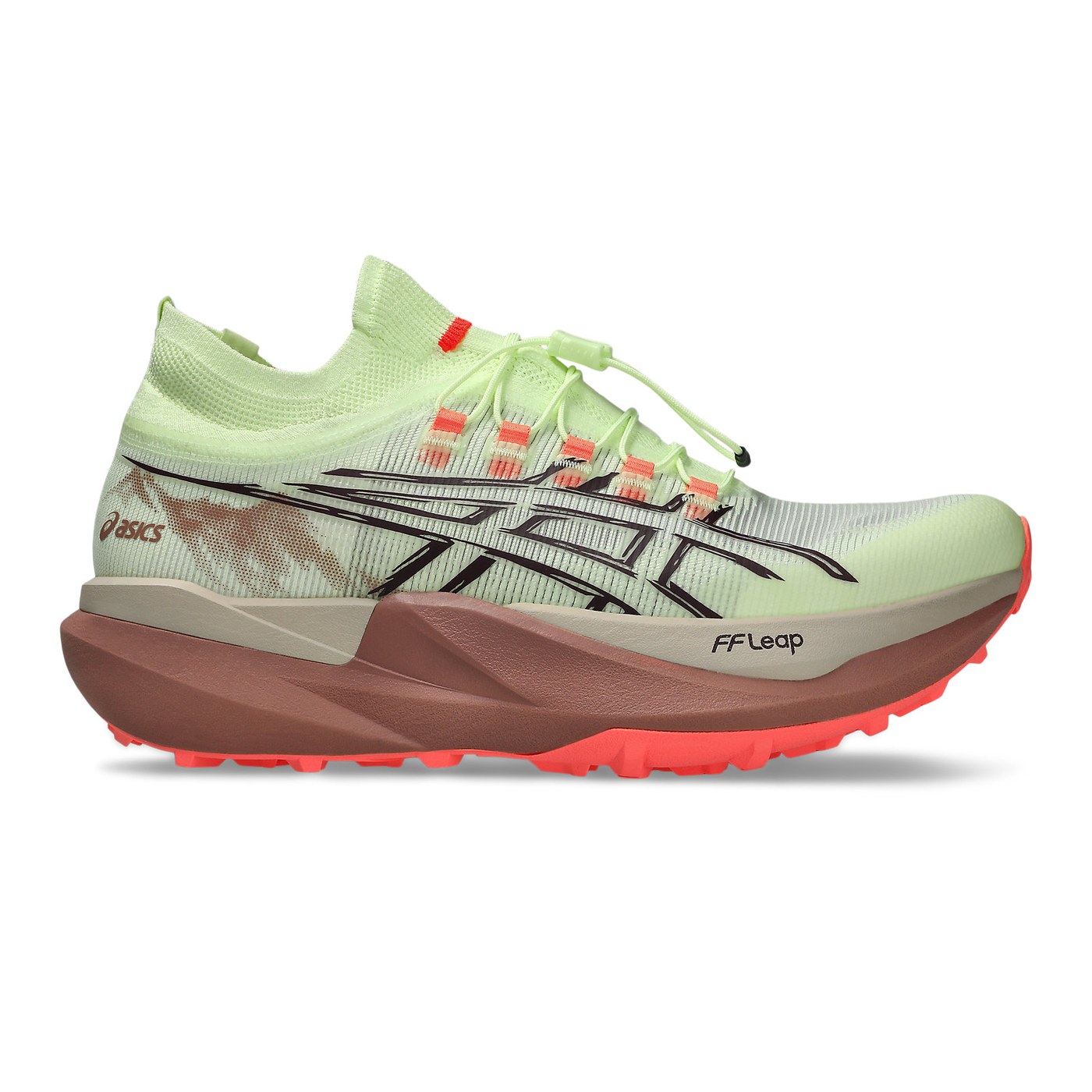
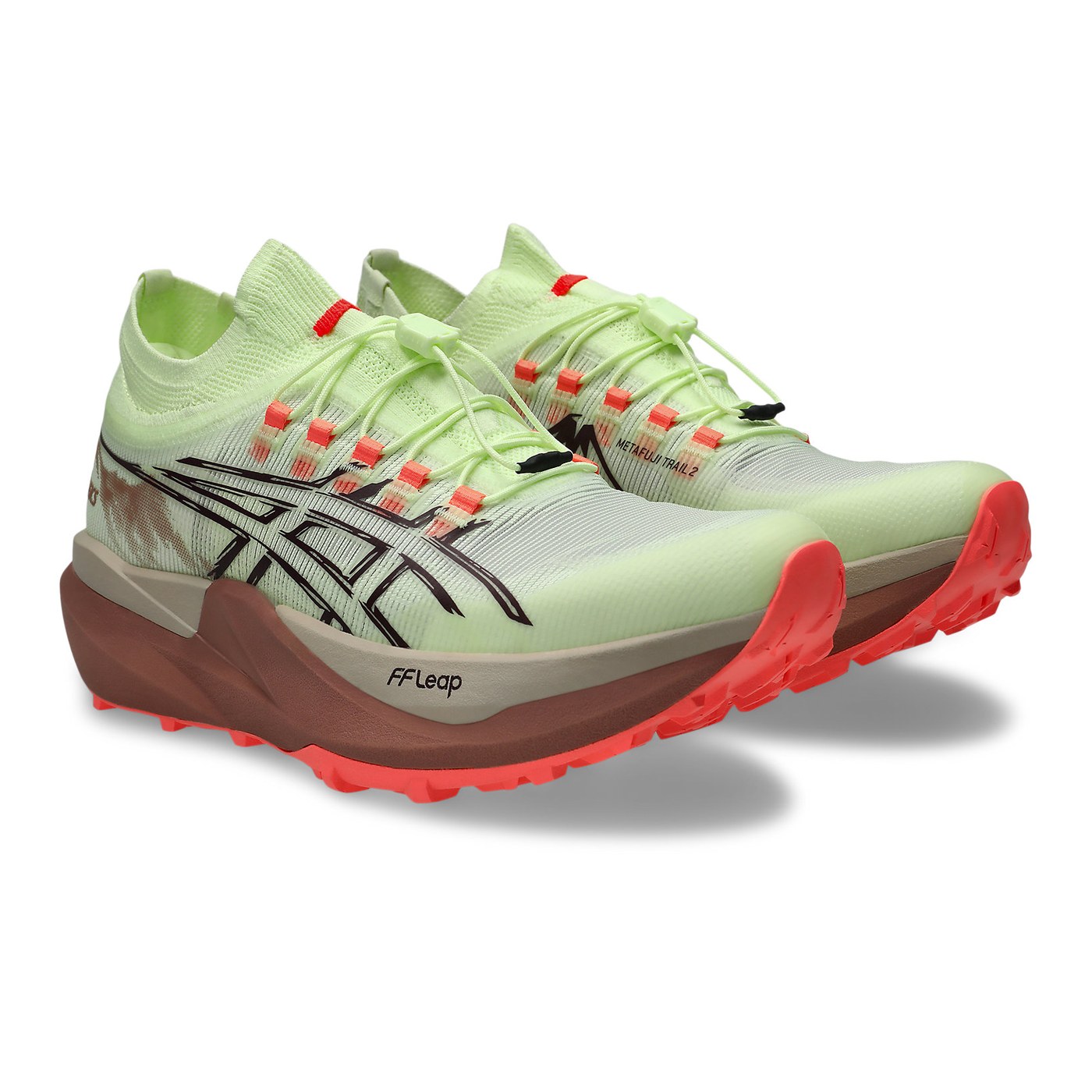
Carbon plates on the trail always draw the same complaint: they eat up the flats but get unruly on technical descents. With the MetaFuji Trail 2, Asics tackles this problem head-on with an X-shaped plate designed to stabilize your stride without giving up propulsion. After several runs on fast trails and rocky scree, RunMorph set out to find the line between marketing claim and genuine technical progress.
© Asics, official photo used for editorial purposes
Asics and the race for a stable carbon plate on the trail
The first MetaFuji Trail laid the groundwork: a carbon plate on the trail, a risky bet given how often technical descents punish stiff shoes. Two years later, Asics is back with version 2, unveiled on July 10, 2026 and available from August 1. It goes straight at the original flaw of every plated shoe: lateral instability. The marketing promise is clear: an X-shaped plate that handles changes in footing better. The smart move is to check whether that promise holds up on the trail, not just on the spec sheet.
The project was developed with Tom Evans and Ben Dhiman, two Asics athletes who took a one-two finish at one of the most prestigious trail races in Chamonix in 2025, and refined with a total of 23 test athletes. That level of field input shows in the design details, especially the quick lacing and the integrated storage pocket, built for self-sufficiency on long races.
MetaFuji Trail 2 specs: X-shaped plate and dual foam
| Brand | Asics |
| Model | MetaFuji Trail 2 |
| Release | August 1, 2026 (unveiled July 10, 2026) |
| Type | Performance trail, carbon plate |
| Drop | 5 mm |
| Stack height (forefoot / heel) | 36.5 mm / 41.5 mm |
| Weight | 255 g (unisex, US 9 reference size) |
| Carbon plate | Yes, trail-specific X design |
| Foam | FF LEAP (top layer) + FF BLAST PLUS (platform) |
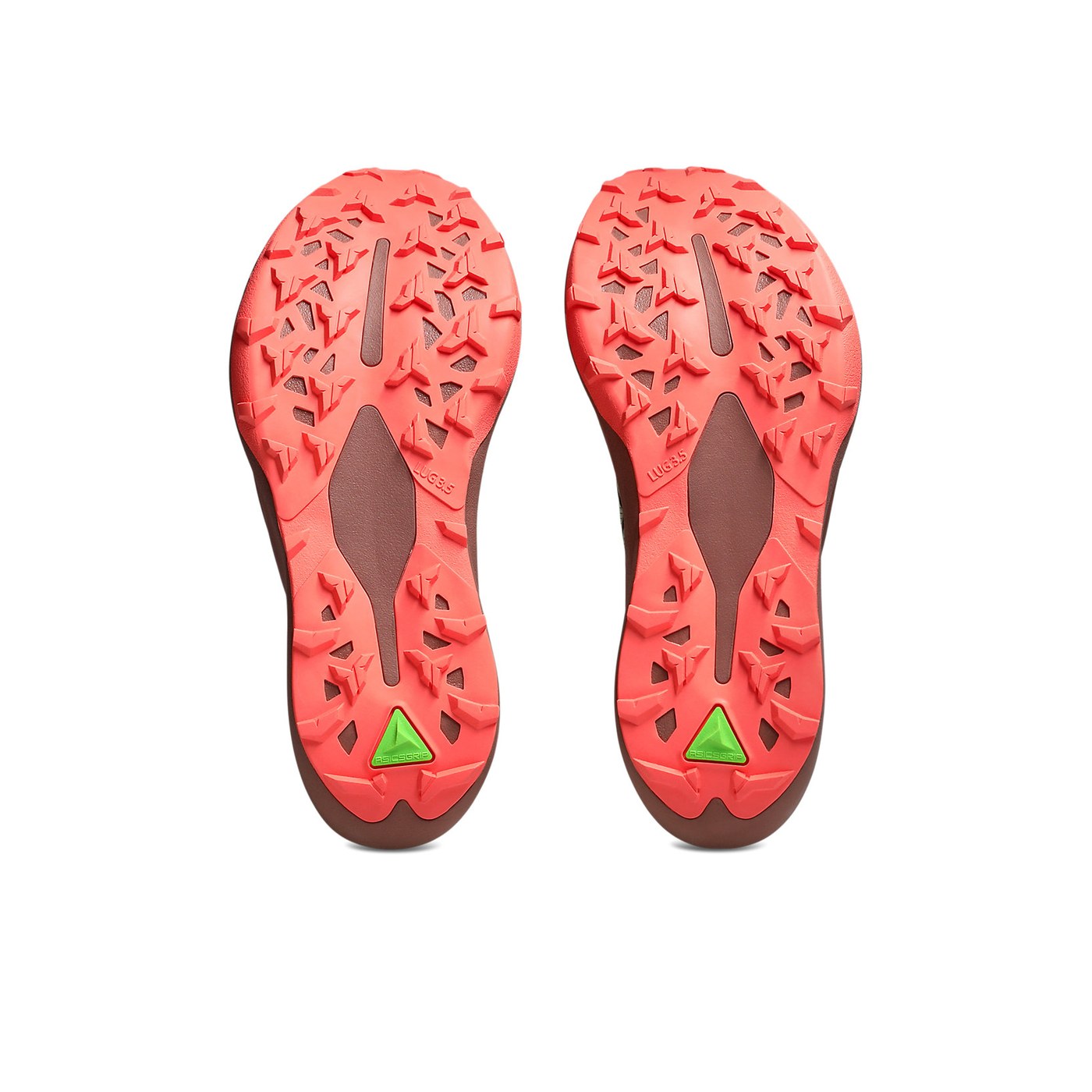
| Outsole | ASICSGRIP, 3.5 mm bidirectional lugs |
| Upper | Woven Motion Wrap TR, at least 50% recycled materials |
| Recommended distance | Trail marathon to runnable ultra |
| Official price | €250 |
© Asics, official photo used for editorial purposes
The X-shaped plate: what changes underfoot?
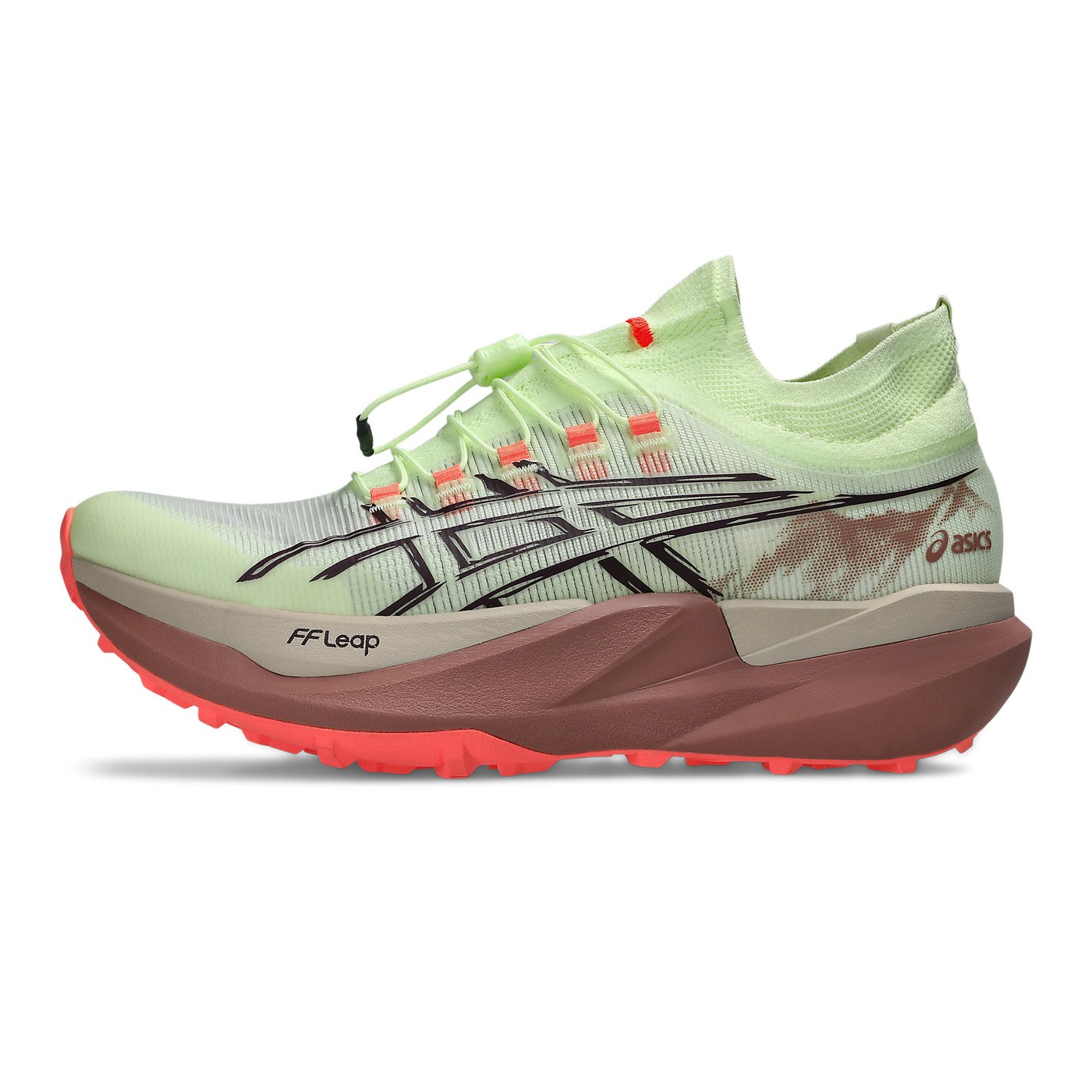
In a road shoe, a carbon plate works mainly along the line of your stride. On the trail, your footing changes constantly, and a conventional stiff plate tends to amplify lateral imbalances on rocky descents. Asics' answer is to cut the plate into an X shape, which lets it flex differently depending on which zones of the foot are loaded, instead of acting as a single stiff block along its full length.
Paired with FF LEAP foam in the top layer (more responsive) and FF BLAST PLUS at the base (firmer and more stable), the combination delivers a clear sense of propulsion on runnable terrain, while keeping your footing easier to read on descents than the first generation did. The limit shows up on very technical sections: the Motion Wrap knit upper is comfortable but still lacks a little torsional rigidity when the terrain gets really rough, and the 3.5 mm lugs of the ASICSGRIP outsole hit their limits in thick mud or very greasy ground.
RunMorph's tip: the MetaFuji Trail 2 is at its best on dry to semi-technical terrain. For muddy winter runs, the Hoka Tecton X 3 with its deeper lugs remains the safer choice.
The field test: from trail marathon to runnable ultra
We tested the MetaFuji Trail 2 on runs of 12 to 30 kilometers, at paces from 4:45/km on runnable stretches to 6:30/km on technical climbs. On dry paths and settled scree, the propulsion kicks in immediately, and the X-shaped plate clearly does its job, keeping your foot stable through quick changes of direction. On a wet, root-covered section in the woods, the 3.5 mm lugs showed their limit, with a few slips on off-camber ground that deeper lugs would have prevented.
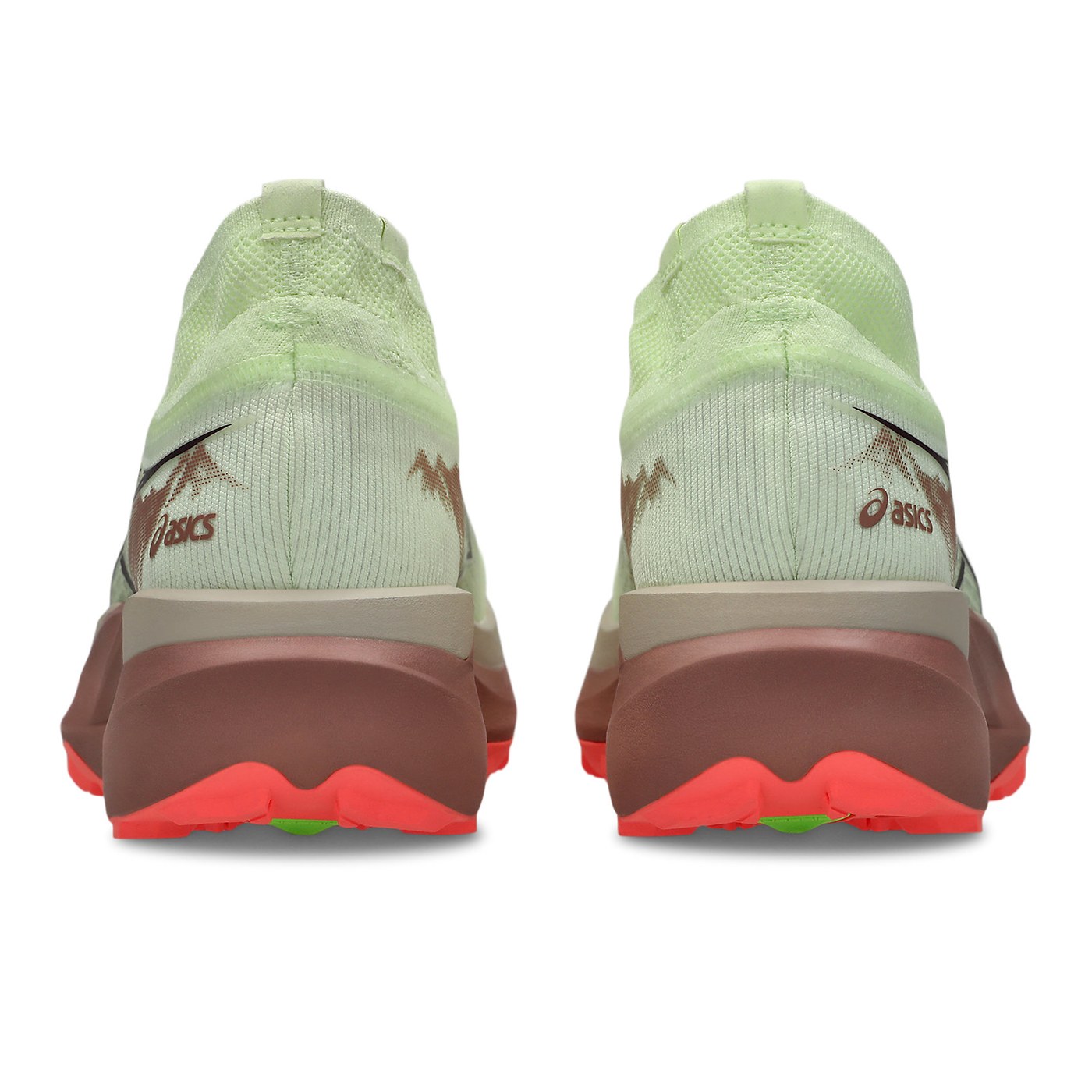
On comfort, the quick lacing with its integrated storage pocket is a real plus on long races: no need to stop and retighten. The low, soft ankle collar with no pull tab, on the other hand, takes a bit more effort when you put the shoes on. A minor detail, but a real one.
© Asics, official photo used for editorial purposes
MetaFuji Trail 2 vs Hoka Tecton X 3: head-to-head
| Criterion | Asics MetaFuji Trail 2 | Hoka Tecton X 3 |
|---|
| Price | €250 | €230 |
| Weight | 255 g | About 255 g depending on size |
| Drop | 5 mm | 5 mm |
| Carbon plate | Yes, X design (lateral stability) | Yes, dual parallel plates |
| Lugs | 3.5 mm, dry to semi-technical terrain | 4 to 4.5 mm, more versatile |
| Ideal terrain | Trail marathon, runnable ultra | Technical trail, varied ultra |
Both shoes share the same philosophy: a carbon plate designed specifically for the trail rather than a road plate adapted for dirt. The MetaFuji Trail 2 is more responsive on runnable terrain, while the Tecton X 3 stays more versatile thanks to deeper lugs that forgive more on mixed terrain.
Pros and cons
Pros
- X-shaped plate that genuinely reduces lateral instability on descents
- Clear propulsion on runnable terrain thanks to the dual FF LEAP / FF BLAST PLUS foam
- Quick lacing with storage pocket, handy on long races
- Design refined in the field with elite athletes
- Largely recycled upper, a more responsible approach
Cons
- 3.5 mm lugs struggle in thick mud or very greasy ground
- Torsional rigidity still has room to improve on very technical terrain
- Ankle collar without a pull tab, so the shoe takes longer to put on
- High price (€250) for what remains a niche use
© Asics, official photo used for editorial purposes
Our field verdict: who is it for, and which RunMorph training?
The MetaFuji Trail 2 is aimed at trail runners who already have miles in their legs and want a real performance gain in trail marathons or runnable ultras, not at newcomers to the sport. It makes the most sense for races with runnable to semi-technical profiles, less so for very rugged ultras in wet conditions.
To prepare for a runnable race with this propulsion and downhill stability, pair the MetaFuji Trail 2 with a RunMorph trail plan matched to your distance goal. 👉 Explore RunMorph training plans.
RunMorph Coach's verdict
The MetaFuji Trail 2 succeeds where many carbon-plated trail shoes still fail: it stays stable through changes in footing without losing its punch on climbs or surges. The approach is coherent: a genuine redesign built to fix the main flaw of the previous version, not a simple cosmetic refresh. The 3.5 mm lugs remain the watch point if you run a lot in wet conditions. 8.5/10: a benchmark in performance trail running for anyone who moves fast on dry to semi-technical terrain.
Key takeaways for your training
- Effective X-shaped plate: downhill lateral stability is a real step forward from the first generation.
- Ideal terrain: dry to semi-technical, trail marathons and runnable ultras.
- Limited in wet conditions: the 3.5 mm lugs aren't enough in thick mud.
- Handy quick lacing: a real plus for self-sufficiency on long races.
- Premium price: 250 euros for a niche shoe, best kept for experienced runners.
© Asics, official photo used for editorial purposes