Hoka Tecton X 3 Review: The Twin Carbon Plate Trail Super Shoe
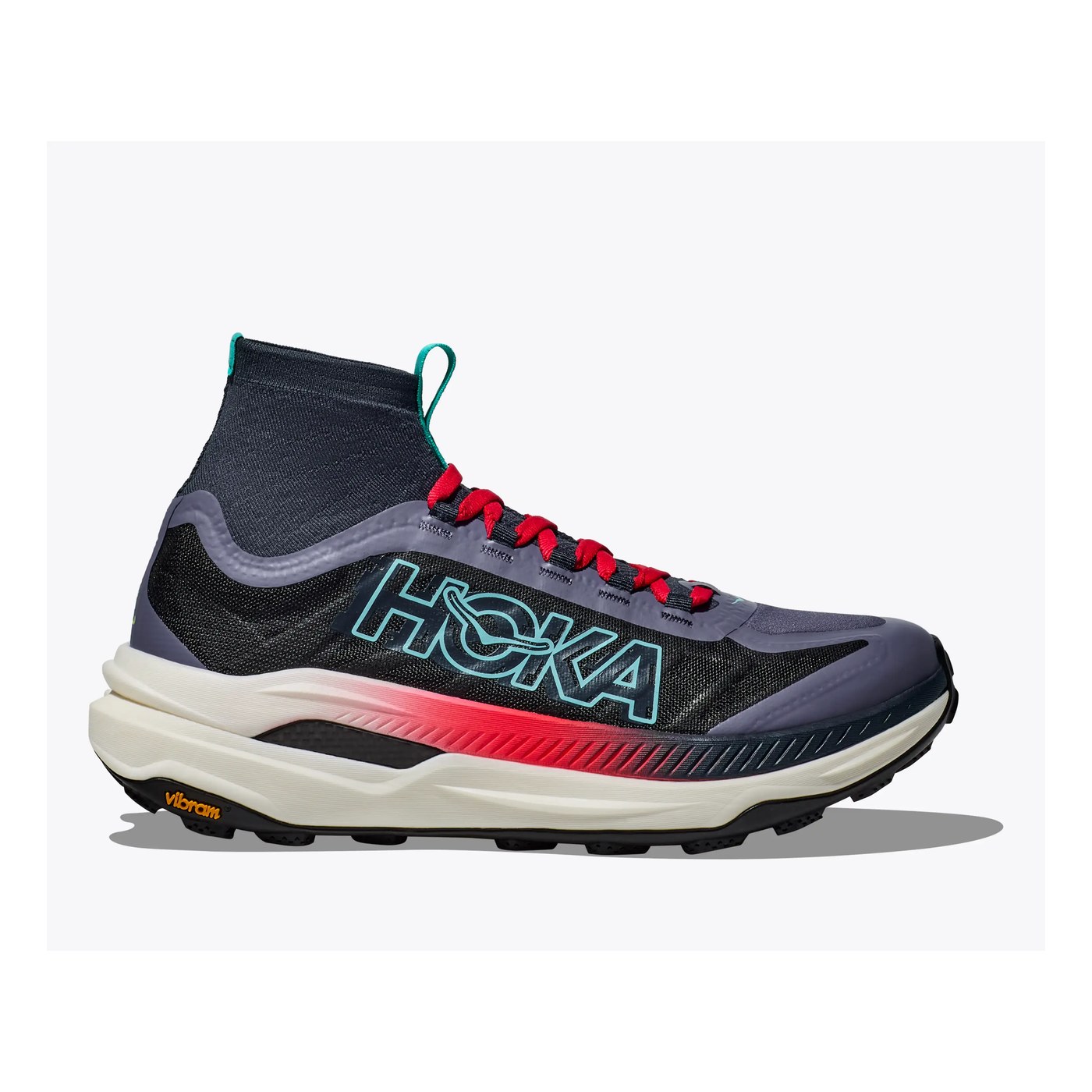
The Tecton X 3: the trail super shoe with twin parallel carbon plates
On the Tecton X, Hoka came up with a carbon plate system you won't find anywhere else: two parallel plates, one for each side of the foot, working independently. The idea is to amplify propulsion without killing torsional flex the way a one-piece carbon plate does. On technical trails, that changes everything.
This third version keeps the twin-plate design while refining the PEBA foam, redesigning the Vibram Megagrip outsole and lightening the upper. Let's see whether the Tecton X 3 deserves its spot as Hoka's benchmark trail racing shoe against the Salomon S/Lab Genesis and the La Sportiva Prodigio Pro.
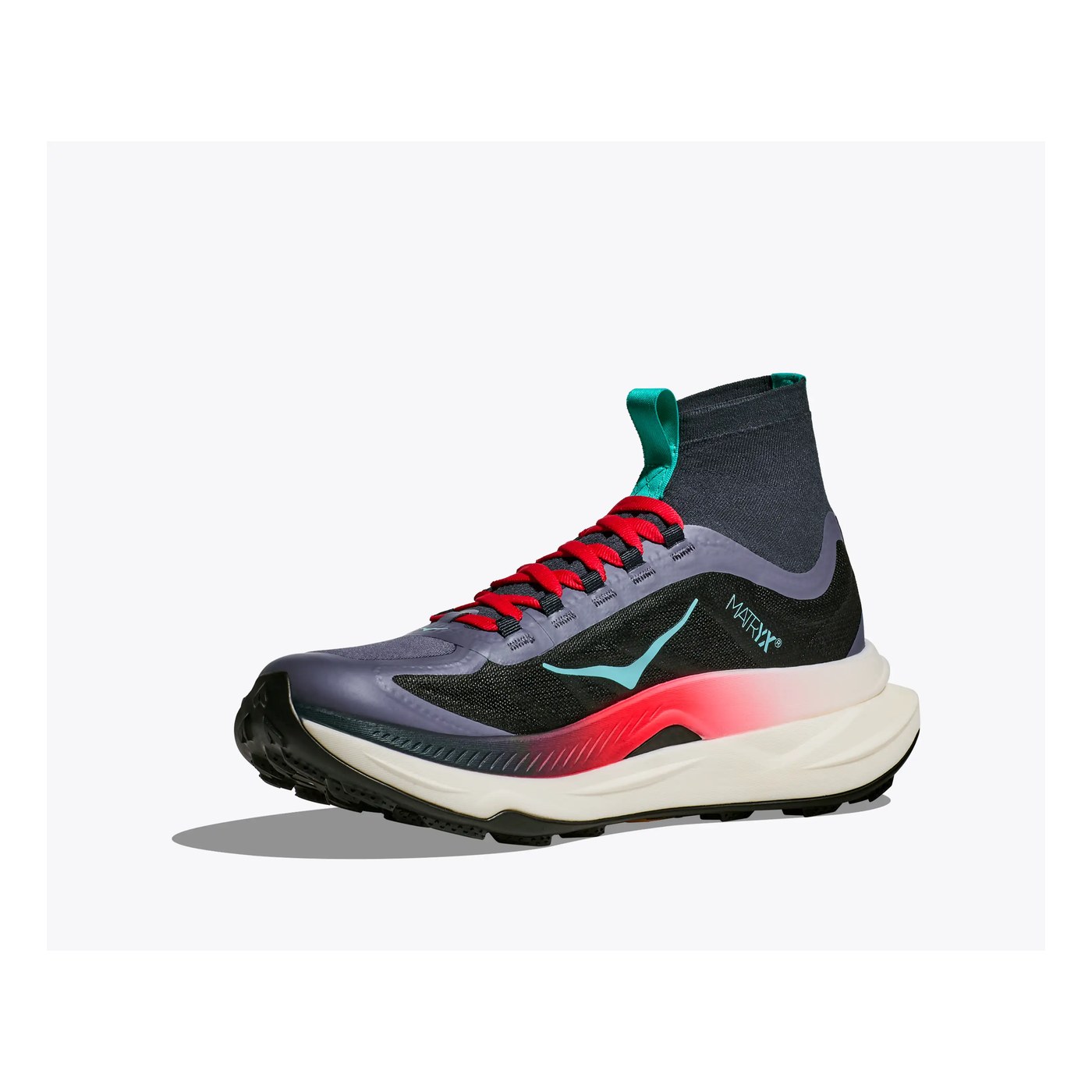
Hoka Tecton X 3 specs
| Brand | Hoka |
| Model | Tecton X 3 |
| Release date | May 15, 2025 |
| Use | Carbon-plated trail racing, runnable to moderately technical trails |
| Drop | 5 mm |
| Stack height (forefoot / heel) | 35 mm / 40 mm |
| Weight (men's size 42) | 264 g |
| Foam | Supercritical PEBA |
| Carbon plate | Yes, two parallel carbon plates (a system unique to Hoka) |
| Outsole | Vibram Megagrip with Litebase, 4 mm lugs |
| Upper | Ultra-breathable Matryx mesh |
| Recommended distance | 21 km to 80 km |
| MSRP | €230 |
| RunMorph score | 9.1 / 10 |
The twin-plate concept: Hoka's big idea
Ever since the first version, the Tecton X's signature has been its twin parallel carbon plates. Here's why nothing else on the market works like it:
- Two independent plates: a lateral carbon plate (outer side of the foot) and a medial plate (inner side), joined by the foam but free to work independently. Each plate amplifies propulsion on its side of the foot.
- No torsional rigidity: unlike a one-piece carbon plate that stiffens the shoe, the twin-plate system preserves torsional flex. On technical trails with unstable footing, that's crucial: your ankle doesn't get locked into an overly rigid shoe.
- Supercritical PEBA foam: Hoka uses a premium PEBA to maximize energy return. Paired with the two plates, you get "double" propulsion that keeps your stride rolling even when you're tired.
RunMorph tip: the Tecton X 3 shines on runnable to moderately technical trails (forest roads, wide trails, accessible mountain terrain). On highly technical trails littered with rocks and roots, it's less stable than the S/Lab Genesis. Pick based on the terrain you run most.
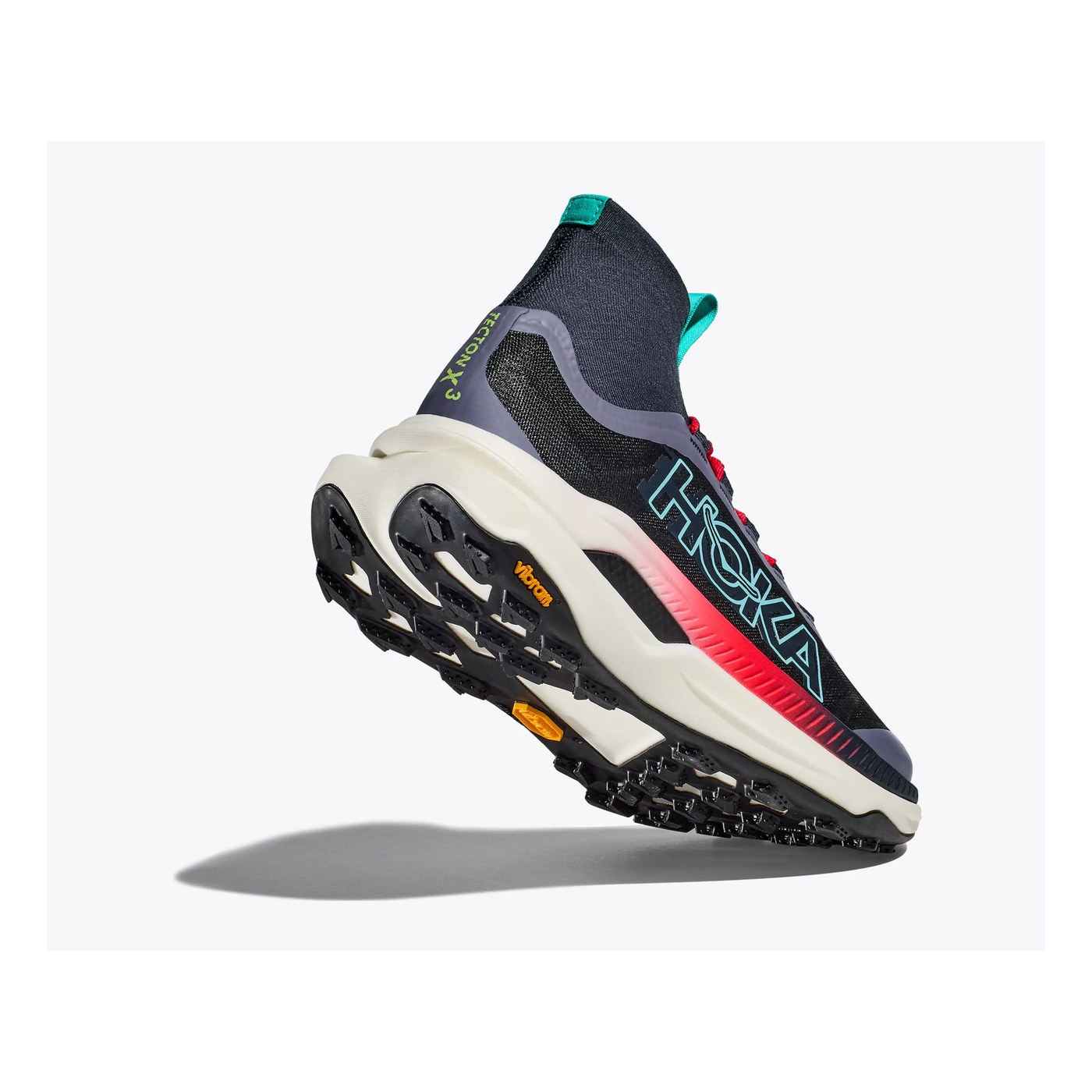
Who is the Hoka Tecton X 3 for?
Here's our coaching take, profile by profile.
Verdict: the Tecton X 3 is the ideal trail racing shoe for runners who log mostly runnable trails. For highly technical mountain trails, look at the S/Lab Genesis or the La Sportiva Prodigio Pro instead. For 90% of amateur trail runners, the Speedgoat 7 is the better all-round pick.
Under the hood: the tech in detail
Supercritical PEBA: the best foam trail has to offer
Hoka uses a premium PEBA foam made by supercritical injection. It's the same foam family you'll find in the best road super shoes (ZoomX, FF Turbo+, PWRRUN PB). Energy return is exceptional for a trail shoe. The trade-off: durability falls short of a classic EVA foam. Expect 400-500 km at most before a noticeable drop in performance.
Twin carbon plates: the Tecton X DNA
The two parallel carbon plates are the model's most distinctive feature. In practice, they deliver:
- Amplified propulsion: each plate acts as an independent lever that returns the energy of every footstrike.
- Preserved torsional flex: unlike a one-piece plate that stiffens everything, this system lets the shoe flex naturally on technical trails.
- Maintained stability: the two plates balance left/right propulsion, which reduces the risk of twisting on landing.
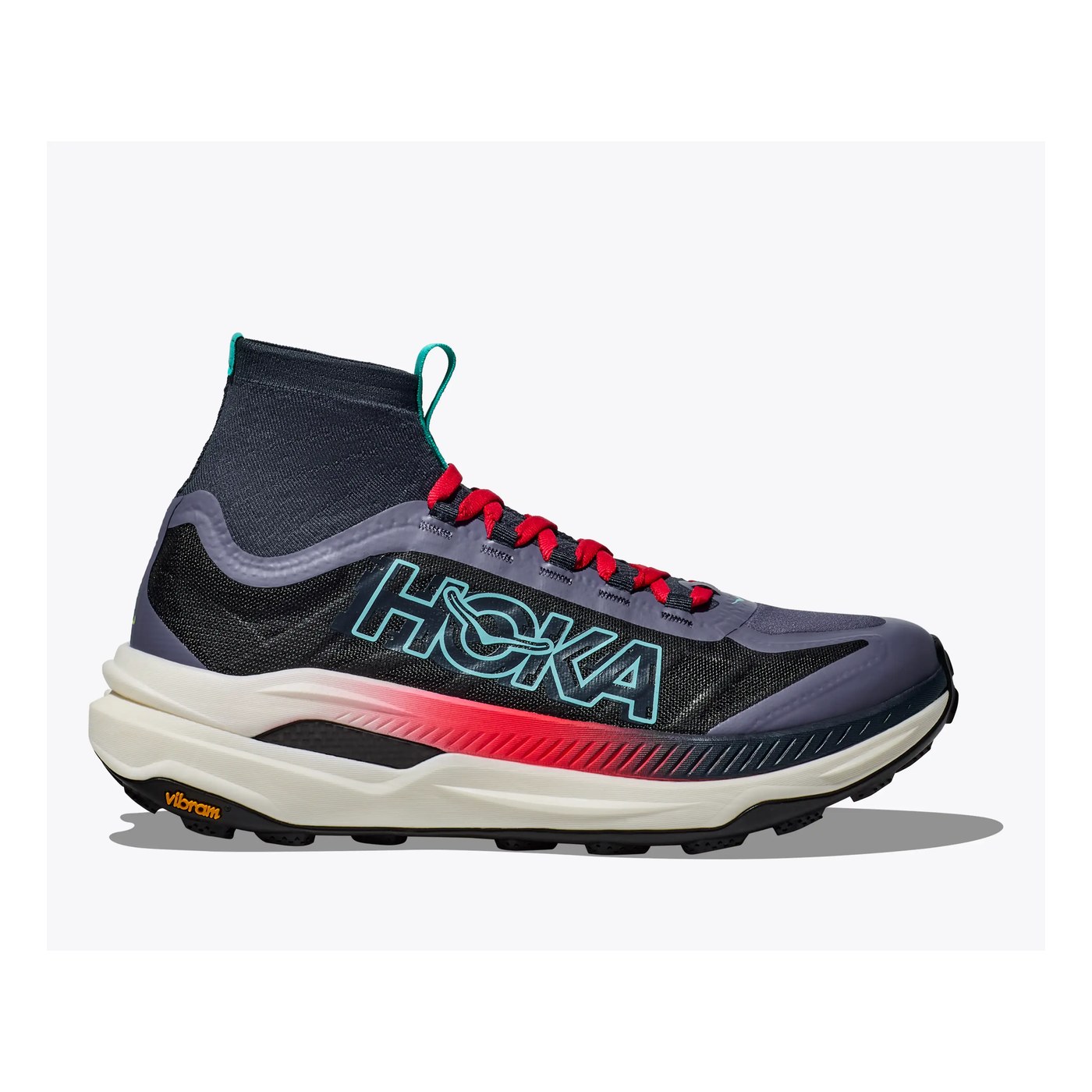
Vibram Megagrip with Litebase: maximum weight savings
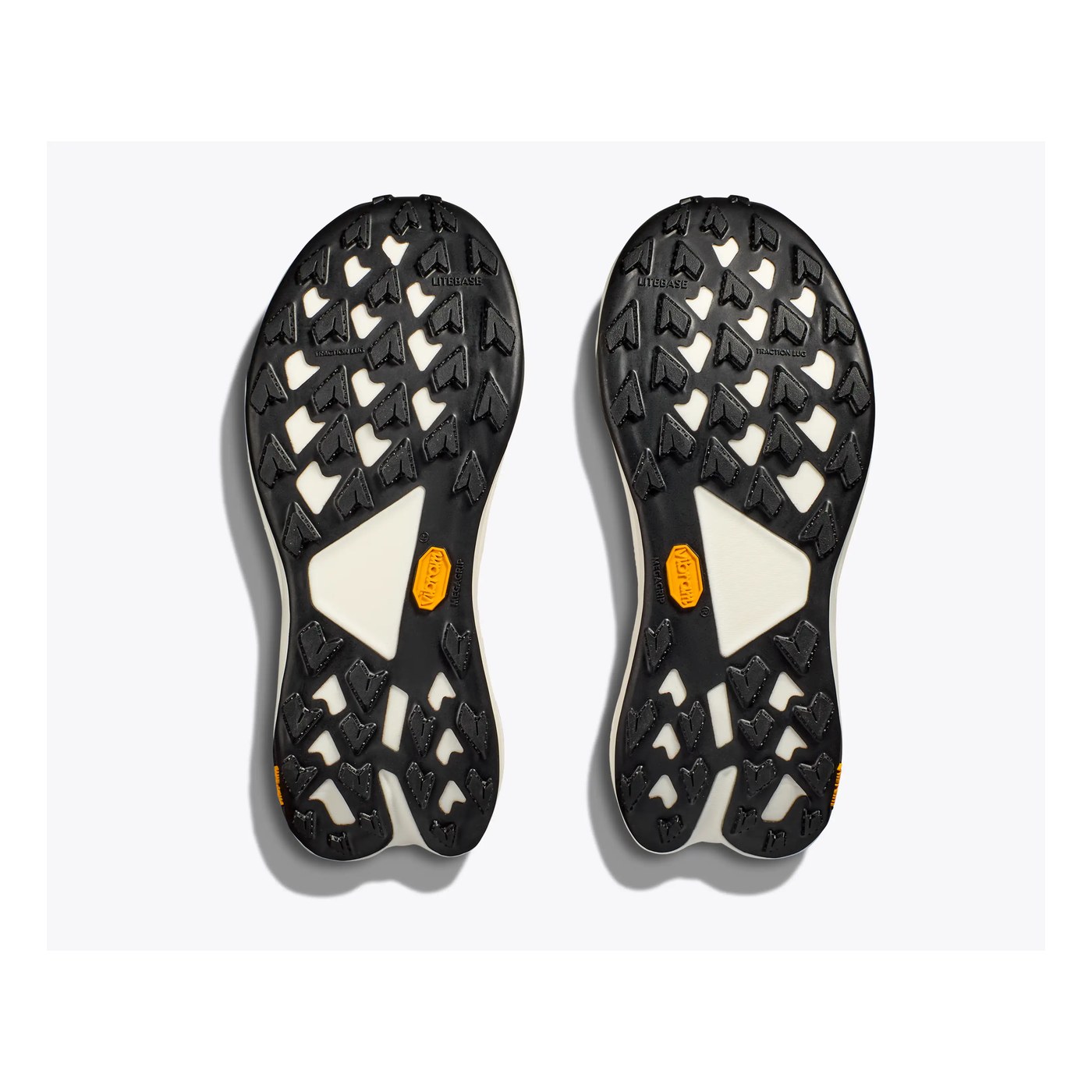
The outsole uses Vibram Megagrip Litebase, a thinner, lighter version of standard Megagrip. You keep the outstanding grip of Vibram rubber at a lower weight. On the Tecton X 3, the lugs are 4 mm, less aggressive than on the Speedgoat 7 (5 mm), but consistent with the model's "runnable trail" focus.
Ultralight Matryx upper: performance and precision
The upper is made of Matryx, a premium, highly durable fabric with a slight stretch. Lateral lockdown is precise without feeling restrictive, breathability is excellent, and abrasion resistance is on par with a racing shoe. It's a pro-level upper that justifies the price.
What the French trail press says
u-Trail rates the Tecton X 3 as one of the most efficient trail super shoes on runnable terrain, with a unique twin-plate system that strikes a better propulsion/stability balance. The review does flag average stability on highly technical trails.
Pacing Trail highlights the energy return of the supercritical PEBA and the quality of the Matryx upper. The verdict is clear: for a racing-focused trail runner on runnable terrain, it's one of the three best options on the market.
Lepape-Info confirms the model's premium position in the trail racing segment and highlights the innovation of the twin-plate system. Value for money is judged fair given the ultra-premium segment.
Our take as RunMorph coaches. The consensus holds no surprises: with the Tecton X 3, Hoka proves it can innovate technically in trail running. For runners who race on runnable trails, it's probably the best tool available right now. For other profiles, look at more versatile models.
Quick comparison
Tecton X 3 vs Hoka Speedgoat 7. Two Hokas with opposite philosophies. The Speedgoat is a versatile training and racing shoe (€165). The Tecton X 3 is built purely for racing (€230). Verdict: Speedgoat for 90% of your runs, Tecton X 3 on race day when you're chasing a time.
Tecton X 3 vs Salomon S/Lab Genesis. The S/Lab Genesis is more versatile on technical trails (flexible TPU plate). The Tecton X 3 is more efficient on runnable trails (rigid twin carbon plates). Verdict: S/Lab Genesis for technical mountain trails, Tecton X 3 for fast, runnable trail racing.
Tecton X 3 vs La Sportiva Prodigio Pro. The Prodigio Pro has a one-piece carbon plate and excellent stability on technical trails. The Tecton X 3 bets on propulsion through its twin plates. Verdict: Prodigio Pro for technical trails, Tecton X 3 for fast, runnable trails.
Fitting the Tecton X 3 into your training
A €230 trail racing shoe deserves to be used wisely. Here's our game plan:
- Your daily workhorse: keep a durable, versatile trail shoe like the Hoka Speedgoat 7 or the La Sportiva Prodigio 2. They soak up your weekly mileage without wearing out your race pair.
- Your 2-3 key sessions in the Tecton X 3: in the 4 weeks before your race, schedule 2-3 goal-pace sessions in your Tecton X 3 on terrain that matches your course. The twin-plate system demands a precise stride.
- Race day: this is the one. Its amplified propulsion and pronounced rocker help you hold your pace even when you're tired.
The RunMorph coach's verdict
As a coach, I recommend the Hoka Tecton X 3 as the trail racing shoe for my runners who stick to runnable trails. For that profile, a sub-elite or ambitious runner training for 21 to 80 km trail races on forest trails or accessible mountain terrain, it's probably the best option available today.
The twin parallel carbon plates are a one-of-a-kind innovation that delivers a real propulsion/stability balance. The supercritical PEBA foam and the Matryx upper round out a premium package that justifies the price.
The only real drawback: the target terrain is narrow. On highly technical trails with lots of rocks and roots, the shoe's stability is average. For that terrain, the S/Lab Genesis or the La Sportiva Prodigio Pro is a better fit.
RunMorph score: 9.1 / 10. At €230, it's a major investment, but in line with the premium trail racing segment. Buy it if you're training for runnable trail races with a time goal. Look elsewhere if you run highly technical trails or you're new to trail running.
Key takeaways for your next race
- Trail racing super shoe: built for sub-elite runners focused on runnable to moderately technical trails.
- Twin parallel carbon plates: a Hoka-only innovation that combines propulsion and torsional flex.
- Supercritical PEBA foam: exceptional energy return, durability limited to 400-500 km.
- Vibram Megagrip Litebase: premium grip at a lower weight, 4 mm lugs for runnable trails.
- Matryx upper: pro-grade material, light and abrasion-resistant.
- 5 mm drop: encourages a midfoot/forefoot strike, in line with its racing focus.
- 400-500 km lifespan: save it for races and 2-3 key dial-in sessions.
Frequently asked questions
Is the Hoka Tecton X 3 good for beginners?
No. Like any carbon-plated super shoe, it demands well-developed running mechanics and solid weekly mileage. If you're just getting into trail running, go for the Hoka Speedgoat 7 instead: it's more forgiving and cheaper.
How durable is the Tecton X 3?
Expect 400 to 500 km of actual running. Supercritical PEBA foam is less durable than a classic CMEVA, but it delivers better energy return. That's the trade-off in the trail super shoe segment.
Does the Tecton X 3 run large or small?
It fits true to size, with more room than Hoka's road shoes. If in doubt, go with your usual size. For long distances where your feet will swell, consider going up half a size.
What's the difference between the Tecton X 3 and the Tecton X 2?
Three major changes: a reformulated supercritical PEBA foam (bouncier), a redesigned Matryx upper (lighter and more breathable) and a Vibram Megagrip Litebase outsole (lighter). The twin carbon plate system, drop, stack height and weight remain virtually unchanged.
Is the Tecton X 3 suited to ultra-trail?
With reservations. For a runnable 50-80 km, yes. For 100 km or more on technical terrain, its limited durability and average stability on rocks will hold you back. For ultras, look at the Salomon S/Lab Genesis or the Hoka Mafate Speed 5 instead.