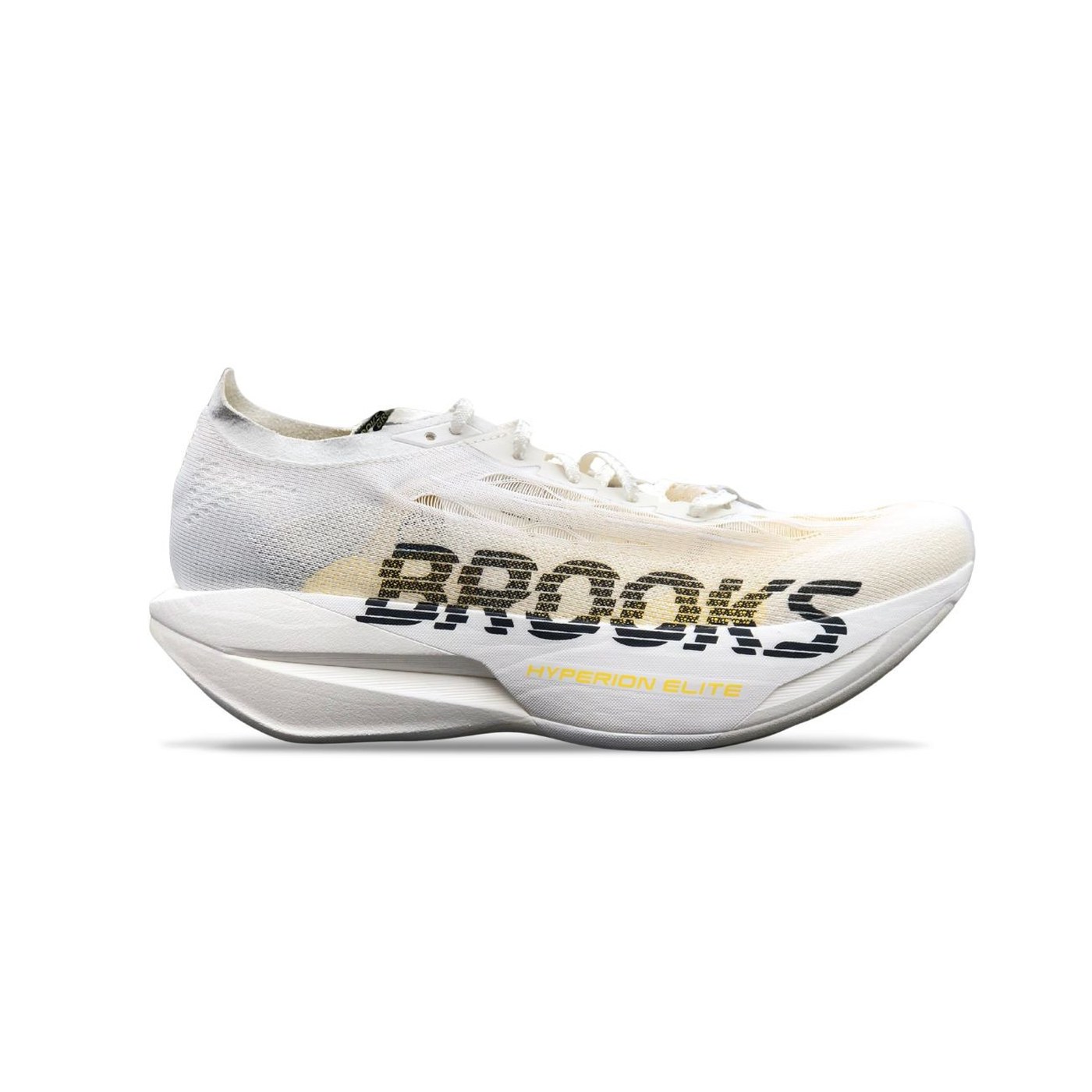
Officially launched on July 31, 2026, the Brooks Hyperion Elite 6 shapes up as the most ambitious marathon weapon Brooks has ever built. DNA GOLD reformulated as pure nitrogen-infused PEBA, a SpeedVault+ plate with a fully reworked rocker profile, a strategic TPU upper and 198 g on the scale: everything has been rethought to chase the fastest times over 42 km. The Brooks super shoe that can help you break your marathon PR may finally be here.
Brooks Hyperion Elite 6 Review: Pure PEBA DNA GOLD at 198 g
8.5/10
The essentials in 3 sentences
The Brooks Hyperion Elite 6 is the first in the line to use DNA GOLD foam reformulated as pure nitrogen-infused PEBA, with clearly more bounce than any previous version. The SpeedVault+ plate gets a steeper rocker angle that triggers propulsion earlier in the stride cycle, without sacrificing the platform stability Brooks is known for. At 198 g and 40 mm of stack height (the World Athletics limit), it finally goes head to head with the leaders of the carbon segment.
8.5
/ 10 · RunMorph overall score
Who is it for?Ambitious marathoners chasing a PR under 3:30, comfortable on carbon plates, who run their race-specific paces between 3:45 and 4:30 per km.
Who should skip it?Beginners and recreational runners, high-volume everyday training, paces slower than 5 min per km: a daily trainer will do the job far better.
Brooks Hyperion Elite 6: six generations to reach the top
Brooks has always made excellent running shoes. But in the marathon super shoe race the big brands kicked off in 2017, the Hyperion Elite line struggled to convince. Too stiff, not bouncy enough, less propulsive than the competition: testers kept reaching the same verdict. The shift that started with version 4 PB and the arrival of DNA GOLD opened a door. Version 6 looks like the definitive break.
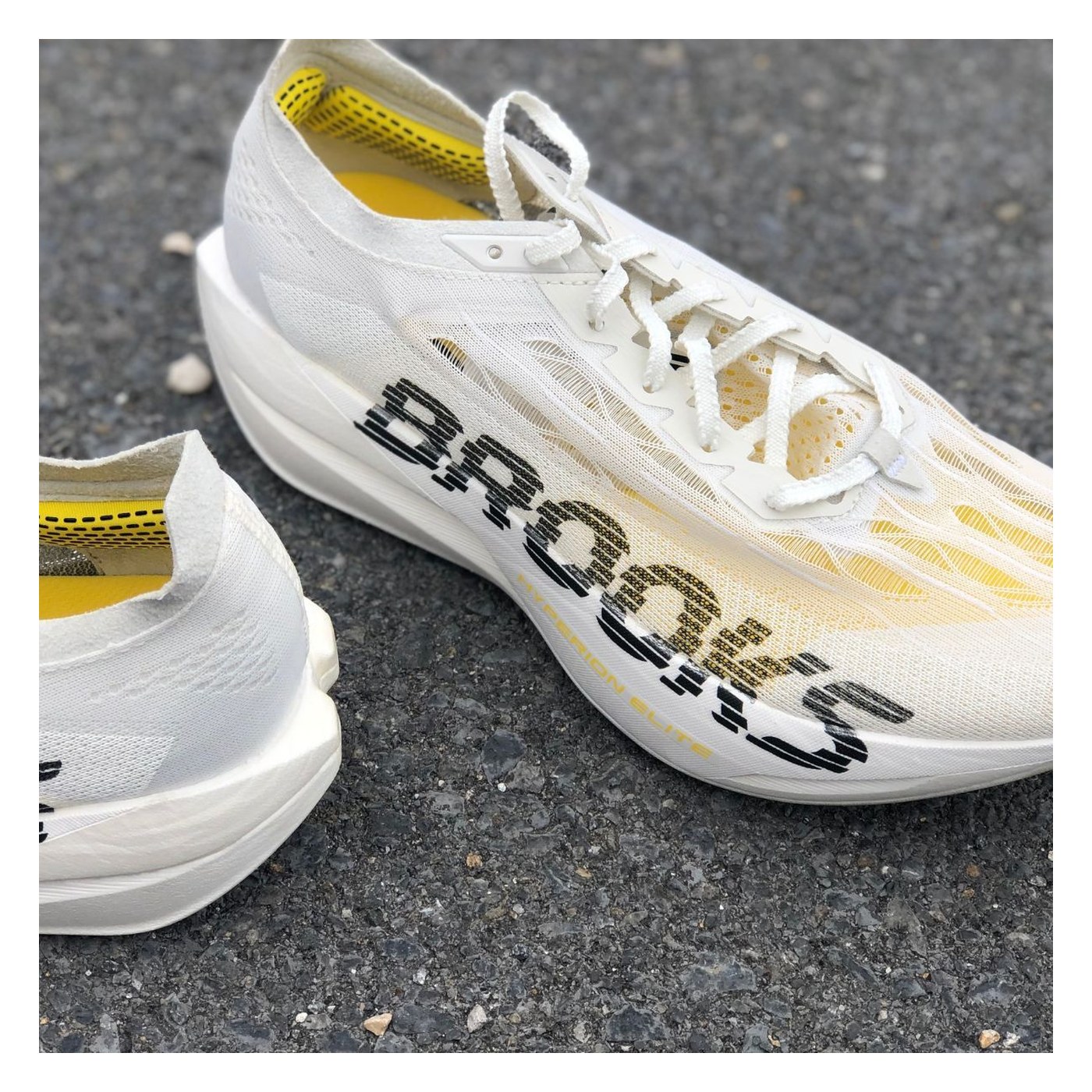
Three simultaneous changes set the Elite 6 apart from earlier versions. The DNA GOLD foam is now pure PEBA (polyether block amide), the same material family you find in the best super shoes on the market. The SpeedVault+ plate has a steeper angle that engages the RapidRoll Rocker earlier in the stride: propulsion kicks in before your foot has even finished its ground contact. And the strategically pressed TPU mesh upper cuts weight while improving lockdown over a full marathon.
RunMorph's advice: the Brooks Hyperion Elite 6 directly succeeds the Brooks Hyperion Elite 5, which we have already reviewed on RunMorph. If you want a more stable alternative to the Nike Vaporfly 4 or the Saucony Endorphin Elite 3 over a full marathon, the Elite 6 deserves your full attention. To prepare the marathon that goes with it, explore the RunMorph training plans.
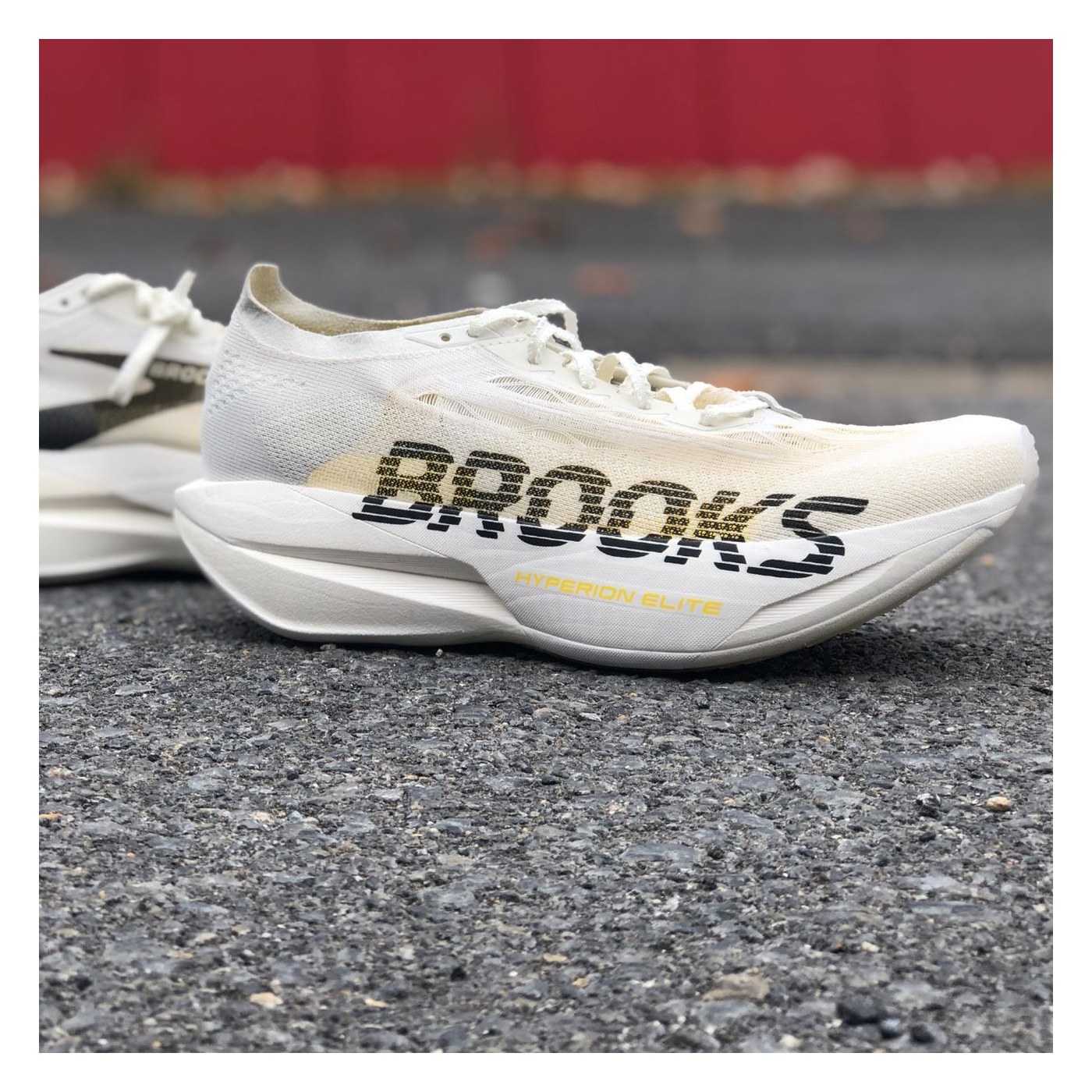
© Brooks, official photo used for editorial purposes
Objective technical data
| Spec | Detail |
|---|---|
| Brand | Brooks |
| Model | Hyperion Elite 6 |
| Official release | July 31, 2026 |
| Type | Carbon super shoe for marathon and half marathon racing |
| Drop | 7 mm (8 mm on the Elite 5) |
| Stack height | 40 mm heel / 33 mm forefoot (World Athletics limit) |
| Weight | 198 g (men's US9) / approx. 170 g (women's) |
| Foam | Reformulated DNA GOLD, pure nitrogen-infused PEBA |
| Plate | Full-length SpeedVault+ carbon, reworked angle |
| Upper | Strategic pressed TPU mesh, ultralight |
| Outsole | High-durability rubber, targeted contact zones |
| Rocker | Optimized RapidRoll |
| Recommended mileage | 400 to 700 km (race-day shoe) |
| Regulations | World Athletics legal for official competition |
| Price | €275 |
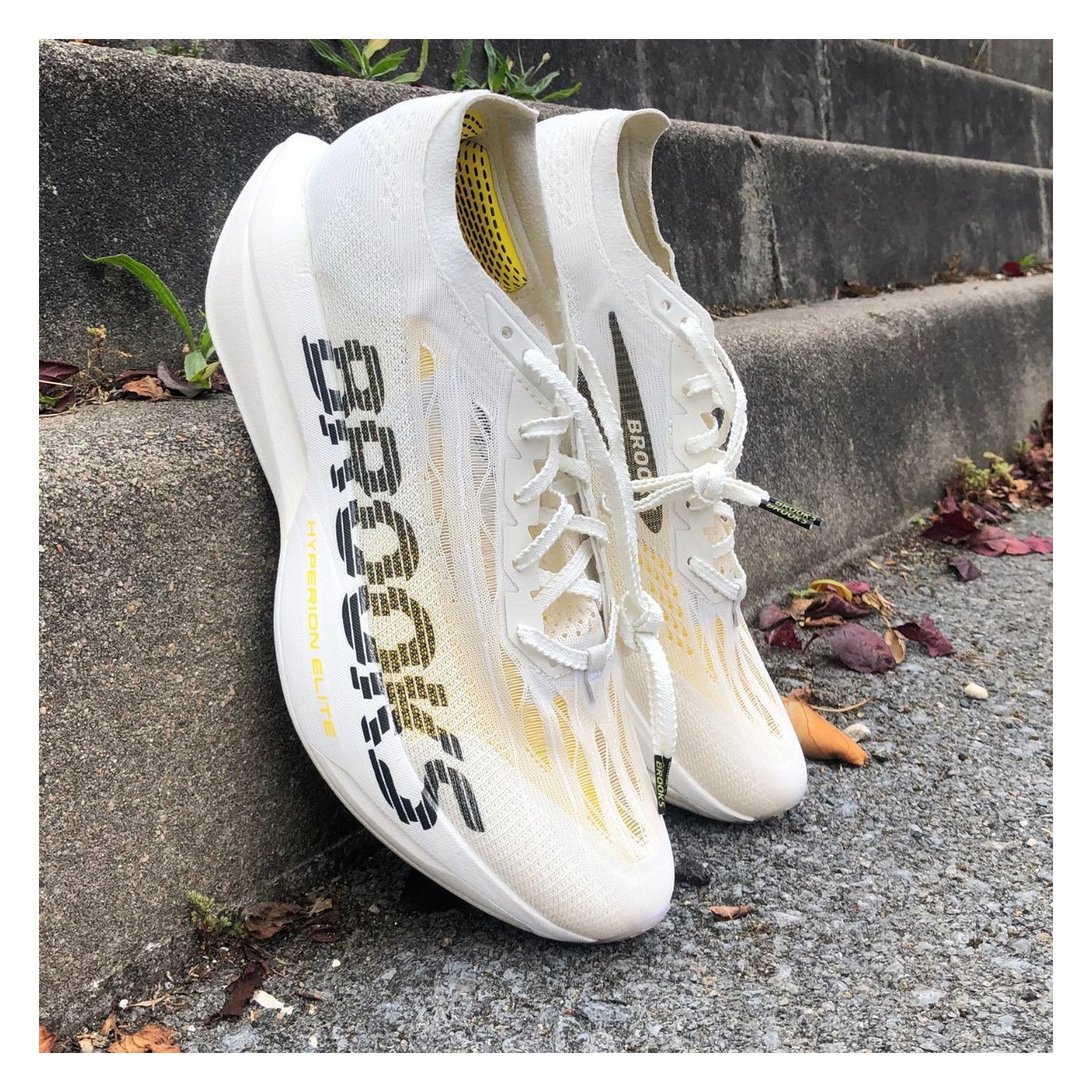
© Brooks, official photo used for editorial purposes
Who is the Brooks Hyperion Elite 6 for?
The ambitious marathoner chasing a PR
Training for a marathon with a goal between 3:00 and 3:30, and running your speed blocks at 3:45 to 4:20 per km? The Hyperion Elite 6 is built for you. Its 7 mm drop and the early rocker of the SpeedVault+ suit a forefoot or midfoot strike very well, without demanding perfect form like models with a drop of 4 mm or less. Its platform stability, more pronounced than a Vaporfly's, also makes it a reassuring option over the full 42 km, especially in the second half of the race when fatigue sets in.
The half marathoner going under 1:25
Over 21 km, the 198 g weight and PEBA bounce of the Elite 6 work wonders. At 3:50 to 4:10 per km, the shoe is both propulsive and comfortable, without the harshness of some ultra-aggressive rivals that demand flawless form. If you're chasing an age-group podium or a qualifying time for a major marathon, the Elite 6 is a top pick for the half distance.
The experienced runner new to carbon plates
Despite its radical look, the Hyperion Elite 6 is one of the easiest super shoes in the segment to get used to. Its platform stability and 7 mm drop let runners without many kilometers on carbon plates adapt to it faster than to a Vaporfly or a Metaspeed. That doesn't mean it suits everyone: if you don't regularly run faster than 5 min/km in training, keep progressing before you spend €275.
DNA GOLD PEBA and SpeedVault+: how it rides on the road
The big question around the Hyperion Elite 6 was the foam. Previous generations used a DNA GOLD with a share of synthetic materials that dulled the bounce compared with the pure PEBA of the best rivals. With this reformulation into pure nitrogen-infused PEBA, the first test sessions confirm what independent measurements suggested: energy return takes a significant leap.
Landing feels softer than expected for a pure racing shoe, with a rebound that comes through clearly and predictably. The SpeedVault+ plate does its job: at marathon pace (between 4:00 and 4:30 per km), you clearly feel the energy transfer forward, with a rocker that engages earlier in the stride cycle than on version 5. You notice the difference from the first kilometers, especially on gentle climbs, where the SpeedVault+ propulsion takes load off your posterior chain.
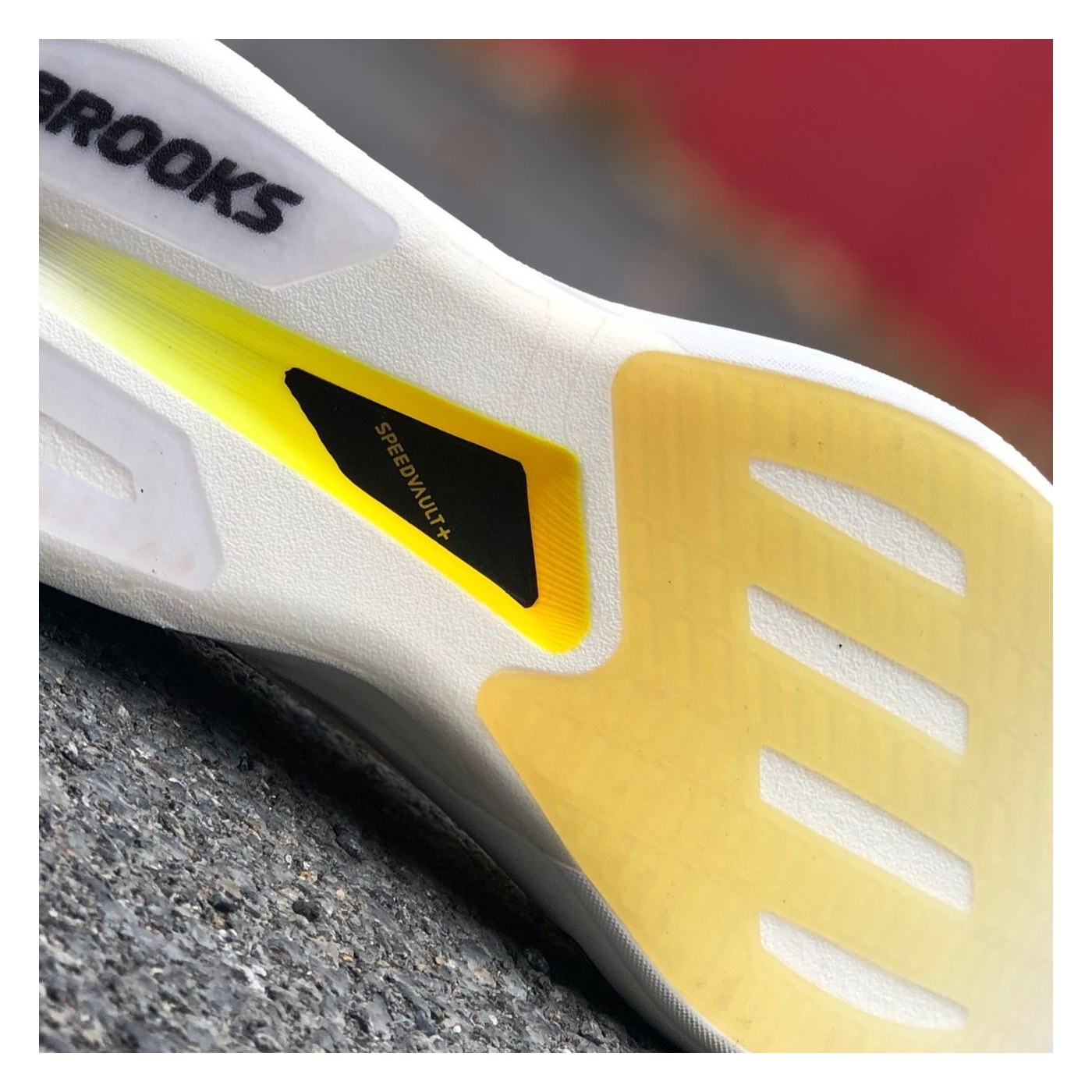
© Brooks, official photo used for editorial purposes
The pressed TPU mesh upper is another highlight. It wraps the foot without excess stiffness, with a measured stretch that absorbs the slight changes in foot volume typical of a marathon. Early field feedback rates the lockdown good to excellent, a clear step up from the Elite 5, whose more conventional upper felt slightly vague mid-race at high pace.
The critical caveat: at €275, the Hyperion Elite 6 isn't the lightest shoe in its segment. The Asics Metaspeed Sky Tokyo drops to 168 g with a drop of just 5 mm for runners chasing absolute lightness. The Elite 6 takes a different approach: more generous cushioning, better stability, a more accessible drop. It's a different philosophy, and that's exactly what carves out its market.
Pros
- DNA GOLD PEBA: energy return finally on par with the best on the market
- Platform stability above the carbon segment average
- 7 mm drop that works even without perfect foot strike technique
- Lightweight TPU upper with reliable lockdown up to km 38
- 40 mm stack height, World Athletics legal
Cons
- Strictly for racing, not a daily trainer
- €275: a steep investment for a first super shoe
- Not the lightest in its segment (198 g vs 140-168 g for the top models)
- Availability in France was limited before August 1, 2026
Hyperion Elite 6 vs Vaporfly 4, Endorphin Elite 3 and Metaspeed Sky Tokyo: the comparison
The marathon super shoe segment is the most competitive in running. Here's how the Brooks Hyperion Elite 6 stacks up against three direct rivals we have already reviewed on RunMorph:
| Model | Weight | Drop | Stack height | Price | RM score |
|---|---|---|---|---|---|
| Brooks Hyperion Elite 6 | 198 g | 7 mm | 40/33 mm | €275 | 8.5/10 |
| Nike Vaporfly 4 | 198 g | 8 mm | 40/32 mm | €250 | 9/10 |
| Saucony Endorphin Elite 3 | 210 g | 8 mm | 40/32 mm | €320 | 9/10 |
| Asics Metaspeed Sky Tokyo | 168 g | 5 mm | 39/34 mm | €270 | 9/10 |
Against the Nike Vaporfly 4, the Elite 6 offers firmer platform stability and a slightly less aggressive drop, at a price €25 higher. Against the Saucony Endorphin Elite 3, it's 12 g lighter and €45 cheaper, with slightly less bounce at truly fast paces under 3:30 per km. The Asics Metaspeed Sky Tokyo sits in a different category for absolute lightness and the stride it demands. Bottom line: the Hyperion Elite 6 owns the slot of the most stable and most accessible super shoe in the group, at a competitive price for the segment.
How to fit the Brooks Hyperion Elite 6 into your RunMorph training plan
The Hyperion Elite 6 is a race-day shoe. At RunMorph, we recommend saving it exclusively for races and a few race simulations. In a 12 to 16 week marathon build, here's how to use it:
- 21 to 14 days out: one race-specific long run of 28 to 32 km in the Elite 6, at goal marathon pace. The goal is to confirm the feel and the fit over distance.
- 10 days out: a short 8 km tune-up run at goal pace to confirm everything works before the recovery week.
- Race day: the shoe for the marathon.
Outside these specific situations, use a Brooks Ghost AMP or another daily trainer to build your training volume. Saving the Elite 6 keeps its DNA GOLD PEBA foam at its best over a 400 to 700 km lifespan. To build the complete plan behind this marathon block, explore the RunMorph training plans matched to your level and your marathon goal.
© Brooks, official photo used for editorial purposes
The RunMorph Coach verdict
The Brooks Hyperion Elite 6 marks Brooks' real entry into the closed circle of marathon super shoes that can play a leading role. The reformulated DNA GOLD PEBA delivers: bouncier, lighter underfoot, on par with the best on the market. The SpeedVault+ plate and its reworked rocker angle deliver clear, predictable propulsion, without the sometimes destabilizing radical feel of some rivals. The stable platform and 7 mm drop make it the most accessible super shoe for runners who don't yet have hundreds of kilometers on carbon plates.
What costs it points: €275 is justified, but the Vaporfly 4 at €250 remains the absolute benchmark for raw efficiency, and the Elite 6 isn't the lightest in its segment. Like any race-day shoe, it only makes sense paired with specific preparation. RunMorph score: 8.5/10.
Key takeaways for your training
- DNA GOLD PEBA: a first in the Elite line, with energy return that finally matches the best super shoes on the market.
- Reworked SpeedVault+: earlier rocker, sharper propulsion, especially effective between 3:45 and 4:30 per km.
- Superior stability: the most stable carbon super shoe in this comparison, ideal for heavier runners or those less used to plates.
- Save it for race day: recommended lifespan of 400 to 700 km, not to be wasted on everyday training sessions.
- A solid alternative to the Vaporfly: €25 more, but better platform support for runners whose stride loses stability late in a marathon.