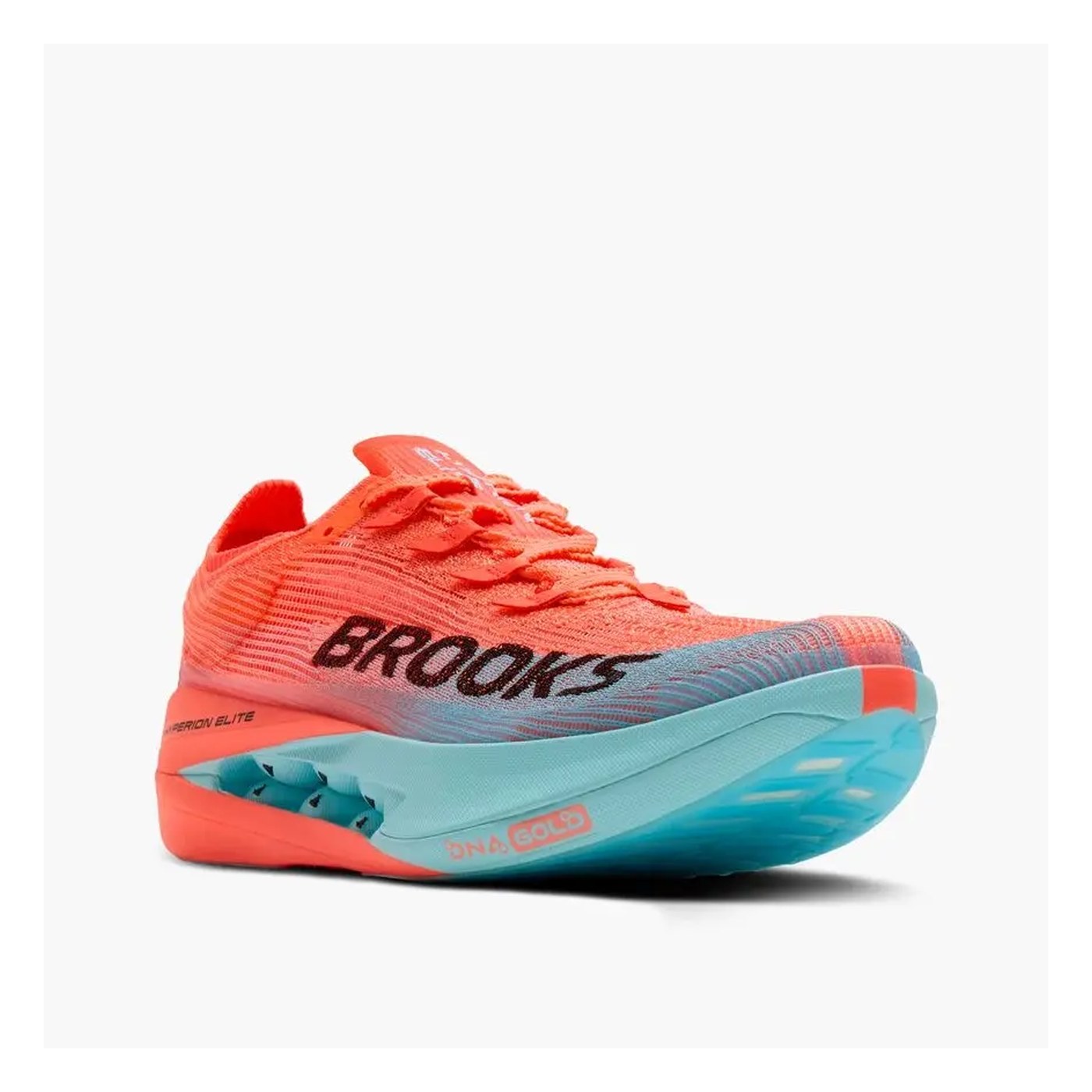
For years, Brooks watched the carbon super shoe train go by. With the Hyperion Elite 5, the Seattle brand stops playing catch-up and finally delivers a model that can take on the market leaders. Here's the RunMorph review, no punches pulled, and above all, which runner this pair is built for.
Brooks Hyperion Elite 5 Review: 100% PEBA Marathon Super Shoe
Brooks Hyperion Elite 5: the most accessible super shoe on the market
The Brooks Hyperion Elite 5 launched on July 1, 2025, at 275 euros, and it marks a real turning point in the brand's history. For years, Brooks struggled to make its mark in the carbon plate war dominated by Nike, Adidas and Asics. This fifth iteration changes the game with a combination that finally works: the new DNA GOLD foam, made of 100% nitrogen-infused PEBA, a SpeedVault+ Arris carbon plate sized individually for every shoe size, and a pressed TPU upper that cuts 10 grams compared to version 4.
The result? A 196-gram shoe in size 42 (186 g for the women's version), at the maximum stack height allowed by World Athletics (40 mm at the heel, 32 mm at the forefoot, 8 mm drop), positioned as the most accessible and versatile super shoe in the racing market.
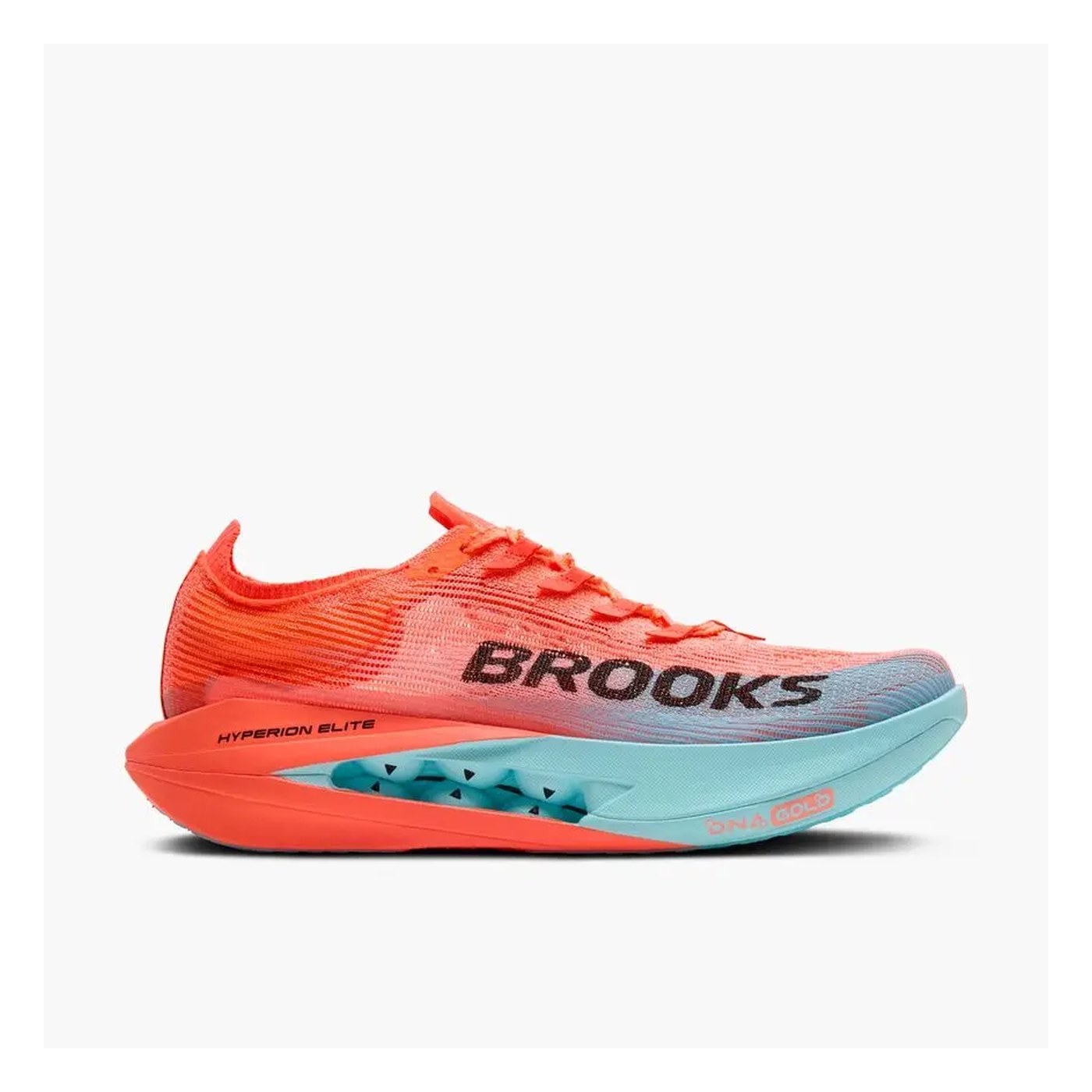
© Brooks, official photo used for editorial purposes
RunMorph's advice: if you want a carbon super shoe to step up from the half to the full marathon without breaking the bank or exposing yourself to overly extreme sensations, the Brooks Hyperion Elite 5 is probably the most reassuring option on the market. It plays in the same league as the Saucony Endorphin Pro 5 for forgiveness, while getting close to the lively feel of the Nike Vaporfly 4.
Objective tech specs
Before we get to how it feels, here are the numbers you need to know. These lab measurements come from independent testing and from Brooks France's official communications.
- Drop: 8 mm
- Heel / forefoot stack height: 40 mm / 32 mm (World Athletics maximum)
- Men's weight (size 42): 196 g
- Women's weight (size 38): 186 g
- Foam: DNA GOLD, 100% nitrogen-infused PEBA
- Plate: SpeedVault+ in Arris carbon fiber, customized by size
- Upper: ultralight silicone mesh with pressed TPU sheaths
- Outsole: strategically placed rubber (forefoot and heel contact points)
- Recommended distance: 5K to marathon
- Official price: €275
- Release date: July 1, 2025
Two points stand out. First, weight: at 196 g, the Hyperion Elite 5 is heavier than the Adidas Adios Pro Evo 3 (138 g) or the Asics Metaspeed Sky Tokyo, but it's still light for the category. Second, the SpeedVault+ plate is sized for each shoe size. That's a genuine innovation: plate stiffness is tuned to the runner's foot length instead of being standardized, as it is on most competitors.
Who is the Brooks Hyperion Elite 5 for?
The intermediate runner moving to carbon
This is where the Hyperion Elite 5 really stands out. Most super shoes (Vaporfly, Adios Pro Evo, Cielo X1) are built for runners chasing an extremely aggressive stride who can handle the stiffness of a carbon plate. Brooks takes a more inclusive approach: instant comfort, a natural stride that works just as well for midfoot strikers as for heel strikers, and reassuring stability. If you're training to race your first all-out 10K or your first sub-1:45 half marathon and want to try carbon without the risk, this is your pair.
The experienced runner looking for a versatile racer
The Hyperion Elite 5 doesn't shine as brightly as the Vaporfly 4 over 5K and 10K, or as much as the Metaspeed Sky Tokyo in the marathon. But it does everything well across the whole range, from 5K to the marathon. For a runner who wants to invest in a single super shoe and races several distances over the season, it's a very solid option.
The heavier runner or one with an injury history
The DNA GOLD cushioning, more protective than on the most radical competitors, makes it a sound choice for runners over 75 kg or with sensitive knees or Achilles tendons. The geometry stays accessible, and lateral stability beats the Adios Pro Evo 3 and the Vaporfly 4.
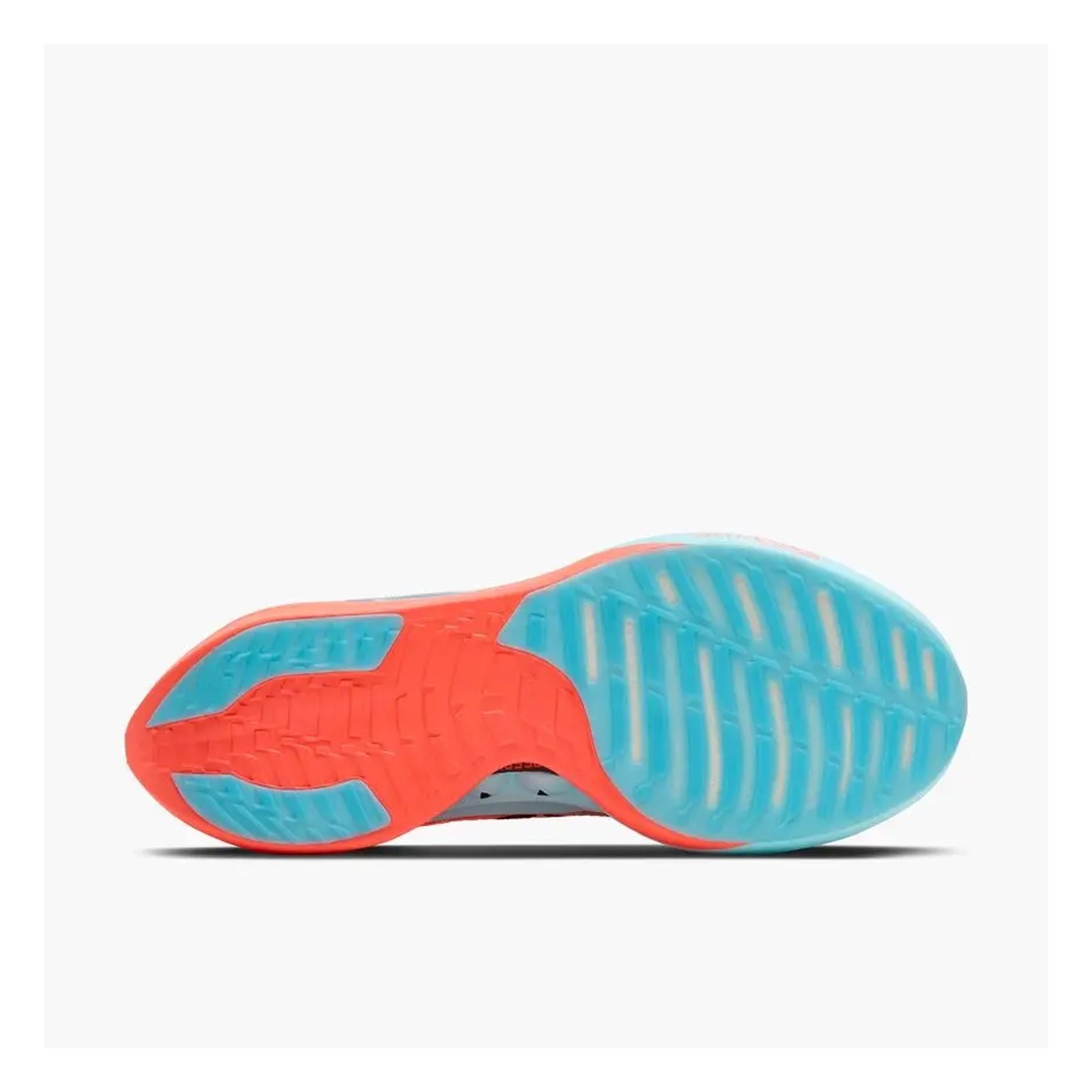
© Brooks, official photo used for editorial purposes
In-depth field test
Comfort and step-in feel
From the first step-in, the Brooks Hyperion Elite 5 surprises. The silicone mesh upper feels like a true second skin, with no pressure points and excellent ventilation. Thin laces threaded through TPU sheaths lock down the midfoot without squeezing. The tongue is thin and well integrated. At the back, a soft but structured heel counter keeps your heel secure. Over runs of 25 to 30 km, we didn't get a single blister, even without technical socks.
Cushioning and ride
This is where Brooks has taken a big leap forward. According to independent lab measurements, the 100% PEBA DNA GOLD foam is among the bounciest on the market. On the run, you get a clear energy return, but less of a "catapult" effect than on the Metaspeed Sky Tokyo or the Endorphin Elite. The SpeedVault+ plate works in sync with the foam to create a smooth transition, more natural than on the Vaporfly 4. It's less extreme, but also less taxing on your muscles over long distances.
Stability and lockdown
With its maximum 40 mm stack height, the Hyperion Elite 5 could have tipped into instability like some of its rivals. Brooks avoided that trap with a wide forefoot base and a central cutout that lowers the center of gravity. The result: lateral stability above the category average, even on tight turns or when landing on your heel. It's probably the shoe's most reassuring trait for a runner new to carbon.
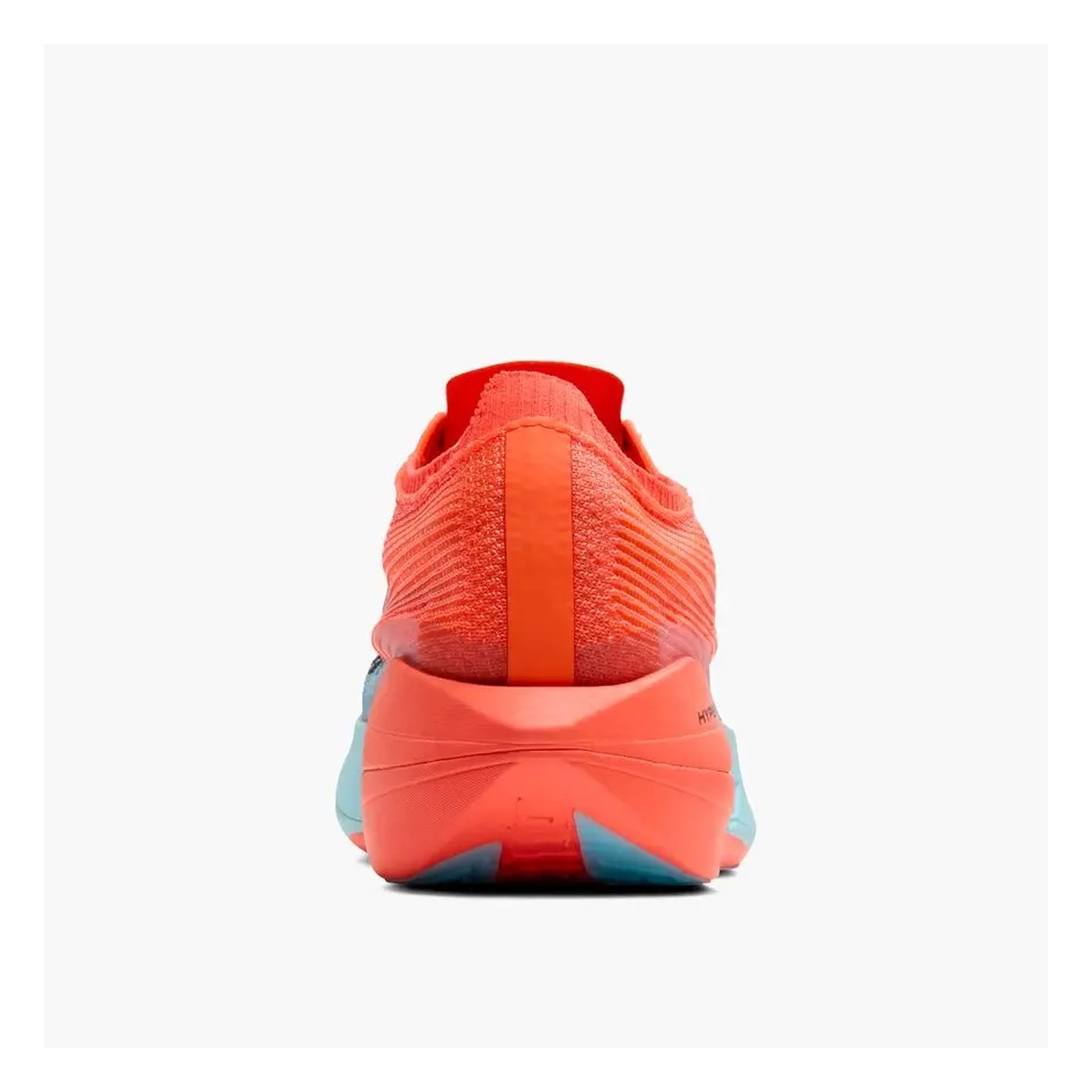
© Brooks, official photo used for editorial purposes
Outsole and grip
Brooks chose not to cover the entire outsole with rubber, to save weight. Rubber is concentrated on high-wear zones: the forefoot (push-off phase) and key points on the heel. On dry asphalt, grip is excellent. On wet roads, be careful for the first few kilometers: the exposed foam slips slightly, as on most super shoes. The "missile bubble" cutouts in the outsole aren't a cosmetic gimmick: they lighten the structure while preserving the integrity of the midsole foam.
Durability
Based on feedback gathered from forums and our first kilometers, the Hyperion Elite 5 should last between 250 and 350 kilometers before the foam loses a significant amount of its bounce. That puts it in the upper half of the carbon super shoe category, ahead of the Adios Pro Evo 3, which tops out at around 150 km. Simple math: at 275 euros for 300 km, the cost per kilometer is 0.92 euro. Still high, but reasonable for the category.
How it stacks up against the competition
The Hyperion Elite 5 has to take on a pack of killers. Here's how it compares with its direct rivals.
Against the Nike Vaporfly 4: the Brooks is more stable, more forgiving and more comfortable over the long haul. The Vaporfly is still livelier over 5K and 10K, but it demands precise mechanics and takes a bigger toll on your muscles.
Against the Saucony Endorphin Pro 5: a very close fight. The Saucony is slightly livelier, the Brooks slightly more protective. At €275 versus €250, the Endorphin Pro 5 has the edge on price.
Against the Asics Metaspeed Sky Tokyo: the Metaspeed Sky is the marathon champion for expert midfoot strikers. The Brooks is more versatile and technically easier to run in.
Against the Hoka Cielo X1 3.0: the Cielo bets on maximalism and extreme comfort. The Brooks is more precise, livelier and 30 g lighter.
How to fit it into your RunMorph training plan
The Hyperion Elite 5 is a pure racing shoe. It has no place on easy runs or recovery days: you'll wear out the PEBA foam prematurely and rob yourself of the sensations it can deliver on race day. Here's how we recommend using it.
Marathon build: 2 to 3 test runs during your key sessions (marathon pace, long runs at a sustained pace) in the 4 to 6 weeks before the race. Then save it for race day. Pair it with a structured RunMorph marathon plan to dial in your paces.
Half marathon or 10K build: 1 to 2 key sessions at race pace, then race day. It's also ideal for long intervals such as 6x2000 m at half marathon pace with your RunMorph half marathon plan.
5K build: usable, but not the best fit for this distance. The Nike Vaporfly 4 or the Adios Pro Evo 3 will be livelier over such a short distance.
For day-to-day training, stick with more durable models like the Asics Superblast 3, the Adidas Adizero EVO SL or the Asics Magic Speed 5 for key sessions with a non-PEBA carbon plate.
RunMorph coach's verdict
As a coach, I see plenty of intermediate runners who hesitate to switch to carbon for fear of instability or excessive stiffness. The Brooks Hyperion Elite 5 is my top recommendation for that profile: it delivers 90% of the benefit of a high-end super shoe with 100% of the comfort and forgiveness of a premium training shoe.
For the experienced runner chasing PRs over 5K or the marathon, the Hyperion Elite 5 isn't the most radical choice. You'll find something livelier from Adidas (Adios Pro Evo 3), more efficient from Asics (Metaspeed Sky Tokyo) or bouncier from Nike (Vaporfly 4). But for versatility, technical accessibility and lifespan, Brooks has finally delivered a true benchmark.
The 275-euro price tag is still high, but in line with the category. Brooks has pulled off its gamble: competing in the super shoe war without copying its rivals.
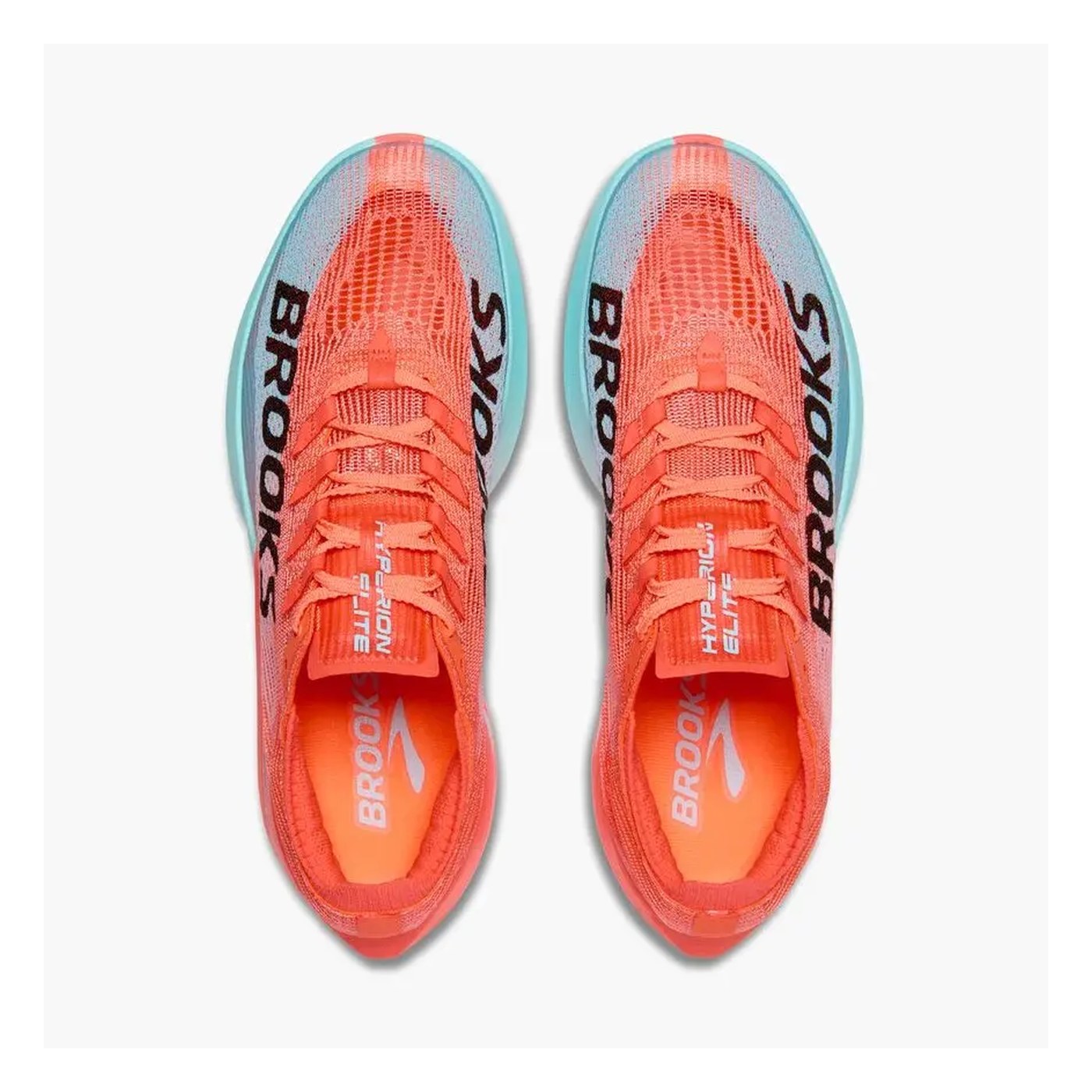
© Brooks, official photo used for editorial purposes
Key takeaways for your training
- Ideal profile: intermediate to experienced runners who want to try carbon without taking risks, or experts looking for a versatile super shoe across the whole 5K to marathon range.
- Best distances: half marathon and marathon. Good over 10K, decent over 5K.
- Key advantage: the combination of stability, comfort and responsiveness makes it exceptionally forgiving for a carbon super shoe.
- Limitation: it doesn't beat the Vaporfly 4 or the Adios Pro Evo 3 over short distances.
- Matching RunMorph plan: marathon plan or half marathon plan, wearing the shoe only for key sessions and race day.
- Cost per kilometer: about €0.92 (€275 for a lifespan of ~300 km).
Brooks Hyperion Elite 5 FAQ
Is the Brooks Hyperion Elite 5 good for beginners?
No. A €275 carbon super shoe makes no sense for a runner who's just starting out. Go for a daily trainer like the Nike Pegasus 42 or the Hoka Clifton 10 instead.
How long does the Brooks Hyperion Elite 5 last?
Between 250 and 350 kilometers before the PEBA foam loses a significant part of its properties. So save it for key sessions and race day.
Does the Brooks Hyperion Elite 5 run large or small?
It runs true to size, even slightly narrow in the forefoot. If you're unsure, go up half a size, especially for the marathon, when your feet swell.
Brooks Hyperion Elite 5 or Saucony Endorphin Pro 5: which one should you choose?
The Endorphin Pro 5 is slightly livelier and €25 cheaper. The Brooks is more stable and more forgiving. If you're preparing your first marathon in a carbon plate shoe, pick the Brooks. If you want maximum bounce, pick the Saucony Endorphin Pro 5.
Is the Brooks Hyperion Elite 5 a good marathon shoe?
Yes, it's probably where it shines most. Its stability and long-haul comfort make it especially well suited to the 42.195 km.