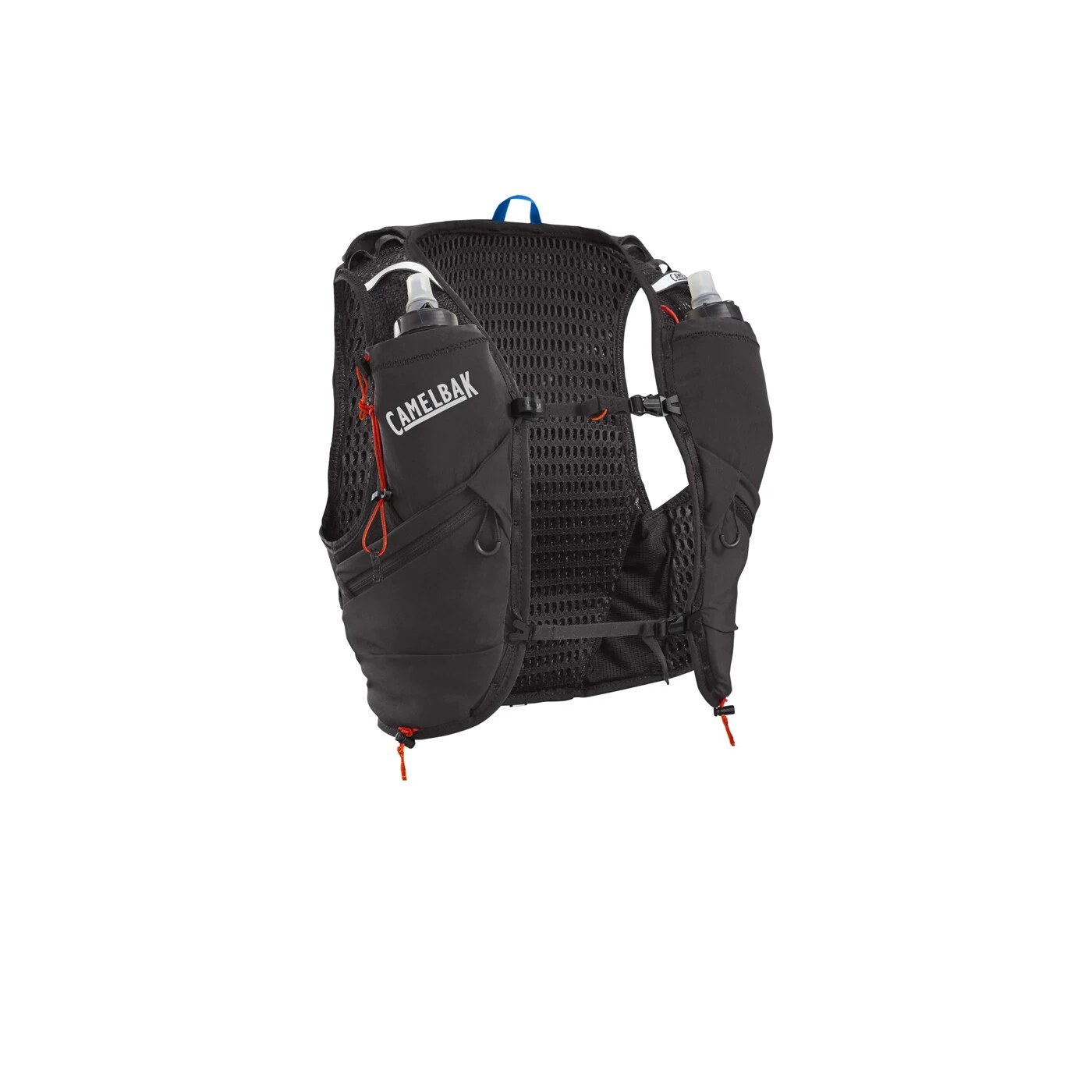
For years, CamelBak was the hydration bladder brand, not the race vest brand. The Apex Pro changes that: 12 liters, ten pockets, a removable pole quiver and a RECCO reflector sewn into the back. Four real-world tests read in full, one French and three English-language, tell the same story. A very well thought-out vest, but heavy for a 12-liter pack and sold at a premium.
© CamelBak, official photo used for editorial purposes
CamelBak Apex Pro: the ultra vest that wants to carry it all
Released in early 2024, the Apex Pro is CamelBak's most ambitious trail model. The brand designed it for long distances: 12 liters of volume, a 3D mesh harness and at least four sizes instead of the brand's usual one-size approach. It retails at €189,99 and sells for around €161 on sale at some French retailers.
Two and a half years after launch, it's still little known in France. The only detailed French test comes from Le Comparatif du Trail. Three English-language tests fill in the picture. First, an American review run by two testers. Then a British test over a few months, roughly 300 km in Scotland. Finally, a three-hour run in New Zealand carrying a race's mandatory kit.
RunMorph's advice: if you're torn between the Apex Pro and a lighter vest, start with your kit list. For an ultra with a jacket, pants, emergency blanket and poles, the Apex Pro makes its case. For a 30 km race, the CamelBak Ultra Pro Vest or the Salomon Adv Skin 12 is plenty.
Who is the Apex Pro for?
One-hour outing
Wrong choice. One of the American testers says it plainly: on a short run, the vest is too structured and too heavy. To run an hour with 500 mL of water, a 5-liter vest does better at half the weight.
30 to 60 km race
Doable, but underused. The 12 liters stay half empty and you feel the weight. If your race requires light gear (wind shell, headlamp, cup), a 6 to 8 liter vest is enough.
Ultra and long self-supported runs
This is its terrain. The British tester fit a down jacket, gloves, a hat, water, bars, a phone and a mini tripod. The New Zealand tester loaded a race's mandatory kit with no trouble. On a winter 100 km or a 100-miler, that capacity becomes a concrete advantage.
© CamelBak, official photo used for editorial purposes
Comfort, bounce and fit: stable, except when the straps give way
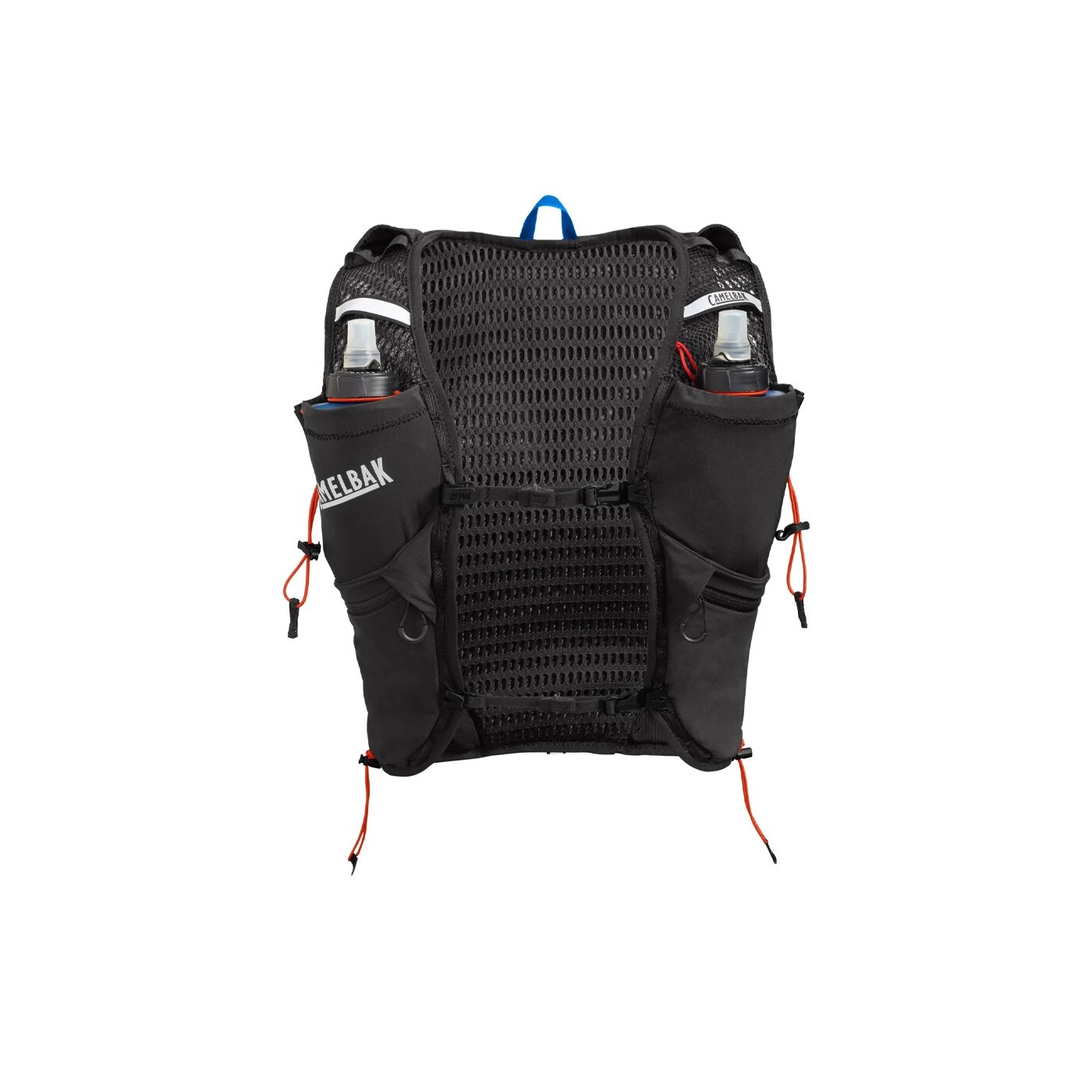
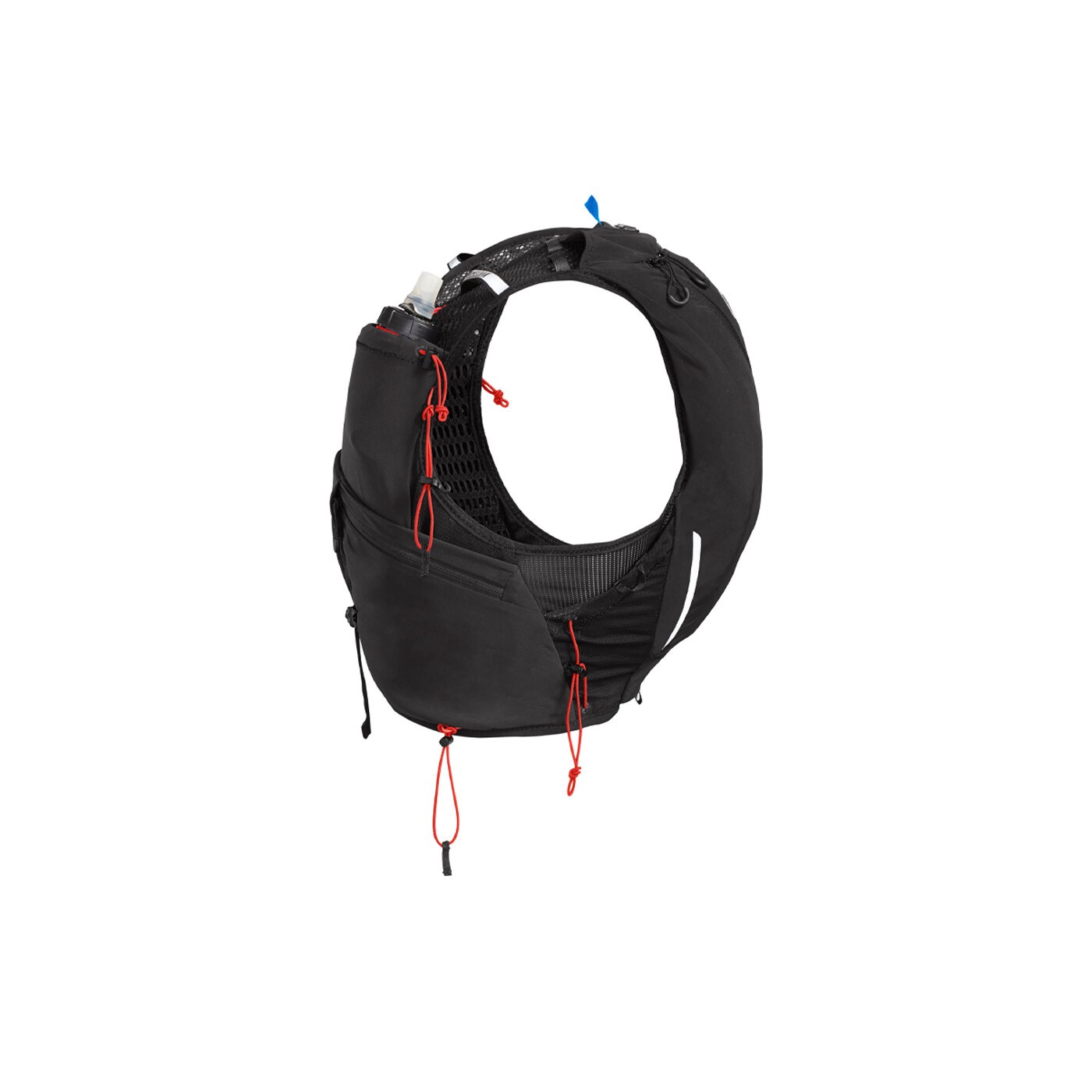
Good news first. All four tests describe a vest that hugs the torso. The 3D mesh and structured shoulder straps stop the vest from twisting when you put it on, a flaw one American tester blamed on the CamelBak Zephyr Pro. Loaded, the pack stays stable: little bounce, flasks that barely move even on descents.
The New Zealand tester, 105 cm chest in size L, felt the weight sit on his shoulders rather than his lower back. Over three hours of steps between Huia and Whatipu, he found it more pleasant than his usual backpack.
Now the flaw. Two testers, one French and one American, report the same thing: the stretchy front straps gradually loosen when the pack is full, especially downhill. The Comparatif du Trail tester found only one fix: tie the straps in a knot. For a vest designed to carry heavy loads, that's a contradiction. And it's not a finishing detail: the hold fails precisely when the pack weighs the most.
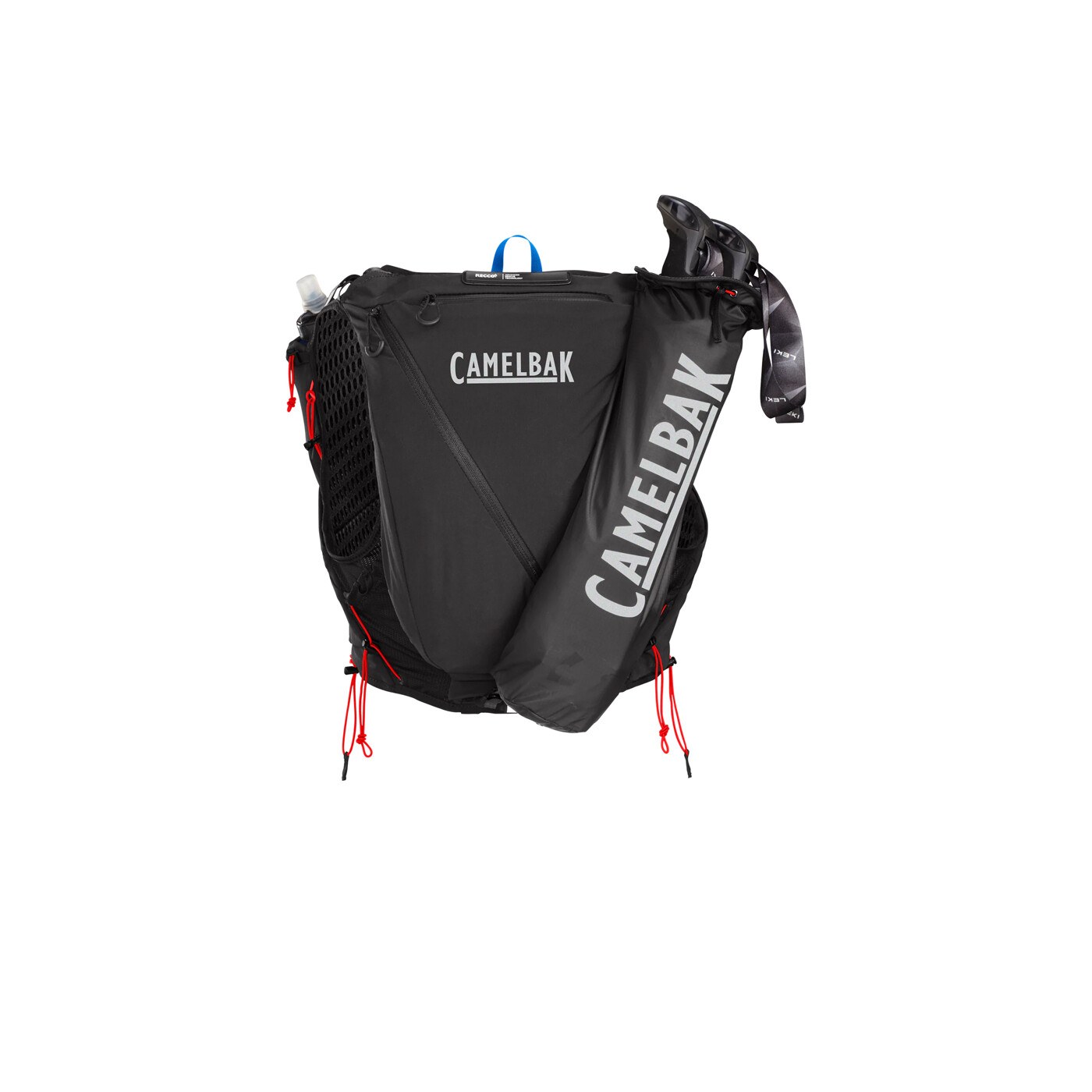
A lighter reservation: the French test finds the pole quiver angled a bit too much. The result is a slight imbalance and a little more bounce on the pole side on some descents.
Finally, a sizing point. The vest runs small. The French test advises sizing up when in doubt, and an American tester at 1,76 m and 66 kg found his size M snug with an extra jacket. If you run in winter with layers, go up one size.
Storage and accessibility: the best-designed layout in its class
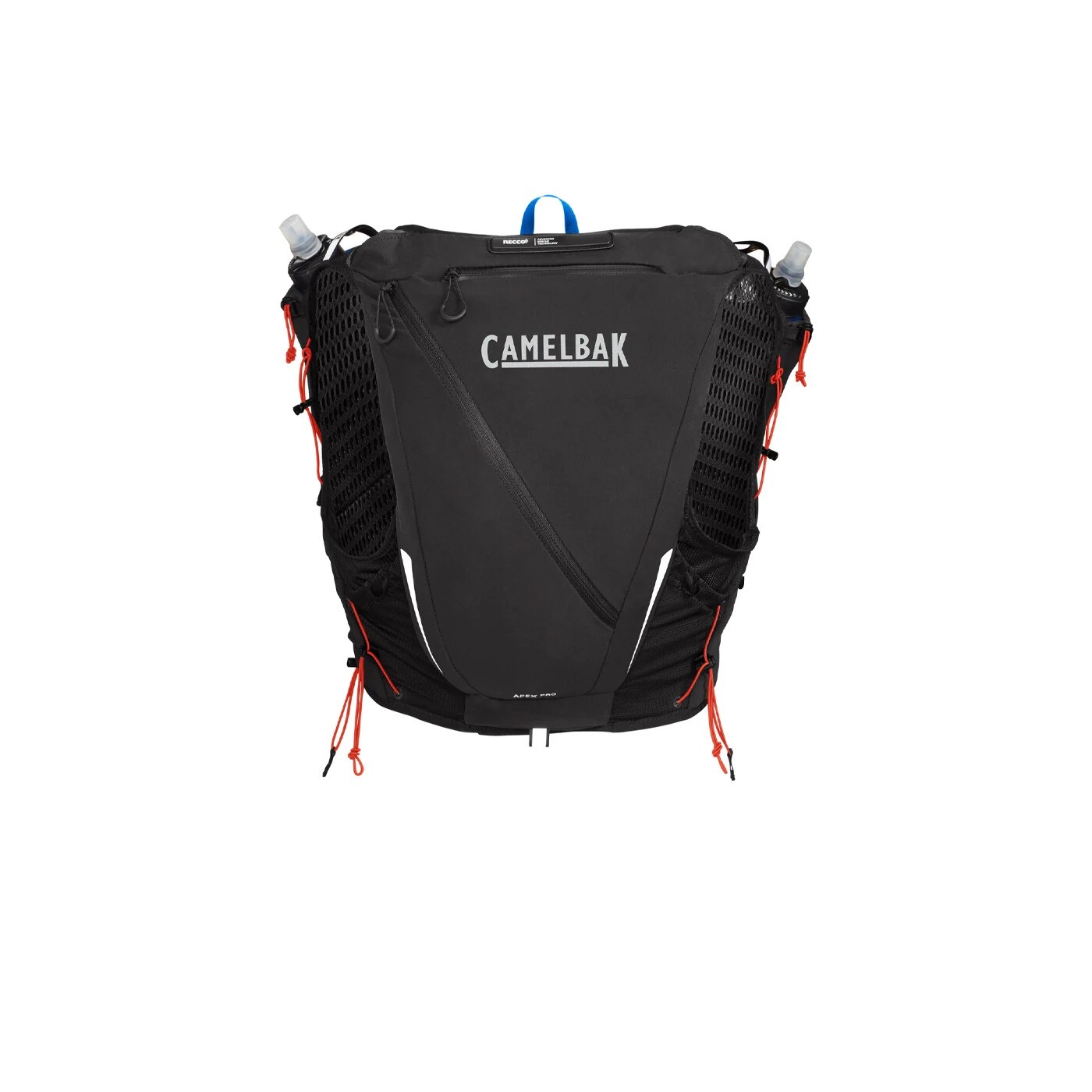
Ten pockets by the French test's count, at least eight by the British test's. Exact number aside, every tester praises the same thing: intuitive organization. Up front, two large stretch pockets with an internal divider, two zippered phone pockets and two deep flask pockets. One American tester rates this front panel better laid out and roomier than the Salomon Adv Skin 12's, but only from photos: we take it as an impression, not a measurement.
In the back, a zippered main compartment with a divider, a small waterproof pocket on top and a tunnel pocket reachable from both sides. That last one is a problem: an American tester admits he wasn't flexible enough to reach it easily on the run. Use it only for things you'll pull out at aid stations.
The pole quiver deserves its place among the strengths. Removable and mountable left or right, it can be handled on the run according to both the French and the American tests. Poles can also go under the front bungees. The RECCO reflector rounds out the kit: it helps equipped rescue teams locate a runner, but it isn't a GPS tracker for your family, as the French tester points out.
The only real storage limit is sweat. The New Zealand tester sweats heavily and found the whole pack soaked, except the waterproof phone pocket. Put your spare clothes in a plastic bag.
© CamelBak, official photo used for editorial purposes
Hydration: two decent flasks, caps to keep an eye on
Two 500 mL Quick Stow flasks come in the box. Bungee cords hold them so they don't sink as they empty, and the New Zealand tester noticed no sloshing after sucking the air out with each sip. The pockets also take wider bottles: an American tester slipped in a Hydra Flask and long Salomon flasks with no bounce.
Two reservations. An American tester reports caps that can twist toward open if not fully tightened, and wants a real locking click. The British tester finds a plastic taste in the flasks. Nothing deal-breaking, but at €189,99 you expect better.
The bladder, up to 2 L, isn't included. For a vest from CamelBak, the company that invented the hydration bladder, that's ironic. Budget around thirty euros more if you want to start with 3 liters in total.
How it compares with the competition
Against the 12 to 15 liter vests already reviewed on RunMorph, the Apex Pro wins on capacity and features and loses on weight.
Put simply, the Salomon S/Lab Ultra 12 weighs 150 g less for the same volume and costs €10 more. The Salomon Adv Skin 12 costs €25 less and weighs 100 g less, but holds less. The Black Diamond Distance 15 offers 3 more liters for a similar weight. The Apex Pro keeps the edge with RECCO and a roomier front panel. From the same brand, the CamelBak Trail Run Vest targets fast hiking and the CamelBak Ultra Pro Vest 6-liter racing.
Pros
- 12 L of very well-organized storage, praised by all four testers
- Stable when loaded, little bounce, flasks that stay put
- Removable pole quiver you can handle on the run
- Built-in RECCO reflector and waterproof phone pocket
- Up to 2 L bladder on top of the 2 flasks
Cons
- Stretchy front straps that loosen when full (two testers out of four)
- 340 to 353 g empty, 150 g more than an S/Lab Ultra 12
- Runs small, especially with winter layers
- Rear tunnel pocket hard to reach on the run
- No bladder included at €189,99
Which pack for which distance with RunMorph?
Your vest choice follows your training. For a trail race under 40 km, 5 to 8 liters is enough. Between 50 and 100 km with mandatory kit, 10 to 12 liters makes sense. Beyond that, the Apex Pro comes into play, especially in winter.
The RunMorph Trail plan builds your long runs week after week. Use them to run loaded: at least two long runs with the pack filled as on race day. That's when you'll see whether the front straps hold on your build, and whether you need to knot them like the French tester.
© CamelBak, official photo used for editorial purposes
RunMorph Coach's verdict
The Apex Pro scores 7,6/10. It's a true ultra vest, designed for anyone who has already run with a pack that was too small. Capacity, organization and the pole quiver push the score up. Weight, price and above all those straps that give way when it's heaviest pull it down.
Our position: if you're training for a 100-miler or a winter ultra with a heavy kit list, it does the job better than most 12-liter vests. If every gram counts, get the Salomon S/Lab Ultra 12. If your budget is tight, the Salomon Adv Skin 12 is the more sensible pick.
© CamelBak, official photo used for editorial purposes